🍑 From the Garden: Why I Always Recommend
Growing
Your Own Peaches
by Tatiana Anderson, Top Tropicals Garden
Expert

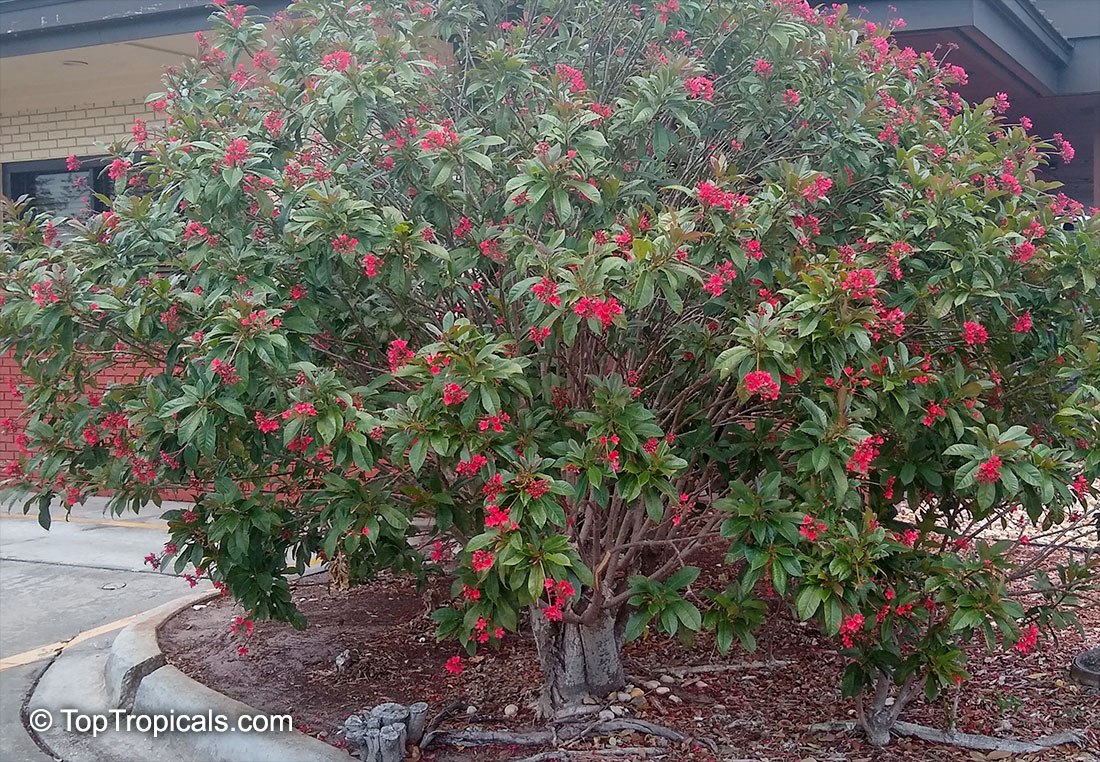
Peach trees are beautiful long before harvest day - glossy green
leaves,
colorful fruit, and that classic fuzzy peach look straight from the branch.
I'll be honest with you. The first time I bit into a peach straight off
the tree, still warm from the afternoon sun, I understood why people get
obsessed with this fruit. There is no comparison to what you find in a
grocery
store. Store peaches are picked hard, shipped cold, and by the time they
reach
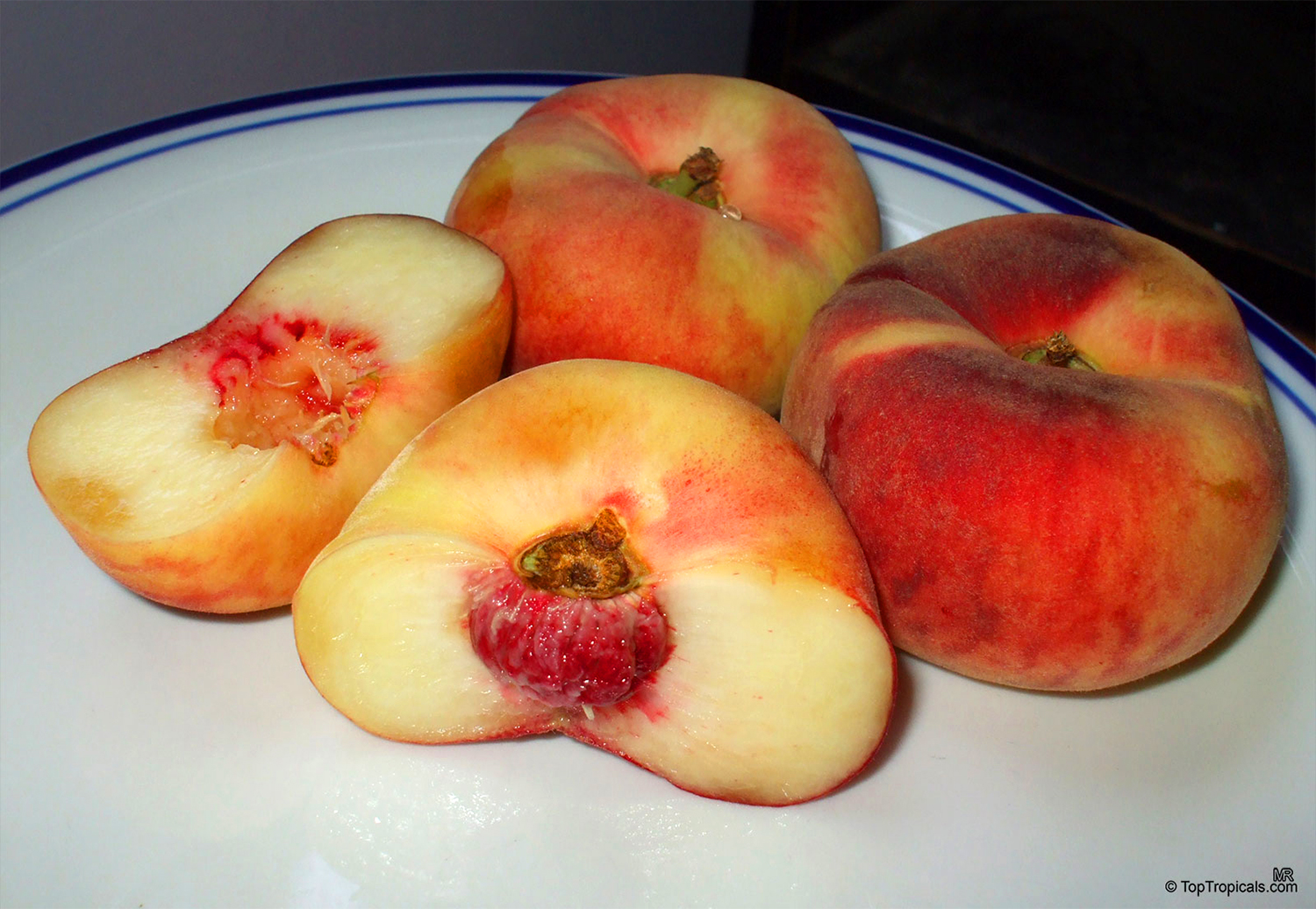
you, something important is already gone. A tree-ripened peach is soft,
fragrant, juicy, and sweet in a way store peaches rarely are. Eat it fresh,
slice
it into a cobbler, throw it on the grill - it holds up beautifully either
way.
So let's talk about how to actually get there.
 Planting
Peaches are not difficult. Give them sun, drainage, and room for air
movement, and they will usually tell you very quickly that they are
happy.
- Full sun is essential - 8 hours minimum, and more is
better.
- Drainage matters - peach roots do not like sitting
wet.
- If your soil stays wet, plant on a mound - simple fix,
big difference.
- Water deeply, then pause - let the soil partially dry
before watering again.
- Prune every year - it keeps the tree open, improves
airflow, and helps the tree put energy into fruit instead of tangled
growth.
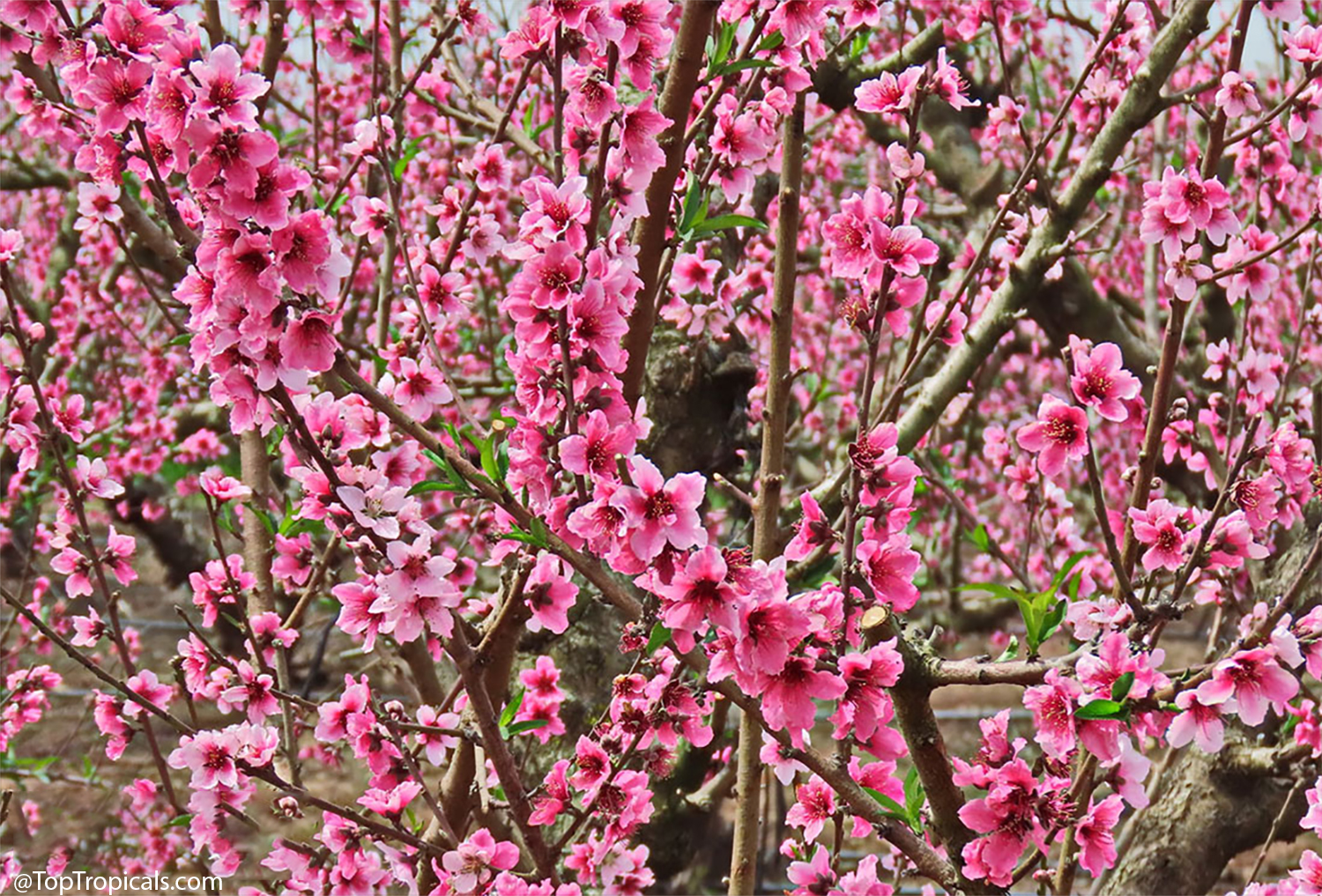
Peach trees put on one of spring's prettiest shows - clouds of pink
blossoms before the fruit season even begins.
What If You Do Not Have Room?
You can still grow peaches in a large container. This is a great option
for patios, small yards, renters, or gardeners who want better control over
soil and drainage.
- Use a large pot with drainage holes.
- Choose a fast-draining potting mix, not heavy garden soil. We recommend
Sunshine Abundance potting mix.
- Place the container in the sunniest spot you have.
- Water more often than in-ground trees, but never let the pot stay
soggy.
- Prune to keep the tree compact and easy to manage.
Fertilizing
Peach trees are generous plants, but producing vigorous growth and a
heavy crop of sweet fruit takes energy. Regular feeding makes a noticeable
difference in tree health, flowering, and fruit quality.
I prefer a simple two-part approach that provides both steady background
nutrition and quick, readily available nutrients when the tree is actively
growing.
- Green Magic controlled-release fertilizer provides a steady
supply of nutrients for months and serves as the foundation of the feeding
program.
- Sunshine Boosters liquid fertilizers deliver amino
acid-based nutrients that are quickly absorbed and especially useful during
periods of active growth, flowering, and fruit development. Sunshine C-Cibus formula is the best for fruit trees.
During the growing season, this combination helps build stronger
branches, healthier leaves, better flowering, and sweeter, higher-quality
fruit.
If your tree shows yellowing leaves or weak growth, consistent feeding
often makes a dramatic difference within a few weeks.
📚 More about low-chill peaches from our garden Blog
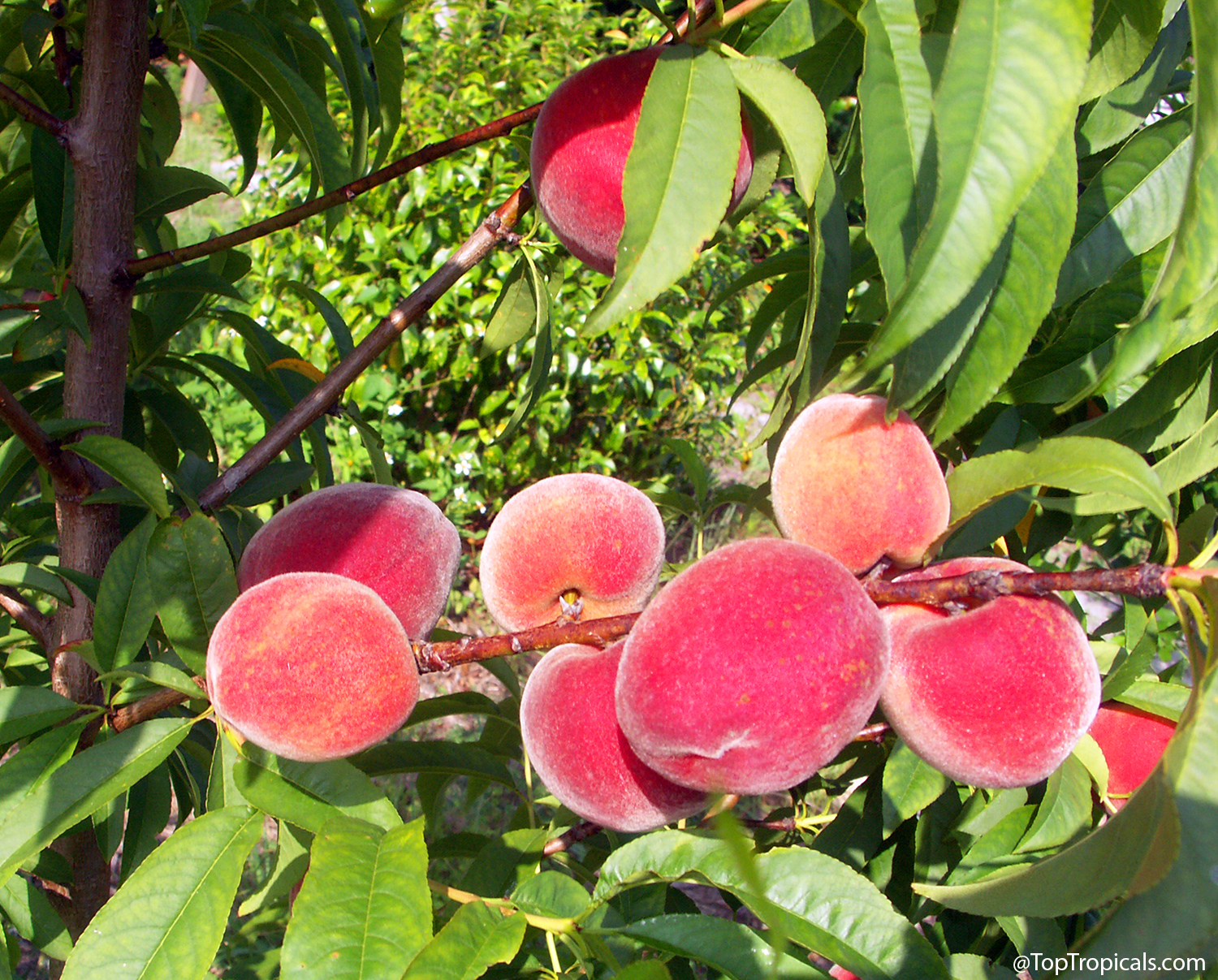
Tree-ripened Tropic Beauty peaches warming in the sun - fuzzy,
colorful,
and almost ready to pick straight from the branch.
Tropic
Beauty variety is one of the most colorful and sweet.
📚 More about Tropic Beauty Peach
🛒 Shop Low-Chill Peach trees
Sunshine’s
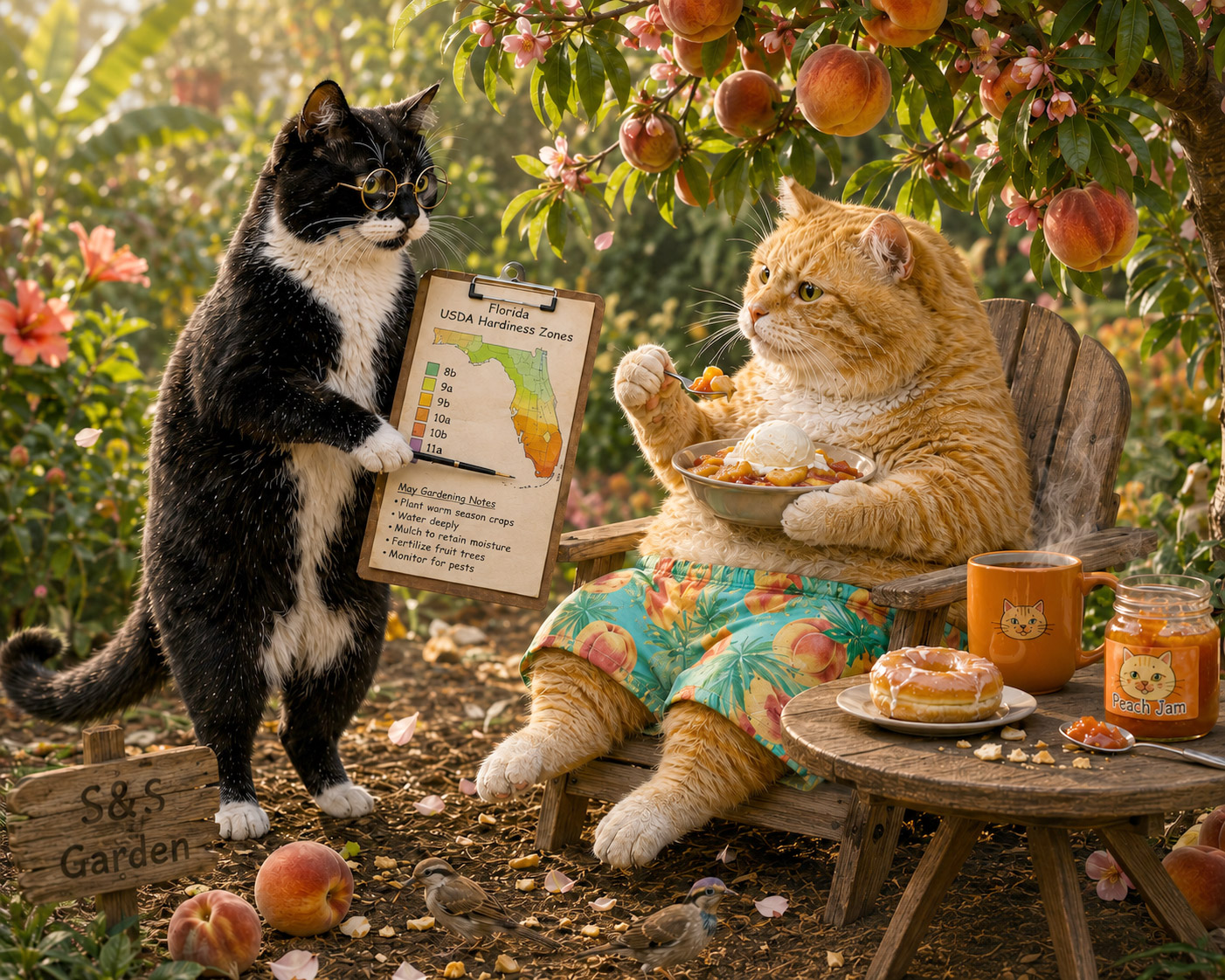
Philosophy: Lazy Peach Sundae 😺
Sunshine absolutely loves peach cobbler, especially when someone else
does all the peeling, slicing, mixing, and baking. But when he is left to
prepare dessert on his own, his standards become much more practical. Why
turn on
the oven when perfectly ripe peaches already taste amazing? His
philosophy
is simple: if a recipe takes less than five minutes and ends with peaches
and vanilla ice cream in the same bowl, it is a masterpiece.
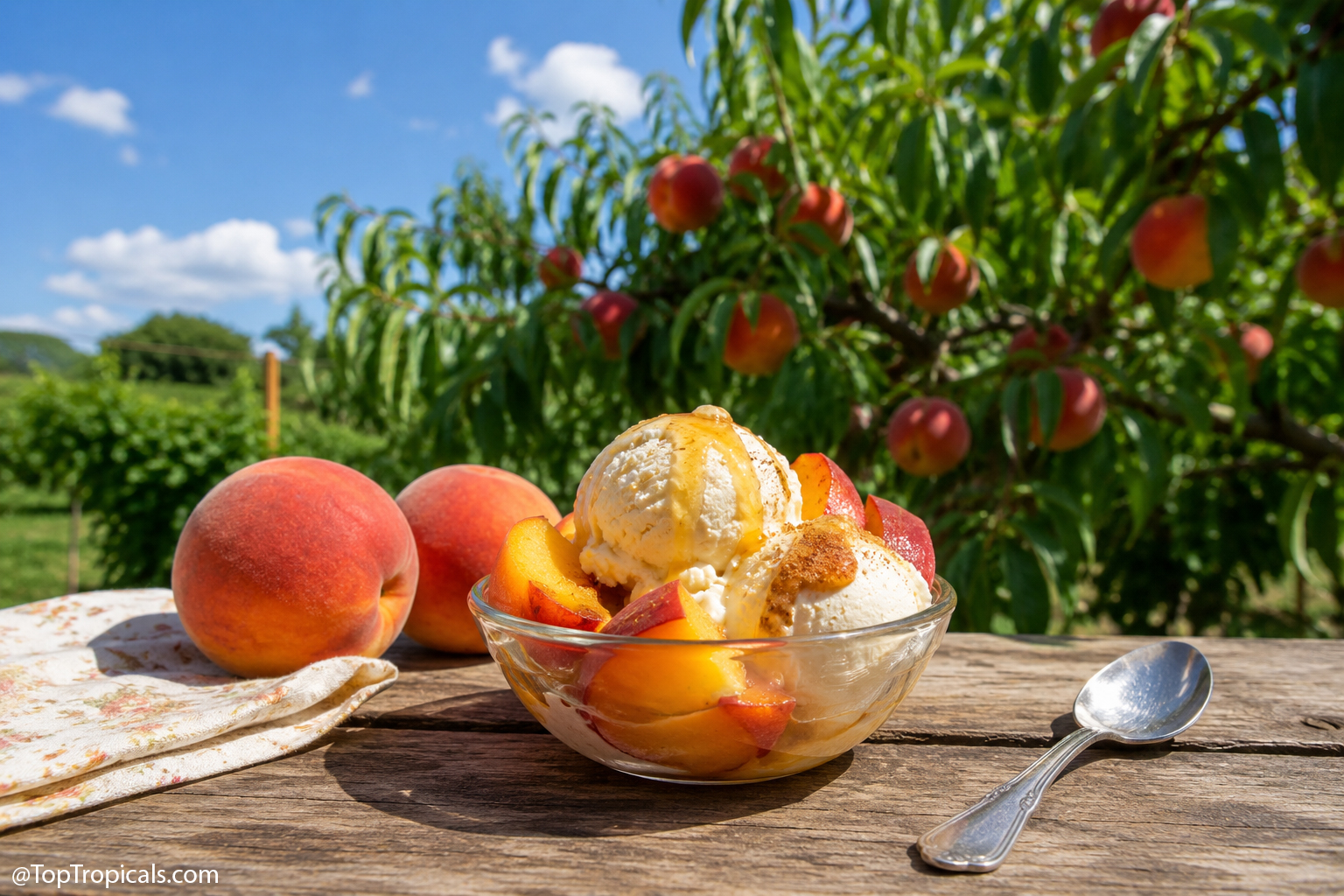
Sunshine's Lazy Peach Sundae - fresh peaches, cold ice cream, and zero
effort on a perfect sunny day.
Sunshine's Lazy Peach Sundae
This is not cooking. This is assembly.
Ingredients
- 2 ripe homegrown peaches
- 2 big scoops of vanilla ice cream
- A drizzle of honey (optional)
- A pinch of cinnamon (optional)
Instructions
- Slice the peaches.
- Put them in a bowl.
- Add vanilla ice cream.
- Drizzle with honey and sprinkle with cinnamon if you feel
ambitious.
- Eat immediately while smiling.
Sunshine's Review
"I peeled exactly nothing and still got dessert. This is my kind of
gardening."
Want this?
Start with a low-chill peach tree. That is usually how it begins.
🛒 Plant your own Peach tree