Garden Blog - Top Tropicals

Date: 24 Jun 2018

TopTropicals

Multi-grafted "fruit cocktail" trees

Q: We love your website and products. Do you have mango trees with different types grafted on one? We live in Hawaii and have space for an interesting mango.

A: Here is the truth about multi-grafted mangos. It is the same issue as with multi-grafted citrus (so-called "fruit cocktail trees"). In most cases, multi-grafted fruit trees look beautiful and healthy for the first couple years if that long. What happens next - the most vigorous variety will take over others and eventually all other grafts will die off or those branches stay retarded without sufficient production. There is a solution though, if you have limited space and still want to have several varieties to enjoy. Plant 2-3-4 desired varieties into 1 hole! Of course production of each tree will reduce due to the crowded situation, but overall crop will be as much as from one big tree. And you will have all kinds of tastes to enjoy! Very often trunks of such trees grow in together, but because of having separate root systems, all trees will remain equally strong and vigorous.

Check out our Mango varieties.

Date: 24 Jun 2018

TopTropicals

Mysterious Night Blooming Cactus - Epiphyllum. How to grow it?

Q: My friend has a huge Queen of the Night Cactus, and the blooms are so gorgeeous! She gave me a cutting but I am not sure how do I plant it? How long will it take till it starts blooming? Is it true that it has only one flower once a year and only at night?

A: Queen of the Night is a very popular and yet mysterious plant. The flowers open once a year after sunset for one night. However the flowering period can last a month or two during the warm season. So each flower lasts only one night, but there will be more flowers to come! In the Nature, Epiphyllum oxypetalum - Queen of the Night - grows on trees in the jungles of Central and South America. It is actually very easy to grow as an indoor plant in colder climates. Here is South Florida we grow them outside in hanging baskets. This is how to start Queen of the Night from a cutting:
1) Put the cutting in a dim, dry place for three days, with no soil and its base exposed to the air, so it will form a callus.
2) Fill a 4-6-inch pot with slightly damp potting soil or succulent mix. Insert the cutting 1 or 2 inches into the soil and tamp the soil around its base.
3) Place the pot where the cutting will get bright light, but no direct sun. Spritz it occasionally with a spray bottle of water to keep the soil only slightly moist. It should root in couple weeks.
4) Keep the plant on an east- or west-facing windowsill where it will receive direct sunlight only in early morning or late afternoon. Water the cactus until water runs out of the pot's drainage holes. Dump the excess out of the pot's saucer immediately, and wait until the surface of the soil is dry to the touch before watering your cactus again.
5) Fertilize once a month from March through October with a balanced plant food, and apply micro-elements once a month for a healthy vigorous growth. Refrain from feeding the plant in December and January.
6) Position the cactus in partial shade under a porch roof or tree, if you decide to move it outdoors during the summer. This plant likes summer humidity!
7) Repot the cactus only once every two years or so, to keep it slightly root bound. Wait until after it flowers in summer, and repot it after it blooms. Prune off any damaged growth at that time as well.
8) Move the plant to a cooler room over the winter months, one that remains dark during the evening hours with temperatures above 45 degrees. Reduce the frequency of watering, waiting until its soil is dry. Resume regular watering in March.

If grown from cutting, it may take 2-3 years until the plant starts blooming, so if you don't want to wait that long - just get a blooming size plant from our store!

We only have a few plants... if sold out, add to wish list and we will have more soon!

Date: 12 Jul 2022

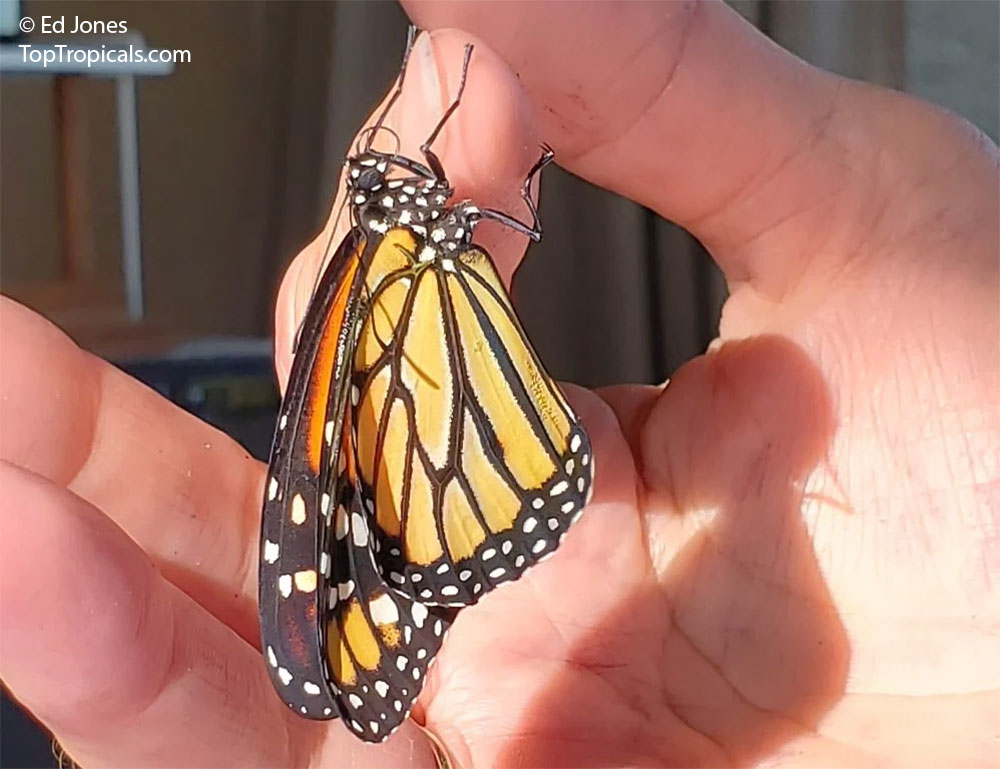
The Milkweed and the Monarch, how to raise your own

Monarch  butterfly

by Ed Jones, the Booster Guy

...How to attract butterflies in your garden? What plants do butterflies love? How to grow those plants when butterfly larvae keep eating them?...
Many gardeners ask these questions and butterfly attracting plants always have been very popular. But did you know that you could actually turn your garden into a little butterfly farm?...
Find out from Ed and Juvonda's butterfly mini-farm experience!
CONTINUE READING >

Monarch  butterfly  on  the  hand

See full list of butterfly attractors

Date: 19 May 2022

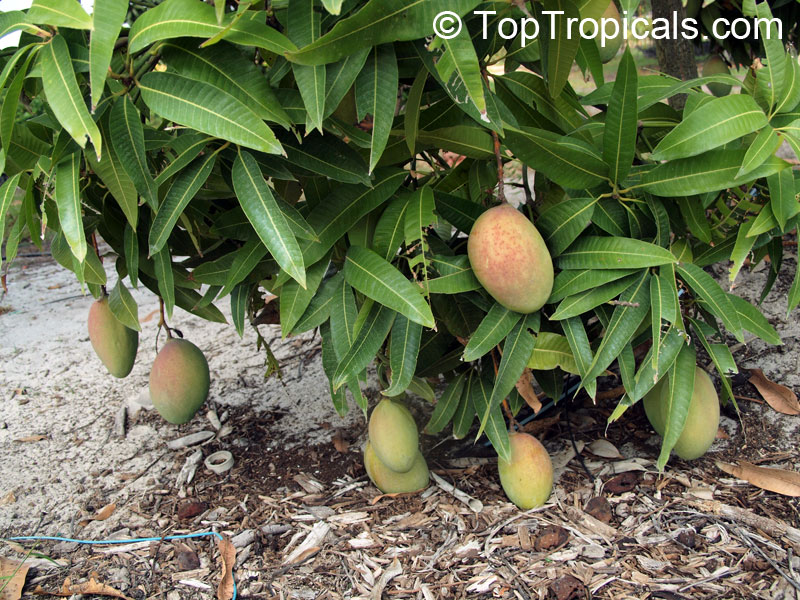
Top Story: The little mango tree that could

Mango  Tree

By Ed Jones, the Mango Guy

"...Until you dig a hole, you plant a tree, you water it and make it survive, you haven't done a thing. You are just talking..."
- Wangari Maathai -

This is the story of the little mango tree that could. From the beginning, it has been a fighter and has come through its latest battle with a few scars, but it is still going...
...On January 30, the unthinkable happened. Cold weather was coming. We had a low of under 25F on that Sunday morning...
...Then, on April 4, 2022 we had a very bad hail storm... Hail stones up to 3"fell for 20 minutes...
Learn more about what happened and see this mango tree today... What helped it to survive and also what will help it to grow back into a beautiful tree?

For information on how to shape your mango trees, see

How to shape mango

Subscribe to our Channel:

Stay updated with TopTropicals Videos by subscribing to our channel at YouTube.com/TopTropicals and get our latest video news of what is fruiting and blooming!


REAL DEALS:
More specials
with instant 30% OFF!

Real  Deal  PeopleCats

Date: 20 Oct 2025

11 tropical fruits to eat instead of taking a fiber supplement

Tropical fruits to eat instead of taking a fiber supplement

Tropical fruits to eat instead of taking a fiber supplement

🍑 11 tropical fruits to eat instead of taking a fiber supplement

  • When we think of tropical fruit, we picture sweetness, sunshine, and exotic flavors packed with vitamin C. But beneath all that juicy goodness lies another gift: dietary fiber - quietly working to support digestion, feed the gut microbiome, and help keep blood sugar steady.
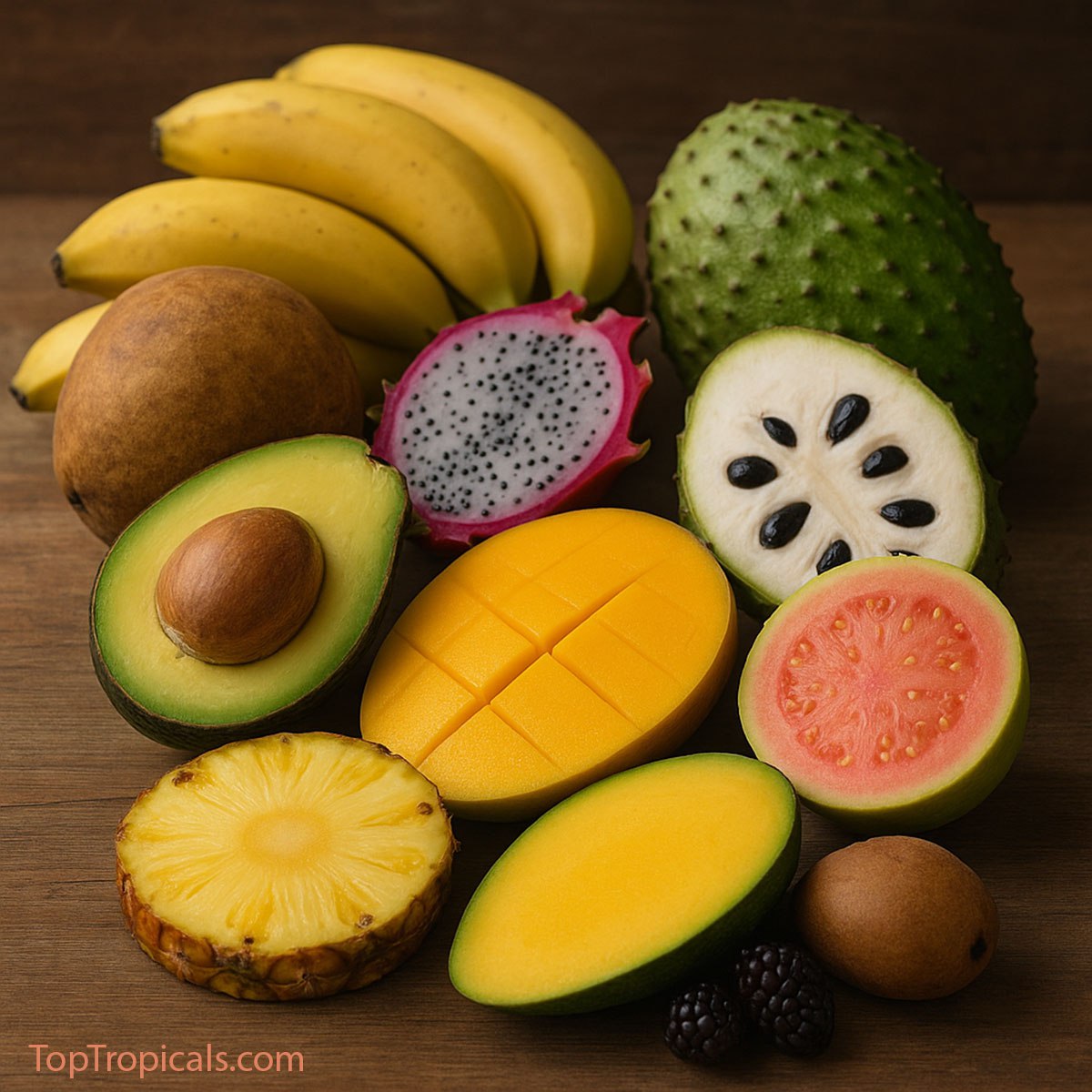
  • Avocado leads the pack among tropical fruits for fiber content. One creamy, ripe fruit can provide around 10 grams of fiber, roughly a third of an adult’s daily need. And there’s more to avocado than fiber - it’s also rich in healthy fats, micronutrients, and that silky texture everyone loves.
  • Other tropical fruits bring their own kind of fiber strength. Guava delivers up to 9 grams per cup, plus a burst of vitamin C.
  • Mango offers about 3 grams in half a fruit, especially when eaten with some of the skin.
  • Pineapple, though not always seen as a fiber powerhouse, still contributes around 2 grams per cup, along with bromelain, the enzyme that helps digestion.
  • Jackfruit’s fibrous pulp makes it another standout - it’s so meaty, it’s even used as a plant-based substitute in savory dishes.
  • Sapote fruit (Mamey, Canistel) and Sapodilla add fiber with a smooth, custard-like texture.
  • Adventurous tropical varieties like Annona (custard apple, soursop) may not top the charts in fiber numbers, but their soft, fibrous flesh still adds value: about 1.3 grams of fiber per 100 grams of fruit.
  • Bananas contain both soluble and insoluble fiber; the soluble part (mainly pectin) helps control blood sugar and appetite, while the insoluble fiber aids regularity.
  • Mulberries are rich in insoluble fiber, especially in their skin, supporting digestion and promoting healthy bowel movements.
  • Dragon fruit offers a mix of soluble fiber in its juicy flesh and insoluble fiber from its tiny edible seeds, which help support gut health and feed good bacteria.

These fruits aren’t just delicious - they help you meet your daily fiber needs in ways that are far more enjoyable (and sustainable) than taking supplements. And when home gardeners, farmers, or tropical communities grow and share them, it’s a double win: nutrition and tradition hand in hand.

✔️ Tropical fiber power: tips for getting more fiber from tropical fruits

  • ⏺Eat whole, not juiced. Most of the fiber is in the pulp, skin, and seeds. Juicing removes much of that goodness.
  • ⏺Mix it up. Tropical fruits are great, but balance them with legumes, whole grains, nuts, and veggies for a full fiber range.
  • ⏺Take it slow. If your diet is low in fiber, increase gradually to avoid bloating or discomfort.
  • ⏺Drink plenty of water. Fiber works best when paired with hydration.
  • ⏺Mind the ripeness. Unripe fruits can have more resistant starch, another form of fiber.
  • ⏺Get creative. Toss tropical fruits into smoothies, salsas, breakfast bowls, or even desserts - a tasty stealth-fiber strategy.


🛒 Plant a fruit tree to harvest your fruit tomorrow

📚 Learn more:


Tropical fruit health benefits guide - what fruit and edibles can help with health issues and vitamin deficiencies, Part 1 and Part 2.

#Food_Forest #Remedies #Discover #How_to

🟢 Join 👉 TopTropicals