Q:
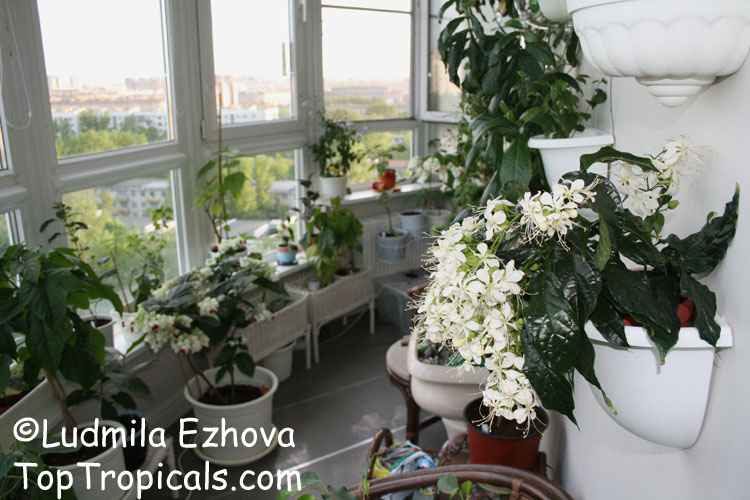
My rainforest plant collection thrived outdoors in our
humid summer (I live in Maryland) but of course I had to
bring them indoors for winter and now with snow outside
they are suffering. Some leaves dried and fell of. Please
advise how not to lose my babies over winter!
A:
When overwintering tropical plants indoors, think about 3
factors: light, temperature, and humidity. Light. Providing bright light is obvious, and all
indoor gardeners are doing their best to have as much
well-lit spots for their plants as possible. TemperatureTropical plants, especially those from
rainforest, do not enjoy significant fluctuations in
temperature, so avoid following places: - neat hear
register (or air conditioning vent) - in drafts - on a
windowsill behind curtains at night Humidity. Most tropical plants need more humidity
than is available in the average, centrally heated home,
but some rooms, such as bathrooms and kitchens, are more
humid than others. To created humidity, fill a tray that
is the same width as a plant, with pebbles or gravel. Pour
in water, keeping the level at just below the top of the
pebbles, then place your plant on top. The water will
produce humidity as it evaporates. Alternatively, mist the
leaves using a hand mister in the morning, so leaves dry
before night. If you have hard water, use distilled or
rain water. Grouping plants together will also increase
humidity.
Date: 24 Jun 2018
When should you start growing plants from seed indoors?
"Happiness held is the seed; Happiness shared is
the flower."(John Harrigan.)
Q:
Our growing season is very short so I decided to start
some of tropicals from seed indoors. When should I start?
A:
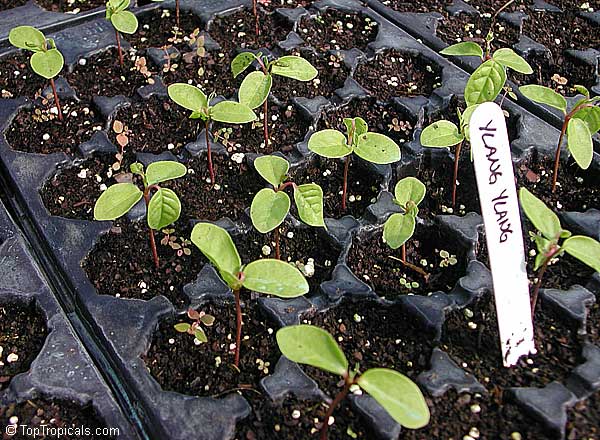
It is always a good time to start from seed. If you want
to feel happier, get into gardening. If you want to feel
God, start plants from seeds and watch New Life grow from
a tiny grain.
Traditionally, people prefer sowing seeds in Spring,
especially temperate species for vegetable garden:
tomatoes, peppers, cucumbers... My grandmother up North
started them in early Spring in small pots on a
windowsill, then once the temperatures raised just above
freezing, she planted them out in garden beds, and that
early start always helped her to have the best early
harvest in the neighborhood.
When we deal with tropical plants, "just above freezing"
is not warm enough. Which means, you have to grow small
babies indoors for quite a while, providing additional
heating when needed. Heating pads always work best... When
we had large size monitors and TV's, I always put couple
trays on top of hot monitors, and even on warm top of a
refrigerator, if space by the radiator was all taken. But
that was in very cold apartment...
If you keep your living space around 75F (ideal for many
species), this is a perfect temperature to get your seeds
started. Tropical plants are not like annual tomatoes that
try to grow through the season as fast as possible. They
may take time. So the sooner you start, the more chances
to get small seedlings just in time when Spring air
outside is warm enough - at least in 70's.
A great advantage of starting tropical seeds indoors is
controlled temperature and moisture. In the plant world,
environment extremes are not good for germination process.
Mild conditions of your home or a greenhouse create better
chances for successful growth. Seeds won't get overheated
in hot Summer sun, and won't get rotten because of a
sudden heavy rain. Just keep in mind that some species
require light for good germination.
Conditions for the best seed germination:
- Soak seeds for a few hours. Adding a few drops of Sunshine Seed Germination booster
is very beneficial and improves germination rate by 30-50%
- Well-drained mix, you may use our Professional Seed Germination Mix.
Put seeds not too deep (1/2 inch deep or less) to allow
air circulation
- Keep warm (75-85F) and in bright light
- Keep soil slightly moist but not soggy.
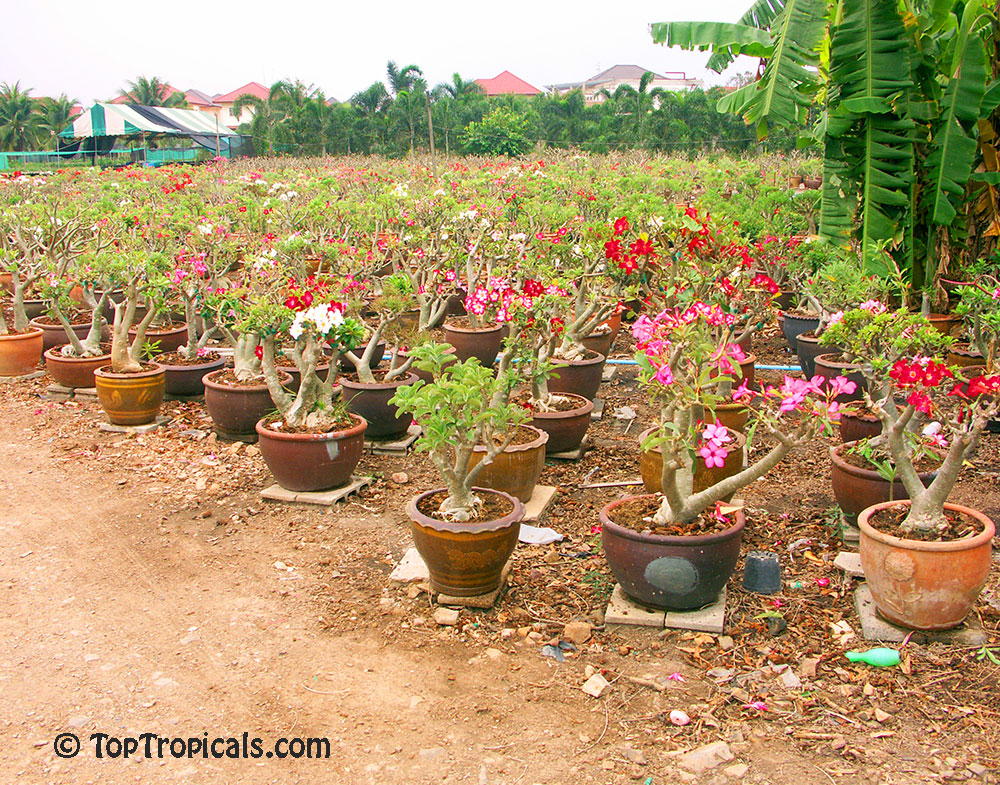
1) Adenium plants- from TopTropicals Endless selection of
Adeniums. We have double flower, red, purple, yellow
and even black flowers! 2) A small pot with excellent drainage is a must.
Position the plant in a pot, size of root system. 3) Adenium soil mix. TopTropicals Adenium Soilless Mix.
Use only well-drained soil. 4) Lots of light. Adeniums need lots of light for
heavy flowering. However from our own experience, in super
hot climates, they look healthier in filtered bright
light. After initial planting, once the plant is
established and starts growing new leaves (may take a few
weeks), gradually move it into brighter light. 5) Little water. Adeniums like a neutral to hard
water. Acidic water tends to sour the soil too fast and
may cause root rot. Water plants preferably in the early
morning, and allow them to drink up throughout the day.
Watering can be done daily to every few days. Do not water
again until soil dries on surface. Never allow your plants
to sit in a saucer of water, but don't let them to dry out
too often - this causes adeniums to go into early
dormancy. Adeniums do not like both over-watering or
drying-out. 6) Fertilizer. To make your plant develop a large
swollen base/trunk, you'll need a good quality fertilizer.
Use slow-release granulated fertilizer
for overall plant health, and liquid water soluble
fertilizer for swelling up trunks that is also used to
increase flowering. It shouldn't be too high in nitrogen,
the middle number should be the highest (similar to
10-50-10). Never apply fertilizer directly on roots and do
not liquid feed when a plant is thirsty: always water
first slightly to avoid root burn and leaf drop. Do not
wet leaves. 7) SuperFood micro-elements. Besides
macro-nutrients provided by fertilizer, Adenium needs
micro-elements for balanced development of root system and
especially caudex: Sunshine-SuperFood. 8) SUNSHINE-BC. Spray leaves with SUNSHINE-BC once a month to
encourage young growth, profuse flowering and large
caudex. 9) Growing caudex. There is a secret how to create
a large swollen caudex: raise the plant a bit every time
you re-pot it, so that the upper part of roots will be a
little exposed. The plant will form more roots that will
go down.
Plant Horoscope. Gemini Zodiac lucky plants: Ferns and Aralias
Gemini
- 5/21-6/20. Ruled by the mutable, changeable
planet Mercury (also patron of the art of medicine),
Gemini is an AIR sign. Plants ruled by Mercury tend to
have ferny or highly-divided leaves or stems (like the
bronchi of lungs), hairy or fuzzy leaves (related to the
cilia in the lungs), or subtle odors.
Gemini rules the lungs, shoulders, arms, and hands. Its
plants help to strengthen the lungs and respiratory
system, relax the nervous system, strengthen ears and
hearing, the tongue and speaking, the vocal cords, lungs
and thyroid, as well as the shoulders, arms, and hands.
Gemini has so much going on mentally that they may need a
little help to digest all the information they're
constantly absorbing. Herbs that have clean, pure flavor
not only help physical digestion, but assist spiritual and
mental intake as well.
9 tropical vegetables to grow indoors, or how to have garden-fresh produce all year
9 tropical vegetables to grow indoors
🌱 9 tropical vegetables to grow indoors, or how to have garden-fresh produce all year
Cold weather does not have to mean the end of homegrown food. According to Southern Living, vegetables like lettuce, carrots, and radishes can be grown indoors during winter. The downside is that most of these are annuals - you harvest once, then start over.
Tropical vegetables work differently. Many are perennial, long-living plants that grow well in containers and keep producing for years. Grow them indoors year-round, move them outside in summer for extra sun and growth, then bring them back indoors before cold weather. With enough light and regular care, these plants can provide fresh harvests in every season.
✅ Tips for growing tropical vegetables indoors
📍Place plants near a bright window or supplement with grow lights for steady growth 📍Use containers with good drainage and quality potting mix 📍Keep plants away from cold drafts and heating vents 📍Rotate pots and prune regularly to encourage fresh, tender growth 📍Feed regularly with natural Sunshine Boosters - they are formulated for edibles
✅ Tropical vegetables to grow indoors
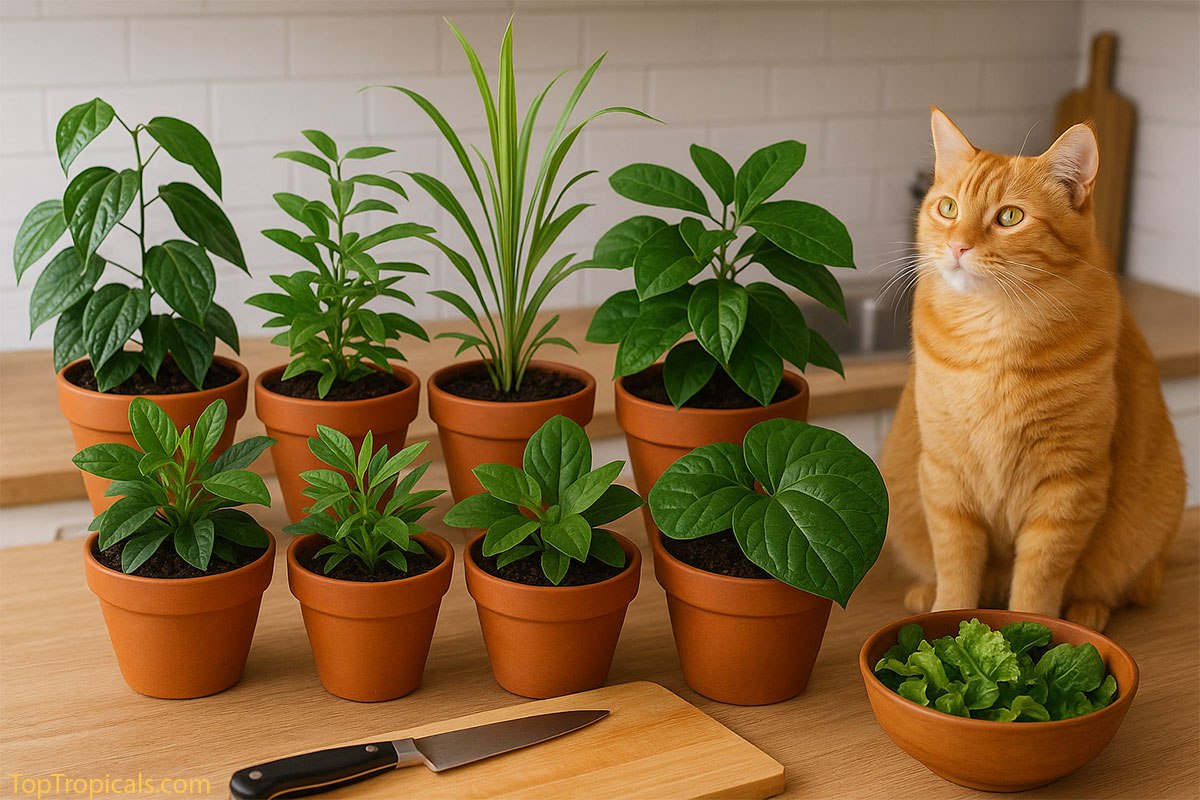
🌿 Gynura procubens - Longevity Spinach, Cholesterol spinach - a fast-growing leafy green often called a superfood. The tender leaves are used fresh or lightly cooked and can be harvested repeatedly. This plant stays compact, handles containers easily, and regrows quickly after cutting.
🌿 Sauropus androgynus - Katuk, Tropical Asparagus. One of Southeast Asia’s most popular leafy vegetables. Katuk produces edible shoots and leaves that are cooked in soups and stews. It grows well indoors and rewards regular harvesting with constant new growth.
🌿 Cymbopogon citratus - Lemon grass: a tough, productive plant that adapts well to container growing. The stalks and leaves are used for teas, soups, and flavoring. Indoors, it grows more slowly but stays productive, especially when moved outdoors in summer.
🌿 Lippia dulcis - Aztec Sweet Herb, Sweetleaf: a low-growing herb with naturally sweet leaves. The foliage can be eaten fresh or used as a sugar substitute in teas and desserts. It stays compact, tolerates pruning, and performs well in pots indoors.
🌿Piper sarmentosum - Vietnamese Pepper, Lalot: grown for its aromatic, edible leaves rather than peppercorns. The leaves are eaten fresh, cooked, or used as food wraps. This plant stays manageable indoors with light pruning.
🌿Piper nigrum - Black Pepper: the true black pepper vine. Grows well indoors as a container vine with support. It prefers warm temperatures, steady moisture, and bright filtered light.
🌿 Piper auritum - Root Beer Plant, False Kava-Kava: close relative of Piper methysticum (Kava-Kava) known for its large, fragrant leaves with a spicy, root beer-like aroma. The leaves are used for wrapping foods and flavoring dishes. Best grown indoors with room for its bold foliage.
🌿 Piper betle - Betel leaf: a traditional edible and medicinal leaf used widely in Asia. The glossy leaves are harvested continuously and used fresh or as wraps. This vine grows well indoors with warmth, humidity, and a small trellis.
🌿Piper longum - Indian Long Pepper, Pippali, Bengal Pepper: A tropical pepper relative grown for its elongated spice fruits and edible leaves. Slower to fruit indoors but easy to maintain as a leafy spice plant in containers with bright light and regular feeding.
Tropical vegetables make indoor gardening more rewarding because they do not stop after one harvest. With containers, light, and basic care, these plants can become long-term food producers that move seamlessly between indoors and outdoors - keeping fresh flavors within reach all year.