Date: 27 Jun 2018
TROPICAL GARDENING: How to grow Brugmansia (Angel Trumpet) in the ground outside.
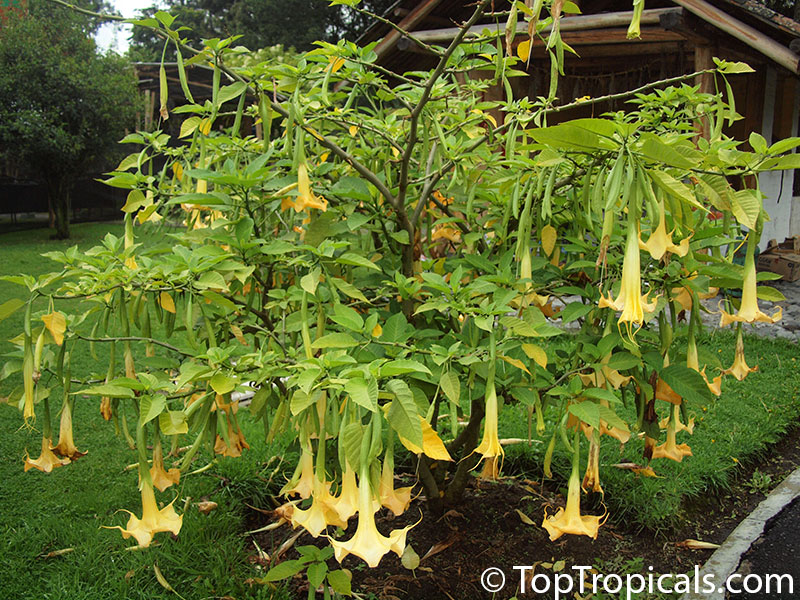
Q: I recently moved from New Jersey to Florida and I brought with me my Brugmansia that I used to have as a house plant. Can I plant it in the ground now?
A: Angel Trumpet - Brugmansia - is a very popular container plant
valued for its large, stunning fragrant flowers. Originated from South
America, it will be happy to grow in tropical to subtropical climate outdoors.
These are a few useful tips to get the most out of this beautiful plant:
1) Light. Plant it in full sun - the more sun, the more flowers
you get, although Brugmansias tolerate shade. If the plant was previously
grown in container indoors, to avoid leaf burn, keep it protected with a shade
cloth or simply white sheet for a while and gradually open to adjust to full
sun.
2) Soil and fertilizer. Use fertile soil with lots of organic
matter (add compost to existing soil). It must be very well drained, Angel
Trumpet won't tolerate waterlogged conditions. Plant it on a little "hill"
elevated 3-4"above the surrounding area. Brugmansias are very heavy feeders. Once
the plant is established, fertilize on regular basis with Slow Release Fertilizer - a handful once a
month.
3) Water. Water daily until established. Once the root system is
well developed, the plant is drought tolerant and won't require too much
care. But at the beginning, watch the leaves - the lush foliage droops quickly
if the plant is thirsty.
4) Plan space. Brugmansia is a short tree, but it needs a lot of
room to spread branches with its heavy hanging flowers. Think 12" wide and
maybe almost as much tall.
5) Support. Being widespread plant, Brugmansia can be blown with
strong winds. Stake with strong support until established.
6) Propagation. Brugmansia is one of the few plants that
propagates with semi-woody cuttings; soft green cuttings usually have little
success. Other than that, it is pretty easy!
Check out our Brugmansia collection
Date: 24 Jun 2018
Varieties of Guava
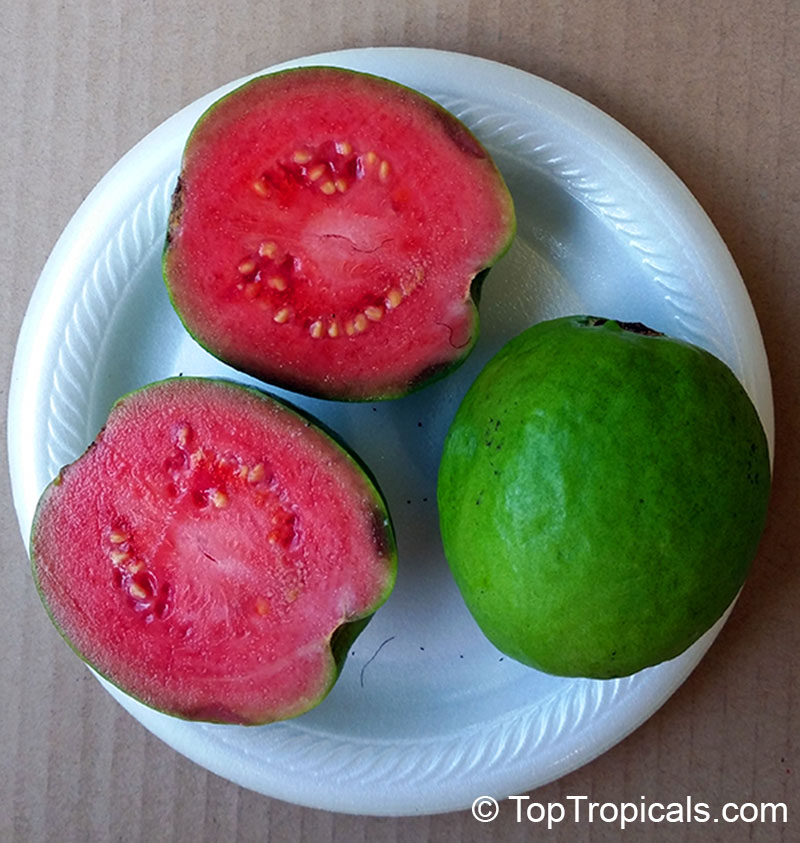
Q: We were just in Australia where guava juice was available in the markets. Pretty sure I can grow different varieties of Guava's here, as I have 3 already, but wondering if it would be psidium guajava or littorale as the best bet for making the pink juice we enjoyed. Thanks so much, your plants are so healthy when they arrive!
A: Both species are used for commercial juice making. We grow lots of Psidium littorale - Cattley Guava, Strawberry Guava - and we make delicious juice. Psidium guajava - Tropical Guava, Guajava - is less juicy, fruit is somewhat dry, but it still has a great flavor; you may need to add water to blended pulp. And sugar - add it to both kinds of fruit!
Check out our Guavas
Date: 31 Jul 2025
Anthurium Collector Set
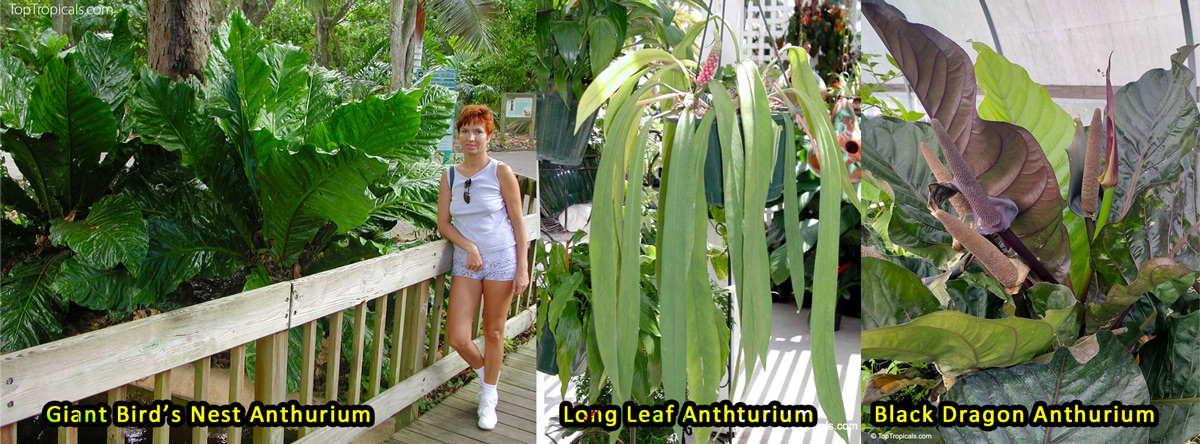
These aren't your typical tropicals - they're collector-grade Anthuriums grown for foliage and texture. Each one brings something different, but they all thrive in the same kind of setting: shade or filtered light, warmth, and humidity. Perfect for growing in containers indoors or out.
 Anthurium Black Dragon
This is the most dramatic of the trio. Upright, leathery leaves shift from dark green to nearly black depending on light. Instead of bright flowers, it produces a dark brown spadix and glowing red berries. A hybrid not found in the wild, it's grown from seed - no two are exactly alike.
- Best for: Indoor focal plant, shaded patio, black ceramic pot
- Height: 2–4 ft in container
- Texture: Thick, architectural leaves
- Highlight: Color shifts with light intensity
Read more about Black Dragon Anthurium
 Anthurium hookeri – Giant Bird's
Nest
Anthurium hookeri – Giant Bird's
Nest
This one's about scale. Broad, crinkled leaves with a cardboard-like texture form a bold rosette. It can get huge with time - up to 6 feet across. Perfect for gardeners who want the "instant jungle" look.
- Best for: Shaded garden, large pots on porches
- Height: Up to 5 ft; width even more
- Texture: Wrinkled and leathery
- Highlight: Bright red berries in maturity
Buy Giant Bird's Nest Anthurium
Read more about Giant Bird's Nest Anthurium
 Anthurium vittariifolium – Long
Leaf Anthurium
Anthurium vittariifolium – Long
Leaf Anthurium
Graceful and rare, this species sends out narrow strap-like leaves that can reach 5–6 ft long. Ideal for hanging baskets or mounting. Bonus: it produces small pink fruit against deep green foliage.
- Best for: Hanging displays, vertical planters, bright bathrooms
- Height: Leaf length, not upright height - up to 6 ft
- Texture: Smooth, ribbon-like
- Highlight: Cascading growth and color contrast
Read more about Long Leaf Anthurium
✅ How to Care for Anthuriums
- Light: Bright, indirect light is best. Avoid direct sun, especially mid-day. These plants evolved in rainforest understory - think "dappled light under trees."
- Water: Keep the soil lightly moist but not soggy. Let the top inch dry before watering. They hate wet feet.
- Humidity: These are tropicals - they'll do fine in 50-60% humidity, but thrive at 70%+. Use pebble trays or place near other plants. Bathrooms with windows work great.
- Soil: Use an airy mix: orchid bark + perlite + peat or coco coir. Drainage is key. Never use plain potting soil.
- Fertilizer: Feed with SUNSHINE Robusta every 2–4 weeks during warm seasons. It's formulated for aroids and won't burn roots.
- Potting: Use shallow, wide containers. Repot only every 2–3 years, or when roots crowd the pot. They don't like frequent disruption.
- Temperature: Ideal: 65–85 F. Short dips to the 30s F are tolerated by mature plants, but avoid cold drafts.
Date: 10 Apr 2025
Pre-hurricane season tips: how to protect your trees from winds
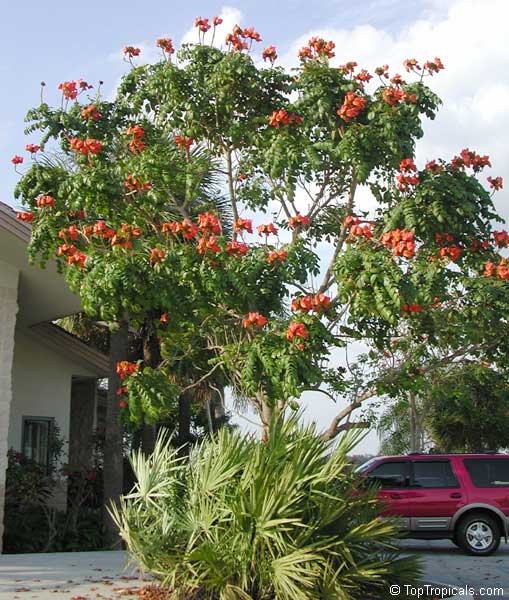
Spathodea campanulata - African Tulip Tree
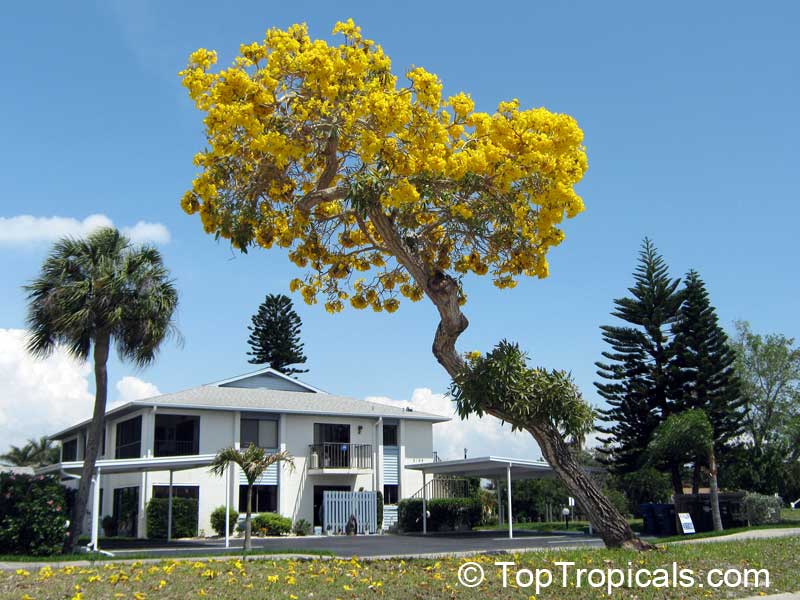
Tabebuia caraiba - Yellow trumpet tree crooked with wind
🌪 Pre-hurricane season tips: how to protect your trees from winds
Some trees like mango have deep roots and handle wind well. Others - like our favorites Spathodea campanulata - African Tulip Tree or Tabebuia caraiba - Yellow trumpet tree (in the photos) - need extra care. You've likely seen crooked Tabebuias in South Florida or lost a bushy Tulip Tree to strong winds. Their wide crowns act like sails in a storm.
💨 To help your trees withstand wind damage:
- ✅ Stake young trees with strong support - use a tripod-style setup (three bamboo sticks or boards secured around the tree for balance from all sides)
- ✅ Check and adjust supports every 6 months
- ✅ Trim long or rubbing branches - they break first
- ✅ Add extra support if a storm is coming (larger trees benefit from sturdy tripod-style bracing with boards)
- ✅ Lighten bushy growth, less sail = more survival
💡 Some remove all leaves from plumeria before a hurricane - it works!
💡 We pruned our Tulip Tree and Ceiba - and they withstood Hurricane Milton while others fell
- ✅ If a tree falls, stand it up ASAP and support it. Trim broken branches - they’ll remind you what needed pruning before, not after!
- ✅ Trees protected young, grow strong for life.
🛒 Grab your beautiful Tulip Tree and Tabebuia Tree today - support them early for strength and beauty later!
📚 Learn more:
Everyone loves these tulips growing on a tree
#How_to #Trees #Discover
🔴 Join 👉 TopTropicals
Date: 24 Jul 2023
Easy,
stress-free plants
for Summer planting
Q: With the rising temperatures, I'm concerned about shipping my plants safely. Can they withstand the heat during transit? Also, is it okay to plant them in the ground now, or should I wait for cooler Fall weather?
A: Your concern about shipping plants in hot weather is valid. For sensitive plants, we'll delay shipping until conditions are more favorable in your area. However, there are plenty of heat-tolerant tropical plants that handle shipping well with minimal stress. These plants adapt easily when planted during the hot summer months. Simply follow the included planting instructions, gradually acclimate them to full sun, and they should thrive.
Certain flowering tropical plants, such as Allamandas, Calliandras, Caesalpinias, Adeniums, and Clerodendrums, are excellent options for shipping and establishing during the summer. Flowering vines like Jasmines also adapt well. Consider using Sunshine Booster fertilizers to promote robust growth, they are safe to use right after planting.
Additionally, many fruit trees flourish in heat. Mangoes, Avocados, Pomegranates, Pineapples, Loquats, Eugenias - Tropical cherries, Bananas, Jackfruits, Dragon Fruit, and Olive trees are great choices for summer planting. Noni trees are hardy survivors and usually ship and grow well during the summer, in spite of their lush tropical leaves.
Feel free to check with us about the specific plant you plan to order for its suitability in summer shipping. We're here to take care of your green babies and address your year-round planting needs!
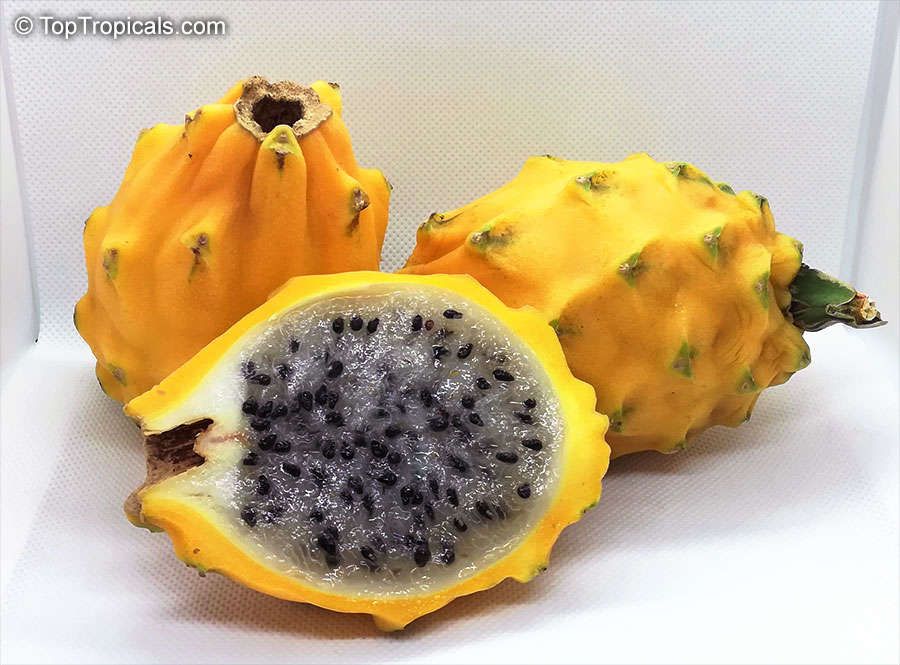
Pitaya, Yellow Dragon Fruit, Selenicereus megalanthus
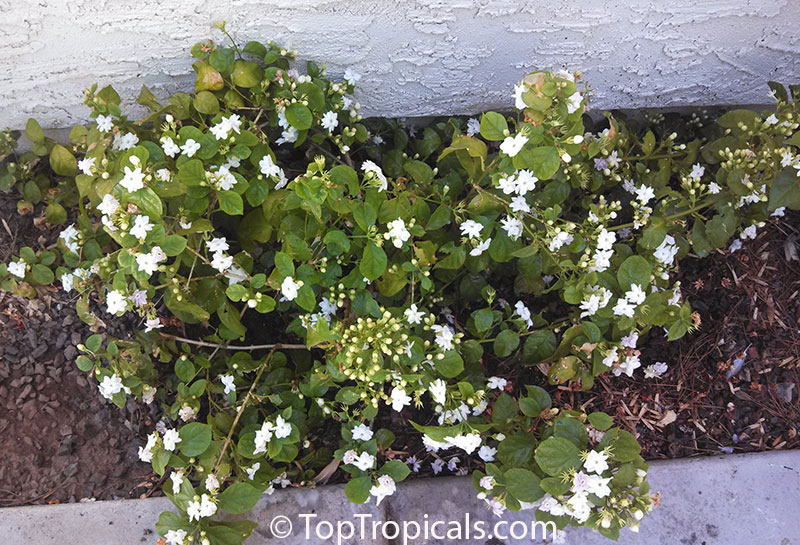
Jasminum sambac Maid of Orleans thrives and blooms in hot sun