Lunar New Year starts today - welcome the Year of the Fire Horse 2026 with Jasmines
Year of the Fire Horse 2026 with its lucky plants Jasmines
🔥 Lunar New Year starts today - welcome the Year of the Fire Horse 2026 with Jasmines
💮 One of the luckiest plants for 2026 is Jasmine. Today, February 17, 2026, the Lunar New Year begins, welcoming the energetic and passionate Year of the Fire Horse.
💮 If you’ve been feeling restless, ready for movement, or craving something fresh in your life - that’s Horse energy. This year is about action, authenticity, and doing things your way. And in Chinese tradition, certain plants help align your space with that powerful momentum.
💮 Why Jasmine is especially lucky this year
Jasmine symbolizes love, luck, and beauty - three themes closely connected to the Fire Horse’s vibrant spirit. Horses are social, expressive, and affectionate. Jasmine’s sweet fragrance supports harmony, romance, and positive energy in your home.
In Feng Shui traditions, fragrant flowering plants help soften intense Fire energy. Jasmine does exactly that - it balances passion with calm.
💮 How to use Jasmine for good fortune in 2026
· Grow jasmine near entrances or windows to invite good luck into your home · Place it in patios or garden walkways where its scent can circulate · Use jasmine oil or candles in bedrooms to enhance relaxation and romantic harmony
💮 Ready for momentum?
Ready to feel bold, inspired, and a little unstoppable? The Year of the Fire Horse moves fast - and it rewards those who move with it. Think you need more clarity, more spark, more direction? Jasmine anchors that fire with calm confidence. It keeps the passion high and the chaos low.
If you’re stepping into 2026 with purpose, don’t just make resolutions. Plant something living. Let jasmine bloom beside you - and grow into the year you’ve been waiting for.
Yes, you can grow a mango tree on your patio - here is how to do it right
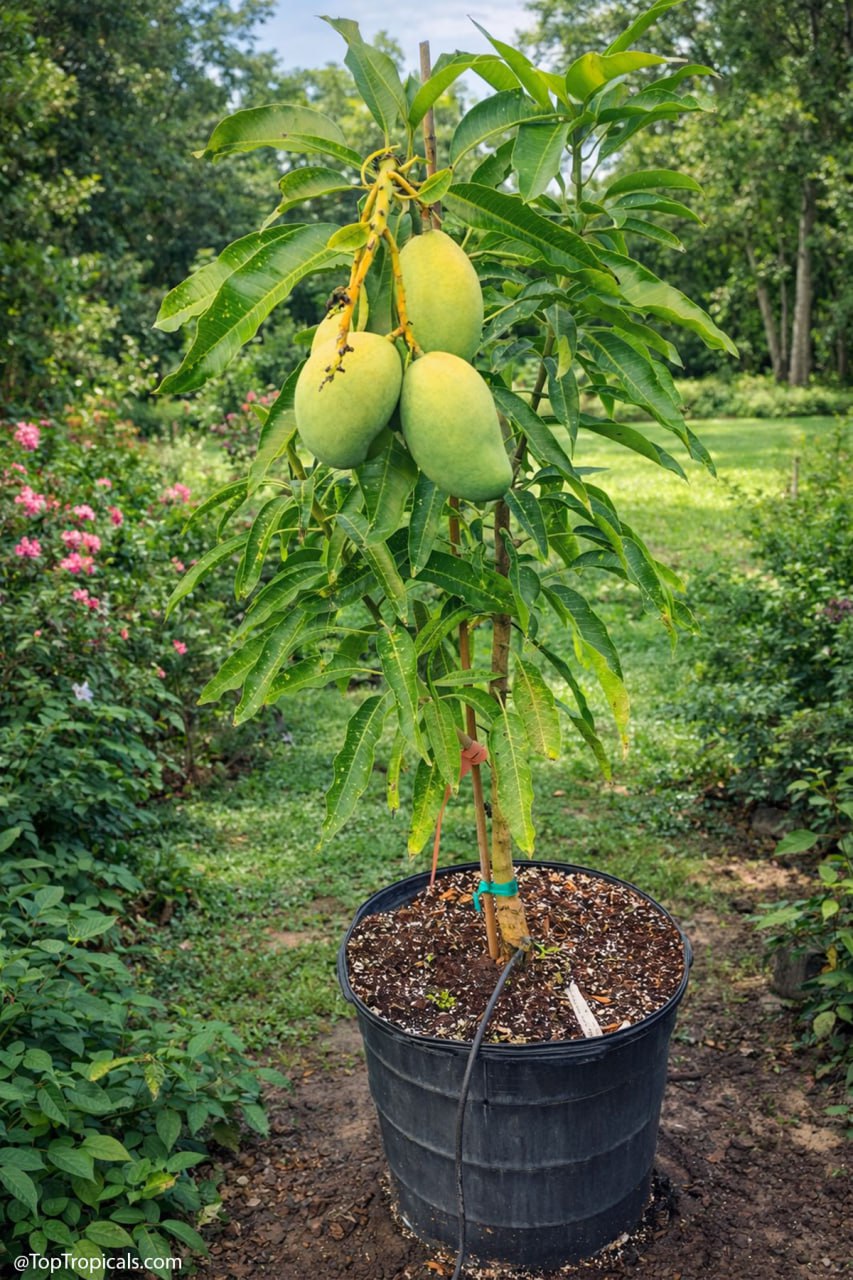
Mango fruiting in container
🥭 Yes, you can grow a container mango tree on your patio - here is how to do it right
Think you need a backyard orchard to grow mangoes? You don't. Mango trees grow very well in containers. Compact varieties, often called condo mangoes, stay naturally smaller and are well suited for pots, patios, and small yards. We grow and ship mango trees nationwide and have seen which varieties perform best in containers.
Mango Plant Facts
Botanical name: Mangifera indica Also known as: Mango
USDA Zone: 9 - 11
Highligths
Growing mangoes in pots is also practical in cooler climates. The tree can be moved to protection during cold weather while still producing real fruit. Here is how to do it right.
🥭 Pick the right condo mango tree variety
Choose condo or semi-dwarf mango varieties that stay smaller and respond well to pruning. These mango trees usually stay 6 to 10 feet tall in containers with light pruning. Fruit size is full-size, just fewer than on large trees.
Good mango choices for pots include:
· Cogshall - compact and productive
· Pickering - naturally small and reliable
· Carrie - manageable size, great flavor
· Ice Cream - slow growing, narrow canopy
· Julie - classic Caribbean type
· more condo varieties...
🥭 Choose the right pot
Start small. Young mango trees do best in a 5- to 7-gallon pot. Oversized containers too early often cause overwatering and root issues.
Increase size gradually:
First pot: 5-7 gallons
Next size: 10-15 gallons
Mature container: 20-25 gallons
The pot must drain well. Mango roots dislike wet soil. Add holes if needed. Plastic, ceramic, and fabric pots all work.
🥭 Use fast-draining soil
Mango trees need air around their roots.
Use a loose, fast-draining mix, such as Abundance Professional Soilless Mix. Improve drainage with perlite, pine bark, or coarse sand. Avoid heavy or water-holding soils. Drainage matters more than fancy ingredients.
🥭 Water carefully
Mango trees prefer a wet-dry cycle.
Water deeply, then allow the top few inches of soil to dry before watering again. Always check with your finger first.
In warm weather, water once or twice a week. In winter, much less. Overwatering is the most common container mistake.
🥭 Give plenty of sun
Mango trees love sun and heat.
Place the pot in full sun with at least 8 hours daily. More sun improves growth and flowering.
If overwintered indoors, use the brightest window possible. Grow lights help, but outdoor sun is best when weather allows.
🥭 Fertilize lightly but consistently
Potted mango trees benefit from regular feeding during active growth.
Use a balanced mango or fruit tree fertilizer such as Sunshine Mango Tango (safe to use with every watering, year-around). Controlled-release fertilizer Green Magic (every 6 months) work well too. Avoid excess feeding, which promotes leaves over flowers.
If leaves pale, check watering first, then nutrition.
🥭 Prune to stay compact
Pruning is essential for mangoes in pots.
Light tipping and trimming control size, encourage branching, and increase flowering points. Keep the canopy open and balanced. Watch how simple tipping works in real life: .
Avoid heavy pruning before flowering. Most pruning is best right after harvest.
🥭 Protect from cold
Mango trees are tropical and cold-sensitive.
When temperatures drop below 40F, move the pot to protection or indoors. Young trees are especially vulnerable.
During winter, reduce watering and stop fertilizing. Growth slows and the tree rests.
When warm weather returns, reintroduce the tree to sun gradually to prevent leaf burn.
🥭 Final thoughts
Growing a mango tree in a pot is practical and rewarding. With the right variety, good drainage, full sun, and careful watering, a potted mango can thrive and fruit for years, even in small spaces.
Ready to start? Choose a compact mango variety.
Avocado Fantastic: the hidden world beyond green and black
Avocado Fantastic fruit
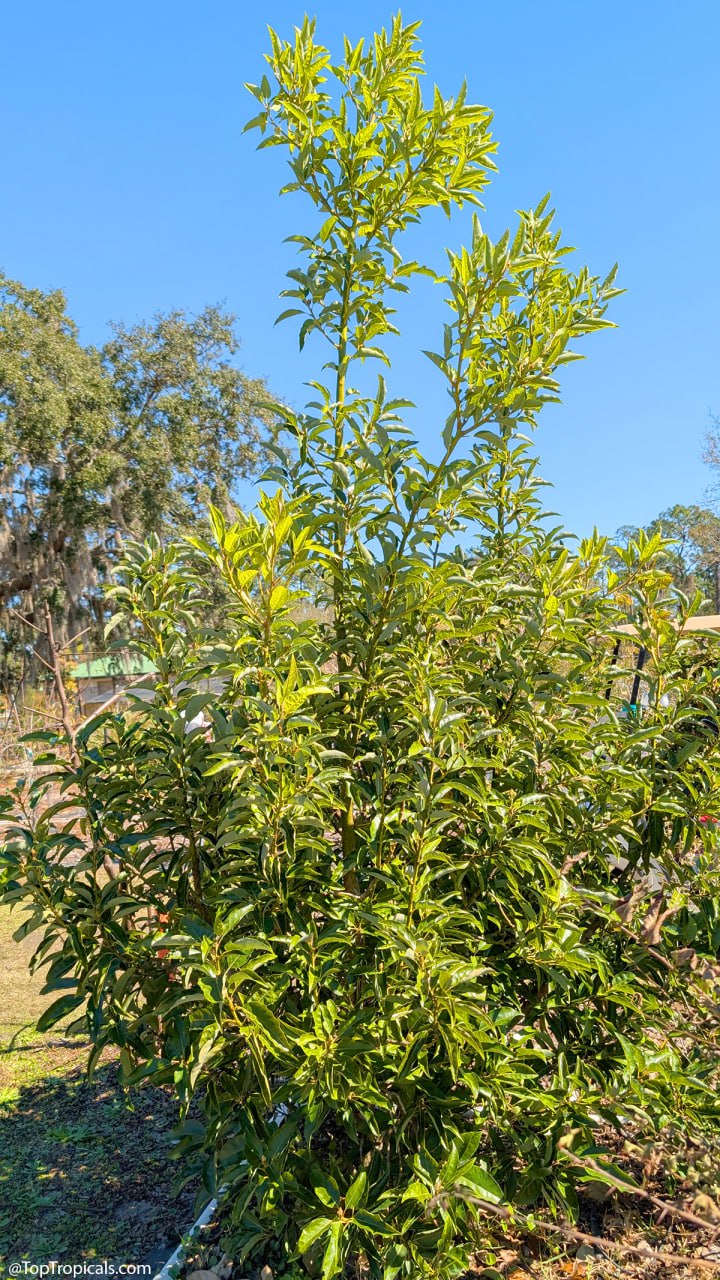
Avocado Fantastic tree
Avocado Fantastic: the hidden world beyond green and black
Most people think avocados come in two colors - green and black. Maybe they've heard of Hass. But the hidden world of avocados is far more diverse, filled with giant fruits, unusual shapes, red-skinned varieties, and even trees that can handle surprising cold.
One of the most remarkable is Fantastic.
💚 The avocado that wasn't supposed to survive
Avocados are often considered tropical and tender. Fantastic challenges that idea. This unusual variety gained a following in Texas, where it reportedly survived temperatures near 10F around San Antonio. Mature trees can tolerate temperatures around 15F for short periods, making it one of the most cold-hardy avocados available.
For gardeners in cooler regions, Fantastic has become something of a legend - proof that growing avocados is not limited to the tropics.
💚 A survivor of Florida's historic freeze
During Florida's historic February 2026 freeze, temperatures at our Sebring nursery dropped to 25F with several nights of prolonged freezing. While many tropical plants suffered damage, Fantastic came through without noticeable injury - remarkable performance for a tropical fruit tree.
💚 More than just a tough tree
Fantastic would not be worth growing if cold hardiness were its only claim to fame. Fortunately, it also produces excellent fruit.
The avocados are relatively small, typically weighing 6 to 8 ounces, with very thin green skin that darkens as the fruit matures. Inside is smooth, creamy flesh with a rich, buttery texture and pleasant nutty flavor.
The skin is so thin that many people simply cut the fruit in half and scoop it out with a spoon, or even it it with the skin. This is the kind of avocado often enjoyed fresh rather than turned into guacamole.
💚 A handsome, manageable tree
Fantastic is a Mexican-type avocado, and it shows many of the characteristics that make this race so appealing.
The tree has an attractive upright growth habit and tends to remain more compact than many large Florida avocado varieties. Rather than becoming an enormous shade tree, it often develops into a narrower, more manageable specimen that fits comfortably into a home landscape.
The foliage is elegant and refined, giving the tree a lighter appearance than many broad-leaved avocados. Like other Mexican-type varieties, the leaves release a pleasant anise-like fragrance when crushed - a surprising feature that many gardeners discover by accident.
💚 Why Fantastic deserves more attention
Many avocado collectors spend years searching for unusual varieties. Some are chasing flavor. Others want larger fruit or longer harvest seasons.
Fantastic offers something different: confidence.
It gives gardeners in cooler climates a chance to grow a fruit that many people assume is impossible outside the tropics. Even in warmer regions, its remarkable cold tolerance provides peace of mind when winter weather turns unpredictable.
In a world where most shoppers only see green avocados and black avocados at the grocery store, Fantastic is a reminder that the hidden world of avocados is far richer, more diverse, and far more interesting than most people realize.
And for many growers, that discovery is simply Fantastic. 👉 More
The secret Brain Food growing in my backyard (and it tastes like green peas!)
Tropical Asparagus (Sauropus androgynus)
🏆 The secret Brain Food growing in my backyard (and it tastes like green peas!)
🌿 Katuk, or Tropical Asparagus (Sauropus androgynus), is one of the most underrated edible plants you can grow. This leafy tropical shrub is a superfood in disguise. It grows fast, looks lush, and its tender young shoots taste just like green peas.
🌿 Native to Southeast Asia, Katuk is a kitchen staple in places like Vietnam, Malaysia, and Thailand. The leaves and shoots are used in soups, stews, and stir-fries with egg or seafood. It’s not only delicious but also incredibly nutritious - rich in nutrients linked to improved memory and reduced cognitive aging: folate, lutein, and especially vitamin K, which is rare in plants.
🌿 Katuk thrives in sun or partial shade, needs little care, and grows into a dense, bushy plant that gives you edible greens all year round. If you want something that feeds both your garden and your health, this one’s a winner!
Pitaya David Bowie: Dragon Fruit Beyond Pink and White - A Collectors Guide
🍉 Pitaya David Bowie: Dragon Fruit Beyond Pink and White - A Collector's Guide
Most people know dragon fruit as a bright pink fruit with white flesh from the grocery store. But that's only the beginning. The world of dragon fruits is surprisingly diverse, with varieties ranging from white to deep purple, giant fruit to compact producers, and flavors that can remind you of kiwi, pear, melon, berries, or even lemonade. In this series, we'll explore some of the most interesting dragon fruit varieties, highlighting their appearance, flavor, growth habits, and what makes each one special.
🔸 At first glance
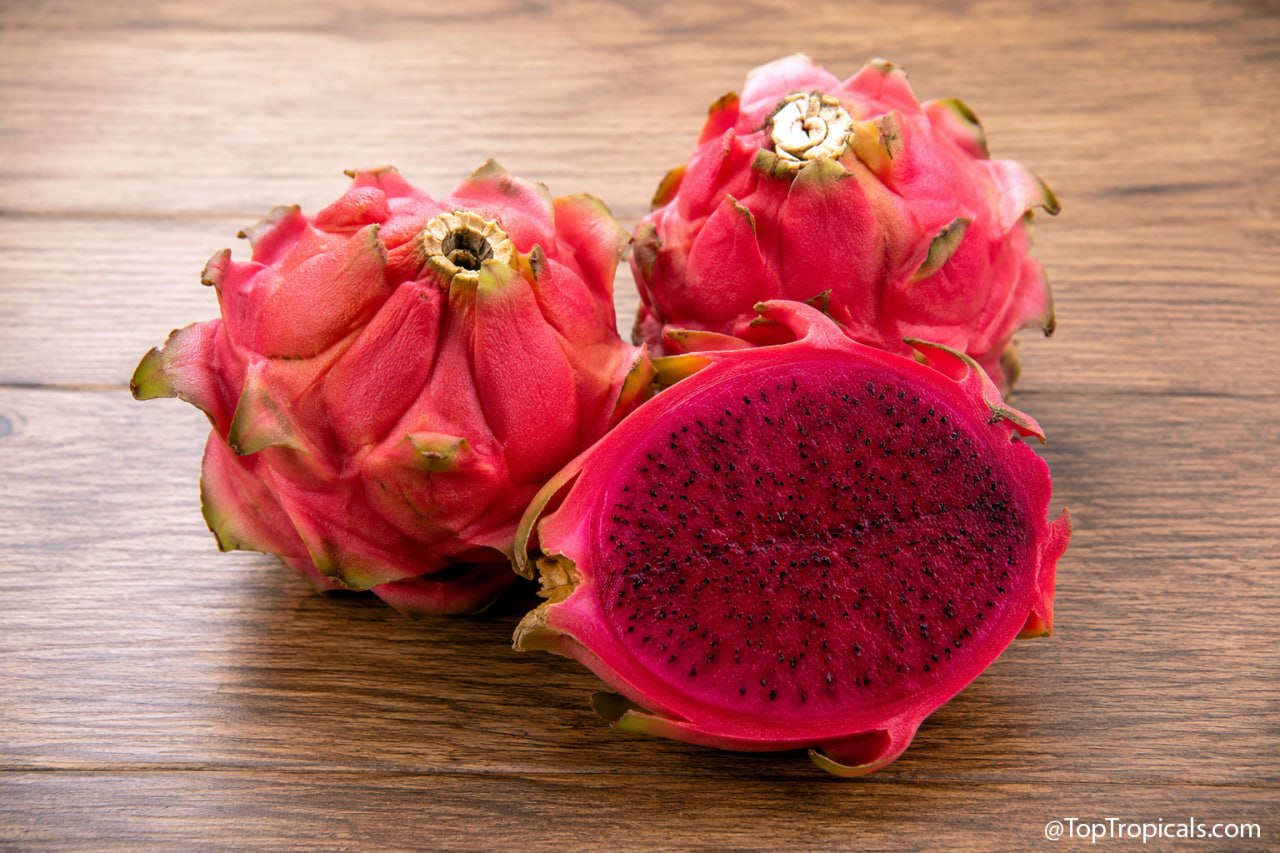
David Bowie (Hylocereus undatus x monacanthuis) looks like a classic dragon fruit - bright red skin, white flesh, and a familiar appearance. But spend a little time with this variety and you'll discover why collectors actively seek it out. David Bowie is one of the most popular white-fleshed dragon fruit varieties, prized for its large fruit, reliable production, and refreshing flavor.
🔸 A classic dragon fruit done right
This self-pollinating variety produces medium to large fruit, often approaching a pound in weight. The bright red skin is decorated with numerous green-tipped fins, giving the fruit an especially dramatic appearance.
Among white-fleshed dragon fruits, David Bowie is known for producing larger-than-average fruit while maintaining excellent eating quality.
🔸 Refreshing flavor with a citrus twist
Unlike some dragon fruits that are valued mainly for appearance, David Bowie delivers a flavor that keeps people coming back.
The flesh is mildly sweet and refreshing, often compared to a cross between kiwi and pear. What makes it memorable is a pleasant tangy character and subtle lemony finish that brightens the flavor and makes it especially enjoyable chilled.
The fruit is excellent eaten fresh and is also popular for smoothies, fruit salads, and garnishes.
🔸 Easy to grow and rewarding
David Bowie is self-pollinating, making it an excellent choice for home gardeners who want reliable fruit production from a single plant.
Like other dragon fruits, it is a vigorous climbing cactus that produces spectacular night-blooming white flowers before setting fruit. The blooms are large, fragrant, and beautiful enough to make the plant worth growing even before the harvest arrives.
🔸 Why collectors love it
Not every dragon fruit has to be purple, yellow, or unusually exotic to earn a place in a collection.
David Bowie remains popular because it combines everything growers want - attractive fruit, dependable production, large size, refreshing flavor, and self-pollinating flowers. Sometimes the classics become classics for a reason. 👉 More...