Garden Blog - Top Tropicals

Date: 26 Jun 2024

Top 5 exotic Mango varieties for rare fruit collection

Mango Kar Lon Long

Mango Kar Lon Long

Mango Mun Kun Si

Mango Mun Kun Si

Mango - Pina Colada

Mango - Pina Colada

Mango Ugly Betty

Mango Ugly Betty

Mango Giselle

Mango Giselle

🥭 Top 5 exotic Mango varieties for rare fruit collection.


Now that you have decided to collect them all but have limited space, these are the top 5 of the most interesting rare Mango cultivars:
  • 🟠 1. Kar Lon Long - rare and unusual, native to India. Fruits that can weigh up to 5 lbs each! The unique flavor that has been described as being a cross between a mango and a pineapple.
  • 🟠 2. Mun Kun Si - similar to Nam Doc Mai but much bigger. Rare variety, very popular among Thai and Vietnamese people. The fruit are extremely sweet, fiberless and somewhat crunchy ("Mun" means crunchy). Very late producer, fruit may still be on a tree as late as January.
  • 🟠 3. Pina Colada - very sweet, has rich flavor with a hint of coconut and pineapple.
  • 🟠 4. Ugly Betty - awesome mango, great sweet flavor, while the fruit is real ugly! Slightly mis-shaped at the top - hence the name.
  • 🟠 5. Giselle - from Gary Zill's breeding program and was a seedling of a mango called Tower. It was described as a juice mango and is named after Gary's wife.


What is your favorite Mango variety? Share in comments 👇

📝 See also earlier posts:

🛒 Shop Mango Trees

#Food_Forest

🏵 TopTropicals

Date: 5 Jan 2025

What are the Condo Mangos?
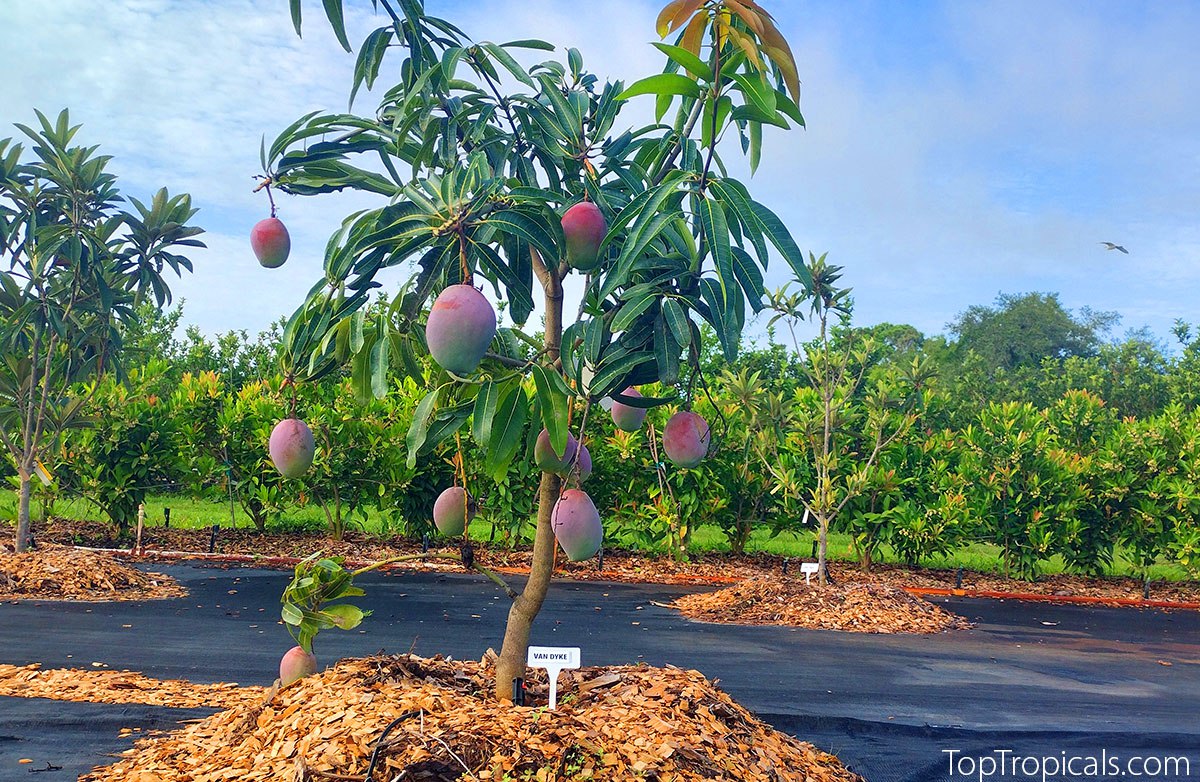
Mango tree with fruit

Mango tree with fruit

🥭 What are the Condo Mangos? A Practical Guide.

  • 🟠 What Are Condo Mangos?


    Condo Mangos, also known as dwarf mango trees, are perfect for small spaces. These trees can be grown in containers, making them ideal for balconies, greenhouses, or small suburban backyards. With proper care, they can be maintained at a manageable height of 6–10 feet through regular pruning. Some plant enthusiasts even manage growing Mango tree as an indoor plant!
  • 🟠 The term “Condo Mango”


“Condo Mango” refers to mango varieties that thrive in containers and are small by nature, allowing them to be easily kept even smaller with selective pruning.
  • 🟠 Size and Growth


    Unlike traditional mango trees, Condo Mangos are compact. They naturally grow to around 6-10 feet, but with proper pruning, they can be kept small, making them an excellent choice for limited space.
  • 🟠 Growing in Containers


· Condo Mango trees thrive in pots and containers.
  • · A 15-20 gallon pot is ideal to give the roots enough room to grow.
  • · Ensure your container has drainage holes to prevent root rot.


🟠 Planting Tips

  • · Plant Condo Mangos in full sun, where they’ll get plenty of heat and light.
  • · Use well-draining soil for optimal growth.
  • · Fertilizer regularly with quality plant food. Out best choice is Sunshine Mango Tango for edibles.
  • · Late Winter to early Spring is the best time to plant in containers, before the rainy season starts.
  • · Mangoes grow well in USDA zones 9-10, but if you live in cooler climates, you can grow them indoors or in a greenhouse, as long as you meet their heat and light needs.


🟠 Pruning and Maintenance

  • · Prune Condo Mango trees once a year to keep them at the desired height (6–10 feet), right after harvesting (late Summer to Fall)
  • · Trim the tips of the branches to maintain a compact shape and encourage healthy growth.
  • · Regular pruning will help keep the tree manageable and ensure better fruit production.

  • 📝 See most popular Condo Mango varieties in the next post 👇


🛒 Shop Condo Mango

📝 Earlier posts on #Mango:
#Food_Forest #Mango

🔴 Join 👉 TopTropicals

Date: 18 Jan 2025

How to take care of a mango tree in winter

How to take care of a mango tree in winter

🥭 How to take care of a mango tree in winter


  • ❄️ Watering

During winter, mango trees need minimal watering. Overwatering can cause root rot, especially when temperatures are low. Water the tree only when the soil feels dry about 2 inches deep.

  • ❄️ Fertilizing

Avoid feeding in the winter with dry fertilizer. It may cause root burn, plus encourages new growth that is more susceptible to cold damage. Wait until spring when the weather warms up to resume heavy feeding your tree. You can continue using Sunshine Boosters natural liquid fertilizers - Sunshine Mango Tango: it is safe to apply year around since its intake is regulated by reduced water, and only the necessary amount of essential elements will be delivered.

  • ❄️ Temperature Protection

Mango trees are sensitive to cold. If you live in a region with freezing temperatures, move your mango tree indoors or to a sheltered location like a garage with a bright light source. If it's in a small container, consider bringing it inside for the winter.

  • ❄️ Sunlight

Ensure the tree gets as much sunlight as possible. If indoors, place it near a South-facing window where it can soak up the sun during the day.

❄️ Check for Pests


Winter can bring pests indoors. Regularly inspect the tree for any signs of insect problems around the leaves and stems.

By following these guidelines, your mango tree will be healthier and better prepared for the next growing season.

📚 Learn more: Mango trees and how to deal with cold weather.

🛒 Shop Mango varieties

📝 Earlier posts on #Mango:
#Food_Forest #Mango

🔴 Join 👉 TopTropicals

Date: 27 Oct 2025

Large Grafted Mango Trees - Plant Now Before Winter!

Smokey  the  tuxedo  cat  prepares  to  plant  a  huge  mango  while  Sunshine  the
 
 
  ginger  tabby  relaxes  in  a  reclining  chair  sipping  coffee  as  a  truck  with  a 


boom  crane  unloads  the  mango  beside  an  excavator  and  a  pile  of  mulch  in  a 


sunny  tropical 


garden.

"Next Time We'll Specify - A TREE!" - Smokey and Sunshine Plant a Giant Mango

🌡️ Why plant now?

Fall is the perfect time to plant tropical fruit trees. The soil is still warm, the air is mild, and your trees can quietly build strong roots. By spring, they’ll already be settled and ready to grow fast.

Imagine walking outside next summer and picking your own mangoes from a tree you planted this fall!

🎥 Check out Mango Tree Videos

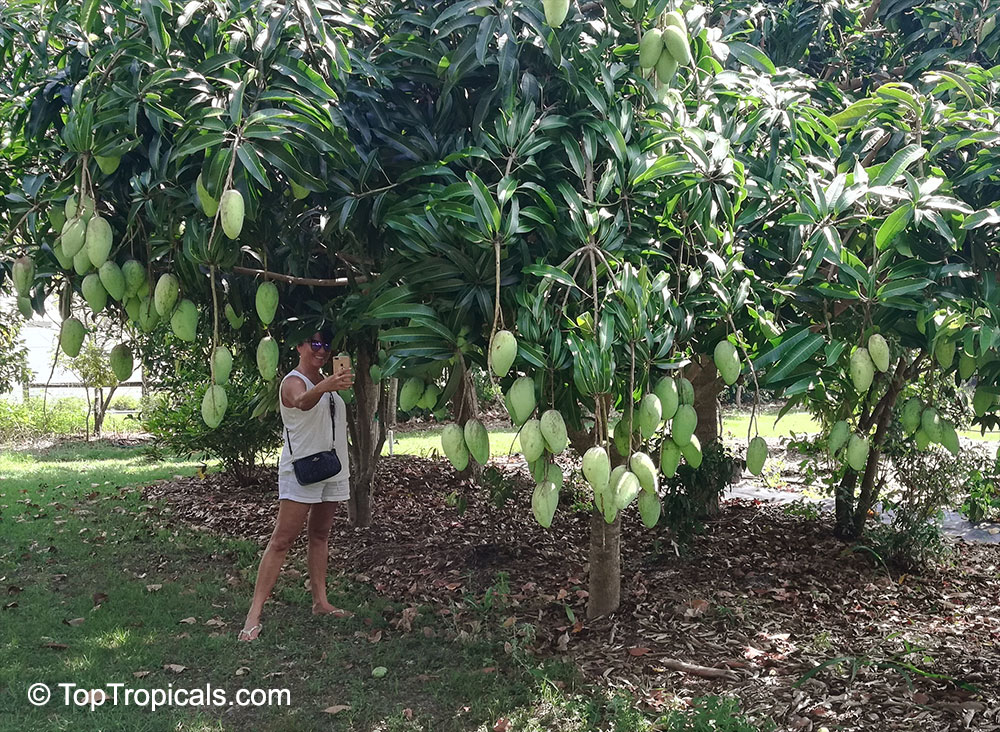
Large  Pim  Seng  Mun  Mango  tree  full  of  heavy  green  fruit.

💲 Special Offer – 20% off Large Mango Trees: 7-15 gal

Get 20% OFF large grafted Mango trees (7-25 gal) with code

MANGO2025

Min order 150 (excluding S/H), valid online only, cannot be combined with other offers.

Hurry, offer expires November 03, 2025!

👉 Explore Mango Varieties:

7 gal pots - shipped to you

15 gal pots: pick up or delivery

25 gal pots: pick up or delivery

All Mango sizes

Date: 2 Jul 2016

Cancer Zodiac lucky plants

Cancer - 6/21-7/22. Cancer is a WATER sign and is ruled by the Moon. Cancer's plants generally have soft or Moon-shaped leaves, contain a lot of moisture, or are found near water. Oftentimes they have white, pale blue or pale yellow flowers. Cancer rules the stomach, diaphragm, and liver, so plants that aid digestion or affect the subconscious are associated with the sign of the Crab. Maternal Cancer also governs the breasts, the womb, and the ovaries. It rules all fluid secretions, including menstrual blood, fluids in the eye, and tears. The moon is often associated with conditions involving irregular periodicity: irregular menstruation and related moods, epilepsy, insomnia, hysteria. Lunar herbs tend to have white or yellow flowers and soft, juicy leaves. They often live in or near water. As they are so nurturing and warm, Cancer loves the homey smell of cinnamon. This sweet spice is good for gently heating things up; it also promotes movement and flow in life. Its familiar scent is soothing and calming for those who need a little retreat every now and again.

Cancer Zodiac lucky plants: Lilies, Eucomis, Magnolia, Nicotiana, Brugmansia, Dombeya, White flowers, Water lilies, Lotus, Maidenhair fern, Monstera, Cinnamon, Sage, Aloe, Lemon Balm, Bay leaf, Palasa - Butea monosperma, Acai, Mahogany, Mango, Banana, Apple, Pear, Geranium - Pelargonium, White roses, Solandra Chalice Vine, Butter Cup, Acalypha, Cornutia, Ruda, Oregano, Camphor plant, Grapes, Brunfelsia, Alocasia, Colocasia, Canna, Cyperus, Iris, Equisetum, Mangroves.

For other signs information, see full Plant Horoscope.