Adenanthera - Plant Encyclopedia Results
| Number of plants found: 2 |
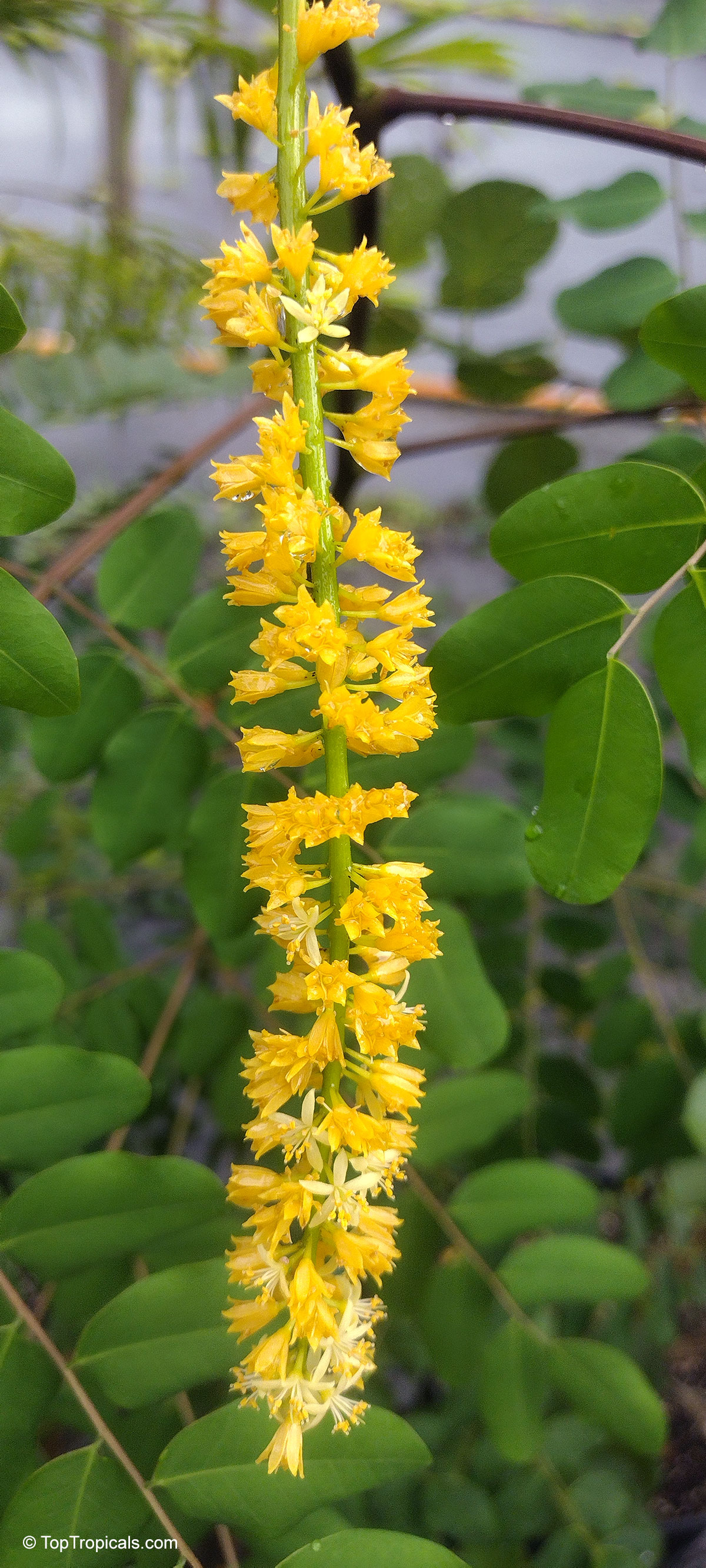
Botanical name: Adenanthera pavonina
Common names: Red Sandalwood, Coral Bean Tree, Saga, Sagaseed Tree, Red-bead Tree, Raktakambal, Kokriki
Family: Fabaceae
Subfamily: Caesalpinioideae
Origin: India
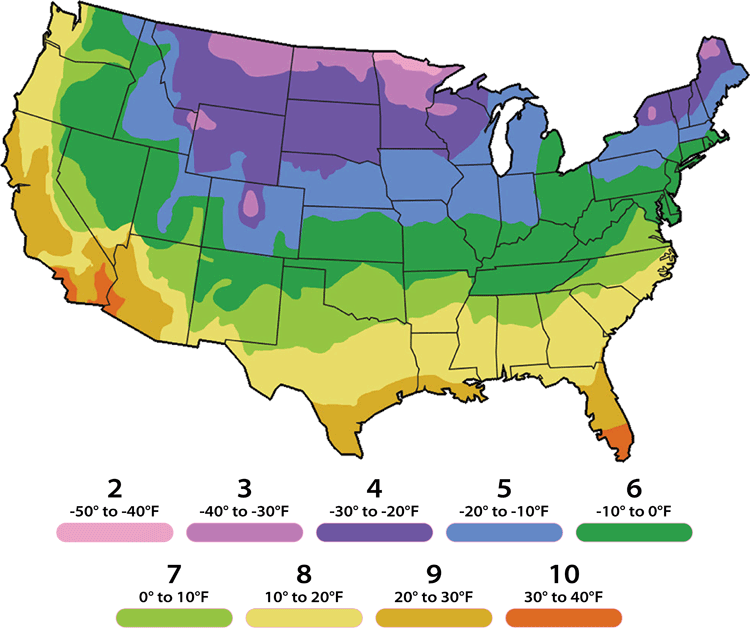
USDA Zone: 10-11
Cold tolerance: 35°F


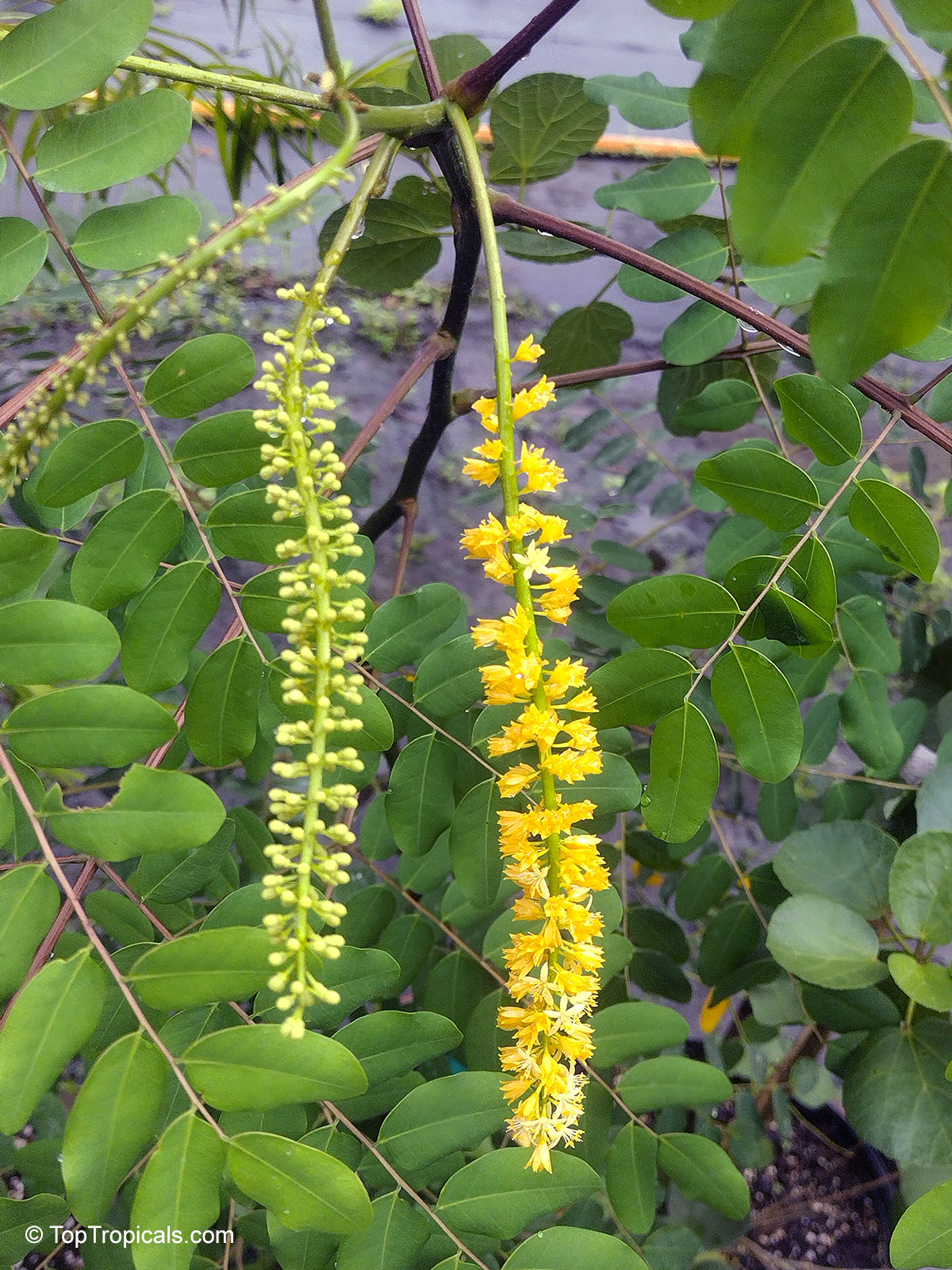
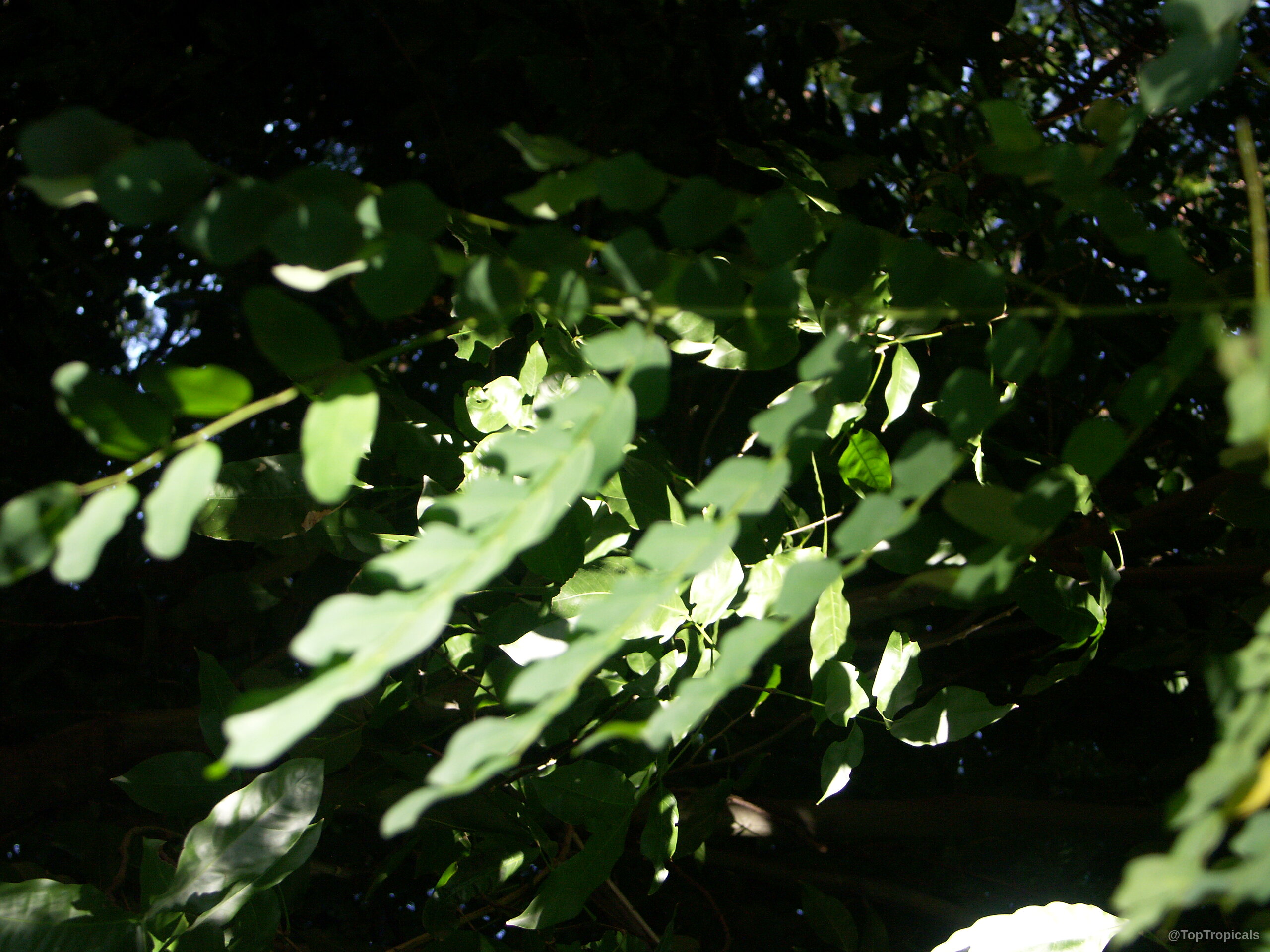
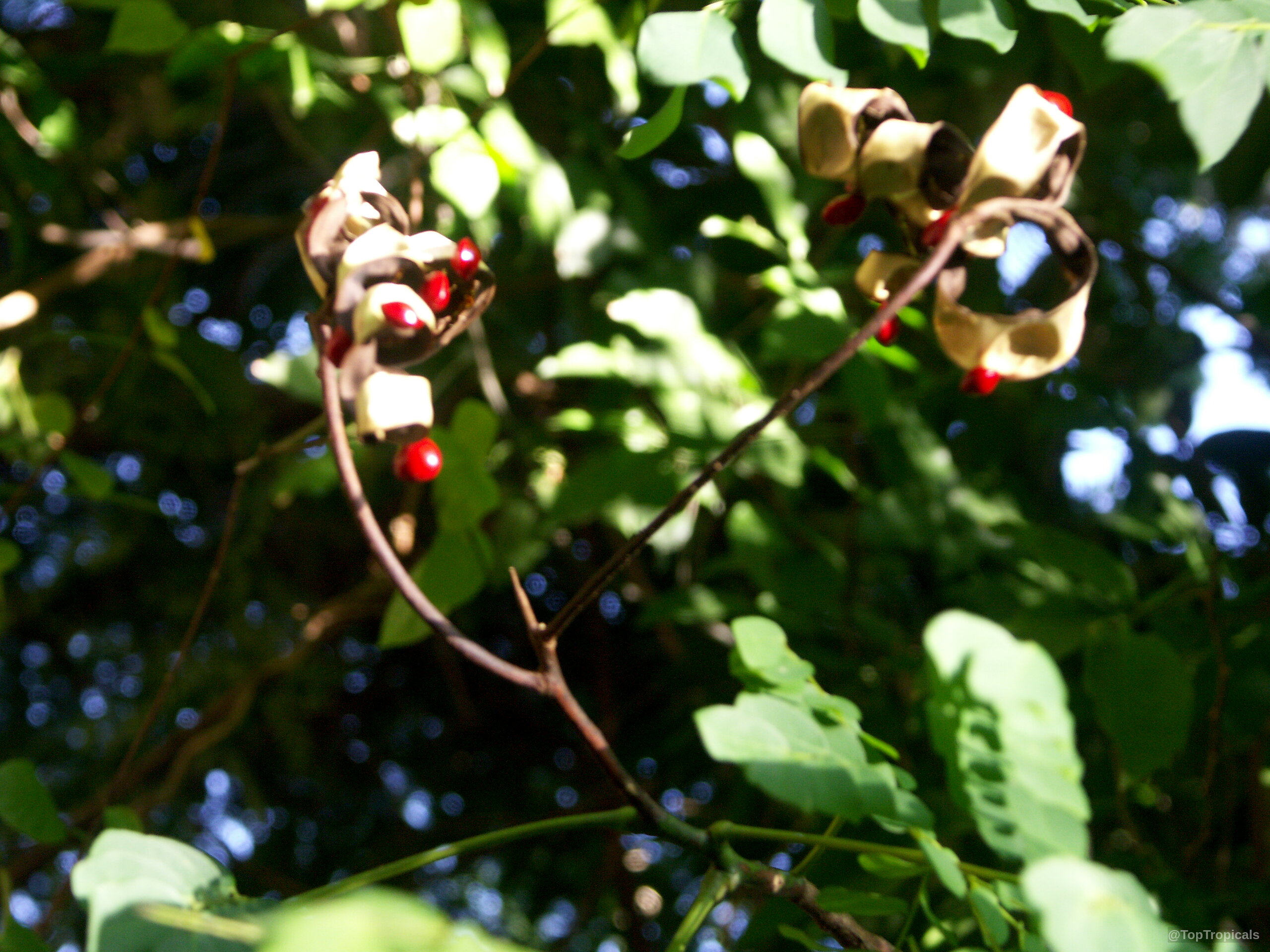
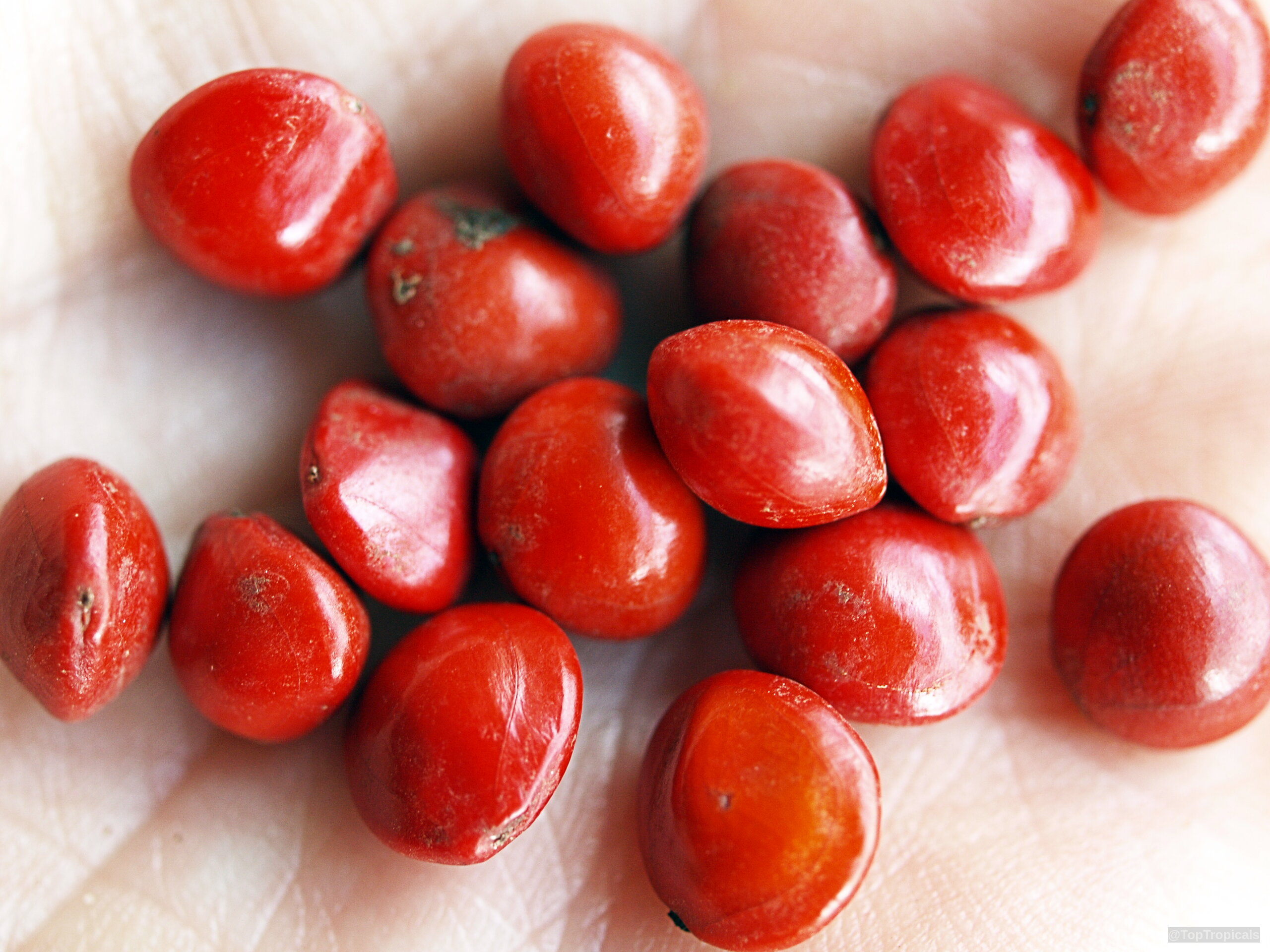
Adenanthera pavonina, commonly known as Red Bead Tree, Red Sandalwood, or Coralwood, is a deciduous to semi-evergreen tree in the Fabaceae family, native to tropical Asia, from India and Sri Lanka through Southeast Asia. It has been widely introduced and naturalized in other tropical regions. In favorable conditions, it develops a broad, spreading crown and may reach 40-60 feet tall, although cultivated trees are often smaller. The foliage consists of large, feathery, bipinnate leaves with numerous small, oval leaflets. Small, fragrant, yellowish-white flowers appear in slender, elongated clusters, followed by narrow pods whose valves twist as they split open at maturity, revealing exceptionally hard, glossy, bright scarlet seeds. These striking seeds are relatively uniform in weight and have traditionally been used as beads, ornaments, and small weights for weighing gold and other precious materials.
Adenanthera pavonina thrives in full sun and well-drained soil, tolerating seasonal drought once established. It grows rapidly in warm climates and is cultivated as a shade and ornamental tree, particularly for its elegant foliage and decorative seeds. Suitable for USDA Zones 10-11, it is sensitive to frost, especially when young. The raw seeds may be unsafe to consume, although traditionally processed seeds have been used as food in some regions.
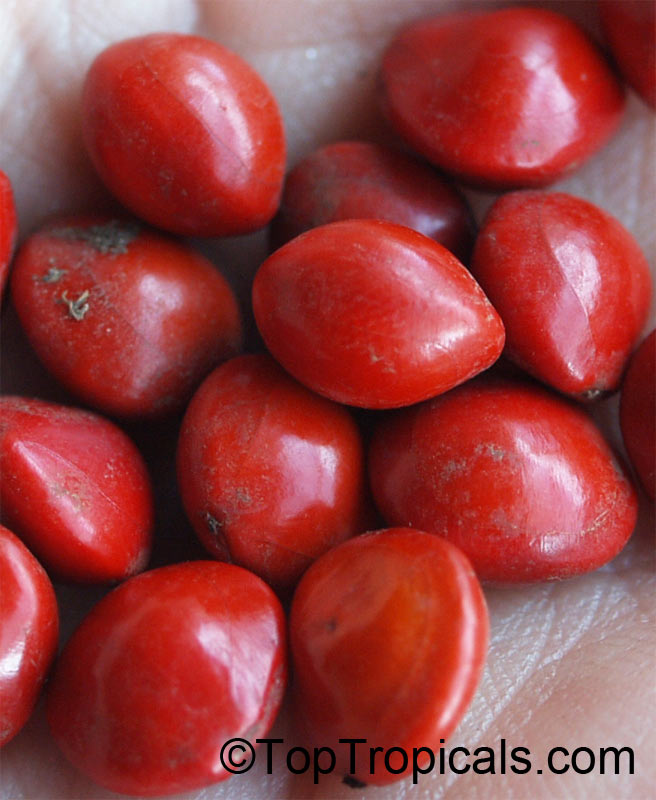
Plant seeds 1" deep in otting mix, keep warm, damp and in bright light. Scarify to expedite germination.
Ordering seeds info
RECOMMENDED SUPPLIES:
Seed Germination Mix #3, professional grade
SUNSHINE-Epi - Seeds and cuttings booster
SUNSHINE Bombino - Young Plant Booster

Botanical names: Tetrapleura tetraptera, Adenanthera tetraptera
Common names: Aidan Tree, Prekese
Family: Fabaceae
Subfamily: Caesalpinioideae
Origin: West Africa
USDA Zone: 9-10


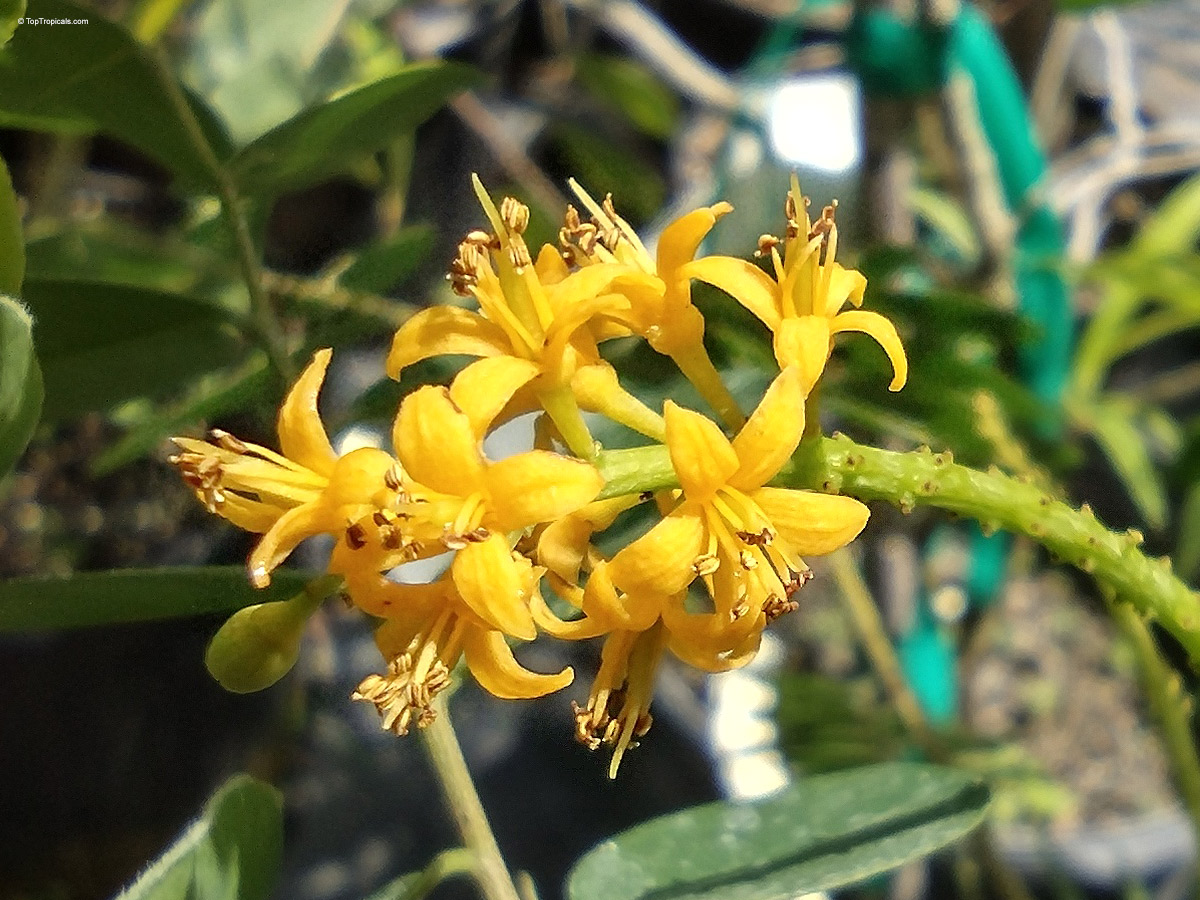
Tetrapleura tetraptera (Aidan Tree) is a small deciduous tree native to West Africa, belonging to the Meso-Melanesian family. It generally grows between 10-20 ft tall, and is semi-evergreen in nature, losing its leaves late in the season or in the early months of winter. It usually prefers full sun but can also do well in semi-shade. This beautiful tree boasts off-white, very fragrant flowers that produce an abundant array of fruits. Not only does this plant attract butterflies and hummingbirds, it is also used ethnomedically and as a spice or herb.
The fruits of the Aidan Tree are particularly healthy and nutritious. They produce a drug-like substance, known as ethiopon, that is used for a wide range of conditions such as malaria, jaundice and even skin diseases. The fruits are also edible. They are rich in a variety of vitamins, minerals and antioxidants, and have been proven to help lower blood pressure, improve digestion and reduce stress. Generally speaking, a single tree can produce between 10-15 kg of fruit in one season, depending on the climate.
When grown in USDA Zone 9-11, Tetrapleura tetraptera is a relatively low maintenance plant - even though regular watering and fertilizing is necessary to maintain good health. During winter, it should be sheltered from frost since it is sensitive to cold temperatures, and it is best to use a large container to protect its delicate roots. In addition, this plant prefers well-draining soils and requires an area with plenty of shade, as it is susceptible to sunburn.


Use link to repeat this search:
https://toptropicals.com/cgi-bin/garden_catalog/cat.cgi?find=Adenanthera&search_op=and&keyword_op=and&language=e&number=10
&no_change_lang=1&user=tt&sale=1&first=0