Garden Blog - Top Tropicals

Date: 19 Nov 2025

5 fruits that help manage gout (high uric acid)

5 fruits that help manage gout

5 fruits that help manage gout

🍒 5 fruits that help manage gout (high uric acid)


💥 High uric acid, hyperuricemia, also called gout, causes painful swelling in joints and can affect kidney health over time. Medicine helps, but so does what you grow and eat. Some fruits can naturally flush out excess uric acid and reduce inflammation. Here are five easy fruit trees and plants that can help:

🍋 Citrus


Citrus trees are great to grow in pots or sunny yards. Lemons and oranges are rich in vitamin C, which helps kidneys remove uric acid and keeps the body’s pH balanced. A glass of lemon water in the morning or a fresh orange during the day can help. Studies in Science Direct show lemon juice lowers uric acid levels in the blood.

Berries (mulberries, blackberries, blueberries, strawberries)


Berries are packed with antioxidants that fight inflammation and support kidney health. Mulberry trees are perennial trees and bushes that produce berries year after year. They grow well in both temperate and warm areas, and are an easy choice for all backyard gardeners. Mulberry high water content helps flush out toxins. Research from the National Institute of Health shows berries rich in polyphenols can lower uric acid naturally.

🍒 Cherries


Cherries are one of the best fruits for gout. They’re rich in anthocyanins, compounds that reduce inflammation and uric acid levels. National Institute of Health studies have found regular cherry intake helps lower gout attacks. Dwarf cherry trees can grow in large pots if space is limited.

🍌 Bananas


Bananas are rich in potassium, which helps the kidneys remove uric acid more efficiently, according to PubMed central. They’re also low in purines, the compounds that form uric acid. Dwarf banana varieties grow well in containers and add a tropical look while supporting healthy digestion and uric acid balance.

🍍 Pineapple


Pineapple contains bromelain, a natural enzyme that eases swelling and pain caused by gout. It’s also refreshing and supports kidney function. Studies by global health science group show pineapple juice can help reduce inflammation and uric acid. It’s easy to grow in a pot or sunny garden bed.

These fruits won’t replace medicine, but they can support your body’s natural detox system. Grow them, eat them fresh, and enjoy both their flavor and health benefits.

🛒 Explore Fruit trees and grow your own natural remedies

📚
Learn more:
#Food_Forest #Mango #Remedies #Discover

🟢 Join 👉 TopTropicals

Date: 7 Dec 2025

Whats for breakfast? Guava versus Banana

Smokey: Guava for fiber, banana for power. Pick wisely.
Sunshine: I pick whatever requires zero effort.
Smokey: So... guava in a hammock. Perfect.

Smokey: Guava for fiber, banana for power. Pick wisely. Sunshine: I pick whatever requires zero effort. Smokey: So... guava in a hammock. Perfect.

🍉🍌 What's for breakfast? Guava versus Banana


Some mornings you want something light. Some mornings you want something that hits like a tiny energy bomb. That’s why people always compare guava and banana. Both are everywhere, easy to eat, and trusted since forever - from Ayurveda scrolls to modern nutrition charts.

But they’re not the same kind of morning fruit. Let’s walk through them like we’re in the kitchen deciding what to slice first.
  • 🍉 Guava - the fiber champion


    Guava looks innocent, but it’s one of the most nutrient-dense fruits.
    Per 100 g: 68 calories, 5.4 g fiber, over 200 mg vitamin C, a little protein, and solid potassium.

    Fiber does most of the work. It smooths digestion, keeps you full, and steadies blood sugar. Vitamin C boosts immunity, and antioxidants reduce inflammation. Studies suggest guava lowers LDL and triglycerides. Not bad for a tennis-ball-size fruit.


🍌 Banana - the quick energy classic


Bananas are the opposite personality: soft, sweet, ready in seconds.
Per 100 g: 89 calories, 22 g carbs, good potassium, and a little vitamin B6.

Bananas give fast energy without upsetting the stomach. Athletes eat them before workouts because carbs, sugars, and potassium wake up your muscles. Vitamin B6 helps mood and brain function, which is why a banana on a groggy morning works wonders.

They also pack antioxidants, polyphenols, and heart-protective compounds. Even the peel has nutrients (though not exactly breakfast-friendly).

📊 What studies say - quick notes

  • · Guava: anti-inflammatory, anti-hypertensive, anti-obesity, antioxidant, antidiabetic, antidiarrheal, boosts hemoglobin, supports dental health.
  • · Banana: antioxidants, fiber, vitamins C and E, carotenoids, flavonoids, and heart-protective compounds.


🔮 What Ayurveda says

  • · Guava calms Pitta and Kapha - great for acidity or sluggish digestion.
  • · Bananas balance Vata - grounding and nourishing - but can raise Kapha at night. Morning banana = good. Night banana = maybe skip.


🏆 Guava or banana - which one wins?


Both win, just in different ways:
  • 🍉 Pick guava for:


· light, high-fiber start
  • · better digestion
  • · steady energy
  • · low calories
  • · weight control


🍌 Pick banana for:

  • · instant energy
  • · easy digestion
  • · pre-workout boost
  • · quick carbs
  • · soft, comforting fruit

  • 🍉 Slow mornings love guava.

🍌 Busy mornings belong to banana.

For home growers


If you live in a warm climate, both fruits are incredibly rewarding to grow.

🍉 Why grow guava?

  • · Fruits in 1-2 years.
  • · Compact for small yards or containers.
  • · Super productive when mature.
  • · Needs only sun, warmth, and pruning.
  • · Homegrown flavor is sweeter and more aromatic.


🍌 Why grow banana?

  • · Grows fast and looks lush.
  • · One mat can feed a whole household.
  • · Dwarf varieties fit small gardens.
  • · Homegrown bananas taste richer and creamier.
  • · When a bunch ripens, breakfast is handled for a week.

Growing your own fruit means you’re never out of a healthy breakfast. Something is always ripening, always ready to pick, and always sweeter than anything you buy.

✍️ Scientific reference


🛒 Grow your perfect breakfast for any day - Guava and Banana

📚 Learn more:


📱 Watch YouTube short videos:


#Food_Forest #Bananas #Guava #Remedies #Discover

🟢 Join 👉 TopTropicals
Date: 10 Dec 2025

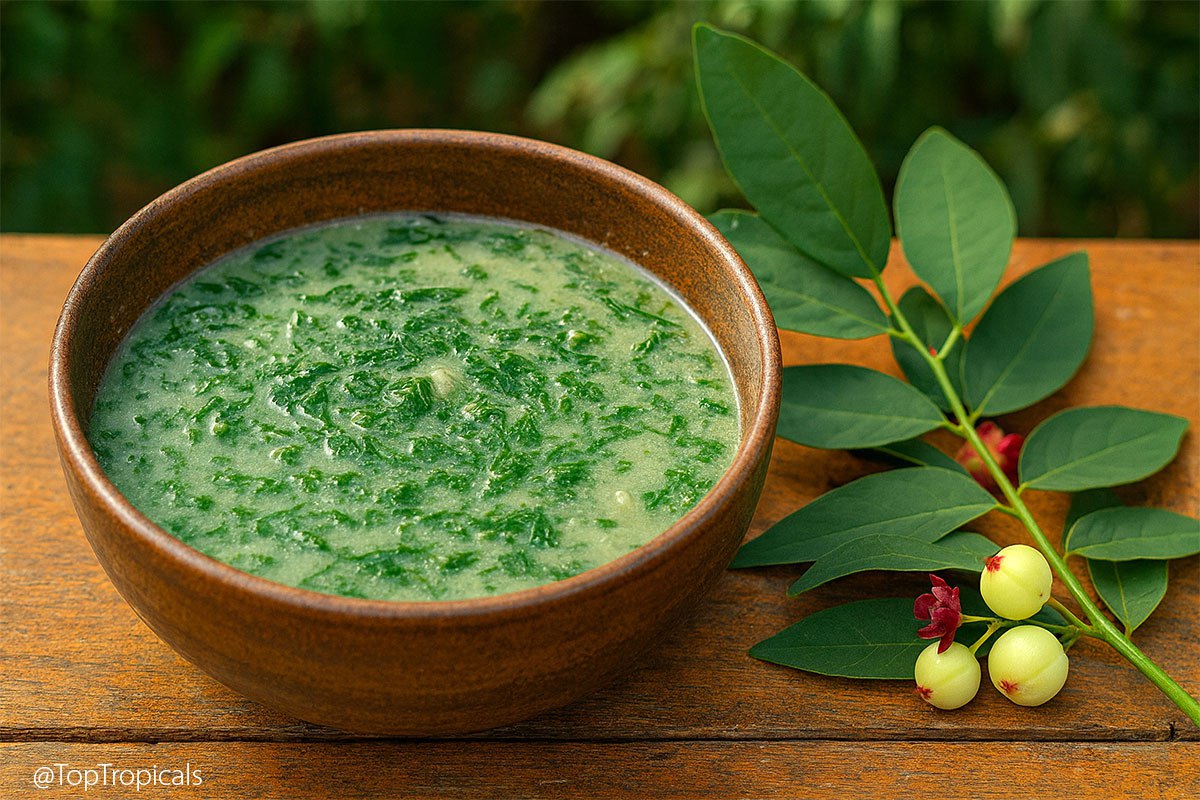
Katuk coconut soup: quick-n-fun exotic recipes

Katuk coconut soup

Katuk coconut soup

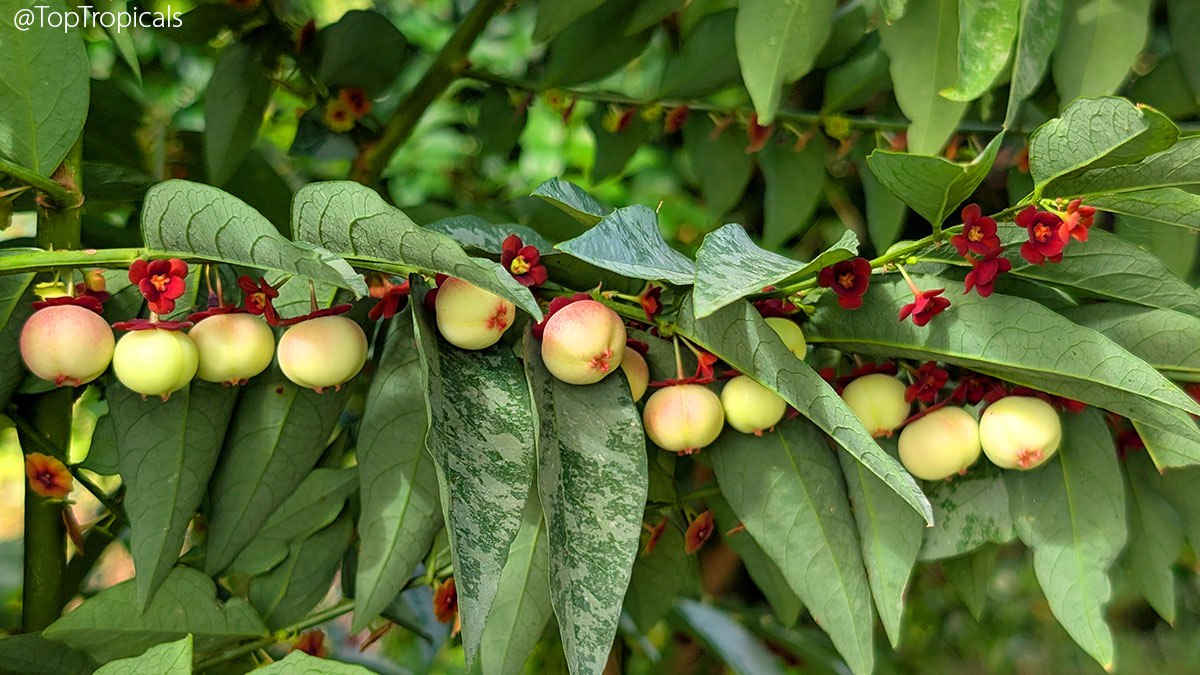
Katuk leaves - Sauropus androgynus, Tropical Asparagus

Katuk leaves - Sauropus androgynus, Tropical Asparagus

🍴 Katuk Coconut Soup

Ingredients

  • Katuk leaves (Sauropus androgynus), about 2 cups, stems removed
  • Coconut milk, 1 cup
  • Garlic, 1 clove, minced
  • Salt, to taste

Instructions

  1. Wash Katuk leaves thoroughly.
  2. Boil Katuk leaves in plenty of water for 15 minutes.
  3. Drain completely and discard the boiling water.
  4. Chop the cooked Katuk leaves.
  5. Warm coconut milk in a saucepan over low heat.
  6. Add garlic and simmer gently for 1 minute.
  7. Add the boiled Katuk leaves and cook for 3 to 5 minutes.
  8. Season with salt and serve warm.

Important Safety Note

Katuk leaves must always be boiled for at least 15 minutes and the water discarded. Do not consume raw or lightly cooked Katuk.


🛒 Add Katuk Superfood to your Food Forest

📚 Learn more:

Plant Facts

Breynia androgyna, Sauropus androgynus
Katuk, Star Gooseberry, Sweet Leaf, Tropical Asparagus, Chang Kok, Manis, Nutty Leaf, Rau Ngot
USDA Zone: 9-11
Large shrub 5-10 ft tallSmall plant 2-5 ftSemi-shadeFull sunRegular waterRed, crimson, vinous flowersOrnamental foliageEdible plantEthnomedical plant.
Plants marked as ethnomedical and/or described as medicinal, are not offered as medicine but rather as ornamentals or plant collectibles.
Ethnomedical statements / products have not been evaluated by the FDA and are not intended to diagnose, treat, cure, or prevent any disease. We urge all customers to consult a physician before using any supplements, herbals or medicines advertised here or elsewhere.

#Food_Forest #Recipes

🟢 Join 👉 TopTropicals

Date: 9 Jan 2026

Moringa leaves made simple - daily benefits and 6 easy recipes

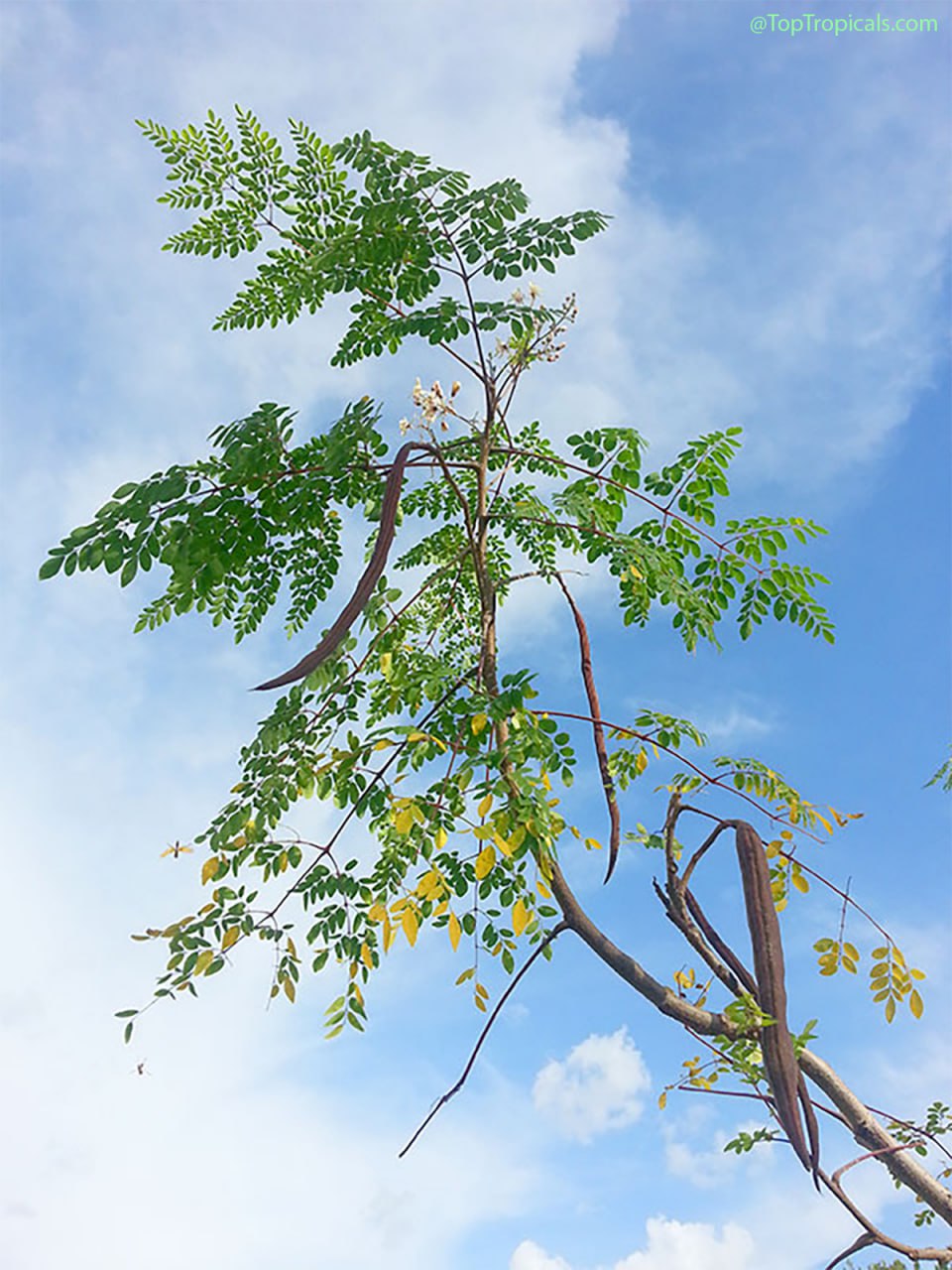
Moringa oleifera leaves and flowers

Moringa oleifera leaves and flowers

Moringa oleifera leaves on a branch

Moringa oleifera leaves on a branch

🌳 Moringa leaves made simple - daily benefits and 6 easy recipes


Moringa tree is called the Tree of Life for a reason. Moringa leaves, often called miracle greens, are packed with vitamins A, C, and E, calcium, iron, potassium, and plant protein. Regular use supports immunity, digestion, skin health, energy levels, and overall vitality. Traditionally, moringa has also been used to support blood sugar balance, heart health, and inflammation control thanks to its rich supply of antioxidants and bioactive compounds like flavonoids and polyphenols.

❤️ Key benefits of eating moringa leaves daily:

  • 🌿 Supports blood sugar balance


    Moringa may improve insulin sensitivity and help stabilize blood sugar, reducing sudden energy crashes. Regular intake has been linked to better glycemic control and reduced inflammation.
  • 🌿 Improves digestion


    High fiber supports gut health, while natural detoxifying compounds help liver function. Moringa may also promote healthy gut bacteria and improve digestion regularity.
  • 🌿 Fights inflammation


    Moringa leaves contain compounds that help reduce inflammatory markers in the body, supporting joint, heart, and overall cellular health.


6 easy moringa recipes to try

  • 🌿 Moringa laddoo


    Roast whole wheat flour in ghee, add fresh moringa leaves, jaggery, nuts, sesame seeds, and cardamom. Shape into laddoos and store airtight.
  • 🌿 Moringa smoothie


    Blend fresh moringa leaves, banana, curd, honey, and water. Top with soaked chia seeds and drink fresh.
  • 🌿 Moringa dal


    Cook toor dal with turmeric. Saute moringa leaves, onion, tomato, garlic, and chilies in ghee, mix into dal, and finish with cumin and asafoetida tempering.
  • 🌿 Moringa paratha


    Knead wheat flour with moringa leaves, onion, spices, and salt. Roll and cook on a hot tawa with oil or ghee.
  • 🌿 Moringa chutney


    Grind moringa leaves with coconut, green chilies, ginger, lemon juice, and salt. Serve fresh.
  • 🌿 Moringa tea


    Simmer fresh or dried moringa leaves in water for a few minutes, strain, and enjoy warm with honey or lemon if desired.


🛒 Grow your own Tree of Life - Moringa

📚 Learn more:

Plant Facts

Moringa oleifera, Moringa pterygosperma
Horseradish tree, Ben Oil Tree, Coatli, Drumstick tree, Bridal veil, Miracle Tree
USDA Zone: 9-11
Plant used for bonsaiLarge tree taller than 20 ftSmall tree 10-20 ftFull sunModerate waterWhite, off-white flowersEdible plantPlant attracts butterflies, hummingbirdsDeciduous plantEthnomedical plant.
Plants marked as ethnomedical and/or described as medicinal, are not offered as medicine but rather as ornamentals or plant collectibles.
Ethnomedical statements / products have not been evaluated by the FDA and are not intended to diagnose, treat, cure, or prevent any disease. We urge all customers to consult a physician before using any supplements, herbals or medicines advertised here or elsewhere.Fragrant plantSubtropical plant. Mature plant cold hardy at least to 30s F for a short time

#Food_Forest #Remedies #Discover #Trees #Recipes

🟢 Join 👉 TopTropicals

Date: 22 Jan 2026

This old-school tropical fruit is making a quiet comeback: Eggfruit - Canistel

Canistel - Pouteria campechiana, Egg Fruit

💛 This old-school tropical fruit is making a quiet comeback: Eggfruit - Canistel


❓✔️ The tropical fruit that feels like dessert but isn’t junk: FAQ

  • 💛 What is canistel fruit?


    Canistel is the fruit of Pouteria campechiana, often called Egg Fruit because its texture resembles a cooked egg yolk. It has dense, yellow flesh and a naturally sweet, custard-like flavor.
  • 💛 Is canistel a high-energy fruit?


    Yes. Canistel contains complex carbohydrates that provide steady, long-lasting energy instead of quick sugar spikes. It is a good choice for active days or when you need sustained fuel.
  • 💛 Does canistel help you feel full?


    It does. The thick texture and fiber content make canistel very satisfying, helping you feel full with smaller portions.
  • 💛 Can canistel support weight management?


    Canistel is filling and naturally sweet, which can help reduce cravings for processed desserts and snacks.
  • 💛 Is canistel easy to digest?


    Yes. Its soft, pasty texture is gentle on the stomach and often well tolerated by people with sensitive digestion.
  • 💛 How does canistel benefit skin health?


    Canistel provides beta-carotene and vitamin C, which support skin renewal, elasticity, and overall skin appearance.
  • 💛 Does canistel help with muscle function?


    Yes. It contains potassium and other minerals that support muscle function and help reduce fatigue after physical activity.
  • 💛 Is canistel good for brain health?


    Canistel supplies iron and B vitamins that support oxygen delivery and mental clarity, especially during periods of fatigue.
  • 💛 Does canistel support healthy aging?


    Its antioxidants help protect cells from oxidative stress, which plays a role in aging and long-term wellness.
  • 💛 Is canistel just a snack fruit?


    Not at all. Canistel is a functional fruit used in custards, smoothies, baked goods, spreads, and even savory dishes, offering both nutrition and comfort-food satisfaction.


🛒 Plant Egg Fruit - Canistel Tree

📚 Learn more:

Plant Facts

Pouteria campechiana
Canistel, Eggfruit, Chesa
USDA Zone: 9-11
Large tree taller than 20 ftSmall tree 10-20 ftFull sunRegular waterEdible plant

#Food_Forest #Remedies #Discover

🟢 Join 👉 TopTropicals