Psidium - Plant Encyclopedia Results
| Number of plants found: 8 |
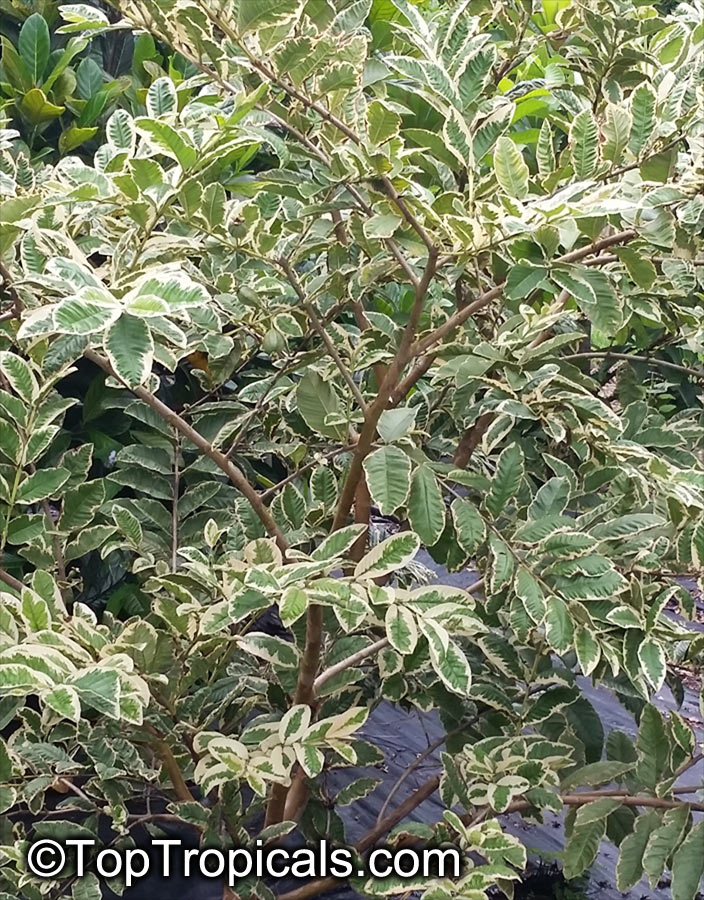
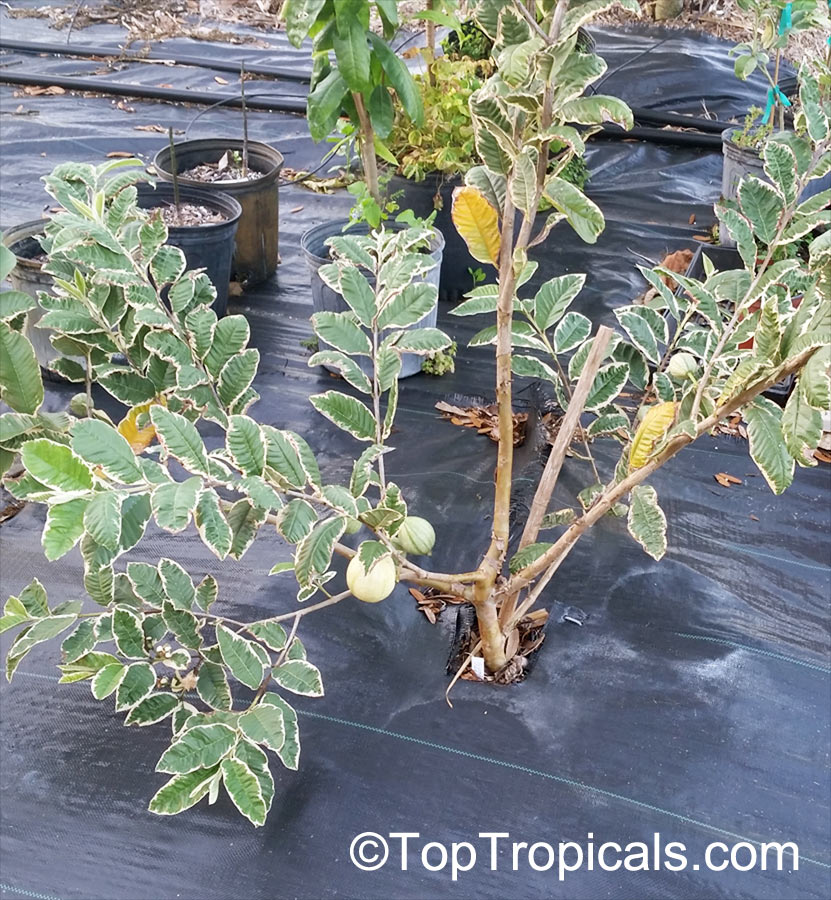
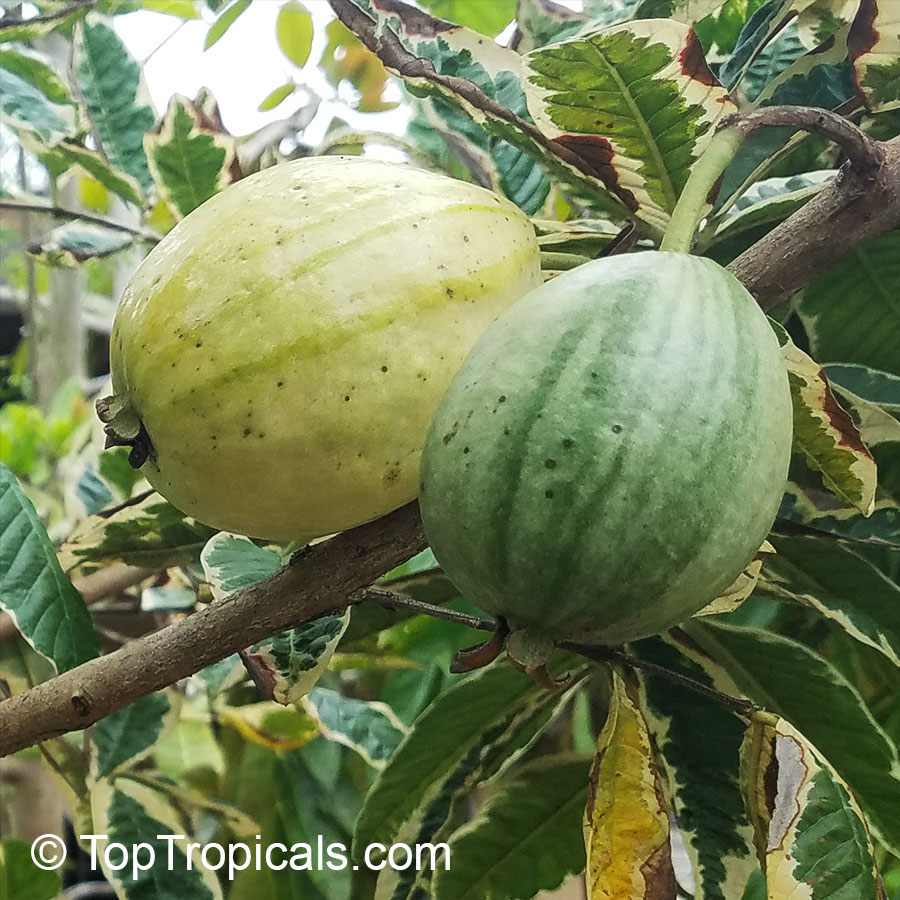
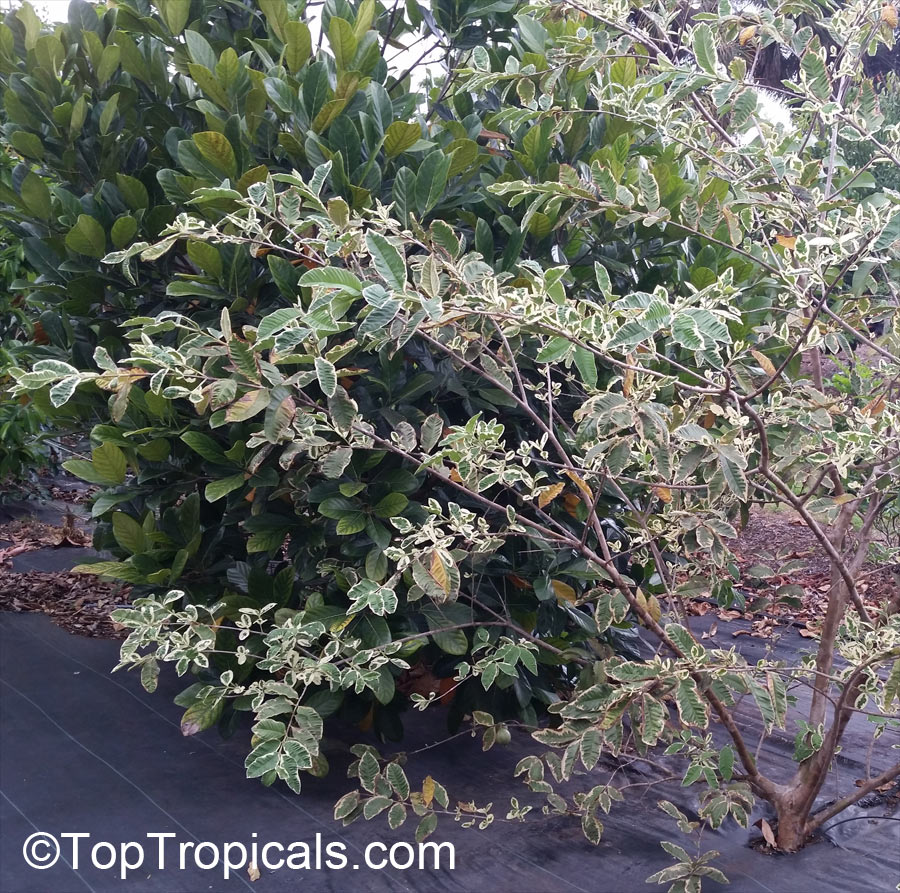
Botanical name: Psidium guajava
Common names: Honeymoon Guava, Honey Moon, Variegated Guajava
Cultivar: Variegata
Family: Myrtaceae
Origin: Tropical America
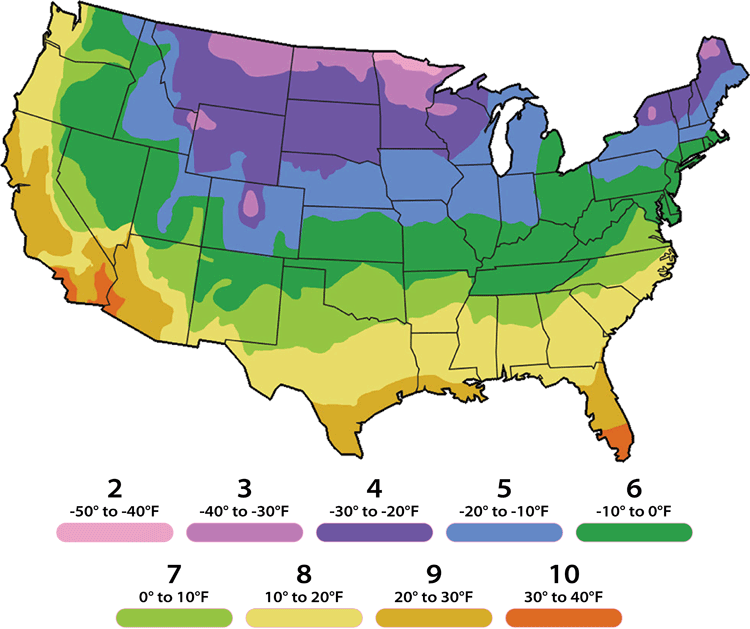
USDA Zone: 9-11


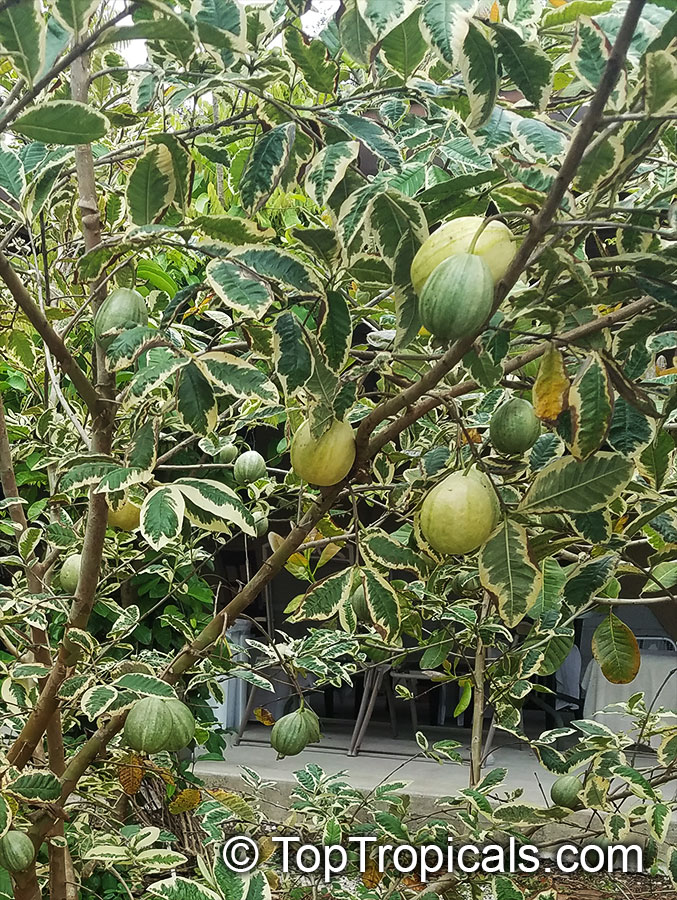
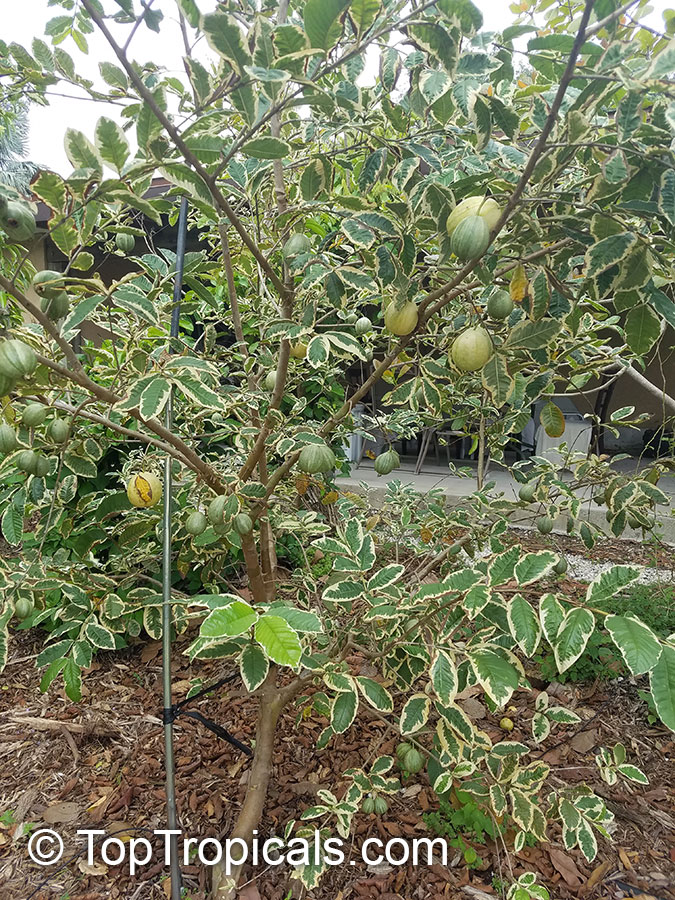
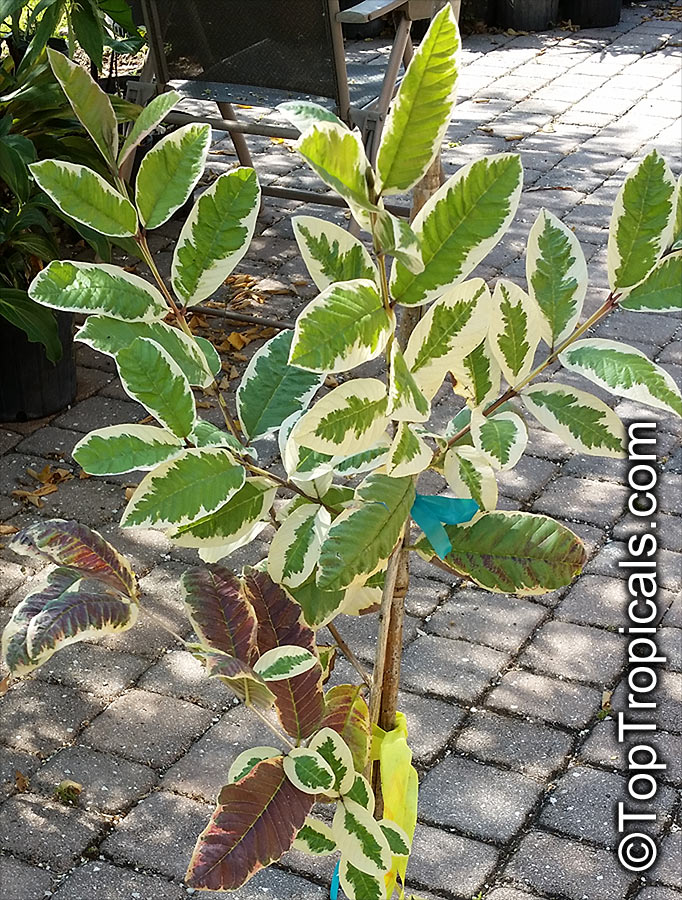
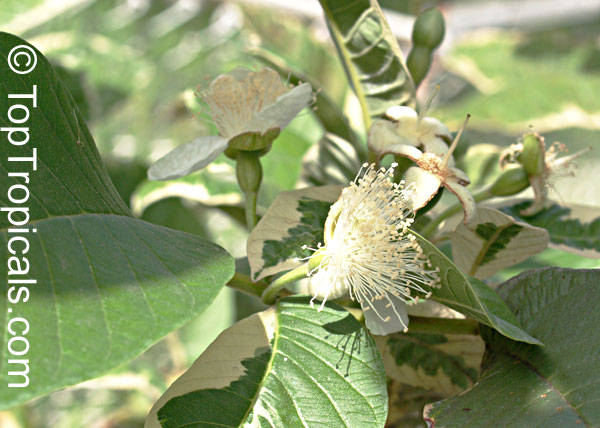
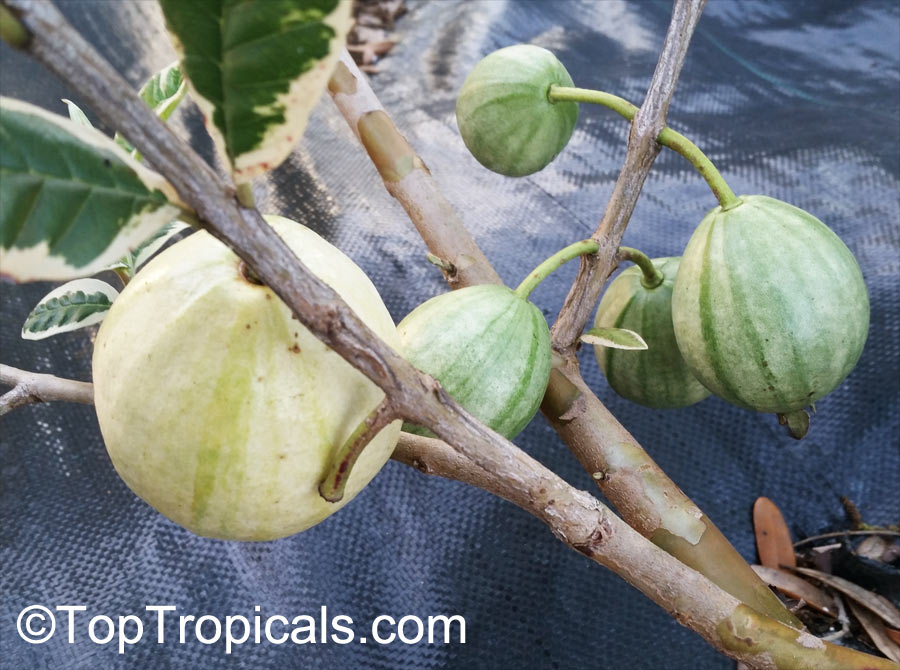
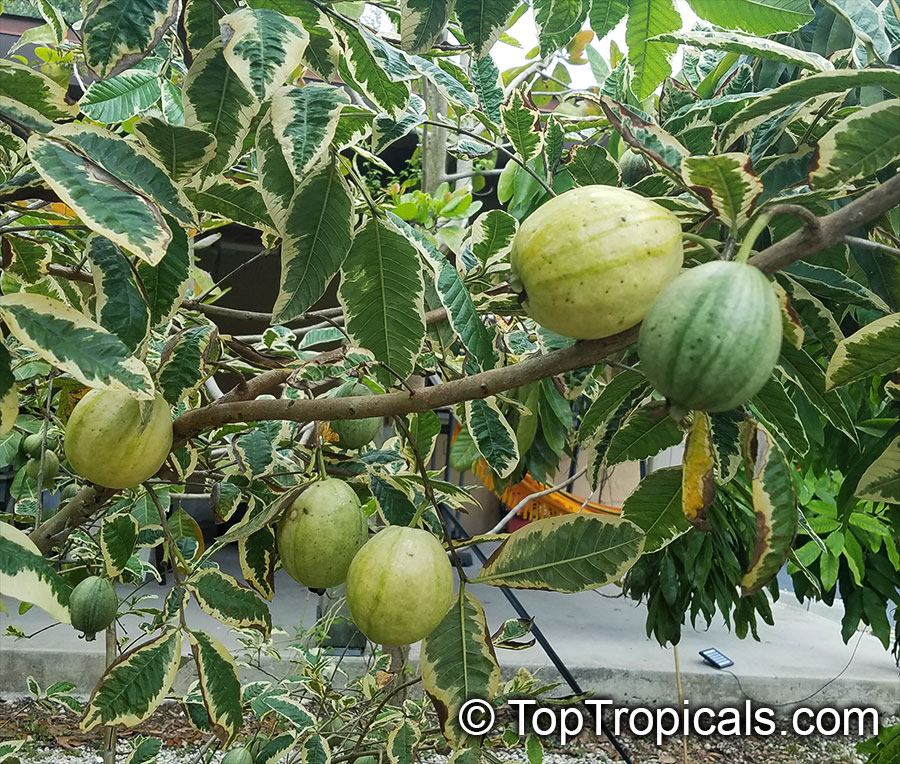
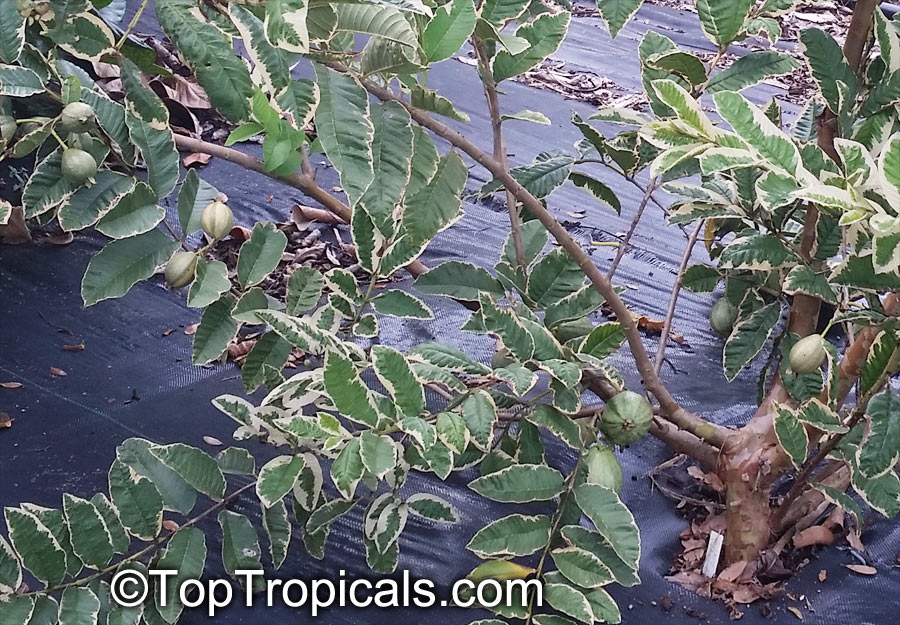
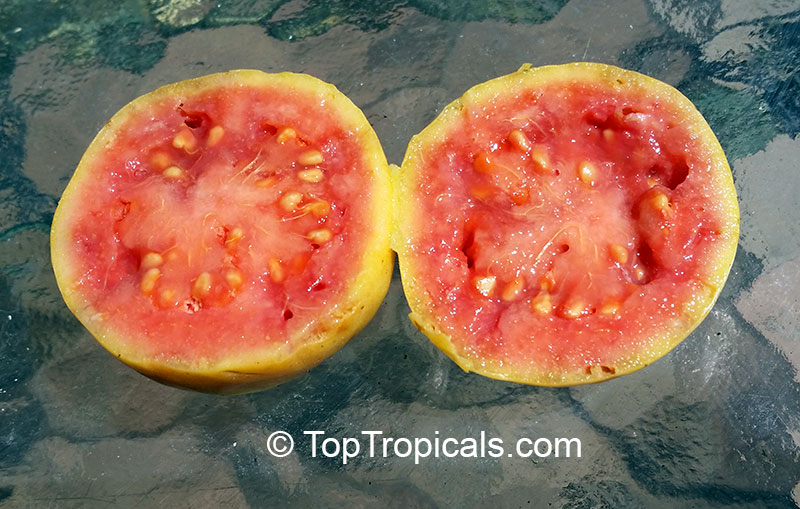
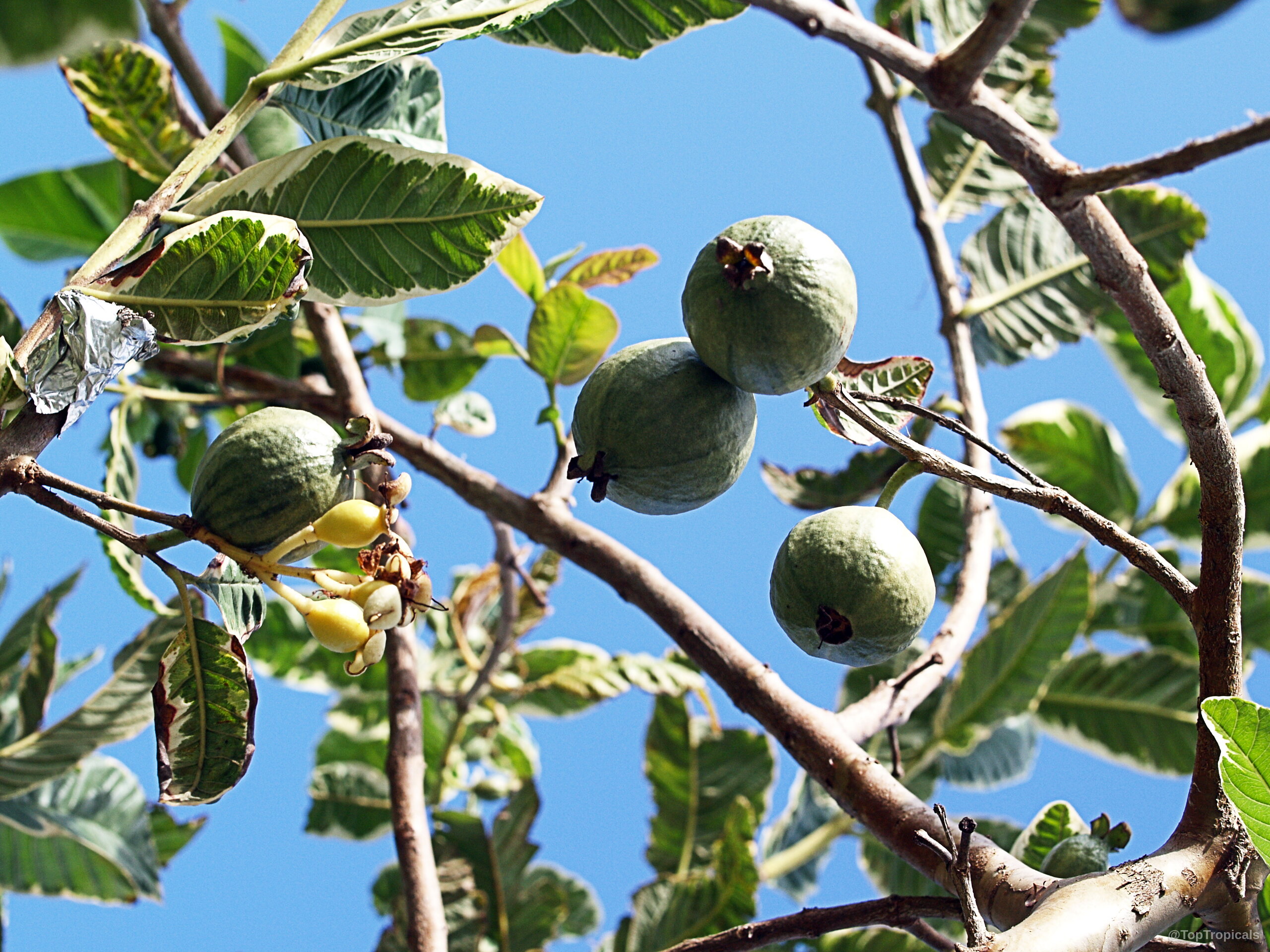
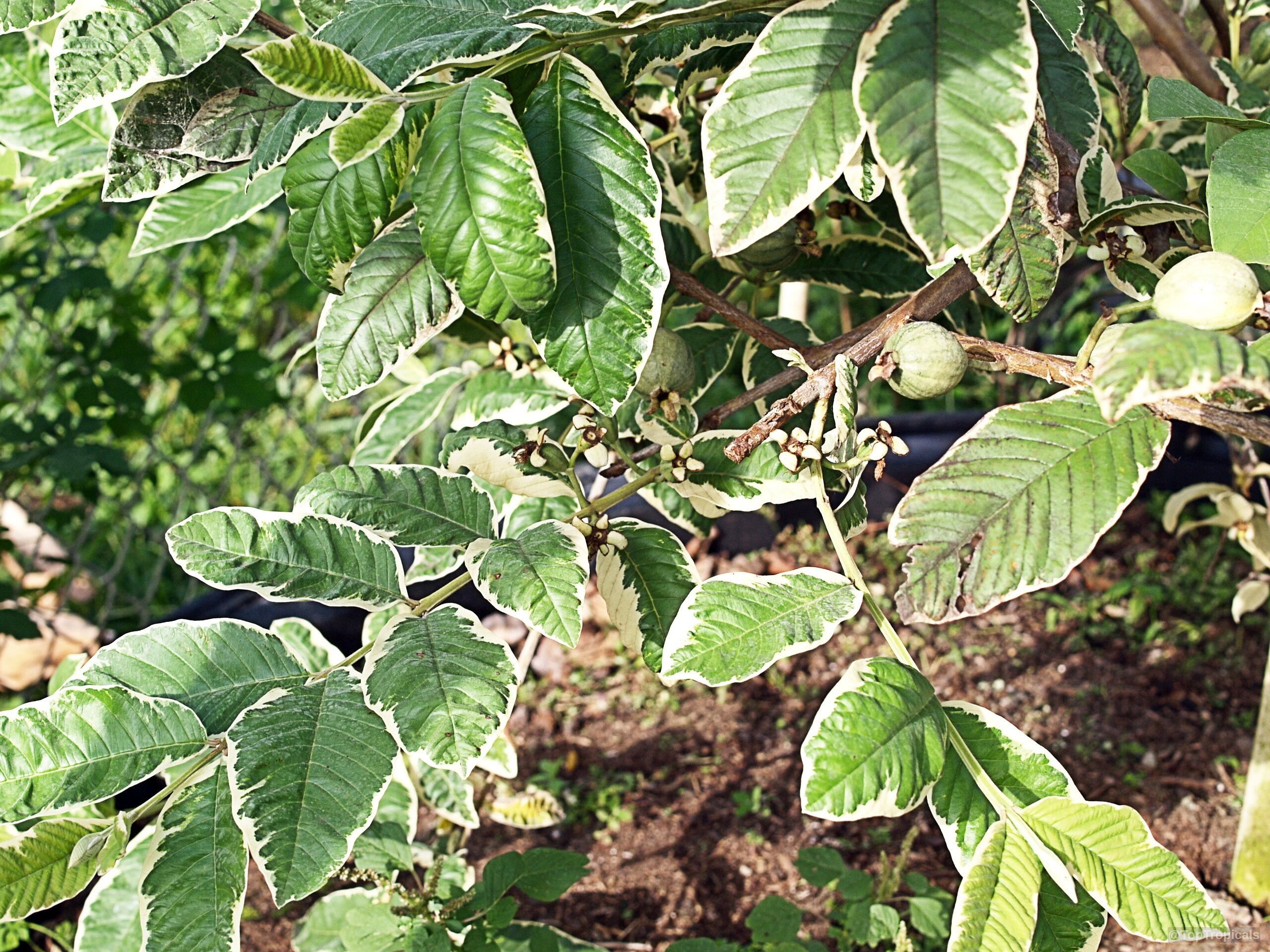
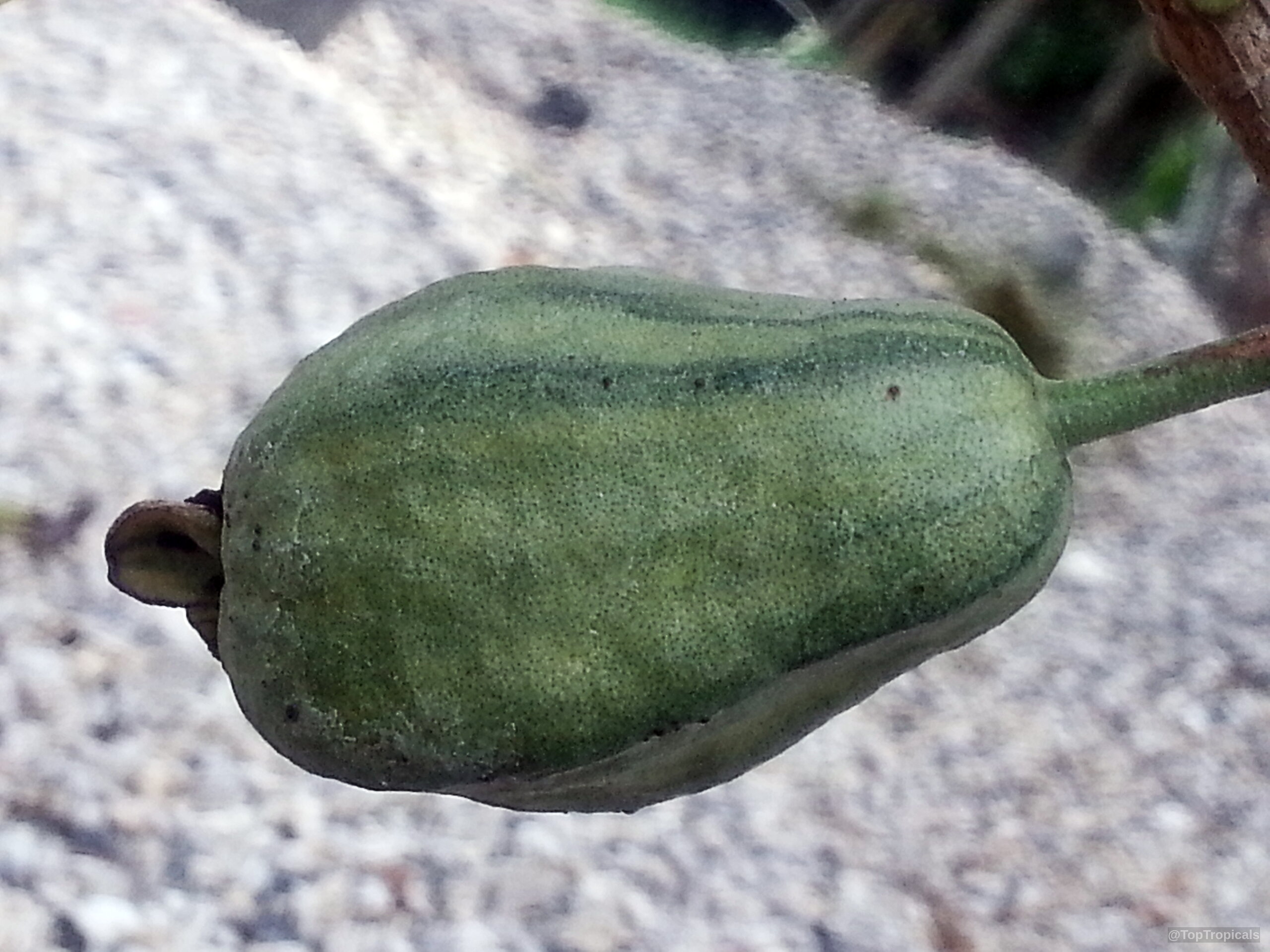
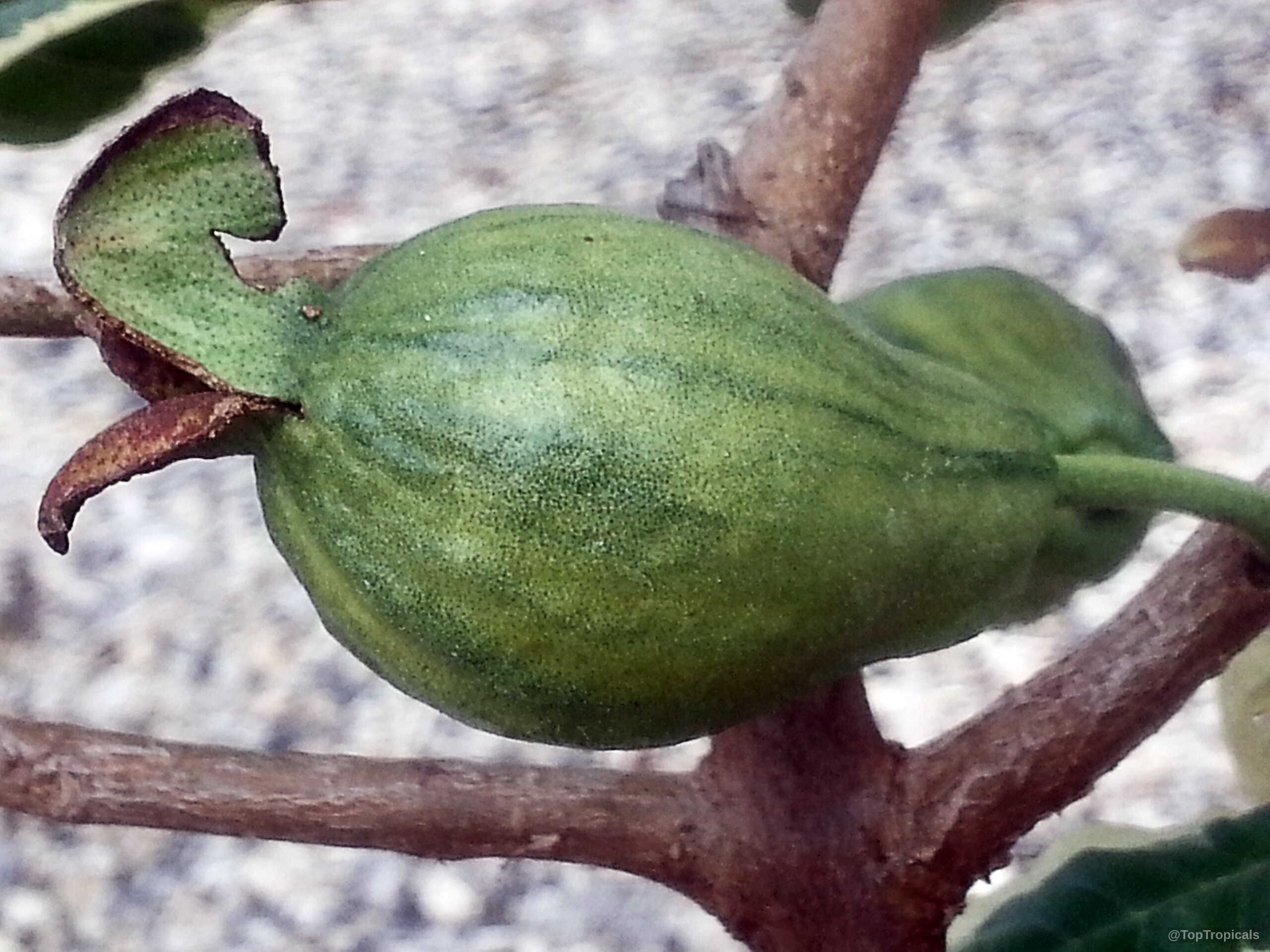
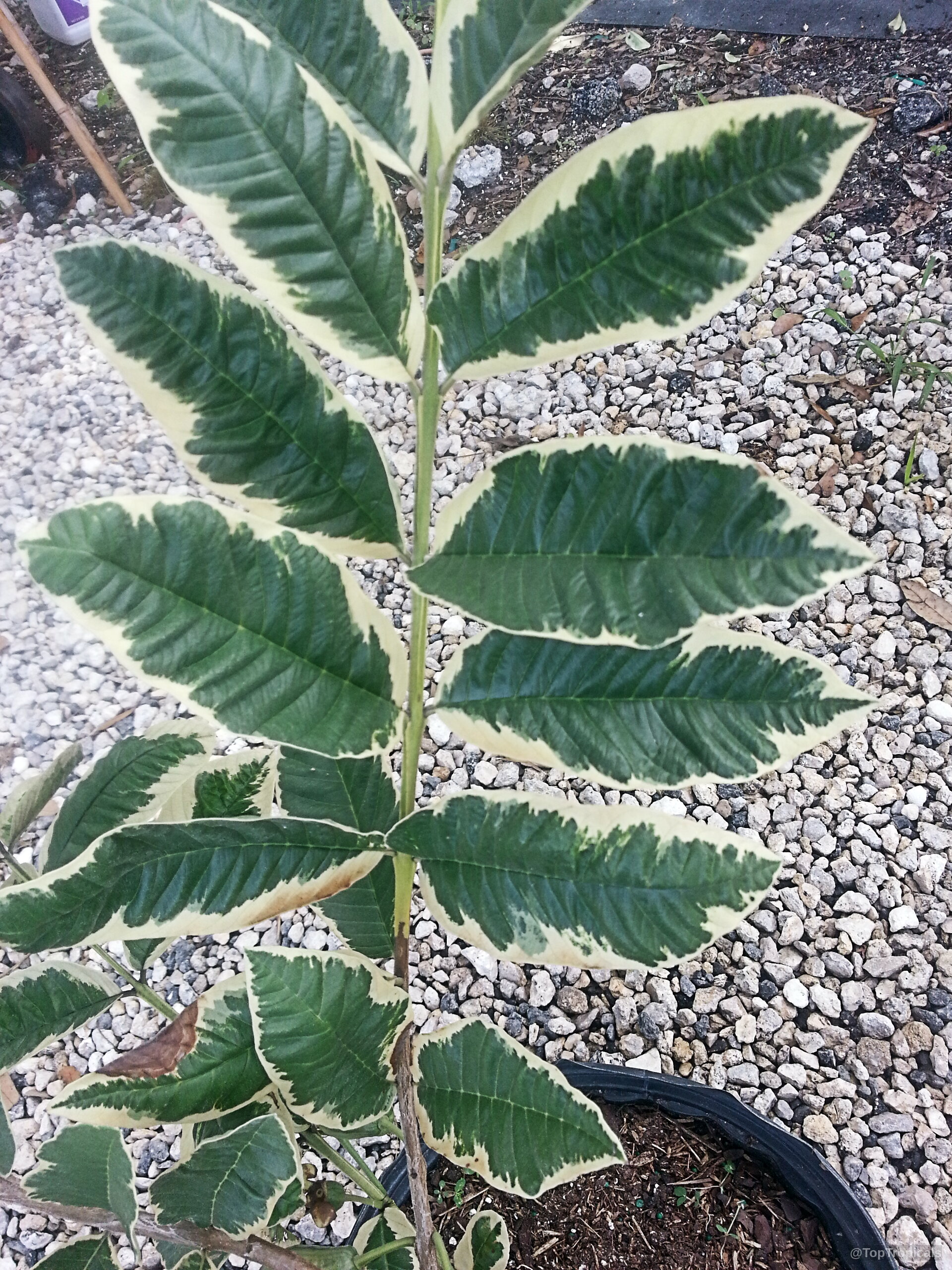
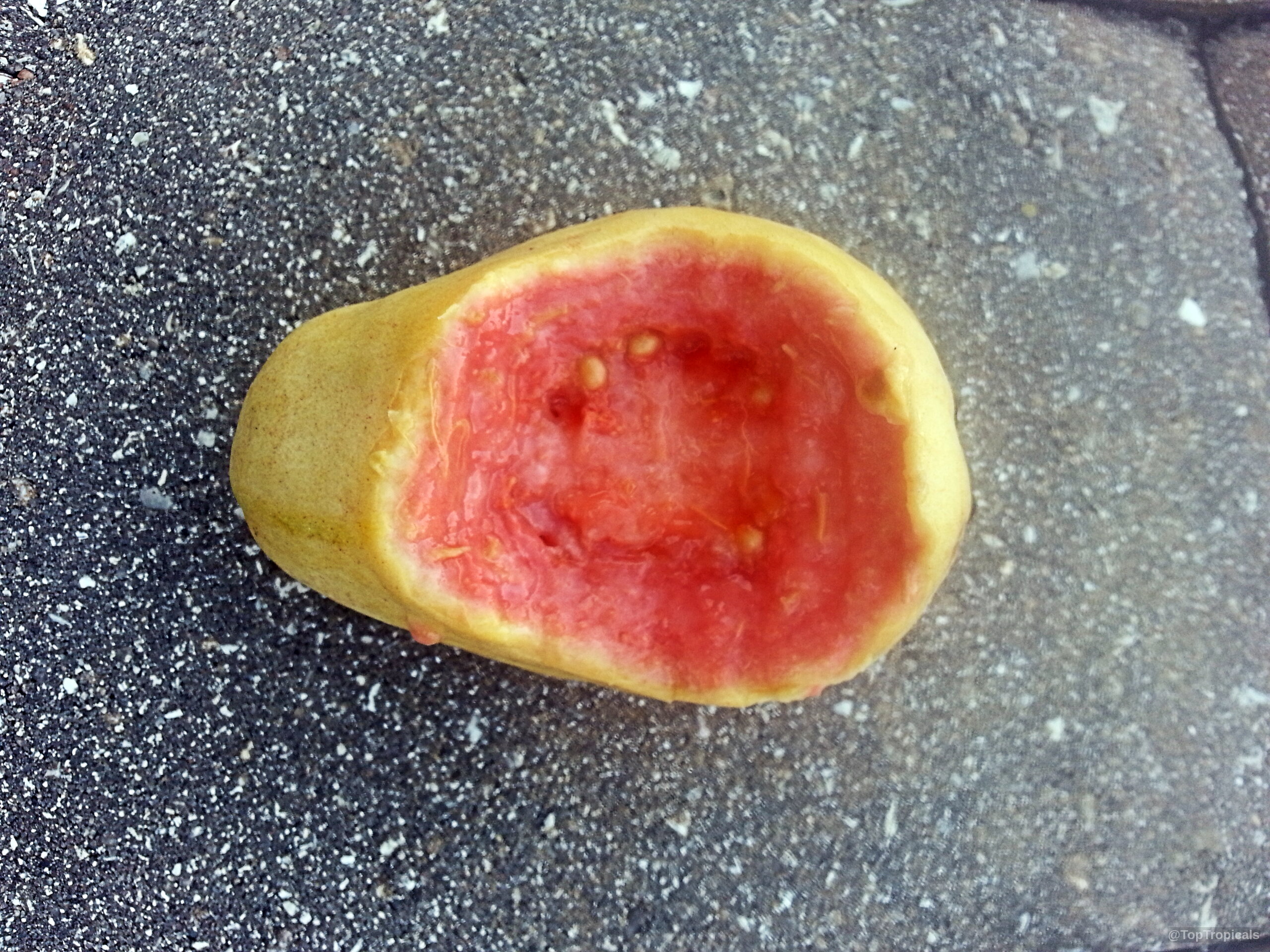
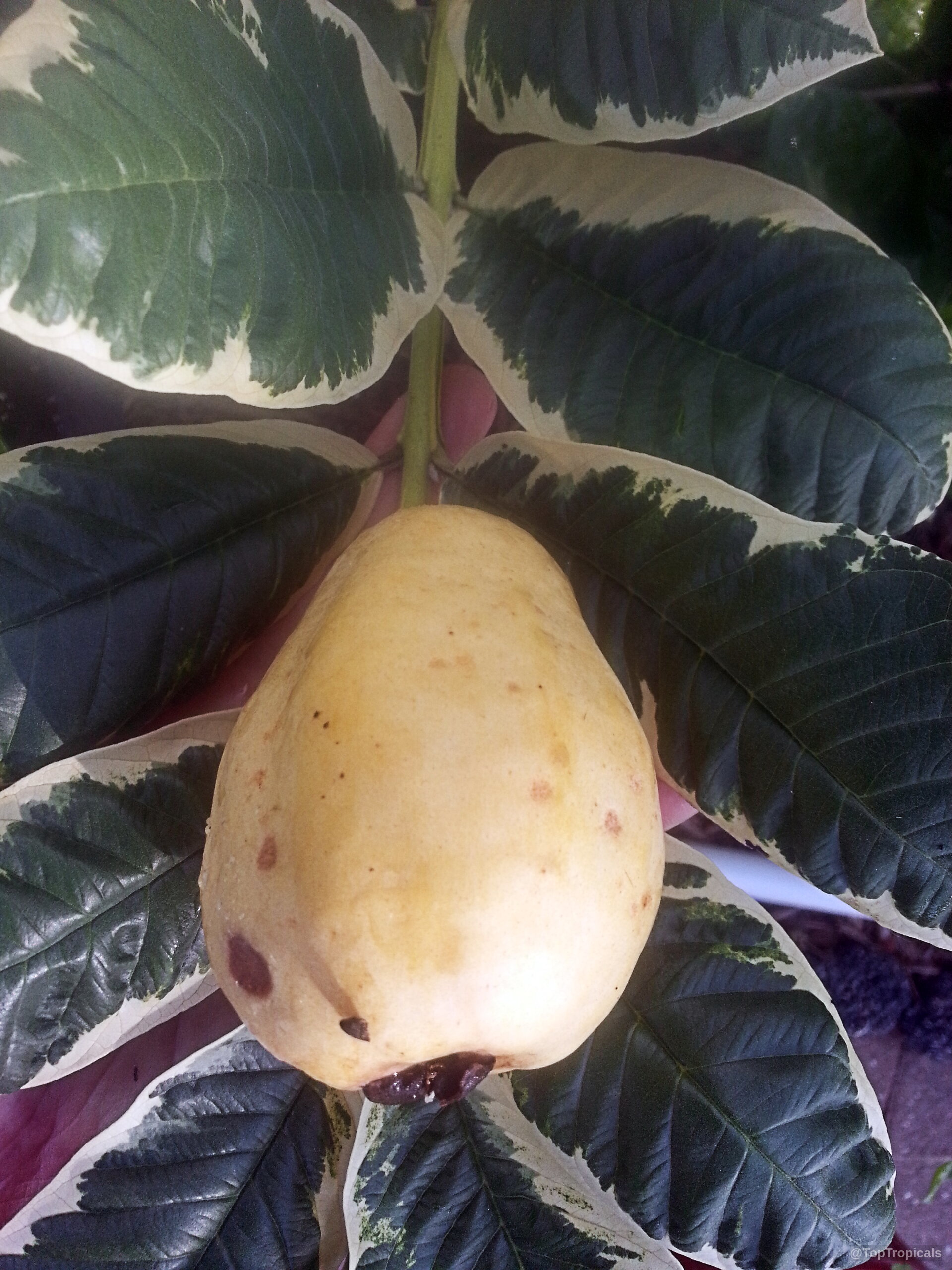
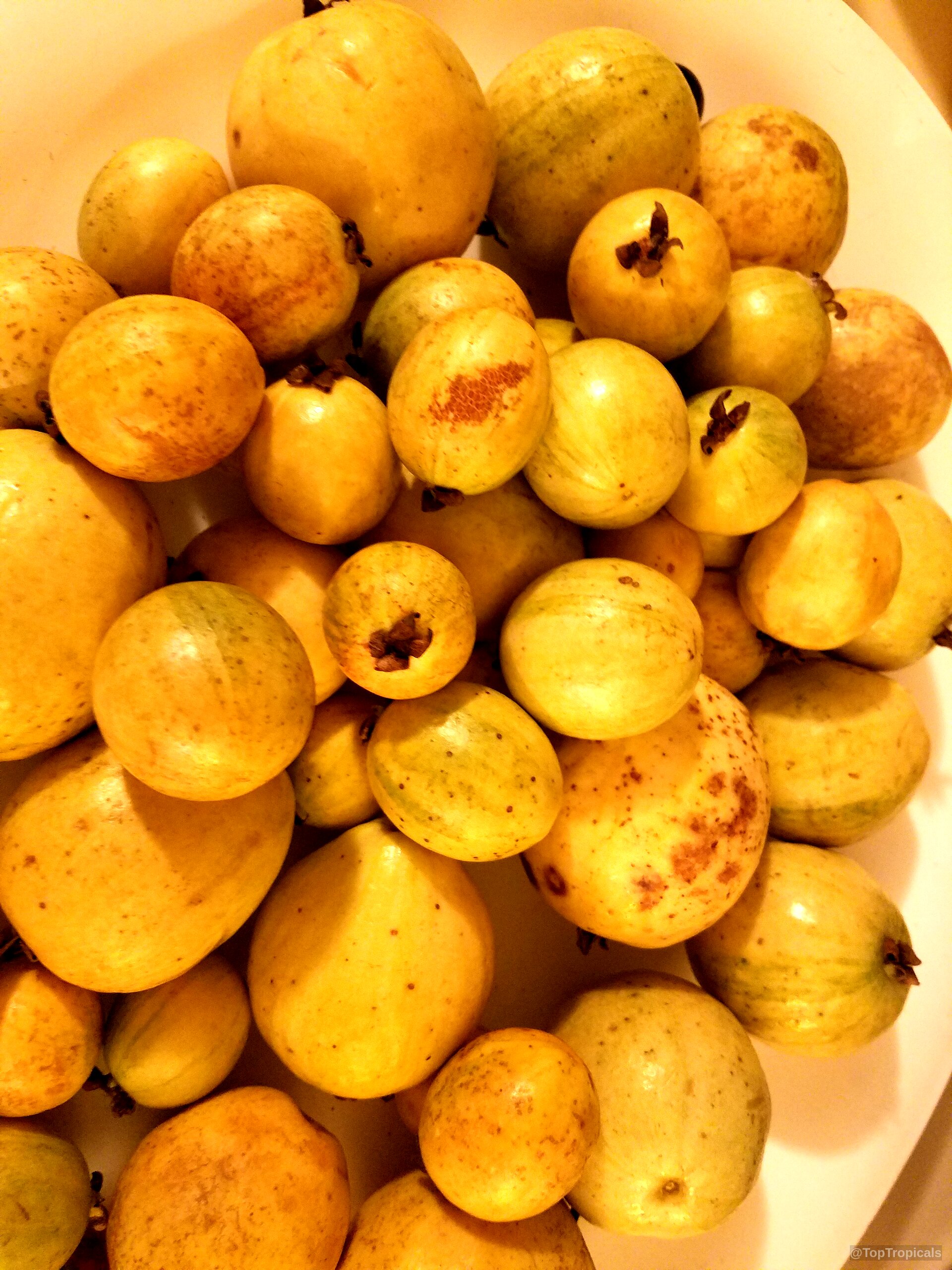
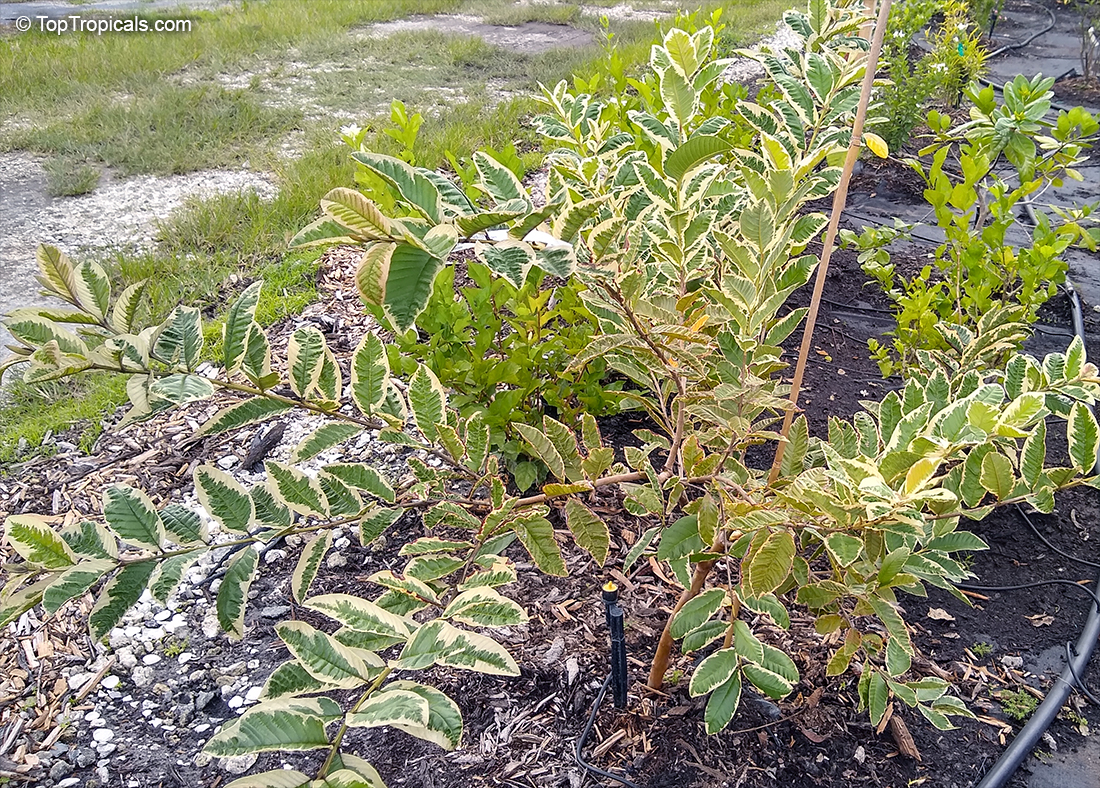
Psidium guajava variegata (Honeymoon Guava) is a large shrub or small tree native to tropical America. It is a fast-growing tree, capable of reaching 5-10 feet tall in full sun and with regular water. The tree is an ornamental specimen with its variegated, broad leaves which have showy white to off-white flowers. Its flowers bloom in clusters and are very attractive. The edible fruit it produces is sweet and delicious with the aroma of ripe fruit when it is fully ripe. The ripe fruit has a unique variegated yellow and green striped exterior and sweet, aromatic, and juicy pink flesh that contains a few seeds.
The Honeymoon Guava is hardy to USDA Zone 8-11 and can withstand temperatures as low as 30s F for a short period of time. The tree can produce up to 50 fruits per season and the fruits can be eaten raw, cooked, canned, and juiced. Psidium guajava variegata is rich in vitamin C, dietary fiber, carotenoids and flavonoids. Eating this fruit can boost immune system, aid digestion, and help keep skin looking healthy.
When grown in cold regions, this guava tree is best grown in a pot. It should be protected from cold winter winds, as well as heat and drought. The potted tree should be placed in a sunny spot, and watered regularly. It is important to prune the plant in spring to promote growth and keep it healthy. The soil needs to be rich and well-draining, and the plant requires fertilizer to ensure good growth and fruit production.








Botanical name: Psidium sartorianum
Common names: Arrayan, Guayabillo, Sartre Guava, Niedenzu, Pichi Che, Little Guava
Family: Myrtaceae
Origin: Central America
USDA Zone: 9-11
Cold tolerance: 25°F
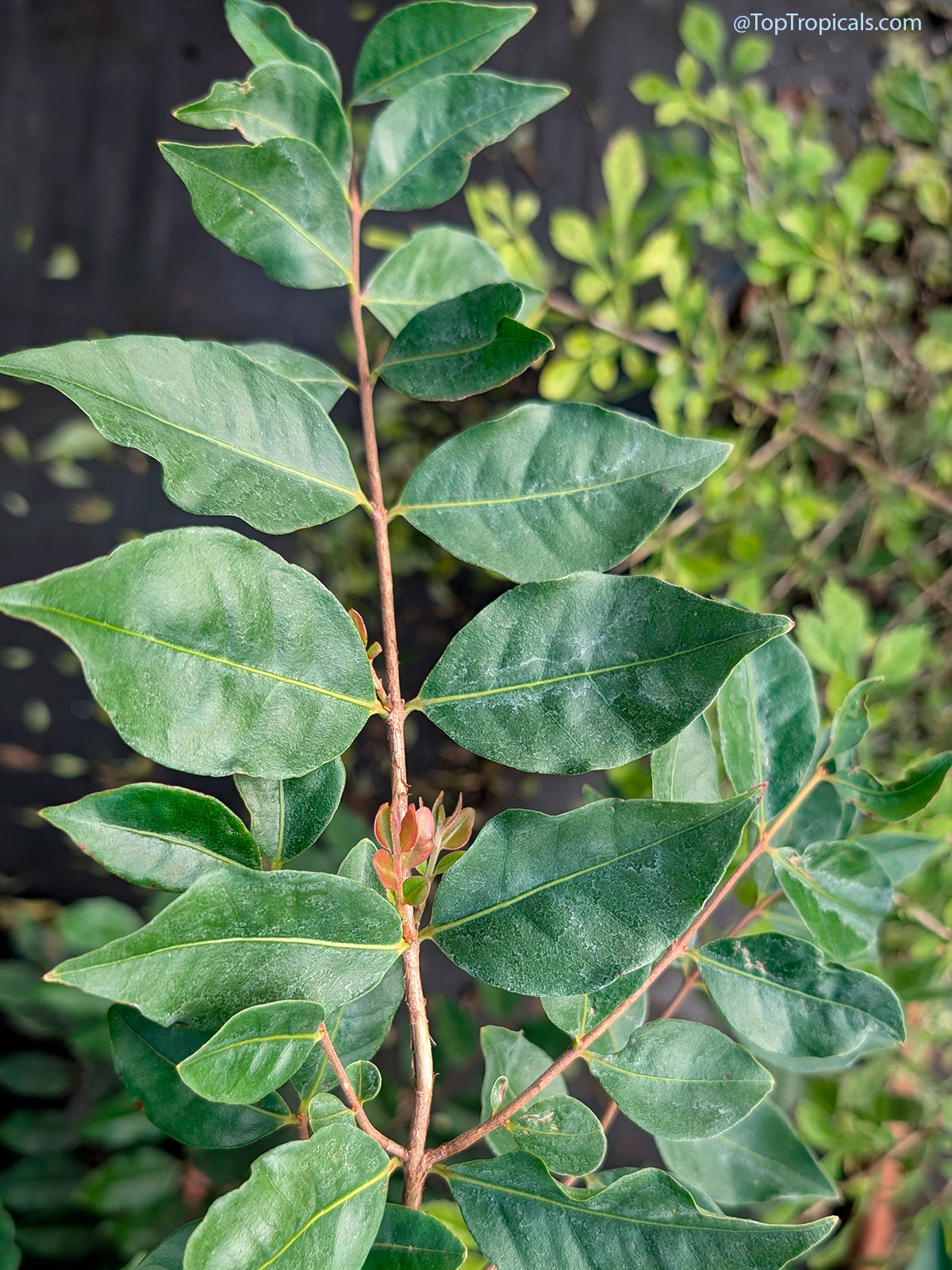
Psidium sartorianum is a compact, ornamental guava species native to Mexico and Central America. Known locally as Arrayan or Guayabillo, and in English as Little guava, it produces small, aromatic yellow-green fruits with a bright sweet-and-sour flavor. The tree is closely related to Cas guava and is valued both for fruit production and attractive landscaping.
The fruits are round to oval, about 1" wide, with thin skin and soft, juicy flesh surrounding a few hard seeds. When ripe, the flavor is tangy and refreshing with citrusy and floral notes. Fruits are eaten fresh, used in jams, syrups, beverages, and traditional dishes, or preserved for later use. Harvest season typically runs from fall through early spring.
Nutritionally, Arrayan fruit is rich in vitamin C, antioxidants, fiber, potassium, and calcium. Both fruits and leaves have a long history of traditional use, with leaves commonly used in herbal remedies for digestion and general wellness.
The tree itself is small and manageable, making it well suited for edible landscaping, home gardens, and collectors of rare tropical fruit trees. It features attractive peeling bark and dense foliage, adding ornamental value year-round. A great choice for gardeners looking for an unusual, productive guava with cultural history and excellent flavor.
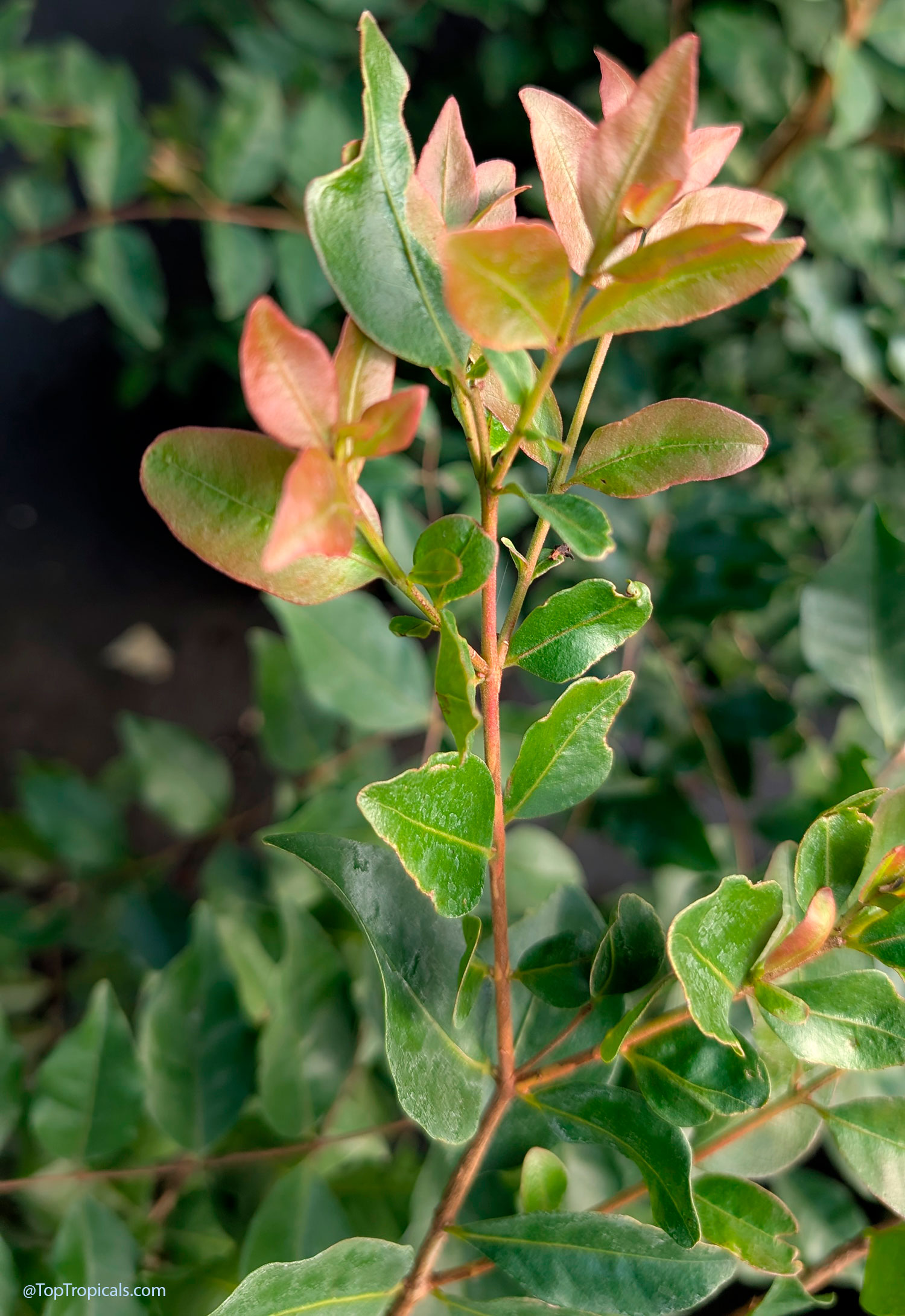
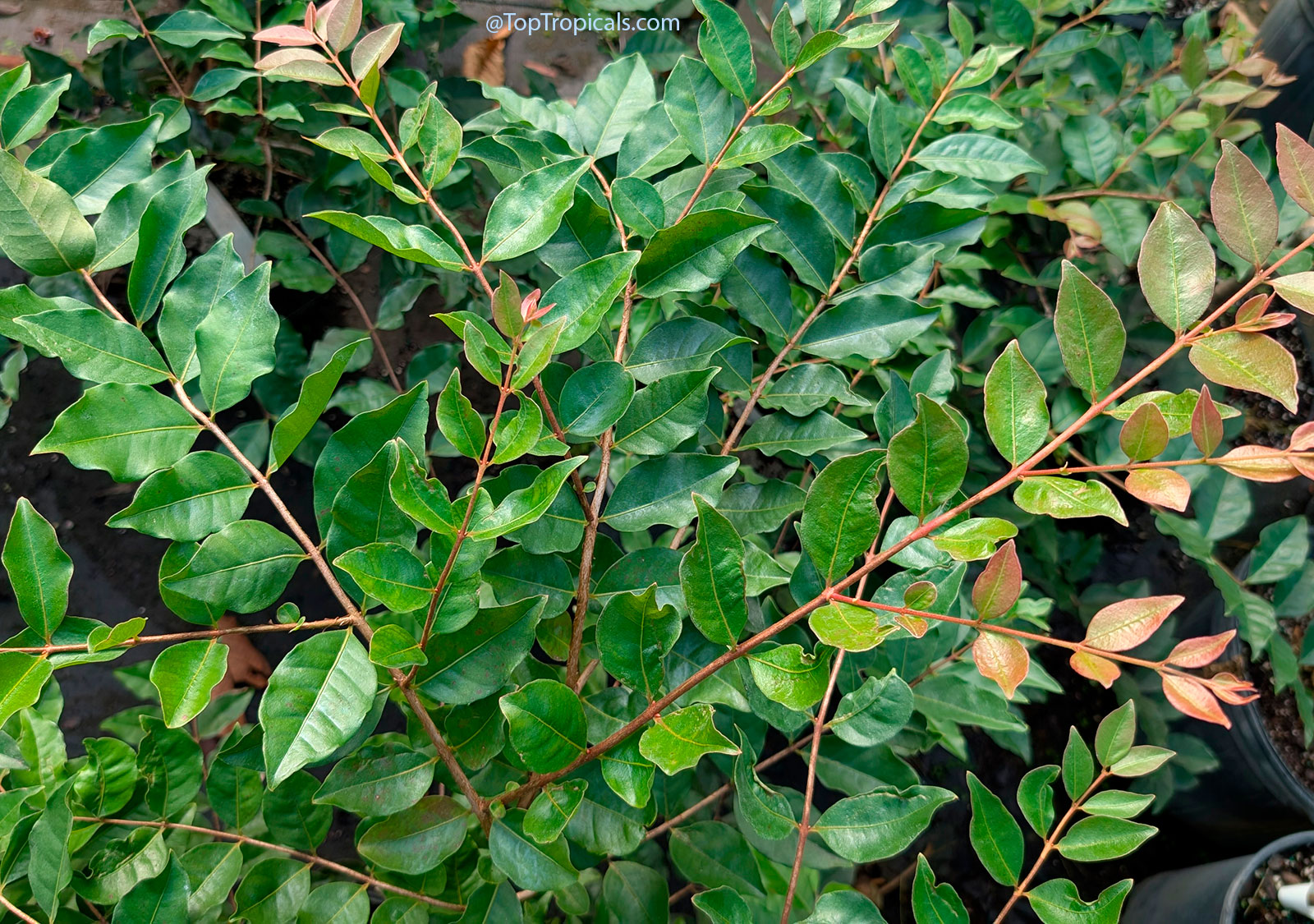
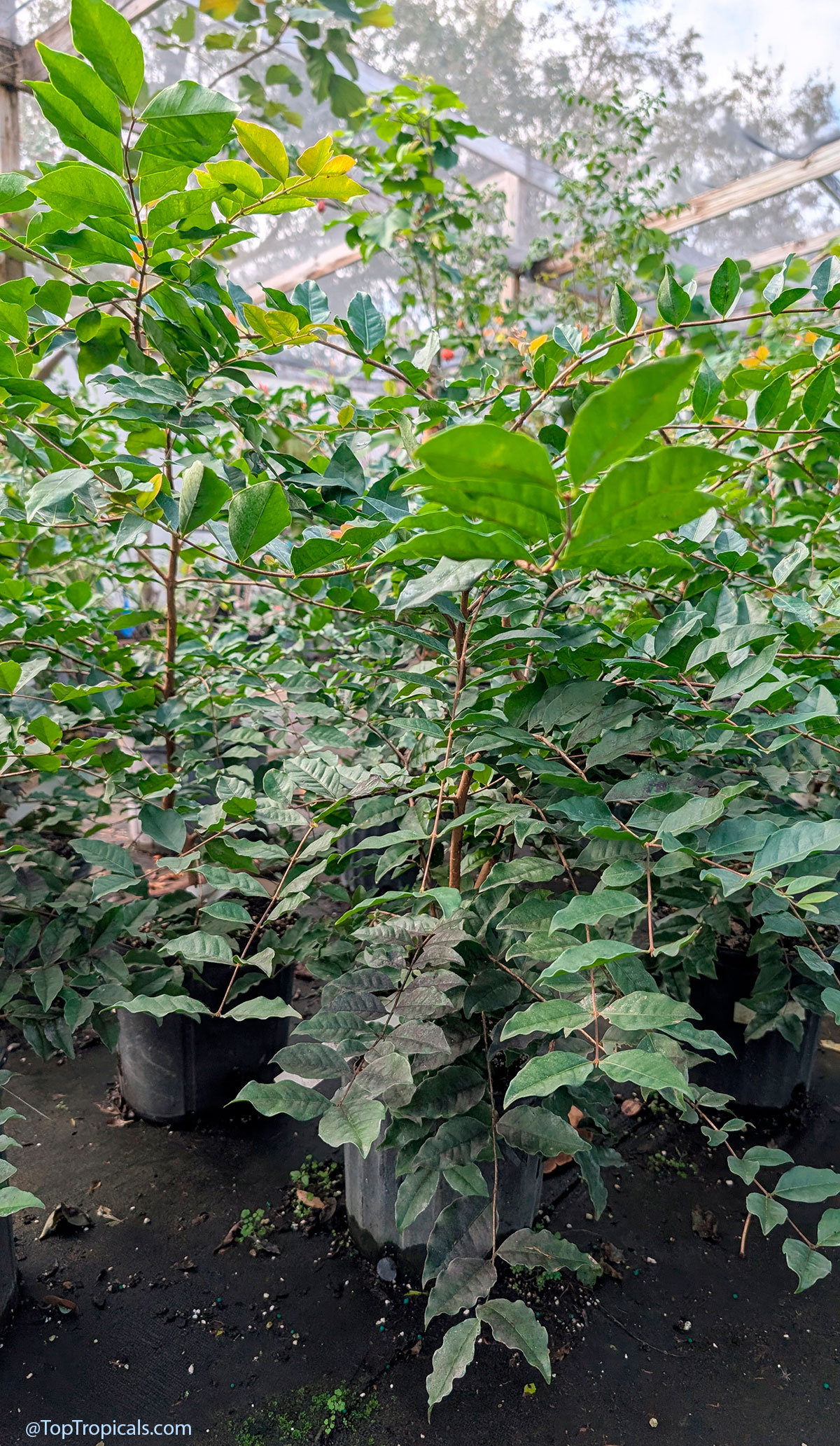
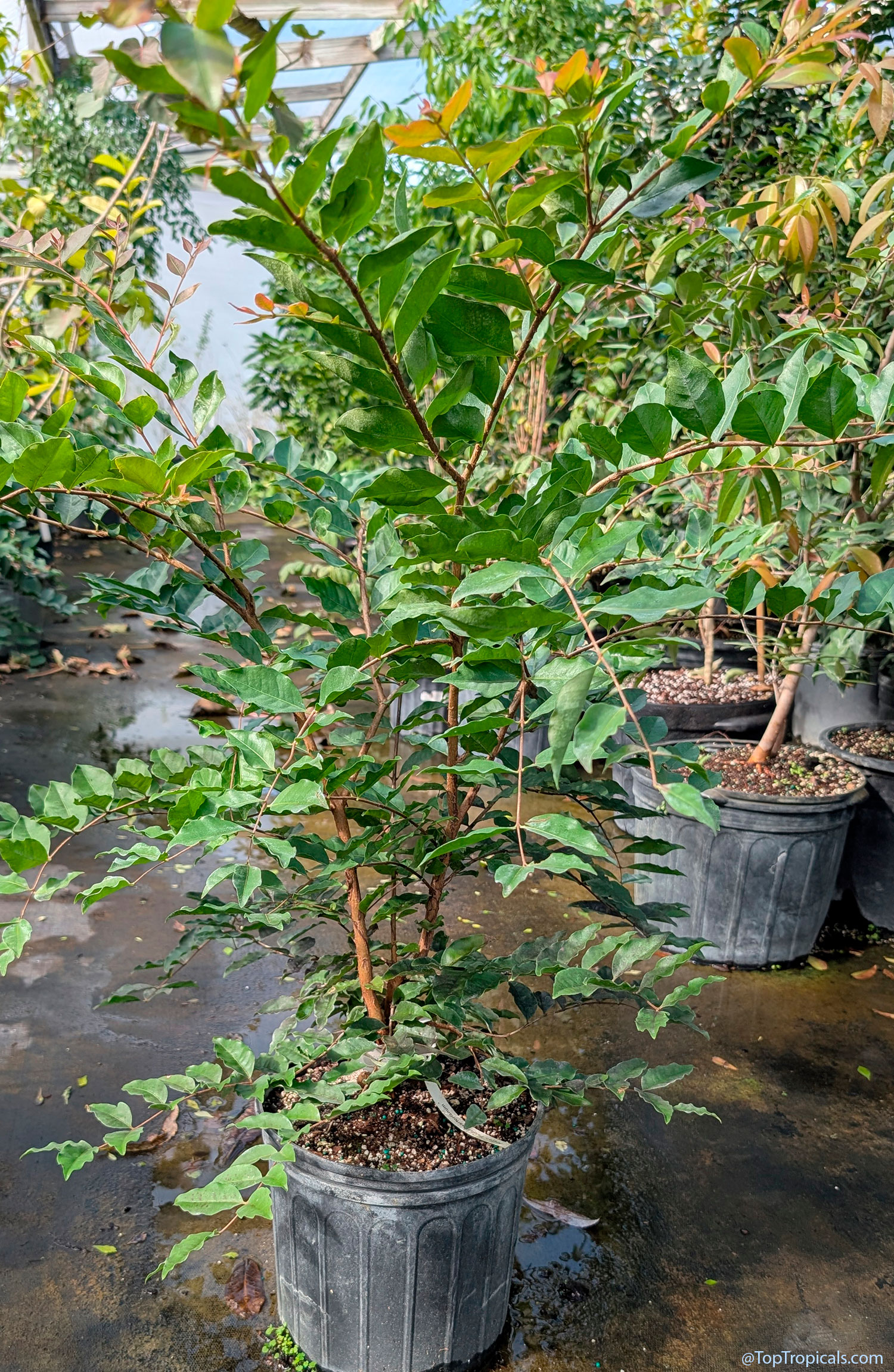
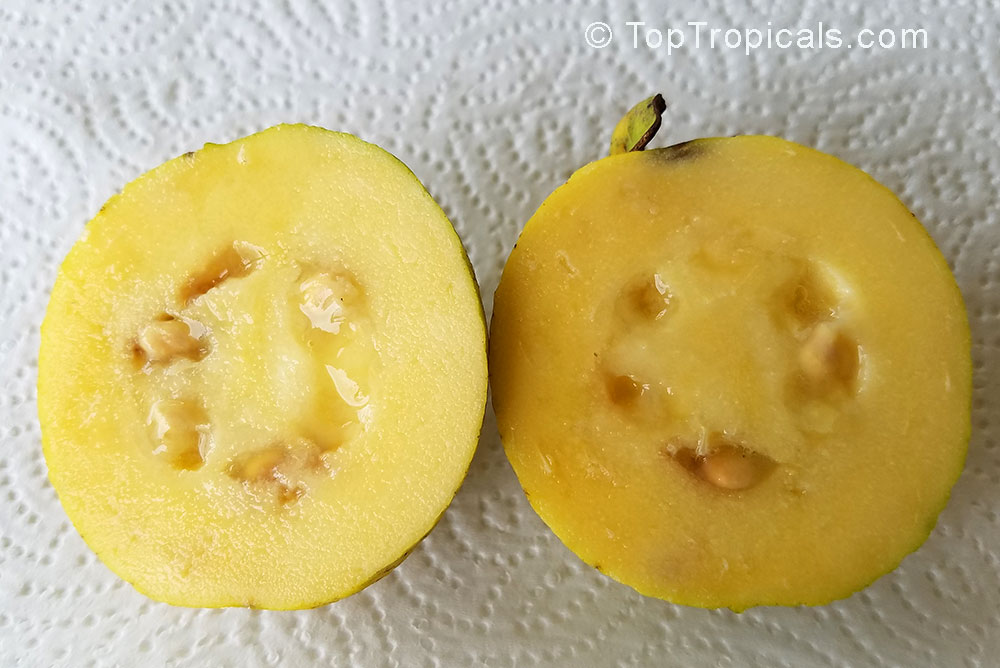
Arrayan fruits ripen from fall through early spring, giving you fresh guava flavor when many other fruits are done for the season. The leaves are also traditionally valued, adding even more usefulness to this already special tree.
If you are looking to grow something uncommon, productive, and genuinely interesting - this is one of those plants people ask about the moment they see it. Great flavor, great looks, and not often available. Add it to your garden while you can.
Recommended Fertilizer: SUNSHINE C-Cibus - Crop Nutrition Booster
SUNSHINE-Honey - sugar booster
7 gal pot. More developed root system, thicker trunk and branches. Plant height depends on growing season and variety. Dwarf varieties are slow growers and may be shorter. Contact us for exact size description if size/height matters to you. 7 gal plants may be shipped separately from other items by Ground service due to large size. See here time in transit (business days, excluding Sat-Sun!)
Botanical name: Psidium guajava
Common name: Dwarf Guava
Cultivar: Nana
Family: Myrtaceae
Origin: Tropical America
USDA Zone: 9-11


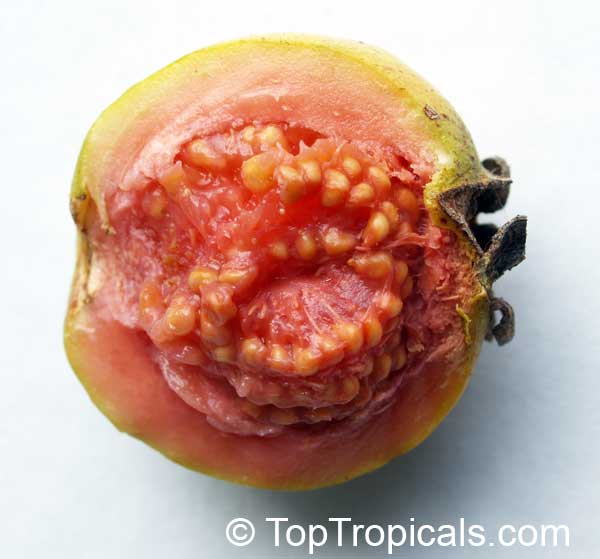
This is a very small, dwarf version of the beloved Guava. The tree grows only up to 5-6 ft tall with a short trunk and branching habit. Leaves are narrow and 2 inch long. This plant has many advantages for those who have limited space. It can be grown in a pot and fruits heavily. Blooms mostly from fall through spring, although the tree can bear fruit almost year around. The fruit is round, and almost a full size, 2 inch size, surprisingly for the dwarf habit of the plant. The leaves can be either smaller or regular size, in both cases the tree has a dwarf habit.
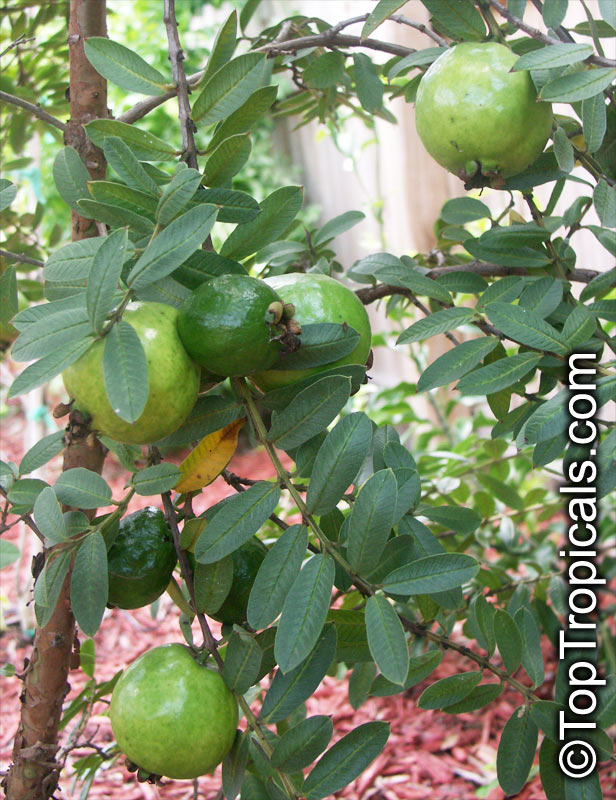
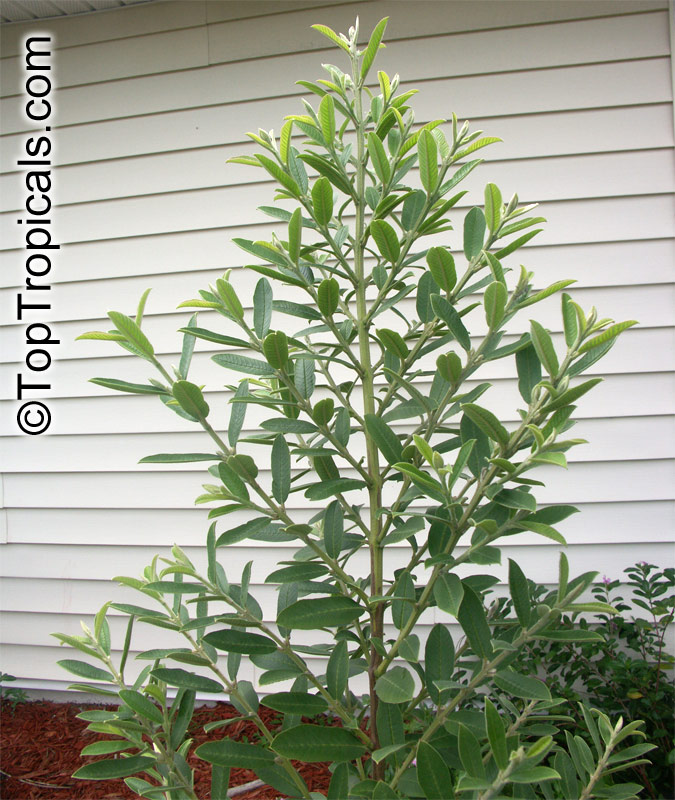
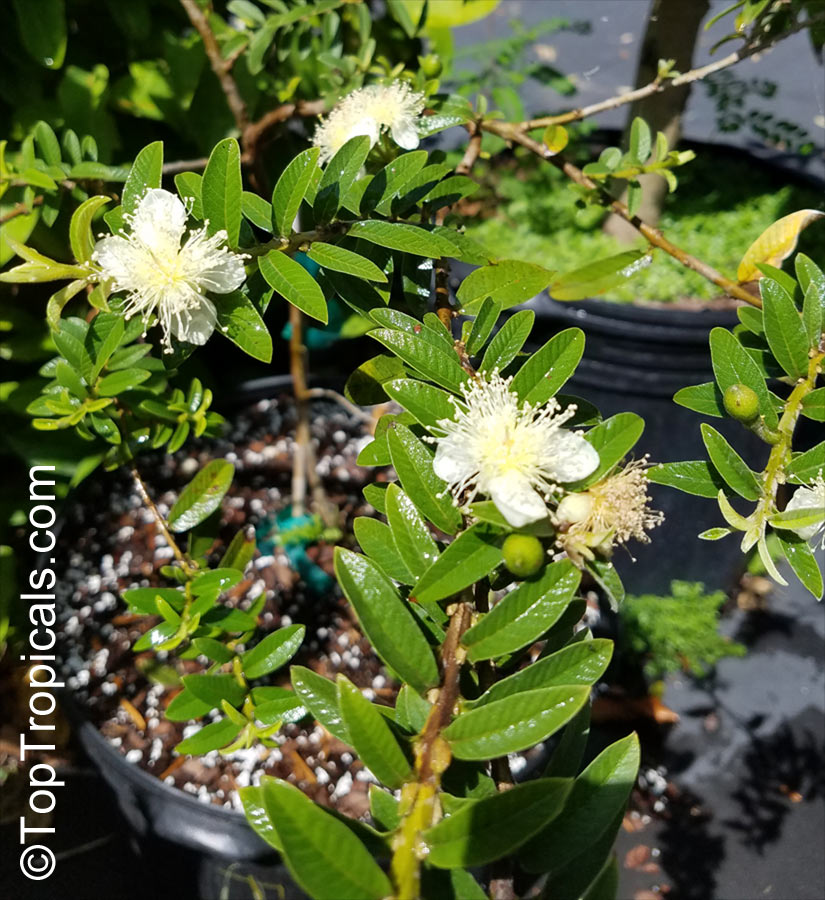
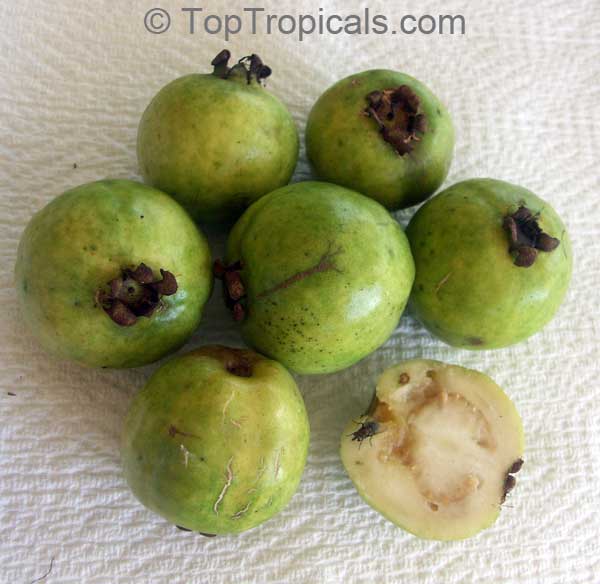
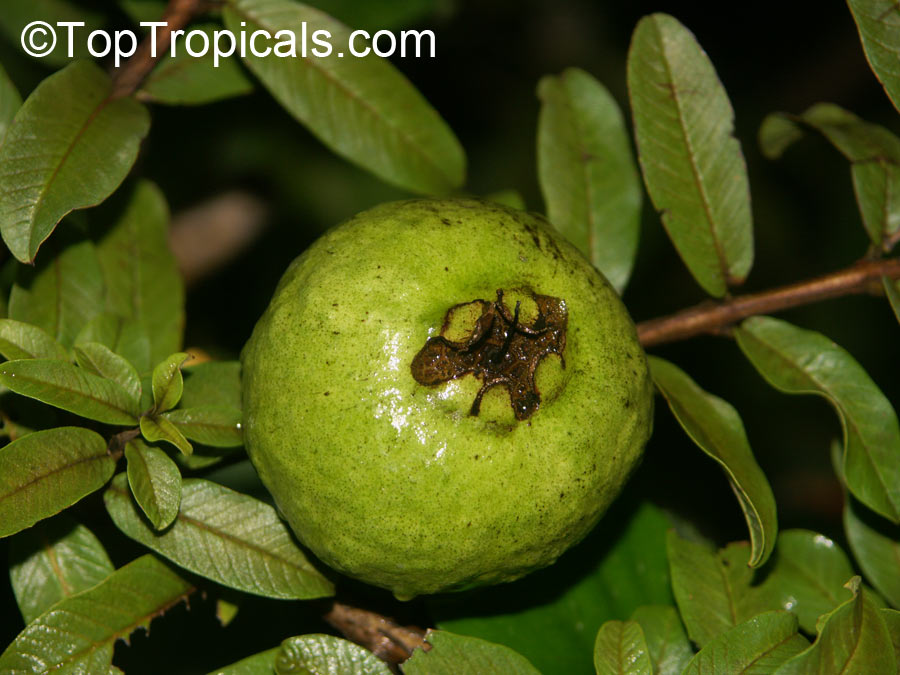
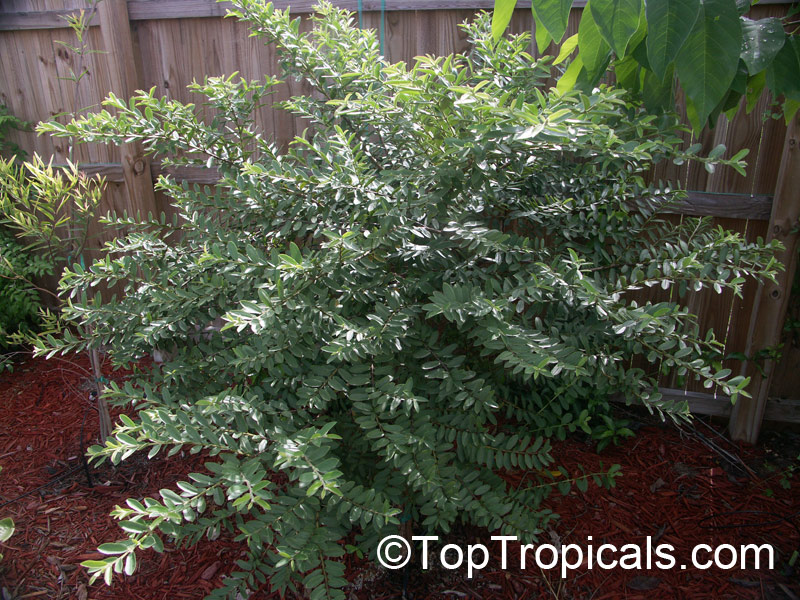
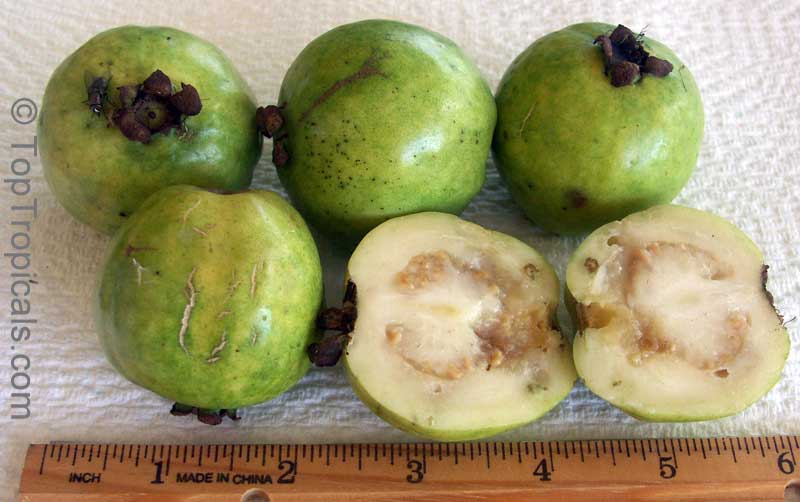


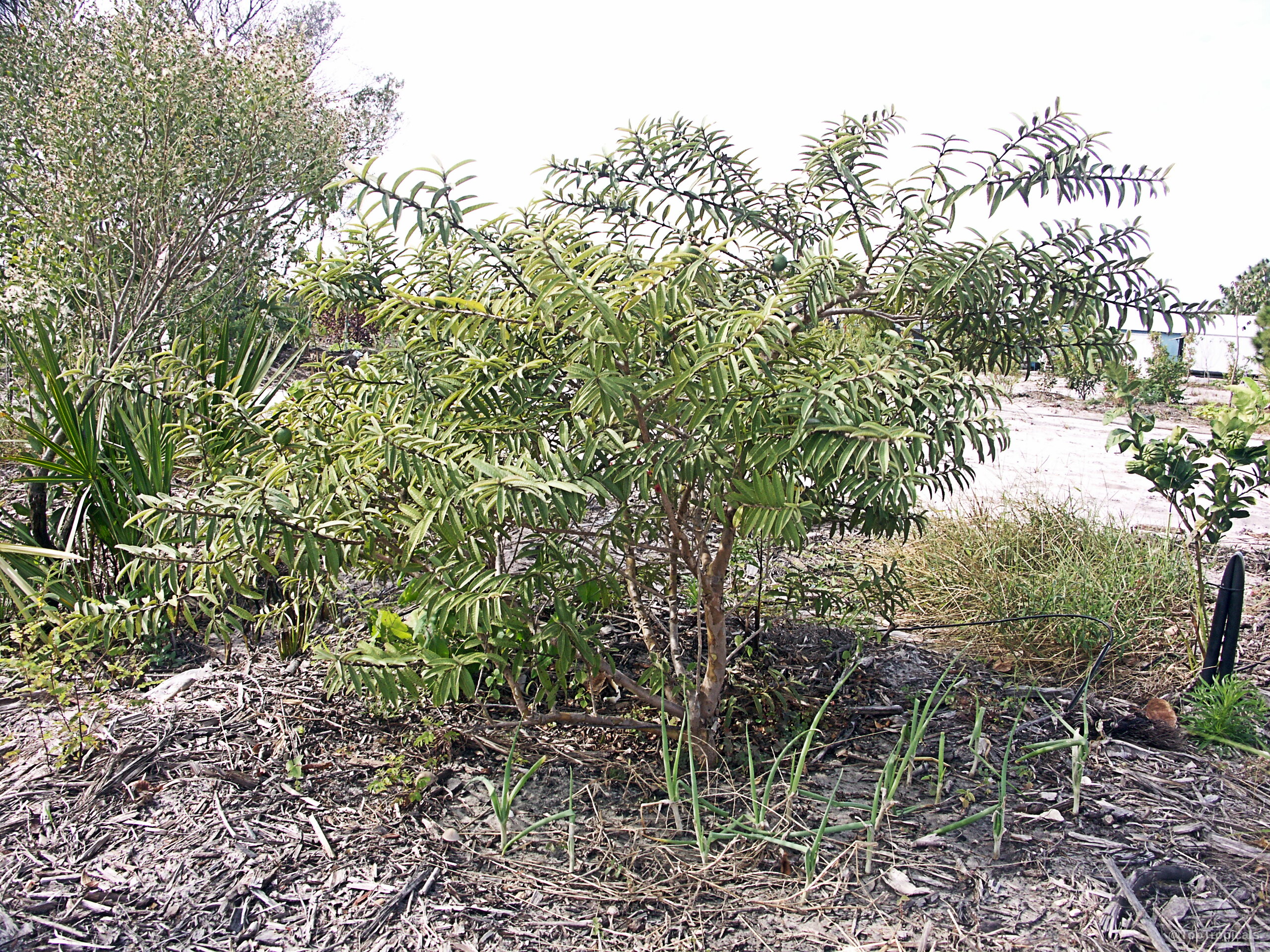
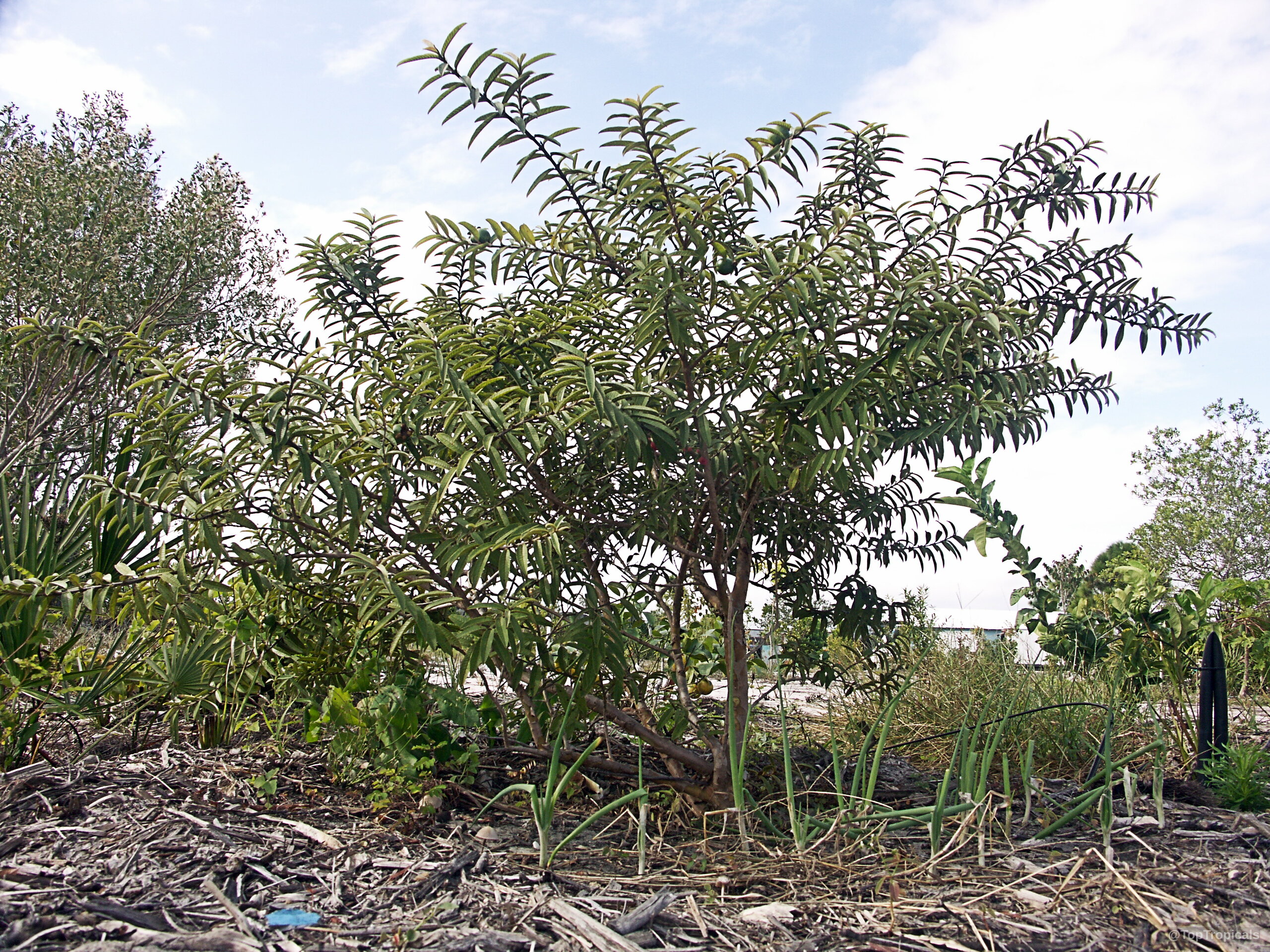

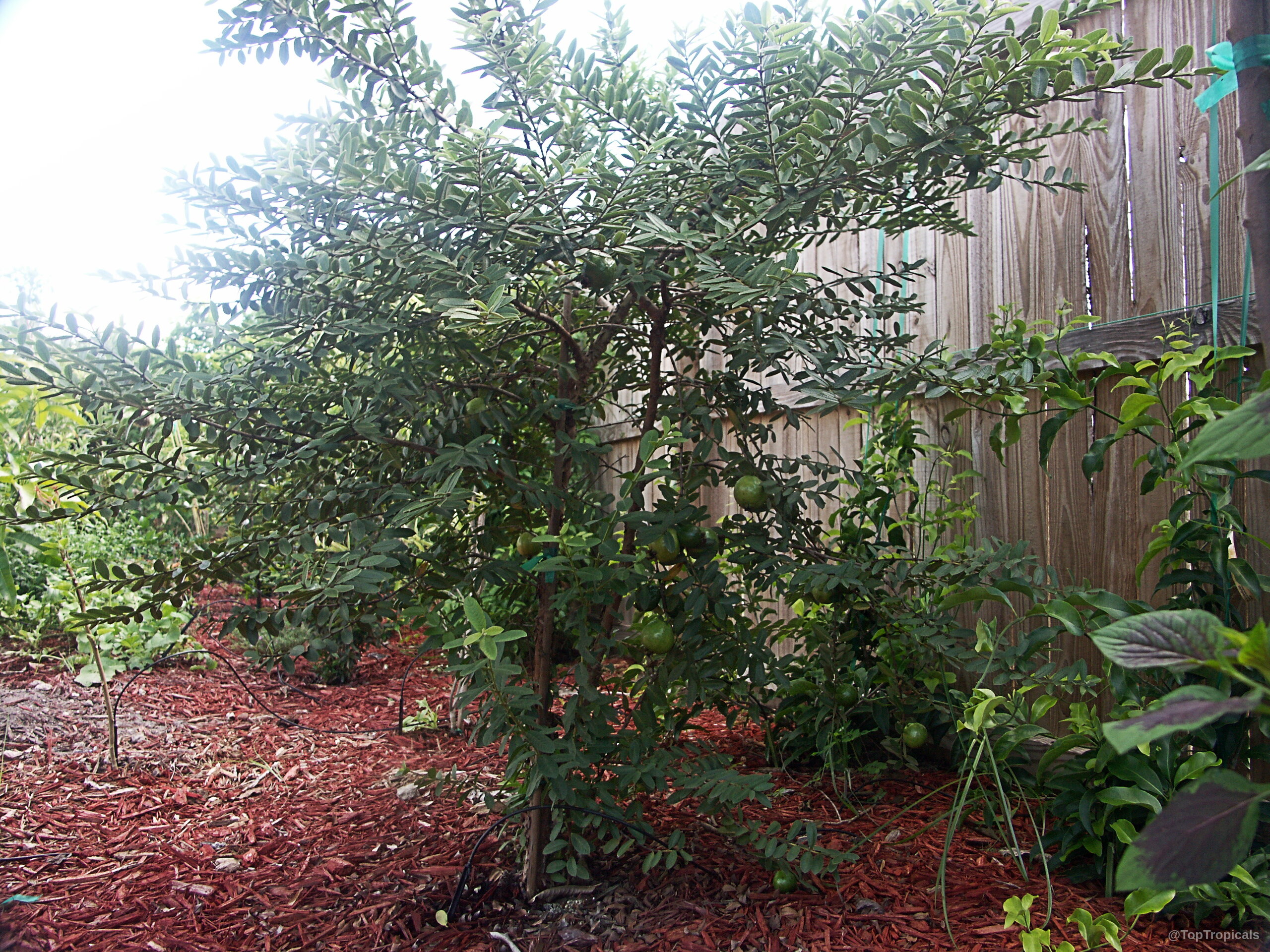

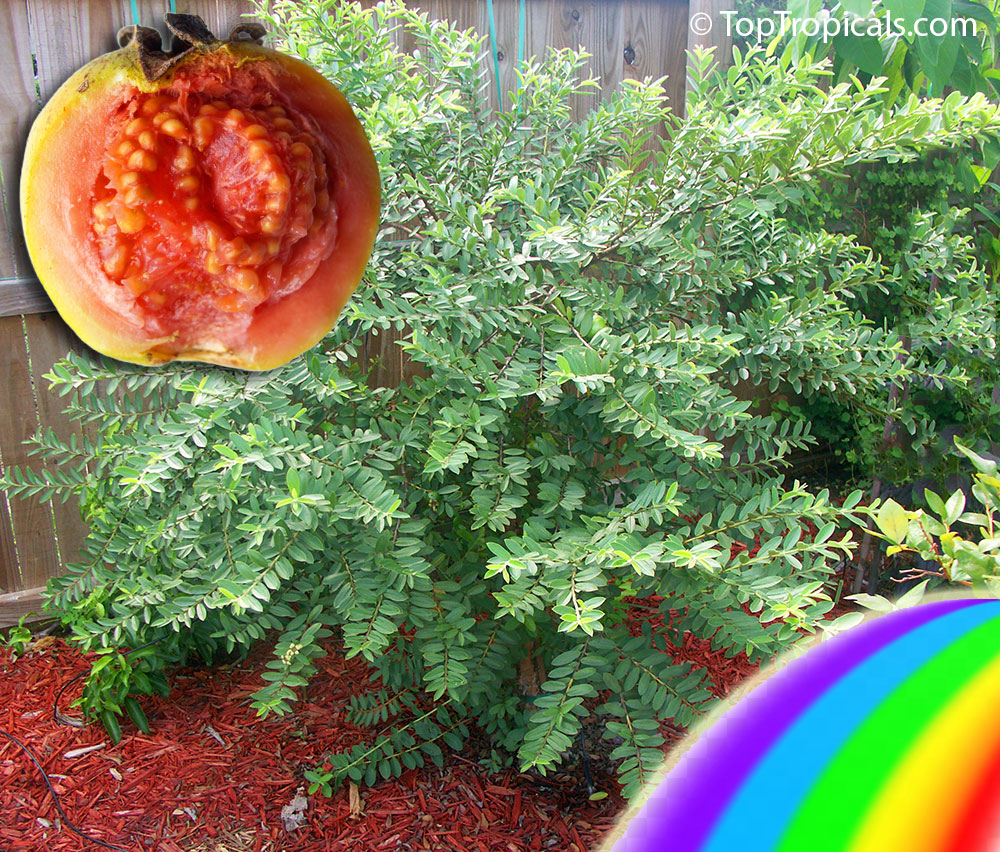
The leaves can be either smaller or regular size, in both cases the tree has a dwarf habit.
Recommended Fertilizer: SUNSHINE C-Cibus - Crop Nutrition Booster
SUNSHINE-Honey - sugar booster
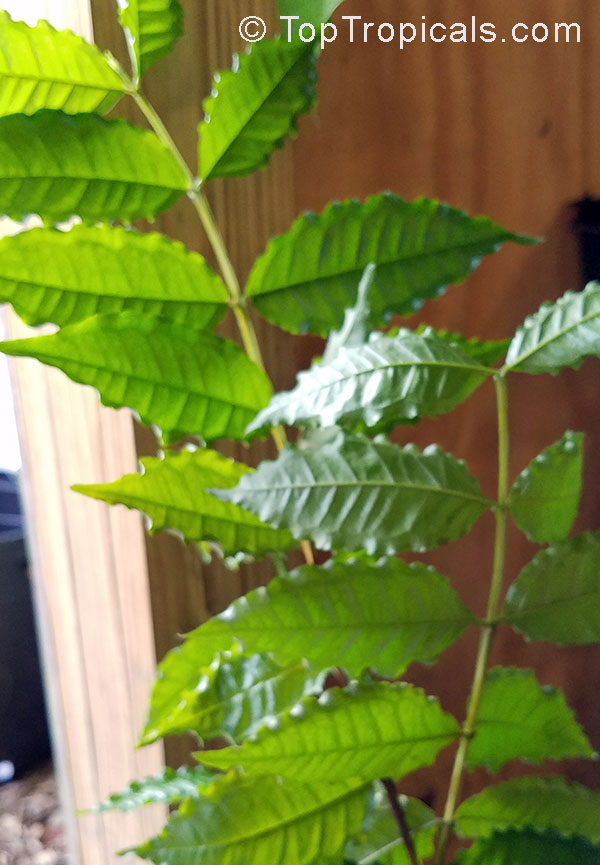
Botanical name: Psidium acutangulum
Common names: Brazilian Guava, Araca Pera, Bayabas
Family: Myrtaceae
Origin: Brazil
USDA Zone: 9-11
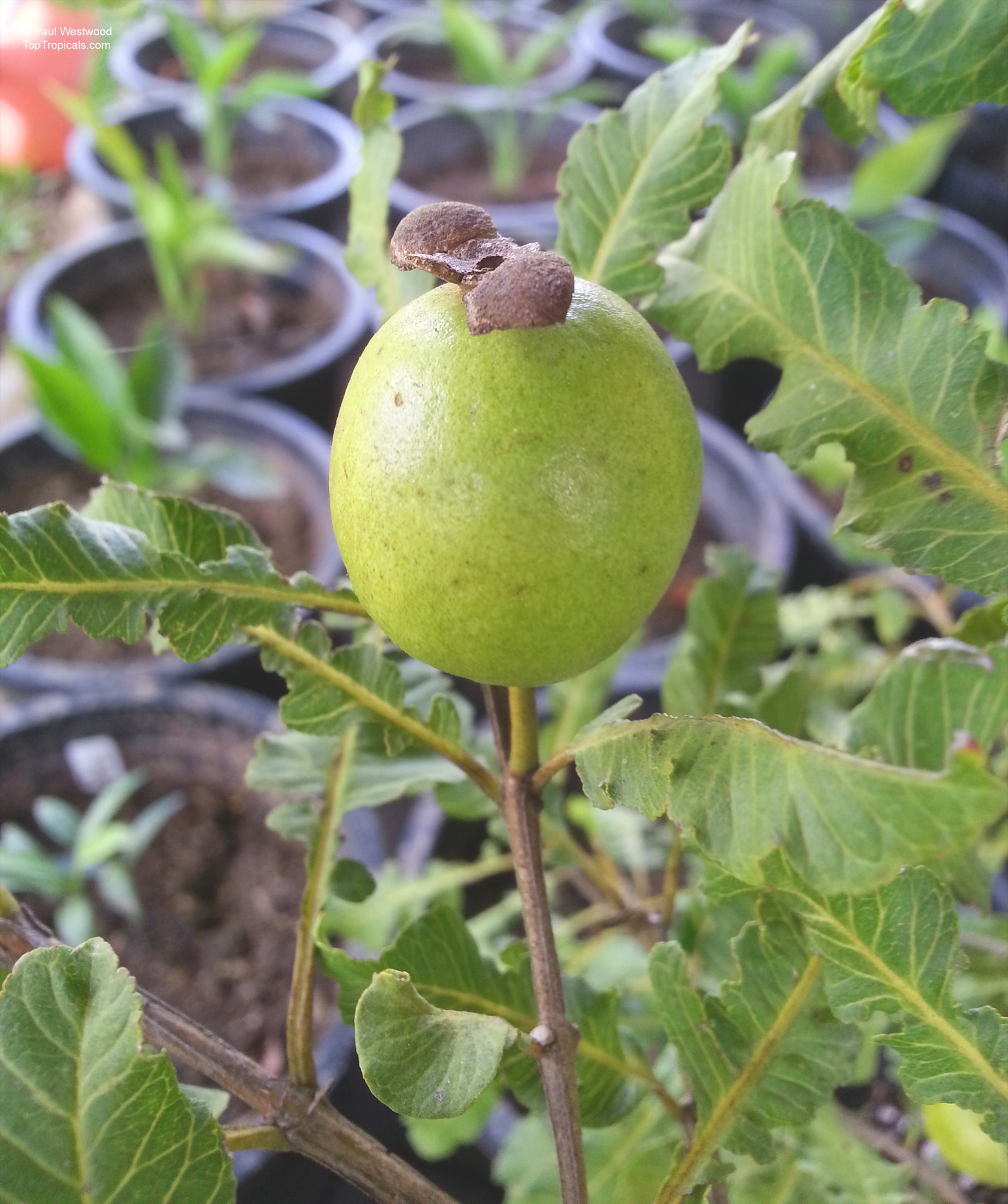
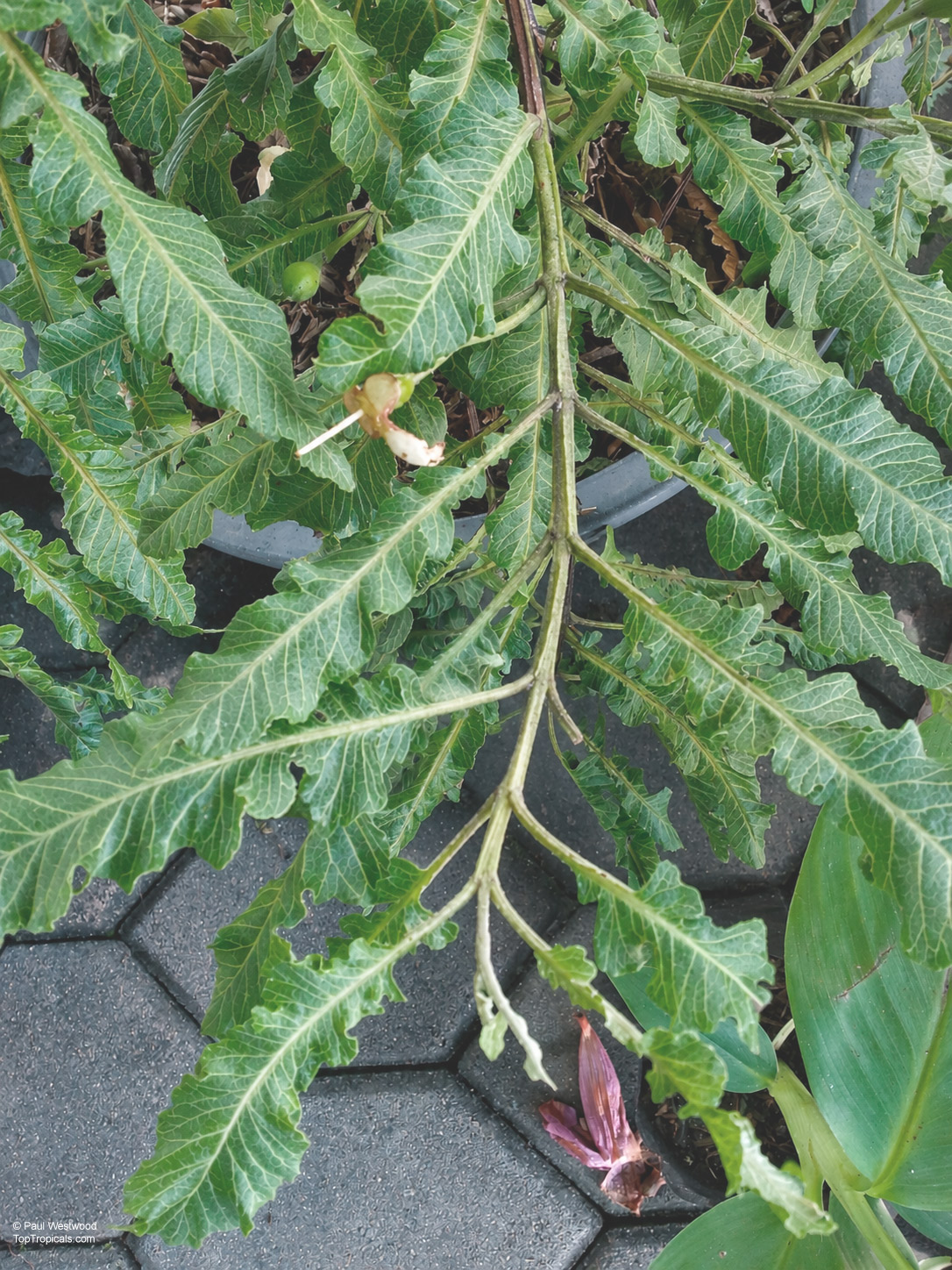
An unusual and tasty wild guava from the Brazilian Amazon. Rare in cultivation. Grows into a small tree, leaves are very interesting and distinctive, with wavy margins.
Fruit grow to 2-3", with an acidic, sour but guava-like flavor. Its juice is concentrated and must be diluted and sweetened to produce a delicious drink. The fruit is processed into ice cream sorbet, gelatins and candies. A great container specimen. Zones 9 to 11.
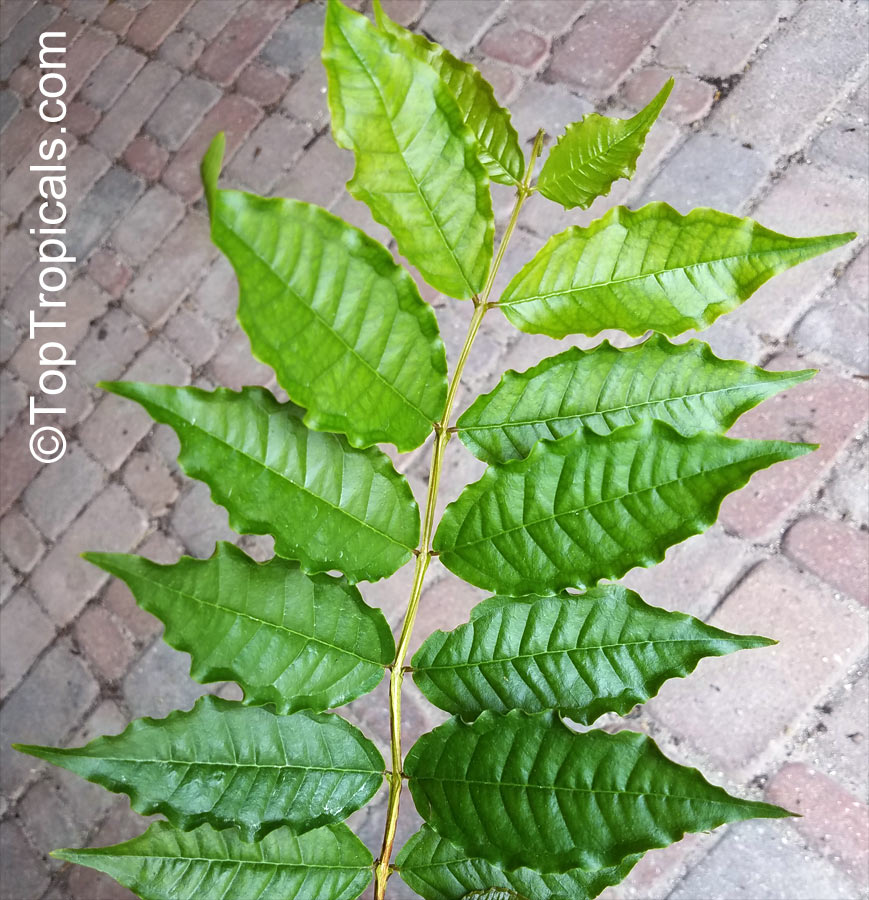
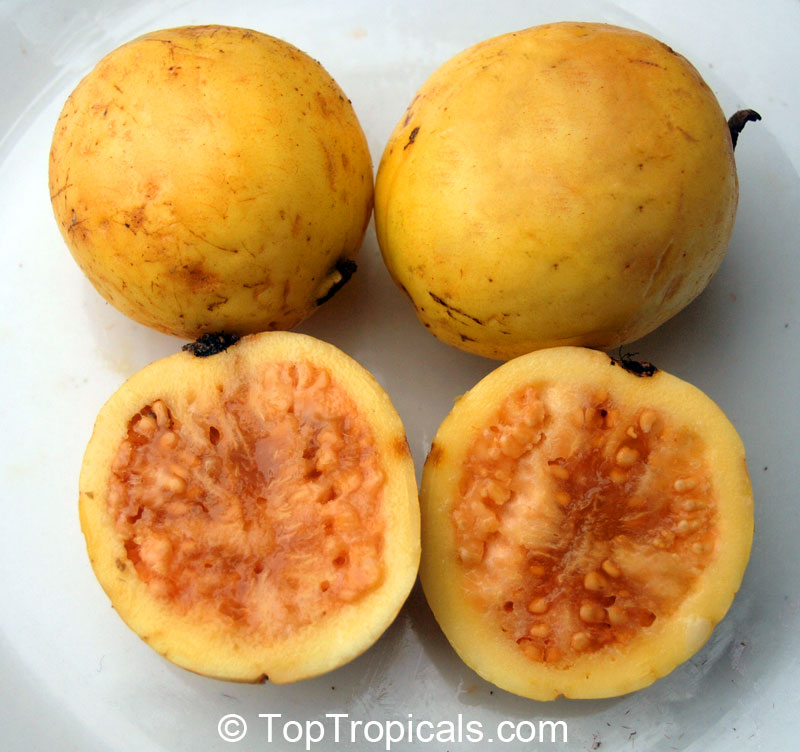
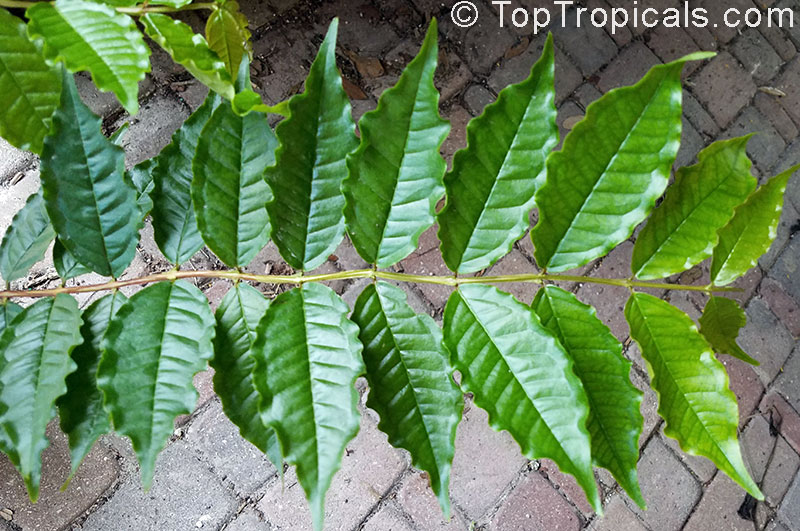
These fruit are 1.5-2", with an acidic, sour guava-like flavor. Its juice is concentrated and must be diluted and sweetened to produce a delicious drink. The fruit is processed into ice cream sorbet, gelatins and candies. It is the major source of a special Guava Wine production. A great container specimen.
Recommended Fertilizer: SUNSHINE C-Cibus - Crop Nutrition Booster
SUNSHINE-Honey - sugar booster
 SUNSHINE C-Cibus (NPK 2-2-4) - Crop Booster for every watering.
  SUNSHINE C-Cibus (NPK 2-2-4) - Crop Booster for every watering.
Botanical name: Psidium acutangulum
Common names: Brazilian Guava, Araca Pera, Bayabas
Family: Myrtaceae
Origin: Brazil
USDA Zone: 9-11
An unusual and tasty wild guava from the Brazilian Amazon. Rare in cultivation. Grows into a small tree, leaves are very interesting and distinctive, with wavy margins.
Fruit grow to 2-3", with an acidic, sour but guava-like flavor. Its juice is concentrated and must be diluted and sweetened to produce a delicious drink. The fruit is processed into ice cream sorbet, gelatins and candies. A great container specimen. Zones 9 to 11.
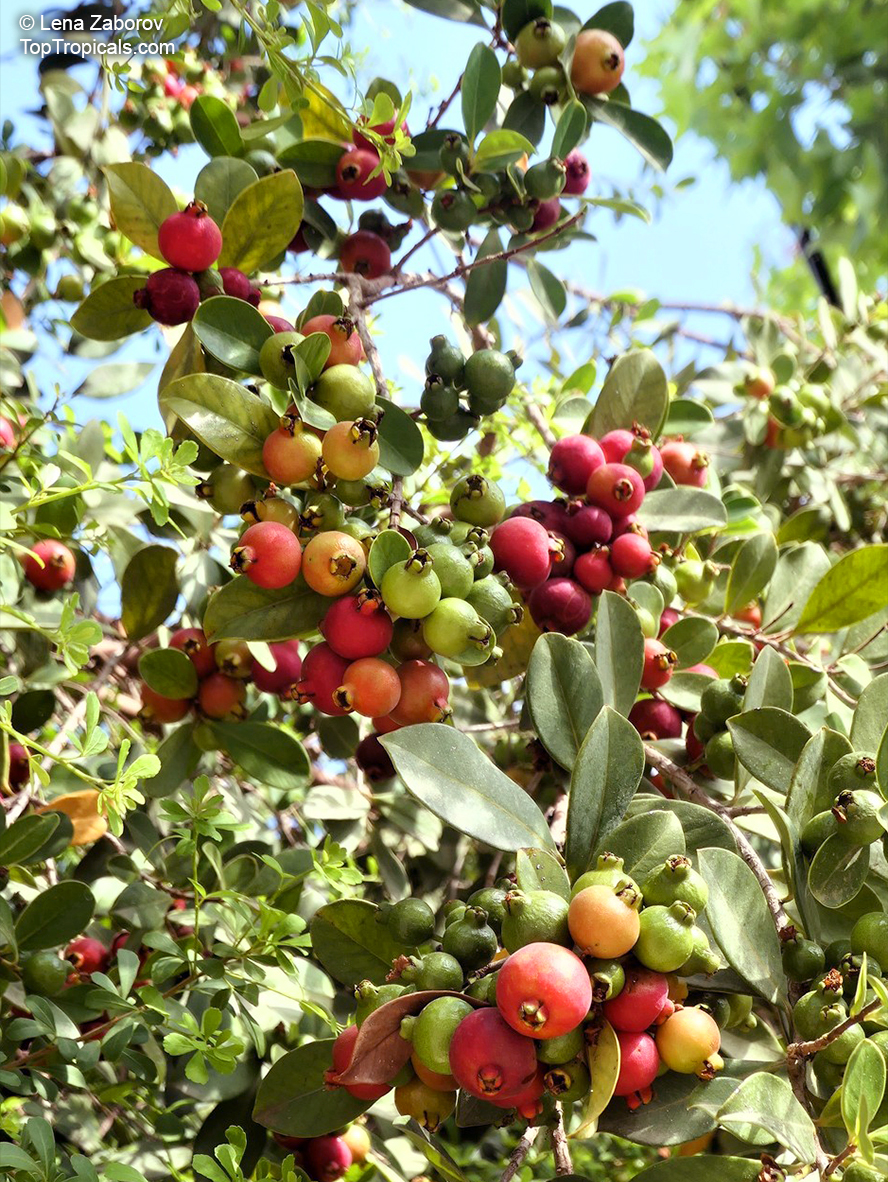
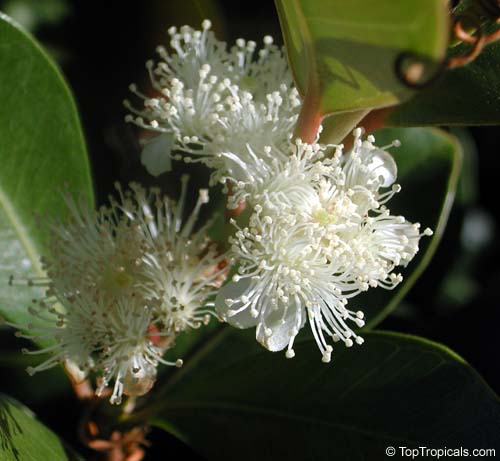
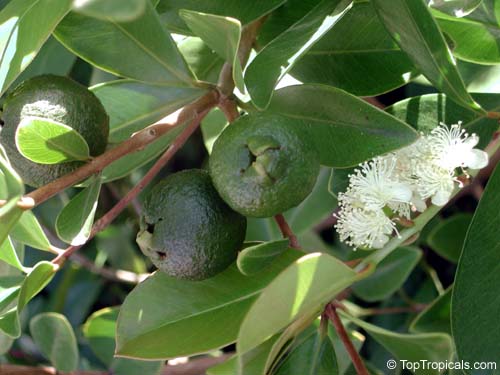
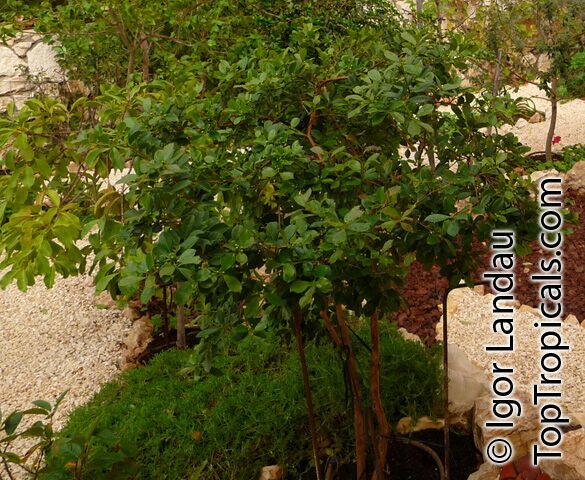
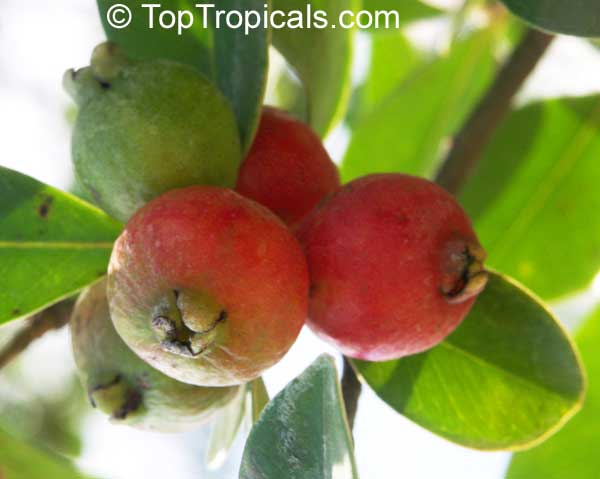
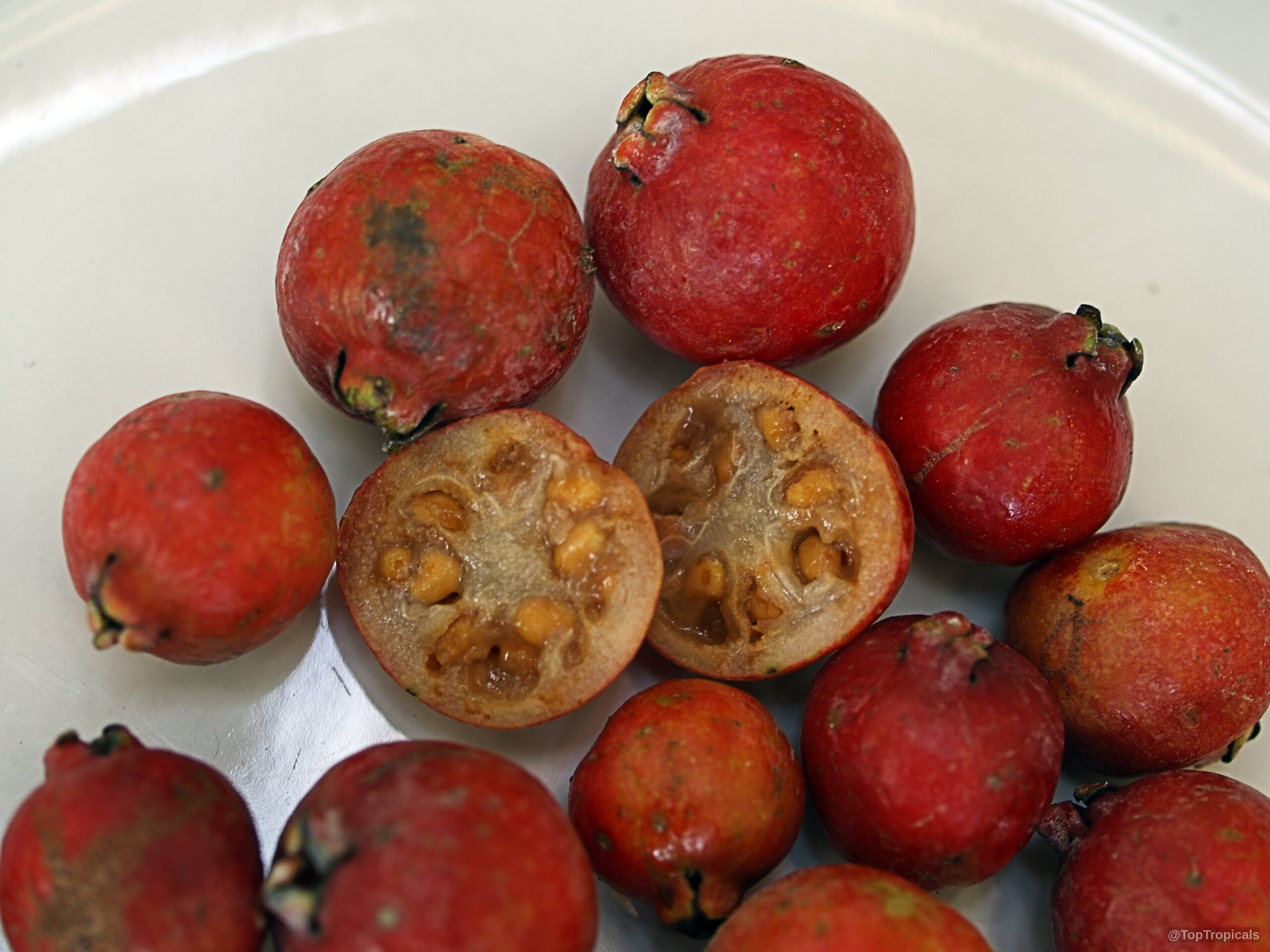
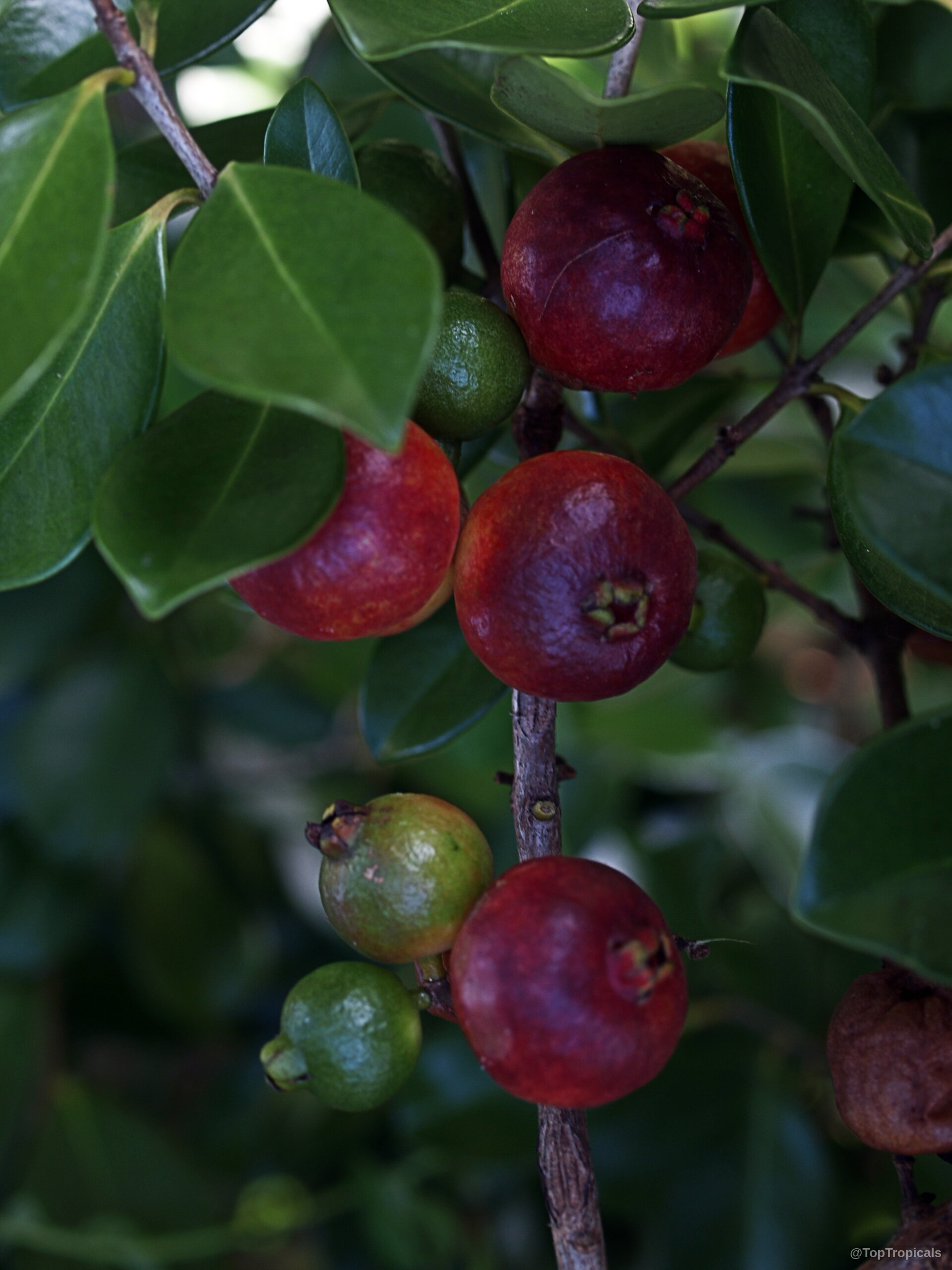
Botanical names: Psidium cattleyanum, Psidium littorale
Common names: Cattley Guava, Sand Plum, Strawberry Guava
Family: Myrtaceae
Origin: Brazil
USDA Zone: 9-11


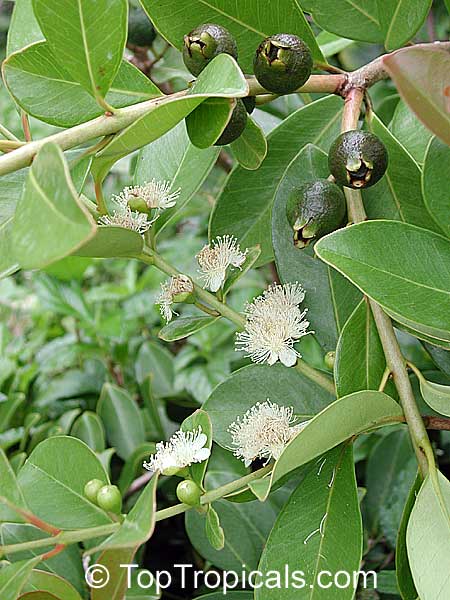
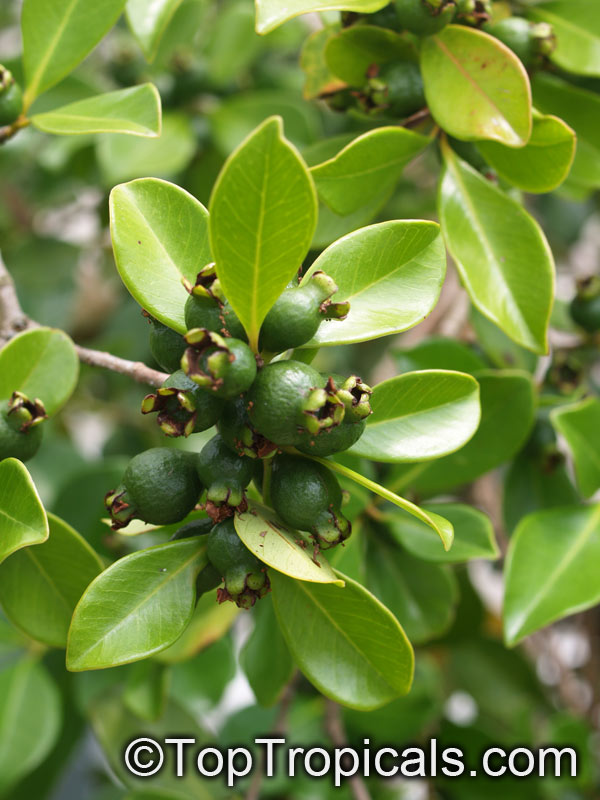
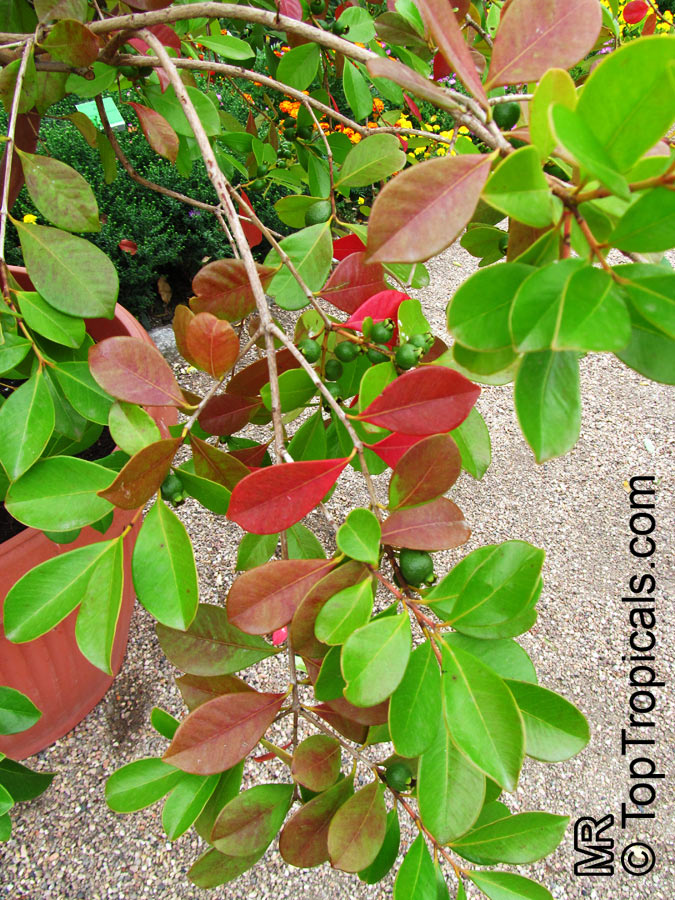
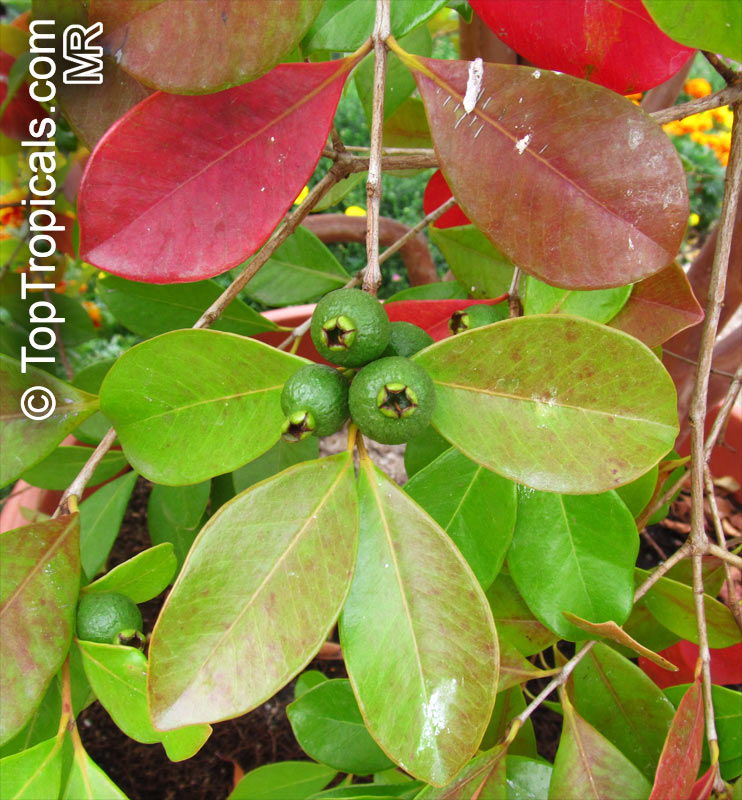
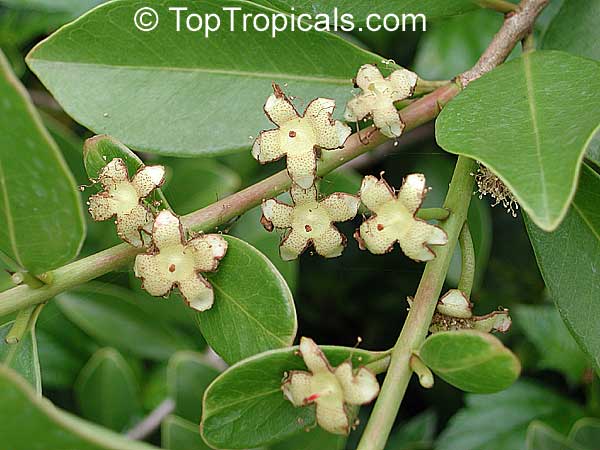
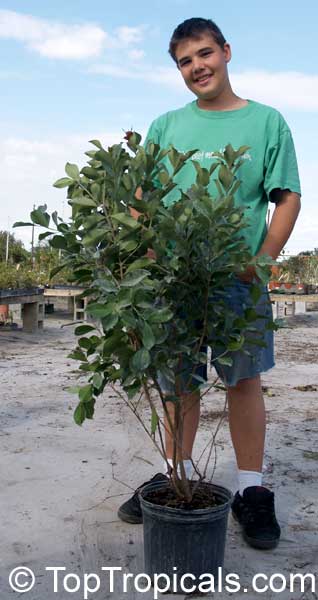
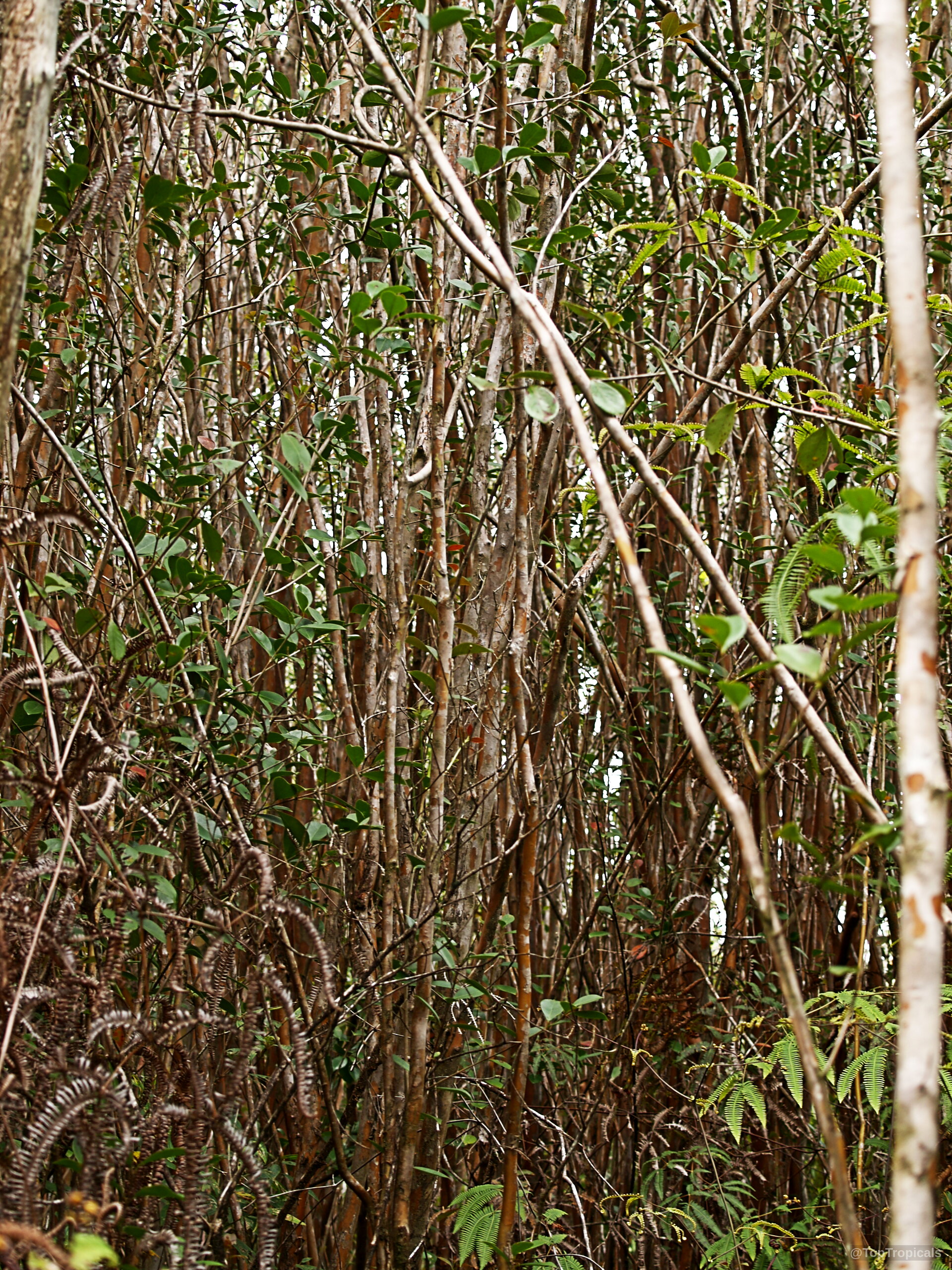
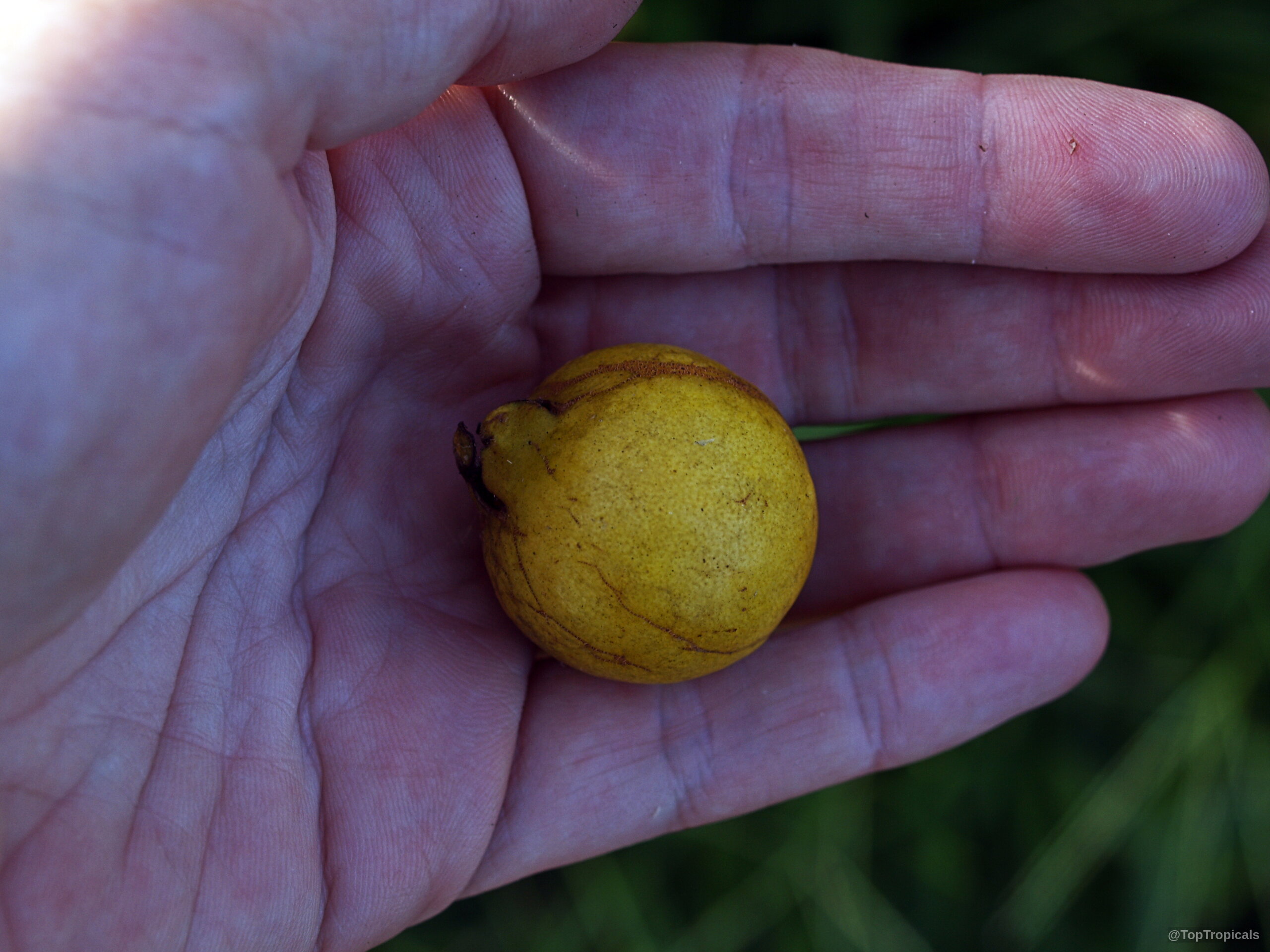
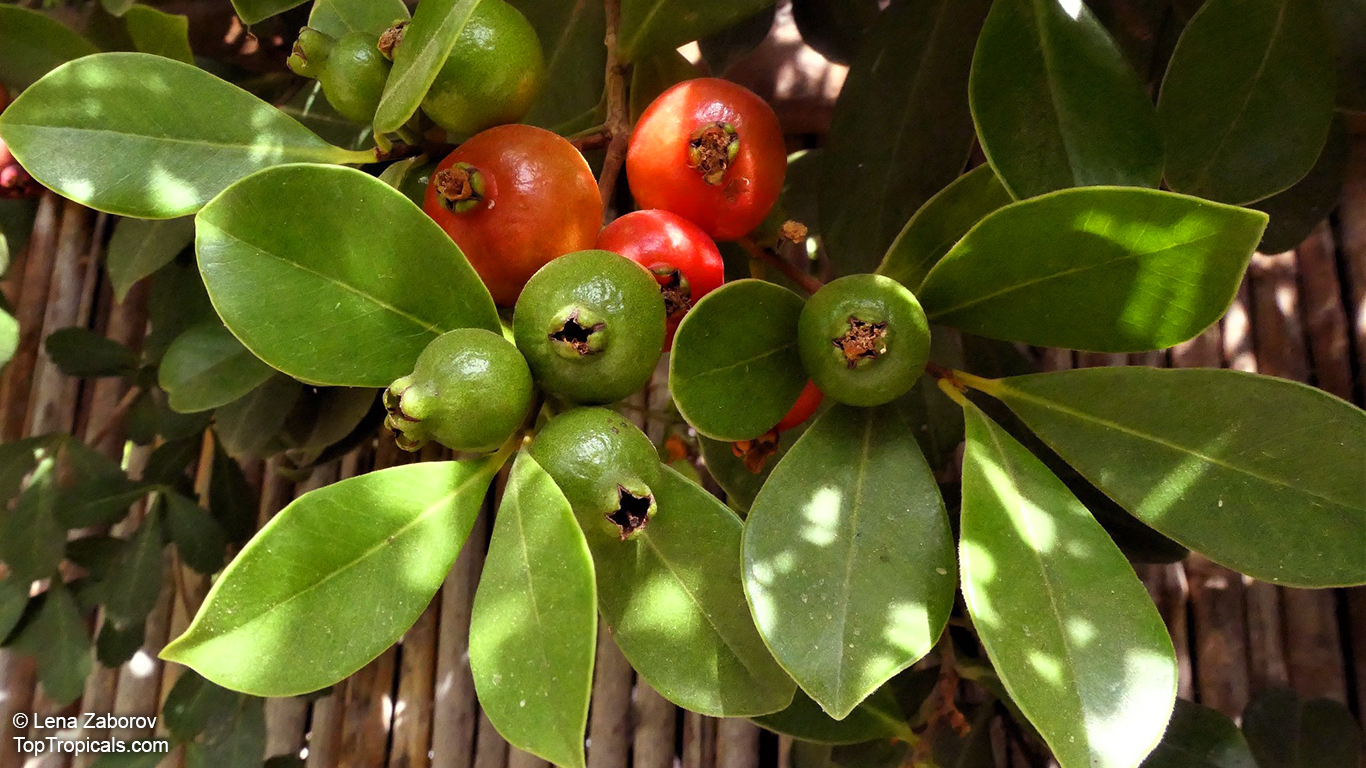
The Cattley Guava is a very attractive, cold hardy and undemanding small tree growing if unpruned to about 20 ft high, with glossy deep green evergreen leaves. New growth is reddish, which adds to the attractiveness of the tree and it has a handsome reddish-brown bark which peels.
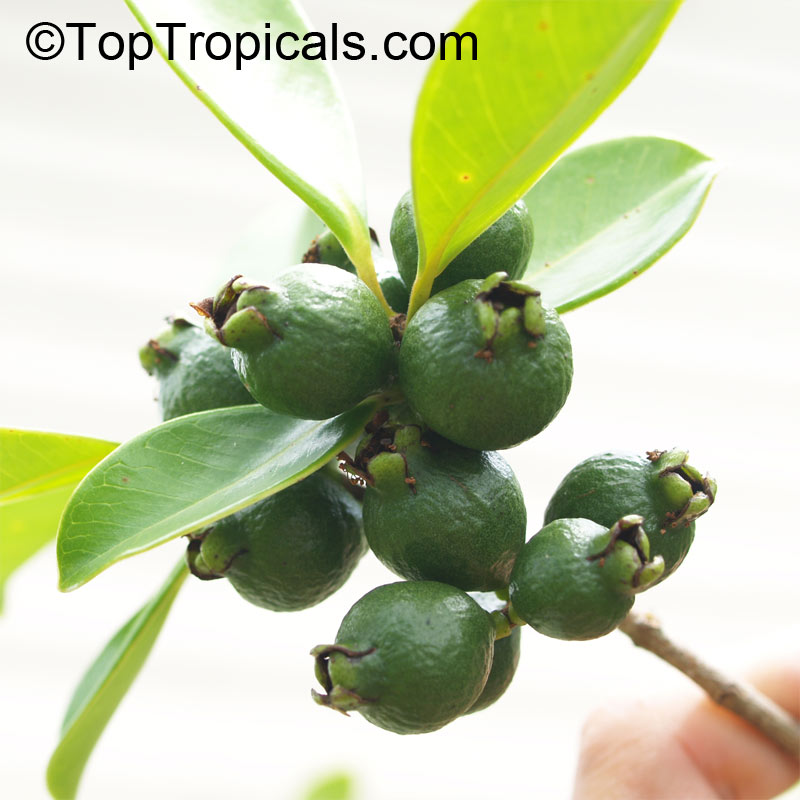
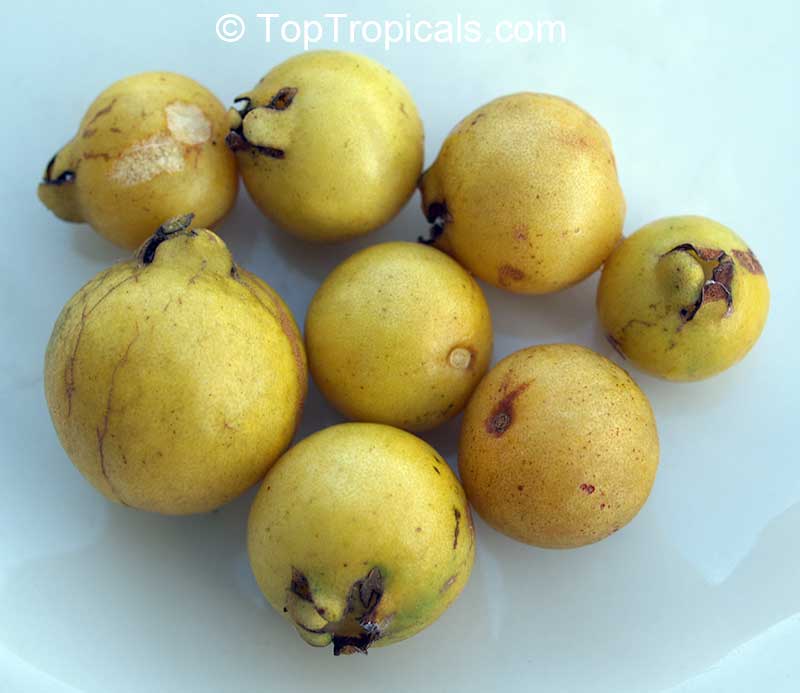
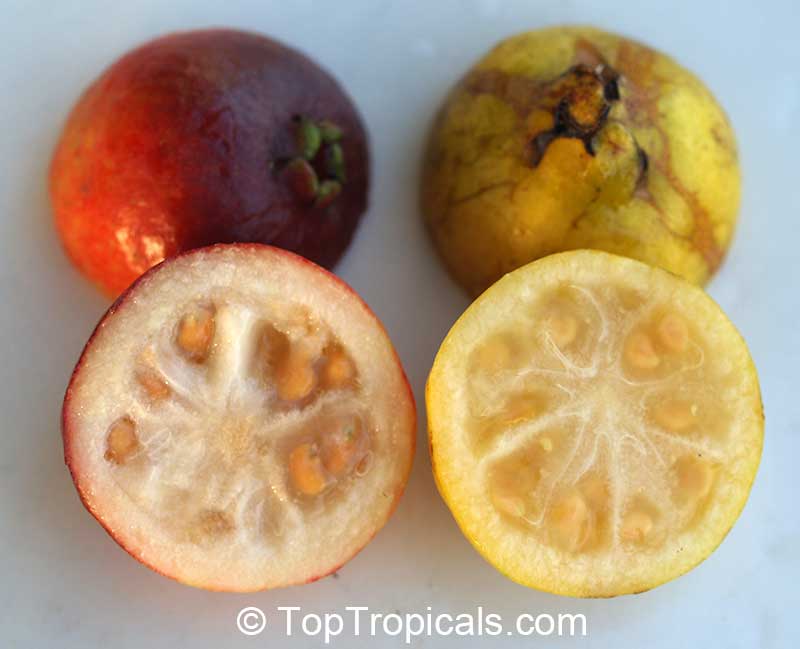
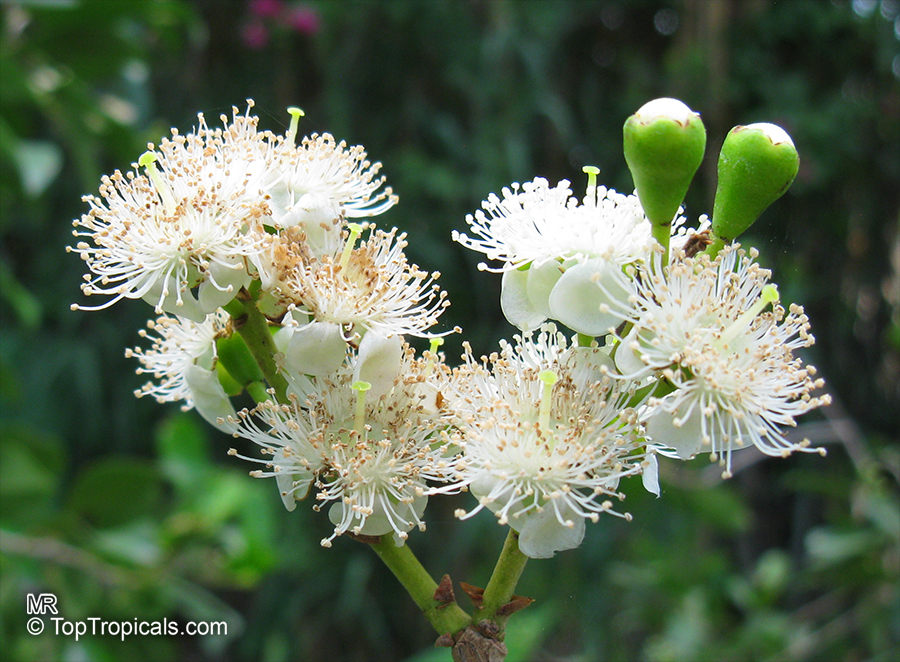
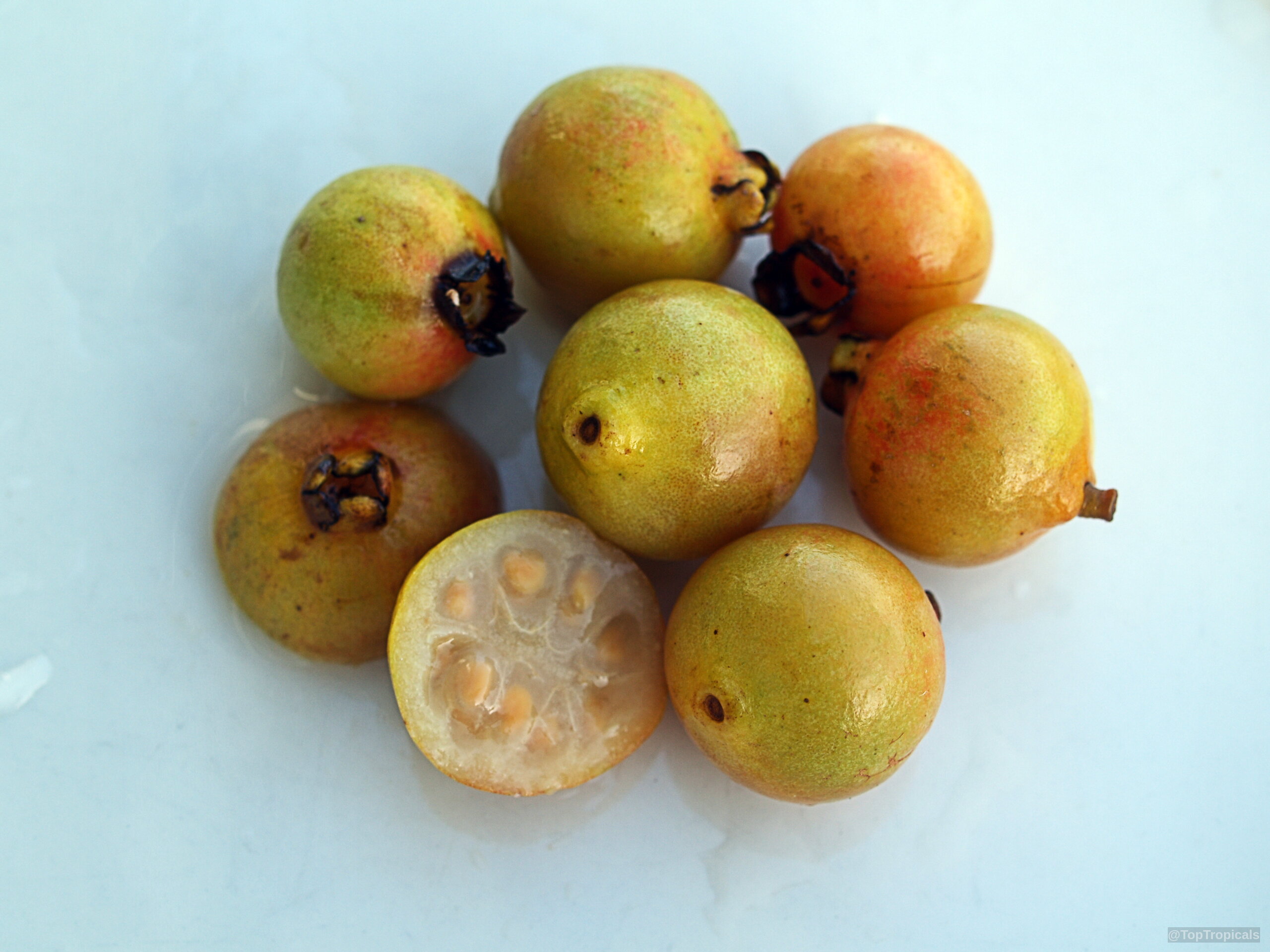
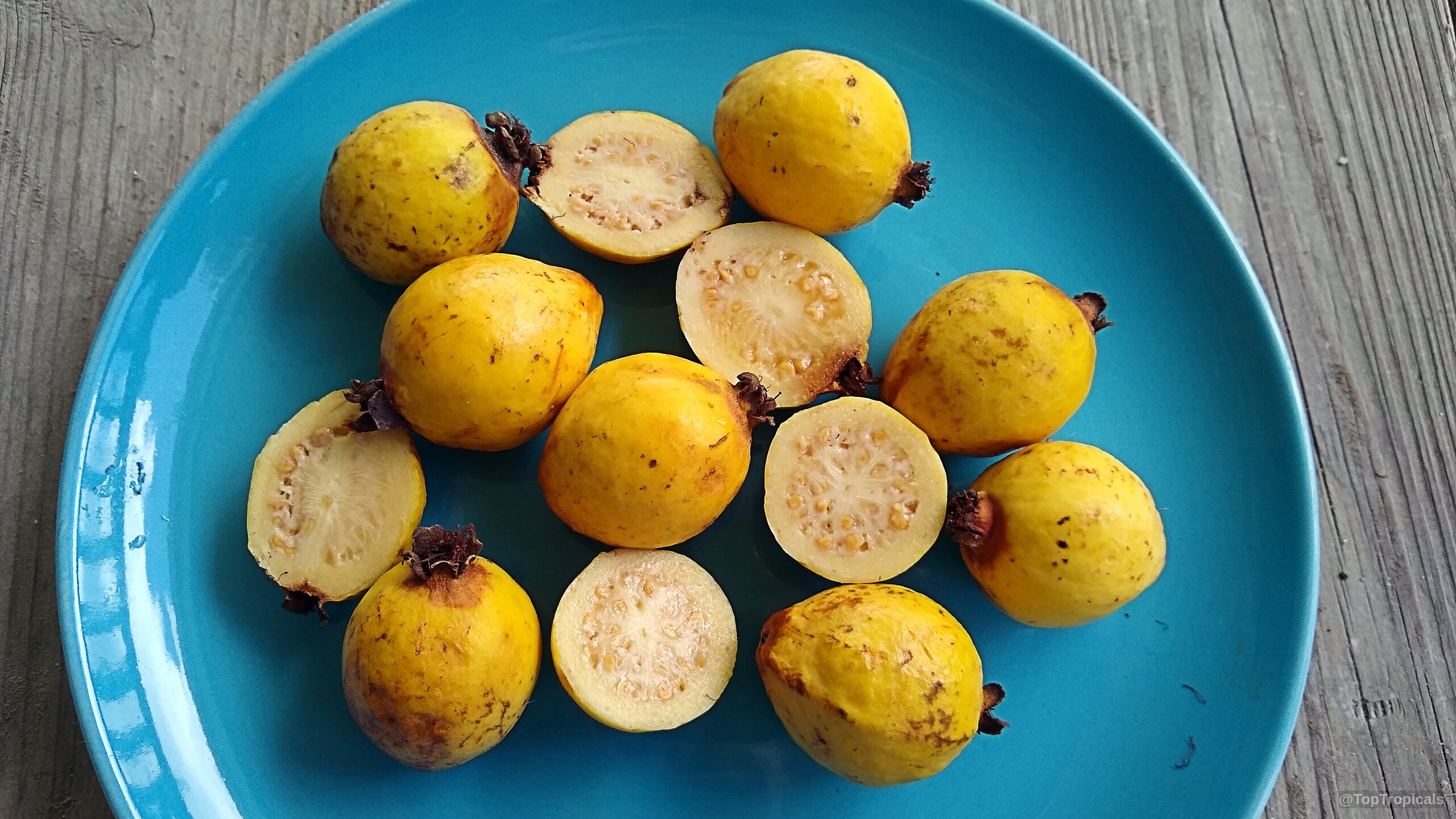
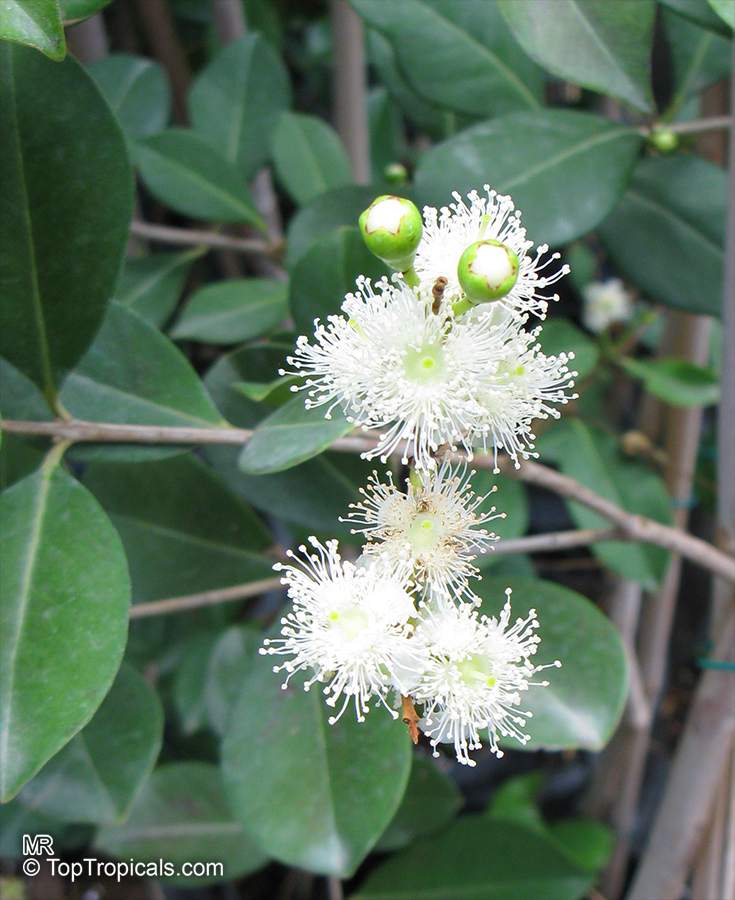
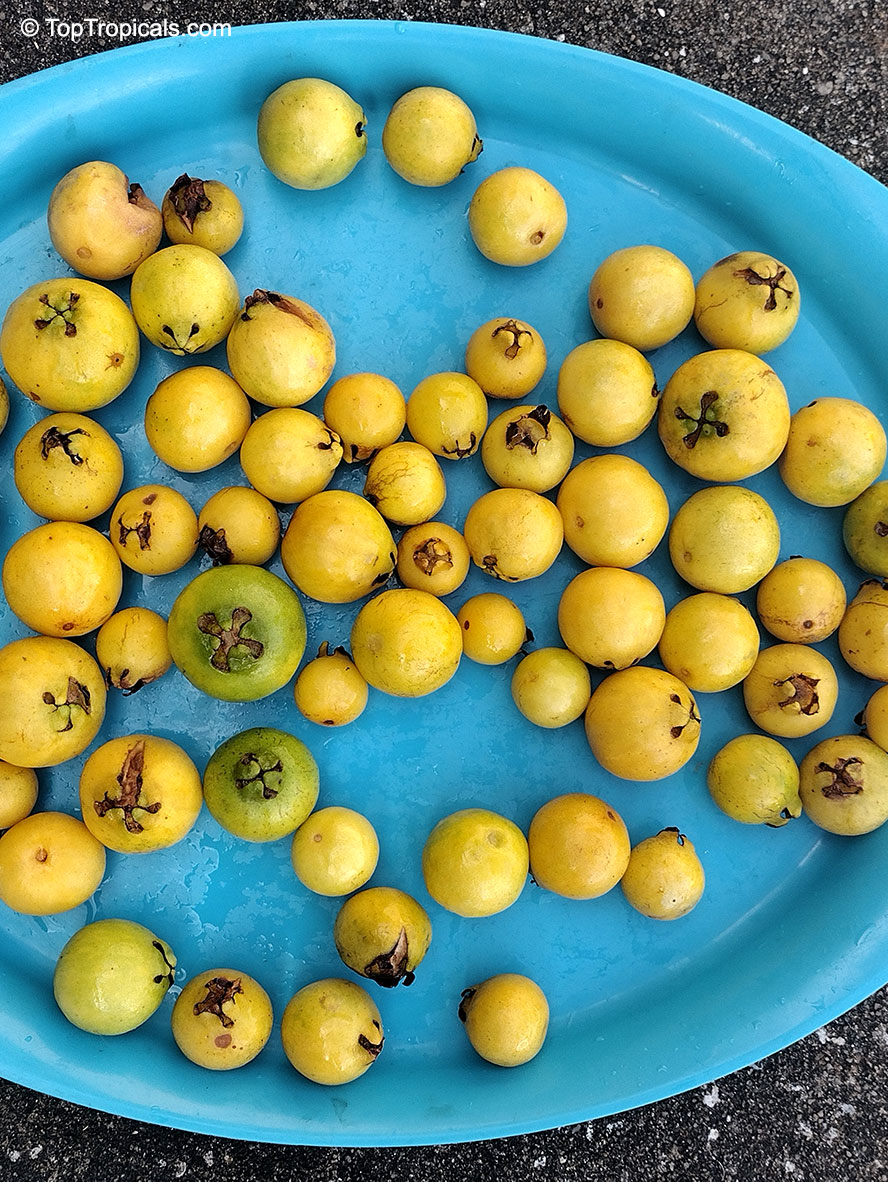
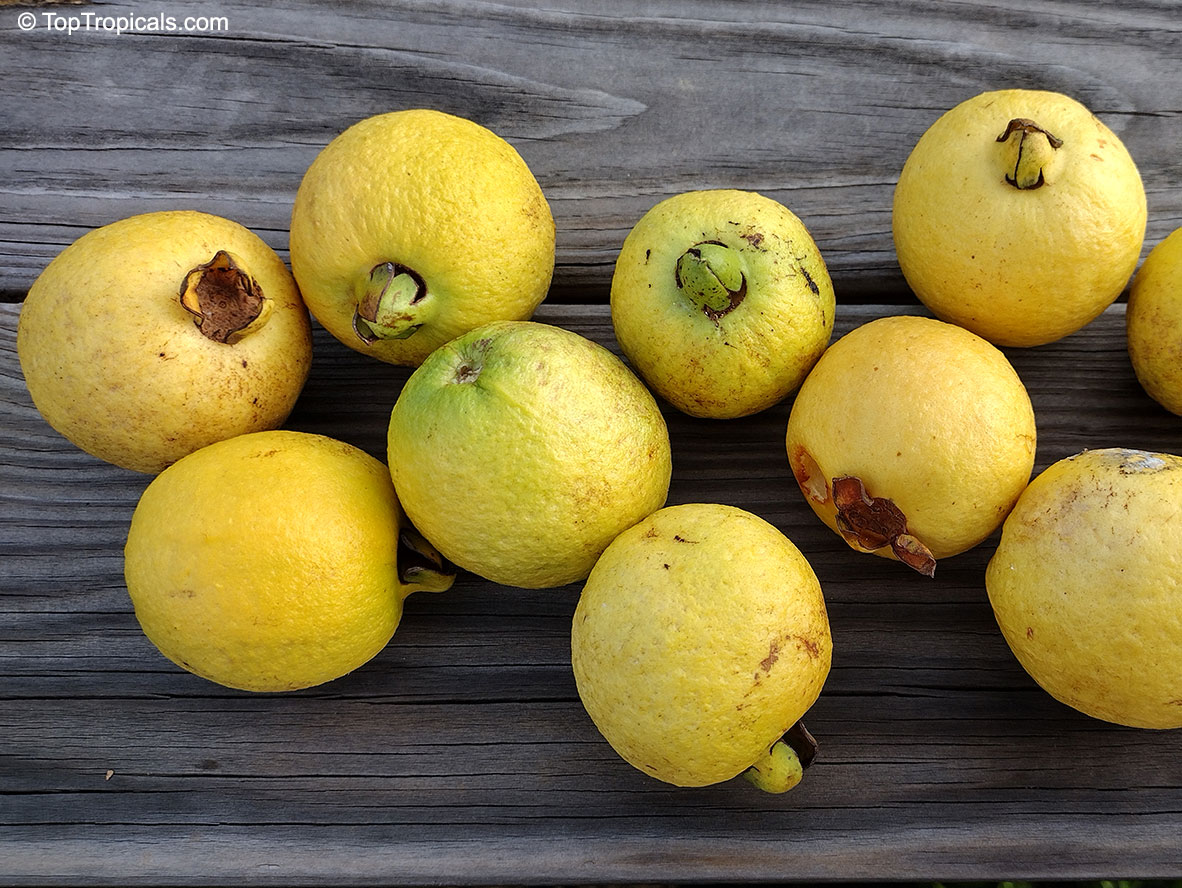
1-2" fruits are produced from late spring to autumn from 1" white flowers, they are round, with a shiny reddish or yellow color. The pulp has many hard seeds and the flesh has a pleasant sweet to sub-acid flavor. Fruits can be eaten fresh or used in jellies, jams, juices and drinks.
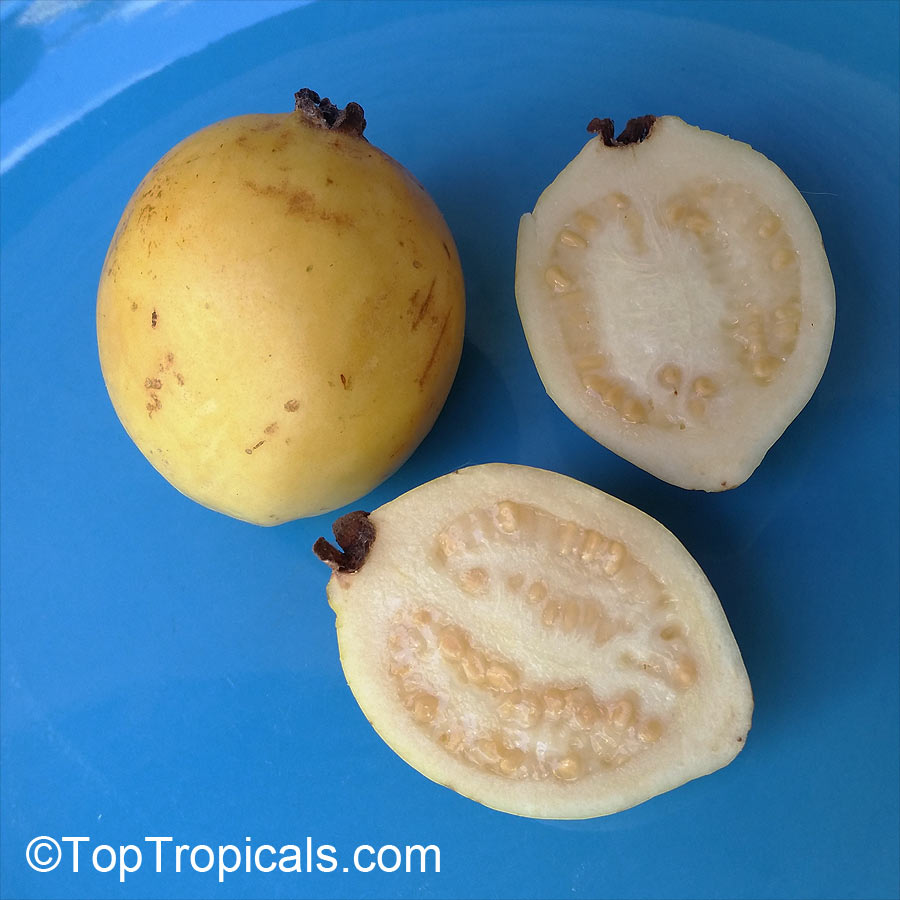
There are two major varieties: Red and Yellow. Red-skinned fruits have white flesh more or less reddish near the skin. The yellow variety, sometimes called the Giant Puerto Rican Cattleya, has somewhat larger leaves and is a little more cold sensitive. The yellow-skinned fruits have faintly yellowish flesh; they are slightly larger and sweeter than those of the red variety.
Cattleya guavas make excellent landscape small trees, but also are easily grown and fruited in large containers. Growth rates are usually about two to four feet a year under good conditions. Trees should be fertilized in the landscape two to three times a year with a balanced fertilizer. Young trees may require some pruning to keep them desirably shaped. However, older trees require little attention. Cattley Guava is shallow-rooted but in spite of that, it is drought tolerant. It is also able to endure flooding for short periods. Guavas can take heavy pruning, however, and can be used as informal hedges or screens. Since the fruit is borne on new growth, pruning does not interfere with next years crop.
There is a number of properties of Cattley Guava that make it very special for any tropical garden.
- It is much hardier than the Tropical Guava and can survive temperatures of low 20's F without any damage.
- It responds well to pruning, and since the fruit form on new growth, pruning won't effect the production.
- It is one of the best choices for a rapidly growing hedge plant and wind protector for other tropical plants.
- It is one of the very few tropical plants that can easily tolerate alkaline soils - in fact, it seems as though it enjoys them! It can grow even in limestone. It can grow in very poor soils that would barely support other fruit trees.
- It requires very little watering once established, and can tolerate long periods of drought (young plants should be watered regularly until established).
- It produces masses of delicious fruit year to year under minimum or no care and doesn't look like has any pest problems.
- Trees have good salt tolerance and can be used close to coastal areas without any problem.




Recommended Fertilizer: SUNSHINE C-Cibus - Crop Nutrition Booster
SUNSHINE-Honey - sugar booster
Recommended Fertilizer: SUNSHINE C-Cibus - Crop Nutrition Booster
SUNSHINE-Honey - sugar booster
Botanical name: Psidium friedrichsthalianum
Common names: Costa Rica Cas Fruit, Cas Guava
Family: Myrtaceae
Origin: Costa Rica
USDA Zone: 8-11
Cold tolerance: 20°F
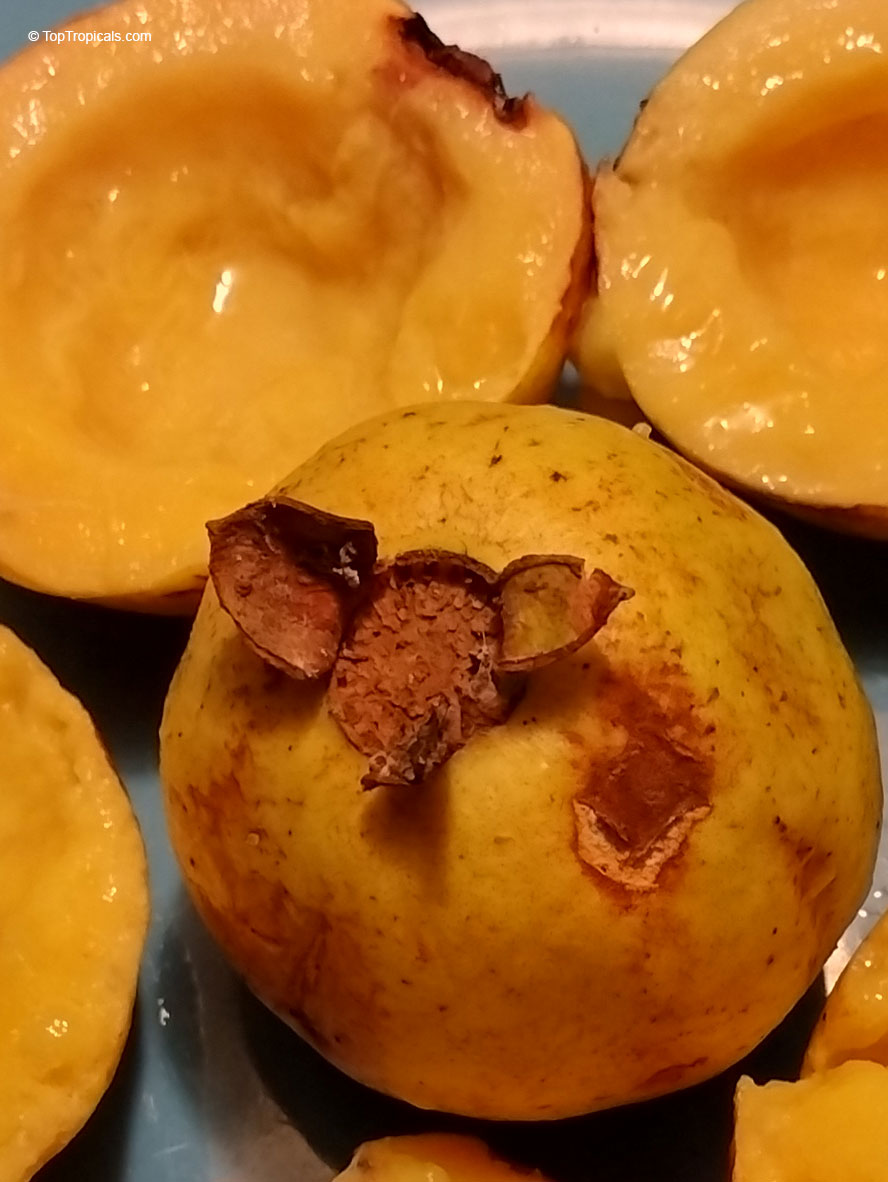
Costa Rican guava is a species of guava found mostly in Costa Rica but also grown in Guatemala, Nicaragua and other Central American countries. It has been successfully grown in California now and can be grown in mild higher regions.
Usually used to make jams, jellies, and preserves, or as a flavoring for drinks. It is used as the base for fresco de Cas, in which Costa Ricans mix it with sugar and water and sometimes add cream for a slightly acidic fruit drink.
Delicious flavorful fruit is sub-acid, great for drinks of eating out of hand for those who like sweet-n-sour fruit. Lots of vitamin C.
The yellow fruit, 2-3" around, similar to the common guava growth habit is similar to the cattley guava. Mature trees seem capable of withstanding short frosts.
Seeds germinate readily and seedlings grow fast.
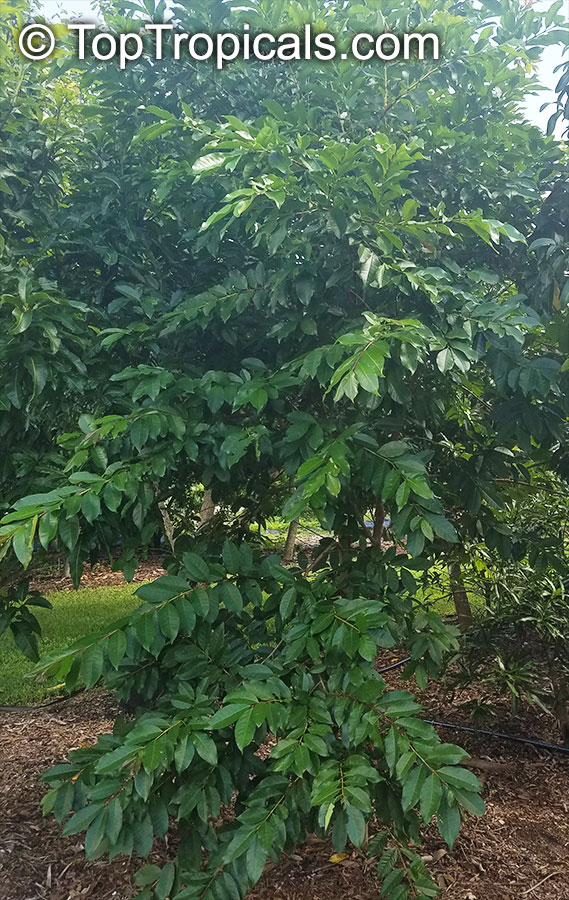
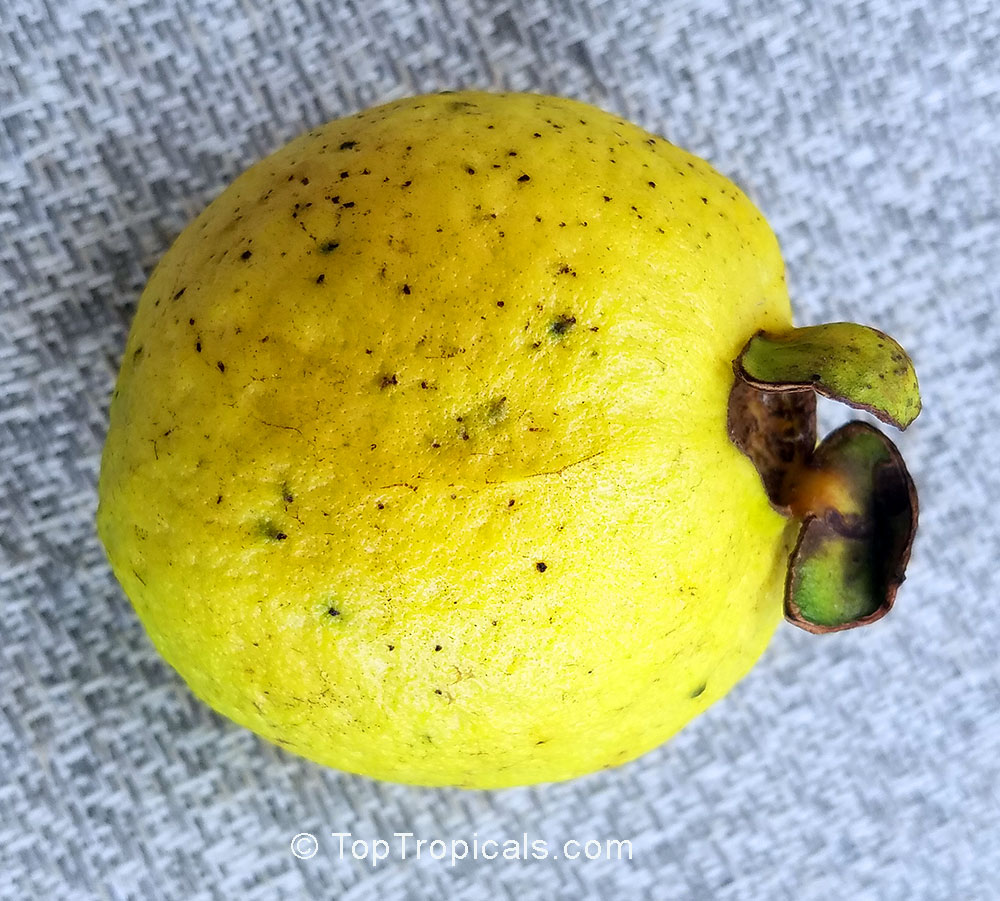
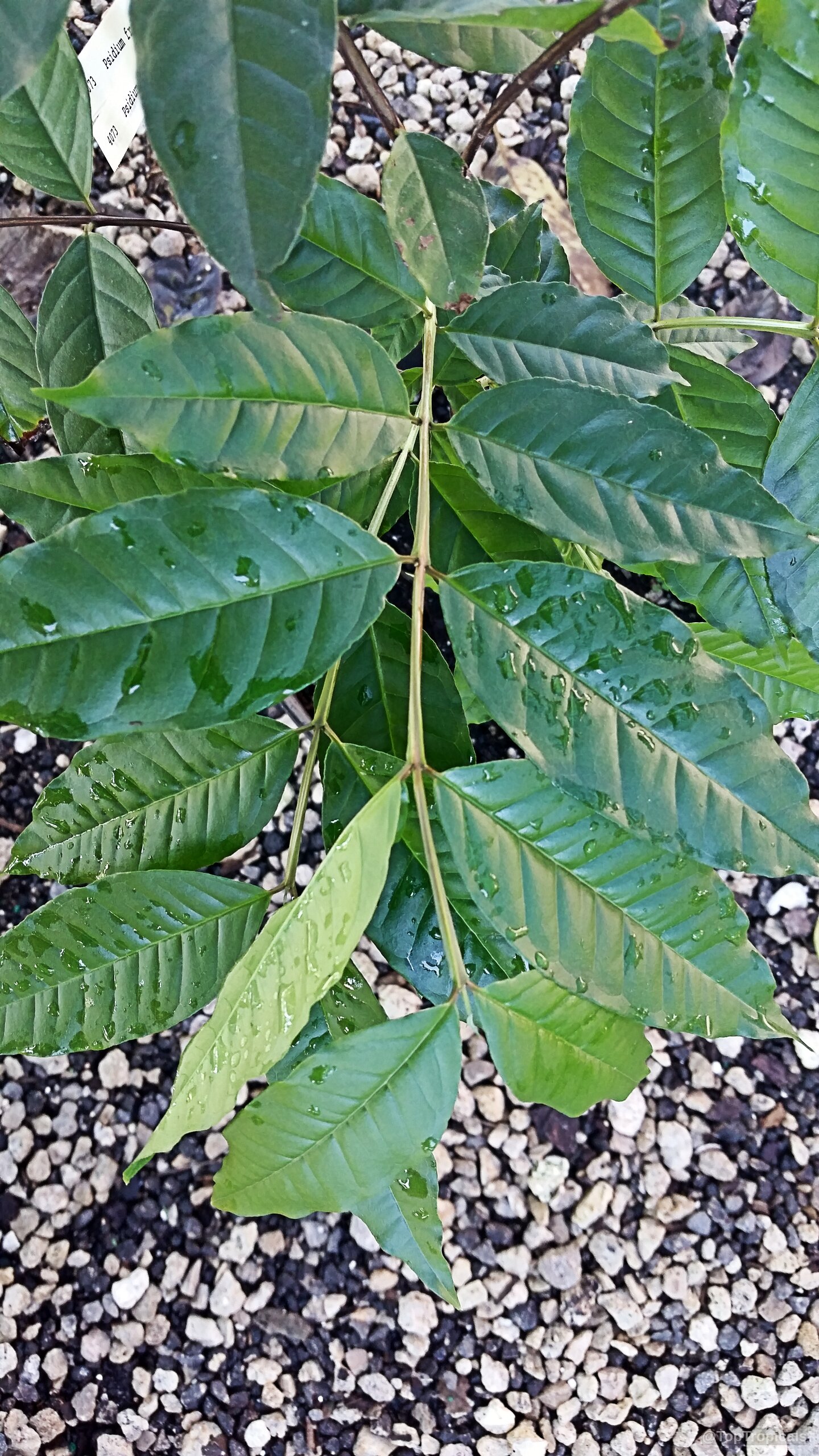
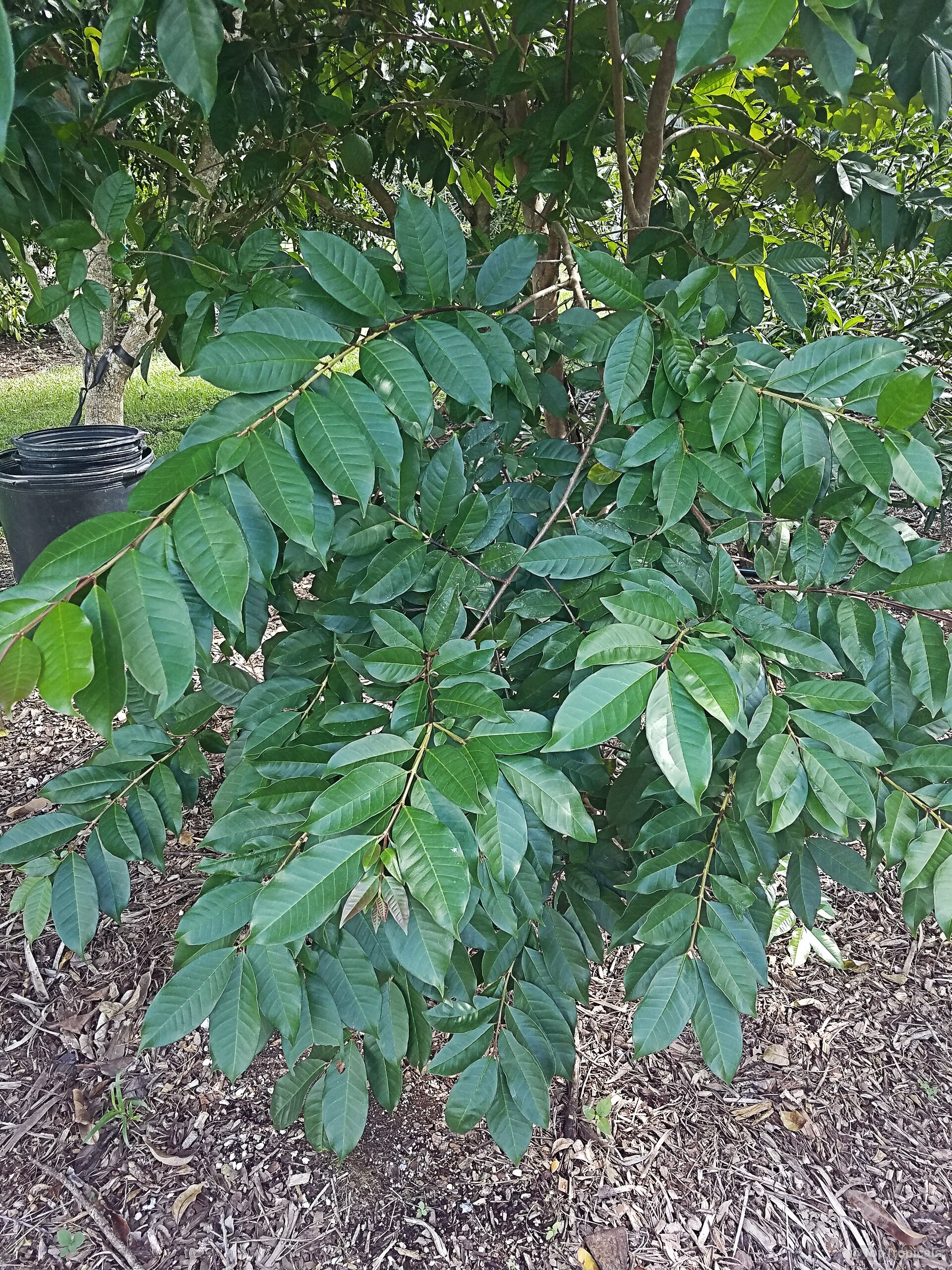
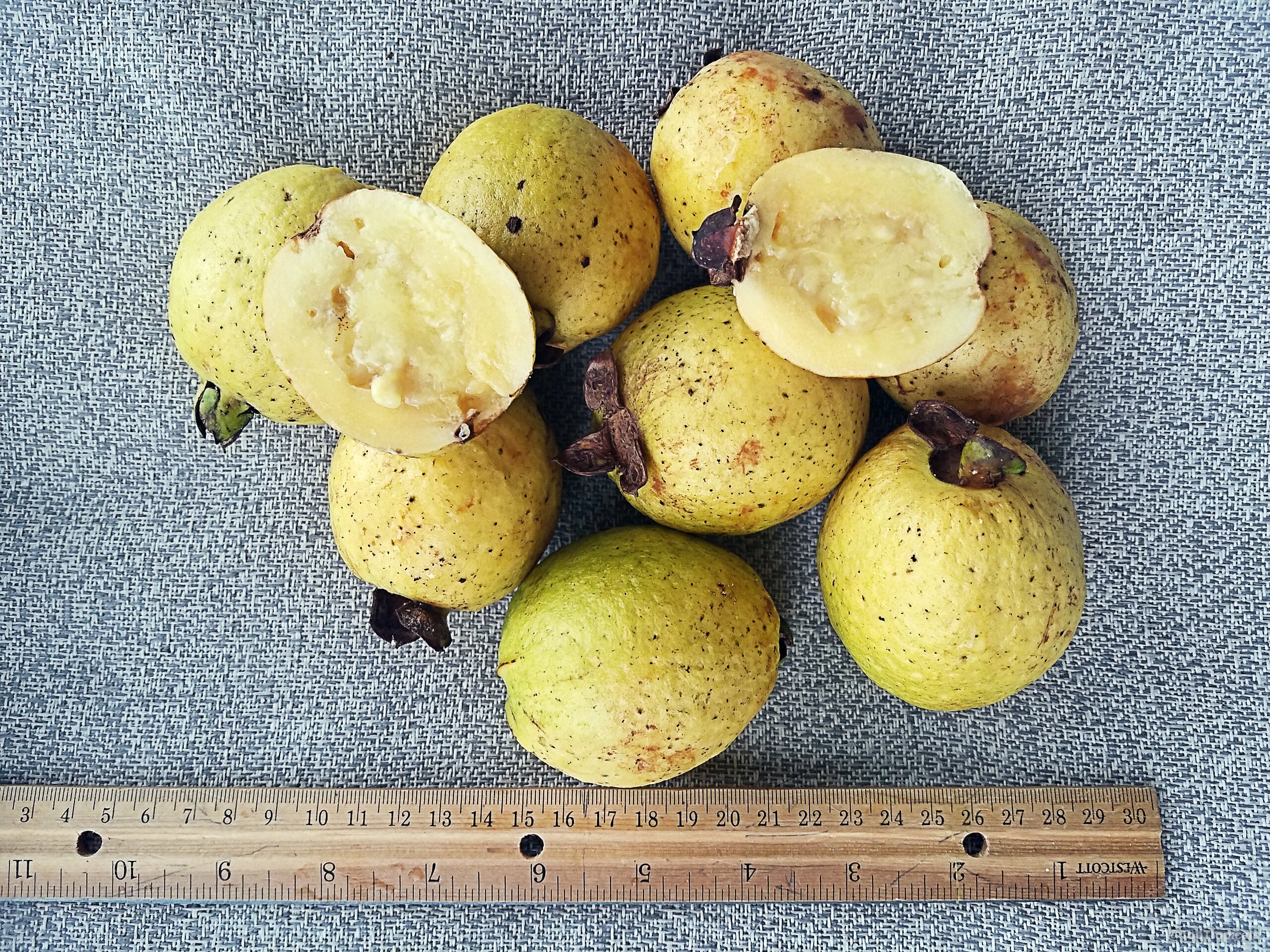


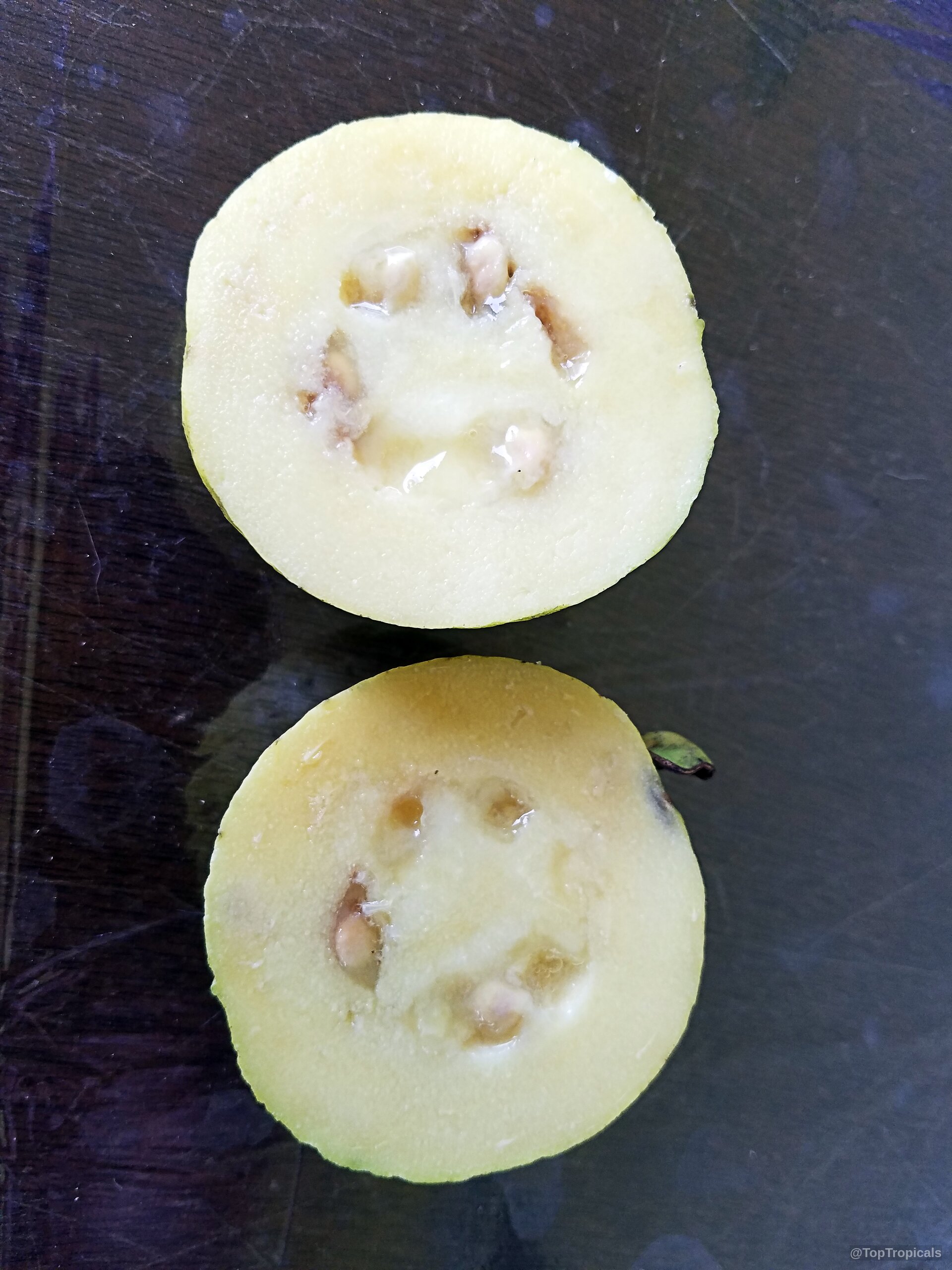
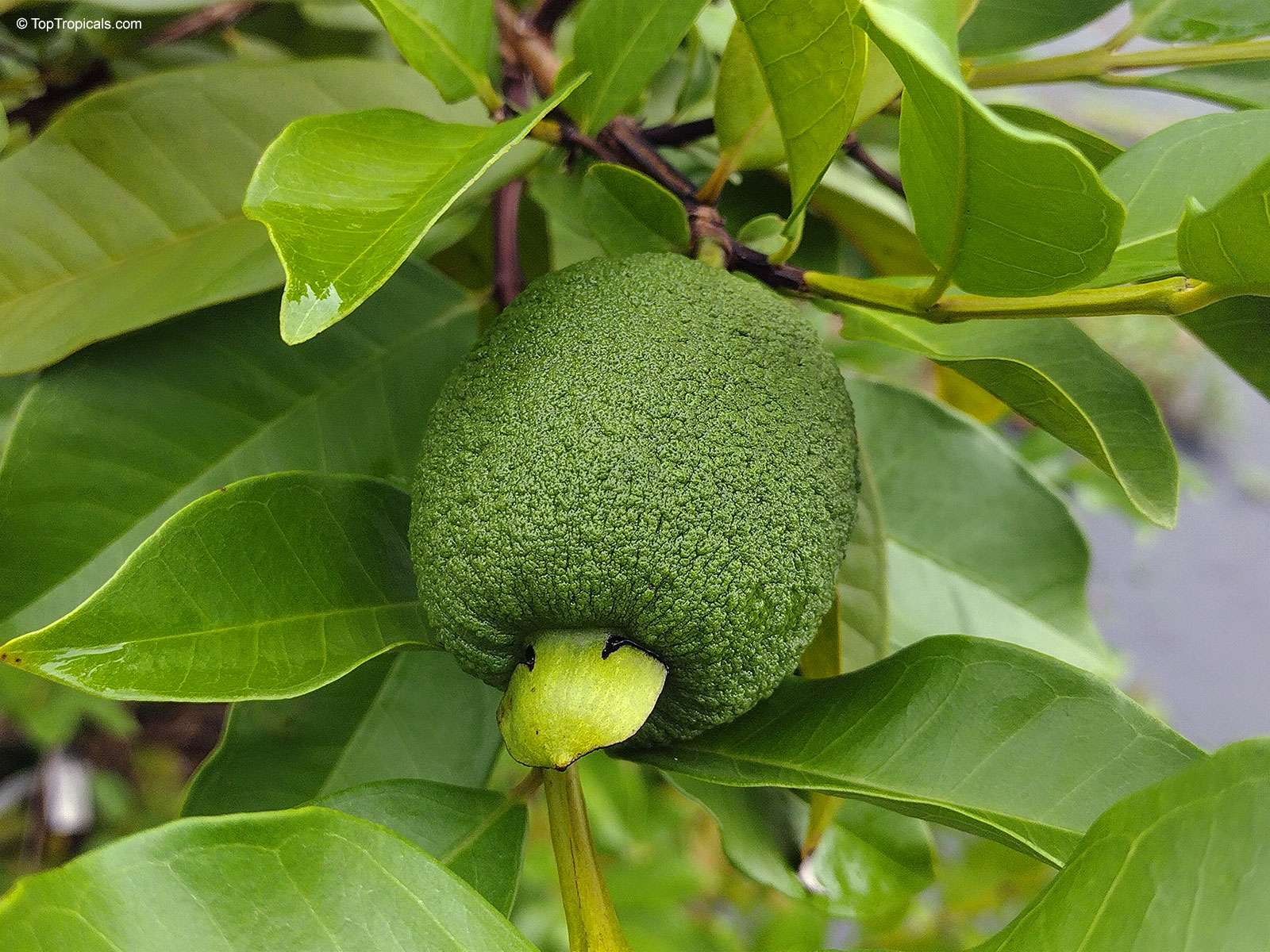
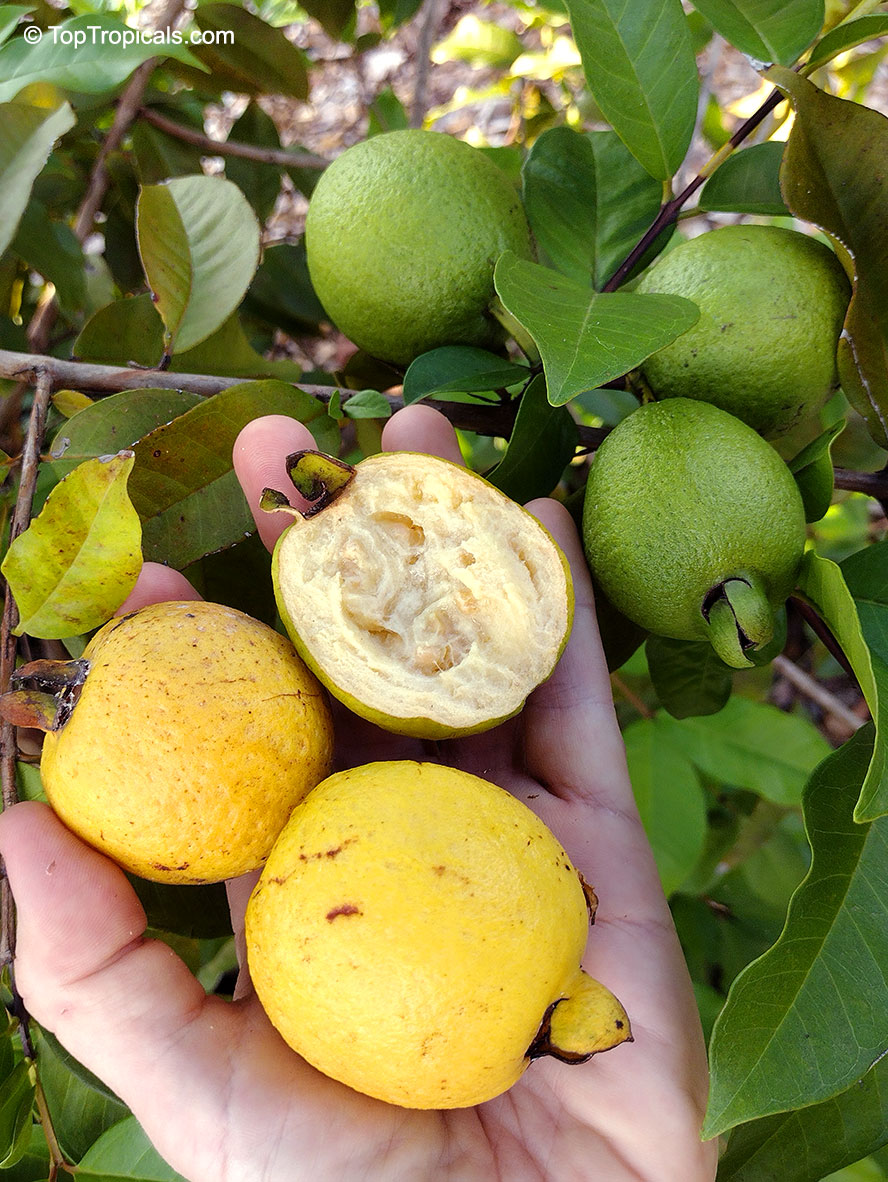
Cas Guava fruit is used in traditional Costa Rican drink "Agua de Cas," a refreshing blend of cas juice, water, and sugar.
Cas Guava fruit is packed with vitamin C: about four times more vitamin C than a typical orange, making it an excellent immune booster. It's also rich in antioxidants, which help combat oxidative stress and reduce inflammation.
Cas guava tree is pretty hardy, thriving in poor soils and resisting pests and diseases.
Learn more about Cas Guava.
Recommended Fertilizer: SUNSHINE C-Cibus - Crop Nutrition Booster
SUNSHINE-Honey - sugar booster
Botanical name: Psidium guajava
Common names: Tropical Guava, Guajava
Family: Myrtaceae
Origin: Tropical America
USDA Zone: 9-11
Cold tolerance: 25°F
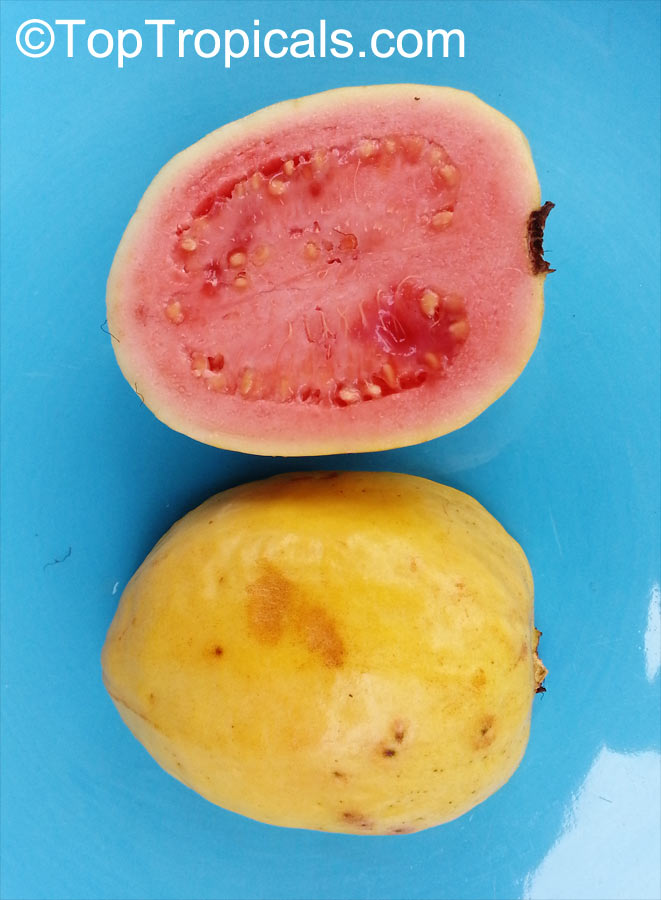
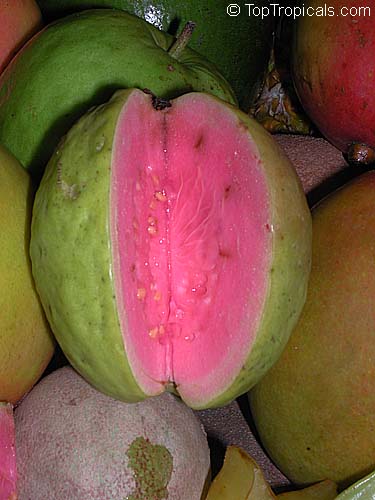
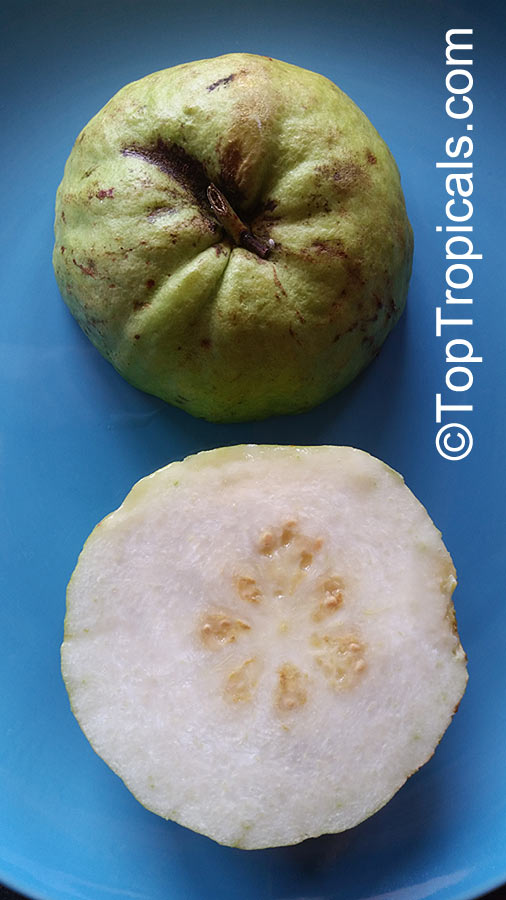
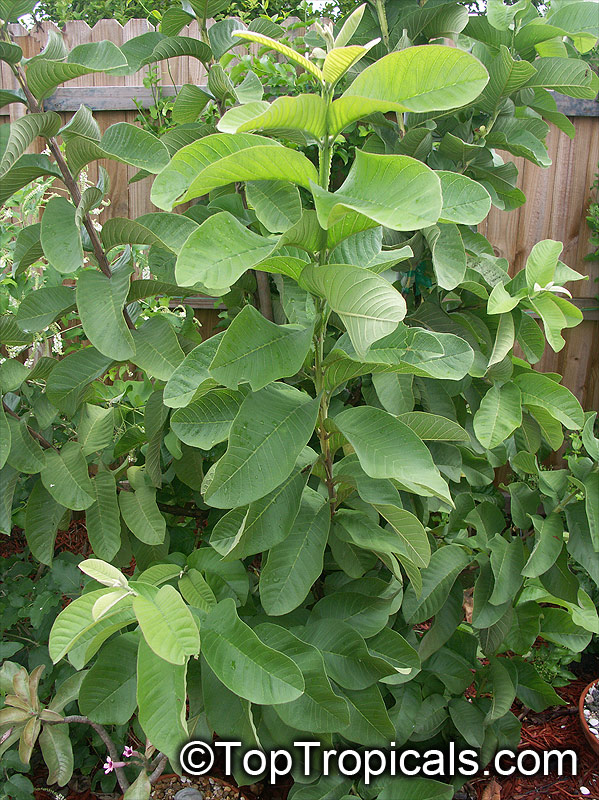
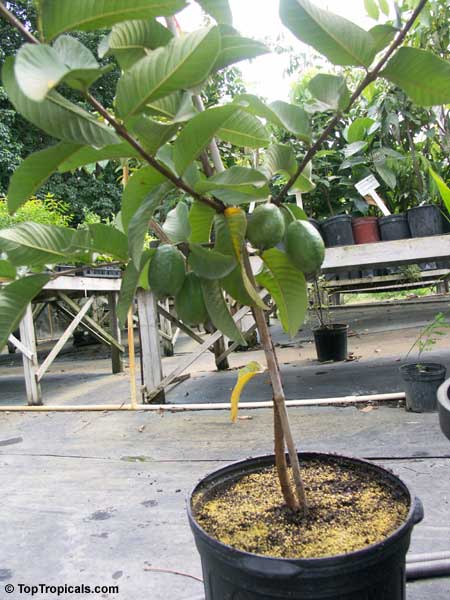
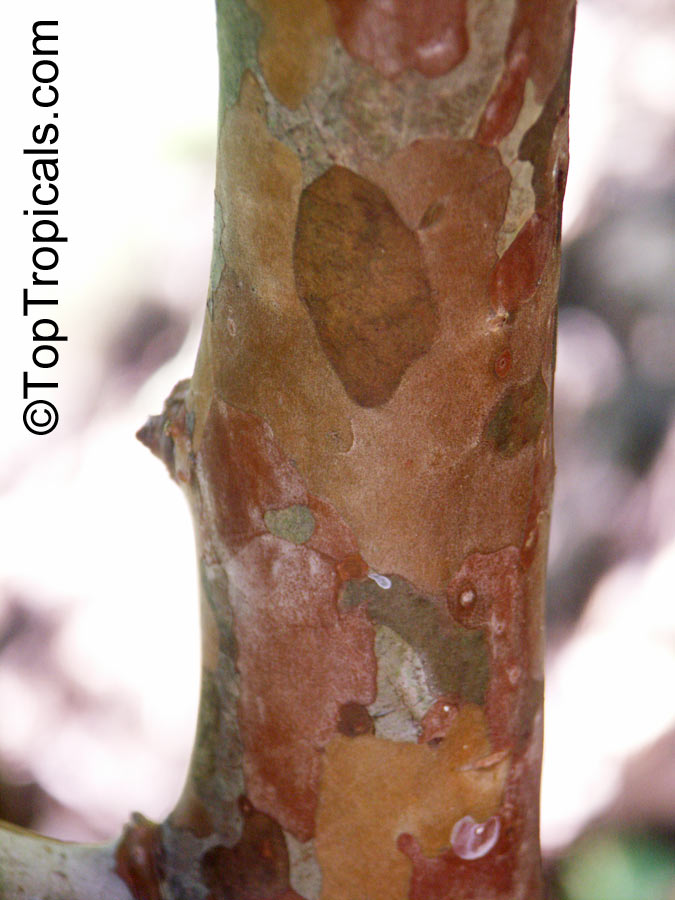
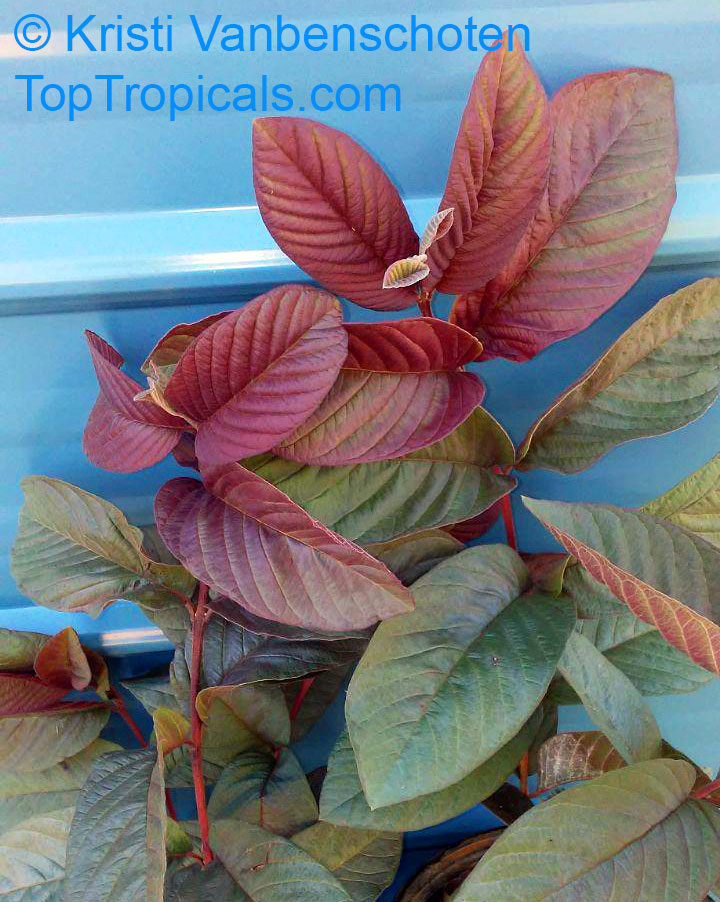
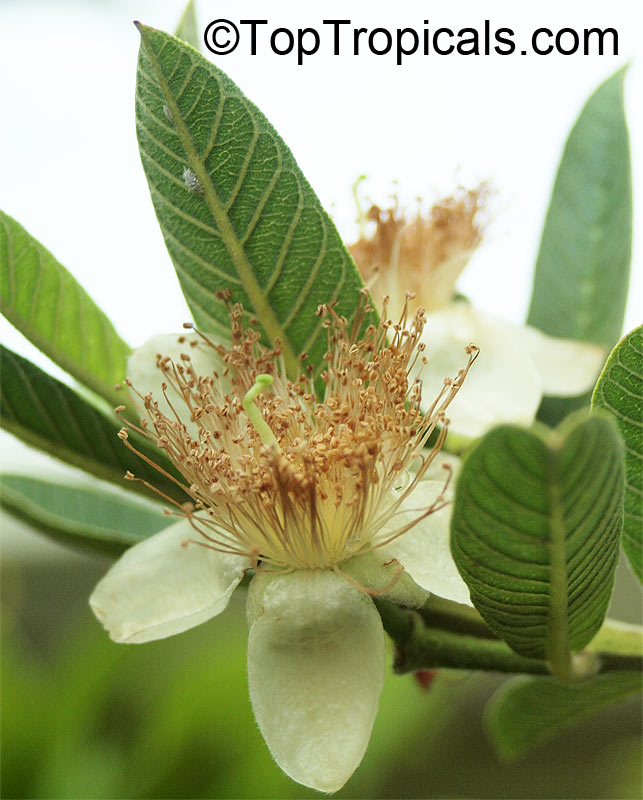
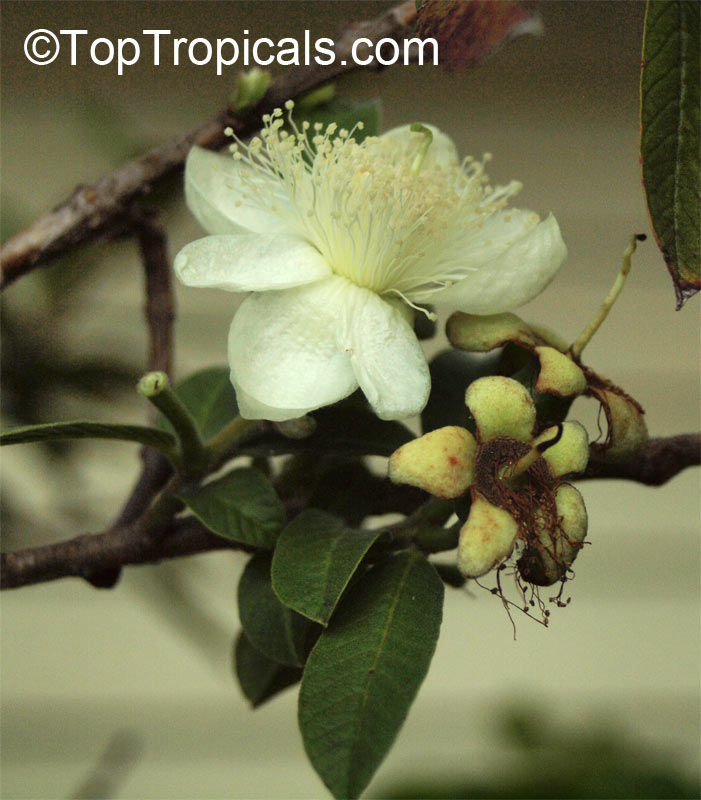
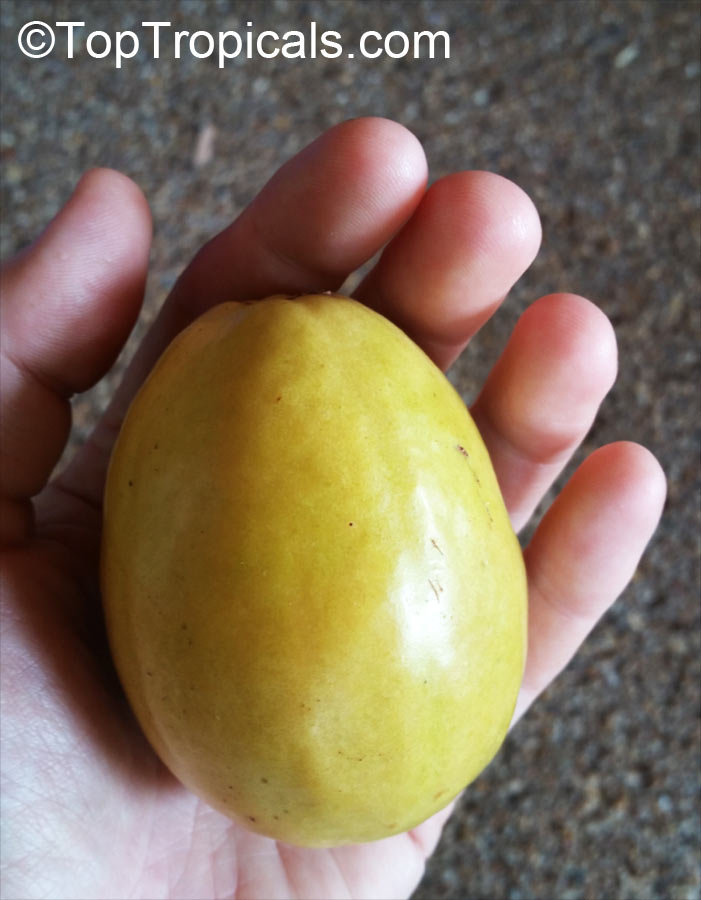
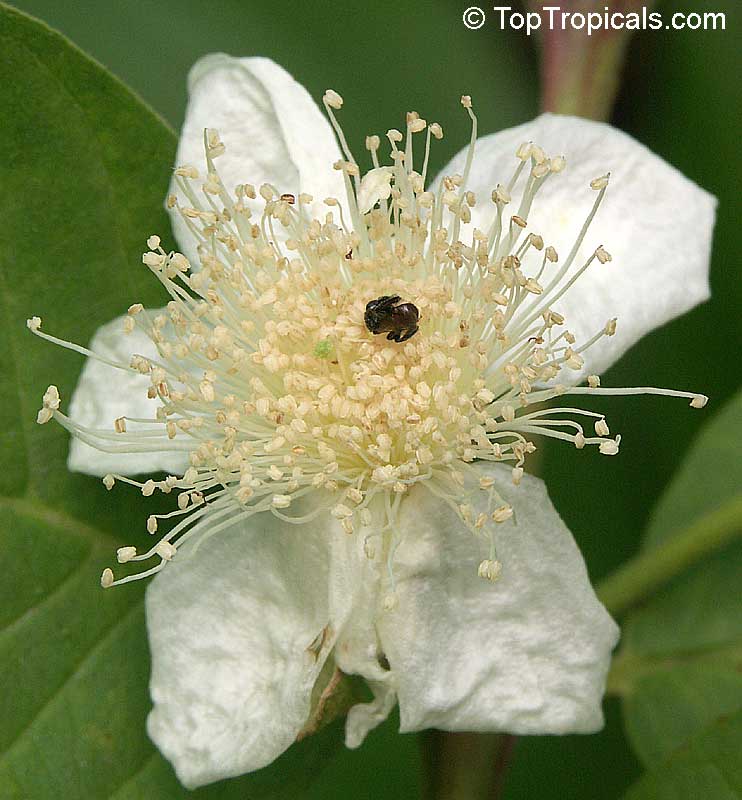
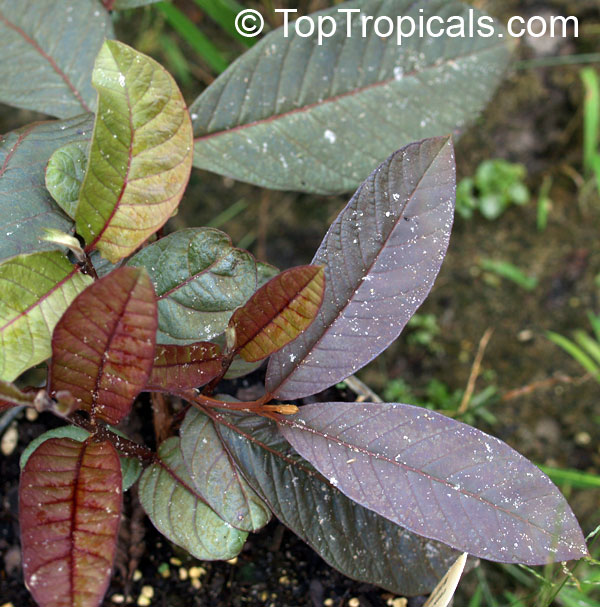
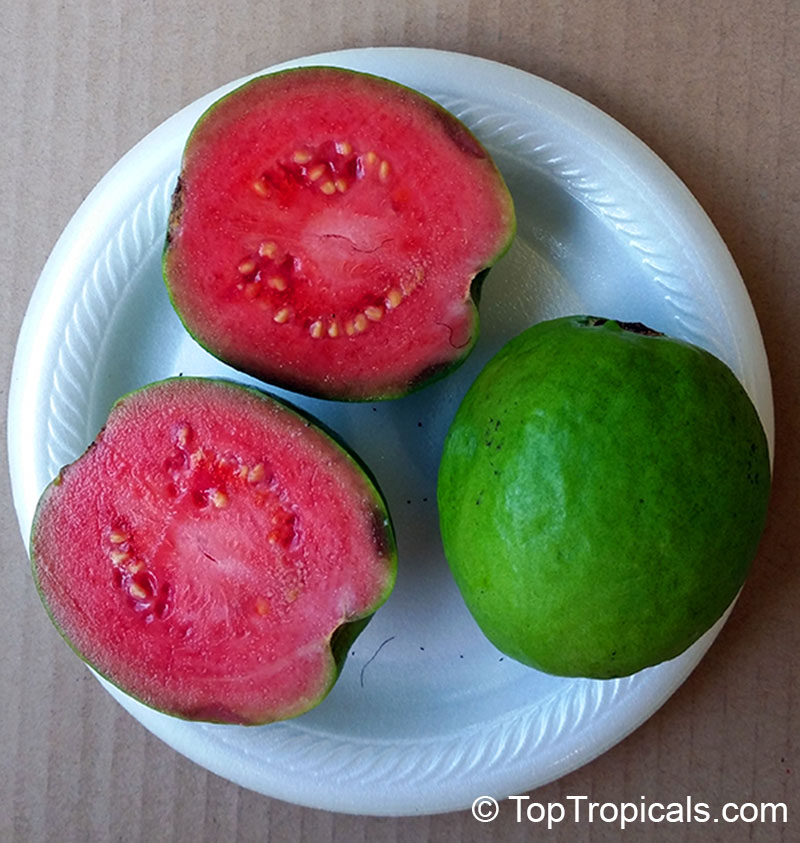
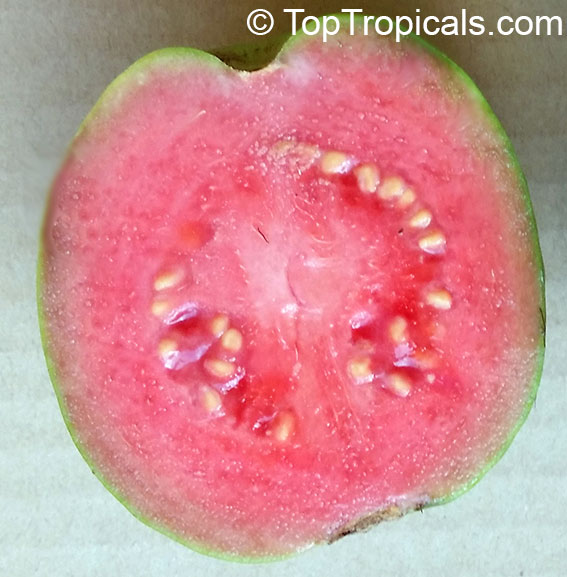
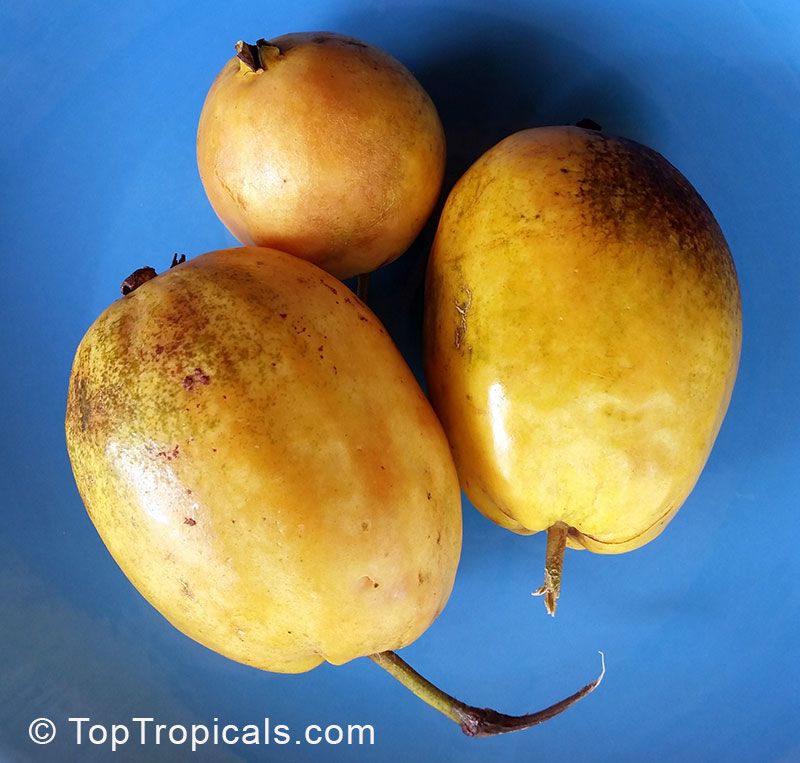
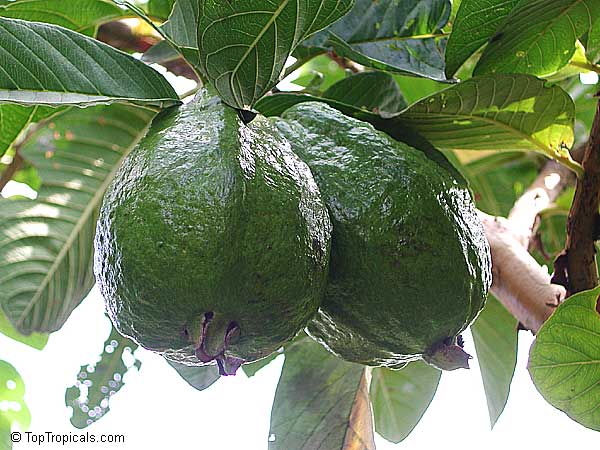
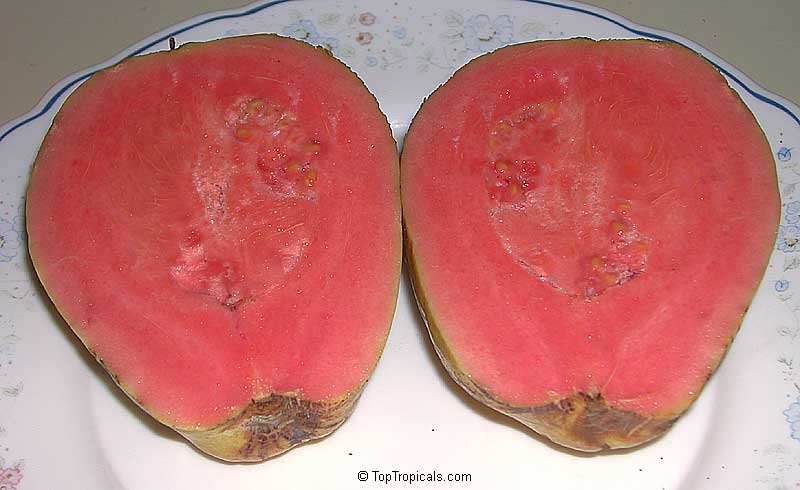
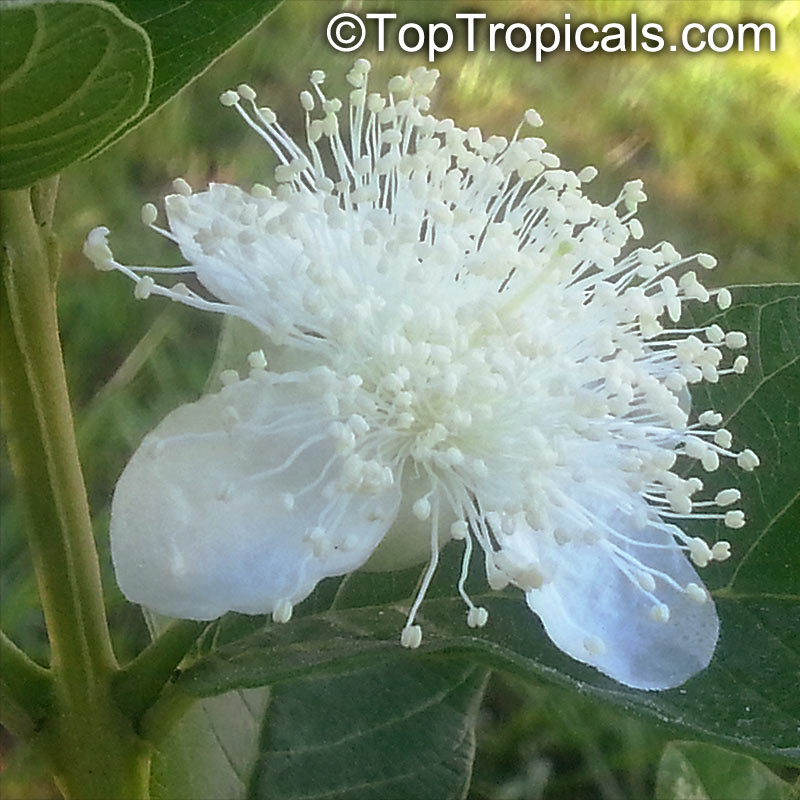
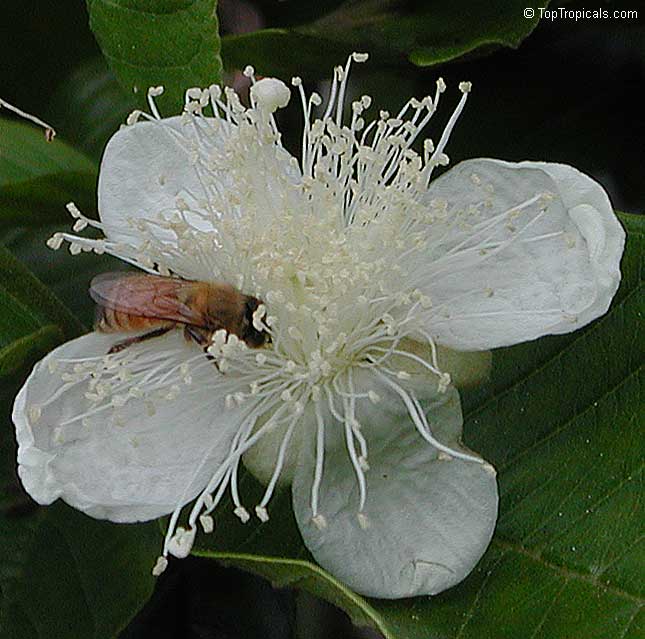
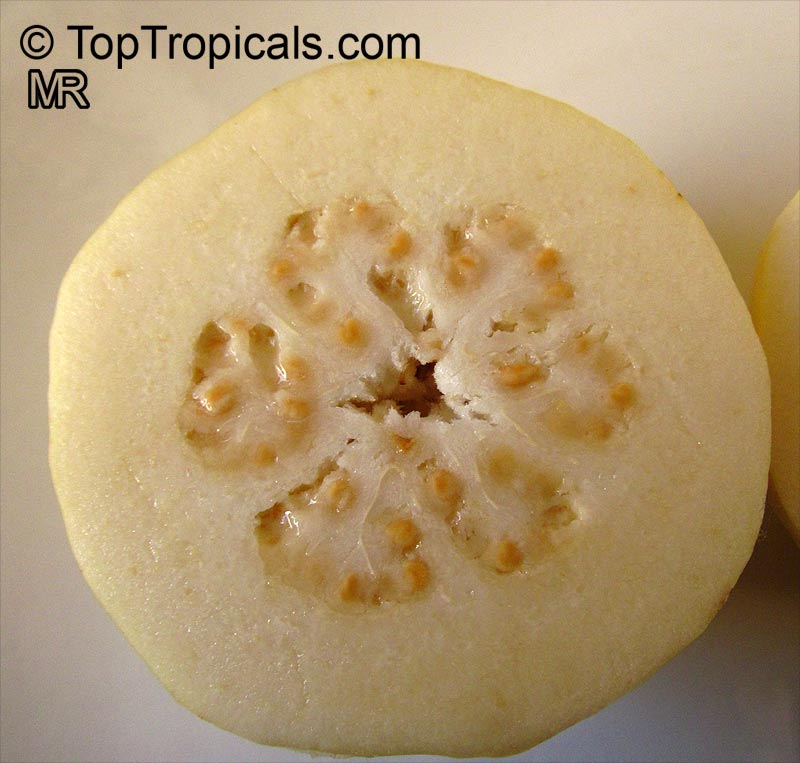
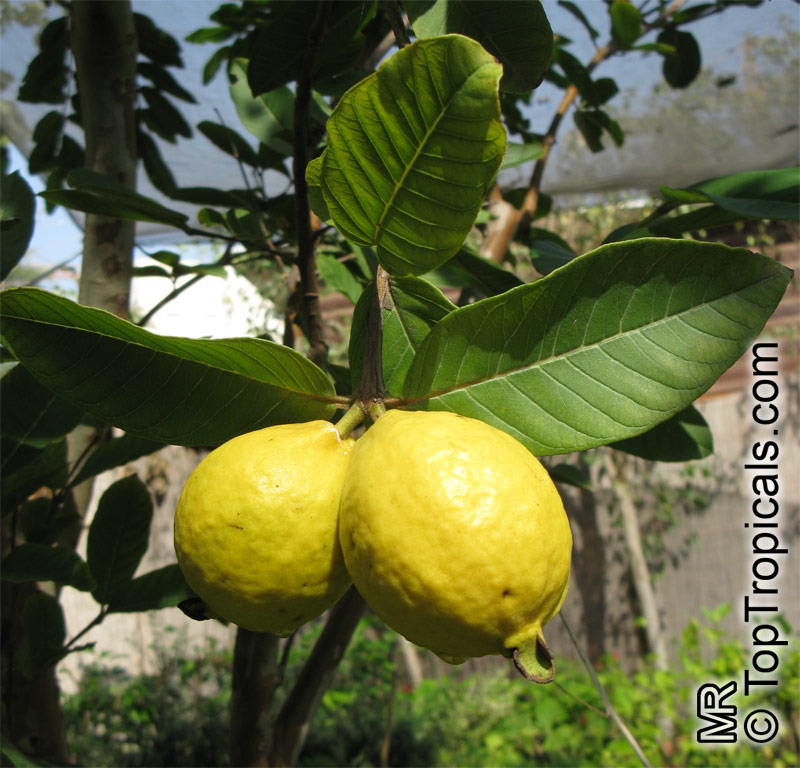
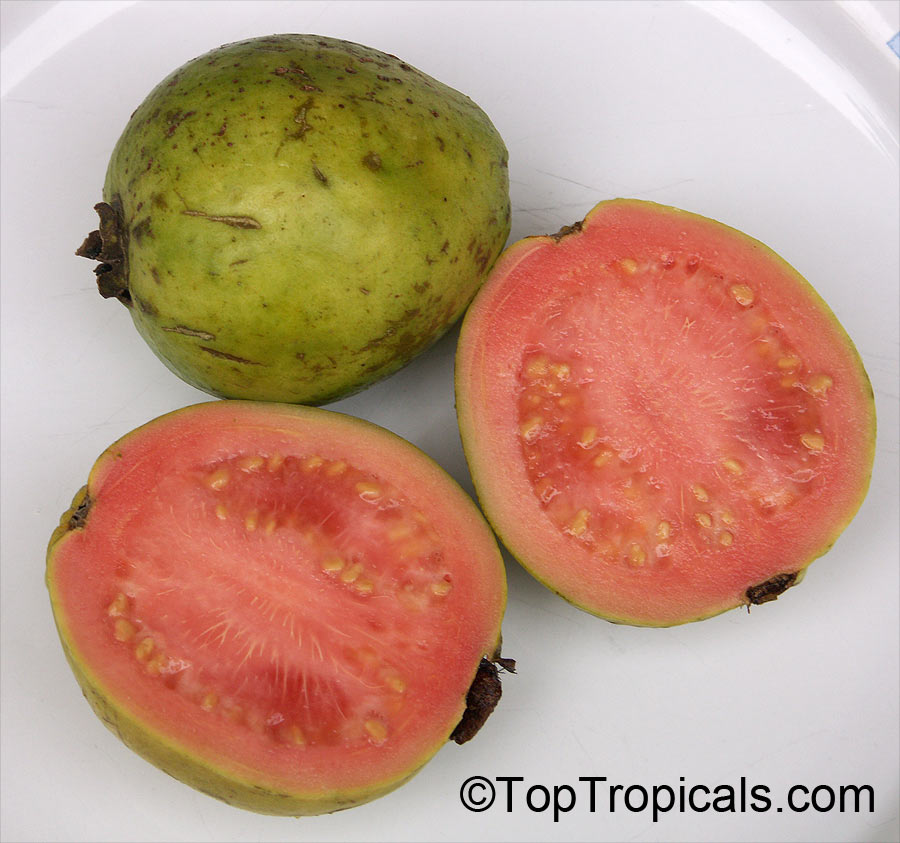
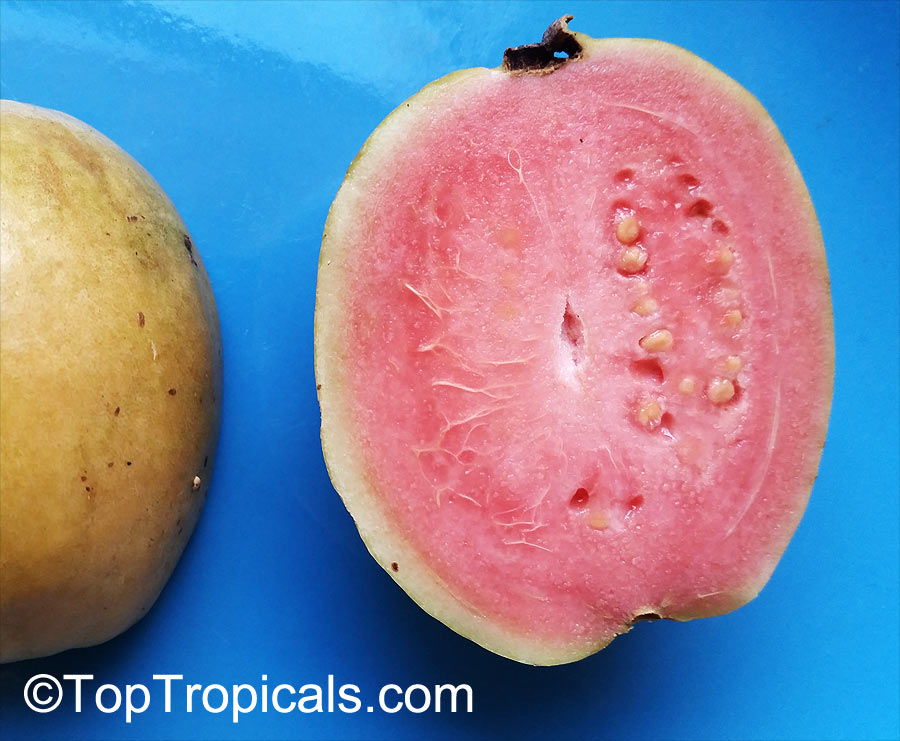
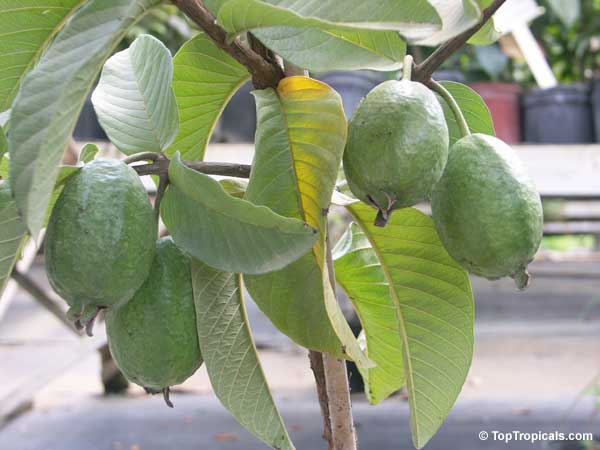
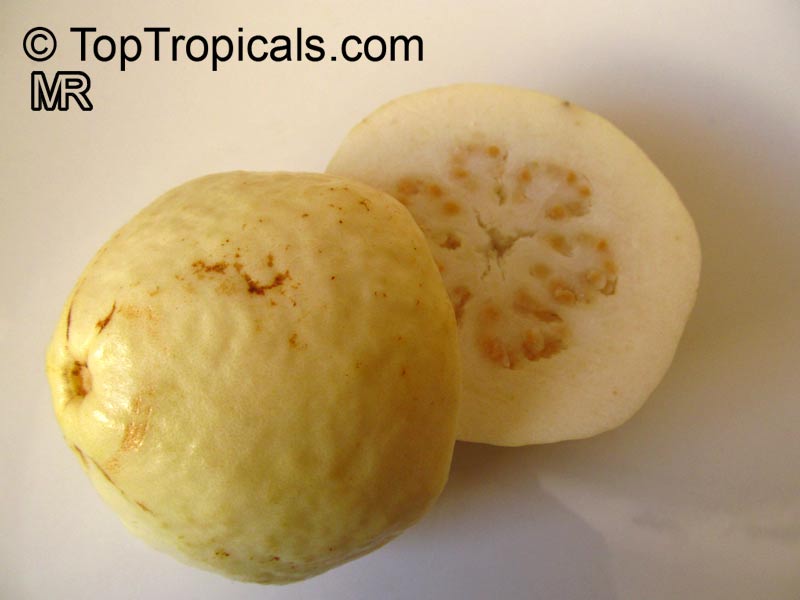
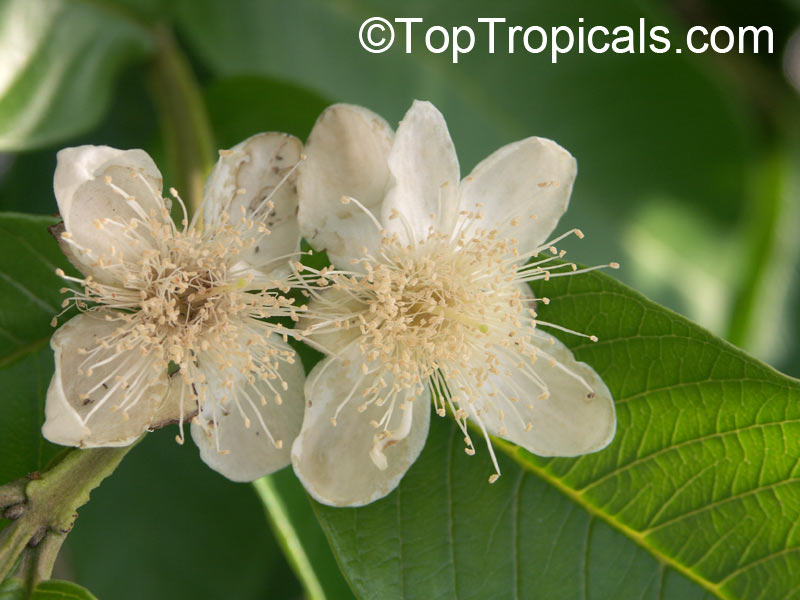
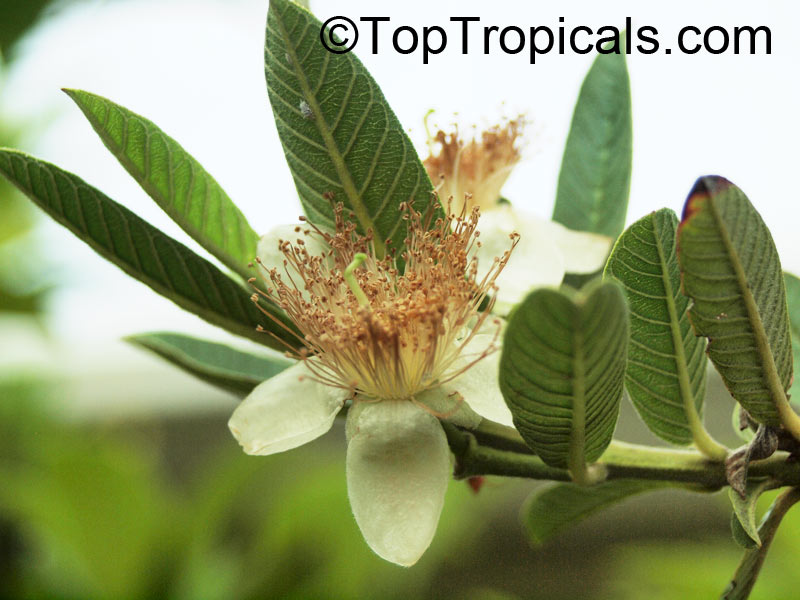
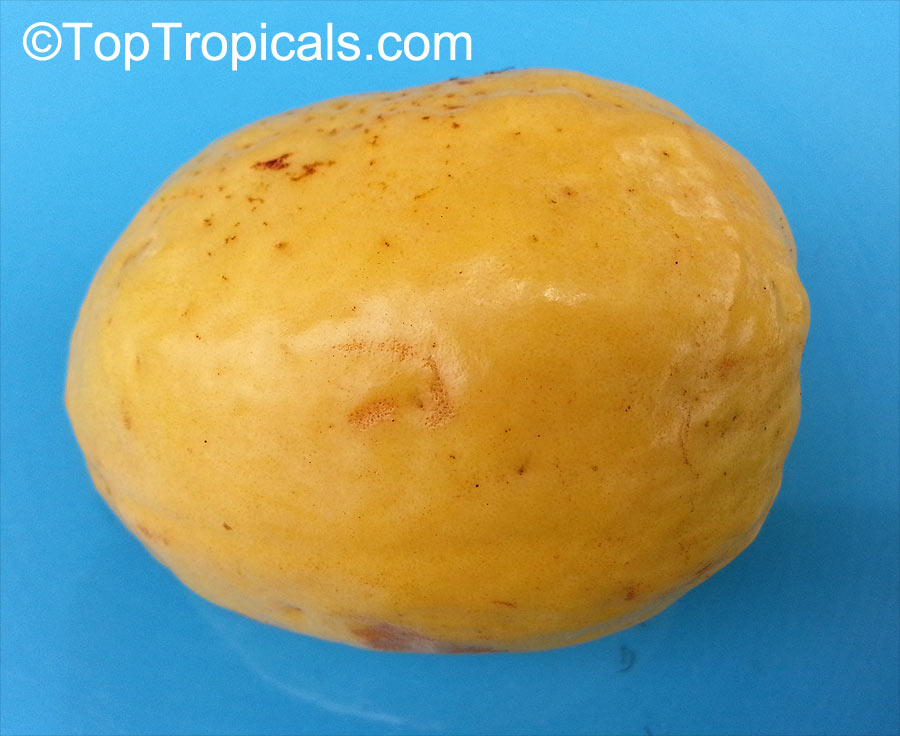
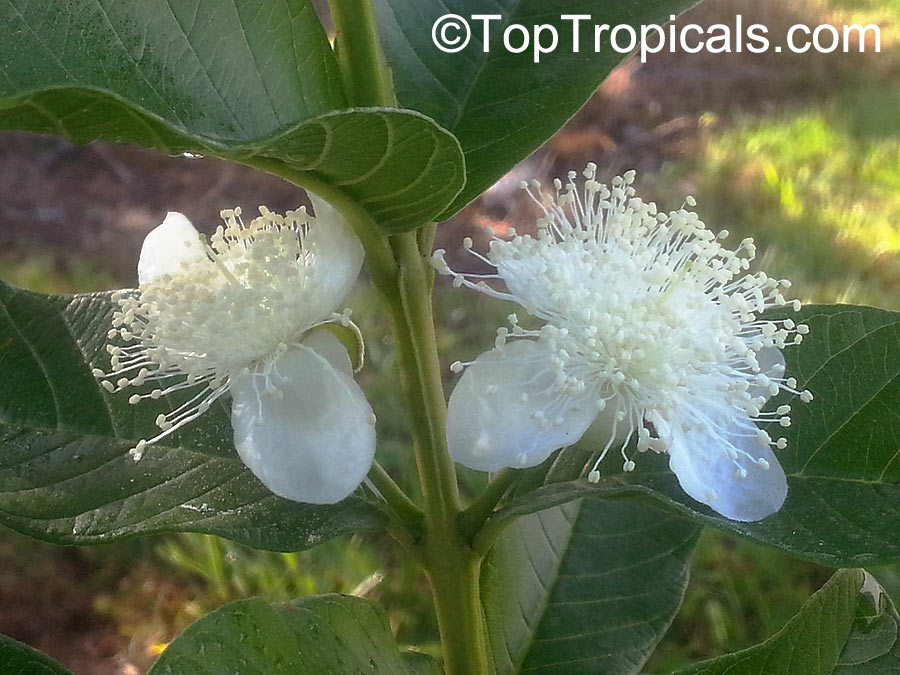
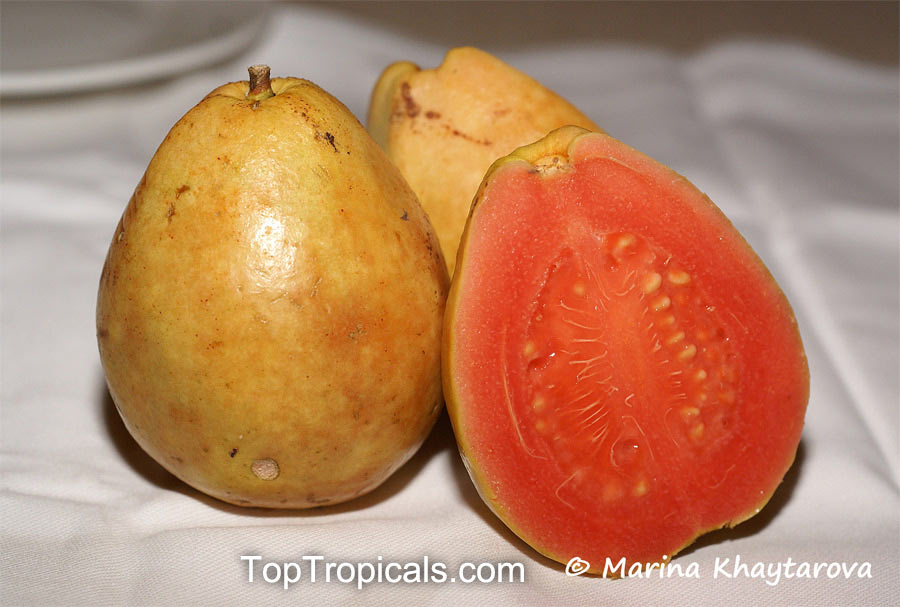
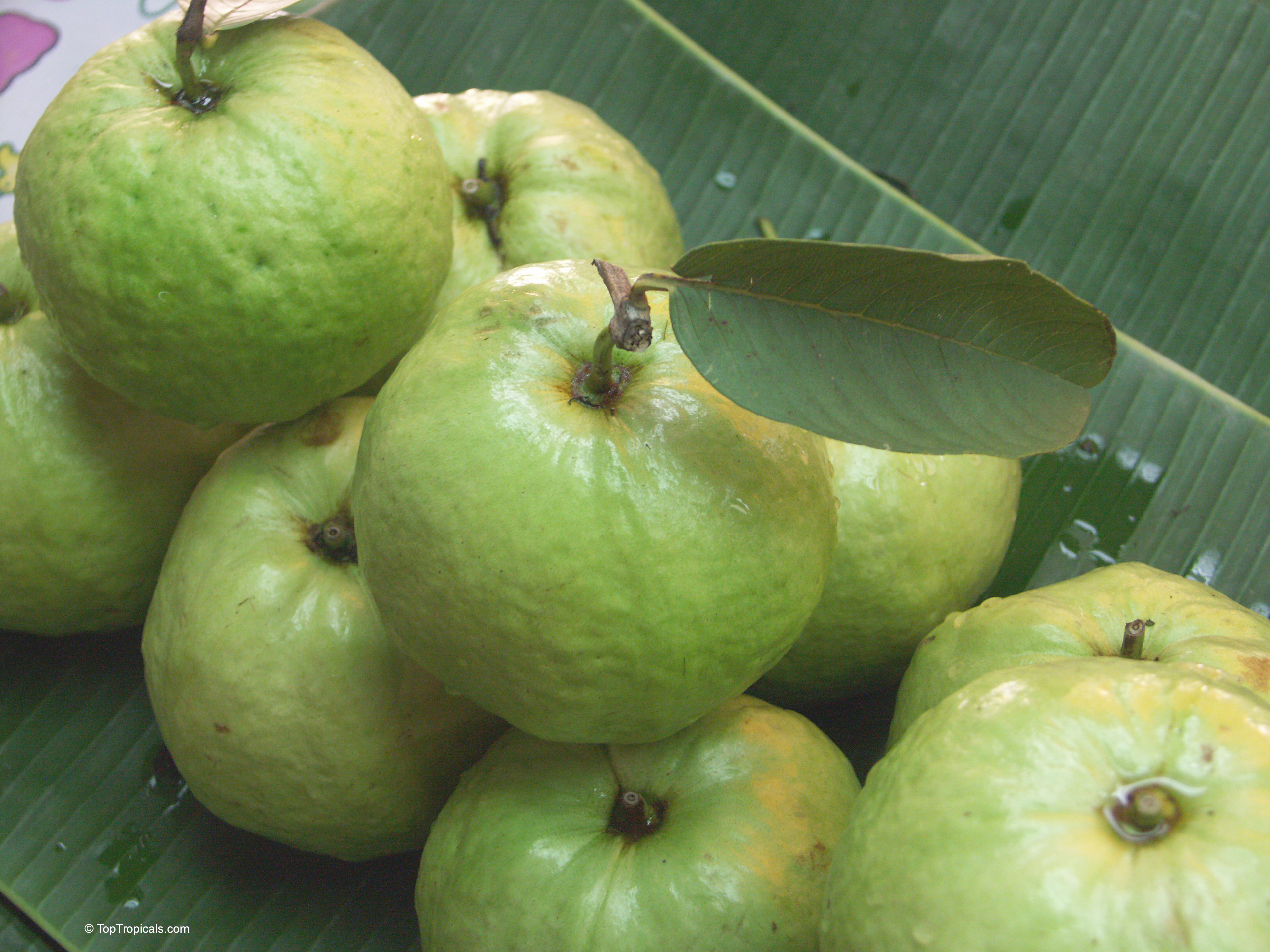
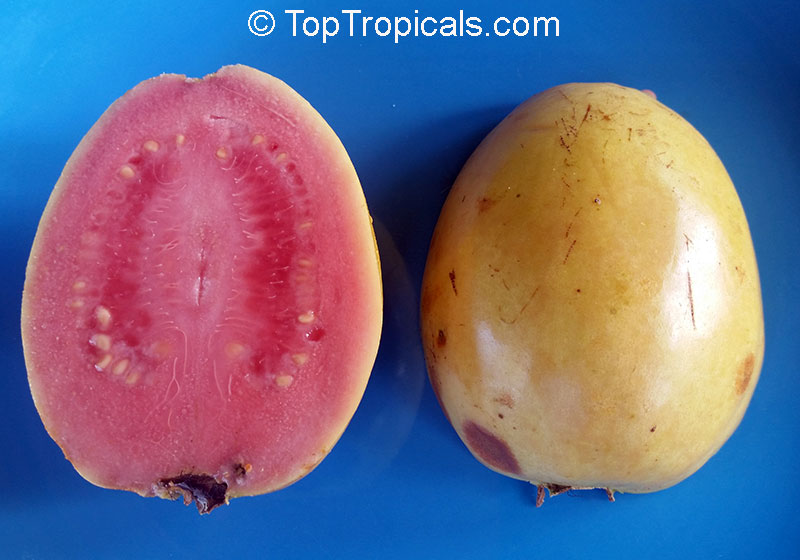
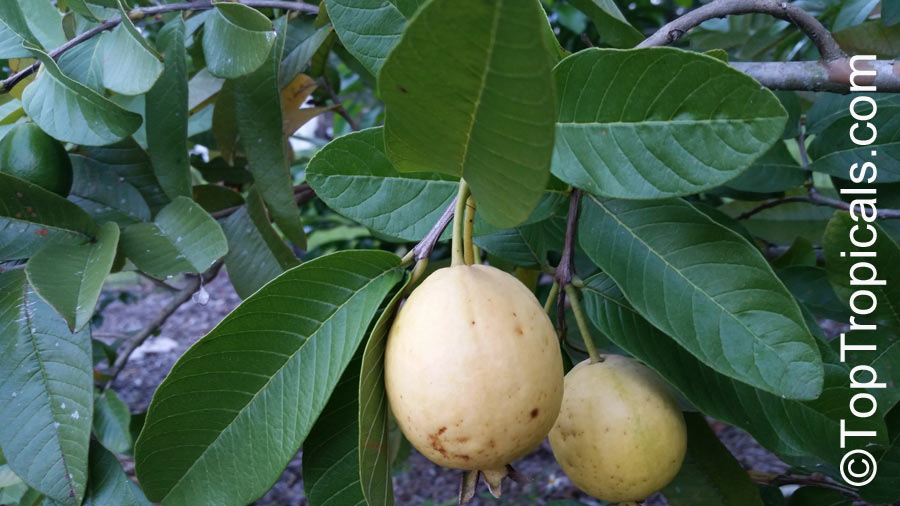
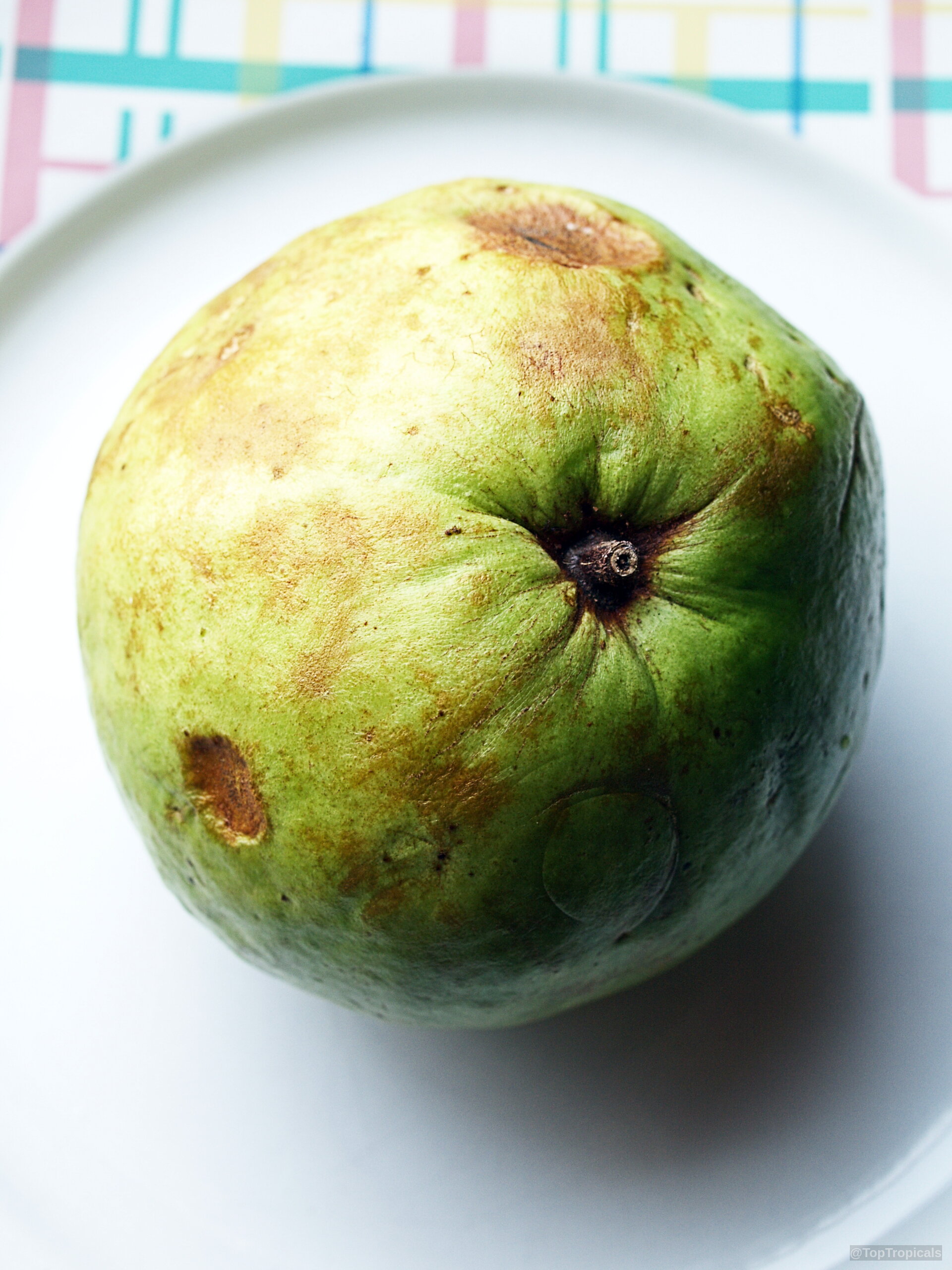
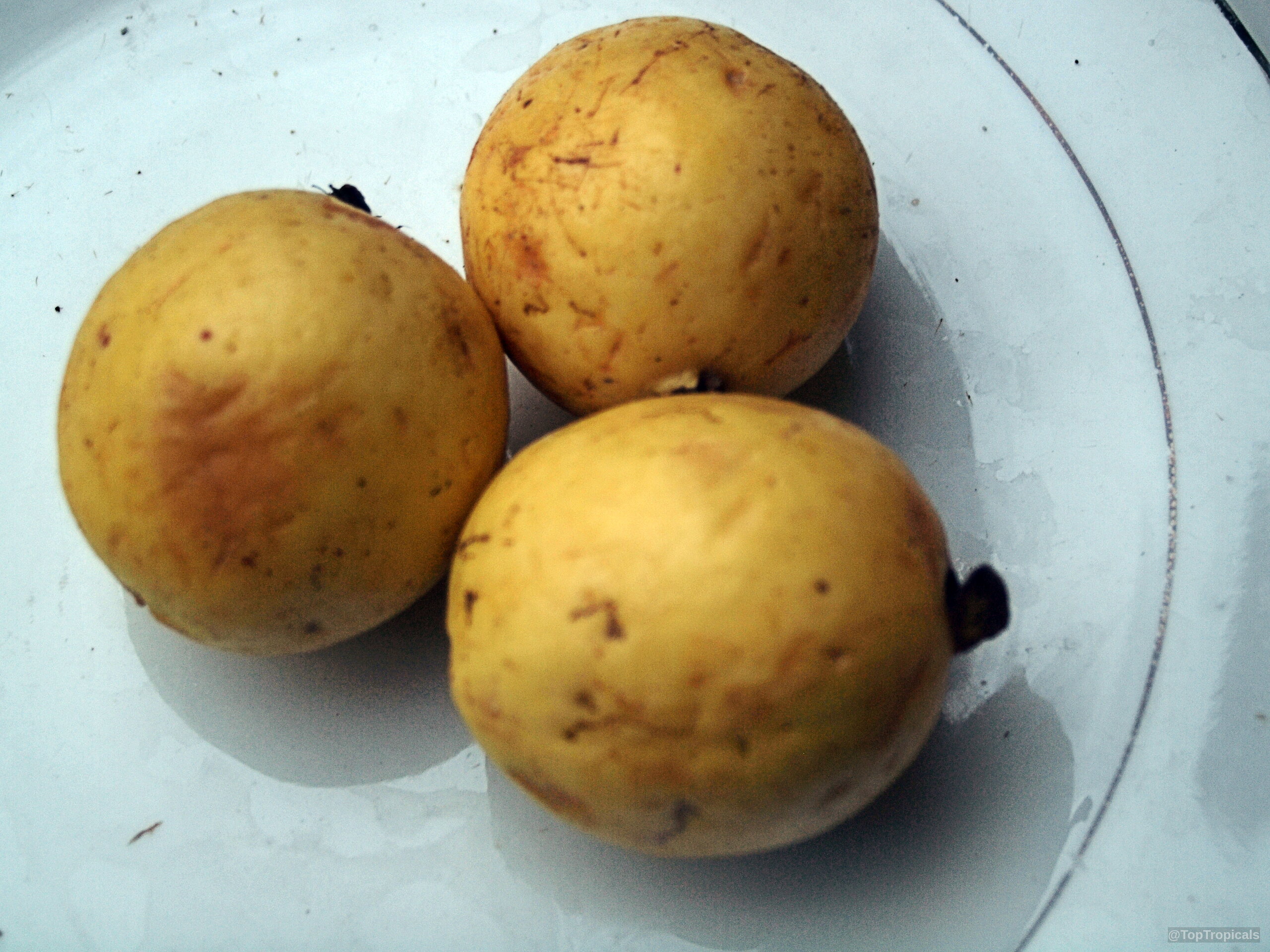
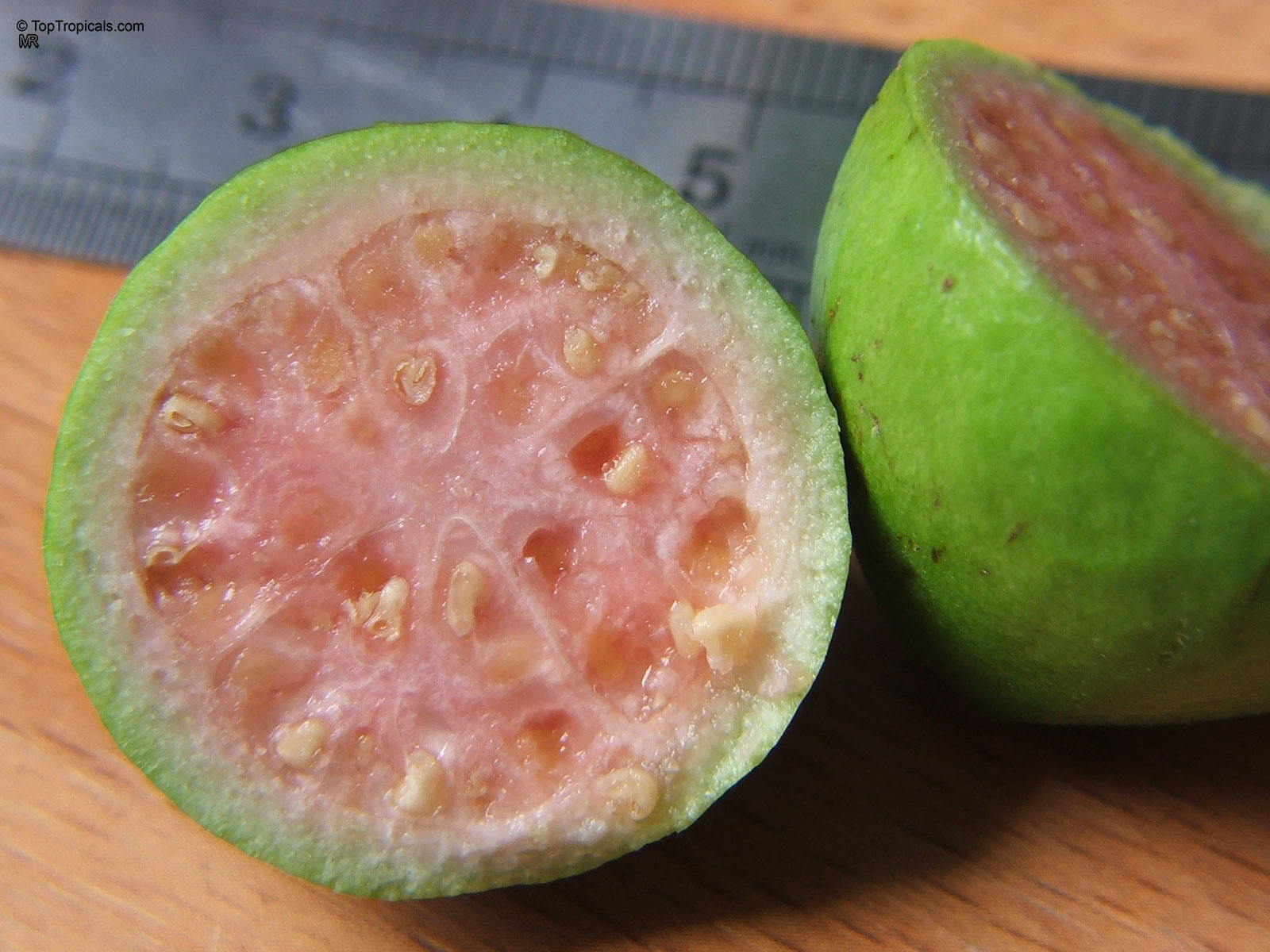
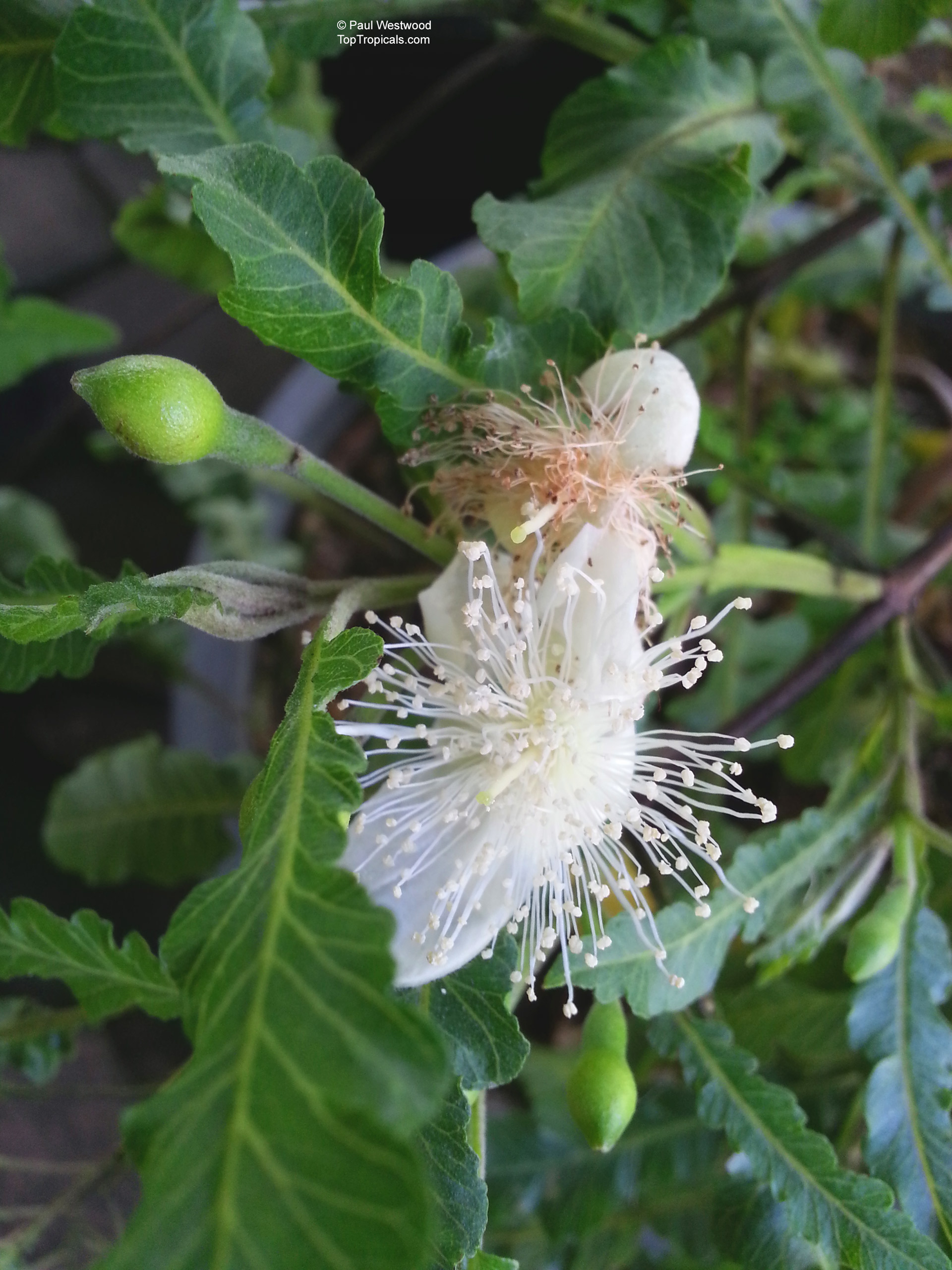
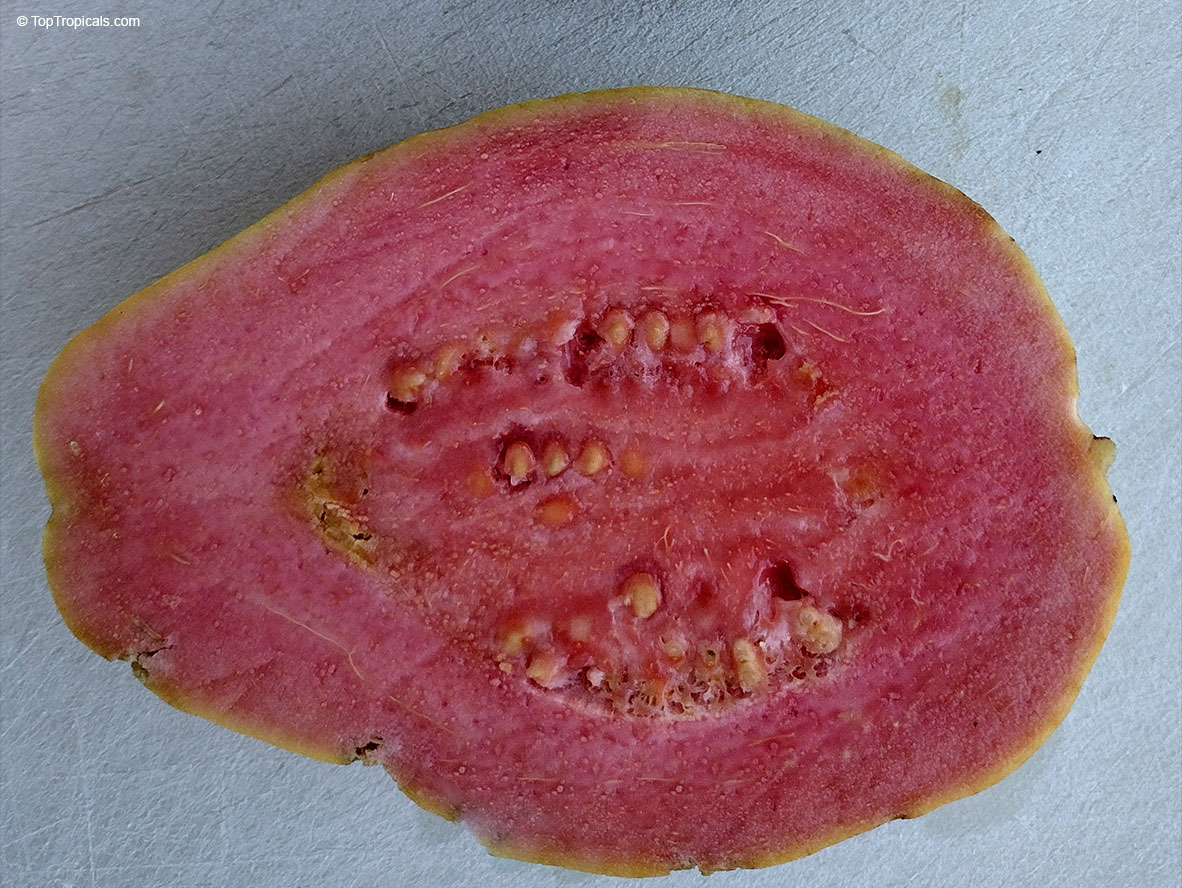
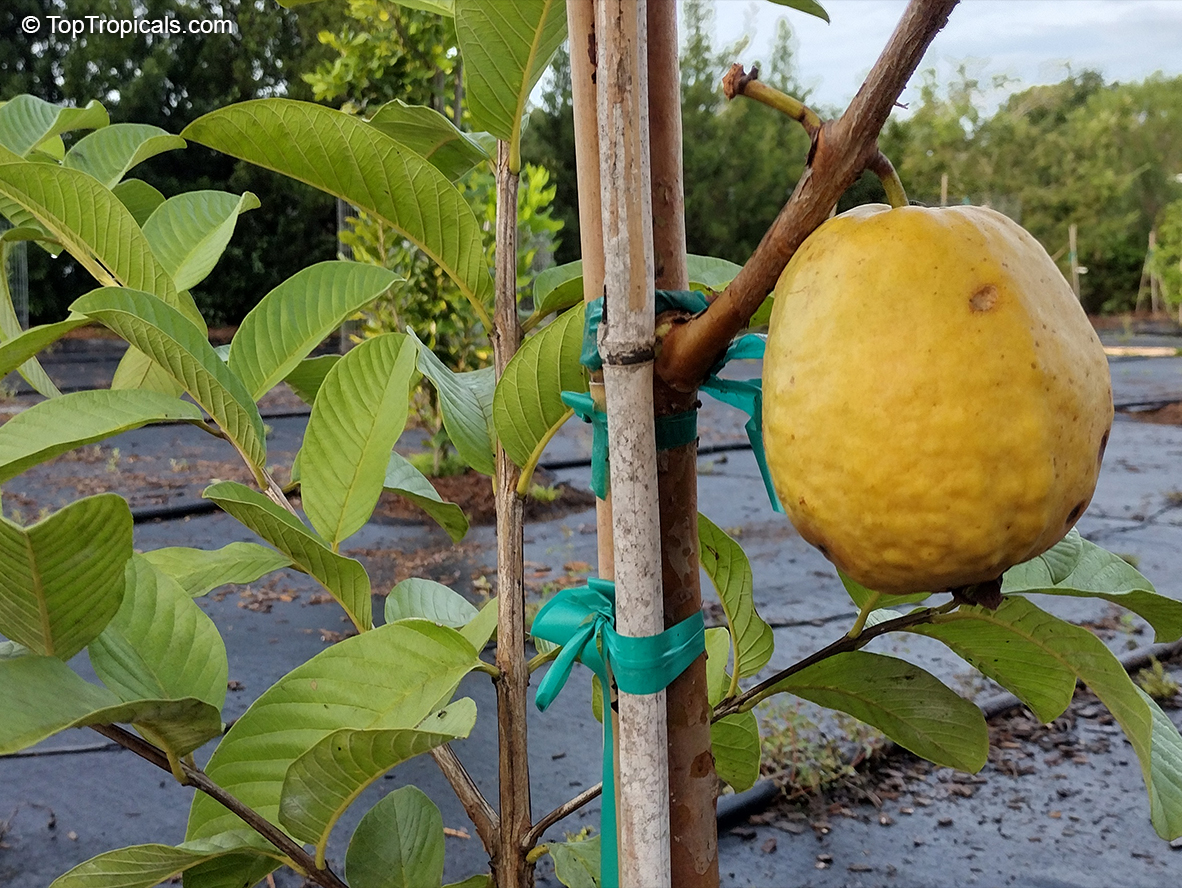
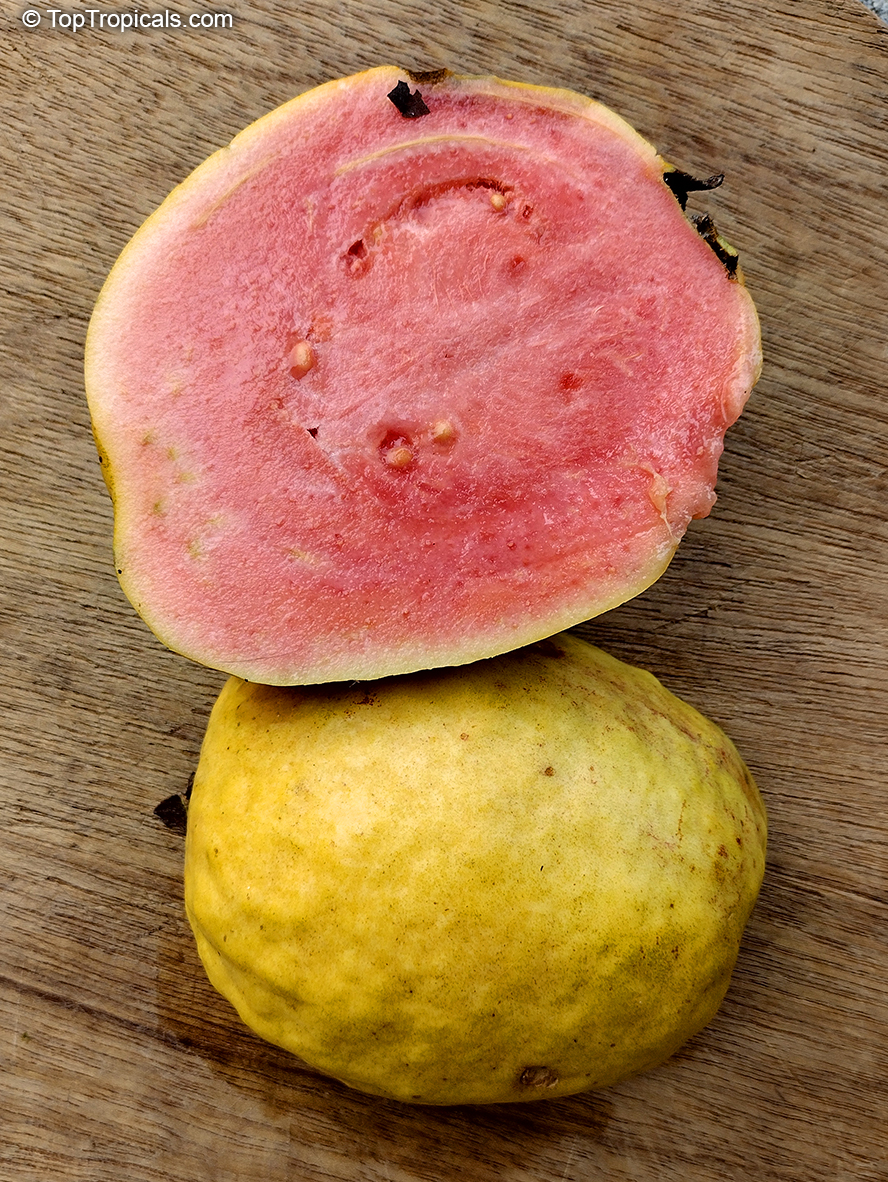
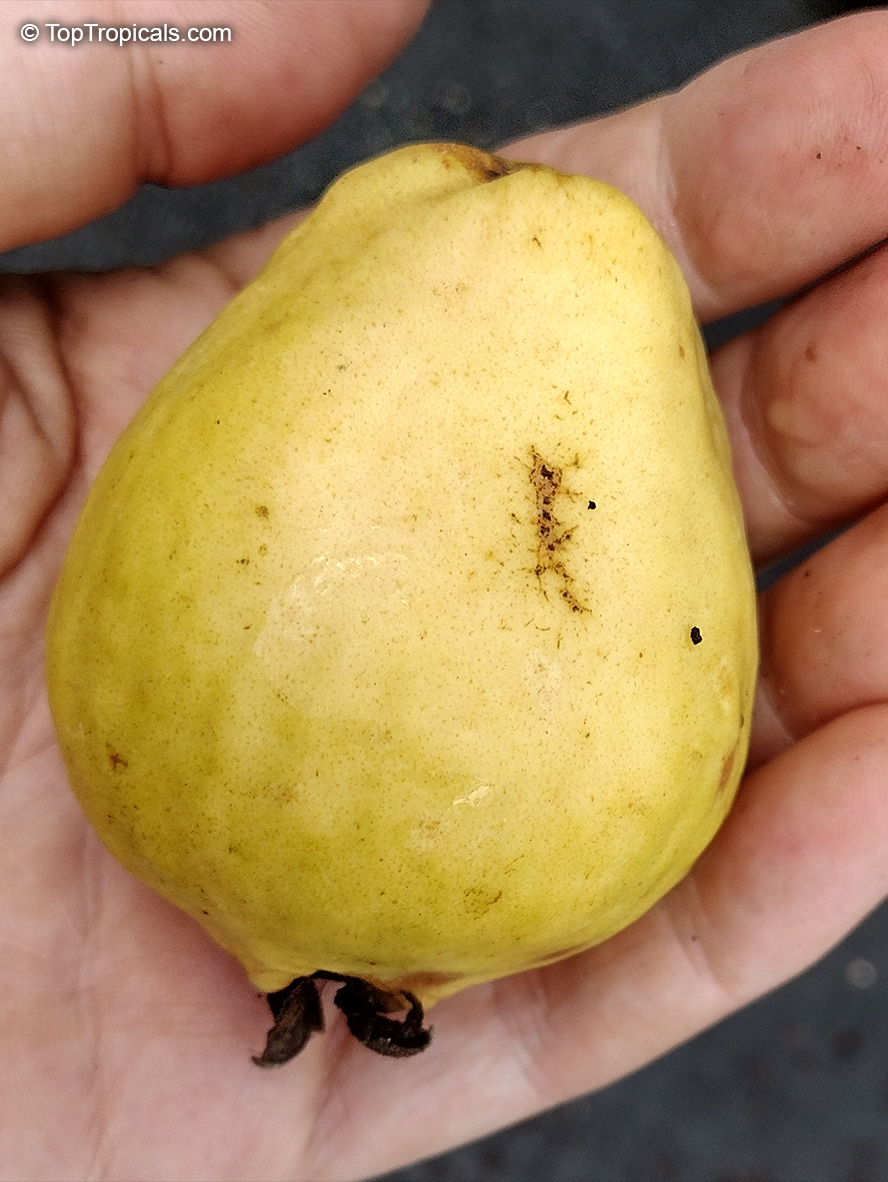
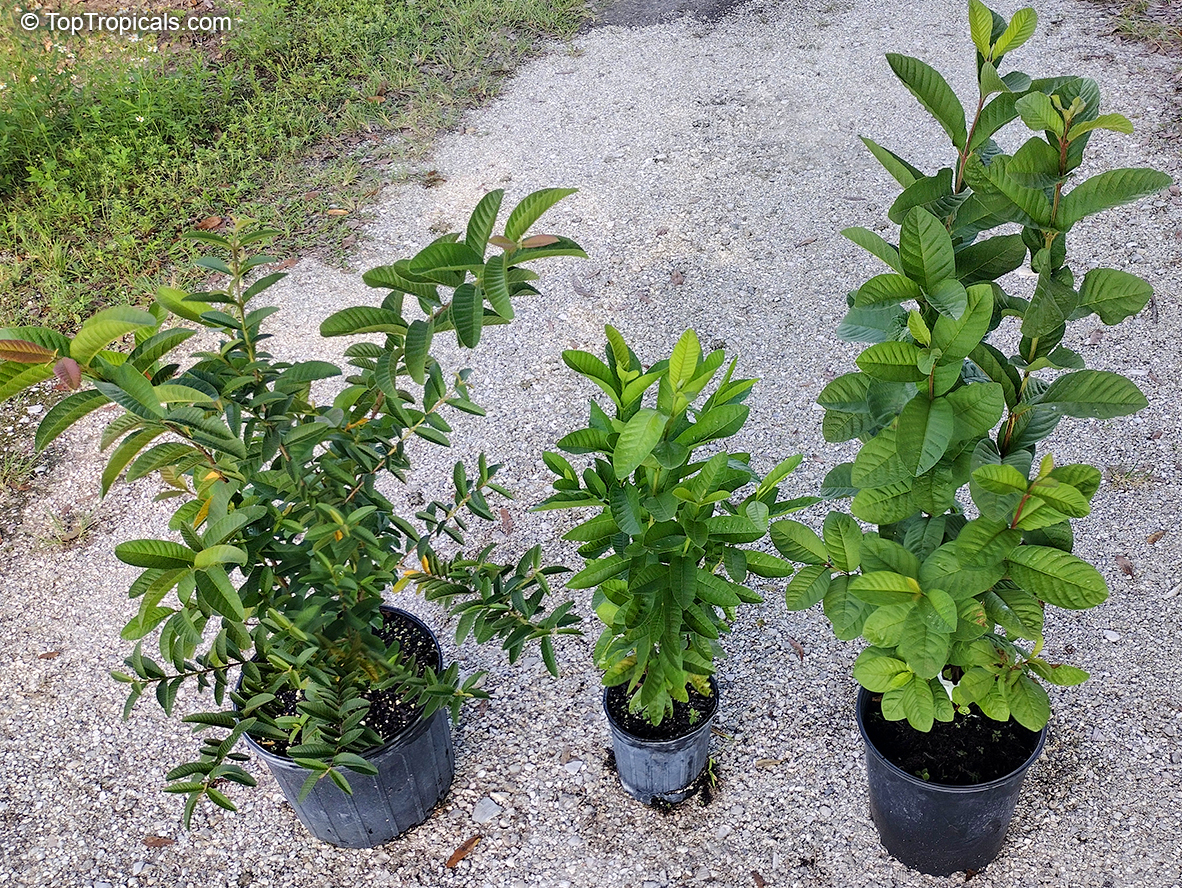
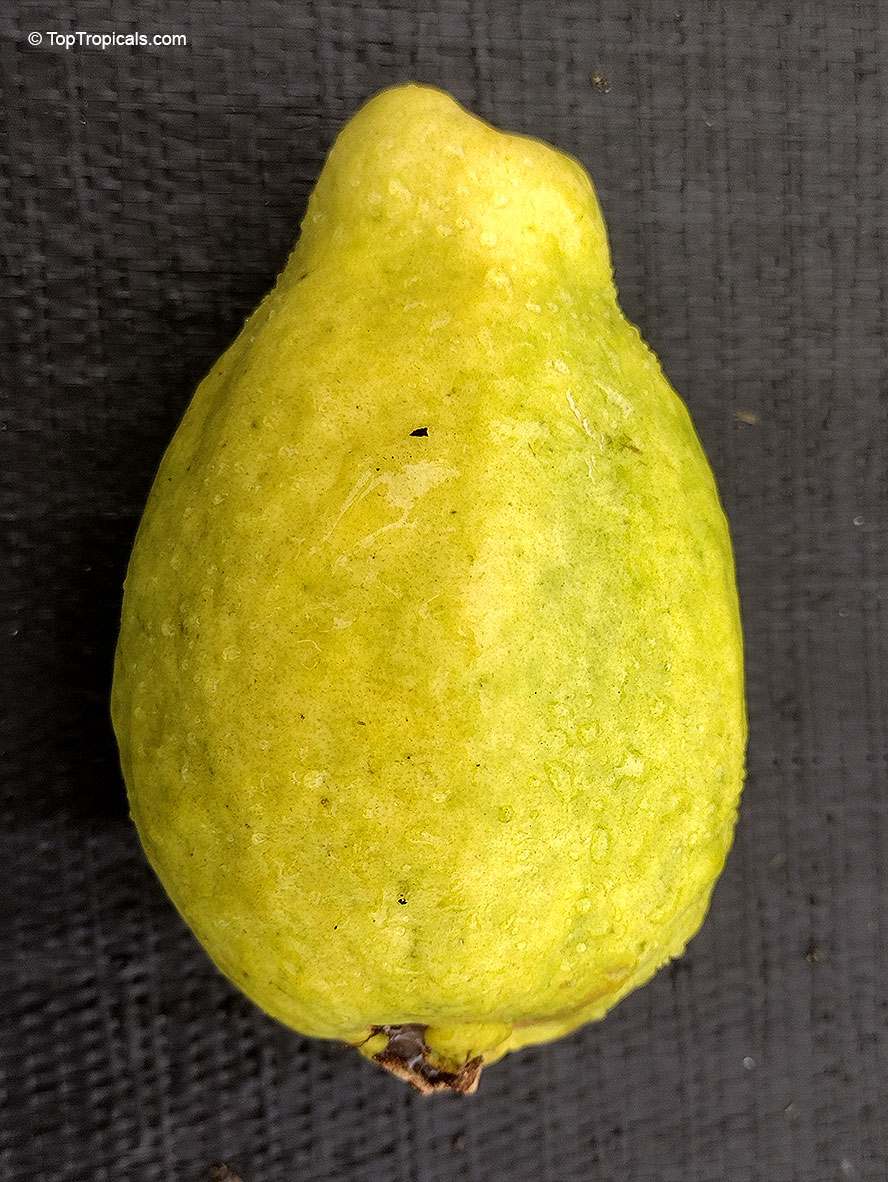
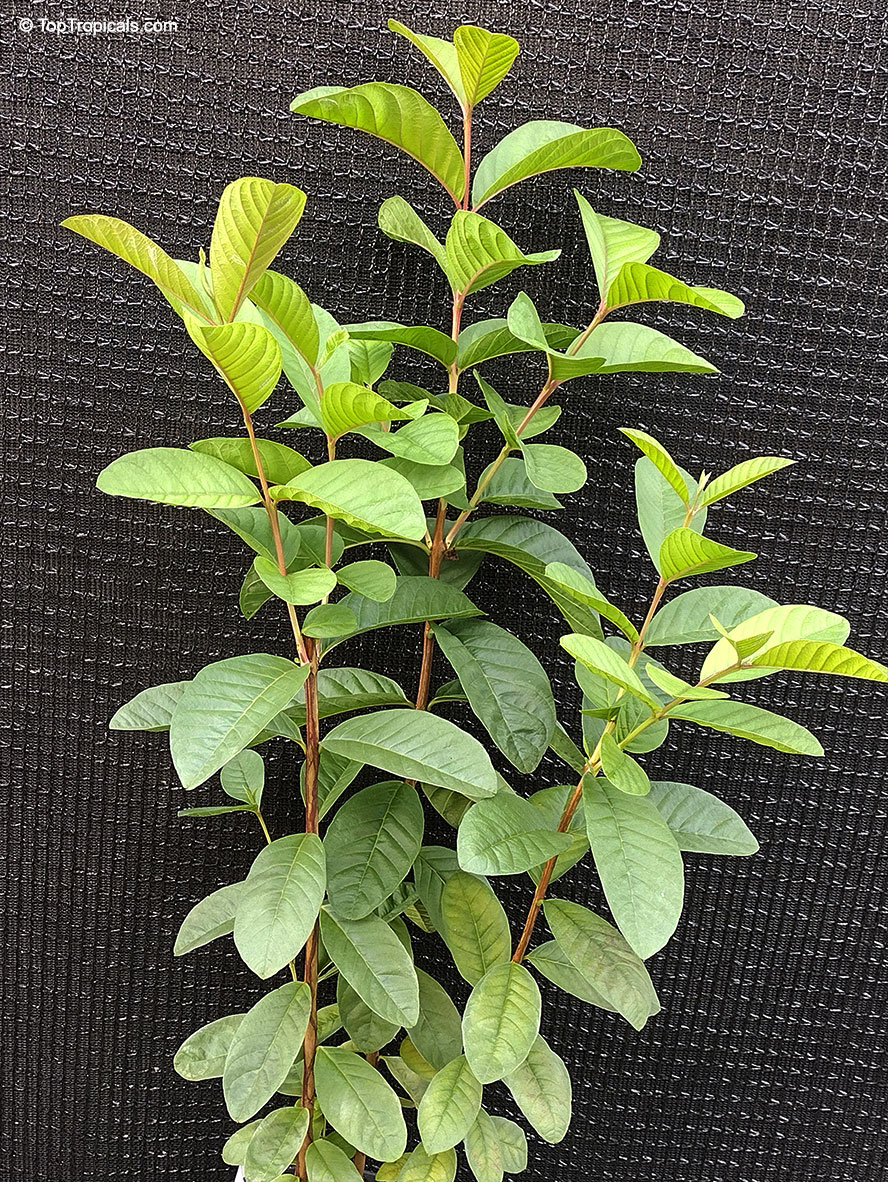
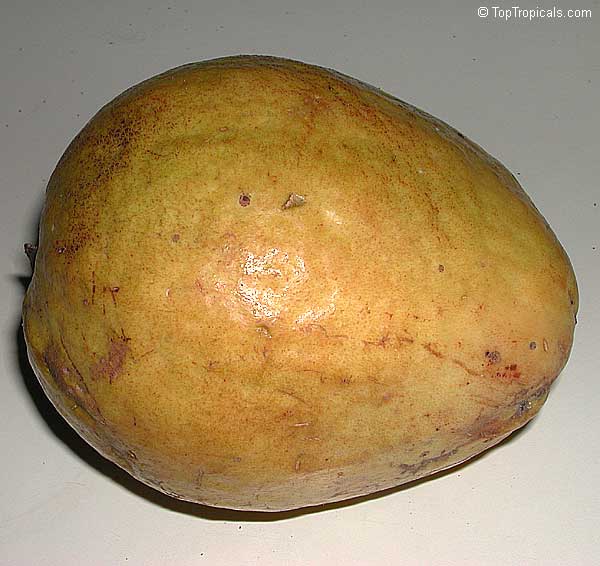
The Guava is well known throughout the tropics, many people are familiar with it because of the large number of products made from this aromatic fruit. The plant is well distributed throughout the tropics and subtropics. This is a low growing tree up to 25 feet high and about the same spread. The bark is an attractive reddish brown and peels off revealing smooth gray bark beneath. The large coarse opposite leaves have prominent veins and young wood often is four-angled or winged. Trees flower and fruit throughout most of the year. Flowers are usually white and about an inch across with many stamens. Fruit size and shape is variable - from 2 to 4 inches across, from round to oblong and even pear-shaped. Guavas typically have very thin skins, easily bruised, so they have to be handled carefully when being shipped. In shape, size and other characteristics, the fruits of the numerous varieties are extremely variable. In color, the skin may be greenish white, yellowish, or pink. Flesh color inside ranges from light to dark pink or white with the pink-fleshed varieties having less acid than the white-fleshed. In flavor, varieties range from sweet to tart, all with the characteristic musky flavor and odor of the guava more or less pronounced. Most varieties bear many seeds embedded in the soft pulp of the center, there are a few varieties that are almost seedless.
Upon ripening, the fruit becomes soft and juicy. It may be eaten fresh, made into a juice or nectar contain fruit pulp, or made into preserves, jam, jelly, or paste. A distinctive, savory-fresh aroma of fruit is thermostable, thus survives processing. The guava is an excellent source of vitamins C and A.
Guava is a good tropical fruit tree not fussy on the soil quality, and produces fruit year after year. It is relatively cold hardy. Mature trees freeze at about 29 F, but young plants can be injured by light frost. Tropical Guava should be protected from extreme salt spray. Once established, it withstands drought well, but fruits better when watered on a regular schedule. The trees are rapid growers and start fruiting in 2-3 years from seed, however for specific varieties grafting is necessary as they don't come true from seed. Guavas are fast growers and heavy feeders, and benefit from regular applications of fertilizer.
Guava can make a nice container fruiting specimen, plants start blooming and producing fruit when they are as small as 1 gal pot size. It responds well to pruning and can be kept in compact bushy shape. In fact, Guava is probably the most popular container fruit tree among tropical plant growers.
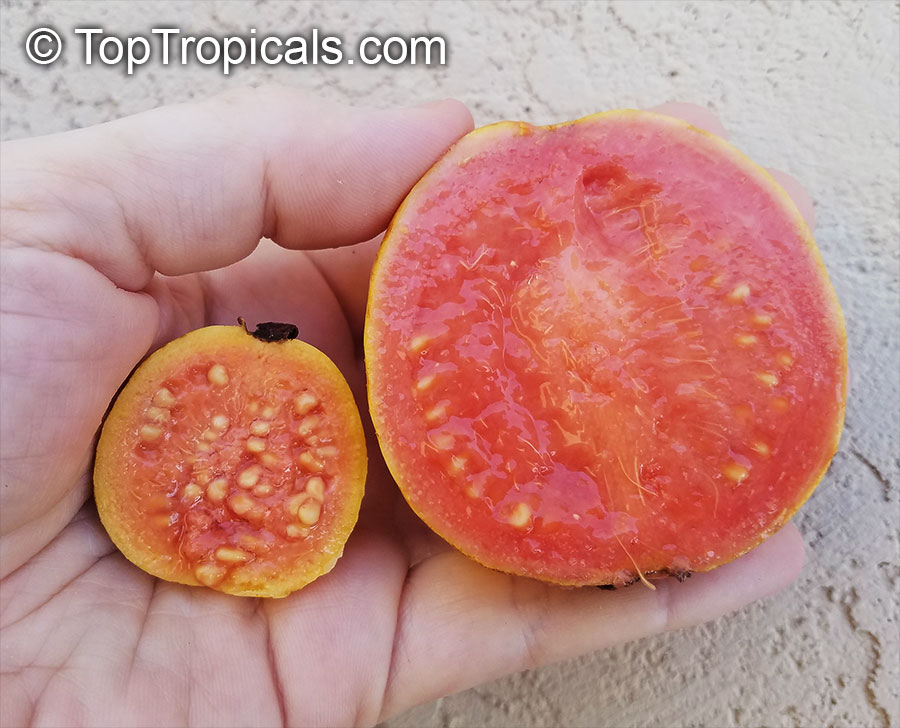
Using SUNSHINE-Honey increases fruit production, fruit size and quality. On the photo below you can see Guava fruit without (left) and with SUNSHINE-Honey applications.
Recommended Fertilizer: SUNSHINE C-Cibus - Crop Nutrition Booster
SUNSHINE-Honey - sugar booster
Last one
Recommended Fertilizer: SUNSHINE C-Cibus - Crop Nutrition Booster
SUNSHINE-Honey - sugar booster
Recommended Fertilizer: SUNSHINE C-Cibus - Crop Nutrition Booster
SUNSHINE-Honey - sugar booster
Recommended Fertilizer: SUNSHINE C-Cibus - Crop Nutrition Booster
SUNSHINE-Honey - sugar booster
Recommended Fertilizer: SUNSHINE C-Cibus - Crop Nutrition Booster
SUNSHINE-Honey - sugar booster
Ordering seeds info
RECOMMENDED SUPPLIES:
Seed Germination Mix #3, professional grade
SUNSHINE-Epi - Seeds and cuttings booster
SUNSHINE Bombino - Young Plant Booster
Recommended Fertilizer: SUNSHINE C-Cibus - Crop Nutrition Booster
SUNSHINE-Honey - sugar booster
Recommended Fertilizer: SUNSHINE C-Cibus - Crop Nutrition Booster
SUNSHINE-Honey - sugar booster
Use link to repeat this search:
https://toptropicals.com/cgi-bin/garden_catalog/cat.cgi?find=psidium&search_op=and&keyword_op=and&language=e&number=10
&no_change_lang=1&user=tt&sale=1&first=0