What tropical plants survived Floridas historic freeze without protection
Florida historic freeze
What tropical plants survived Florida's historic freeze without protection
In the first week of February 2026, arctic air pushed deep into Florida. For many areas, this was the coldest event in over a century.
We received one question over and over: How did your gardens do?
Top Tropicals Farm in Sebring, Florida is up and running - and this freeze became a real-world hardiness test for tropical and subtropical plants. Below is our initial field report after inspecting established plantings.
📊 Weather data - February 1-6, 2026
Sebring, Florida - 132 years of recorded observations
This was not a light frost. It was prolonged, windy, penetrating hard freeze.
🌡 Minimum temperature: 25F ❄️ Wind chill: 14F ⏳ Duration: 3 nights of 8-10 hour hard freeze ☀️ Daytime temperatures: around 50F for 7 days 🌀 Wind: sustained 20 mph, gusts 40-50 mph
Cold protection
In-ground trees: selected plants covered with frost cloth, especially
Mango Plant Facts
Botanical name: Mangifera indica Also known as: Mango
USDA Zone: 9 - 11
Highligths
mango and young
Avocado Plant Facts
Botanical name: Persea americana, Persea gratissima Also known as: Avocado, Alligator Pear, Aguacate, Abacate
USDA Zone: 9 - 11
Highligths
avocado trees. Tender container plants: moved into greenhouses with propane heat above 34F. Hardy container plants: frost cloth and wind protection only - no plastic Nutrition support: plants fertilized regularly during the growing season with Green Magic and Sunshine Boosters to maintain vigor and hardiness.
However, the plants listed below had no protection at all.
All were established trees 2-3 years in the ground.
The plants below had NO PROTECTION, established trees 2-3 years old
Botanical name: Psidium cattleyanum, Psidium littorale Also known as: Cattley Guava, Sand Plum, Strawberry Guava
USDA Zone: 9 - 11
Highligths
Eugenias (Grumichama, Rio Grande, Surinam and more)
Olive trees
Bay Leaf (Laurus nobilis)
Fig trees (Ficus carica)
Prunus sp - Peaches, Plums, Nectarines
Persimmons
Rubus (Blackberries) including Tropical Mysore Raspberry
Elderberry (Sambucus)
Yerba Mate - Ilex paraguariensis
Opuntia - Nopal Cactus, Prickly Pear
🌸 Flowering Trees and Shrubs:
Beaucarnea recurvata - Pony Tail
Ponytail Palm Plant Facts
Botanical name: Beaucarnea recurvata, Nolina recurvata Also known as: Ponytail Palm, Pony Tail, Bottle Palm, Nolina, Elephant-foot Tree
USDA Zone: 10 - 11
Highligths
Callistemon - Bottlebrush
Yucca
Tabebuias
Magnolia figo and Little Gem
Banana Magnolia Plant Facts
Botanical name: Magnolia figo, Michelia figo, Magnolia fuscata Also known as: Banana Magnolia, Banana Shrub, Port Wine Magnolia
USDA Zone: 7 - 10
Highligths
Calliandra tweedii - Red Powderpuff
Sophora tomentosa
Yellow Necklace Pod Plant Facts
Botanical name: Sophora tomentosa Also known as: Yellow Necklace Pod, Silverbush
USDA Zone: 8 - 11
Highligths
Galphimia gracillis - Thriallis
Thriallis Plant Facts
Botanical name: Galphimia gracillis, Galphimia gracilis, Galphimia glauca Also known as: Thriallis, Rain of Gold, Spray of Gold
USDA Zone: 9 - 11
Highligths
Acacia trees
Osmanthus fragrans
Tea Olive Plant Facts
Botanical name: Osmanthus fragrans, Olea fragrans, Olea ovalis, Osmanthus longibracteatus, Osmanthus macrocarpus Also known as: Tea Olive, Fragrant Olive, Sweet Olive, Kinmokusei in Japan
USDA Zone: 8 - 11
Highligths
Abutilon trees
Erythrina - several species
Monkey Ear tree - Enterolobium cyclocarpum
Bauhinia Orchid Trees - several species
Pseudobombax ellipticum - Shaving Brush Tree
Shaving Brush Tree Plant Facts
Botanical name: Pseudobombax ellipticum, Bombax ellipticum Also known as: Shaving Brush Tree
USDA Zone: 9 - 11
Highligths
Bulnesia arborea- Vera Wood
Vera Plant Facts
Botanical name: Bulnesia arborea Also known as: Vera, Verawood, Vera Wood, Maracaibo Lignum Vitae
USDA Zone: 10 - 12
Highligths
Caesalpinia mexicana, Mexican Bird of Paradise
Mexican Bird of Paradise Plant Facts
Botanical name: Caesalpinia mexicana Also known as: Mexican Bird of Paradise, Dwarf Poinciana
USDA Zone: 9 - 11
Highligths
Sansevieria - Snake Plant
Foxtail fern - Asparagus densiflorus
Lonicera - several varieties
Jacaranda tree
Eucalyptus
Plumbago Imperial Blue
Philodendron bipinnatum
Gardenias
Gingers (dormant rhizomes)
✳️ Minimal leaf damage only:
(These plants showed light cosmetic damage but no structural injury)
🍑 Tropical Fruit Trees and Edibles:
Glycosmis pentaphylla - Gin Berry
Ash sheora Plant Facts
Botanical name: Glycosmis pentaphylla, Limonia pentaphylla Also known as: Ash sheora, Orangeberry, Rum Berry, Gin Berry
USDA Zone: 9 - 10
Highligths
Black sapote tree
Tamarind tree
Syzygiums: Rose Apple and Java Plum
🌸 Flowering Trees and Shrubs:
Pandora vine
Jasminum - several species
Stenocarpus sinuatus - Firewheel Tree
Firewheel Tree Plant Facts
Botanical name: Stenocarpus sinuatus Also known as: Firewheel Tree
USDA Zone: 9 - 11
Highligths
Xanthostemon
Quisqualis indica
Rangoon Creeper Plant Facts
Botanical name: Combretum indicum, Quisqualis indica Also known as: Rangoon Creeper, Burma Creeper, Chinese Honeysuckle
USDA Zone: 10 - 11
Highligths
Schotia tree
Eranthemum pulchellum - Blue Sage
Blue sage Plant Facts
Botanical name: Eranthemum pulchellum, Eranthemum nervosum Also known as: Blue sage, Blue eranthemum, Lead Flower
USDA Zone: 9 - 11
Highligths
Hiptage benghalensis - Helicopter Flower
Hiptage Plant Facts
Botanical name: Hiptage benghalensis, Hyptage bengalensis Also known as: Hiptage, Helicopter Flower
USDA Zone: 9 - 10
Highligths
🏡 What this means for Florida gardeners
This freeze was a stress test few gardens are prepared for. Yet many species handled 25F, wind, and multi-night freeze conditions without protection.
Choosing proven survivors, planting in smart microclimates, and maintaining strong plant health during the growing season makes a measurable difference.
More updates will follow as full recovery continues - but these early results already help define a stronger plant palette for future winters.
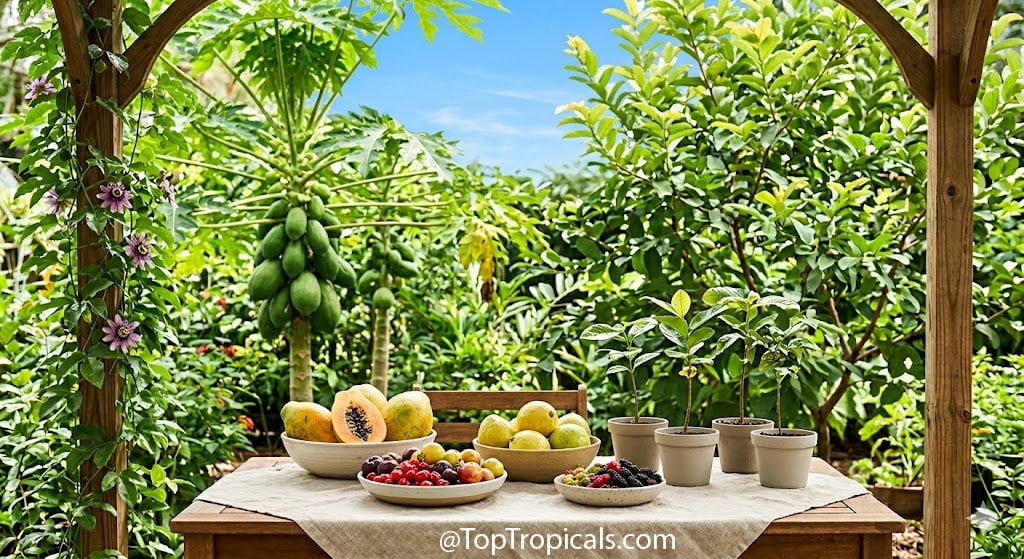
Want fruit without the wait? These tropical powerhouses deliver a "fast-food" garden in record time.
🍓 The Top 3 Speed Demons
1. The Favorite: Papaya🍊
If you want speed, Papaya is king. It can go from a small seedling to heavy fruit in 6-10 months. It behaves more like a giant herb than a tree: it is fast, has shallow roots, and is incredibly responsive to water and fertilizer. In warm climates, it is a plant it and watch it go legend. More details
2. The Reliable: Guava🍉
Guava is the most forgiving fruit tree you can own. It handles heat, poor soil, and the occasional week of neglect without missing a beat. Most varieties begin producing in just 1-2 years, staying compact enough for small yards or large pots. More details
3. The Surprise: Eugenias 🍒
This family (including Surinam Cherry, Grumichama, Cherry of the Rio Grande, and Pitomba) often flies under the radar. They look like ornamental shrubs, but they establish quickly and can fruit within year two. They handle pruning beautifully, making them perfect for edible hedges. More details
🍓 The Fast-Fruit Honor Roll
🍓 Ultra-Fast (Under 1 Year)
Papaya and Banana: The heavyweight champions of speed. Strawberry Tree (Muntingia calabura): Non-stop cotton candy berries. Grafted Favorites: High-quality Mango, Avocado, Peach, Nectarine, and Persimmon.
Mango Plant Facts
Botanical name: Mangifera indica Also known as: Mango
USDA Zone: 9 - 11
Highligths
Avocado Plant Facts
Botanical name: Persea americana, Persea gratissima Also known as: Avocado, Alligator Pear, Aguacate, Abacate
USDA Zone: 9 - 11
Highligths
Peach Plant Facts
Botanical name: Prunus persica, Amygdalus persica Also known as: Peach
USDA Zone: 5 - 10
Highligths
🍓 Very Fast (1-2 Years)
The Berries: Mulberry (especially Everbearing), Fig, and Barbados Cherry. The Exotics: Strawberry Guava, Loquat, and the curious Peanut Butter Tree (Bunchosia). The Sweet Treats: Blackberry Jam Fruit (Randia formosa).
🍓 Tropical Staples (2-3 Years)
Starfruit (Carambola): A heavy producer that looks stunning in the garden. Annona Family: Sweet Sugar Apples and creamy Atemoyas. Macadamia Nut: A long-term investment that starts surprisingly early.
🍓 Fast Climbers and Bush Fruit
Passionfruit: Will cover a fence and fruit in a single season. Berries: Mysore Raspberry and classic Blackberries for quick returns.
Pre-hurricane season tips: how to protect your trees from winds
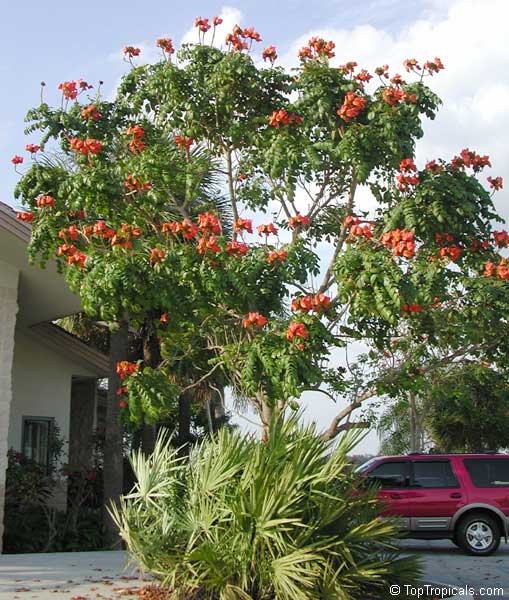
Spathodea campanulata - African Tulip Tree
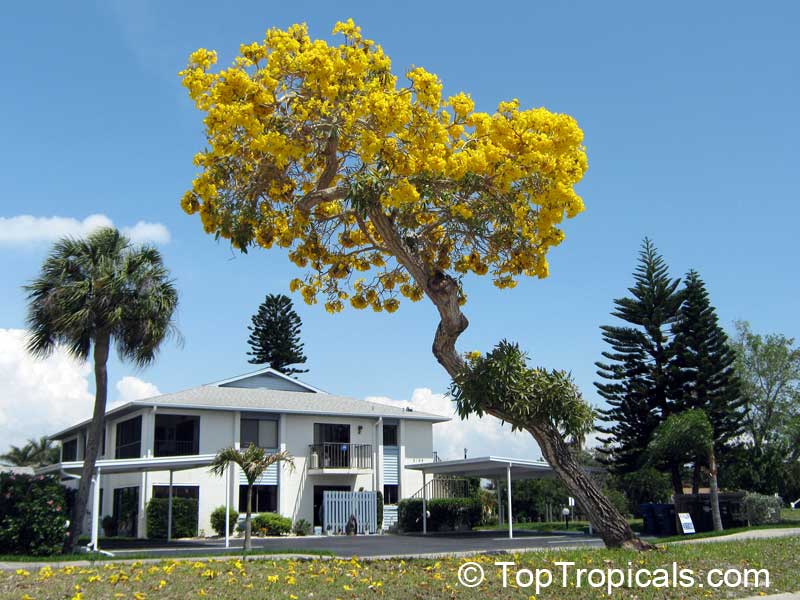
Tabebuia caraiba - Yellow trumpet tree crooked with wind
🌪 Pre-hurricane season tips: how to protect your trees from winds
Some trees like mango have deep roots and handle wind well. Others - like our favorites Spathodea campanulata - African Tulip Tree or Tabebuia caraiba - Yellow trumpet tree (in the photos) - need extra care. You've likely seen crooked Tabebuias in South Florida or lost a bushy Tulip Tree to strong winds. Their wide crowns act like sails in a storm.
💨 To help your trees withstand wind damage:
✅ Stake young trees with strong support - use a tripod-style setup (three bamboo sticks or boards secured around the tree for balance from all sides)
✅ Check and adjust supports every 6 months
✅ Trim long or rubbing branches - they break first
✅ Add extra support if a storm is coming (larger trees benefit from sturdy tripod-style bracing with boards)
✅ Lighten bushy growth, less sail = more survival
💡 Some remove all leaves from plumeria before a hurricane - it works!
💡 We pruned our Tulip Tree and Ceiba - and they withstood Hurricane Milton while others fell
✅ If a tree falls, stand it up ASAP and support it. Trim broken branches - they’ll remind you what needed pruning before, not after!
✅ Trees protected young, grow strong for life.
🛒 Grab your beautiful Tulip Tree and Tabebuia Tree today - support them early for strength and beauty later!
Q: With the rising temperatures, I'm concerned
about shipping my plants safely. Can they withstand the heat during transit? Also, is it okay to plant them in the ground now, or should I wait for
cooler Fall weather?
A: Your concern about shipping plants in hot weather is valid. For sensitive plants,
we'll delay shipping until conditions are more favorable in your area. However, there are plenty of heat-tolerant tropical plants that handle shipping well with minimal stress. These plants adapt
easily when planted during the hot summer months. Simply follow the included planting
instructions, gradually acclimate them to full sun, and they should thrive.
Feel free to check with us about the specific plant you plan to order for its suitability in
summer shipping. We're here to take care of your green babies and address your
year-round planting needs!
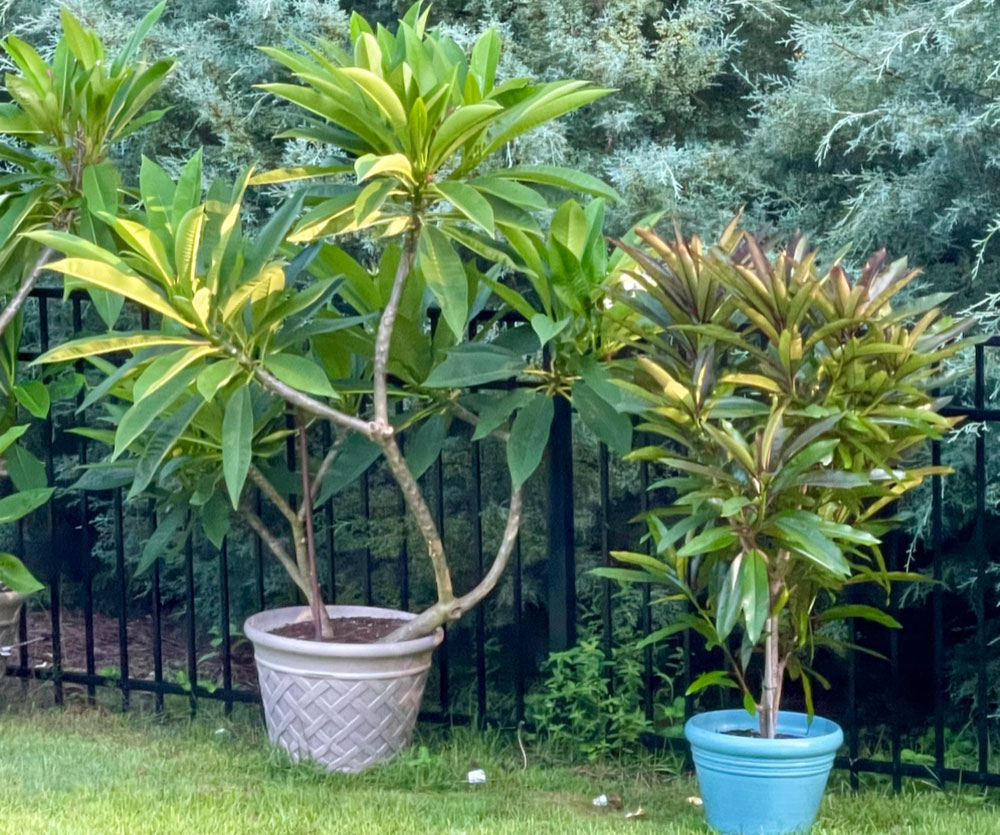
Q: I purchased Cerbera manghas - Enchanted Incense a year ago. As you see from the
photo, it's doing great however, no blooms. I fertilize properly and very often
and use worm castings for micronutrients. Yes it's not "your" fertilizer, but
my plumerias, that are also in pots they are over 5 feet tall and blooming
like crazy. I don't see any inflows coming on the Cerbera at all and it is hot
and humid here in North Carolina, so it's happy but no sign of blooming.
What is your advice?
A: Top Tropicals first brought Cerbera manghas into the US plant
market a few years ago, it was recommended to us by our friend, plant
taxonomist John Mood who visited Thailand, and among other exotic plants noted this
fragrant beauty. Since then we've been successfully growing this plant, it
has become one of everybody's favorites.
Generally speaking, Cerbera culture is very similar to Plumerias. These
plants are closely related. So if you know how to grow Plumeria, you sure
will succeed with Cerbera. Hot and sunny location, well-drained mix, moderate
water and bloom boom fertilizer will do the trick. However, we have noticed a
few distinctive features that make this plant somewhat challenging at
times.
1) Flowers
For past years, we've been studying what triggers its flowering.
Sometimes these plants start flowering in 1 gal pot, 1 ft tall. Other times a large
developed tree 5-6 ft tall, in 5-7 gal pot, grows beautiful foliage with no
signs of flowers. Eventually all of them bloom, no matter how stubborn they
are, it's just some individual plants start flowering sooner than others, all
grown in the same conditions.
One of our plants in the ground, a well-branched tree, was covered with
flowers for a few months, but only on the 3d year after planting. Before that,
it only produced a few random blooms. Others bloomed in pots at very young
age.
The following factors benefit to Cerbera flowering:
- full sun at least 10 hours a day
- hot temperatures above 85F
- regular water but not heavy rains
- regular fertilizer - Bloom Booster type
- very good drainage and drying out before waterings. If root ball stays
moist, the plant may look healthy but won't set flower buds. Keeping on a dry
side will encourage flowering. Very similar to Jasmines: they bloom like crazy
in April while it's hot and dry in Florida, but once our summer rainy season
starts, they reduce blooming.
We highly recommend using Sunshine Megaflor bloom booster or SUNSHINE Pikake in combination with micro-element supplements Sunshine Honey (B-Mo) and Sunshine Superfood (complex micro) that induce flowering.
Dry and granulated fertilizers may not supply exactly what a plant needs:
certain elements that trigger flowering may be missing. Sunshine Boosters
formulas are scientifically balanced, they contain precise amounts of nutrients
needed for setting flowers. Besides, excessive salts from regular dry
fertilizers create nutrient lock up that may retard plant metabolism; with liquid
amino-acid based Sunshine boosters, plants consume the whole menu of elements
without building them up in the soil.
2) Fruit
Fruit of Cerbera are very pretty and cover the tree after profuse
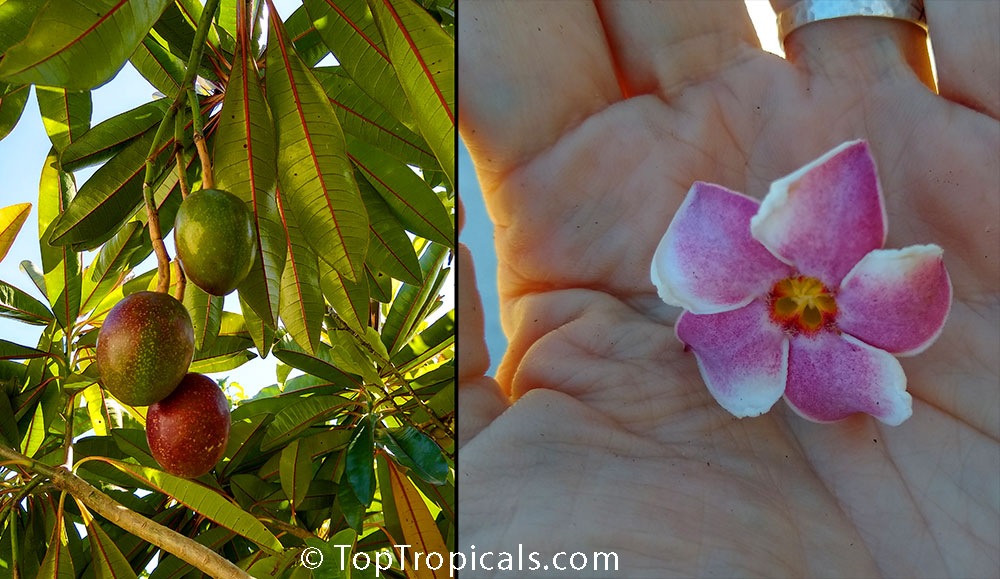
flowering. To inexperienced eye they may look very much like small mango or avocado
fruit - so make sure kids or visitors don't try to eat them! Cerbera seeds
are extremely poisonous.
3) Leaves
If you ever grew Passiflora or Milkweed, you know how leaves can be
eaten by caterpillars overnight. This may happen to Cerbera too, as we
discovered. In Florida environment this exotic plant doesn't have natural predators for
protection from certain insect species that may feed on it. So watch out and
if noticed first signs of leaves damage - its time for insect control.
Other than that, Cerbera foliage is usually beautiful and colorful, here in
Florida it looks much healthier than that of Plumerias often affected with
rusty residue during high humidity months.
Hope this helps. The Cerbera fragrance is enchanting, it is worth the
efforts and waiting!