Garden Blog - Top Tropicals

Date: 4 Jun 2026

The Beginner-Friendly Houseplant With Blooms Large Enough to Be a Centerpiece

Amaryllis Minerva

💄 The Beginner-Friendly Houseplant With Blooms Large Enough to Be a Centerpiece


While most houseplants are prized for their green foliage, Amaryllis Minerva steals the show with its enormous blooms. If you are looking for a houseplant that delivers real color, this one is hard to beat. Its flowers combine bright scarlet-red petals with a crisp white star and a striking lime-green throat. The blooms can reach an incredible 6 to 8 inches across, making them some of the largest flowers you can commonly grow indoors.

🌷 A splash of color when you need it most


Amaryllis is especially valued for blooming during the dull, cooler months when many other plants are resting.
A single bulb can produce multiple sturdy flower stalks, each carrying several impressive blooms.
Named after Minerva, the Roman goddess of wisdom and the arts, its symmetrical red-and-white flowers look almost hand-painted.

🌷Amaryllis Minerva fast facts:

· Bloom Size: 6 to 8 inches across
· Colors: Scarlet-red, crisp white star, lime-green throat
· Difficulty: Easy (Great for beginners)
· Lifespan: Perennial (Blooms year after year)

🌷 Surprisingly easy to grow


Despite its dramatic appearance, Amaryllis Minerva is one of the easiest flowering houseplants for beginners. The bulb stores a remarkable amount of energy, which is why it can produce such impressive flowers with minimal effort from the gardener.

To get started, simply:

· Place it in a spot with bright, indirect light.
· Water when the soil begins to dry out.
· Watch it grow - the bulb does most of the work.

Unlike many flowering houseplants, it does not require constant humidity, misting, or complicated care routines.

🌷 More than a one-time holiday plant


Many people treat amaryllis as a seasonal decoration, but these bulbs can live and bloom for years.

Once the flowers fade, the remaining green leaves continue gathering energy from the sun. With a little post-bloom care, the bulb matures and often produces even larger displays in future seasons.

With giant flowers, vivid contrast, and simple care, Amaryllis Minerva remains one of the most rewarding flowering plants you can grow indoors. 👉 More...

🛒 Order Amaryllis Minerva

📚 Learn more:

Belladonna Lily Plant Facts

Botanical name: Amaryllis belladonna, Callicore rosea
Also known as: Belladonna Lily, March Lily, Naked Lady
USDA Zone: 9 - 10
Highligths Small plant 2-5 ftSemi-shadeFull sunWatering: Moderate. Water when top soil feels dryWatering: Regular. Let topsoil dry slightlyWhite, off-white flowersPink flowersPlant attracts butterflies, hummingbirdsDeciduous plant
Get personalized tips for your region

· Hippeastrum (Amaryllis) in Plant Encyclopedia
· What is the brightest indoor flower
· The Alien Lily: why this rare Peruvian bulb is taking over garden feeds

#Container_garden #Shade_garden #Discover

🟢 Join 👉 TopTropicals
Date: 28 May 2026

The white-fleshed, low-acid pineapple disrupting tropical gardens

Sugar Loaf Pineapple, Kona Sugarloaf Ananas

Sugar Loaf Pineapple, Kona Sugarloaf Ananas

🍍 The white-fleshed, low-acid pineapple disrupting tropical gardens


Most people think all pineapples taste roughly the same - sweet, tangy, yellow, and a little acidic. Then they try a Sugar Loaf pineapple and suddenly understand why rare fruit collectors are obsessed with this variety.
Sugar Loaf - also known as Kona Sugarloaf - completely changes expectations of what a pineapple can taste like. If regular pineapples leave your mouth burning after a few bites, this variety may change your mind about growing tropical fruit at home.

🍍 Why Kona Sugarloaf is completely different from store-bought pineapples


Originally associated with West Africa and later popularized in Hawaii, Sugar Loaf stands out for several unusual characteristics:

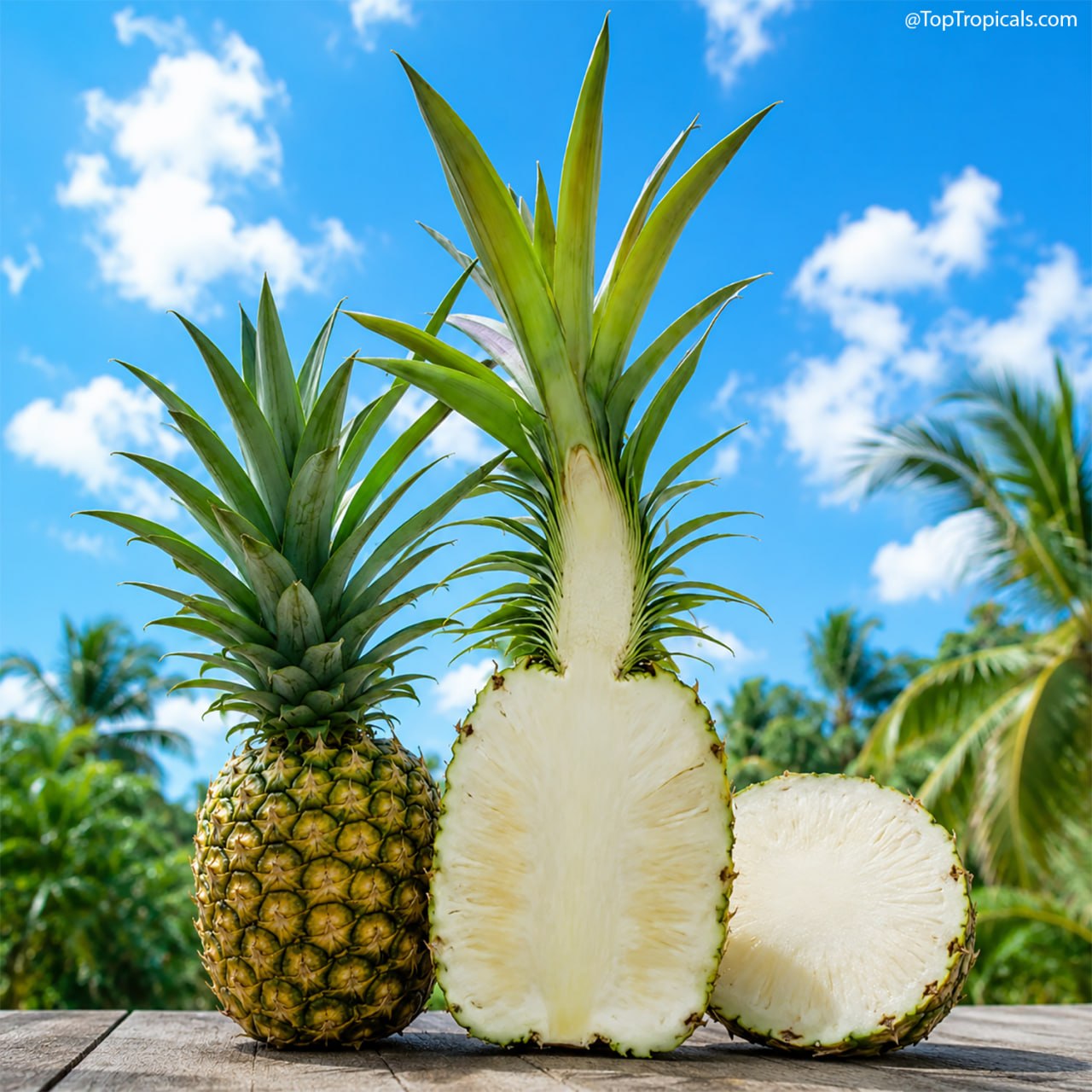
Creamy white flesh - Instead of the typical golden-yellow interior, Sugar Loaf produces soft, juicy, creamy-white fruit.
Very low acidity - The flavor is smooth, mild, and intensely sweet, with many growers describing notes of vanilla, honey, and coconut.
An edible core - Unlike regular pineapples with tough woody centers, the core of Sugar Loaf is tender and fully edible.
The green deception - One of the strangest things about this pineapple is that it often stays dark green even when fully ripe. Many first-time growers wait too long expecting it to turn gold.

Standard Pineapple:
Golden Skin ✦ Yellow Flesh ✦ High Acid ✦ Woody Core
Sugar Loaf Pineapple:
Green Skin ✦ White Flesh ✦ Low Acid ✦ Edible Core

🍍 A heavyweight performer in the garden


The fruit itself has a unique shape - taller, slimmer, and noticeably heavier for its size than standard pineapples. Under ideal tropical conditions, a single Sugar Loaf fruit can approach 10 pounds.

Beyond the fruit, gardeners love the plant for its ornamental appeal. It produces a dramatic pointed crown and arching tropical foliage, making it attractive even before fruit appears.

🍍 Kona Sugar Loaf at a glance

Pineapple Plant Facts

Botanical name: Ananas comosus
Also known as: Pineapple, Pina
USDA Zone: 9 - 11
Highligths Small plant 2-5 ftSemi-shadeFull sunWatering: Moderate. Water when top soil feels dryOrnamental foliageThorny or spinyEdible plantSubtropical plant. Mature plant cold hardy at least to 30s F for a short time
Get personalized tips for your region


Plant Type: Compact, self-fruitful bromeliad
Fruit Size: Up to 10 lbs under ideal conditions
Skin Color at Ripeness: Deep green
Flesh Color: Creamy white
Cold Tolerance: Tropical; protect from frost

🍍 Container-friendly for northern growers


You do not need a Hawaiian orchard to grow this collector favorite. Because Sugar Loaf grows as a compact bromeliad, it adapts well to patios, containers, and small gardens.

In tropical climates, it can be planted directly in the ground. In colder regions, gardeners often grow it in large pots outdoors during warm weather and move it indoors near a bright window for winter.

👉 Grower's Tip: Pineapples and bromeliads respond especially well to regular feeding during warm weather. SUNSHINE Ananas - Pineapple and Bromeliad Booster was designed specifically for bromeliads and fruiting pineapples to support vigorous growth and sweeter fruit production.

For tropical fruit enthusiasts, Sugar Loaf has quietly become one of those varieties that makes ordinary grocery-store pineapples feel surprisingly boring afterward.

🛒 Try the pineapple with the edible core and more pineapple varieties

📚 Learn more:


Ananas varieties (Pineapples) in Plant Encyclopedia
What are the best varieties of Pineapples?
What is the best pineapple to grow at home
How we ate all pineapples from that ugly corner
The most luscious Hospitality Fruit: Pineapple
Three must-have fruit for every tropical garden
Rare Pineapple that looks like a sunset and thrives on neglect
🎥 King of Fruits that makes you healthy and happy

#Food_Forest #Container_Garden #Discover

🟢 Join 👉 TopTropicals

Date: 27 May 2026

How to Root Plumeria Cuttings: The Dry Method for Success

Rooting Plumeria Cuttings

Rooting Plumeria Cuttings

How to Root Plumeria Cuttings: The "Dry" Method for Success ✔️

Plumeria cuttings root with incredible ease if you respect their succulent nature. Most failures come from two mistakes: planting too early and watering too much. Whether you use the traditional potting method or the professional Thailand "Surface" Method, the secret is: Keep it dry until it grows

✍️ Stability Note: Cuttings vs. Grafted Trees


While cuttings are easy, they develop shallow, horizontal root systems.
Best for: Pots and sheltered garden spots.
For windy or hurricane-prone areas: Consider Grafted Plumeria. Grafted trees use a seedling rootstock with a strong taproot, providing much better anchoring and long-term stability.

🌸 5 steps how to root plumeria cuttings - simple method that works


🌸 Step 1: Prepare and Cure (The 5-Day Rule)


Before a cutting ever touches soil, it must heal.
Cut: Take healthy branches 6-12 inches long and remove all leaves.
Cure: Place the cuttings in bright shade with plenty of airflow.
The Goal: Wait 3-5 days until the cut end is bone-dry, firm, and callused.
Pro Tip: Planting a "wet" cutting is the #1 cause of stem rot. If it isn't callused, do not plant it.

🌸 Step 2: Use Fast-Draining Soil


Plumerias hate "wet feet." You need a medium that drains instantly.
The Recipe: 50% professional potting mix (like Top Tropicals Abundancу mix) and 50% coarse sand.
Why it works: The bark provides structure, while the sand ensures water runs straight through, leaving no stagnant moisture.

🌸 Step 3: Planting & The "Thailand Method"


You have two proven ways to set your cuttings:

Method A: The Traditional Pot
1. Hormone (Optional): Dip the dry end in rooting hormone and tap off the excess.
2. Depth: Insert only 2–3 inches deep. Roots emerge from the base, not the stem.
3. Secure: Firm the soil so the cutting doesn't wobble.

Method B: The Thailand Style (Surface Rooting)
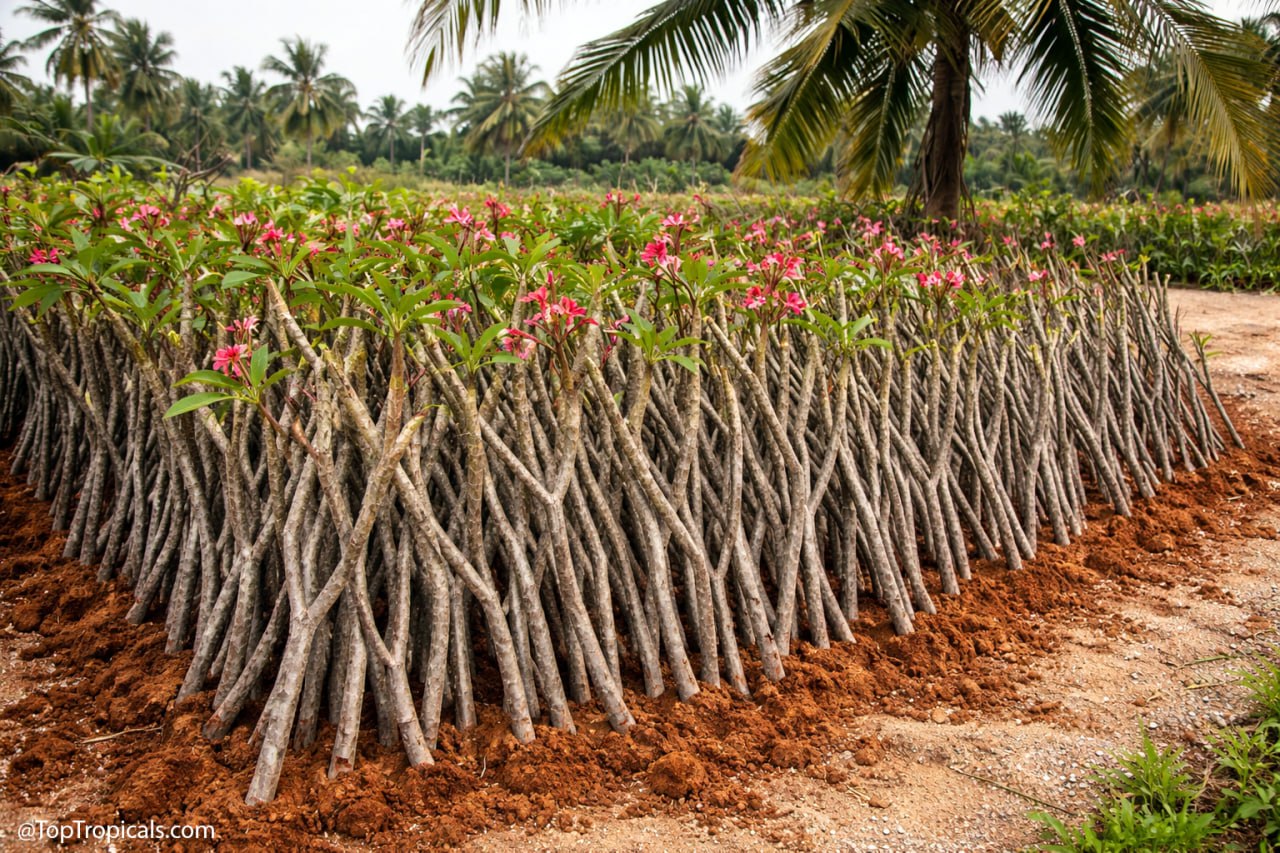
As seen in the image, large-scale growers often don't bury cuttings at all.
1. The Bed: Prepare a bed of well-draining soil.
2. The Placement: Stand the cuttings on top of the soil, leaning them against each other or a support.
3. The Benefit: This provides maximum airflow to the base and zero risk of rot. Roots will naturally dive into the soil as they emerge.

🌸 Step 4: Critical Watering Rules


This is where most gardeners fail.
Initial Watering: After planting, moisten the soil slightly—just once.
The Wait: Do not water again for 5–7 days. The Logic: No roots = No water intake. If the soil stays wet without roots to drink it, the cutting will rot.

🌸 Step 5: Heat, Light, and Air


Sun: Start in bright shade for a few days, then move to full sun. Heat is the catalyst for root growth.
Ground Heat: Placing pots on a warm surface (like a concrete patio or black ground cover) can accelerate rooting.
Airflow: Never root plumeria in a humid greenhouse or enclosed space. They need "open air" to thrive.

🌸 What to Expect


2-4 Weeks: Callusing ends and initial roots form.
4-8 Weeks: New leaf "claws" appear at the tip.
Success: Once you see full leaves, you can begin a regular watering and fertilization schedule.

✅ Quick Success Checklist


Dry the cutting for 3–5 days.
Use 50% sand for instant drainage.
Plant shallow (or use the Thailand surface method).
Wait a week before watering again.
Provide maximum sun and airflow.

❌ What NOT to do:


Avoid frequent watering. If you think it’s time to water, wait one more day.
Plumeria cuttings have no roots to drink with yet.
If the soil looks dry and you feel the urge to water, wait 24 hours. When in doubt, keep it dry.
Remember: You can save a dry cutting, but you can't save a rotten one.

🛒 Shop Grafted Plumeria Collection

📚 Learn more:
· Plumeria varieties in Plant Encyclopedia
· #PlumeriaRainbow

#Perfume_Plants #Container_Garden #How_to #Discover

Dwarf Plumeria Plant Facts

Botanical name: Plumeria alba
Also known as: Dwarf Plumeria
USDA Zone: 9 - 11
Highligths Large shrub 5-10 ft tallSmall tree 10-20 ftFull sunWatering: Moderate. Water when top soil feels dryWhite, off-white flowersFragrant plant
Get personalized tips for your region
🟢 Join 👉 TopTropicals

Date: 15 Jun 2026

Pitaya Tricia: dragon fruit beyond pink and white - A Collectors Guide

Pitaya Tricia dragon fruit

Pitaya Tricia dragon fruit

🍉 Pitaya Tricia: dragon fruit beyond pink and white - A Collector's Guide


Some dragon fruit varieties are known for their flavor. Others are prized for their appearance. Tricia manages to stand out for both.
Developed by California dragon fruit breeder Edgar Valdivia and named after one of his daughters, Tricia is a unique hybrid between Hylocereus polyrhizus and Hylocereus ocamponis. It combines striking ornamental qualities with excellent fruit and has become a favorite among serious dragon fruit collectors.


🔸 A plant that looks different from the start


Even before it flowers or fruits, Tricia catches attention.

The vigorous plant produces long, thick, three-sided stems with a distinctive grayish-green color. This natural gray coating helps protect the stems from intense summer sun and winter cold, giving the plant a rugged appearance unlike most dragon fruits.

The stems are heavily armed with large spines, a reminder of its wild ancestry.

🔸 Some of the most impressive flowers in the dragon fruit world


When Tricia reaches maturity, it produces spectacular summer blooms that can reach an astonishing 15 inches across.

The flowers are not only huge but also brightly colored and highly ornamental. From flower bud to bloom takes about 30 days, followed by another 30 days from flower to ripe fruit.

For many growers, the flowers alone make Tricia worth growing.

🔸 Large fruit with sweet magenta flesh

Once pollinated, Tricia produces attractive egg-shaped fruit averaging about one pound each. The fruit have numerous small fins that give them a distinctive appearance.

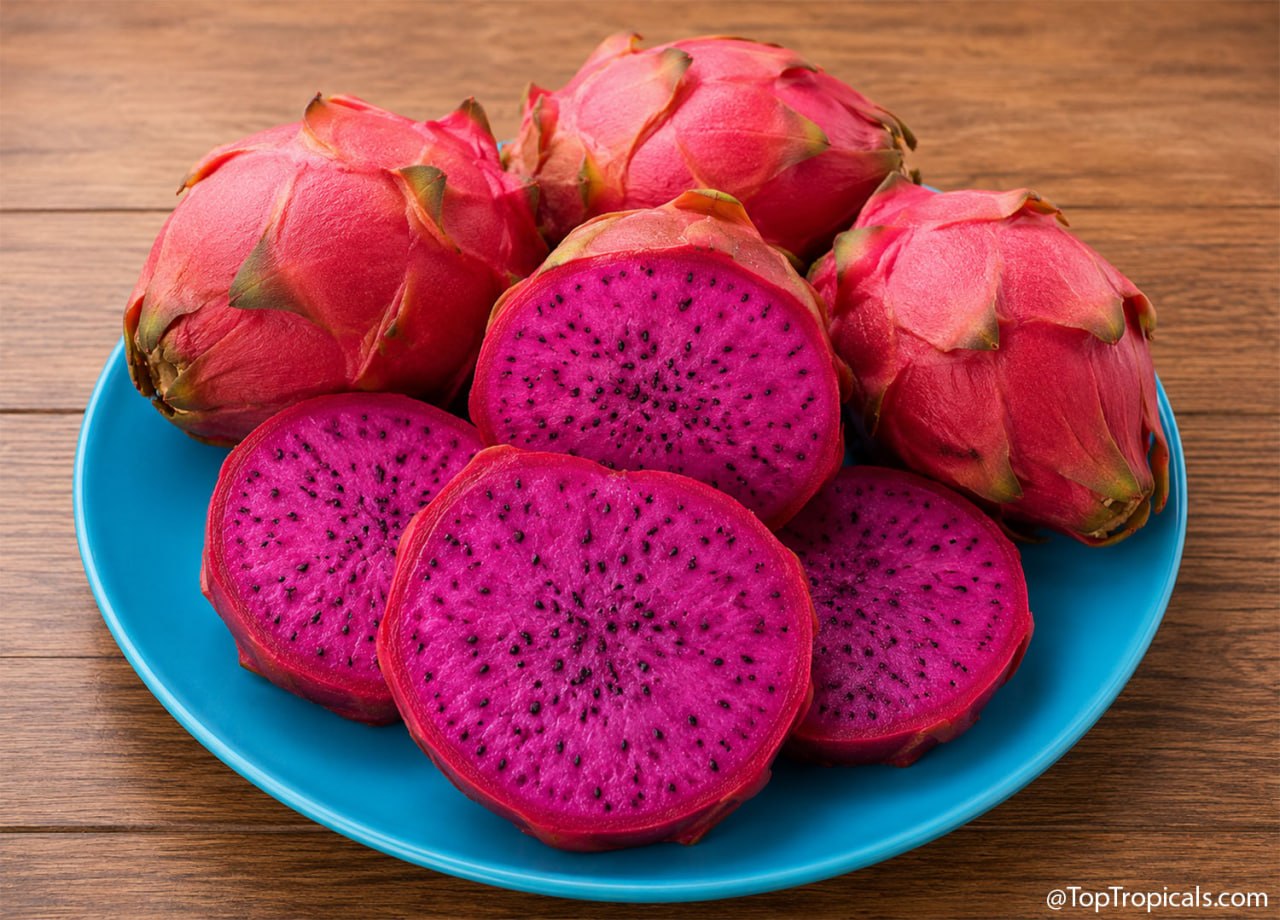
Inside is rich red flesh with a flavor that sets it apart from many dragon fruits. The fruit is sweet and flavorful, with little to no acidic aftertaste. The result is a smooth, pleasant flavor that many growers find easy to enjoy fresh out of hand.

🔸 A variety for collectors


Unlike self-fertile varieties, Tricia requires pollen from another dragon fruit variety and usually benefits from hand pollination. While this adds an extra step for growers, the reward is a unique plant with extraordinary flowers, unusual stems, and delicious fruit.

For collectors looking beyond ordinary dragon fruit varieties, Tricia offers something special at every stage of growth - from its distinctive gray stems to its giant blooms and sweet magenta-fleshed fruit. 👉 More...

🛒 Explore and collect Dragon Fruit varieties

📚 Learn more:

Pitaya Plant Facts

Botanical name: Hylocereus sp.
Also known as: Pitaya, Pitahaya, Dragon Fruit, Strawberry Pear
USDA Zone: 9 - 11
Highligths Large shrub 5-10 ft tallVine or creeper plantSemi-shadeFull sunWatering: Moderate. Water when top soil feels dryWhite, off-white flowersThorny or spinyEdible plantSubtropical plant. Mature plant cold hardy at least to 30s F for a short timeSeaside, salt tolerant plant
Get personalized tips for your region

· Dragon fruit Hylocereus in Plant Encyclopedia
· Pitaya "Sweet Red": dragon fruit beyond pink and white
· Pitaya Purple Haze: dragon fruit beyond pink and white
· Pitaya Hana: dragon fruit beyond pink and white
· Pitaya Eureka Red: dragon fruit beyond pink and white
· Pitaya David Bowie: Dragon Fruit Beyond Pink and White
· A Quick Guide to Dragon fruit varieties: Red, White, Yellow, Purple and more...
· What is the best Dragon fruit with red flesh?
· Planting your own Dragon Fruit plantation
· Do-It-Yourself Support Structure for Dragon Fruit
· Why you need to grow your own dragon fruit
· Do red, white and yellow Dragon fruit taste differently?

#Food_Forest #Dragon_Fruit #Discover

🟢 Join 👉 TopTropicals

Date: 27 Jun 2026

This Tropical Tree Has Leaves Bigger Than Your Head

This Tropical Tree Has Leaves Bigger Than Your Head

This Tropical Tree Has Leaves Bigger Than Your Head


One look at Macaranga grandifolia and most gardeners have the same reaction: "What is THAT?"
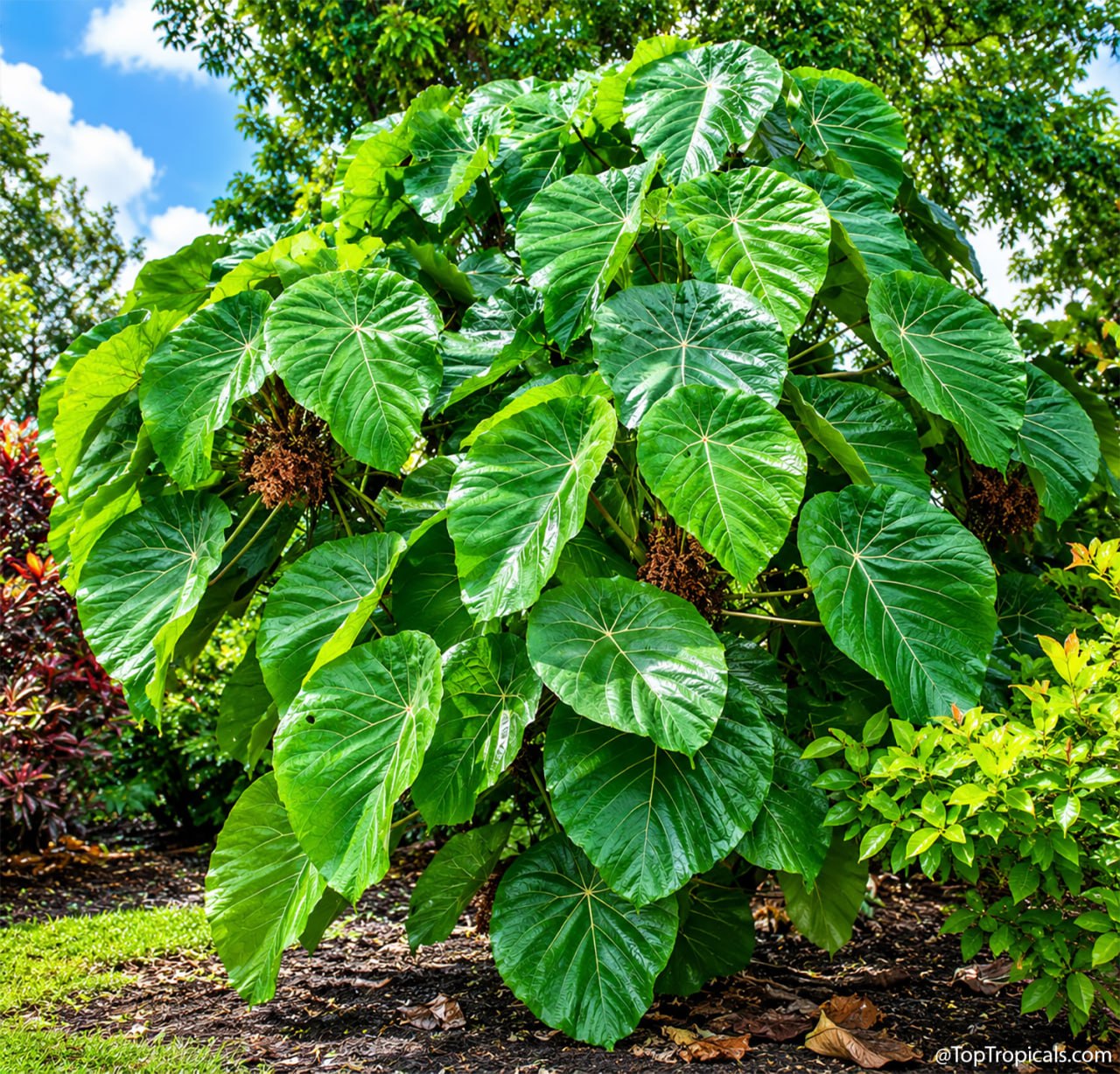
Nicknamed the Elephant Ear Tree, this rare tropical beauty produces enormous, glossy leaves that can easily grow larger than a person's head. The effect is dramatic, bold, and impossible to ignore.


☂️ A Living Jungle Umbrella


Native to tropical regions of Southeast Asia and grown widely in Hawaii, Macaranga forms a small upright tree with huge rounded leaves stacked along its stems like giant green shields.

Unlike many tropical plants that rely on colorful flowers, Macaranga's foliage is the entire show. The leathery leaves create an unmistakable rainforest look that instantly transforms a garden into something exotic.

☂️ Why Gardeners Fall in Love With It


· Massive elephant-ear-shaped leaves
· Fast enough to make an impact quickly
· Rare and hard to find
· Surprisingly easy to grow
· Few serious pest or disease problems
· Excellent for creating a lush tropical effect

Even a young plant becomes a conversation piece.

☂️ Bigger Than Most Elephant Ears


Despite its nickname, the leaves often resemble real elephant ears more than many of the plants commonly sold as "elephant ears."

The tree grows upright and relatively narrow, making it useful where space is limited but a bold tropical statement is desired. Mature specimens create a striking column of giant foliage that looks almost prehistoric.

☂️ Easy Tropical Luxury


Macaranga thrives in warm, frost-free climates and appreciates rich, moist soil. It can grow in nearly full sun with adequate water, but the largest and most attractive leaves usually develop with some protection from intense afternoon sun.

It also performs well in large containers, making it an excellent choice for patios and tropical plant collectors.

☂️ The Plant Nobody Knows About


Perhaps the biggest mystery about Macaranga is why it isn't grown more often. It combines spectacular foliage, easy care, and a truly unique appearance, yet remains surprisingly uncommon in Florida gardens and nurseries.

If your goal is to create instant tropical drama, few plants deliver more impact than the Elephant Ear Tree. One glance at those gigantic leaves and you'll understand why collectors become obsessed with it.

🛒 Grow Your Own Elephant Ear Tree with Giant Leaves

📚 Learn more:
· Macaranga grandifolia in Plant Encyclopedia
· One look and you're hooked: Macaranga!
🎥 Shocking ears of Macaranga

#Nature_Wonders #Trees #Discover

Macaranga Plant Facts

Botanical name: Macaranga grandifolia, Macaranga longifolia, Macaranga mappa
Also known as: Macaranga, Nasturtium Tree, Parasol Leaf Tree, Bingabing, Sun Parasol Shrub, Elephant Ear Tree
USDA Zone: 9 - 11
Highligths Large shrub 5-10 ft tallSmall tree 10-20 ftSemi-shadeFull sunWatering: Regular. Let topsoil dry slightlyRed, crimson, vinous flowersOrnamental foliagePlant attracts butterflies, hummingbirdsEthnomedical plant.
Plants marked as ethnomedical and/or described as medicinal, are not offered as medicine but rather as ornamentals or plant collectibles.
Ethnomedical statements / products have not been evaluated by the FDA and are not intended to diagnose, treat, cure, or prevent any disease. We urge all customers to consult a physician before using any supplements, herbals or medicines advertised here or elsewhere.Subtropical plant. Mature plant cold hardy at least to 30s F for a short timeSeaside, salt tolerant plant
Get personalized tips for your region
🟢 Join 👉 TopTropicals