Macaranga grandifolia (Macaranga)
Botanical names: Macaranga grandifolia, Macaranga longifolia, Macaranga mappa
Common names: Macaranga, Nasturtium Tree, Parasol Leaf Tree, Bingabing, Sun Parasol Shrub, Elephant Ear Tree
Family: Euphorbiaceae
Origin: Australia, Philippines
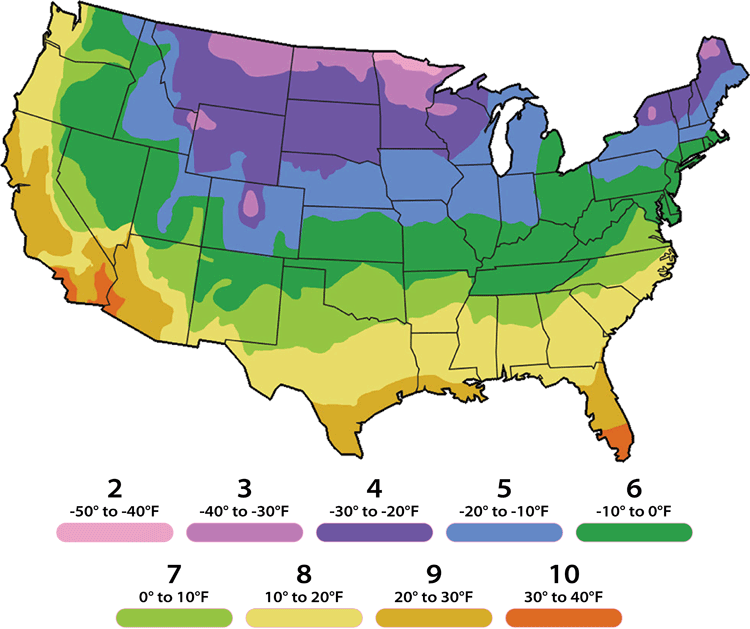
USDA Zone: 9-11

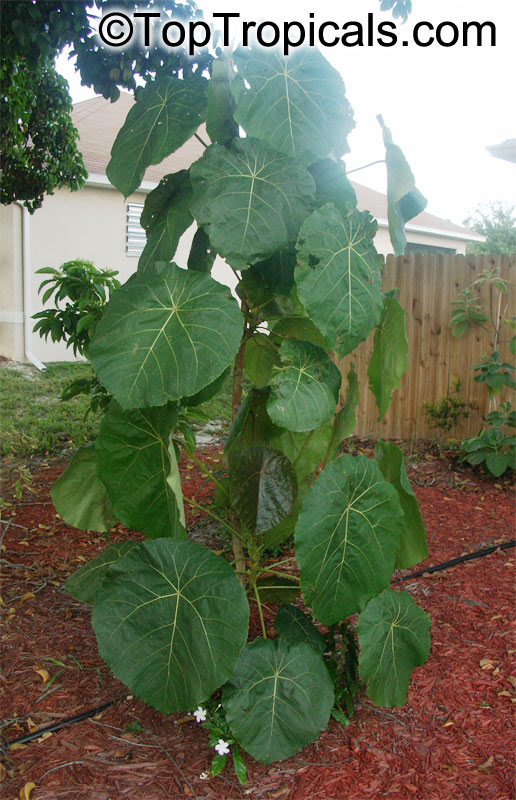
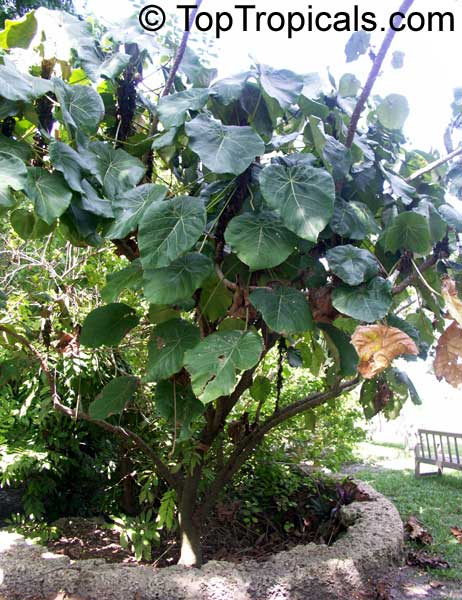
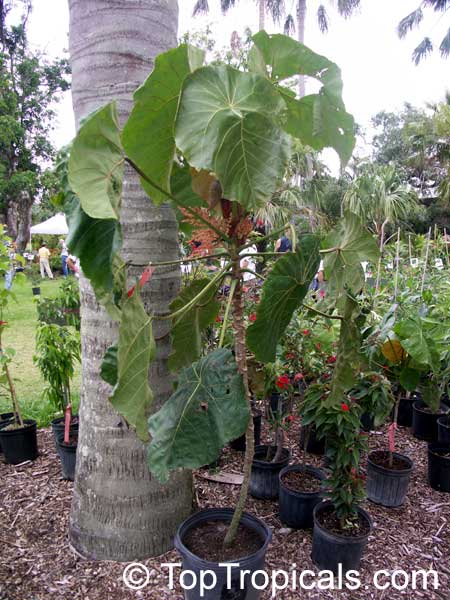
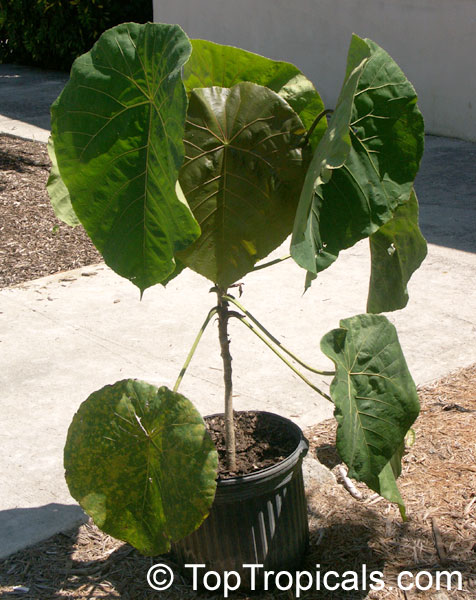
 Plant form: Large bush or small tree
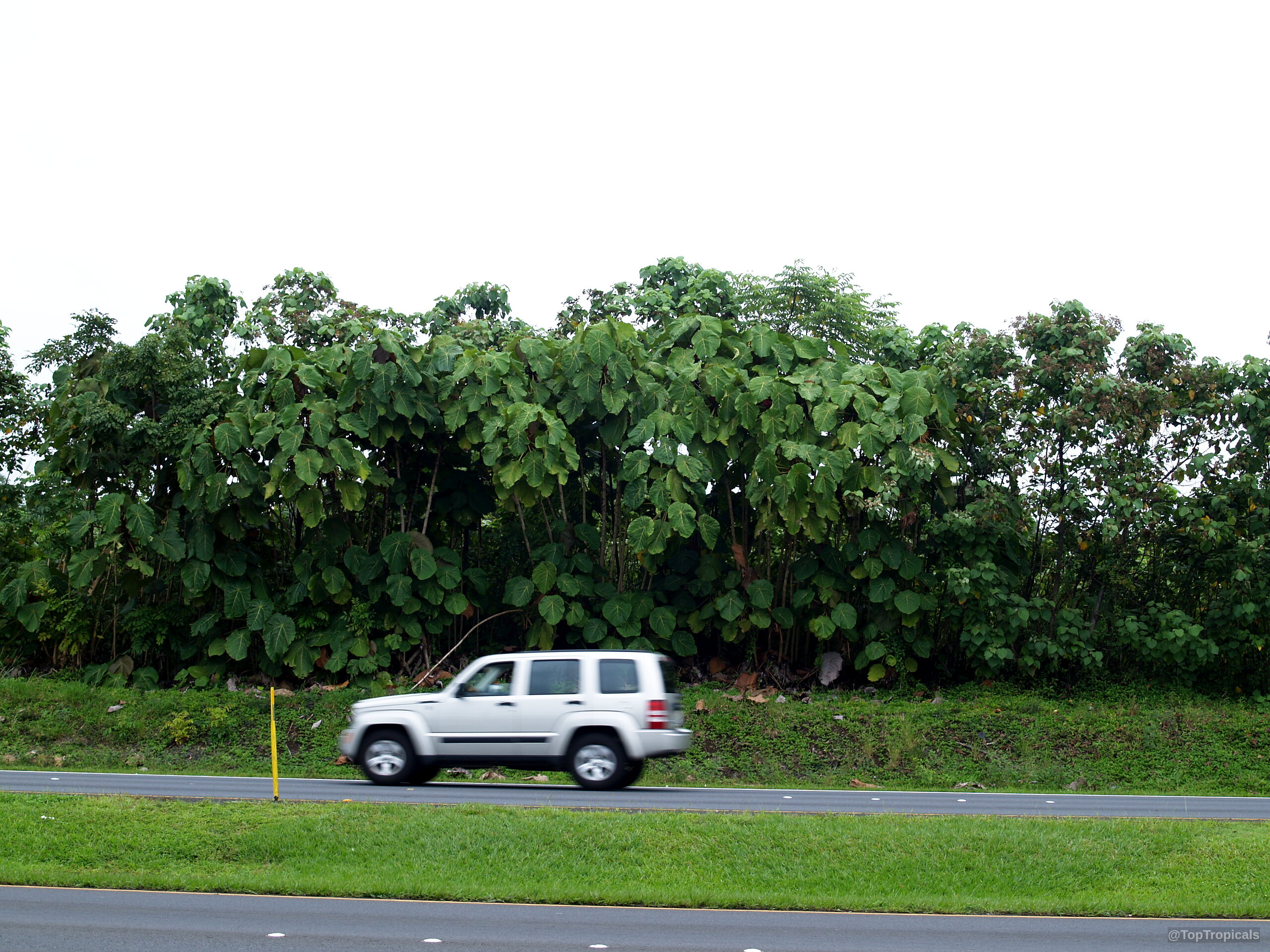
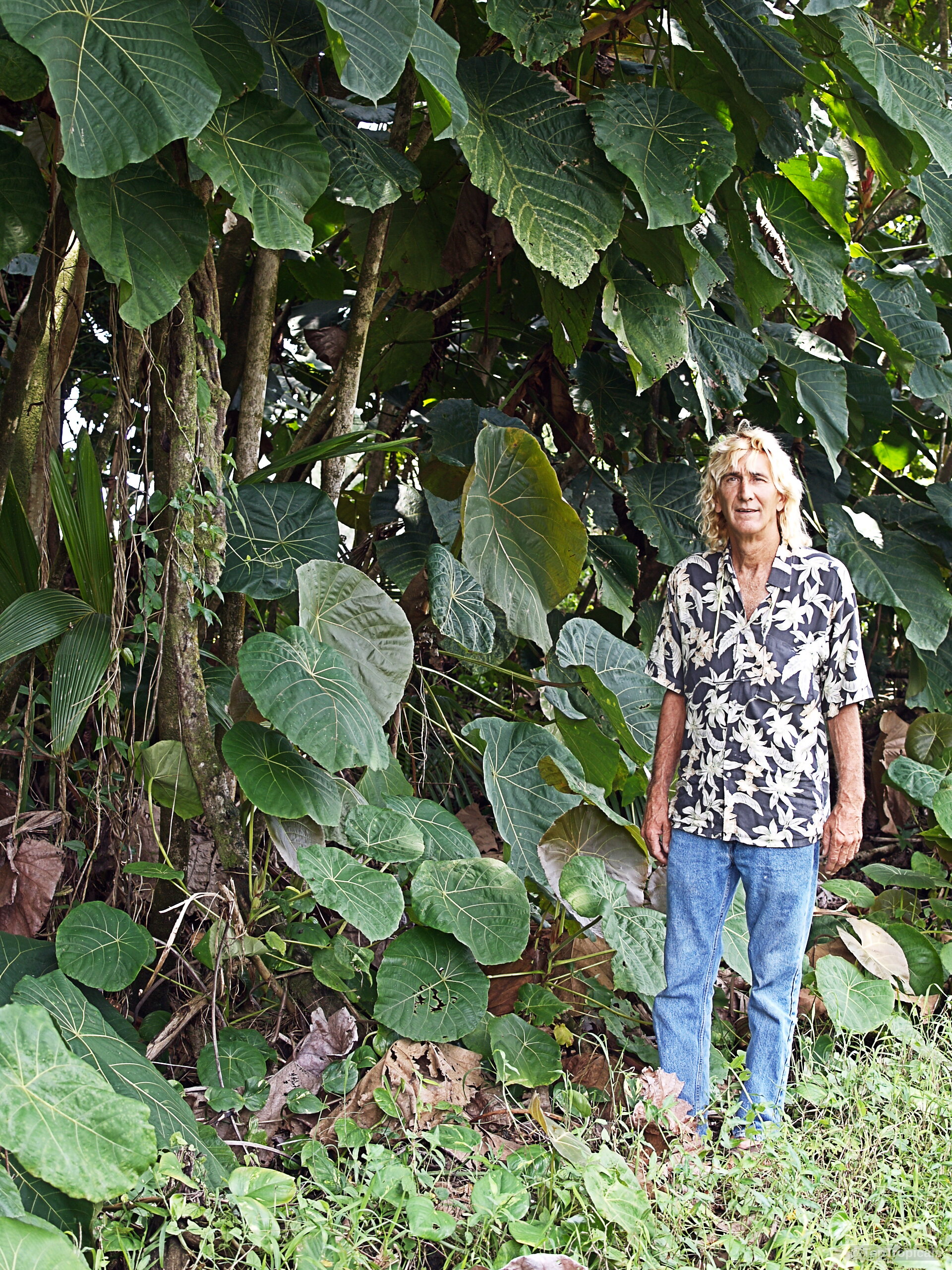
 Mature height: 10-20 ft
 Sun exposure: Full sun or bright light indoor; semi-shade
 Cold tolerance: Tolerates light freezing to about 30°F for short periods (mature plants). Young plants must be protected.
 Watering: Regular
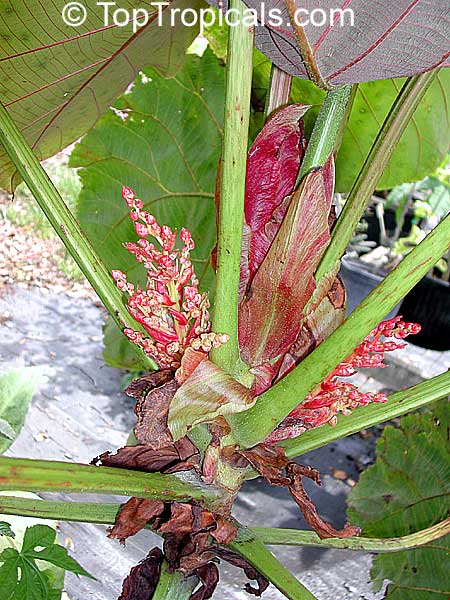
 Flower color: Red, crimson, vinous
 Suitable for: Outdoors in the suitable USDA zone; small gardens, containers, and indoor growing
 Foliage color: Ornamental foliage
 Wildlife: Attracts butterflies and hummingbirds
 Ethnomedical: Ethnomedical plant, traditionally used in folk or indigenous medicine
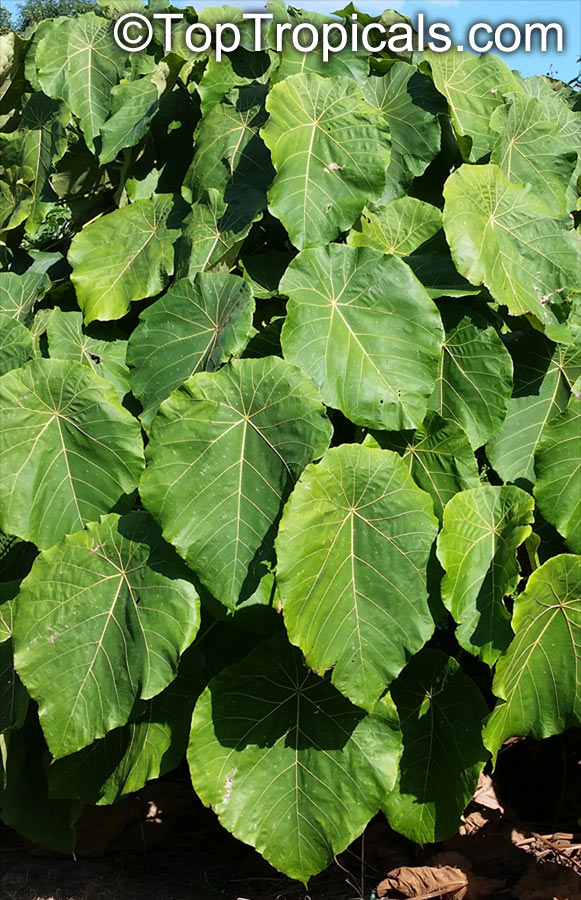
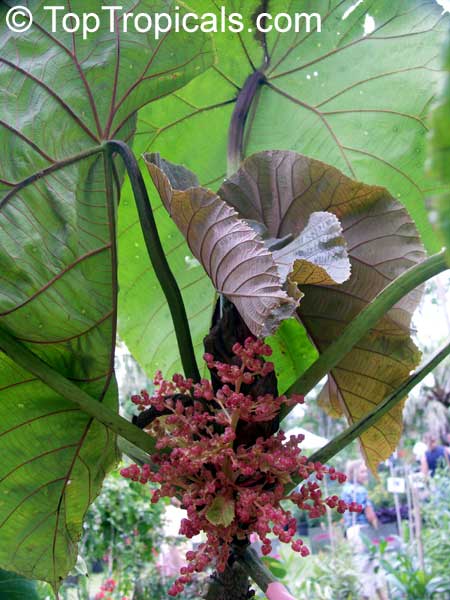
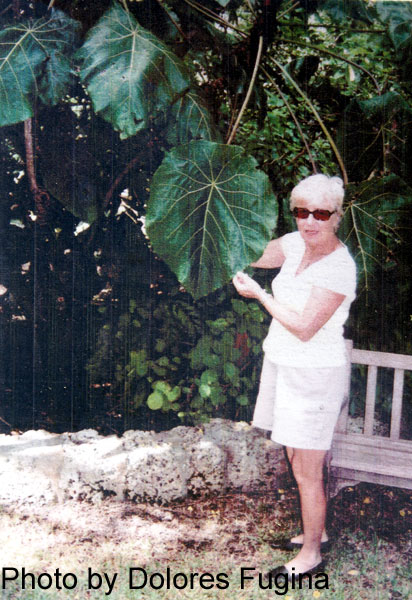
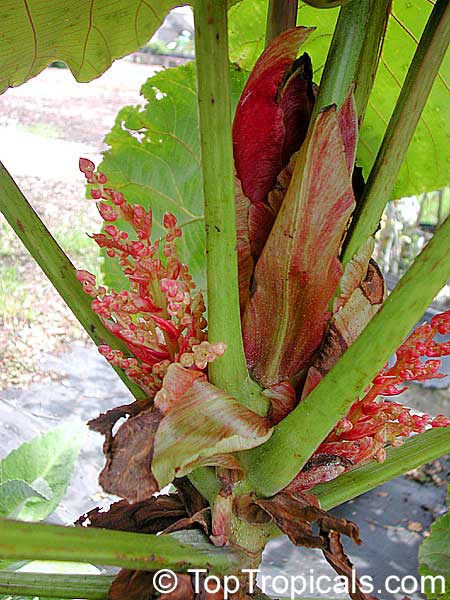
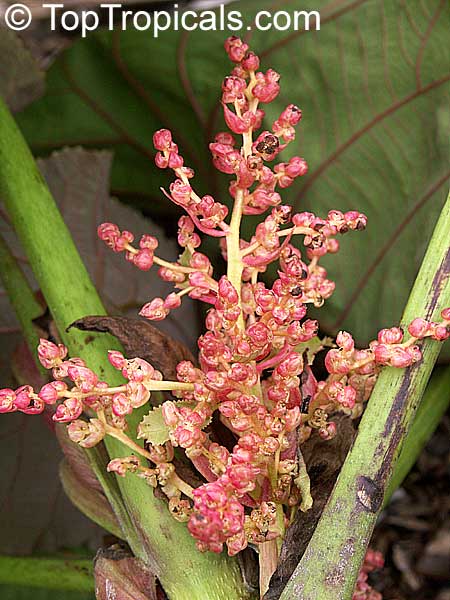
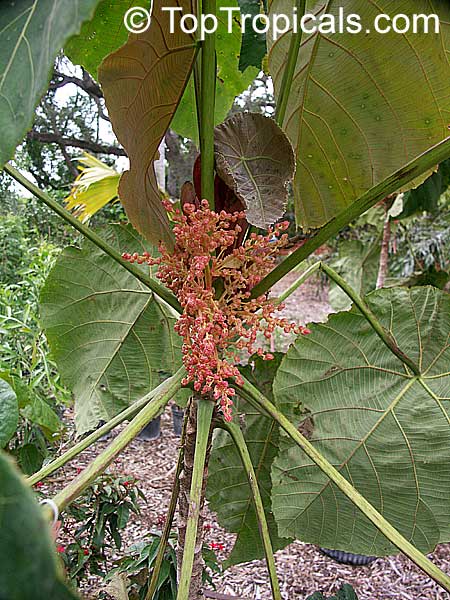
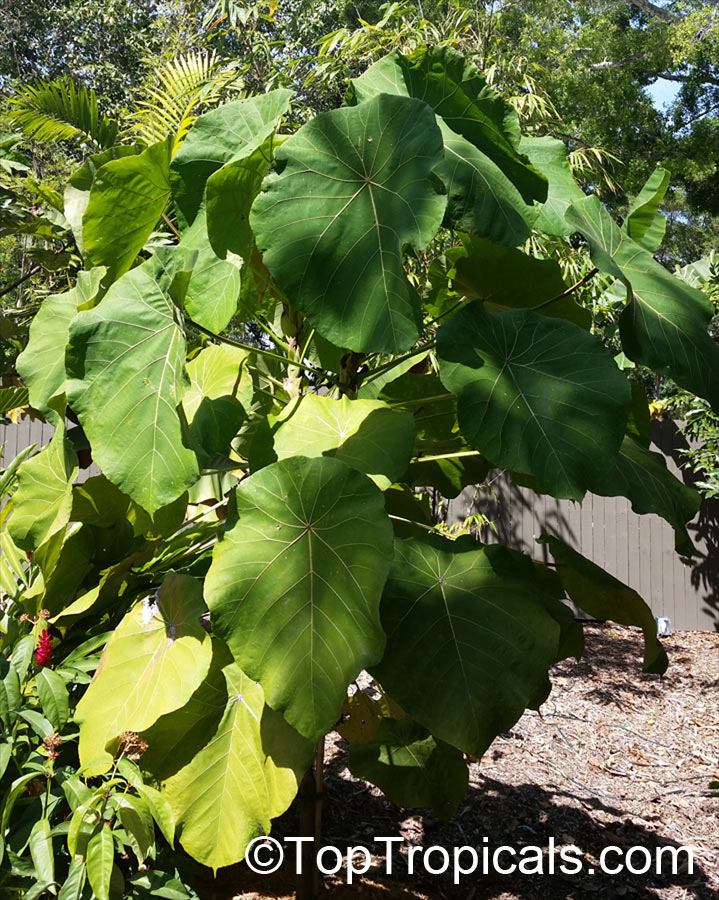
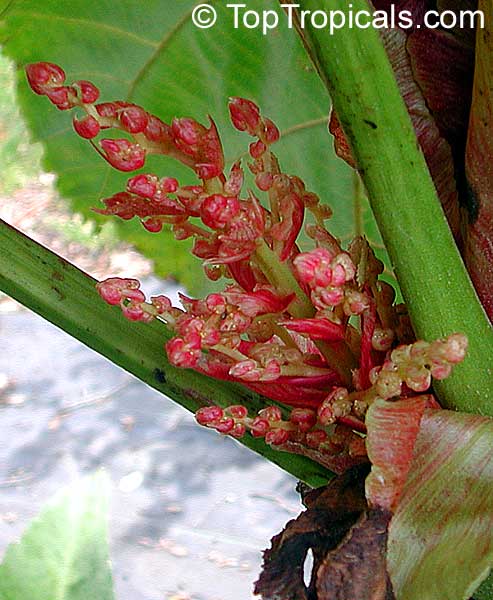
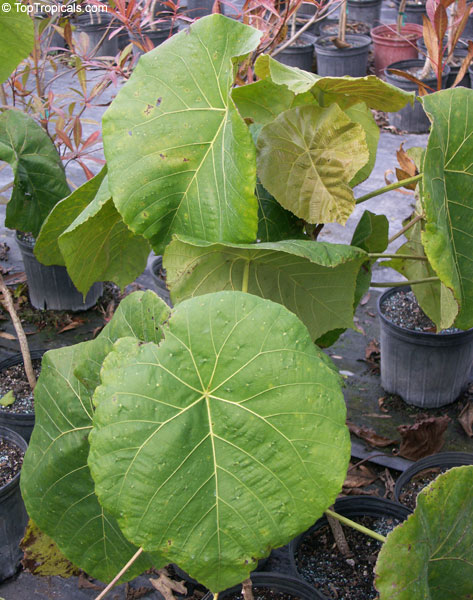
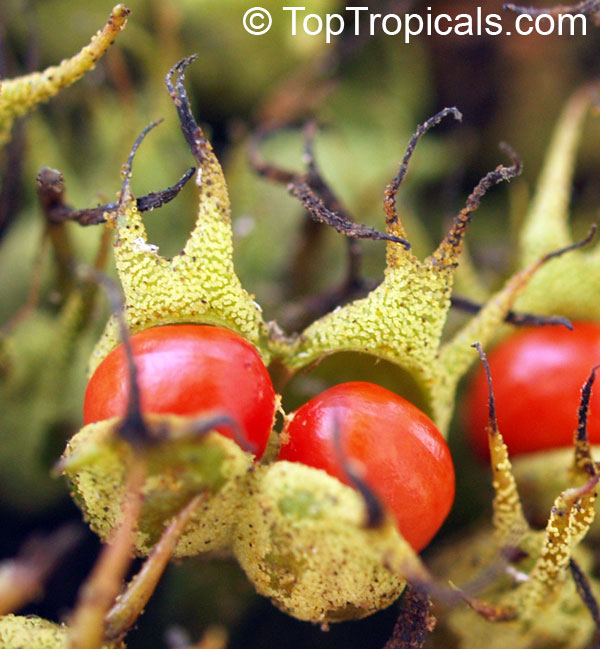
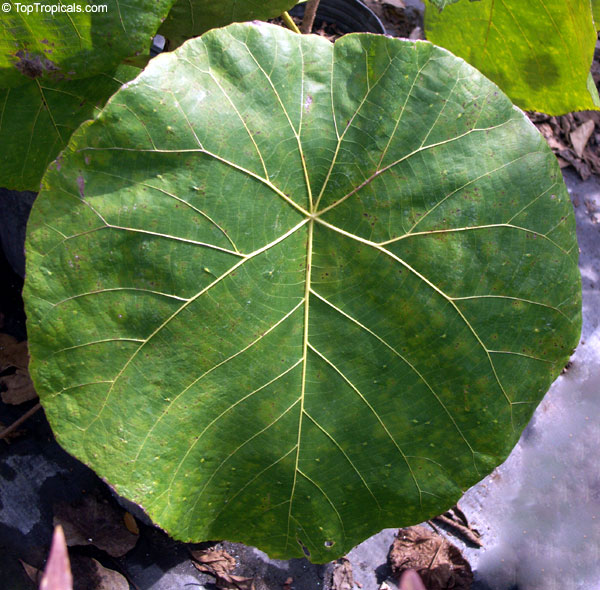
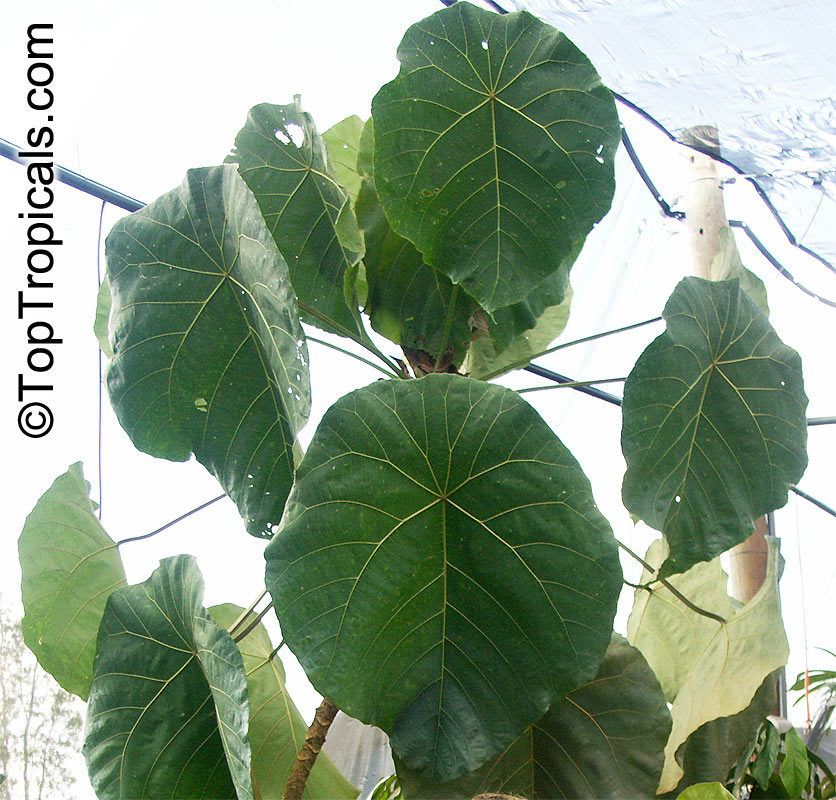
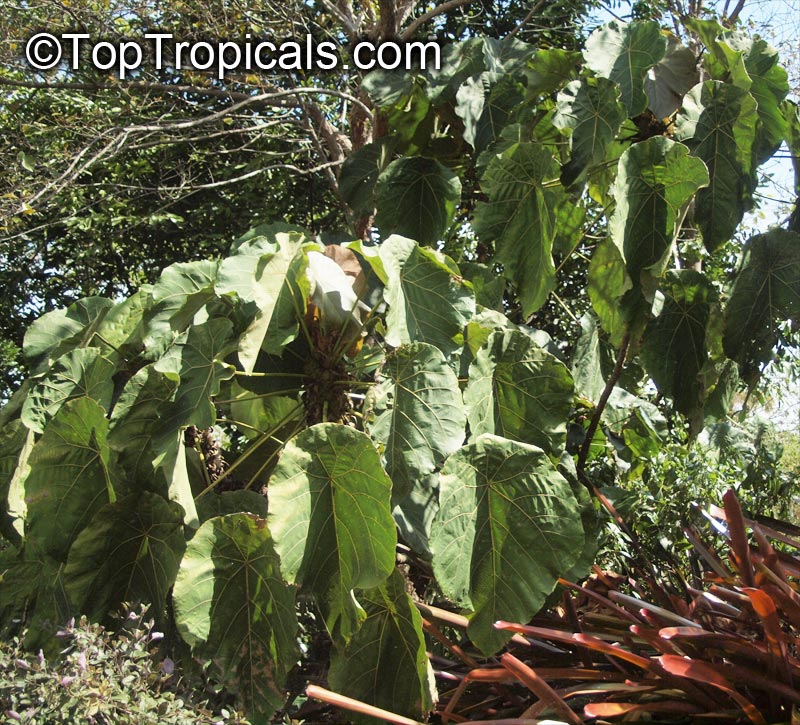
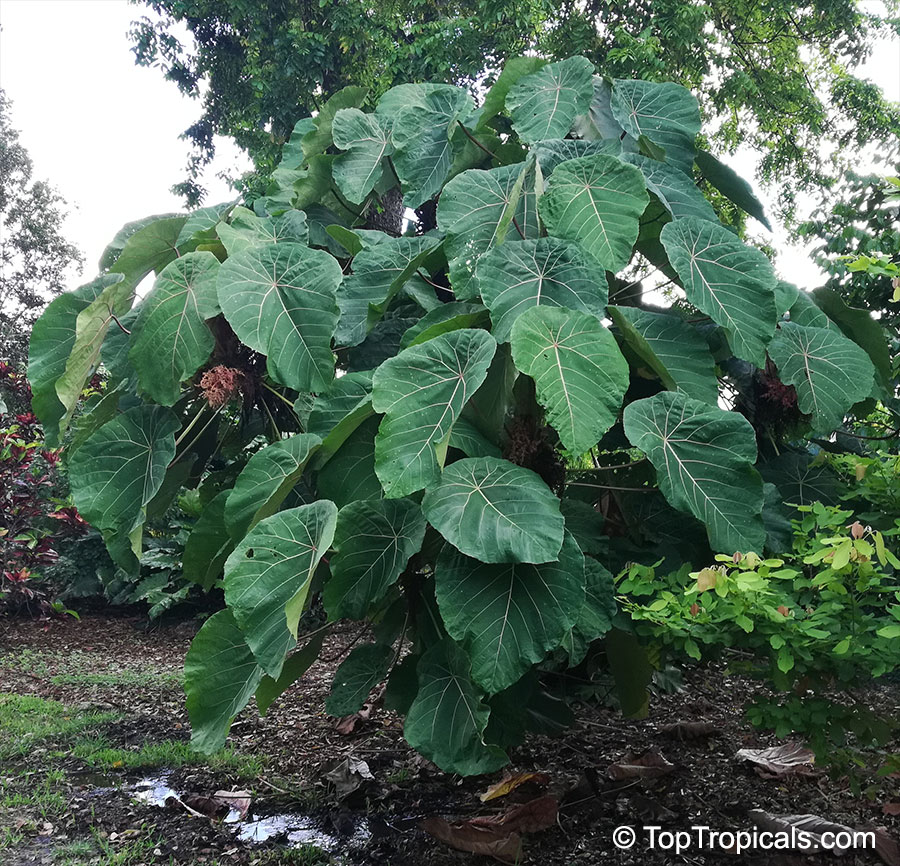
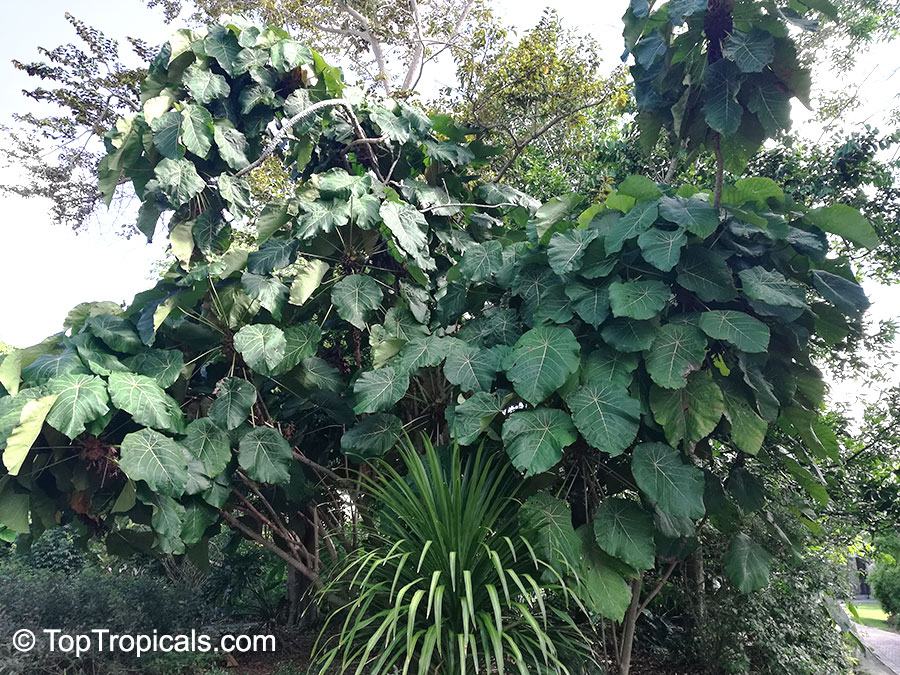
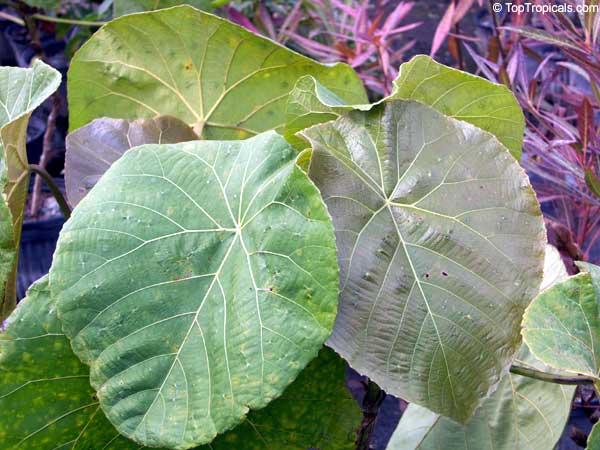
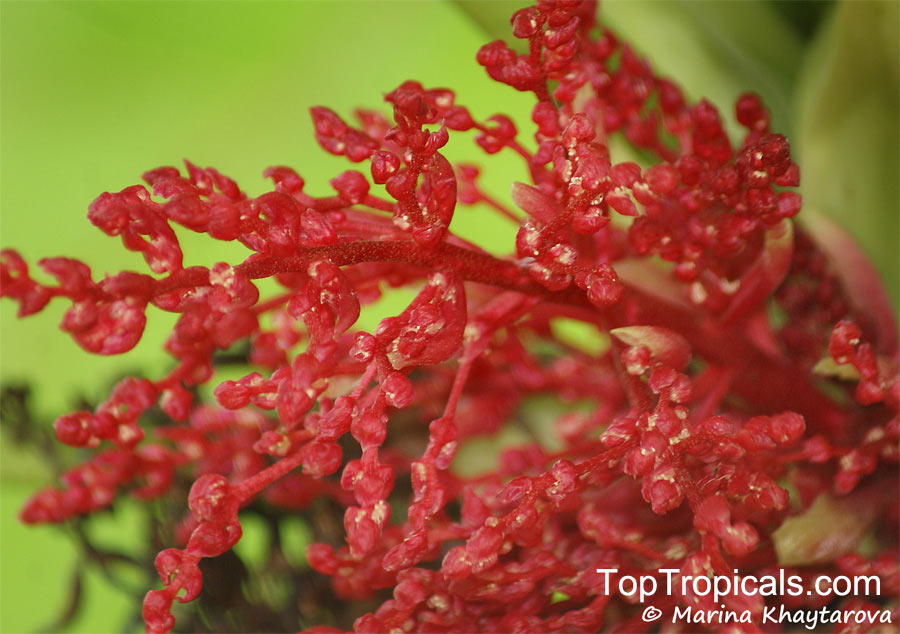
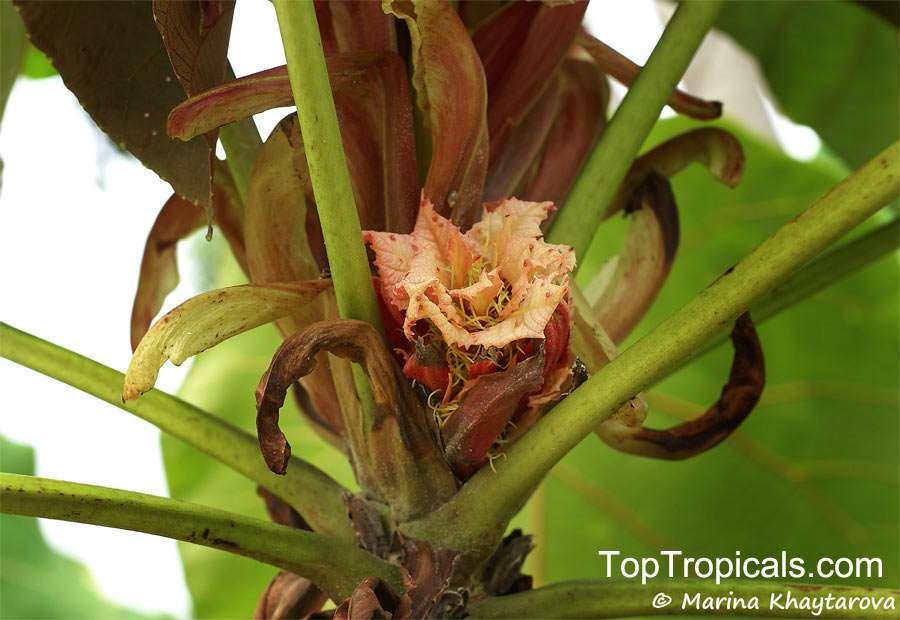
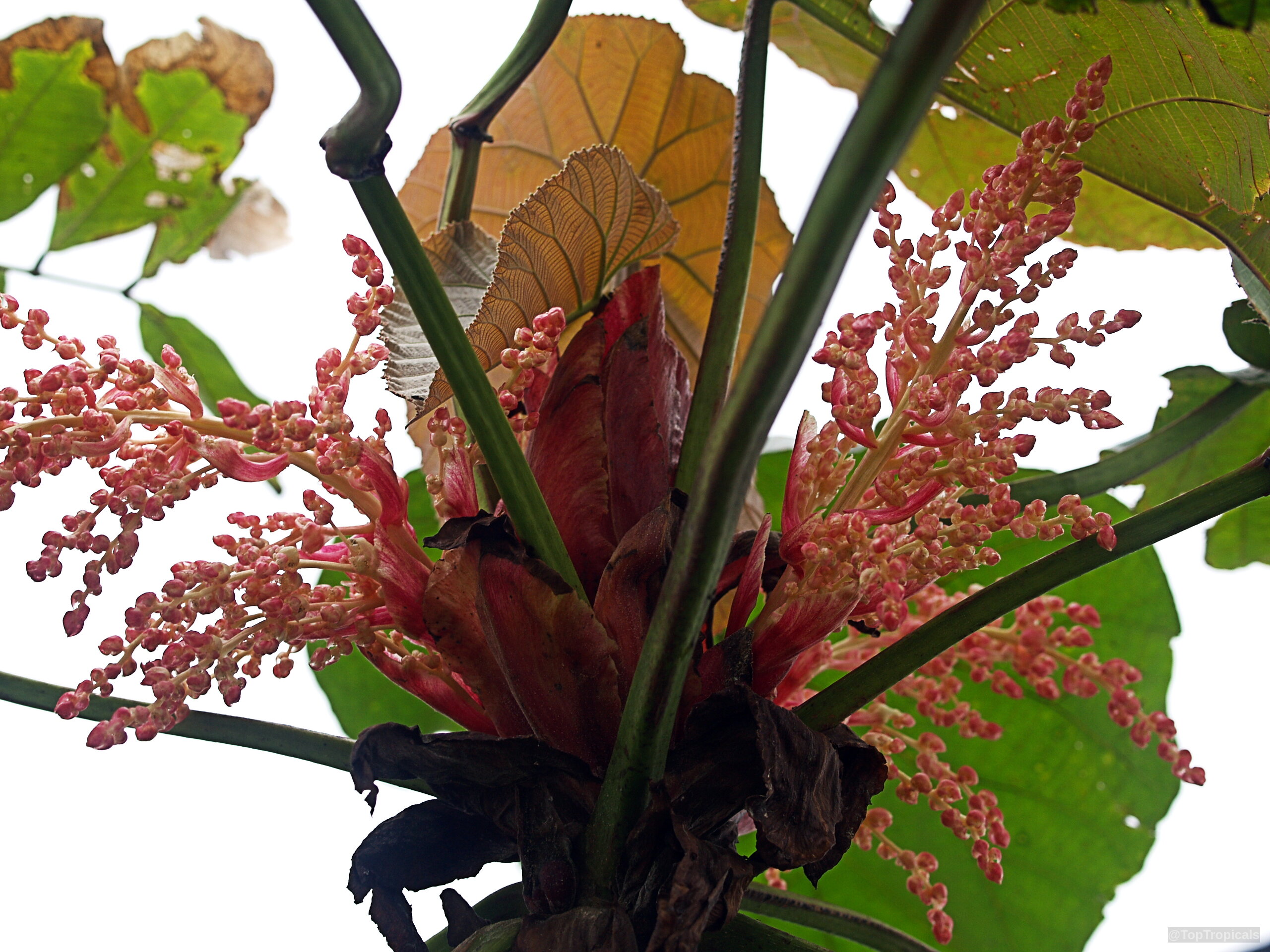
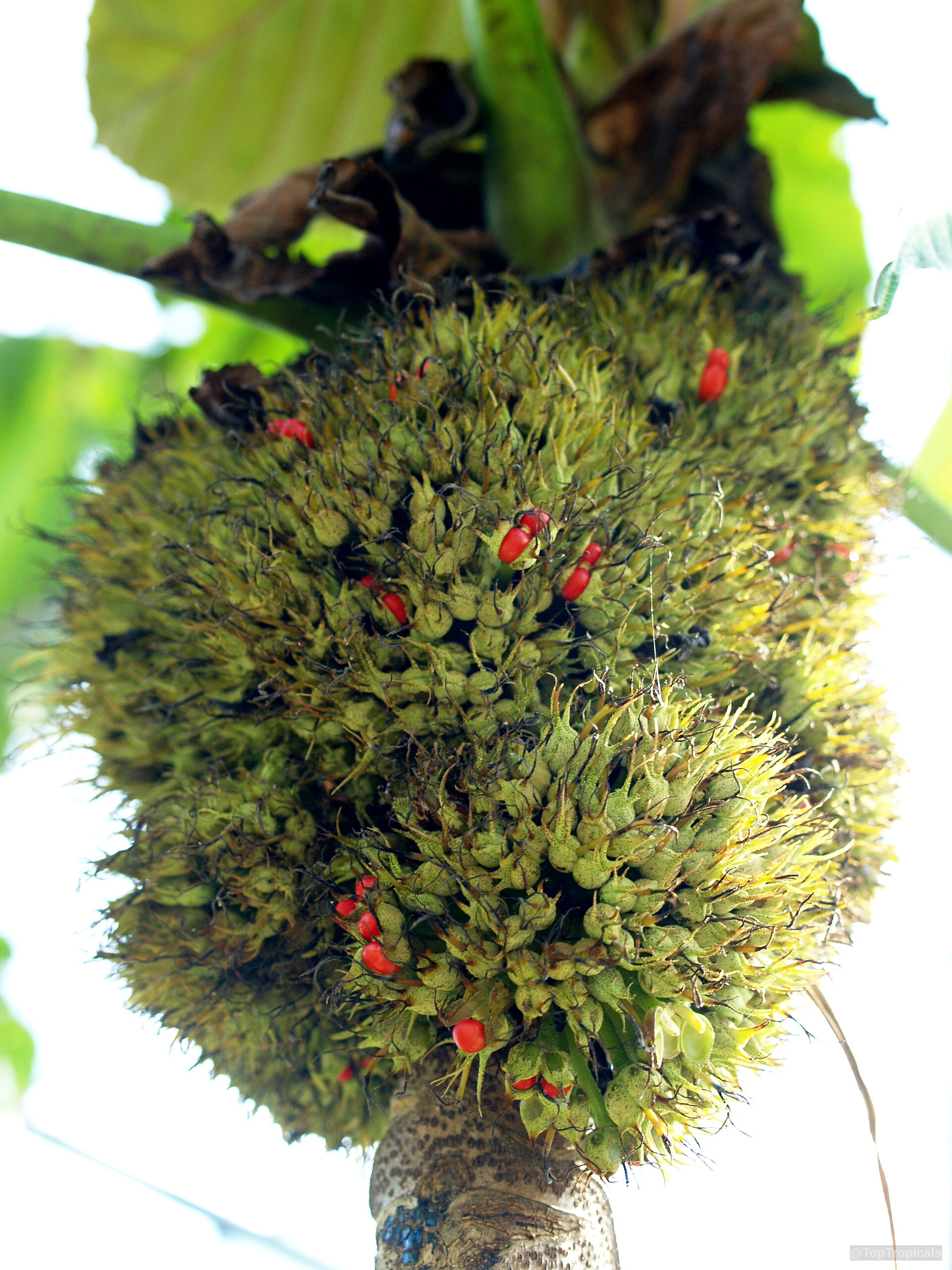
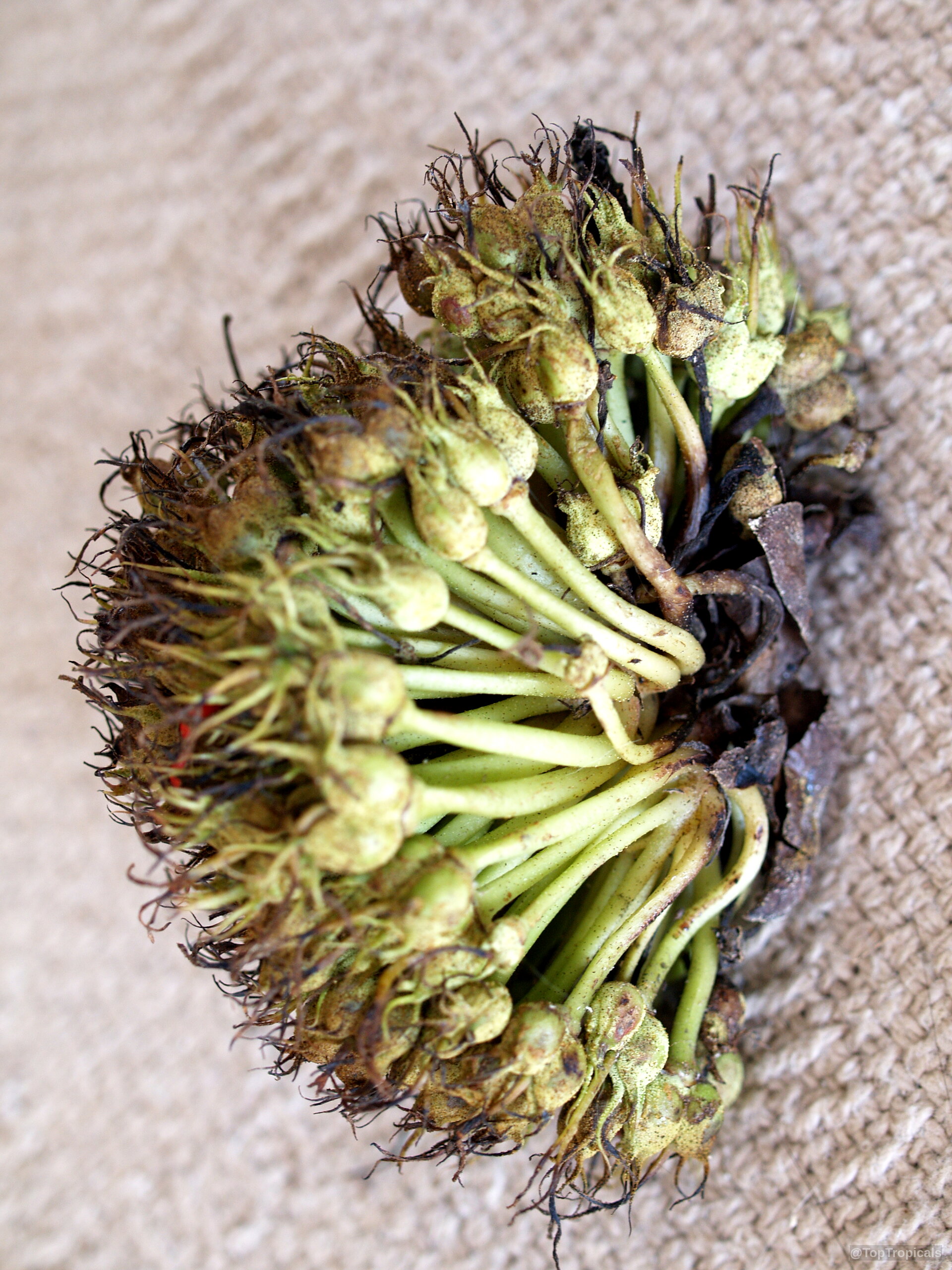
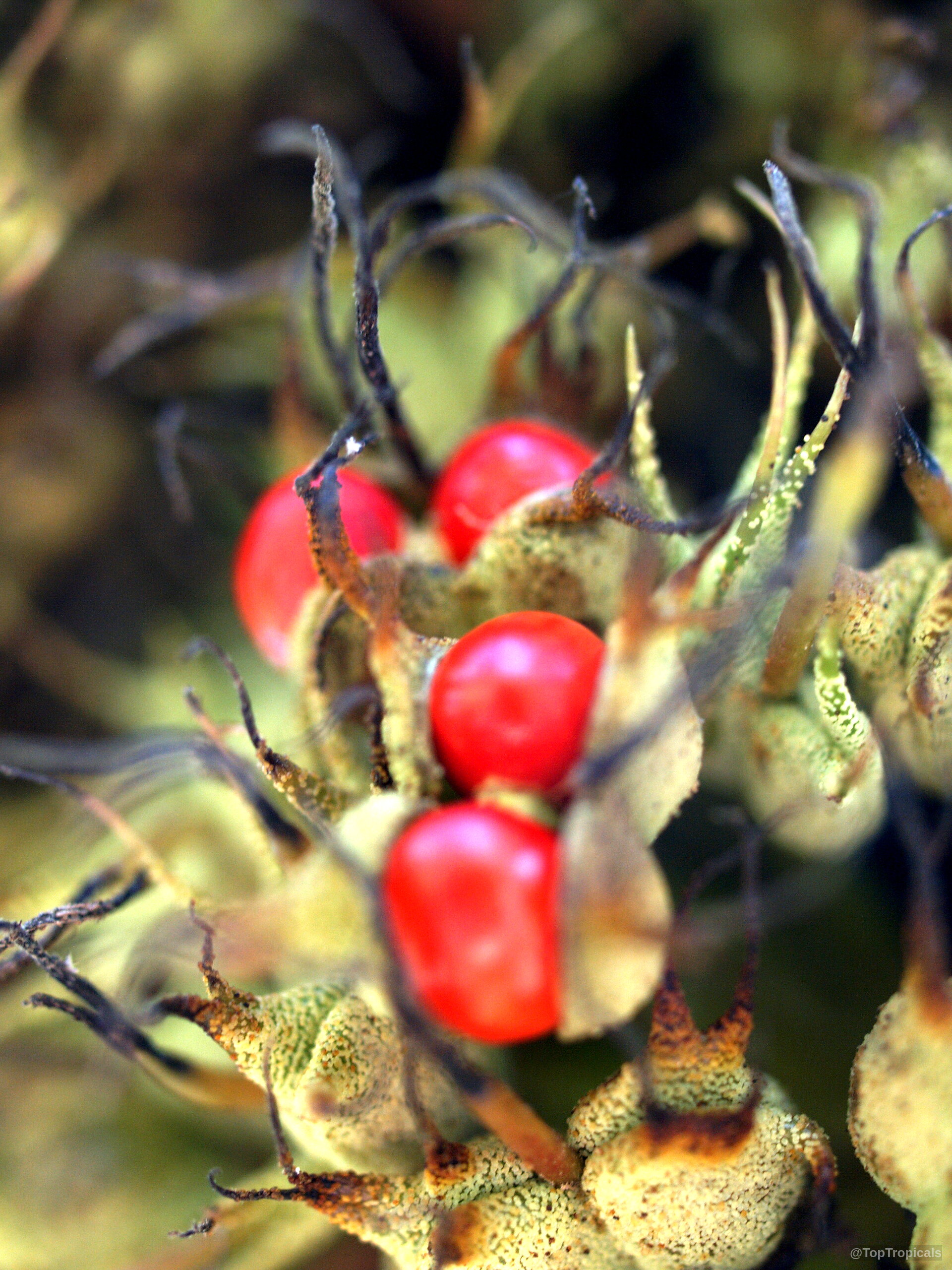
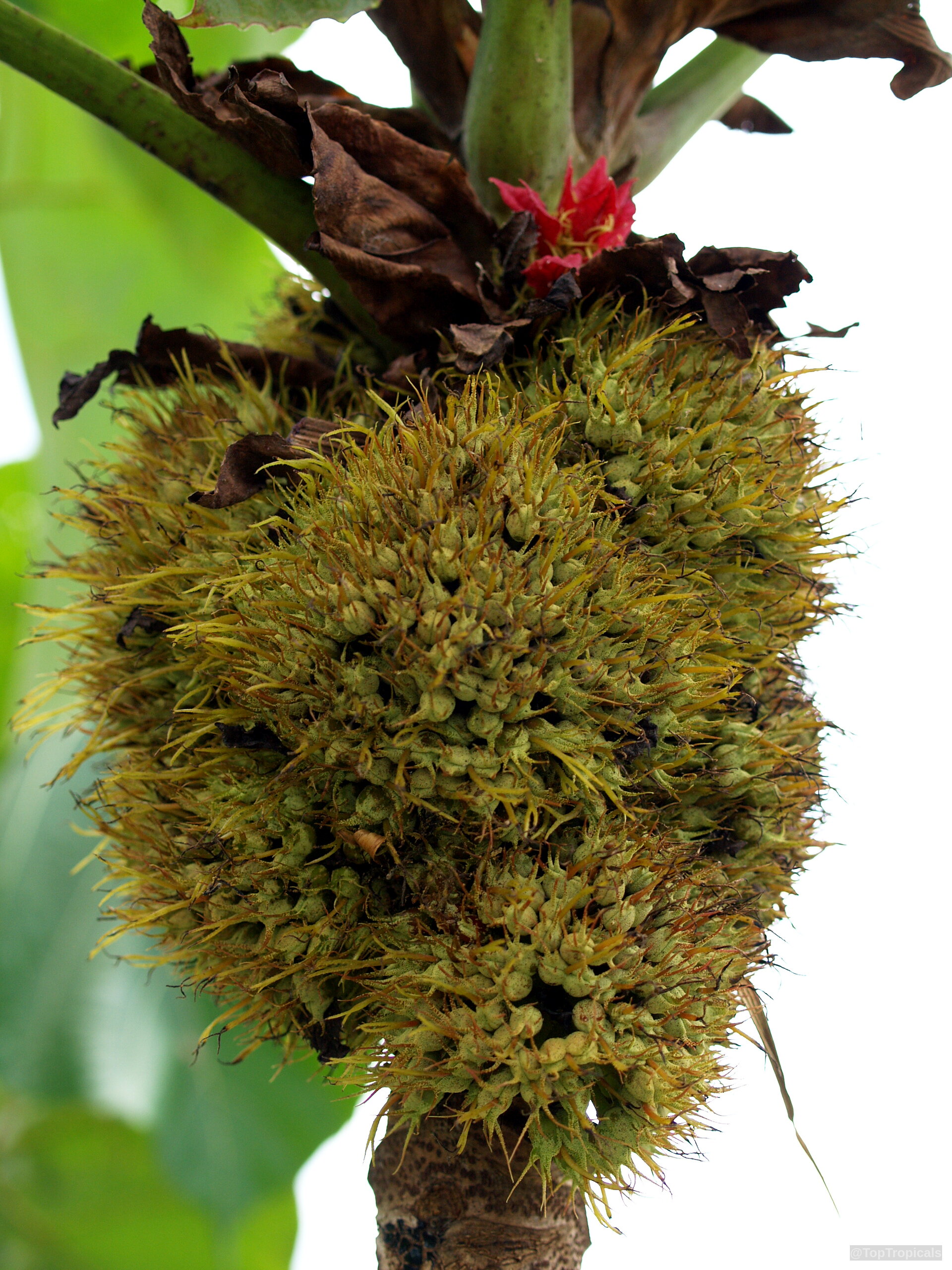
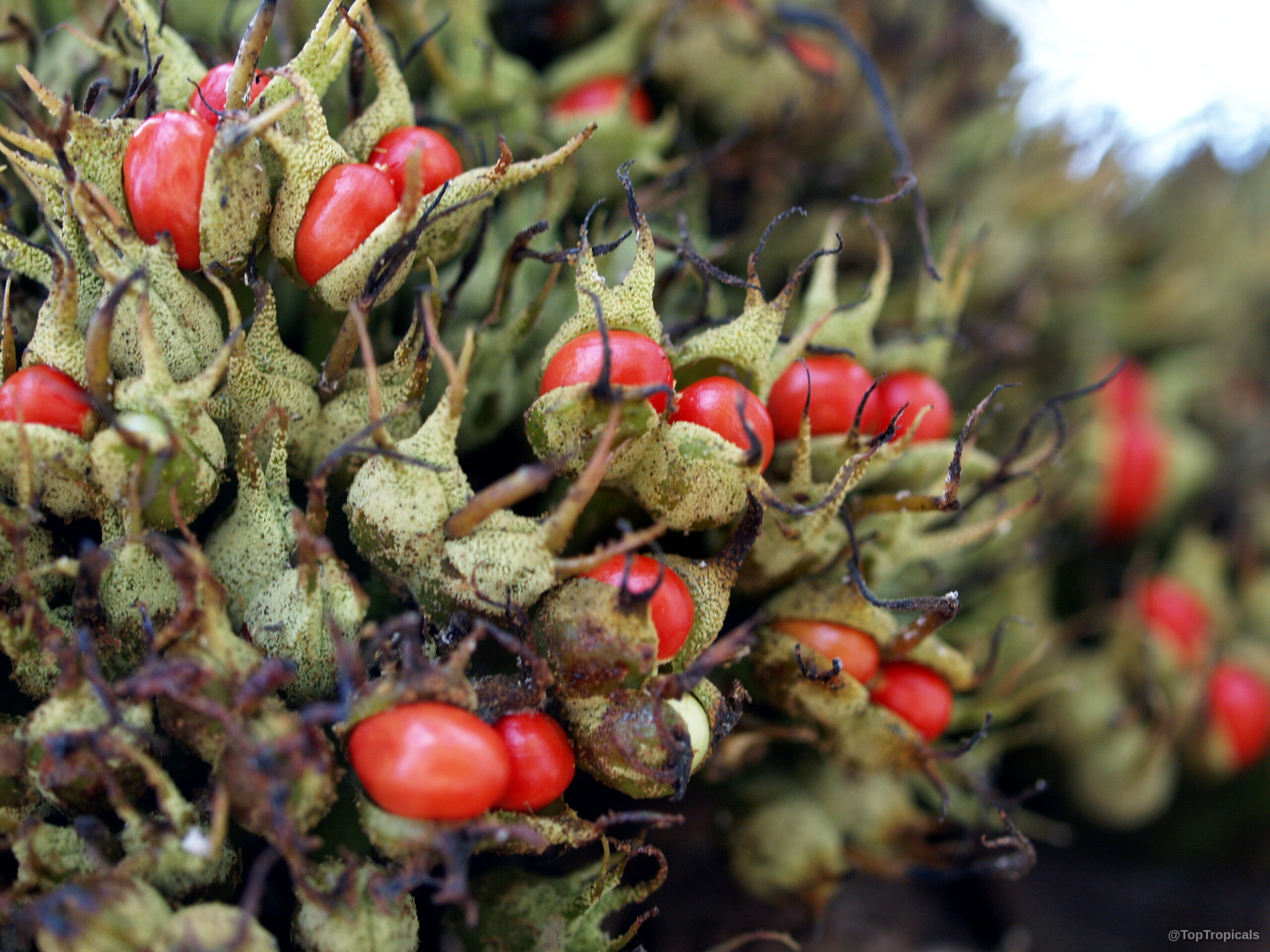
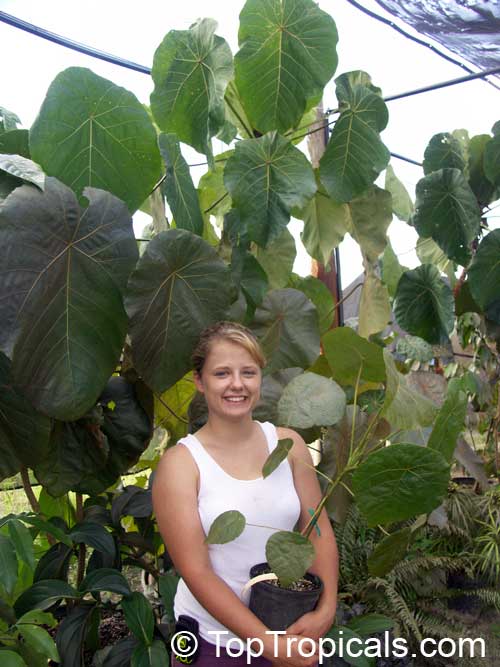
Macaranga grandifolia is a spectacular plant with tree-like habit and large, 1-2 ft wide, showy leaves. They feel tough in touch and resemble in shape nasturtium leaves. It is Philippines endemic and has been widely cultivated in Hawaii as a tropical ornamental. This plant has become very popular garden ornamental in many parts of the tropics for the extraordinary grandiose leaves, which are rounded-ovate in shape, with prominent, reddish veins and the stem attached towards the center of the leaf blade. The flowers are pinkish red and the males are held in coral-like, congested inflorescences. The leaf ash was eaten as a cure for enlarged bellies. Twine was made from the bark and the wood was used for fishing spears. The leaves were used to wrap food. Birds eat the ripe fruit. Separate male and female trees.
See more facts about Macaranga.
Related species with slightly smaller leaves --Macaranga tanarius
Similar plants: Macaranga grandifolia (Macaranga)





Read article about this plant.
Recommended Fertilizer: SUNSHINE Robusta - Rapid Growth Booster