Garden Blog - Top Tropicals

Date: 19 Jan 2022

Avocado Q & A

Sensation: Avocado 2.5 y.o seedling just bloomed!
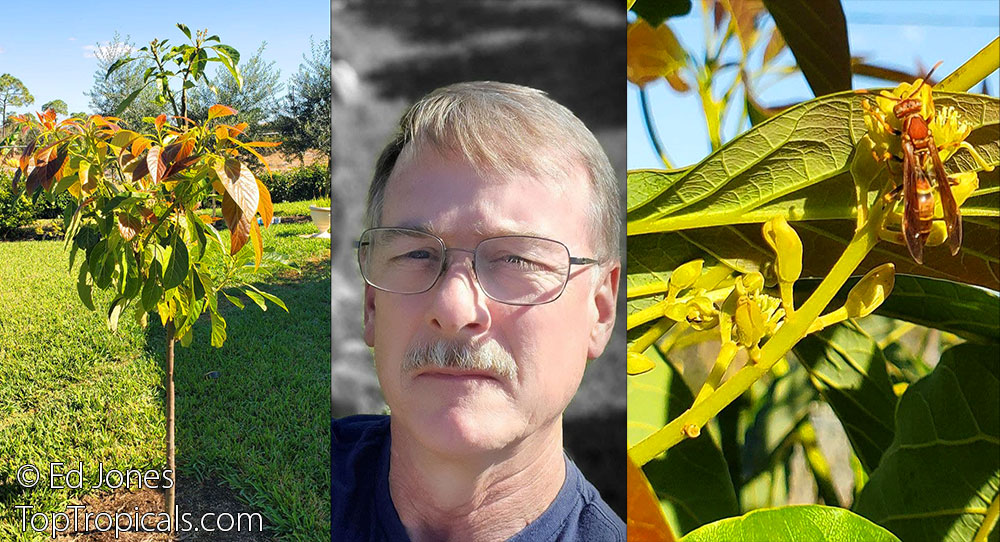
Ed's Avocado seedling blooming at age 2.5 years old... Go figure!

Q: Can I plant a seed from a store bought avocado and expect it to bear fruit?

A: Avocados grown from seed do not always come true, meaning being the same as the avocado that produced the seed being planted. Also, avocados grown from seed will take upwards of 8 years to flower and bear fruit unless grown by Ed Jones and his witchcraft. Ed Jones, the Avocado Guy... Yes, he is also the Mango Guy, and the Booster Guy... We don't know how he does it. He grows the most beautiful fruit trees, many of them from seed and they all seem to flower within two years! (See his blogs about his Star Fruit, Olive trees, and video about Shaping Mango Trees). All we know for sure, he uses Sunshine Boosters for all his plant experiments.
As far as Avocado , we recommend a grafted variety, where a scion, or branch tip, of a known cultivar is grafted to good rootstock. These trees will usually flower right away and bear good amount of fruit within a couple of years of being planted in the ground.
It's a good chance now to get a good grafted Avocado on our special Happy Value Sale while supply lasts, for only $59.95.

Date: 20 Oct 2025

11 tropical fruits to eat instead of taking a fiber supplement

Tropical fruits to eat instead of taking a fiber supplement

Tropical fruits to eat instead of taking a fiber supplement

🍑 11 tropical fruits to eat instead of taking a fiber supplement

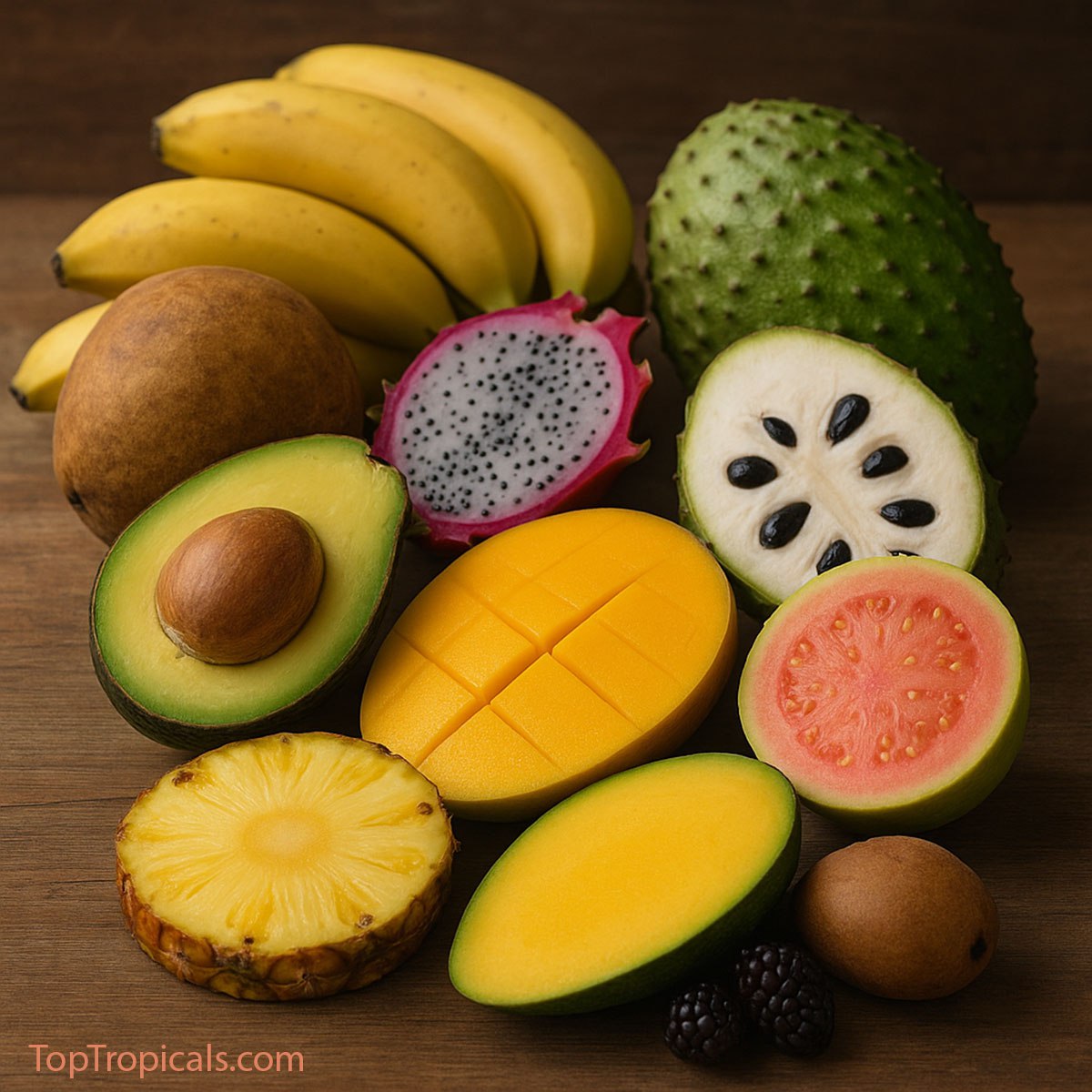
  • When we think of tropical fruit, we picture sweetness, sunshine, and exotic flavors packed with vitamin C. But beneath all that juicy goodness lies another gift: dietary fiber - quietly working to support digestion, feed the gut microbiome, and help keep blood sugar steady.
  • Avocado leads the pack among tropical fruits for fiber content. One creamy, ripe fruit can provide around 10 grams of fiber, roughly a third of an adult’s daily need. And there’s more to avocado than fiber - it’s also rich in healthy fats, micronutrients, and that silky texture everyone loves.
  • Other tropical fruits bring their own kind of fiber strength. Guava delivers up to 9 grams per cup, plus a burst of vitamin C.
  • Mango offers about 3 grams in half a fruit, especially when eaten with some of the skin.
  • Pineapple, though not always seen as a fiber powerhouse, still contributes around 2 grams per cup, along with bromelain, the enzyme that helps digestion.
  • Jackfruit’s fibrous pulp makes it another standout - it’s so meaty, it’s even used as a plant-based substitute in savory dishes.
  • Sapote fruit (Mamey, Canistel) and Sapodilla add fiber with a smooth, custard-like texture.
  • Adventurous tropical varieties like Annona (custard apple, soursop) may not top the charts in fiber numbers, but their soft, fibrous flesh still adds value: about 1.3 grams of fiber per 100 grams of fruit.
  • Bananas contain both soluble and insoluble fiber; the soluble part (mainly pectin) helps control blood sugar and appetite, while the insoluble fiber aids regularity.
  • Mulberries are rich in insoluble fiber, especially in their skin, supporting digestion and promoting healthy bowel movements.
  • Dragon fruit offers a mix of soluble fiber in its juicy flesh and insoluble fiber from its tiny edible seeds, which help support gut health and feed good bacteria.

These fruits aren’t just delicious - they help you meet your daily fiber needs in ways that are far more enjoyable (and sustainable) than taking supplements. And when home gardeners, farmers, or tropical communities grow and share them, it’s a double win: nutrition and tradition hand in hand.

✔️ Tropical fiber power: tips for getting more fiber from tropical fruits

  • ⏺Eat whole, not juiced. Most of the fiber is in the pulp, skin, and seeds. Juicing removes much of that goodness.
  • ⏺Mix it up. Tropical fruits are great, but balance them with legumes, whole grains, nuts, and veggies for a full fiber range.
  • ⏺Take it slow. If your diet is low in fiber, increase gradually to avoid bloating or discomfort.
  • ⏺Drink plenty of water. Fiber works best when paired with hydration.
  • ⏺Mind the ripeness. Unripe fruits can have more resistant starch, another form of fiber.
  • ⏺Get creative. Toss tropical fruits into smoothies, salsas, breakfast bowls, or even desserts - a tasty stealth-fiber strategy.


🛒 Plant a fruit tree to harvest your fruit tomorrow

📚 Learn more:


Tropical fruit health benefits guide - what fruit and edibles can help with health issues and vitamin deficiencies, Part 1 and Part 2.

#Food_Forest #Remedies #Discover #How_to

🟢 Join 👉 TopTropicals

Date: 10 Dec 2025

Meet Onikas cats - Fred

Fred - the most inquisitive and smartest of all her tuxedo cats!

Fred - the most inquisitive and smartest of all her tuxedo cats!

Cat Fred

Cat Fred

🕺 Meet Onika's cats: Fred


🐈📸 Meet Onika's cats from TopTropicals PeopleCats.Garden:
This is Fred - the most inquisitive and smartest of all her tuxedo cats! Fred is super smart. Very tough on the outside, but sweeter than a mango on the inside.

#PeopleCats

🟢 Join 👉 TopTropicals

Date: 1 Jan 2026

Why young trees need staking?

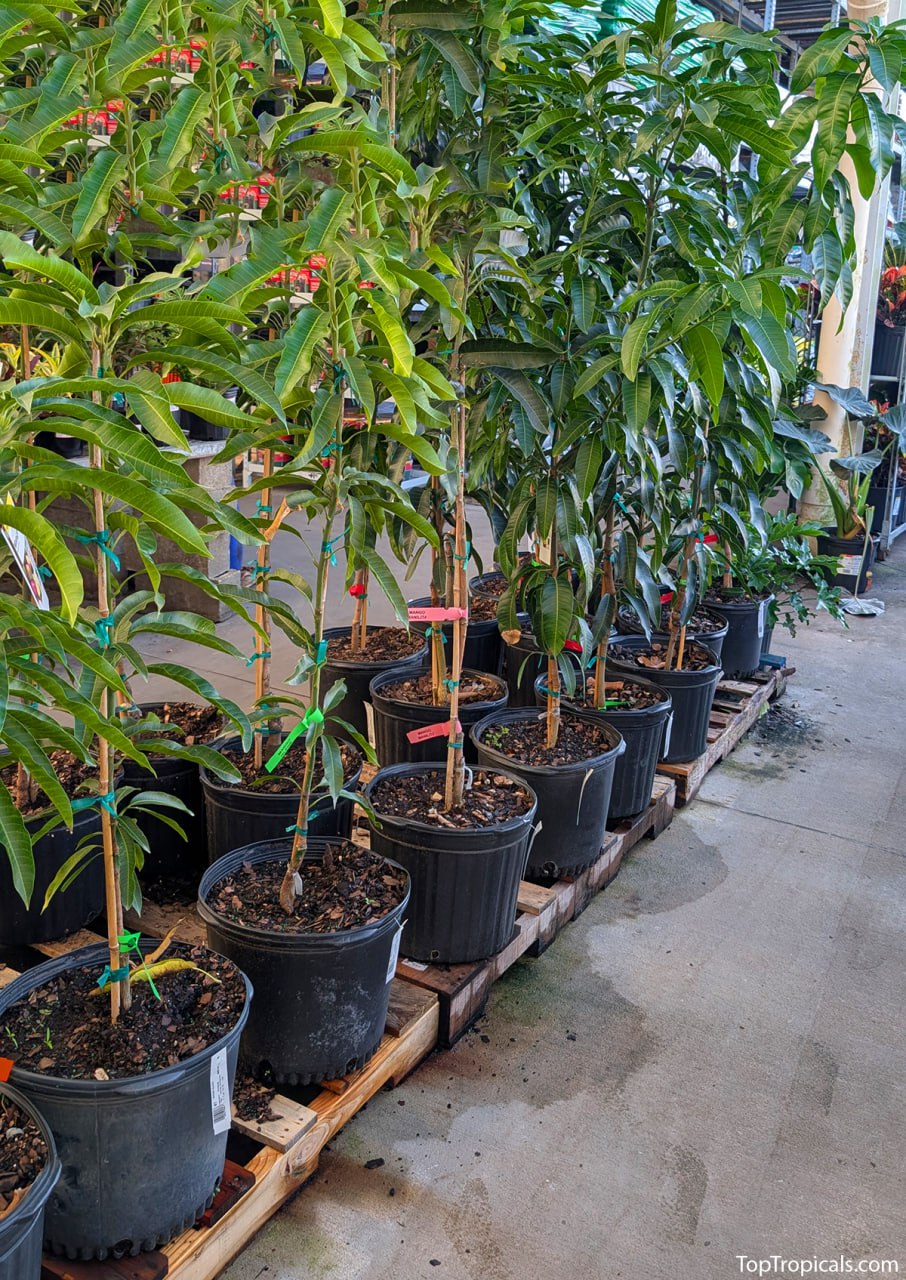
Mango trees with bamboo support

Mango trees with bamboo support

Staking young trees

Staking young trees

🌳 Why young trees need staking?


Staking a young tree is simple but important. The goal is to attach a bamboo stake to support the trunk, encourage straight growth, and-most importantly-prevent the stem from wiggling.

Young trees grow fast and vigorously, but their trunks are often much taller and heavier than their root systems can support. At the same time, those trunks are still thin and flexible. Even light wind can cause the tree to rock back and forth. This movement disturbs developing roots and slows establishment.
  • ❗️ Without proper support:


  • 🔹 The trunk can break in strong wind.
  • 🔹 Roots loosen instead of anchoring.
  • 🔹 The trunk may grow crooked.
  • 🔹 The tree becomes uneven and less stable long-term.


🌳 How to stake correctly

  • 🌳 Small trees


  • 🔹 Create an A-frame with one bamboo stake.
  • 🔹 Attach near the top, forming a triangle.
  • 🔹 Do not push the stake right next to the trunk. It may look neat, but it can damage roots and will not provide proper stability.


🌳 Medium trees

  • 🔹 Use 2-3 tie points along the trunk.
  • 🔹 Use soft green garden tape, 1/2"wide.
  • 🔹 Secure firmly but allow slight movement.


🌳 Tall or heavy trees

  • 🔹 Use a strong support such as a metal pipe. We use 1" aluminum electrical conduit.
  • 🔹 Attach with wider green tape, about 1"to protect the bark.
  • 🔹 Build tripods around larger trees.


❗️ Important maintenance tips:

  • 🔸 Check ties and tape often-every few weeks to once a month.
  • 🔸 As the tree grows, re-adjust the tape so it does not cut into the trunk as it thickens and doesn't cause any rot.
  • 🔸 Re-position bamboo stakes as needed, and be ready to replace them with a larger, stronger stake as the tree grows.

These rules apply to both potted trees and trees planted in the ground. Proper staking early on helps your tree establish faster, grow straighter, and develop a strong, stable root system for the future.

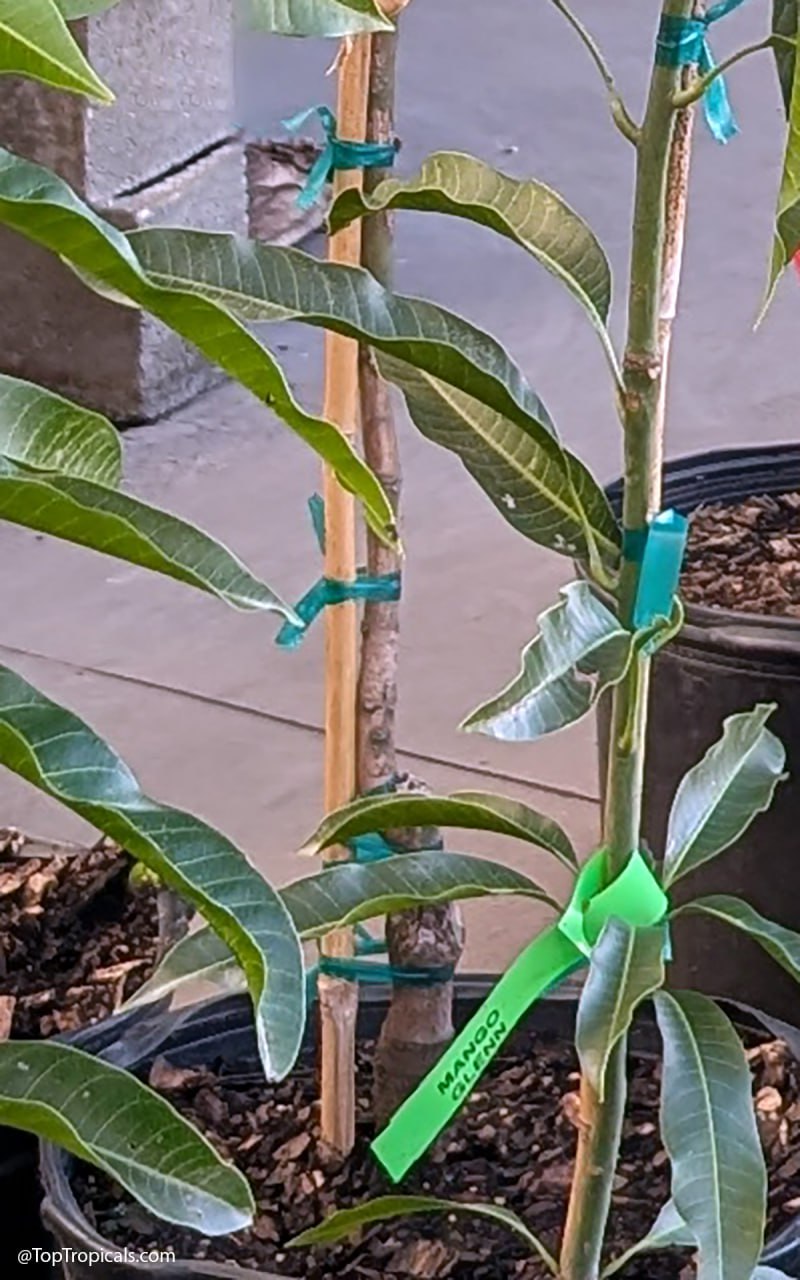
📸 Mango trees in 7 gal pots with"nursery-style"bamboo stakes that create a neat"standard". When stepping up or planting in the ground, attach a new stake and keep it away from the trunk.

🛒 Explore fruit trees and flowering trees

#Food_Forest #Trees #How_to

🟢 Join 👉 TopTropicals

Date: 5 Jan 2026

A  tuxedo  cat  planting  a  small  shrub  in  a  tropical  garden  while  a  ginger
    cat  relaxes  nearby  with  coffee  and  donuts,  illustrating  winter  planting  in 
 a  warm 
 climate.
Sunshine: January might feel warm, but its still winter. Wool socks, scarf, hot coffee.
Smokey: You get warm when you work. Plant now so roots are established before spring growth starts.
Sunshine: Alright. Lets see who stays warmer - you digging or me with coffee.

🌴 Why winter planting works in a warm climate

By our plant expert Tatiana Anderson

We are lucky to live in a warm climate. This is how I think about the seasons here. Winter is for roots. Spring is for growth. Summer is for managing heat and water.

So if we want plants that handle summer better, we plant them in the season that gives them the best start. Winter here is comfortable. The soil stays workable. The days are mild. And plants are not being stressed by heat. That is exactly why winter is the best time to plant in Florida and other warm areas.

If we use this season well, plants go into spring already settled instead of trying to catch up. This is what I like to plant now, and why.

🟢 Trees first. Anything that will be in the ground for years. Fruit trees, shade trees, flowering trees. When we plant them in winter, they can focus on roots before the spring growth surge starts. By the time spring arrives, the tree is anchored and ready to grow on top.
Examples: mango, avocado, Eugenia cherries, jackfruit, sapodilla, longan, lychee, canistel.

🟢 Shrubs next. Shrubs establish faster than trees, but winter still gives them an advantage. They settle in quietly before the spring flush and bloom cycles begin. That usually means steadier growth and fewer problems once heat returns.
Examples: gardenia, jasmine, brunfelsia, hibiscus, clerodendrums.

🟢 Vines are often overlooked. Vines want to grow fast when spring starts. If the root system is not ready, you get weak growth and frustration. Planting vines in winter gives them time to build a foundation first, so spring growth has support.
Examples: Rangoon creeper, stephanotis, Petrea, Mexican Flame Vine.

🛒 Explore cold tolerant plants