Garden Blog - Top Tropicals

Date: 15 Feb 2026

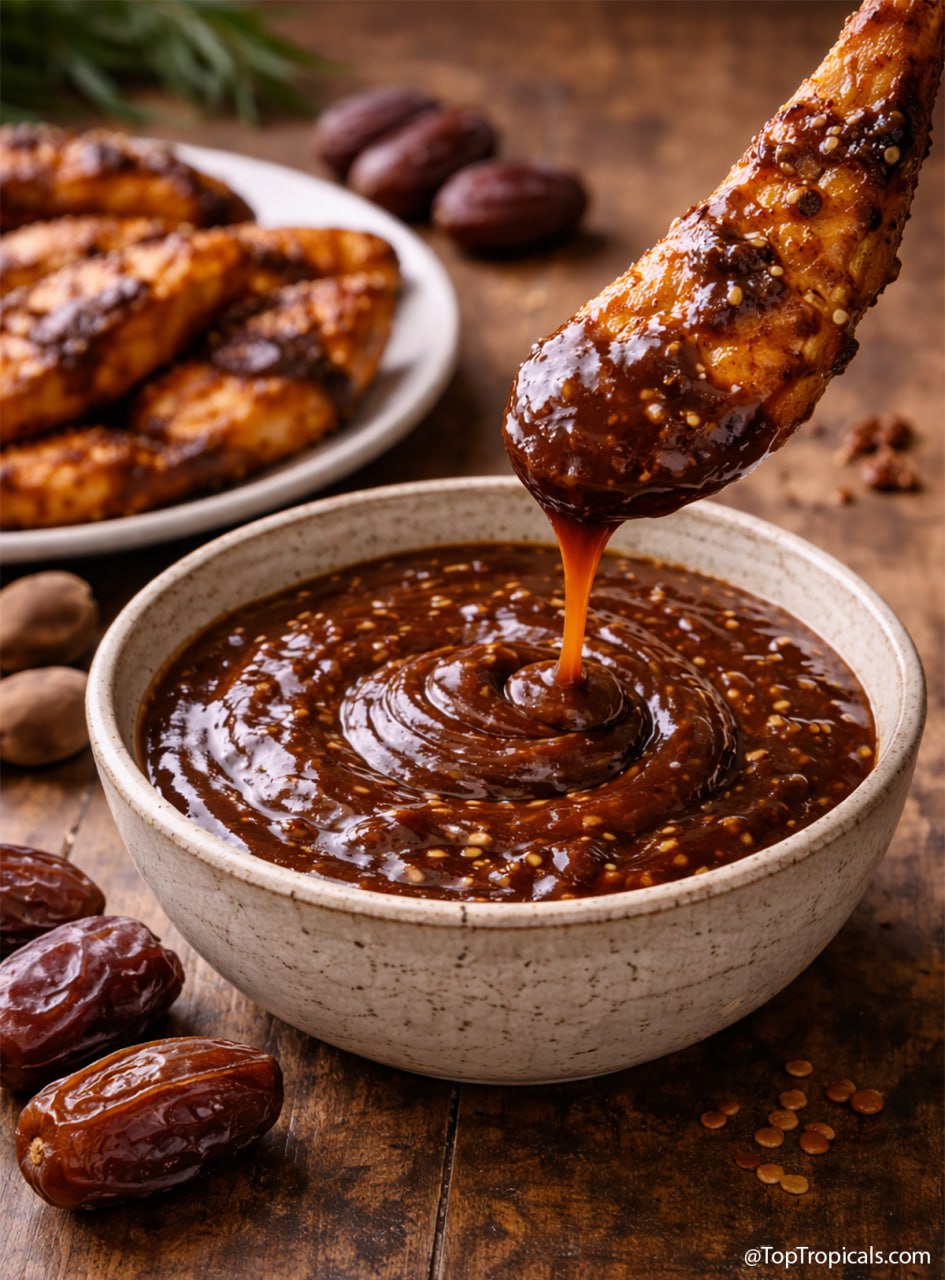
Tamarind date dipping sauce, quick-n-fun exotic recipes

Tamarind date dipping sauce

Tamarind date dipping sauce

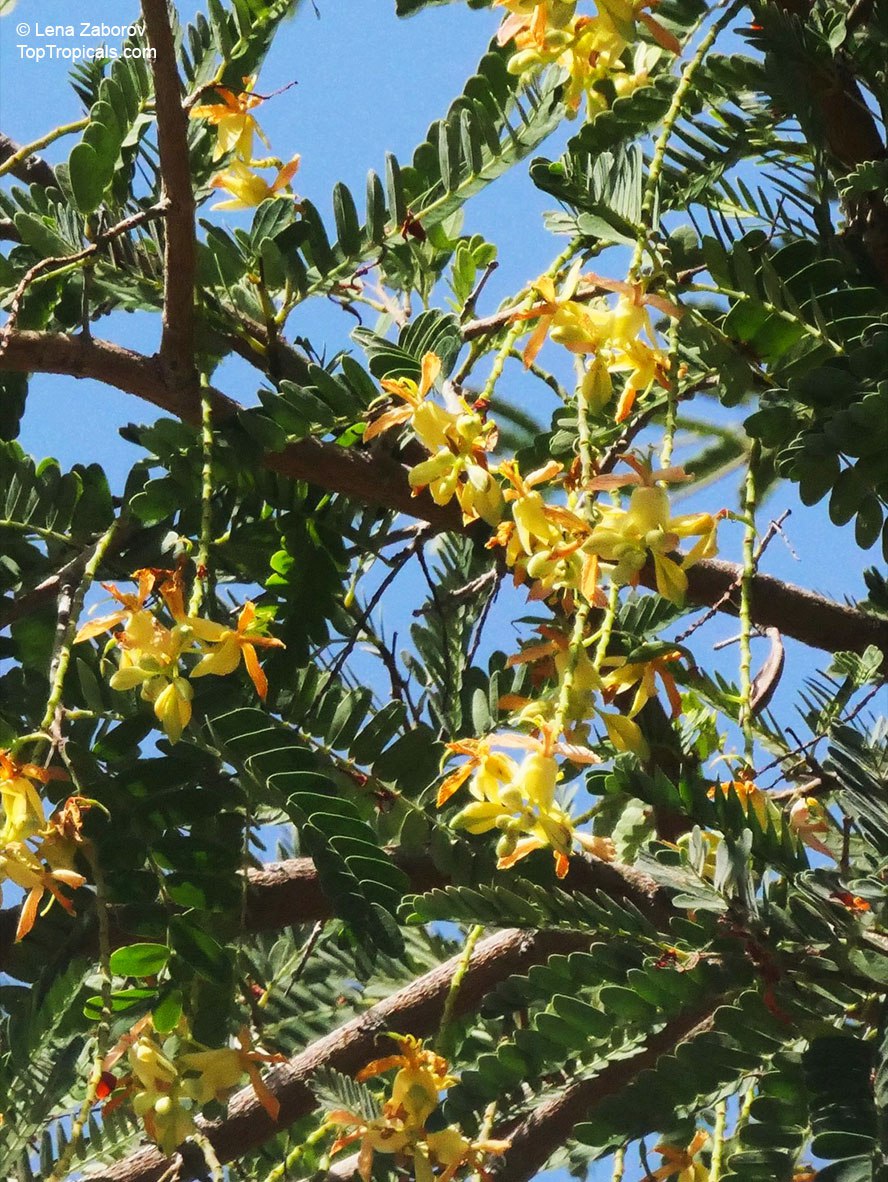
Tamarind - Tamarindus indica - flowers

Tamarind - Tamarindus indica - flowers

🍴 Tamarind date dipping sauce: quick-n-fun exotic recipes


Tamarind Date Dipping Sauce

Ingredients

  • 3 soft dates
  • 1 tablespoon tamarind pulp
  • 1 pinch salt
  • 2-3 tablespoons warm water

Instructions

  1. Soak the dates briefly in warm water if they are firm.
  2. Add the dates, tamarind pulp, and salt to a blender.
  3. Blend until smooth.
  4. Add warm water gradually until the sauce reaches dipping consistency.
  5. Serve with snacks, roasted vegetables, or grilled foods.


🌿 About the plant:


When combined with dates, tamarind transforms into a sweet-sour chutney common in Indian street food.

🏡 In the garden:


Tamarind (Tamarindus indica) flowering occurs in warm months with small yellowish blooms. Pollination leads to the familiar curved pods.

🛒 Add Tamarind tree to your garden

📚 Learn more:

Tamarind Plant Facts

Botanical name: Tamarindus indica
Also known as: Tamarind, Sampalok
USDA Zone: 9 - 11
Highligths Large tree taller than 20 ftFull sunWatering: Moderate. Water when top soil feels dryEdible plantSubtropical plant. Mature plant cold hardy at least to 30s F for a short timeFlood tolerant plantSeaside, salt tolerant plant
Get personalized tips for your region

Tamarindus indica in Plant Encyclopedia

#Food_Forest #Recipes

🟢 Join 👉 TopTropicals

Date: 7 Feb 2026

How to grow an Avocado tree on your patio

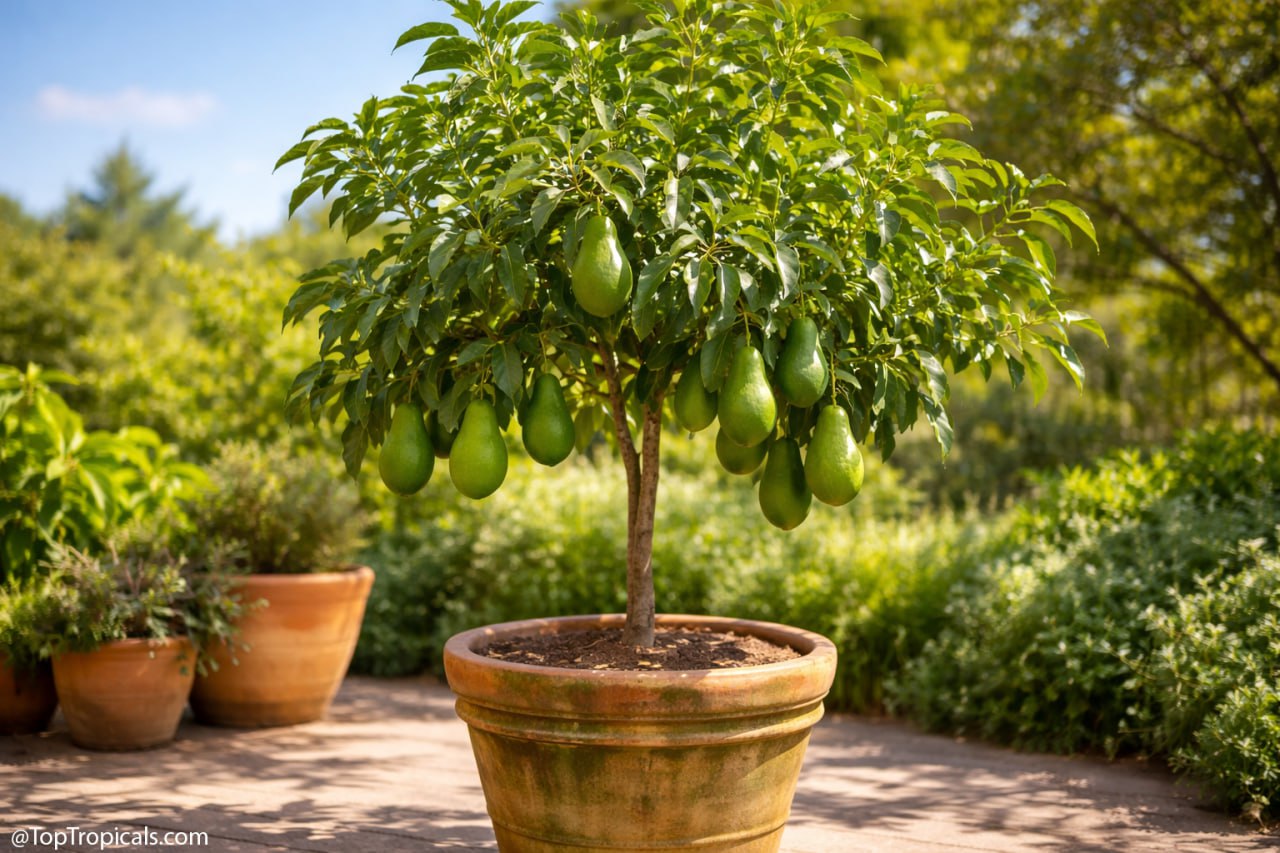
Avocado tree fruiting

Avocado tree fruiting

Yes, you can grow an Avocado tree on your patio - here is how to do it right


If you would love to grow your own avocado but don’t have a big yard, good news - avocado trees can grow very well in containers. Compact or dwarf varieties, often called condo avocados, are especially suited for pots, patios, balconies, and even indoor growing near a sunny window.

Avocado Plant Facts

Botanical name: Persea americana, Persea gratissima
Also known as: Avocado, Alligator Pear, Aguacate, Abacate
USDA Zone: 9 - 11
Highligths Large tree taller than 20 ftSmall tree 10-20 ftFull sunWatering: Regular. Let topsoil dry slightlyEdible plantSubtropical plant. Mature plant cold hardy at least to 30s F for a short time
Get personalized tips for your region

Growing avocados in pots is also a smart choice in cooler climates, since you can move the tree indoors when temperatures drop. With the right variety and basic care, potted avocado trees are easy to manage.

Pick a compact avocado variety


Choosing the right variety is the most important step. Standard avocado trees grow very large, but condo or compact varieties stay much smaller and adapt well to containers.
Good choices for pots include:
· Wurtz (Little Cado) - a true dwarf, perfect for containers
· Fuerte - a semi-dwarf that stays manageable with pruning
· Joey - naturally compact and easy to keep smaller
Dwarf avocado trees usually grow 6 to 10 feet tall. Fruit size is normal, but yields are smaller than on large trees.

Choose the right pot


Start with a pot about 12 inches wide (around 5 gallons). This size is easier to water correctly and helps prevent root rot. Avoid planting a small tree into a very large pot too soon.
As the tree grows, move up gradually. A mature potted avocado will need an 18- to 24-inch container. Repot every couple of years when roots show through drainage holes.
Always use a pot with excellent drainage.

Use well-draining soil


Avocados love water but hate wet feet. Use a loose, fast-draining mix, such as Abundance Professional Soilless Mix. You can improve drainage by adding perlite or coarse sand. Avoid heavy garden soil.
Water deeply, but not too often.
Water thoroughly, then let the soil dry before watering again. Always check moisture first. In summer, watering may be needed once or twice a week; in cooler weather, much less.
Overwatering is the fastest way to kill a potted avocado.

Give plenty of sun


Avocado trees need at least 6 to 8 hours of full sun daily. Outdoors is best, but indoors place the tree near a bright south- or west-facing window. Grow lights can help if light is limited.

Fertilize and prune


Feed during the growing season with a balanced fertilizer such as Green Magic (every 6 months) or liquid Sunshine Boosters (safe to use with every watering, year-around). Prune lightly to keep the tree compact and well-shaped.

Protect from cold


Most Avocados are sensitive to hard freeze. When temperatures drop below 35F, move the pot indoors or into a protected space. Reduce watering in winter as growth slows.
Cold hardy varieties can take cooler temperatures down to 18F once established. For example, Joey is both cold hardy and dwarf - perfect choice.

Final thoughts


Growing an avocado tree in a pot is practical and rewarding. With good drainage, sun, careful watering, and the right variety, you can enjoy homegrown avocados even without a yard.
Small space? No problem. Just think condo avocado. According to Southern Living, Lemons can be grown in pots - and so can Avocados!

✔️ Check out
Avocado Variety Guide interactive chart. Sort them by flower type A or B, tree habit, fruit shape and quality, cold hardiness, origin, season and more!

🛒 Explore Avocado varieties and Dwarf Avocado

📖 Our Book: Avocado Variety Guide, Snack or Guacamole?
·
Hard copy · PDF File Download

📚 Learn more:


· Avocado Variety Guide
· Posts about #Avocado
· Avocado tree (Persea americana) in Plant Encyclopedia
· How to grow tropical fruit outside the Tropics
· What is so unique about Wurtz avocado?
· How to protect Avocado from cold and how hardy is it?
· Avocado that laughs at frost: Mexicola Grande for cooler climates
· Cold hardy Avocado Joey - you eat it with the skin
· Cold-hardy avocados: how cold-hardy are they?

🎥 What is a Dwarf Condo Avocado that fruits at 3 ft tall? 📱

#Food_Forest #Avocado

🟢 Join 👉 TopTropicals
Date: 27 Jan 2026

Jackfruit golden hash: quick-n-fun exotic recipes

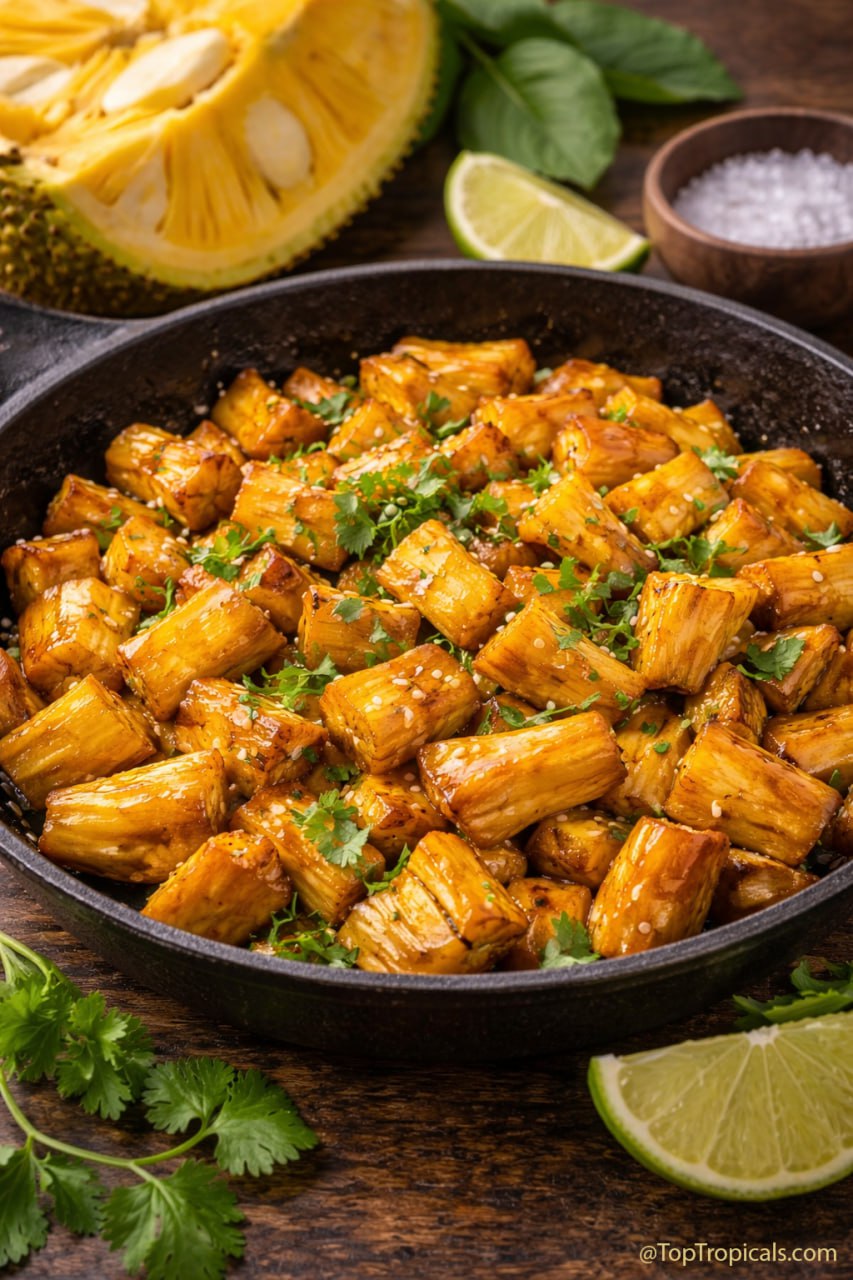
Jackfruit golden hash in frying pan

Jackfruit golden hash in frying pan

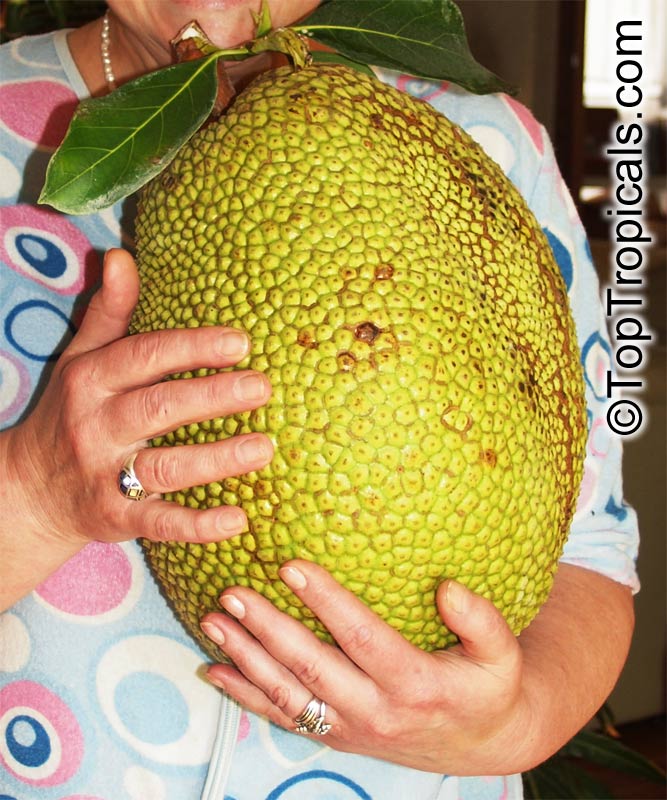
Jackfruit tree (Artocarpus heterophyllus) fruit

Jackfruit tree (Artocarpus heterophyllus) fruit

🍴 Jackfruit golden hash: quick-n-fun exotic recipes


Jackfruit Golden Hash

Ingredients

  • 1 cup ripe jackfruit pods, chopped
  • 1 teaspoon coconut oil or butter
  • 1 pinch salt
  • Fresh lime juice (optional)

Instructions

  1. Chop ripe jackfruit pods into small pieces.
  2. Heat coconut oil or butter in a frying pan over medium heat.
  3. Add the chopped jackfruit and pan-sear until the edges begin to caramelize.
  4. Toss with a tiny pinch of salt.
  5. Finish with a squeeze of lime juice and serve warm.


🌿 About the plant:


Jackfruit is the world’s largest tree-borne fruit, native to South and Southeast Asia. When ripe, its golden pods are sweet, fragrant, and naturally caramelize when cooked. It has been a staple food for centuries, used both ripe and unripe in desserts and savory dishes.

🌱 In the garden:


Jackfruit is a fast-growing tropical tree that thrives in warm climates with full sun and good drainage. It loves regular water and fertile soil, it's a heavy feeder. Best suited for USDA zones 9b-11, it can be grown in large containers when young and makes a bold, architectural fruit tree in the landscape. The fruit forms at the base of the tree, so trimming it under 7-8 ft makes it easier for cold protection.

🛒 Plant your own Jackfruit tree

📚 Learn more:

Jackfruit Plant Facts

Botanical name: Artocarpus heterophyllus, Artocarpus integrifolius
Also known as: Jackfruit, Jakfruit, Langka, Nangka, Jaca
USDA Zone: 9 - 11
Highligths Large tree taller than 20 ftFull sunWatering: Regular. Let topsoil dry slightlyEdible plantSubtropical plant. Mature plant cold hardy at least to 30s F for a short time
Get personalized tips for your region

Jackfruit tree (Artocarpus heterophyllus) in Plant Encyclopedia
Ten best fruit trees to grow in Florida and Southern landscapes. Jackfruit Tree.
How to Grow Jackfruit: Practical Guide

🎥 We Cut Open a 37 lb Jackfruit - You Won't Believe What's Inside!

#Food_Forest #Recipes

🟢 Join 👉 TopTropicals

Date: 23 Jan 2026

A leaf you grow, not a pill you buy

Insulin Ginger (Chamaecostus cuspidatus)

Insulin Ginger (Chamaecostus cuspidatus)

❣️ A leaf you grow, not a pill you buy: Insulin ginger - the plant people actually use

❣️ Costus igneus (Chamaecostus cuspidatus) - Insulin Ginger, Fiery Costus or Spiral Flag - I love this plant! And that’s not something I say lightly.

Insulin Plant Facts

Botanical name: Costus igneus, Chamaecostus cuspidatus
Also known as: Insulin Plant, Fiery Costus, Spiral Flag
USDA Zone: 9 - 11
Highligths Large shrub 5-10 ft tallSmall plant 2-5 ftSemi-shadeShadeWatering: Regular. Let topsoil dry slightlyYellow, orange flowersEdible plantSpice or herb plantEthnomedical plant.
Plants marked as ethnomedical and/or described as medicinal, are not offered as medicine but rather as ornamentals or plant collectibles.
Ethnomedical statements / products have not been evaluated by the FDA and are not intended to diagnose, treat, cure, or prevent any disease. We urge all customers to consult a physician before using any supplements, herbals or medicines advertised here or elsewhere.Subtropical plant. Mature plant cold hardy at least to 30s F for a short time
Get personalized tips for your region


❣️ Customers often ask me about medicinal plants that may help with diabetes, and Insulin Ginger always comes up - for a good reason. This is one of those plants people grow on purpose, not just because it looks nice. Imagine stepping into your garden and picking a leaf instead of opening a pill bottle. That idea alone makes people pause.

❣️ In everyday use, Insulin Ginger is valued for supporting healthy blood sugar and helping the body respond better to insulin. It’s also packed with antioxidants, which gardeners like to think of as quiet helpers for organs that get stressed when sugar balance is off. No lab talk, no big claims - just a plant people have trusted and used for a long time.

❣️ From a gardener’s point of view, it’s hard not to love. You can harvest leaves year-round, and the more you pick, the better it grows. One plant quickly turns into many, which means you’ll have enough for yourself and extras to share with friends and family.

❣️ It’s one of those plants people don’t regret planting. Easy to grow. Easy to share. Easy to use.

🛒 Add Insulin Ginger to your medicinal herb garden

📚 Learn more:


Costus igneus (Chamaecostus cuspidatus) - Insulin Ginger in Plant Encyclopedia
How to make lots of Insulin Ginger plants quickly and get more health benefits
How to lose weight naturally with tropical fruit and plants
The fiery plant that fights sugar: Nature secret insulin?
Most interesting edible gingers

#Food_Forest #Remedies #Shade_Garden #Discover

🟢 Join 👉 TopTropicals

Date: 20 Sep 2025

How to make lots of Insulin Ginger plants quickly and get more health benefits

Costus igneus (Chamaecostus cuspidatus) - Fiery Costus or Spiral Flag

💚 How to make lots of Insulin Ginger plants quickly and get more health benefits


Costus igneus (Chamaecostus cuspidatus) - Fiery Costus or Spiral Flag is believed to help lower blood glucose levels naturally and managing diabetes.

Have you heard of Insulin Ginger? Everyone wants to have it in the garden!

Gardeners in India grow it not just for its pretty spiral leaves, but for what those leaves do. People with diabetes often chew them fresh or brew them into tea, saying it helps keep their blood sugar under control.

Researchers have found something interesting: the leaves contain an insulin-like compound, along with antioxidants and anti-inflammatory properties. In animal studies, extracts from the plant lowered blood sugar, protected the liver and kidneys, and even made the body more sensitive to insulin.

The way folks use it is simple. You can chew a leaf right off the plant, steep dried leaves for tea, or find it in powders and capsules. It's one of those plants that shows how tradition and science sometimes meet in the garden.

Its lush, turmeric-like leaves spiral around upright stems, with a glossy dark green top and a striking light purple underside. In warm months, it produces bright orange, cone-like flowers that stand out beautifully in the garden.

Beyond its beauty and natural insulin effects, the insulin plant is credited with aiding digestion, reducing cholesterol, boosting energy, improving skin health, supporting weight loss, relieving stress, and promoting heart wellness. A real botanical multitasker!

🎥 In this video, we’ll show you how to multiply Insulin Ginger fast, so you’ll have plenty of plants for yourself and even extras to share with friends and family.

✅ Don’t forget to use Green Magic fertilizer for the best results. Gingers absolutely love this plant food - they thrive on it and respond better than any other plant, with vigorous growth, lush foliage and loads of leaves you’ll need for all the benefits.

🛒 Grow your own sugar-fighter - the Insulin Ginger

📚 Learn more:


🟡The fiery plant that fights sugar: Nature secret insulin?
🟡Most interesting edible gingers

#Food_Forest #Remedies #Shade_Garden #Discover

🟢 Join 👉 TopTropicals