Garden Blog - Top Tropicals

Date: 8 Apr 2025

What makes Lolita so special and different from regular Surinam Cherry?

Black Surinam Cherry cv. Lolita (Eugenia uniflora)

Black Surinam Cherry cv. Lolita (Eugenia uniflora)

Black Surinam Cherry cv. Lolita (Eugenia uniflora) fruit

Black Surinam Cherry cv. Lolita (Eugenia uniflora) fruit

Black Surinam Cherry cv. Lolita (Eugenia uniflora) fruit

Black Surinam Cherry cv. Lolita (Eugenia uniflora) fruit

Black Surinam Cherry cv. Lolita (Eugenia uniflora) fruit

Black Surinam Cherry cv. Lolita (Eugenia uniflora) fruit

What makes Lolita so special and different from regular Surinam Cherry? 💋
  • ❣️ Black Surinam Cherry cv. Lolita (Eugenia uniflora) is Sweet, Juicy, and Cold-Hardy!
  • ❣️ Lolita Cherry is the cultivar you've been waiting for - also known as Black Star or Pitanga var. Black. This rare variety starts red and ripens to a rich black color, with a flavor tha'’s incredibly sweet, juicy, and free of the typical aftertaste found in regular Surinam cherries.
  • ❣️ The fruit is large (1-1.2 inches), packed with juice, and produced by a vigorous, upright, freely branching plant that often fruits in its first year. A reliable and heavy producer, this cherry tree is both ornamental and productive.
  • ❣️ Why grow Lolita?


💋 Delicious, black-colored cherries with exceptional sweetness
  • 💋 Fast to fruit, even in the first year. Seedlings grow true to type - a rare trait!
  • 💋 Cold hardy to the upper 20s F once established. Thrives in USDA zones 9–11 or in containers with winter protection
  • 💋 Upright, bushy habit makes it perfect for edible hedge or small garden spaces
  • 💋 Hard to find and easy to love, Lolita Black Surinam Cherry is a must-have for tropical fruit collectors.


🛒 Plant a Lolita Cherry and have lots of delicious fruit and juice

📚 More about Lolita Cherry from previous posts:


#Food_Forest #Remedies #Discover

🔴 Join 👉 TopTropicals

Date: 28 Jun 2025

Get the Red Jade look without the fuss: cold-hardy Dwarf Red Jade Vine

Dwarf Red Jade Vine blooming

Dwarf Red Jade Vine blooming

Dwarf Red Jade Vine blooming

Dwarf Red Jade Vine blooming

💃 Get the Red Jade look without the fuss: cold-hardy Dwarf Red Jade Vine

  • 🔥 Love the stunning, fiery blooms of the famous Red Jade Vine (Mucuna benettii) but live outside the tropics?
  • Its cousin - Dwarf Red Jade Vine - is tougher, easier to grow, and just as jaw-dropping, and delivers the same dazzling display of blazing red flower chains - without the high-maintenance, ultra-tropical demands.
  • 🔥 Camptosema grandiflora - Dwarf Red Jade Vine, Cuitelo, or Rooster's Crest - this Brazilian superstar brings cascading chains of bright red blooms that look like flames frozen in mid-air.
  • 🔥 Unlike the ultra-tropical and finicky Mucuna benettii, this cousin is tougher, easier to grow, and just as jaw-dropping. It thrives in full to partial sun, forgives a little drought, and even shrugs off light frost. Blooming in fall and winter, it gives your garden a fiery finale when everything else starts to fade.
  • 🔥 Got a pergola or arbor? Perfect. The hanging flower clusters will light up the space like a botanical chandelier. Just prune it hard in spring and feed it well, and it will thank you with a blooming spectacle year after year.
  • 🔥 If you've been dreaming of the iconic Red Jade Vine but thought it was out of reach - this is your sign.


🛒 Get all the wow of Red Jade Vine - without the worry

📚 Learn more:


Camptosema grandiflora, Dwarf Red Jade Vine - my favorite plant

#Nature_Wonders #Hedges_with_benefits #Butterfly_Plants

🟢 Join 👉 TopTropicals

Date: 18 Sep 2022

The fruit of Heaven:
Phyllanthus acidus - Amlak, Otaheite Gooseberry

Phyllanthus  acidus  -  Amlak,  Otaheite  Gooseberry  in  a  pot

Grow Your Own Food

This is a fun rare fruit tree to have if you like lemonade and believe in Vitamin C benefits! The tree is super easy to grow, relatively cold hardy and doesn't require any special care. It is a fast growing plant, however the mature tree is only about 20 ft so it will be well suited for any size garden, even container garden. As you can see, it happily fruits in a pot. Bright yellow fruit are beautiful and curious, they always make a conversation piece!

About Otaheite Gooseberry

Otaheite Gooseberry, or Amlak, is a rare tropical fruit tree from SE Asia and India, very close related to Phyllanthus emblica (Amla, Amlaki), however it is much cold hardy than Amla. Known as Amritphala in Sanskrit, which literally means "the fruit of heaven" or "nectar fruit". It is so called because it has many helth benefits. Amlak is one of the favorite fruit of Indian people who definitely know what is good for you! Fruit paste is a major ingredient of Chavyanprash, a popular Ayurvedic tonic. It is the richest source of vitamin C.
Fruits are borne in loose clusters, which hang from the tree trunk and main branches. Fruits are esteemed for jellies, preserves and pastries, and are great for making a delicious lemonade rich in vitamin C. There are no commercial plantings; trees grow only in home gardens.

You need to have one! Or two. We have only limited quantities.

Phyllanthus  acidus  -  Amlak,  Otaheite  Gooseberry,  mature  tree

Phyllanthus  acidus  -  Amlak,  Otaheite  Gooseberry,  lot  of  loose  fruit

Date: 4 Dec 2021

Sunday Breakfast with Peanut Butter and Blackberry Jam...

It's time for our favorite day and another Easy stroll through Top Tropicals' Garden with savings of 50% and MORE! What a wonderful way to start the day.

Speaking of wonderful, is there any memory as wonderful as a peanut butter and jelly sandwich from back in the day?! PB&J's, a true Classic, easy, savory and delicious and a universal favorite... And for a truly Top Tropicals variation of the Classic sandwich, have we got something special for you...
Bunchosia argentea and Randia Formosa. OK, we admit it may not roll off the tongue quite as easily as PB&J, but your tongue and taste buds will be thankful for the delicious flavors of the Peanut Butter Fruit Tree - Bunchosia argentea, and Blackberry Jam Fruit - Randia formosa.

Combine the rich and creamy delicious Peanut Butter with the not too sweet and fresh pulp of the Blackberry Jam Fruit and you have a unique and tasty combination destined to be a classic of its own while making your garden look even more beautiful!

Saving on your favorite plants is Easy.
Easy like Sunday Morning...

For this Easy Sunday we have priced these at incredible savings:
The Peanut Butter Tree, regularly $49, is on Easy Sunday sale for only $24
The Blackberry Jam, regularly $39, is on Easy Sunday Sale for only $19

Classic Combination

Combine the two for your own Classic Combination and save even more, instead of full price $88, it's only only $39 for the set!

Blackberry Jam Fruit

Randia formosa - Blackberry jam fruit, Jasmin de Rosa - fragrant white flowers of this Gardenia relative and edible fruit that tastes like blackberry jam... Kids love the fruit! Many claim that it's even better than preserves. This exotic shrub will fruit in a container within a year and produces as many as 25 to 30 fruits at a time. It is relatively cold hardy, blooms for a few months in the fall and winter, so fruiting and flowering can be enjoyed when many other plants are dormant.

Picture of 2 y.o. plant full of fragrant flowers, ready to set fruit:

Peanut Butter Tree

Bunchosia argentea - Peanut Butter Tree.
One of the most fascinating exotic fruit, as amazing as Miracle fruit, Peanut Butter Fruit is loved by both kids and adults. Yes, it tastes exactly like peanut butter! Sweet, soft pulp with peanut flavor. The tree is small in size, grows 10-15 ft max, or can be kept as a bush. Starts fruiting within 2-3 years from seed! Keep it in a pot if you have limited space, it can be grown indoors, too. The fruit can be eaten fresh or made into milk shakes. Very rare in cultivation, and relatively cold hardy.

Picture of 2 y.o. tree full of fruit:

Remember, the special prices are good for only 24 hours and expire Monday morning at 7 am EST.
Limited to availability, while supply lasts, hurry up!

Enjoy!

Date: 9 Dec 2023

Sunshine supplement kit for cold hardiness

Video by Scott Riddle

Discover the cool story of Scott Riddle, a well-known plant enthusiast with a popular YouTube channel dedicated to his tropical plant collection. In this video, Scott shares his firsthand experience with our Sunshine micro-element kit, designed to enhance the cold hardiness of plants.
Living in the unpredictable climate of the California mountains, where he cultivates tropical plants in a zone higher than recommended, Scott faced the challenge of unexpected freezes. The boosters hopefully will be a game-changer for him, reinforcing his plants for the winter season. This insightful and detailed video is a valuable resource for anyone engaged in zone-pushing, aiming to fortify their tropical plants against the rigors of challenging weather conditions.

Here at Top Tropicals, we have already applied two pre-winter treatments of Sunshine Power-Si formula, in combination with the bio-stimulant Sunshine Epi and micro-elements. One in November, the second one in the beginning of December. So far, after a couple of cold nights, the plants still look happy. Stay warm and get prepared!"

Cozy  cat  with  sunshine  boosters  hardiness  kit

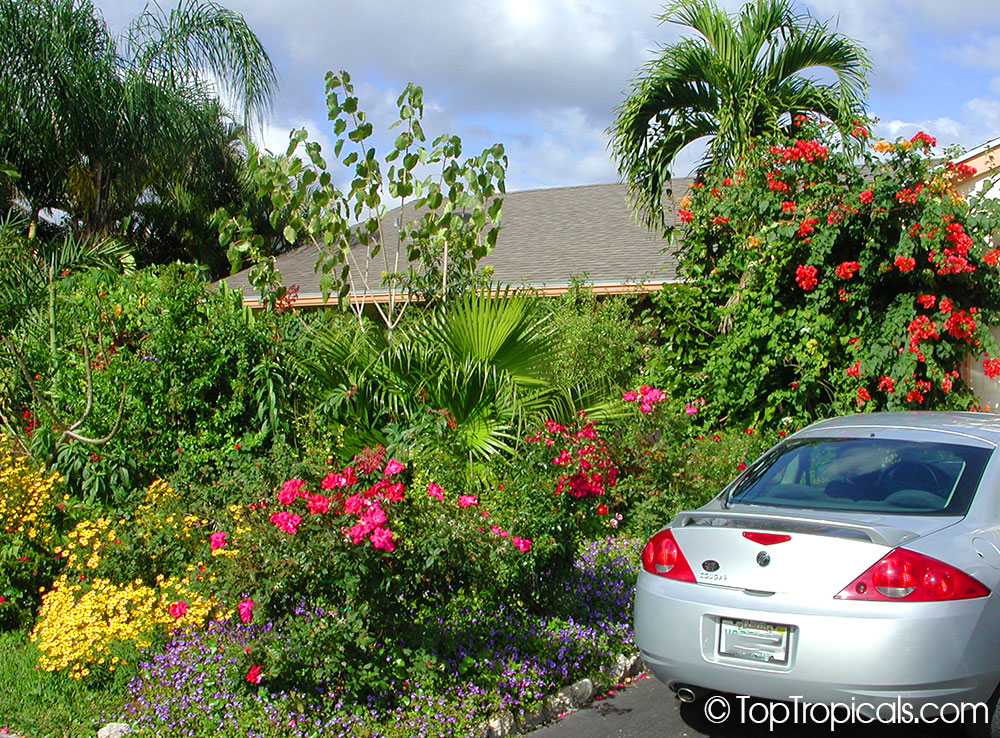
Tropical  landscape  with  Red  Lipstick  Palm