Date: 16 Jun 2023
NEW VIDEO:
ABC7 Fort Myers News:
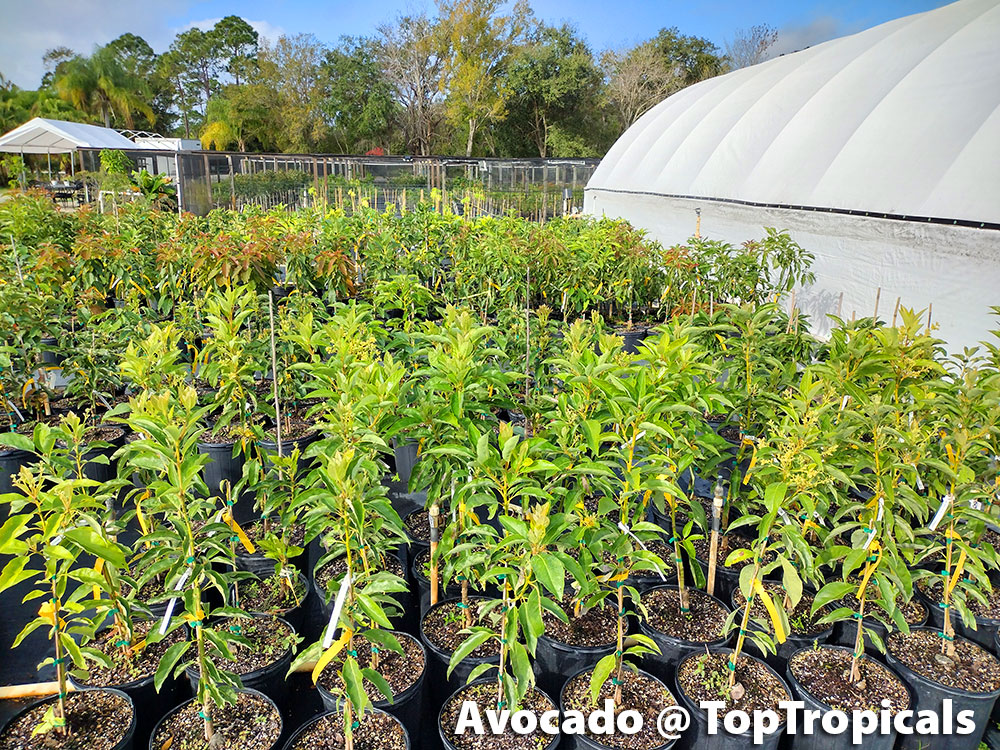
Avocado Varieties at Top Tropicals
We continue the series of ABC-7 News on Top Tropicals selections. Previously, we showed you segments about Butterfly Plants, Rare Fruit Trees, and Mango varieties. Today's video is about growing an Avocado tree in your home garden.
Growing your own avocado tree has many benefits. You can enjoy fresh, delicious avocados right from your garden. Avocado trees are attractive, provide shade, and enhance your landscape. There are many avocado varieties to choose from, offering unique flavors, sizes, and ripening times. You will find Avocado trees for sale online right here at TopTropicals.com. Our trees can be shipped to you!
Watch the news segment by Rachel Anderson for ABC-7:
Avocado Varieties at Top Tropicals.
Subscribe to our Channel:
Stay updated with TopTropicals Videos by subscribing to our channel at YouTube.com/TopTropicals and get our latest video news of what is fruiting and blooming!
Date: 29 Jul 2019
When to fertilize and prune tropical fruit trees?
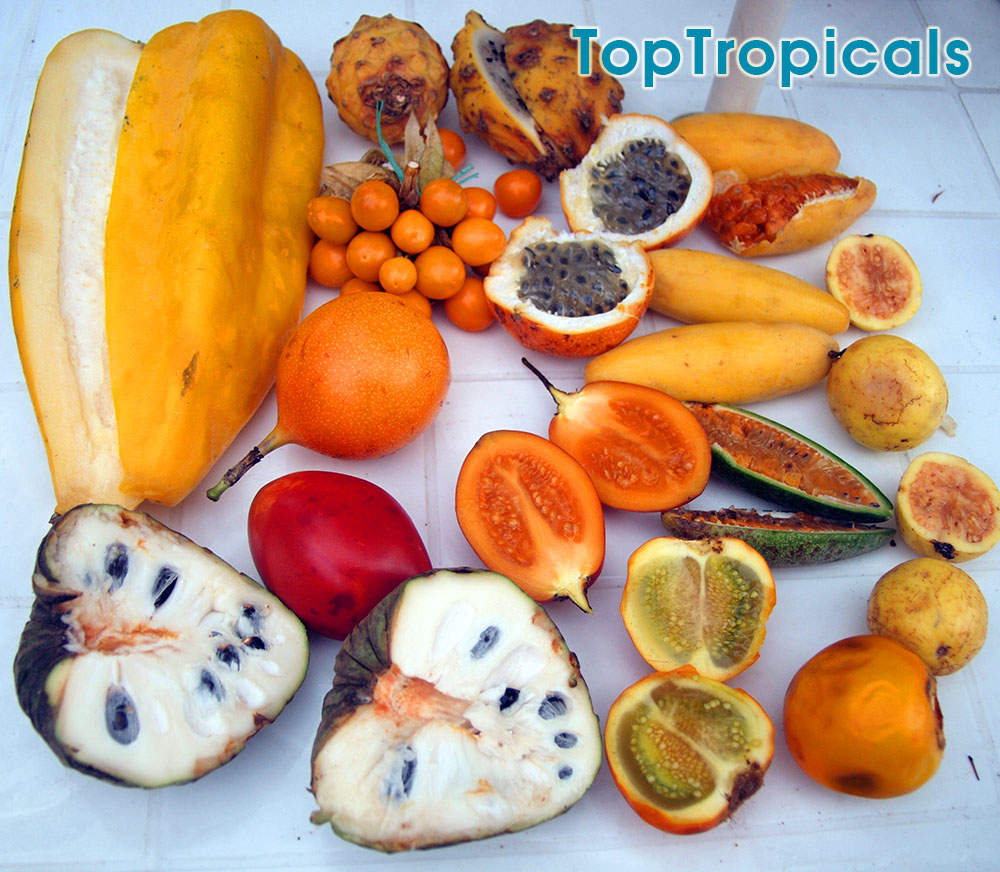
Q: Can tropical fruit trees (Soursop, Mango, Star fruit, etc) be given plant food any time of year? Also can they be trimmed this time of year/summer?
A: True tropical plants (including fruit trees) need plant food most of the year in real Tropics, where temperatures have very little fluctuations, and active growth season is close to 12 months a year. In subtropical areas when temperatures in winter drop below 65F, plant metabolism slows down, so it is recommended to fertilize only during the warmest period (March through November). So yes, Summer is the perfect time for fertilizing your trees; their metabolism is at the highest point and they can use more food!
Trim your fruit trees right after harvesting. Obviously, you don't want to prune branches before or during flowering or fruiting. The specific time of the year for pruning depends on the plant - every tree has its own flowering/fruiting season. However, avoid pruning right before winter: young shoots promoted by pruning are tender and can be cold damaged.
Recommended fertilizers for fruit trees:
Fruit Festival Plant Food - Super Crop Booster
Mango-Food - Smart Release Fruit Tree Booster
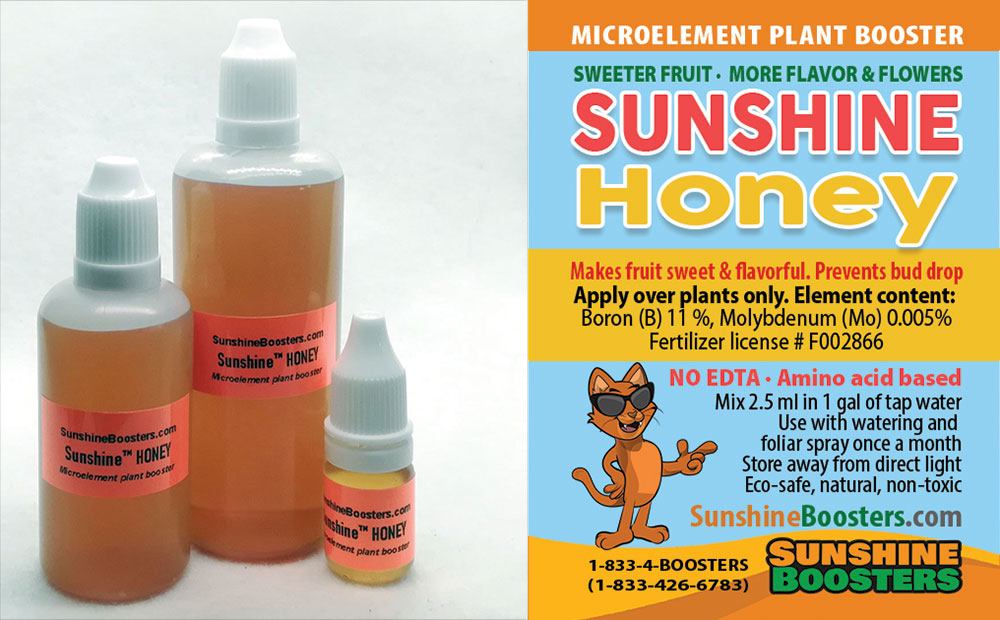
SUNSHINE-Honey - for sweeter fruit
SUNSHINE SuperFood - microelement supplement

Date: 22 Feb 2023
Benefits of growing your own tropical fruit
"The fruit of the mango tree is no longer forbidden.
Indeed, it has been recommended to me by the physicians as an antidote to the
plague."
- Louis IX, King of France -
Q: Why do you want to grow your own tropical fruit tree?
A: Growing your own tropical fruit tree can have many benefits. Here are a few reasons why someone might choose to grow their own tropical fruit tree:
1. Fresh, flavorful fruit: When you grow your own tropical fruit tree, you have access to fresh, flavorful fruit that you may not be able to find at your local grocery store. Tropical fruit, like avocado, mangoes, papayas, and passionfruit, jackfruit, Dragon Fruit, Annona have a short shelf life, and the fruit you find at the store may have been harvested weeks ago. When you grow your own fruit tree, you can pick the fruit when it's fully ripe and enjoy it at its peak flavor. Besides, some rare fruit like Akee or Sapodilla simply never offered from the store.
2. Environmental benefits: Growing your own fruit trees can have environmental benefits. Trees absorb carbon dioxide from the air and release oxygen, which can help reduce your carbon footprint. Additionally, growing your own fruit trees reduces the need to transport fruit long distances, which can help reduce greenhouse gas emissions.
3. Cost savings: Depending on where you live and the availability of tropical fruit, growing your own fruit tree can be a cost-effective way to enjoy your favorite tropical fruits.
4. Gardening and outdoor hobby: Growing a fruit tree can be a fulfilling and rewarding outdoor hobby. It can also be a great way to teach children about where their food comes from and the importance of taking care of the environment.
Overall, growing your own tropical fruit tree can be a great way to enjoy fresh, flavorful fruit, reduce your carbon footprint, save money, and enjoy a fulfilling outdoor hobby.
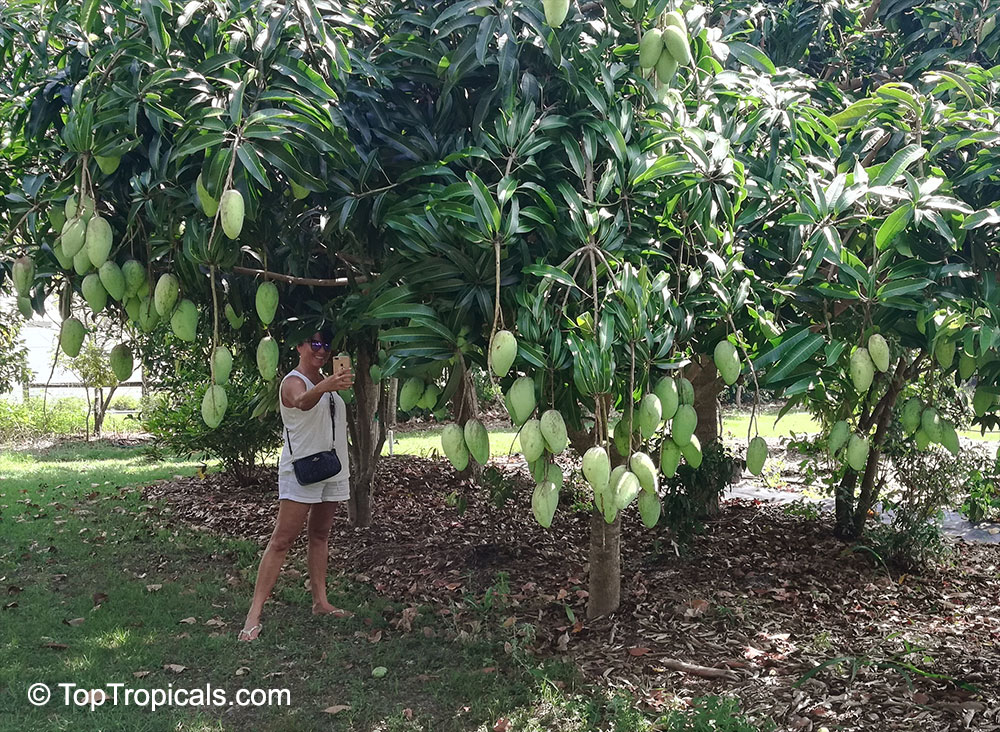
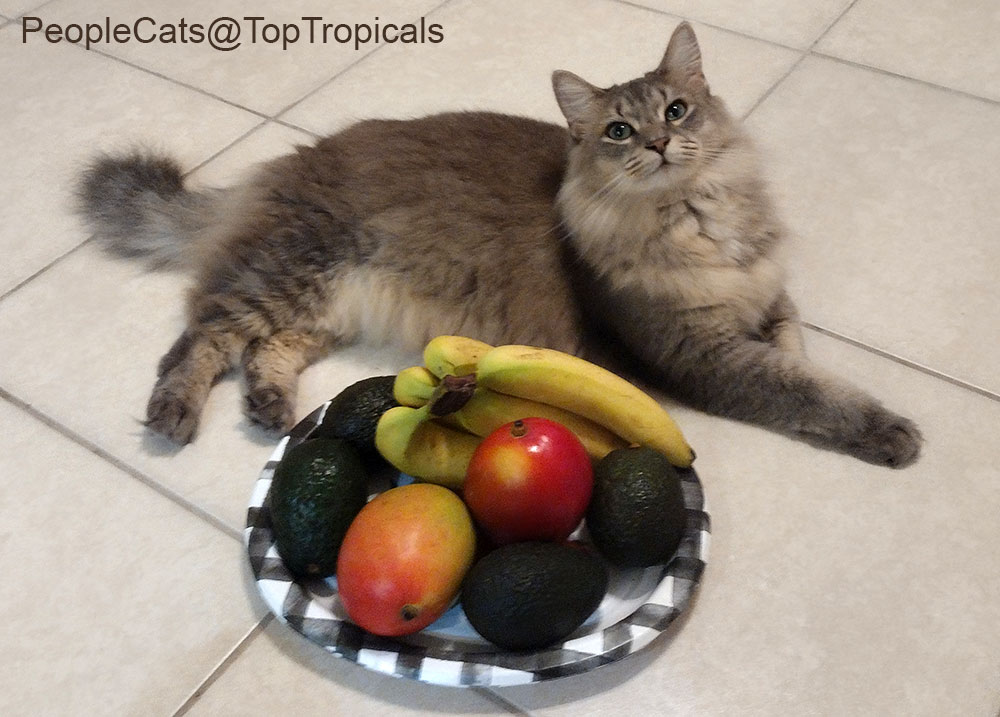
In the photo: Mango
Date: 6 Dec 2018
Seven rules of cold protection for tropicals
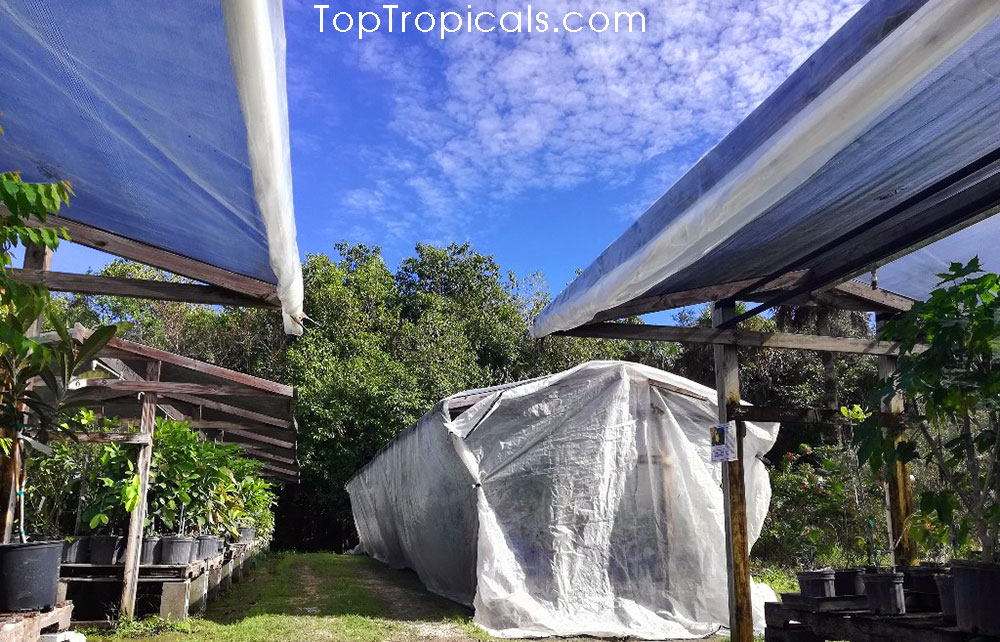
Q: I was always wondering how you guys manage to grow true tropical trees in Florida? I live in Puerto Rico and we have Breadfruit trees growing here in a wild... but my sister lives not far away from you, in Orlando, which is much colder, and I wonder if I can get her a Breadfruit tree for Christmas?
A: Your
sister can grow a Breadfruit tree in Orlando either in a pot (and bring it indoors during
cold periods) or in the ground inside a structure (an elclosed conservatory
with heating system). See our customer's Greenhouse in Virginia. Cold protection of tropical plants is a lengthy
subject and we have many interesting publications about it in our managine
Tropical
Treasures and on the website. In a nutshell, when growing tropicals outside of
tropical climate, you need to follow these 7 rules:
1. Cut watering to a minimum. Cold+wet kills tropical roots.
2. Water thirsty plants before a cold night. Jucy leaves have fewer
chances to be cold-zapped.
3. Wind protection is more important than a temperature drop. Plant
tropicals close to a house or surrounded by other trees.
4. Duration of a cold period is more critical than the cold itself. If
expecting long cold hours, bring up all available protection resources.
Christmas lights or propane heaters - as long as there is a heat source,
everything helps!
5. Remove plastic covers during the daytime so plants don't get
"cooked" in the sun. Fabric covers are better than plastic.
6. Grow ultra-tropicals in containers and bring them inside the garage
or even indoors during the cold.
7. Use SUNSHINE plant boosters and feed your plants well during Summer to improve cold hardiness.
Related topics:
About Cold Protection
Cold protection - winter action for your plant collection
Improving cold hardiness before winter: fertilizer and micro-elements
Cold hardy tropical fruit trees
Date: 15 Jun 2021

Healthy Plants: Q&A from Mr Booster
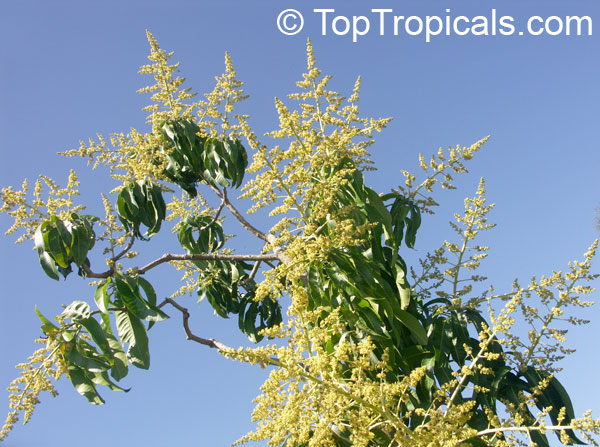
How to prevent mango flowers drop
Q:The mango blossoms my tree had in February have blown off due to weather conditions. Do you know what I can do to prevent this from happening again in the future?
A: The only "guarantee" to protect mango flowers from cold
weather damage here in Florida is to plant a LATE flowering variety. Generally,
mango trees are winter bloomers. Those varieties called "early season" start
flowering in January (for example, Nam Doc Mai), and of course very often they
get affected by cold, so they drop. Some varieties are so called "late season"
- for example Venus. They start flowering in spring when the weather conditions are
more favorable.
Another thing that may help you with mango flower drop is applying plant
micro-element supplement Sunshine-Honey - it contains Molybdenum and Boron, which help flower
and fruit development/strength and prevent their drop.
Read more: Boosting Mango Flowers and Fruit.