Date: 22 Sep 2025
🐲 The taste you will never forget

If you only know dragon fruit from the grocery store, you probably think it looks pretty but tastes bland. That is because most commercial fruit is picked early, shipped far, and loses its sweetness. The truth? Homegrown dragon fruit is juicy, sweet, and full of flavor. The best of all is the yellow variety, Palora (Selenicereus megalanthus), a cactus fruit from Ecuador that bursts with tropical taste.
🌵 Pitaya or Dragon fruit – what is the difference?
Both names describe the same climbing cactus. In Latin America it is called Pitaya, while Asia and English speakers say Dragon fruit. There are three main kinds:
- Red skin, white flesh (Hylocereus undatus)
- Red skin, red flesh (Hylocereus costaricensis)
- Red skin, purple or pink flesh (Hylocereus x costaricensis hybrids)
- Yellow skin, white flesh (Selenicereus megalanthus)
Some hybrids give purple or magenta flesh. All are beautiful, all are easy to grow at home.
⚡️ Do red, white, and yellow taste different?
Yes. White types are mild and refreshing. Reds are sweeter and juicier. Yellows are the sweetest of all.
⚡️ Flowers from a fairy tale
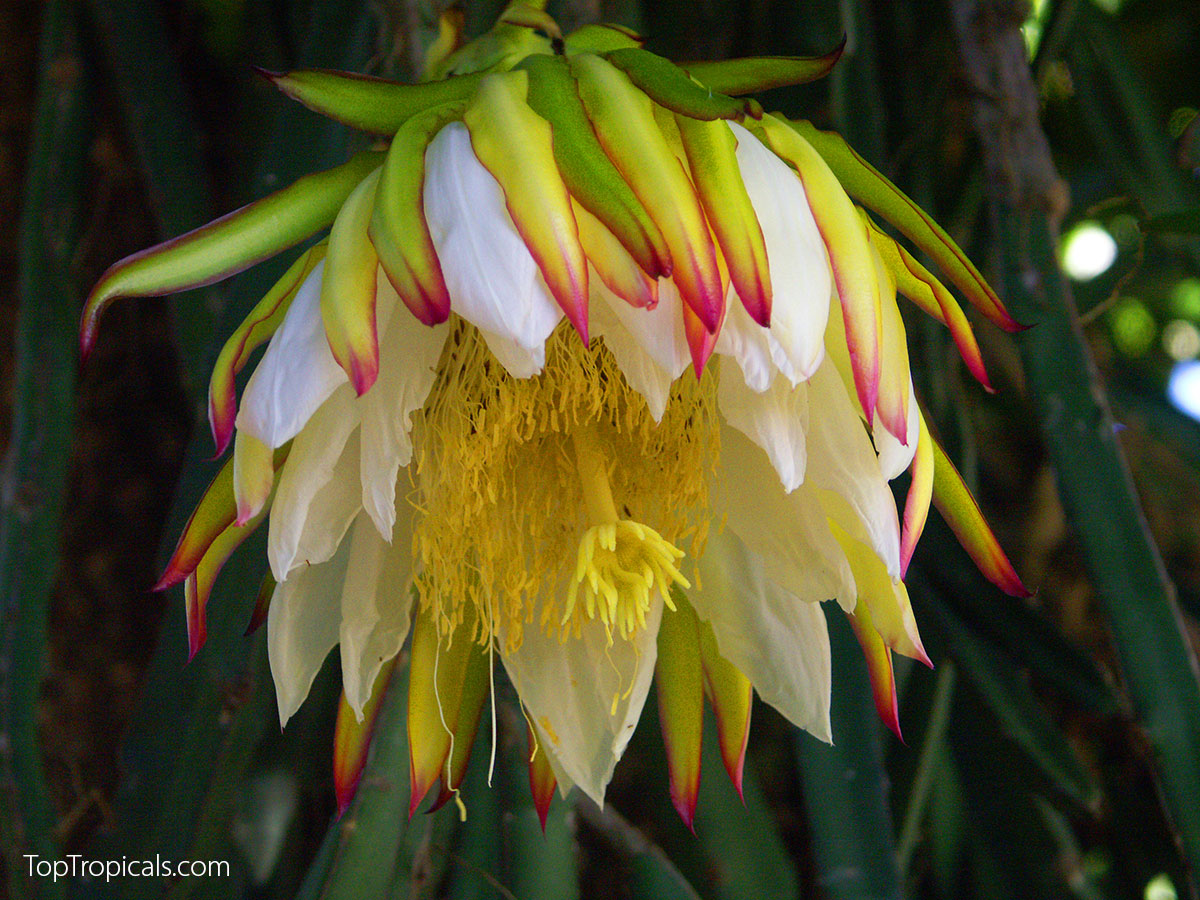
Dragon fruit flowers are among the most spectacular in the plant world. They open at night, glowing under moonlight, with pale petals and a sweet fragrance. Each flower can be a foot wide. Seeing one bloom feels like stepping into another world.
⚡️ Top Dragon Fruit Health Benefits
- High in fiber for digestion and gut health
- Low in calories but full of vitamins
- Great for weight management
- Adds color and freshness to smoothies and salads
🍹 Dragon Fruit Smoothie recipe
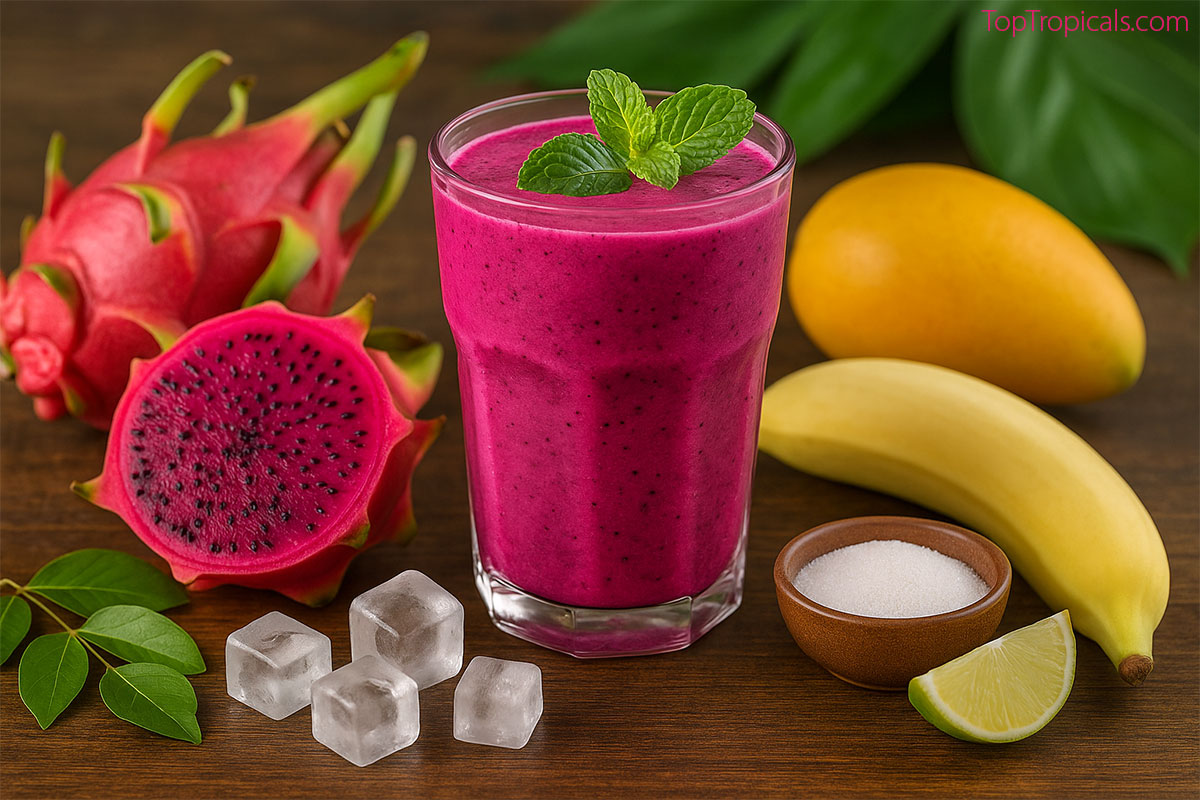
Blend together:
- 2 dragon fruits, peeled
- 1/2 cup mango pulp
- 1 banana
- 1 cup milk of your choice
- 2 tbsp sugar
- 1/2 tsp lime juice
- Ice cubes to taste
Top with mint for a refreshing tropical treat.
Watch Dragon Fruit short videos:
💲 Special Offer – 25% off Dragon Fruit Pitaya Plants!
Get 25% OFF Pitaya plants with code
DRAGON2025
Min order $100. Excluding S/H, valid online only, cannot be combined with other offers.
Hurry, offer expires September 29, 2025!
Date: 24 Jun 2018
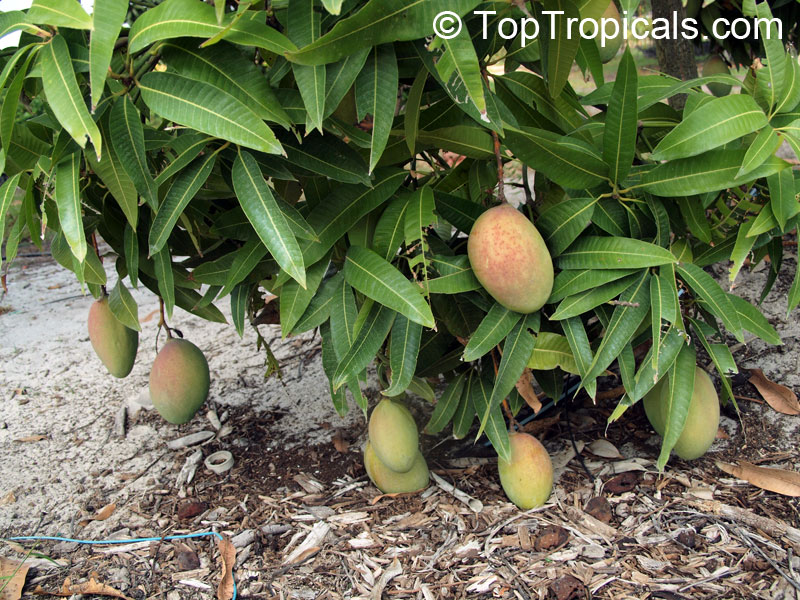
Multi-grafted "fruit cocktail" trees
Q: We love your website and products. Do you have mango trees with different types grafted on one? We live in Hawaii and have space for an interesting mango.
A: Here is the truth about multi-grafted mangos. It is the same issue as with multi-grafted citrus (so-called "fruit cocktail trees"). In most cases, multi-grafted fruit trees look beautiful and healthy for the first couple years if that long. What happens next - the most vigorous variety will take over others and eventually all other grafts will die off or those branches stay retarded without sufficient production. There is a solution though, if you have limited space and still want to have several varieties to enjoy. Plant 2-3-4 desired varieties into 1 hole! Of course production of each tree will reduce due to the crowded situation, but overall crop will be as much as from one big tree. And you will have all kinds of tastes to enjoy! Very often trunks of such trees grow in together, but because of having separate root systems, all trees will remain equally strong and vigorous.
Check out our Mango varieties
Date: 23 Nov 2025
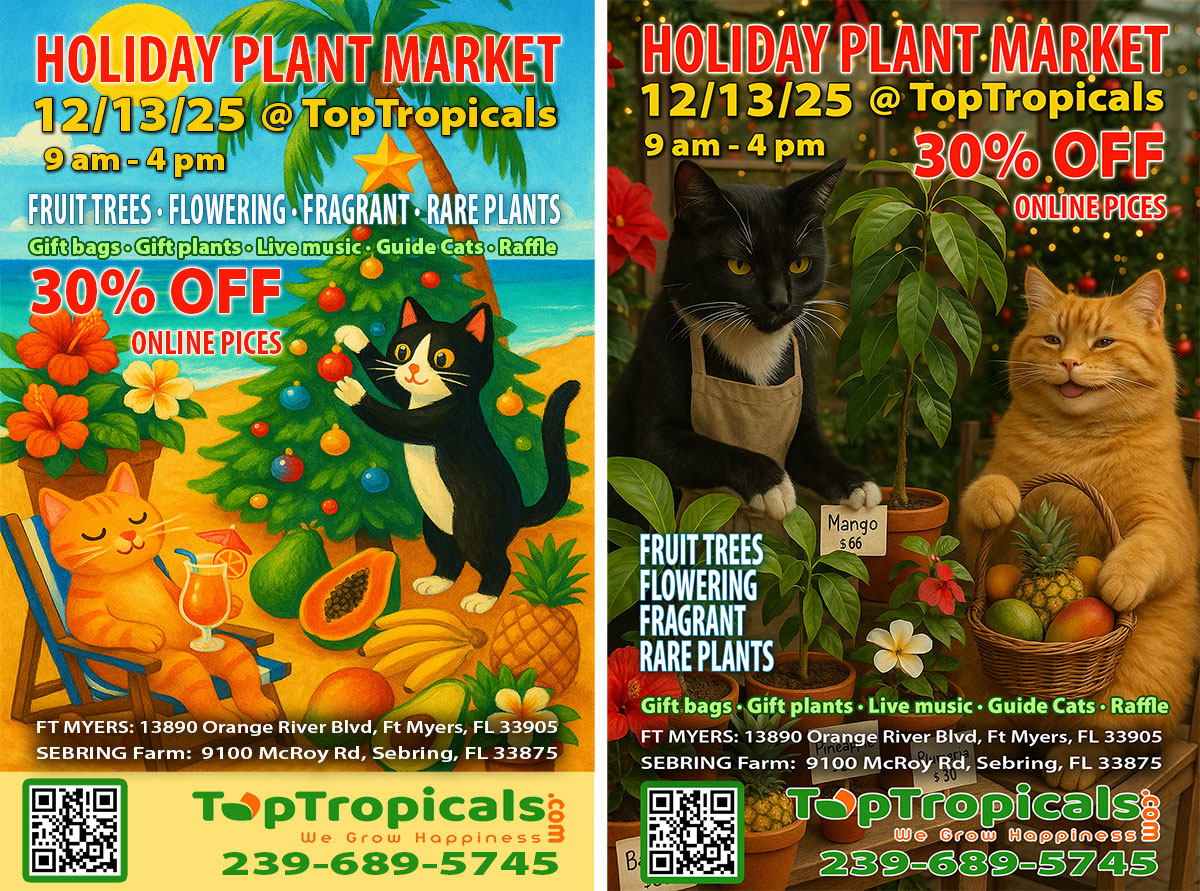
📅 Mark Your Calendar - Holiday Plant Market
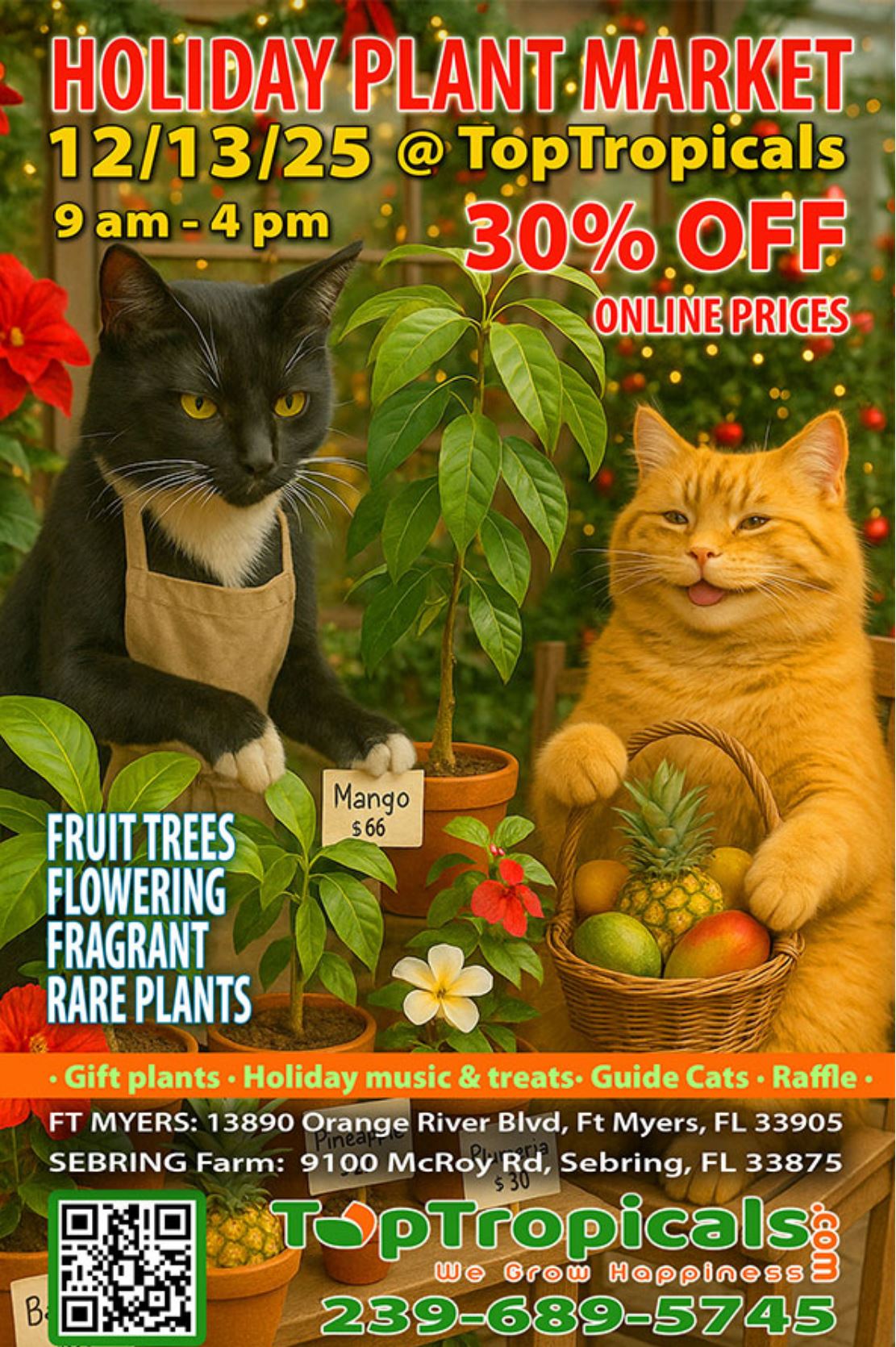
Holiday season in Florida means sunshine, green leaves, and cats on patrol. On Saturday 12/13/25, our PeopleCats are hosting a special Holiday Plant Market at TopTropicals, 9 am to 4 pm. This is not a regular nursery day. This is the one where you grab a donut in one hand, a mango tree in the other, and try not to trip over a cat giving you a tour.
We are bringing out the best plants we grew all year: big fruit trees with real branches, flowering and fragrant beauties, rare collectors plants, and vines that are ready to take off as soon as you get them home. December is perfect planting weather in Florida, so while the rest of the country is scraping frost from windshields, you can be choosing which banana, mango, or jasmine will perfume your yard next summer.
Holiday extras: 30% OFF online prices, free plant with purchase, 5 to 10 dollar specials, mini donuts and holiday treats, iced tea and citrus water, tropical Christmas music, and raffle prizes. If there is enough ripe fruit in the morning, we will set up a tasting table too. Our PeopleCats will be on duty all day, rearranging plants, checking on visitors, and occasionally allowing themselves to be petted between tours.
Event discounts and specials are valid at both locations:
- Ft Myers Garden Center: 13890 Orange River Blvd, Ft Myers, FL 33905
- Sebring Farm: 9100 McRoy Rd, Sebring, FL 33875
Save the date, tell a friend, and plan your plant hunting route now. Come celebrate the holidays the Florida way: sunshine, rare fruit trees, happy cats, and a car full of tropical plants going home with you.
Facebook event page - Download invitation
Date: 21 Feb 2026
The best time to plant a fruit tree was 20 years ago - here is why you need to plant it now
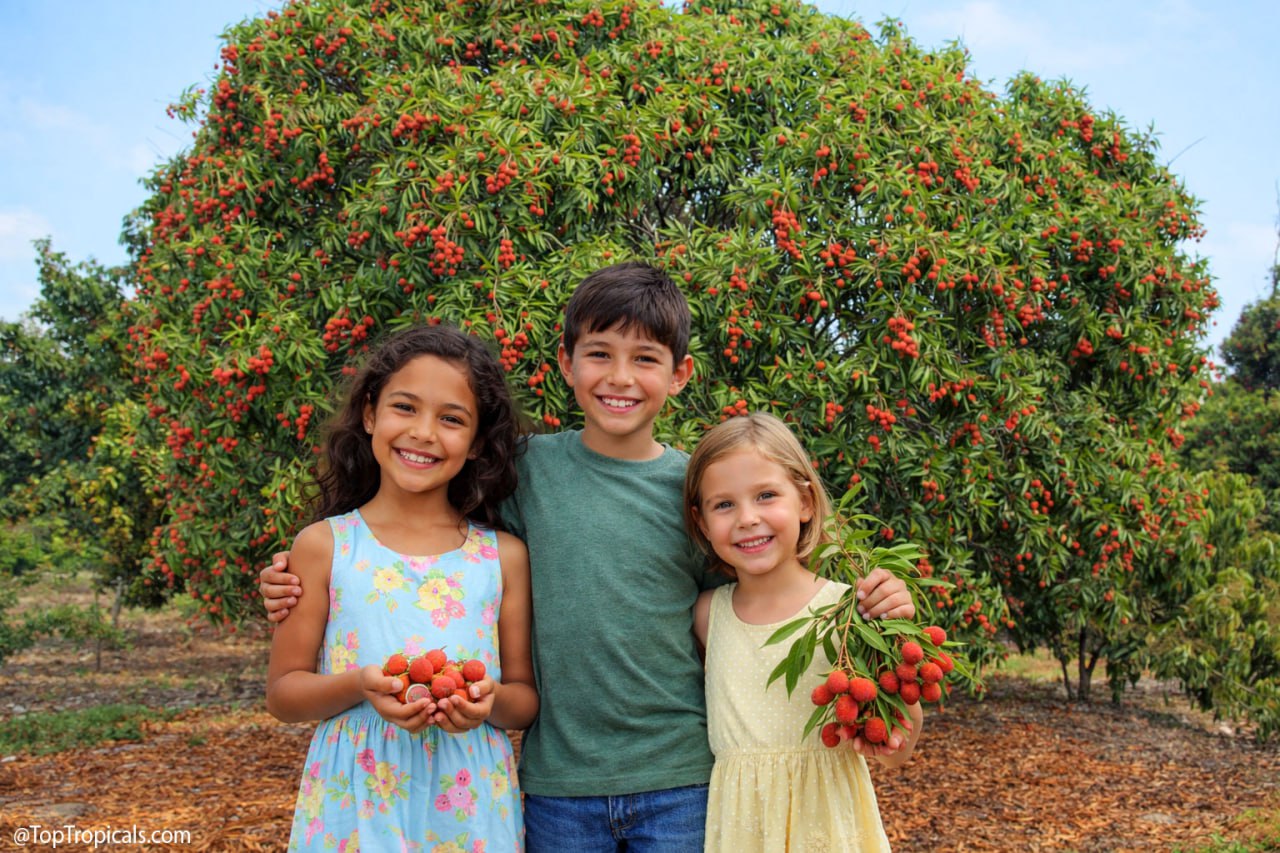
Litchi chinensis - Smiles under the Lychee tree
🍑 The best time to plant a fruit tree was 20 years ago - here is why you need to plant it now
They say the best time to plant a fruit tree was 20 years ago.
The second best time is today.
A fruit tree is not a seasonal purchase. It is not a decoration. It is a decision that stretches far beyond you.
When you plant a mango, an avocado, a loquat, a lychee tree - you are not just planting for this summer. You are planting for children who will climb that tree. For neighbors who will ask for a basket of fruit. For someone who may live in your house long after you are gone.
Fruit trees are quiet investments in the future.
Unlike annual crops that come and go, a tree deepens its roots every year. Many fruit trees - especially mangoes - can live for decades, even a century. They outlive trends, owners, renovations, even mortgages. They stand there, steady, producing.
Even if you sell the house, the tree remains.
The next family will walk into the yard and discover fruit hanging overhead. Imagine buying a home and realizing someone before you planted abundance!
That is a gift.
In many parts of the world, mango trees are called generational crops. One farmer plants them. His children harvest them. His grandchildren sell the fruit. A single decision continues to feed and support a family long after the planter is gone.
There is something deeply grounding about that.
We live in a fast world. Quick returns. Quick moves. Quick upgrades.
A fruit tree moves at a different pace. It asks for patience. It rewards consistency. It teaches you to think long term.
Planting a fruit tree says:
I believe in tomorrow.
I believe this land will matter.
I believe someone will stand here after me.
And even if you never taste the fullest harvest, someone will.
Passing fruit trees through generations is more than horticulture - it is legacy. It is continuity. It is resilience. It is saying that this space, this soil, this home will keep giving.
So plant it now.
Plant it for your children.
Plant it for the next homeowner.
Plant it for shade you may never sit under.
Plant it for fruit you may never pick.
Because one day, someone will walk into that yard, look up, and thank the person who thought ahead.
Let that person be you.
🛒 Explore fruit trees for your orchard
👉 Tropical Fruit favorites:
🥭 Mango
Avocado
🍒 Cherry
🍊 Loquat
🍈 Jackfruit
🍑 Peach tree
🍉 Guava
🍏 Sugar apple
🍇 Mulberry
🍐 Sapodilla
#Food_Forest #Discover
🟢 Join 👉 TopTropicals
Date: 2 Apr 2026
Stop Fixing Your Soil: 15 Bulletproof Fruit Trees for Tough Ground
Not everyone starts with a lush, loamy paradise. In many parts of Florida and the South, "soil" is just a polite word for sand, limestone rock, or depleted clay.
The biggest mistake new gardeners make? Spending hundreds of dollars on soil amendments before they ever put a tree in the ground.
The secret the pros know: You don't need to change your land to fit your plants; you need to choose plants that love your land. Some of the most delicious fruits actually thrive on neglect - and a few even produce better fruit when the soil is "poor."
🌳 The "Big 5" Toughest Fruit Trees
If your yard is a dry, sandy lot or a rocky outcrop, start with these. They are the ultimate "survivors."
Jujube, Chinese Date (Ziziphus jujuba): Arguably the toughest fruit tree on earth. It laughs at drought, poor soil, and neglect. The fruit is crisp like an apple when fresh and sweet like a date when dried.
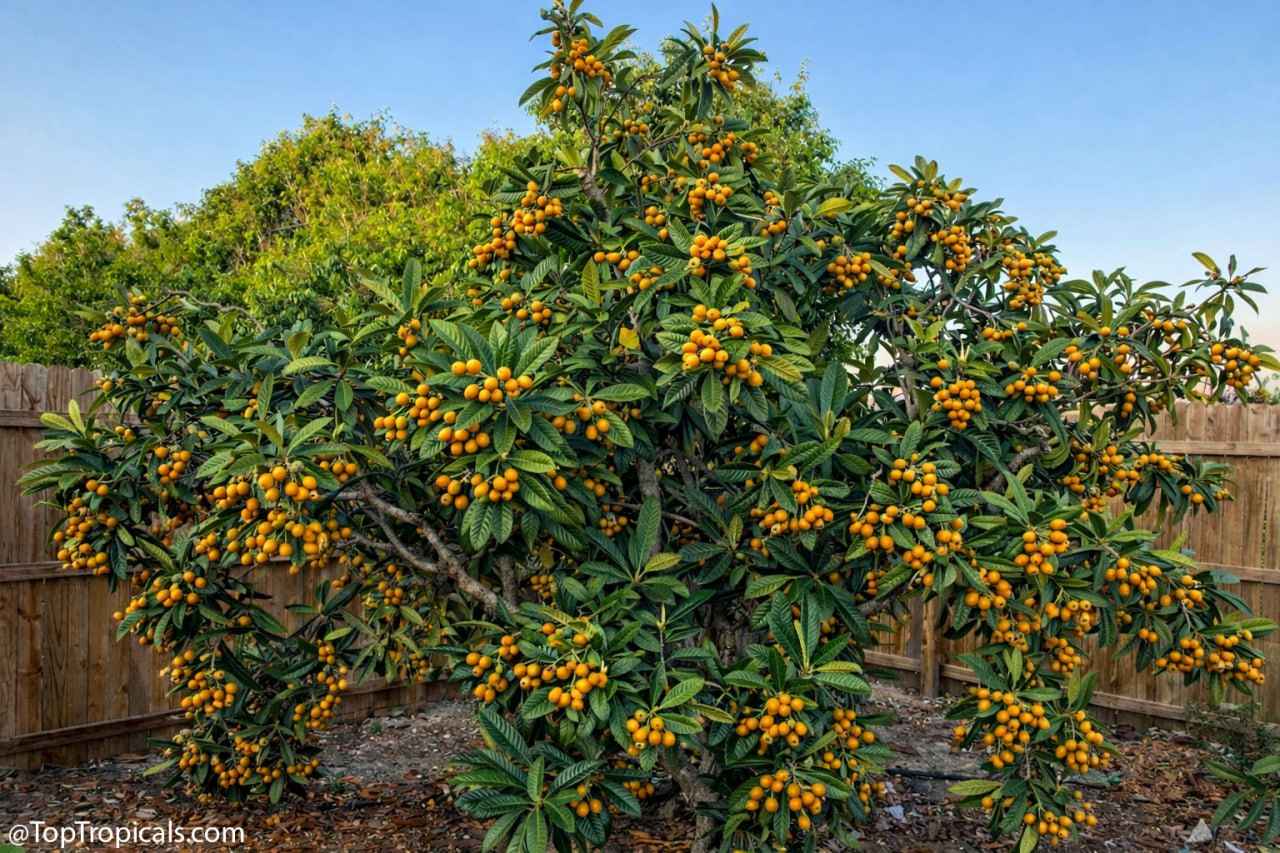
Loquat (Eriobotrya japonica): A Southern staple. It’s evergreen, beautiful, and produces honey-sweet fruit in early spring when nothing else is ripe.
Mulberry (Morus alba): If you can’t grow a Mulberry, you might be gardening on the moon. It grows in sand, clay, or sidewalk cracks with equal enthusiasm.
Fig (Ficus carica): Figs actually prefer not to be pampered. In overly rich soil, they grow lots of leaves but little fruit. Give them well-drained, mediocre soil and they’ll thrive.
Pomegranate (Punica granatum): These trees are "stress-lovers." Rocky, alkaline soil is no problem, and a bit of soil stress often results in a higher sugar content in the fruit.
🌳 Tropical Flavors That Don't Need "Perfect" Dirt
You don’t need a rainforest to grow tropical treats. These species are surprisingly resilient once they get their roots established.
🌟 The Sand-Lovers:
Mango (Mangifera indica): While young trees need a little babying, a mature Mango is incredibly drought-tolerant and handles Florida’s sandy "sugar sand" like a champ.
Sapodilla (Manilkara sapota): A rugged, wind-resistant tree that produces fruit tasting like brown sugar and pear. It is a top-tier choice for coastal or sandy areas.
Tamarind (Tamarindus indica): It’s slow-growing but patient. Once it’s in, it’s there for a century, regardless of soil quality.
🌟 The Low-Maintenance Stars
Longan (Euphoria longana): If you’ve struggled with finicky Lychee trees, try Longan. It’s more cold-hardy and much less picky about its soil.
Citrus: While they need regular feeding (fertilizer), Citrus trees are naturally adapted to the sandy ridges of the South.
🌟 The "Quick-Win" Berry & Shrub Layer
If you want fruit this year, don’t wait for a tree to mature. Add these hardy producers to your edges. And here is why it works:
Dragon Fruit (Hylocereus undatus). It’s a cactus! It literally prefers poor, fast-draining soil over rich potting mixes.
Barbados Cherry (Malpighia glabra). A vitamin C powerhouse that handles low-nutrient soil with ease.
Grumichama (Eugenia brasiliensis). Slower grower, but steady and tolerant once established.
Surinam Cherry (Eugenia uniflora). Virtually indestructible. Often used as a hedge because it grows so vigorously in poor soil.
Pineapple Guava (Feijoa sellowiana). A beautiful silver-leafed shrub that is salt-tolerant and drought-resistant.
🌳 The Strategy: "Plant First, Improve Later"
In the South, the "dig a $100 hole for a $10 tree" rule doesn't always apply. Trying to completely re-engineer your soil often leads to drainage issues (the "bathtub effect").
Try this instead:
1. Select a species naturally adapted to your pH and texture.
2. Plant it at the correct height (never too deep!).
3. Mulch heavily with wood chips. This improves the soil from the top down over time, mimicking a natural forest floor.
🛒 Shop Fruit Trees and Mango
📚 Learn more:
- · Loquat, Sapodilla, Mulberry, Eugenia, Tamarind - in Plant Encyclopedia
- · 10 best fruit trees to grow in Florida and Southern landscapes
#Food_Forest #How_to #Discover
🟢 Join 👉 TopTropicals