Sapodilla - Plant Encyclopedia Results
| Number of plants found: 2 |
Botanical names: Manilkara zapota, Manilkara achras, Achras sapota
Common names: Sapodilla, Ciku, Naseberry, Nispero, Sapote, Brown Sugar Fruit
Family: Sapotaceae
Origin: Tropical America
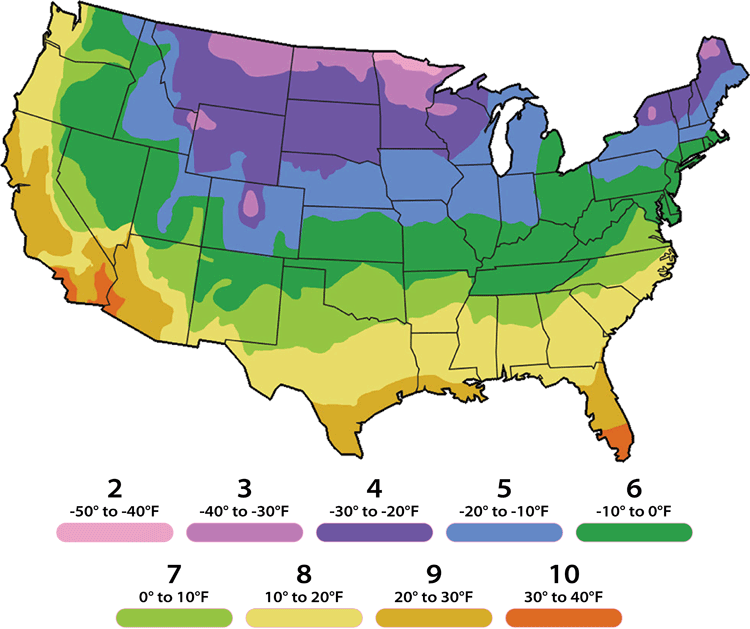
USDA Zone: 9-11


Varieties: Makok, Tikal, Alano, Oxkutzcab, Hasya, Morena, Molix. Season: Sporadic throughout year, March - July. Sapodilla is well spread throughout the tropics. For centuries, It has been one of the most popular and most productive tropical fruit trees in the world, widely grown in India and Africa, West Indies, Philippines, Malaysia, Tropical America and Southern Florida.
Besides delicious fruit, the tree produces white, gummy latex that was an original source of chewing gum (chicle).
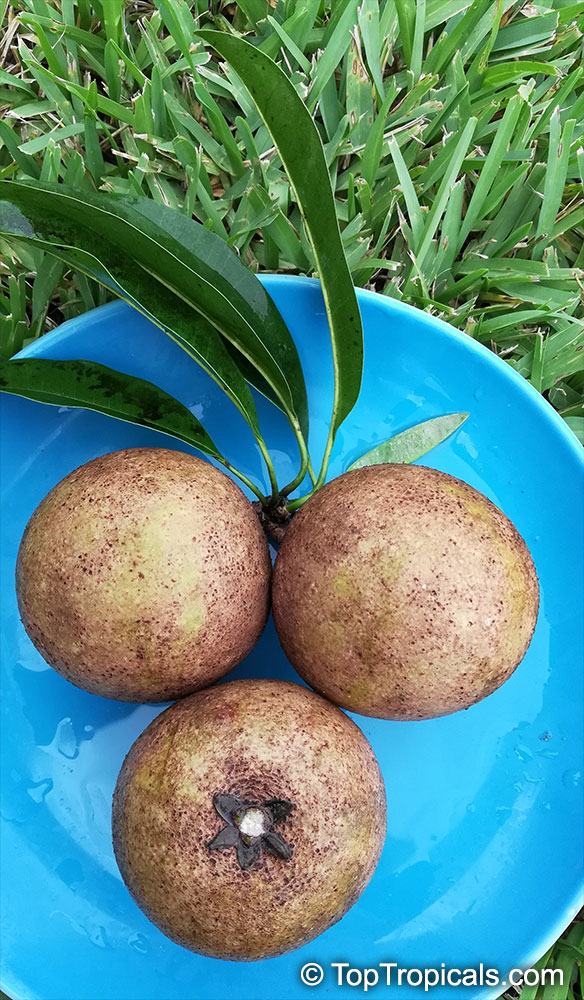
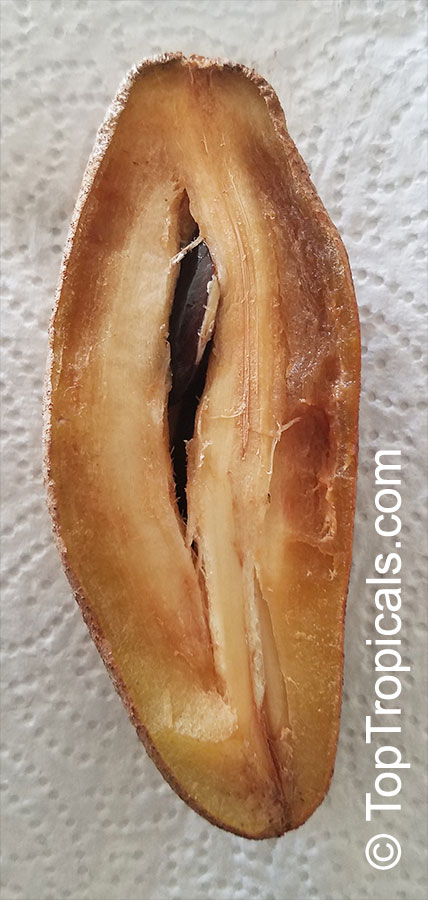
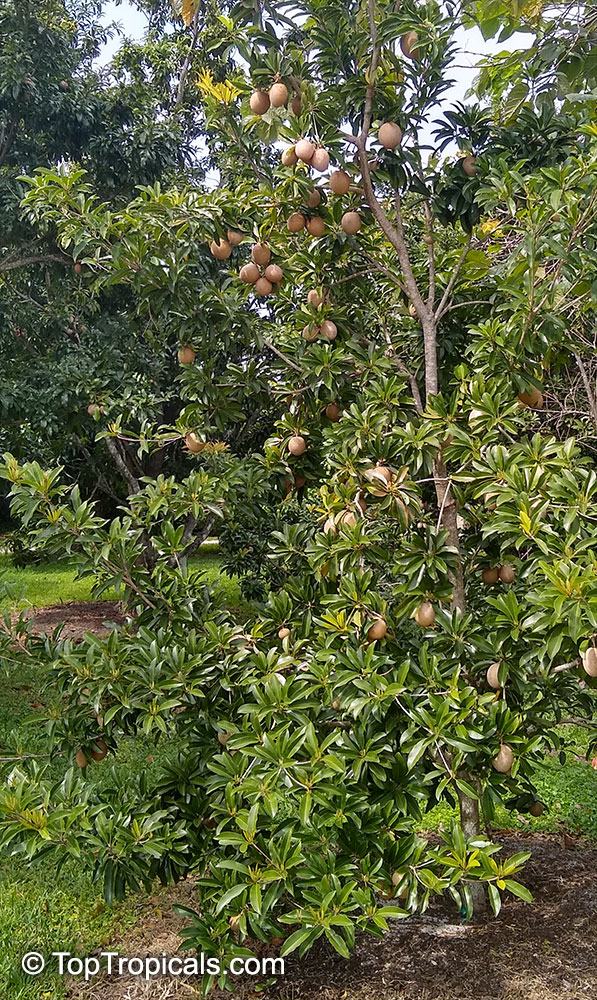
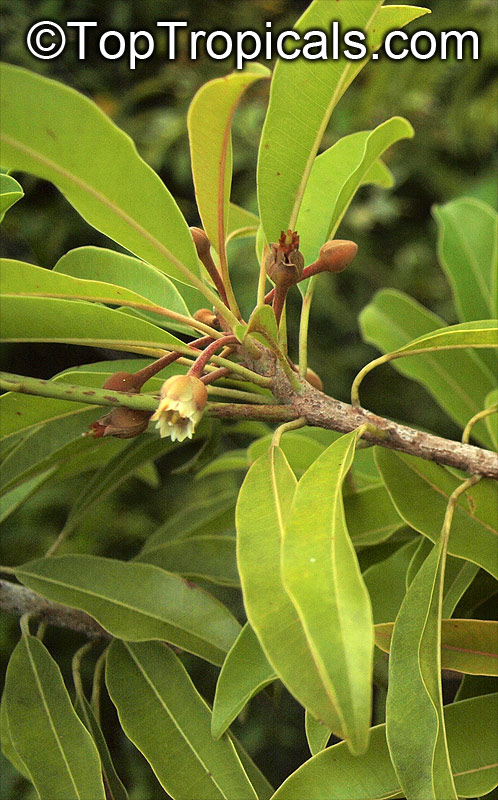
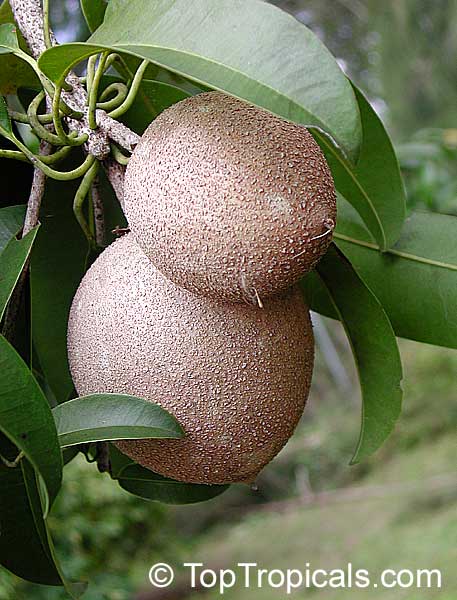
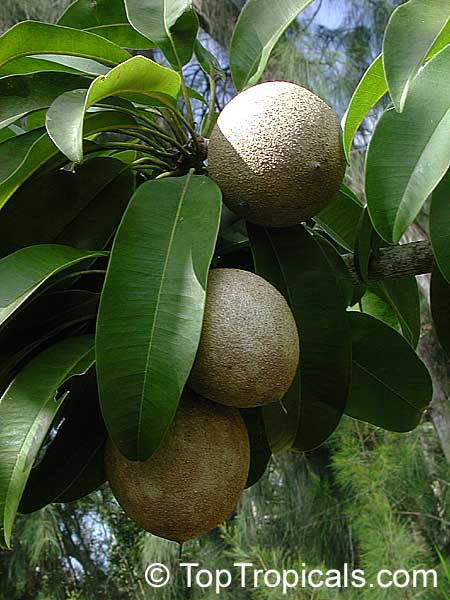
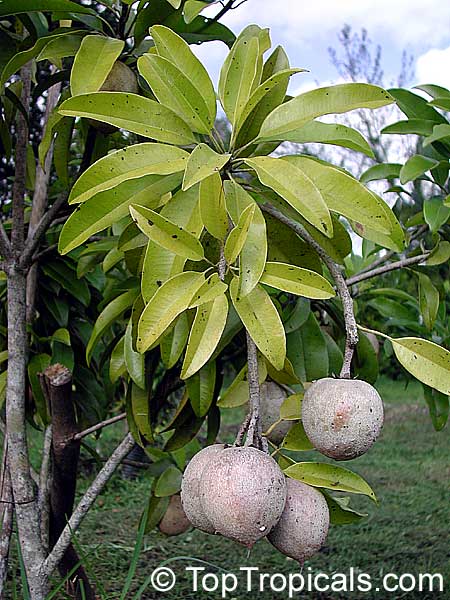
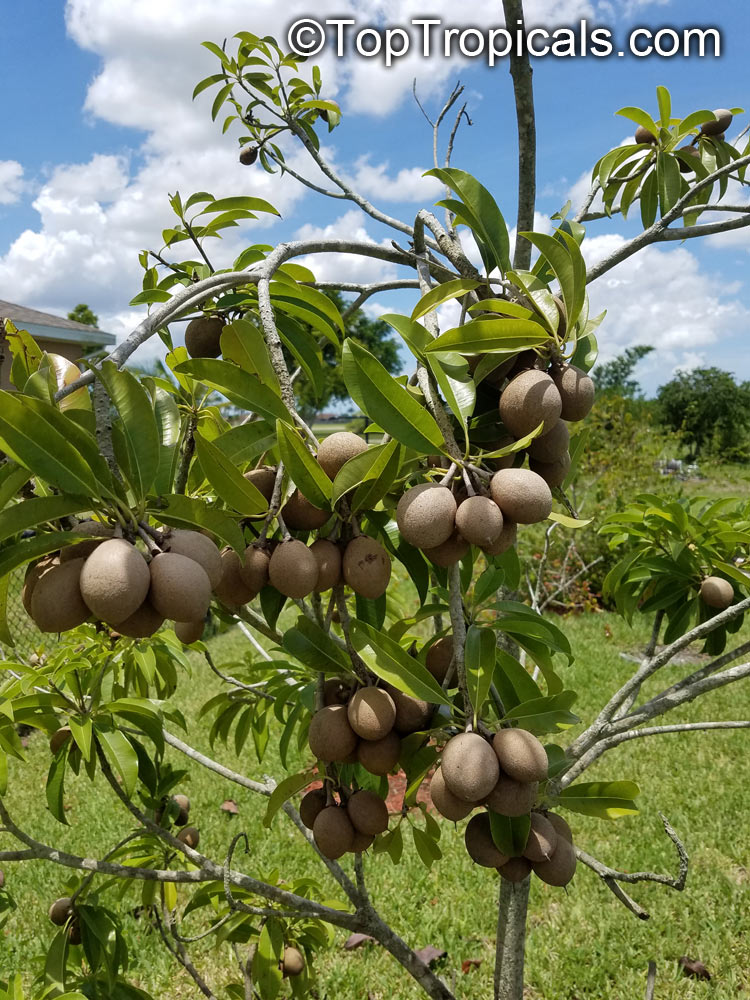
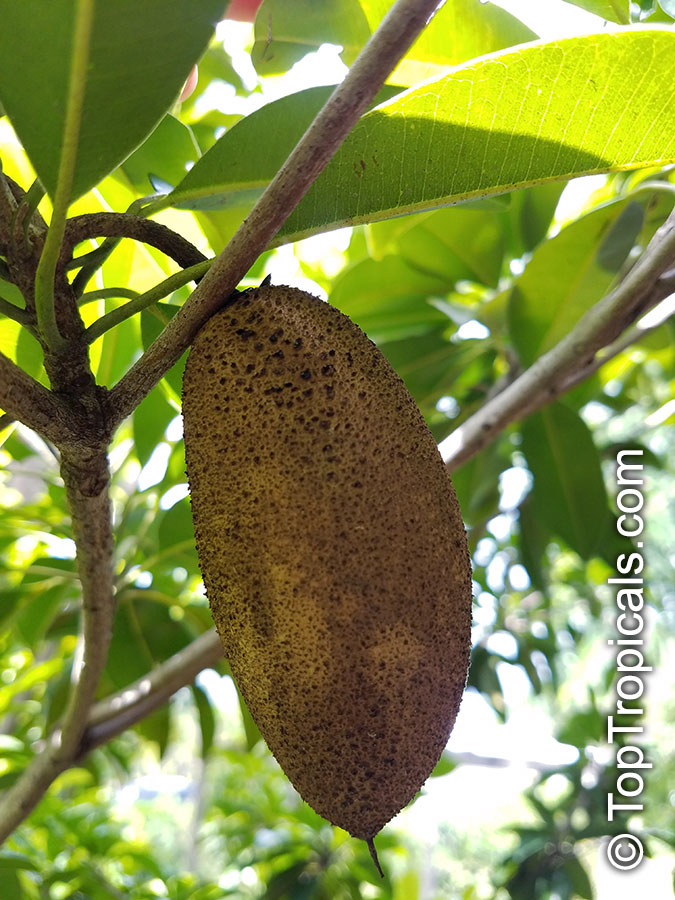
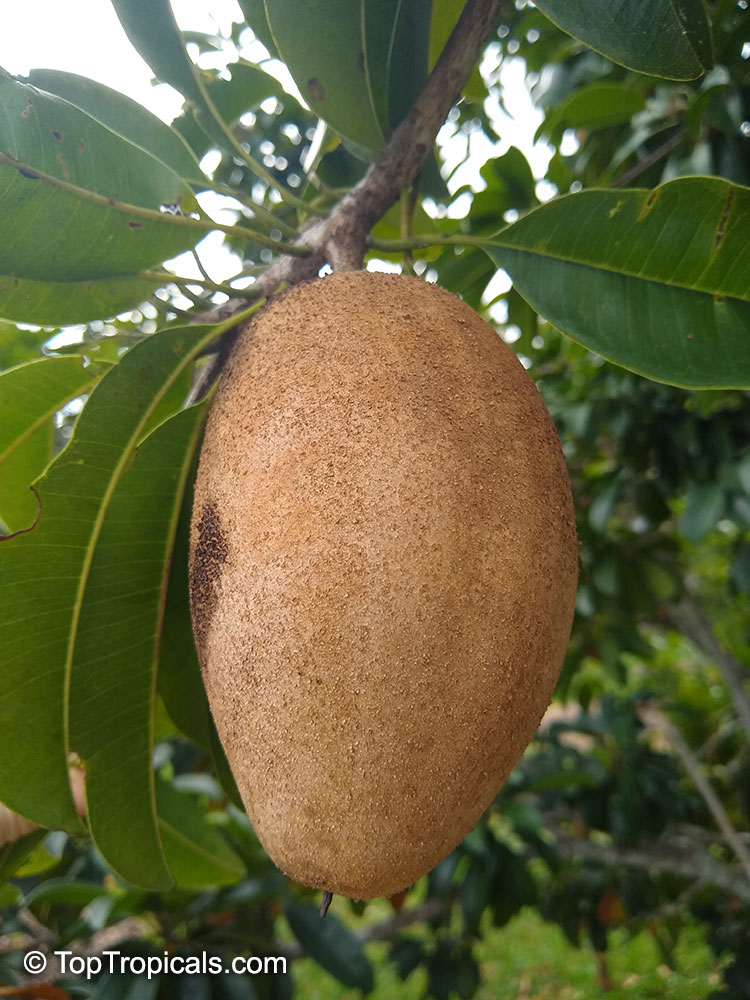
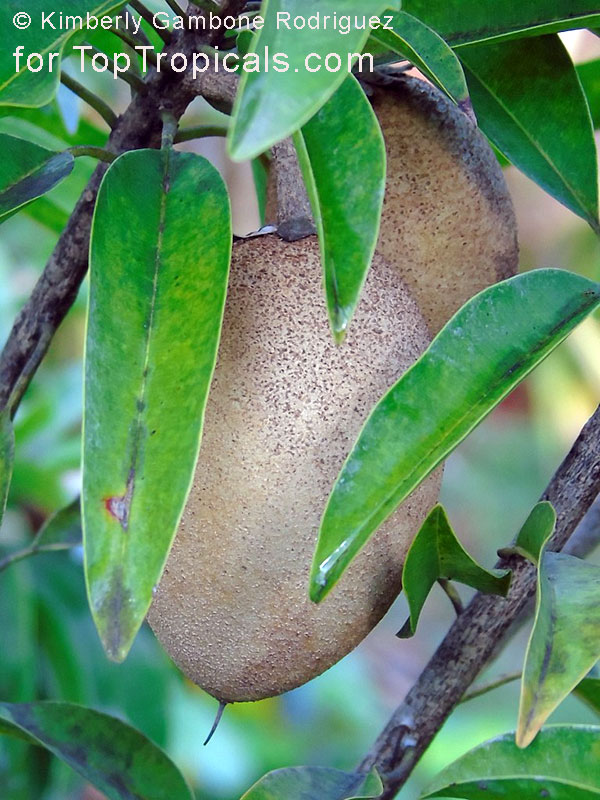
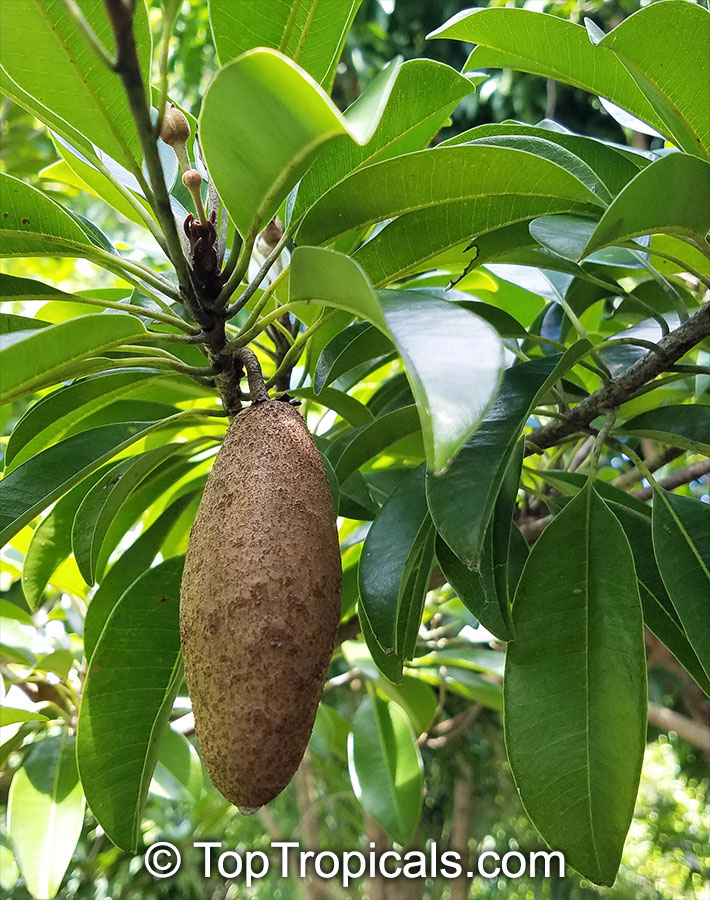
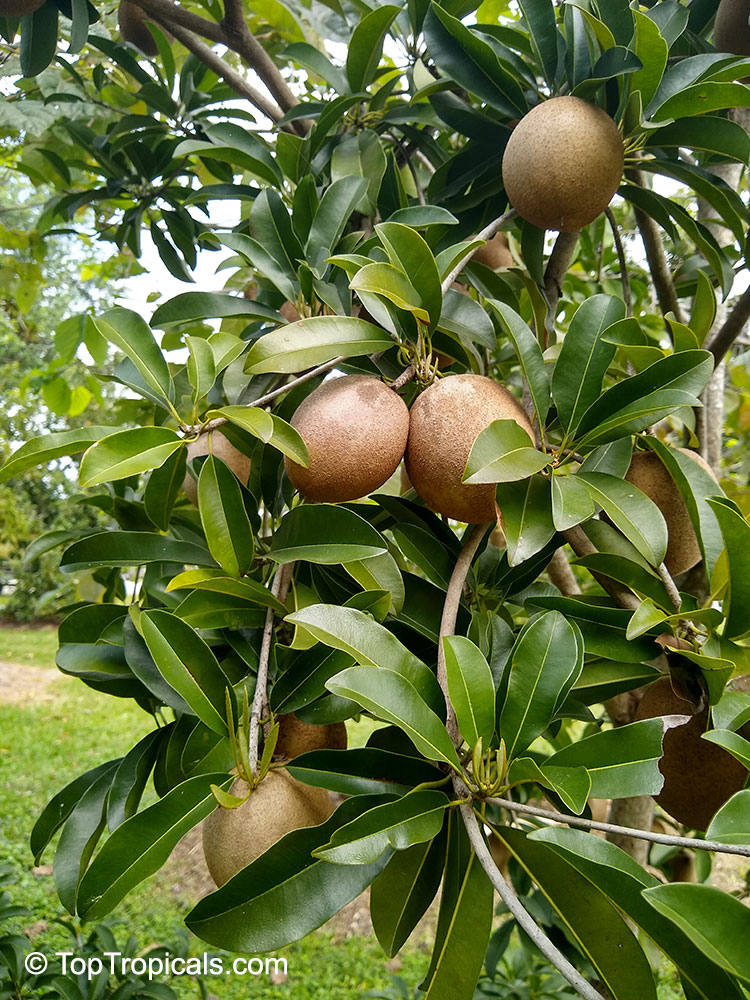
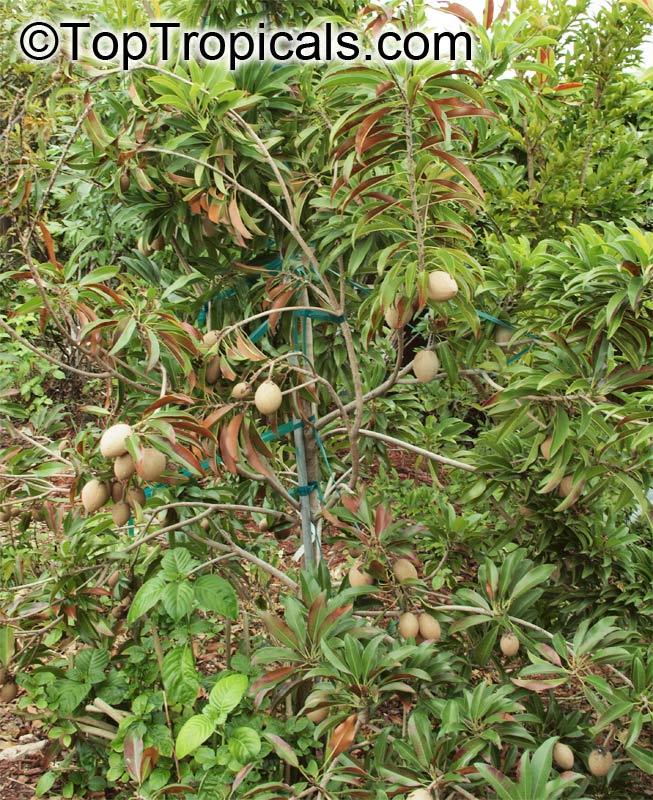
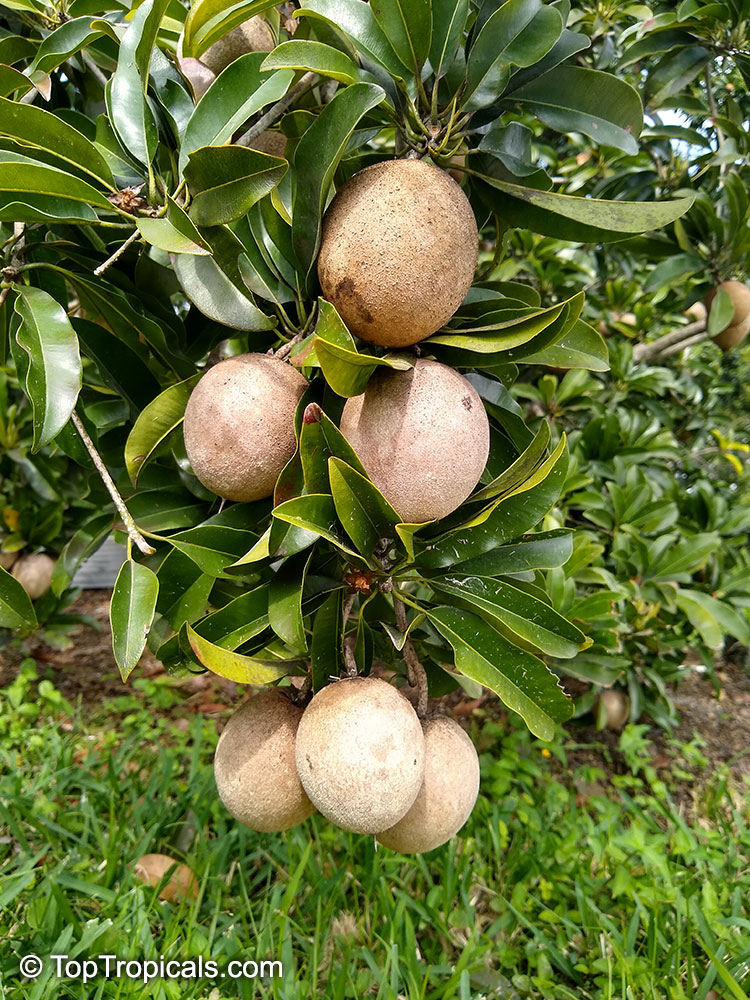
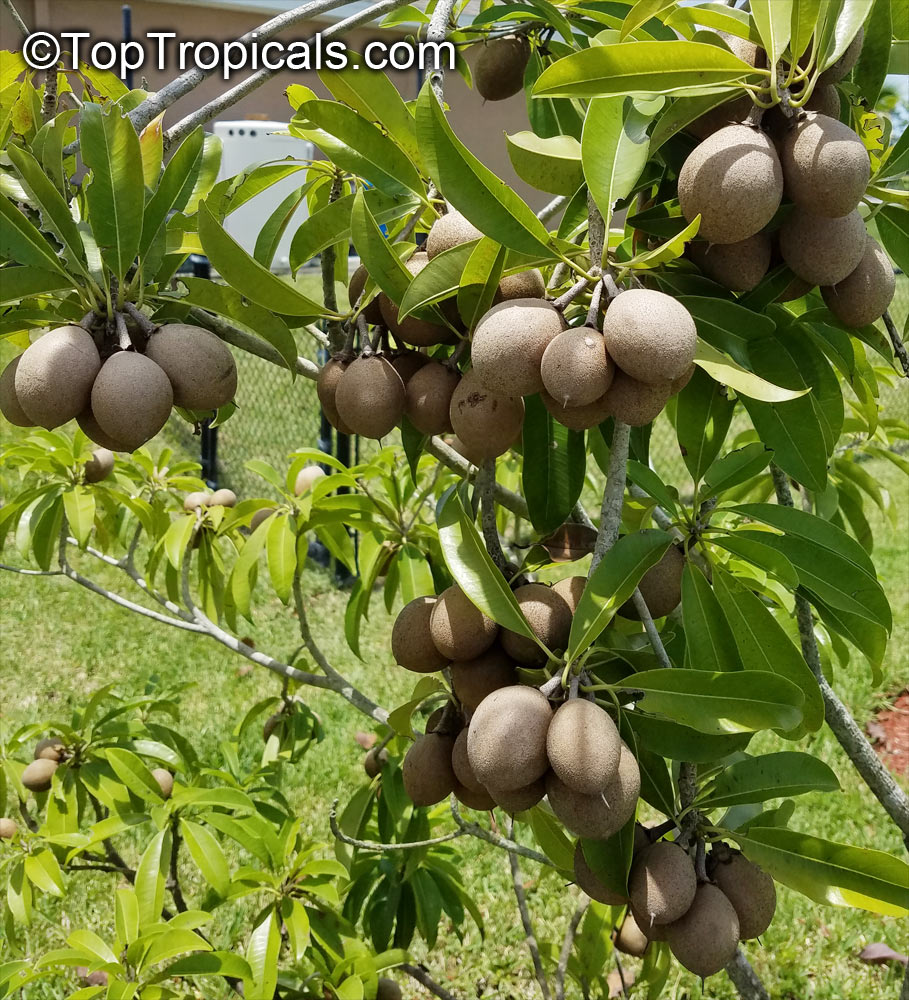
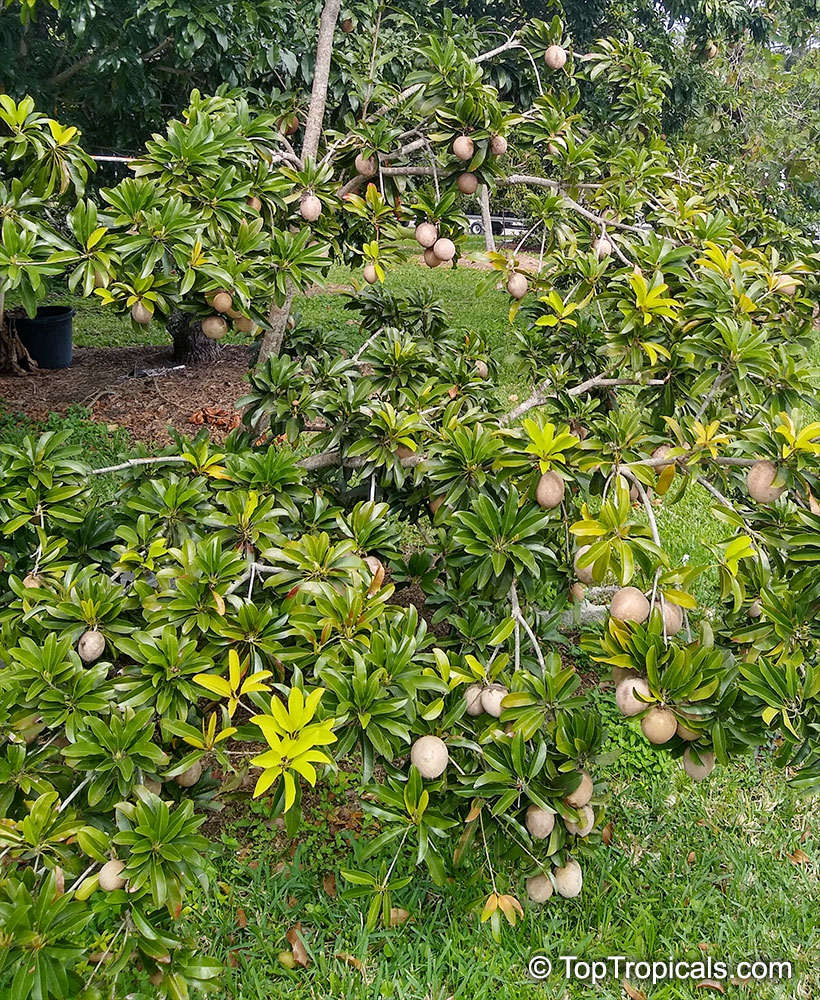
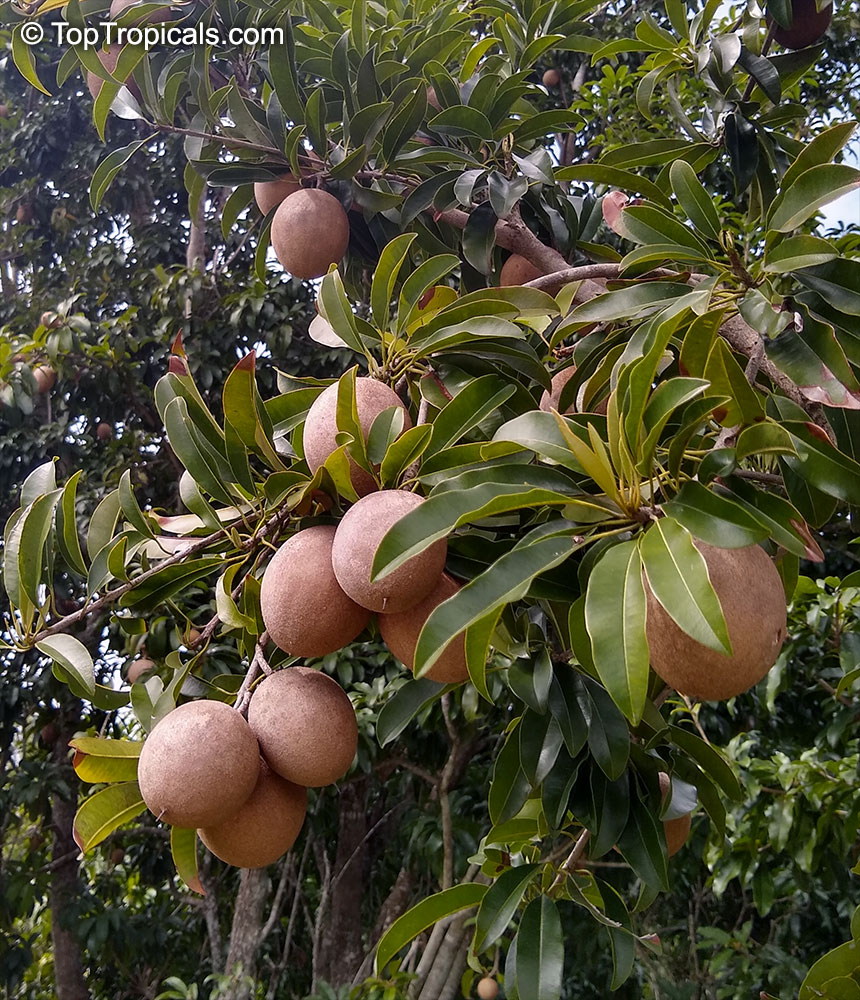
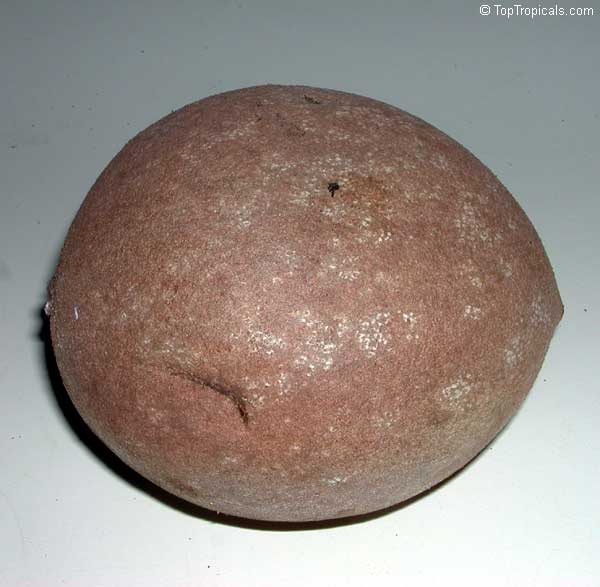
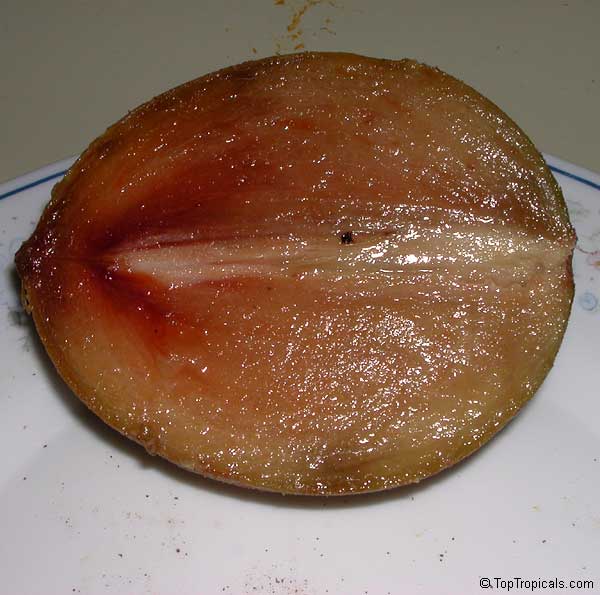
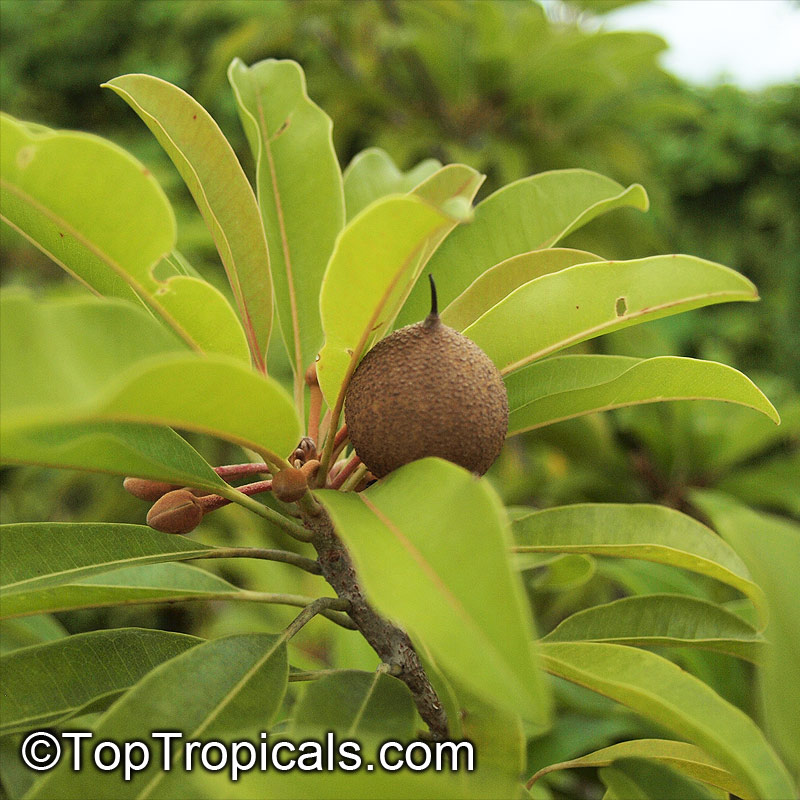
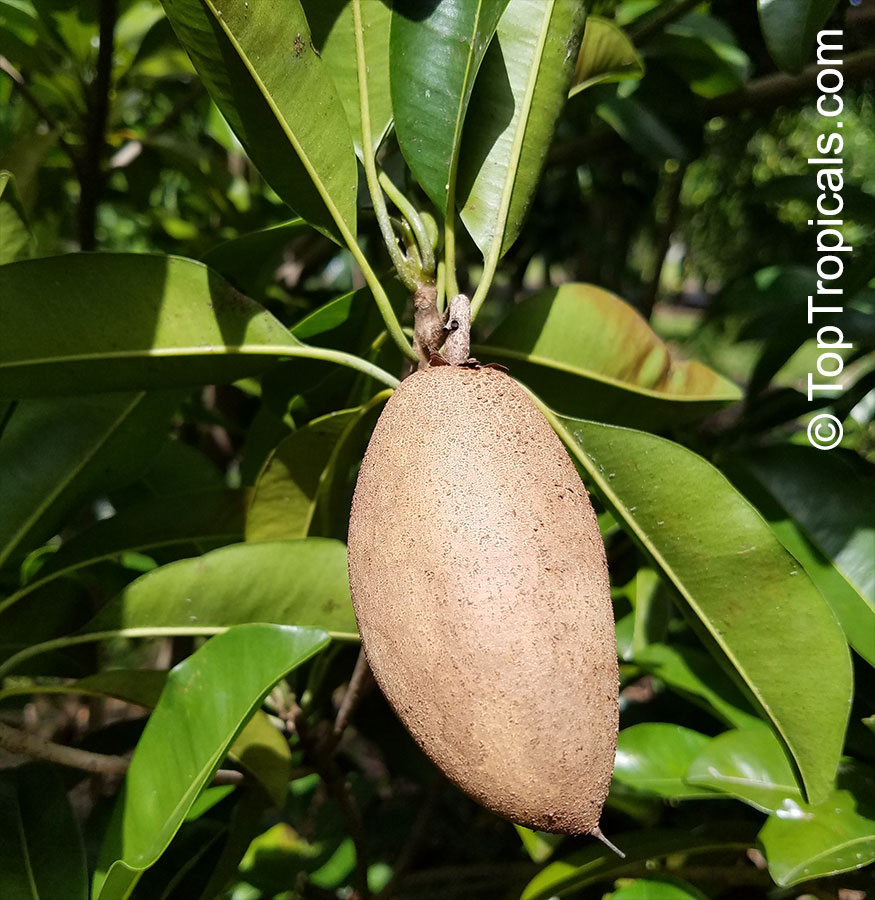
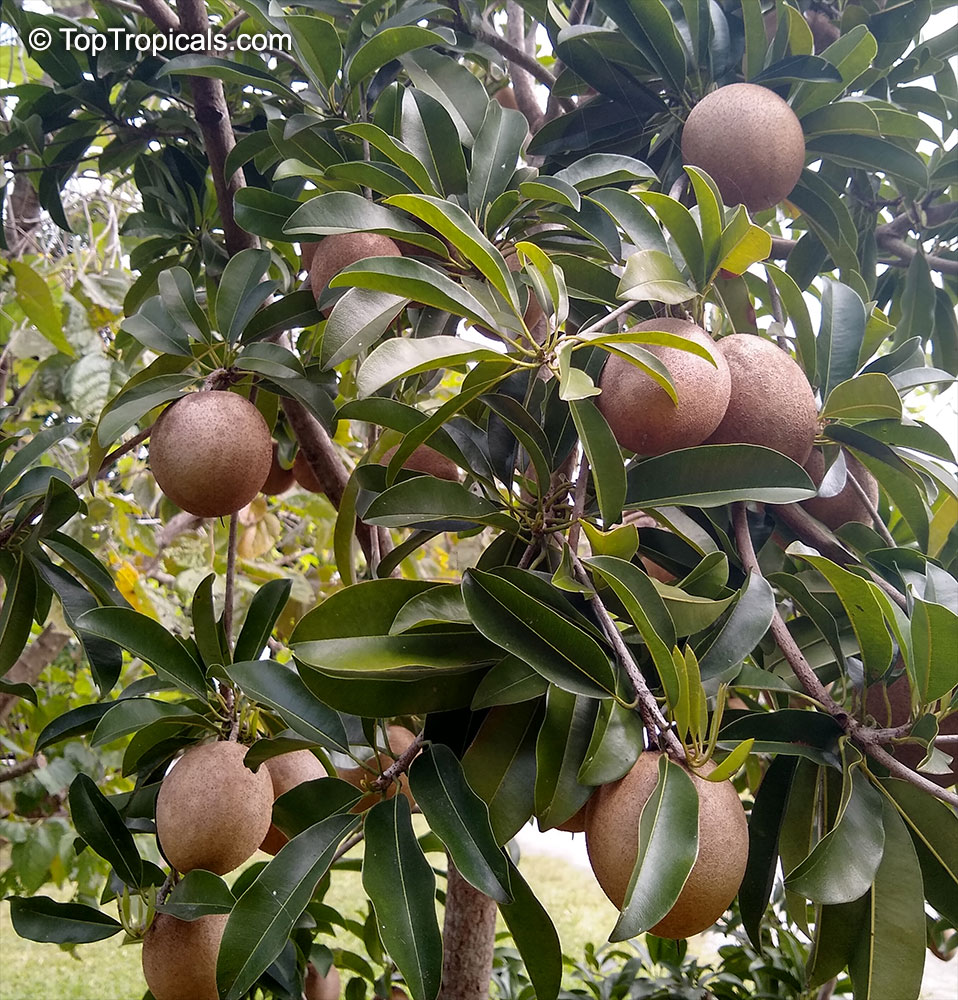
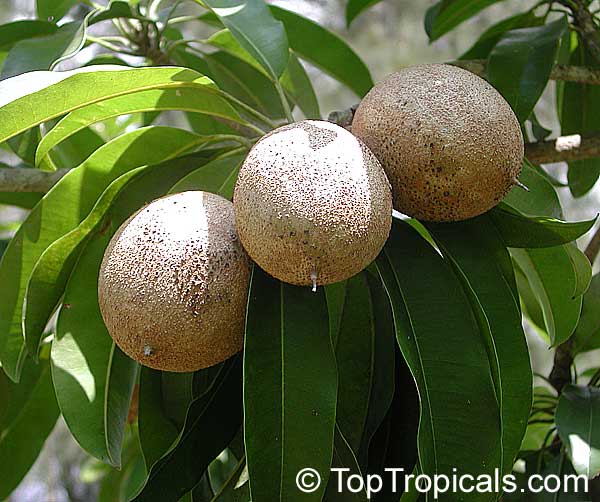
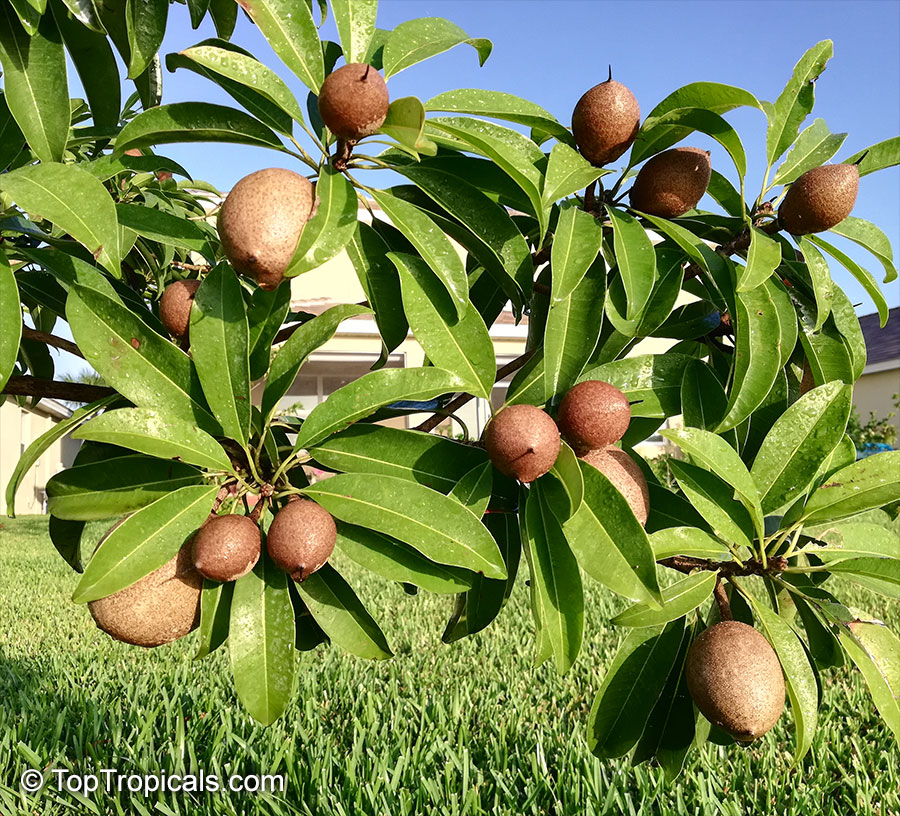
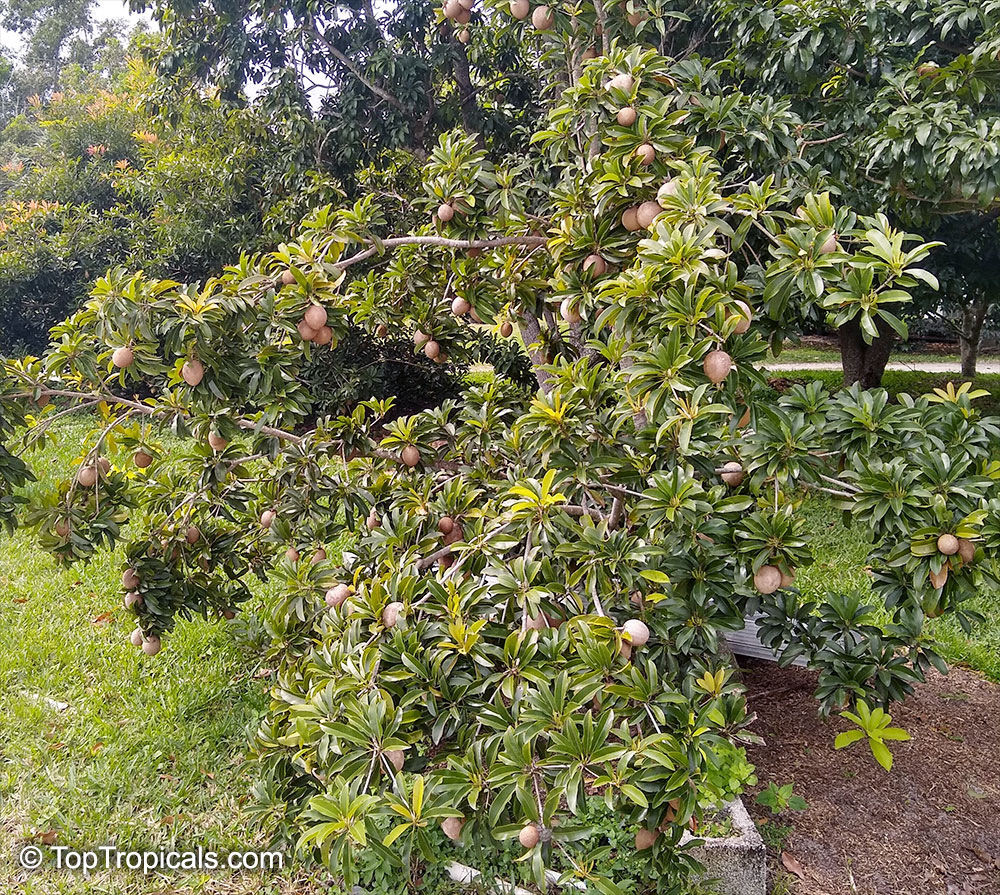
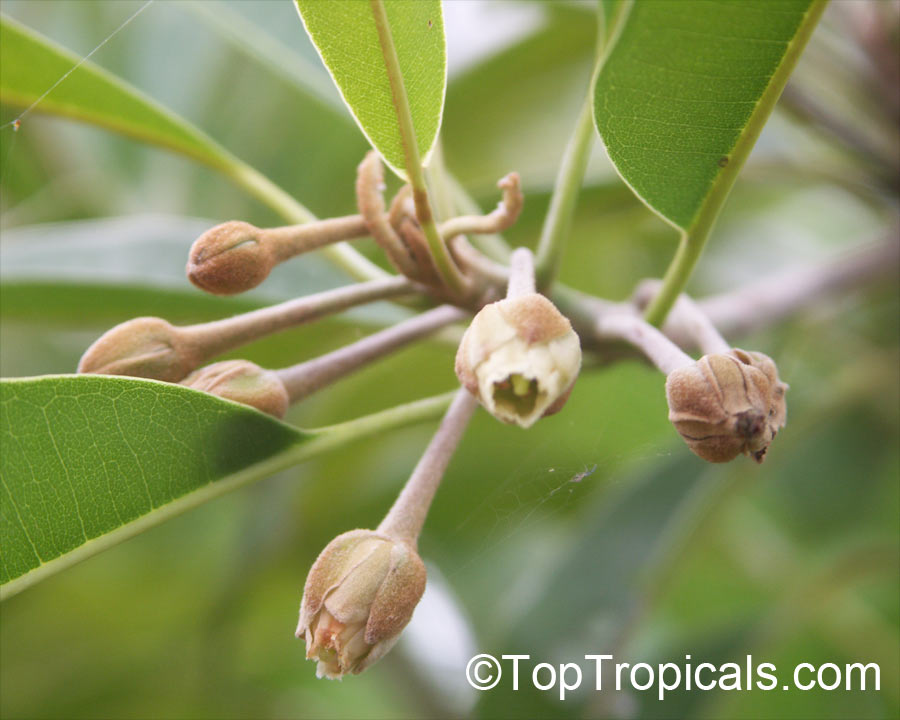
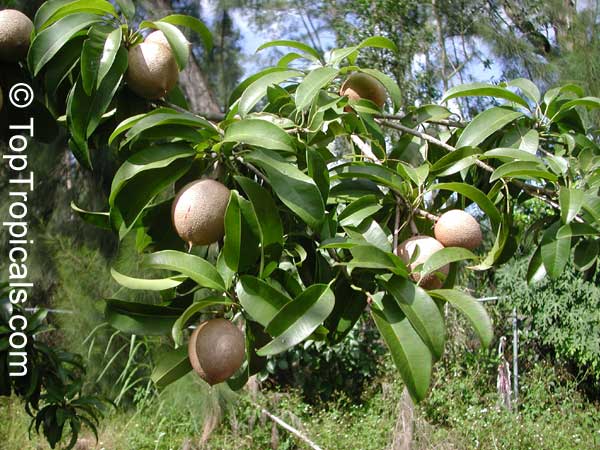
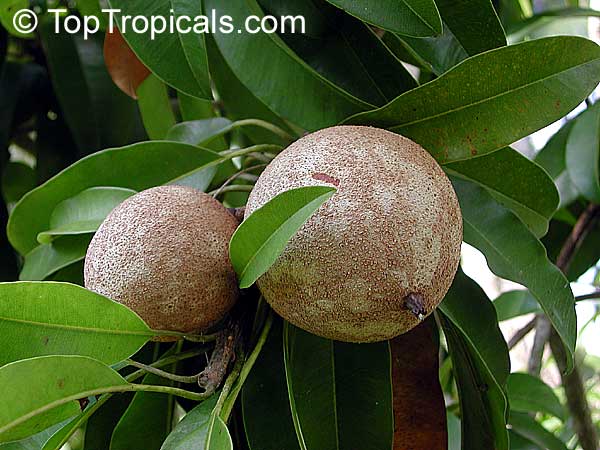
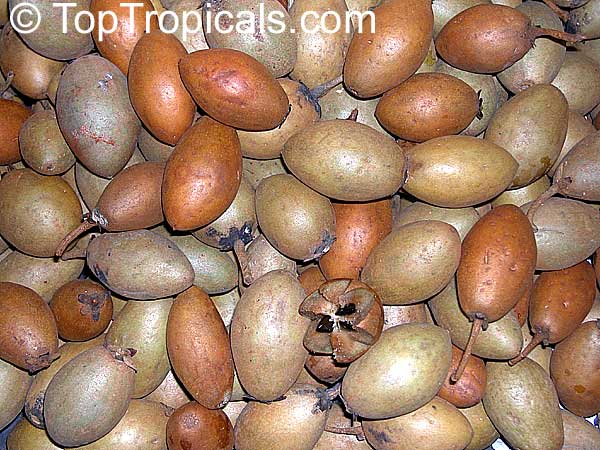
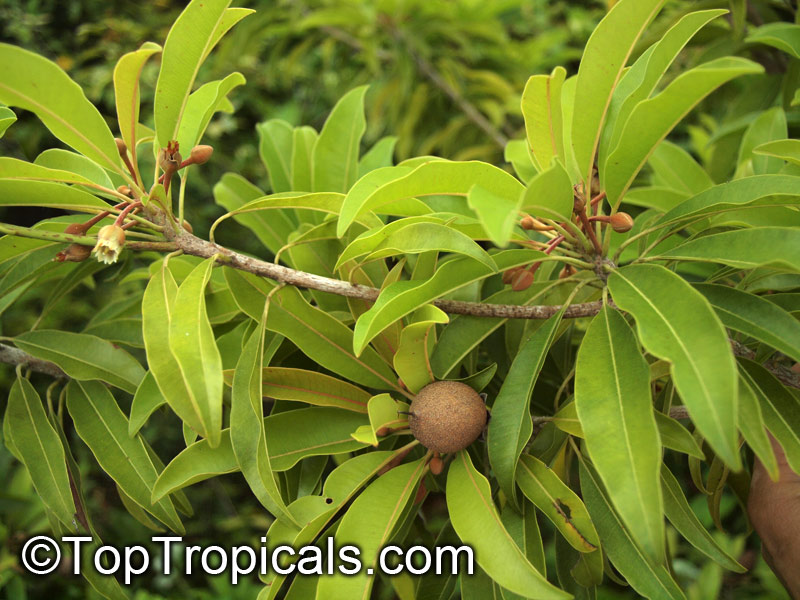
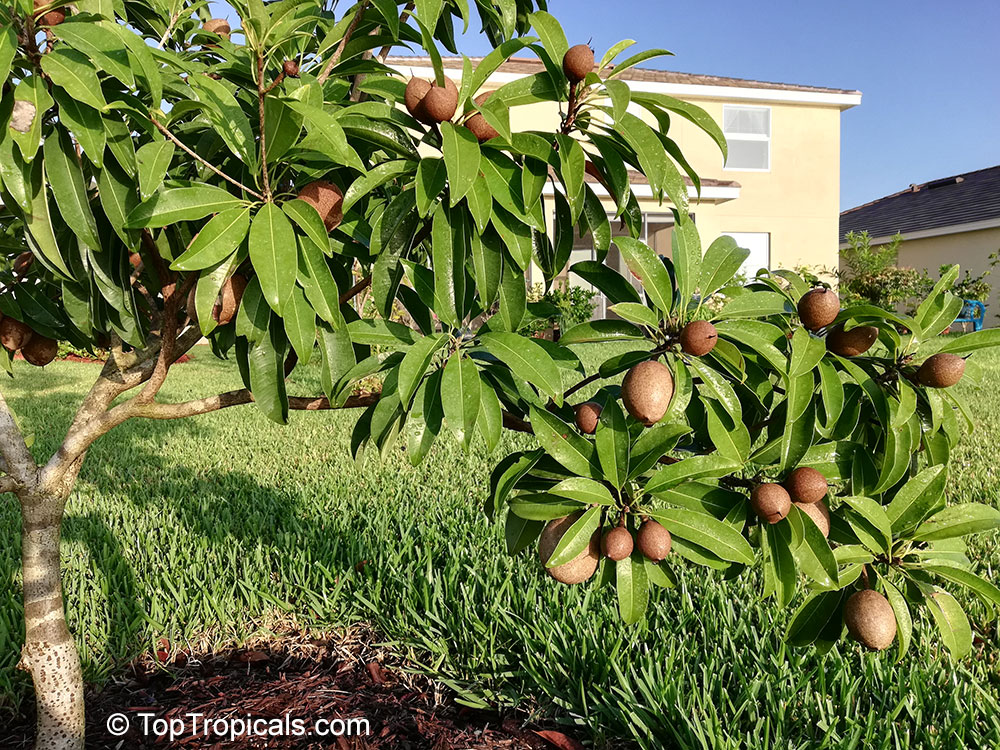
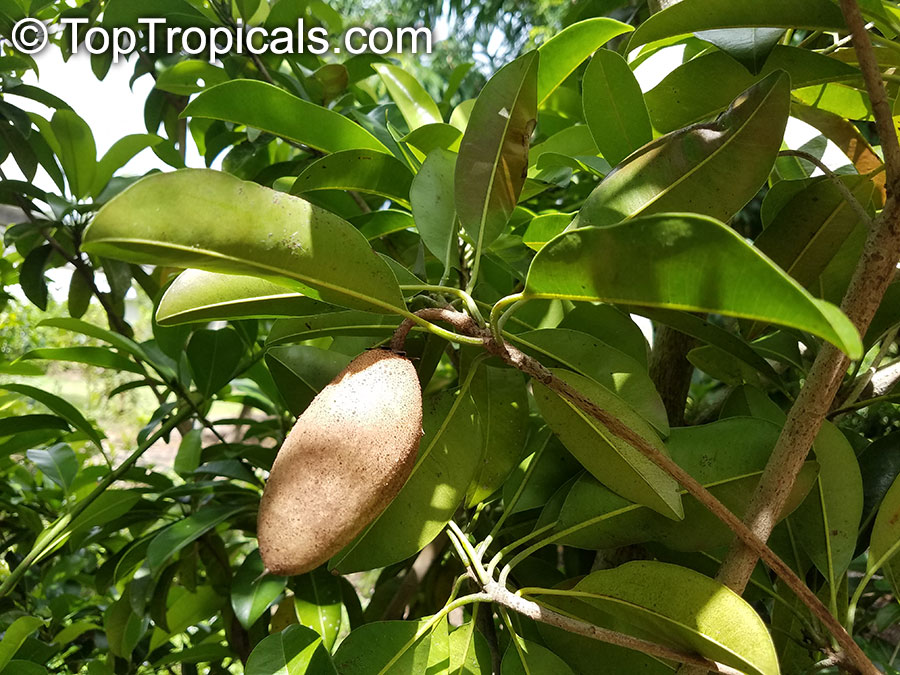
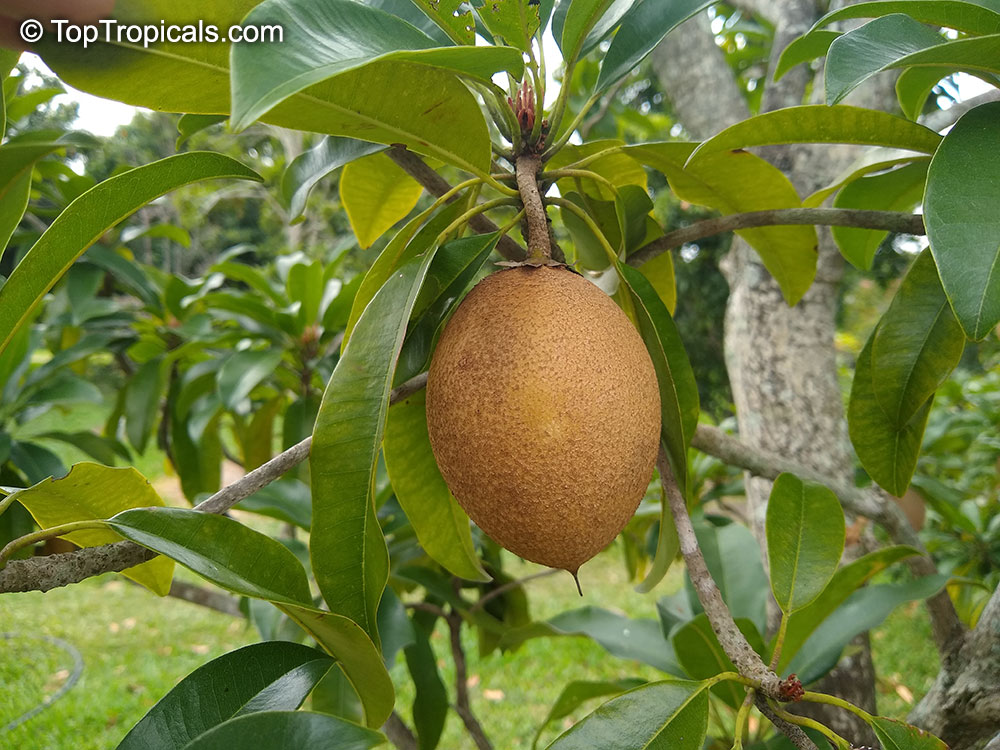
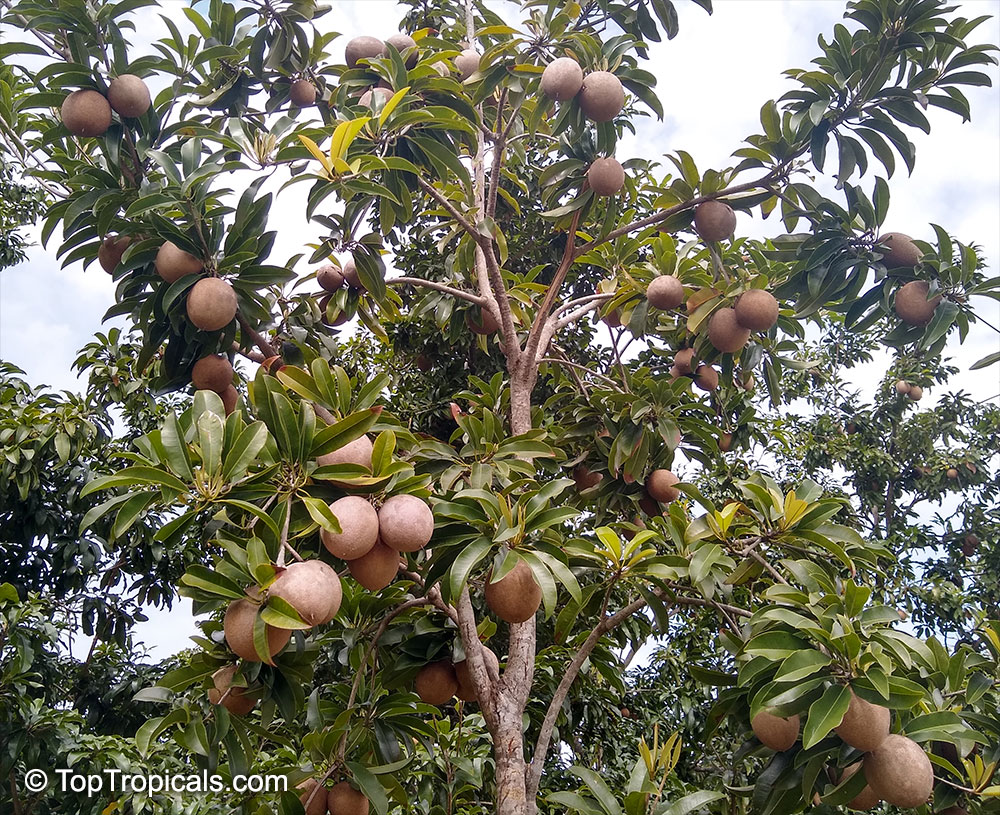
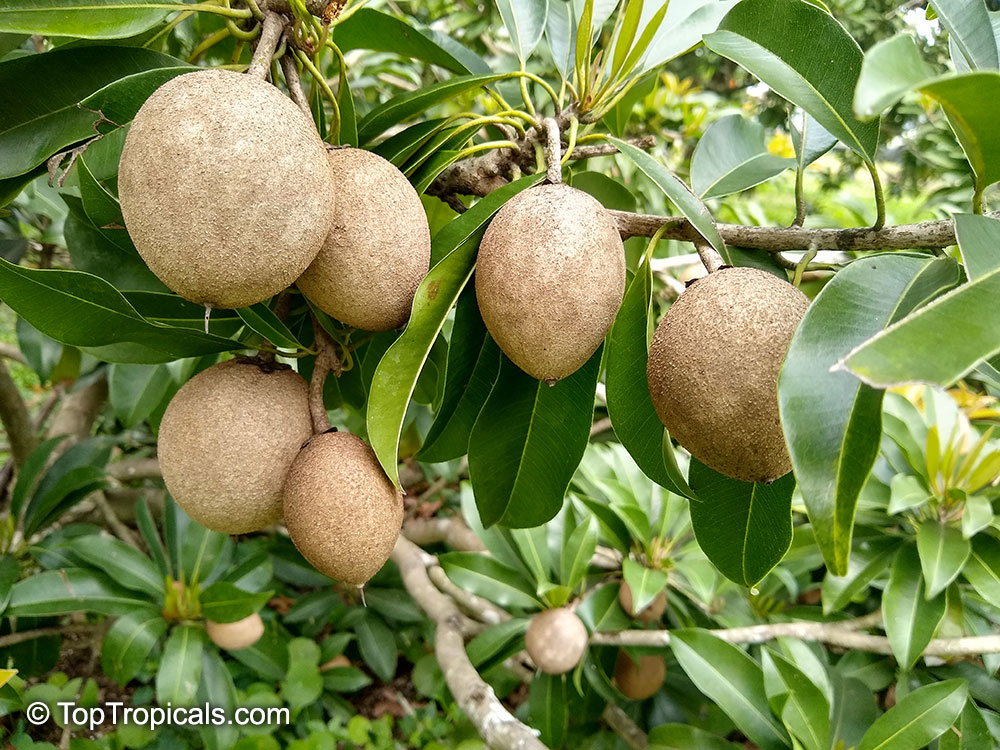
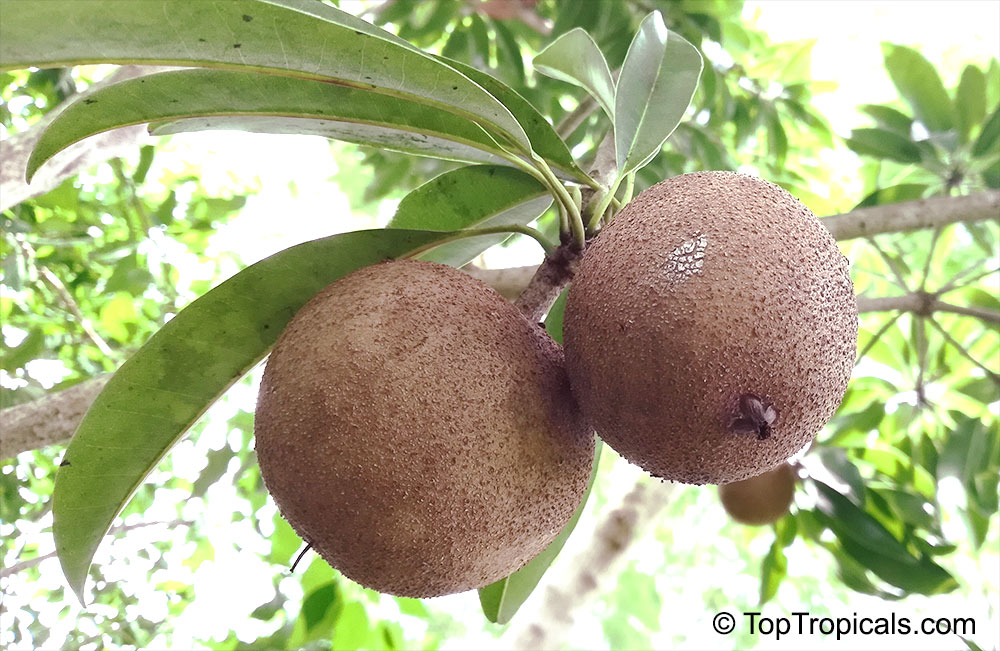
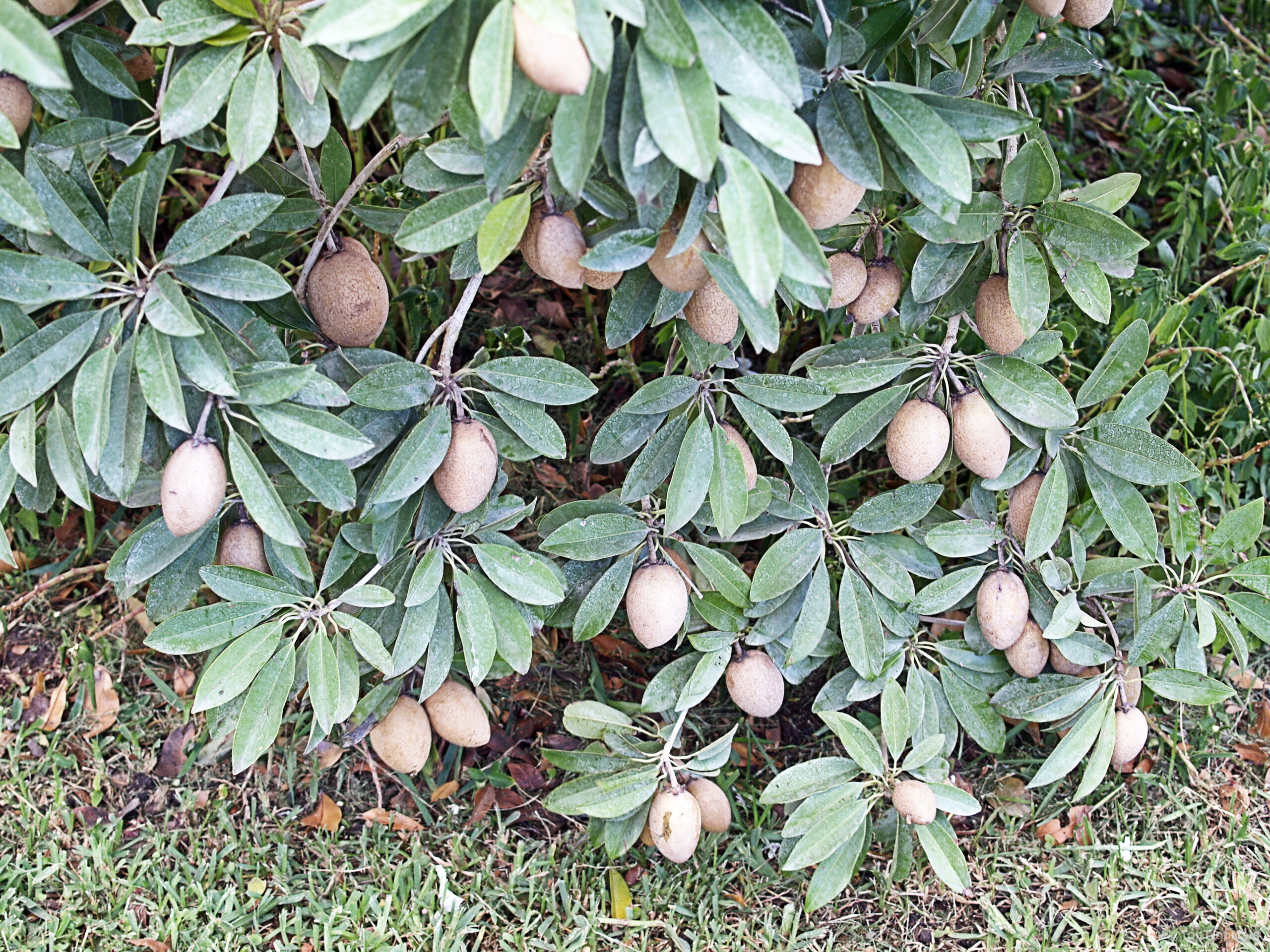
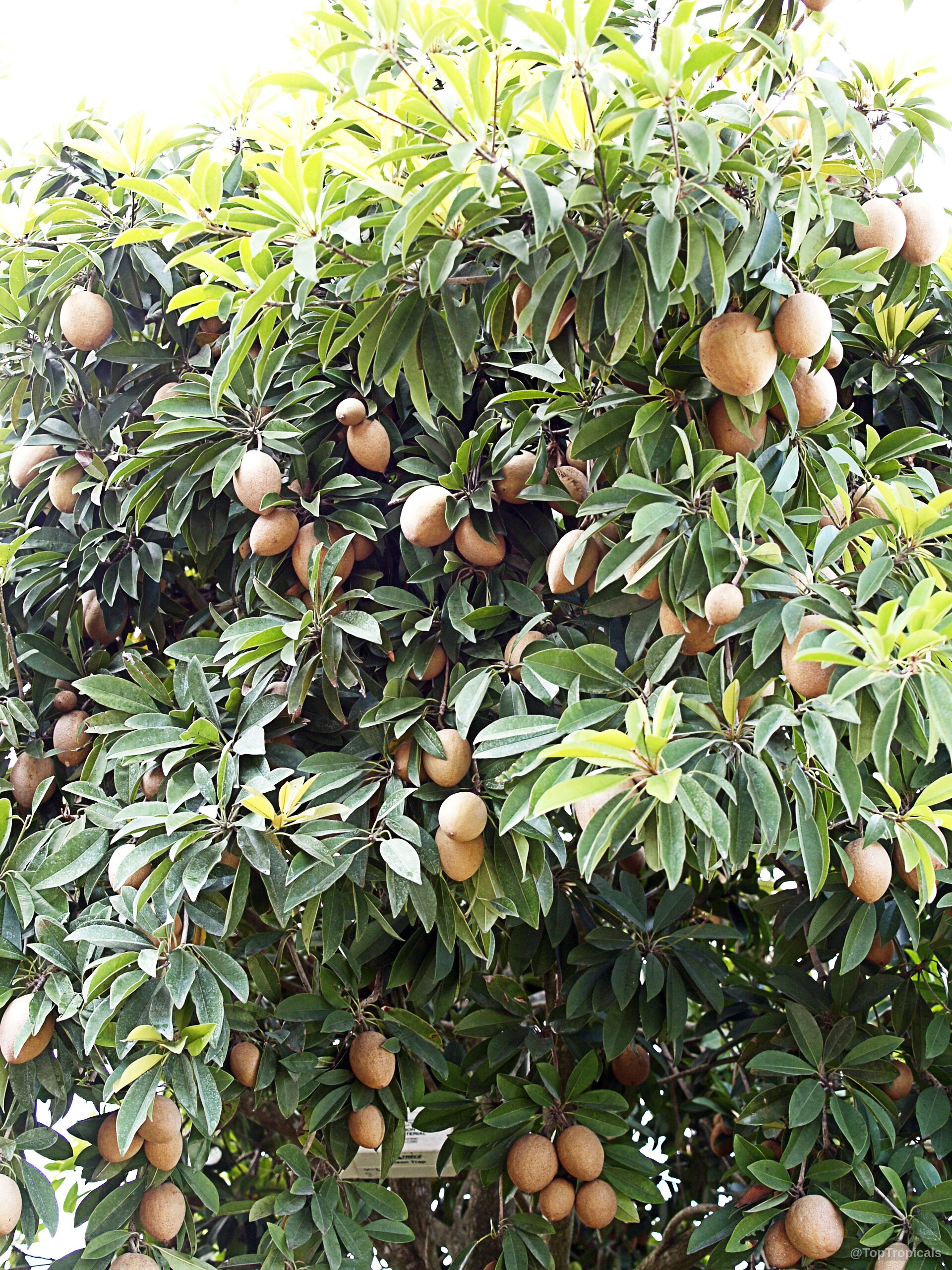
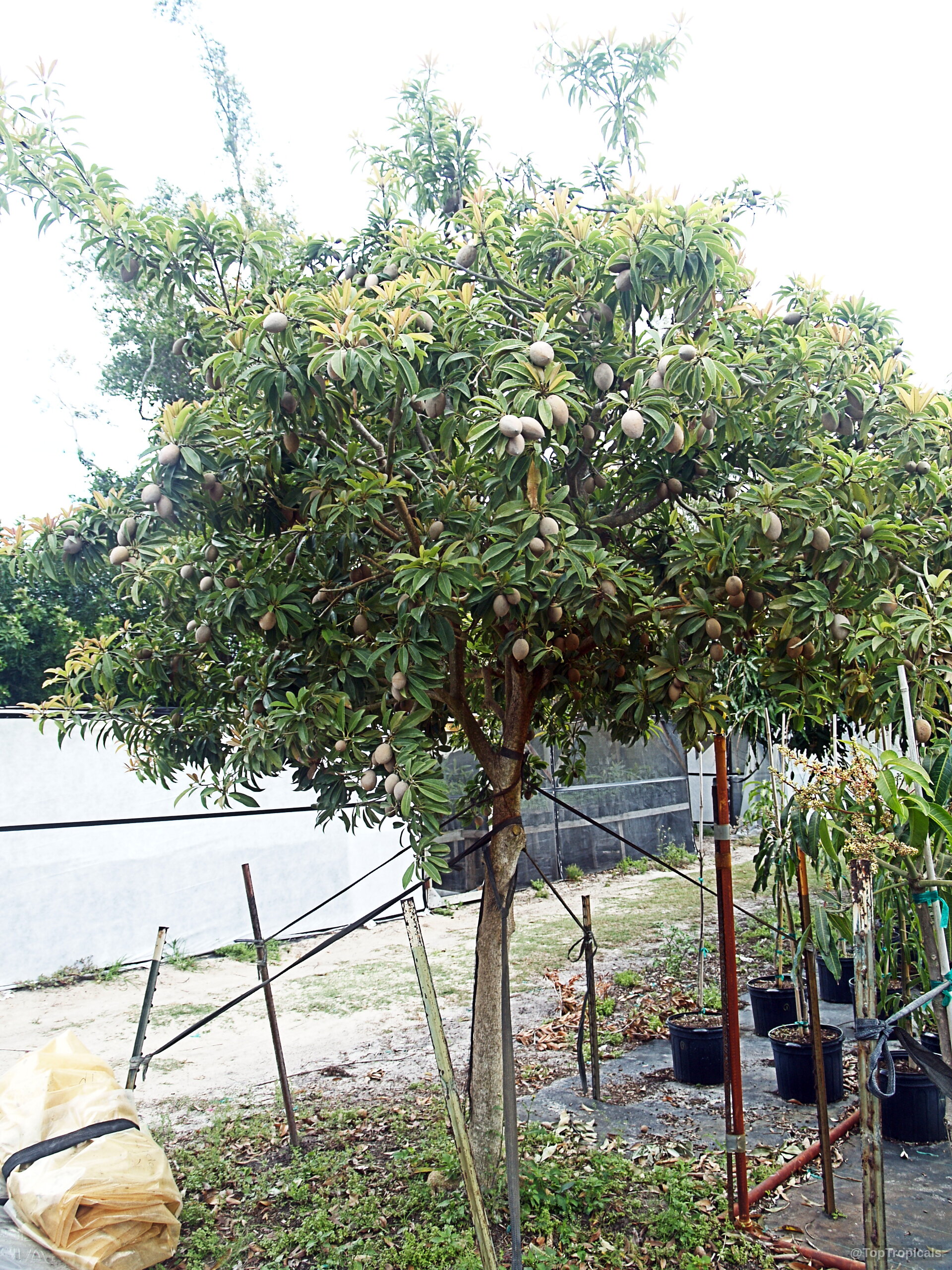
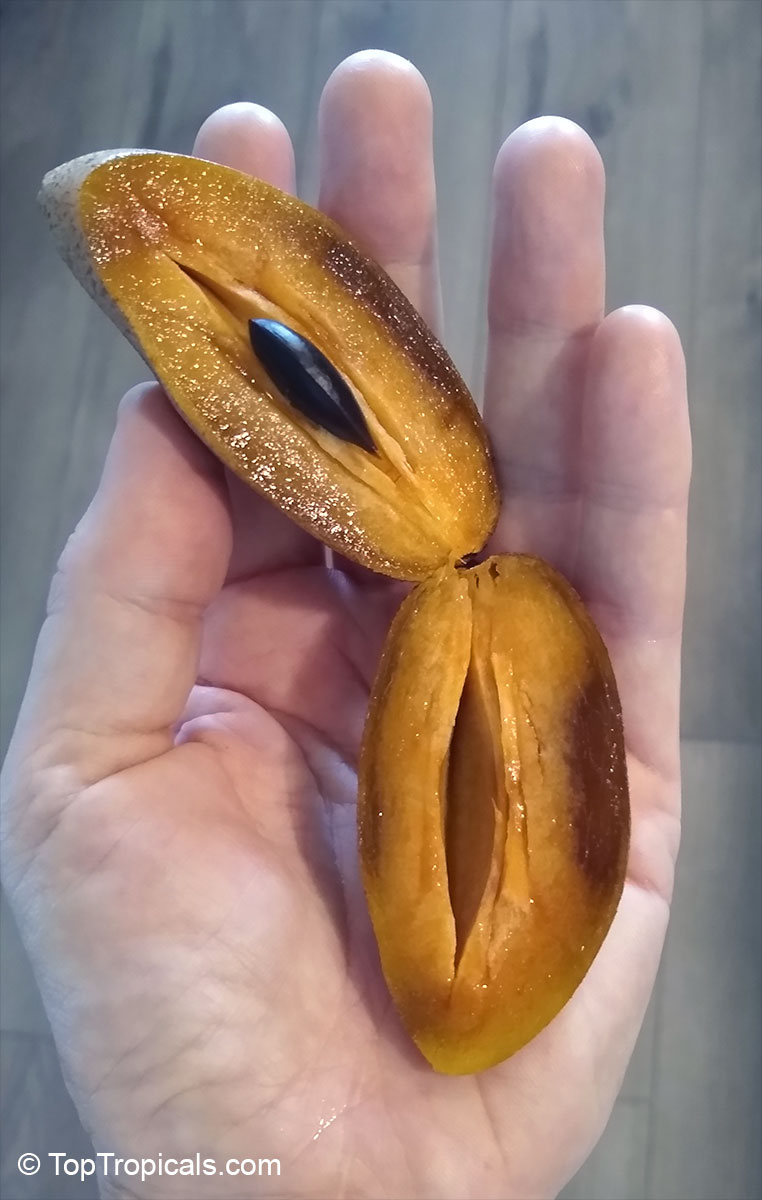
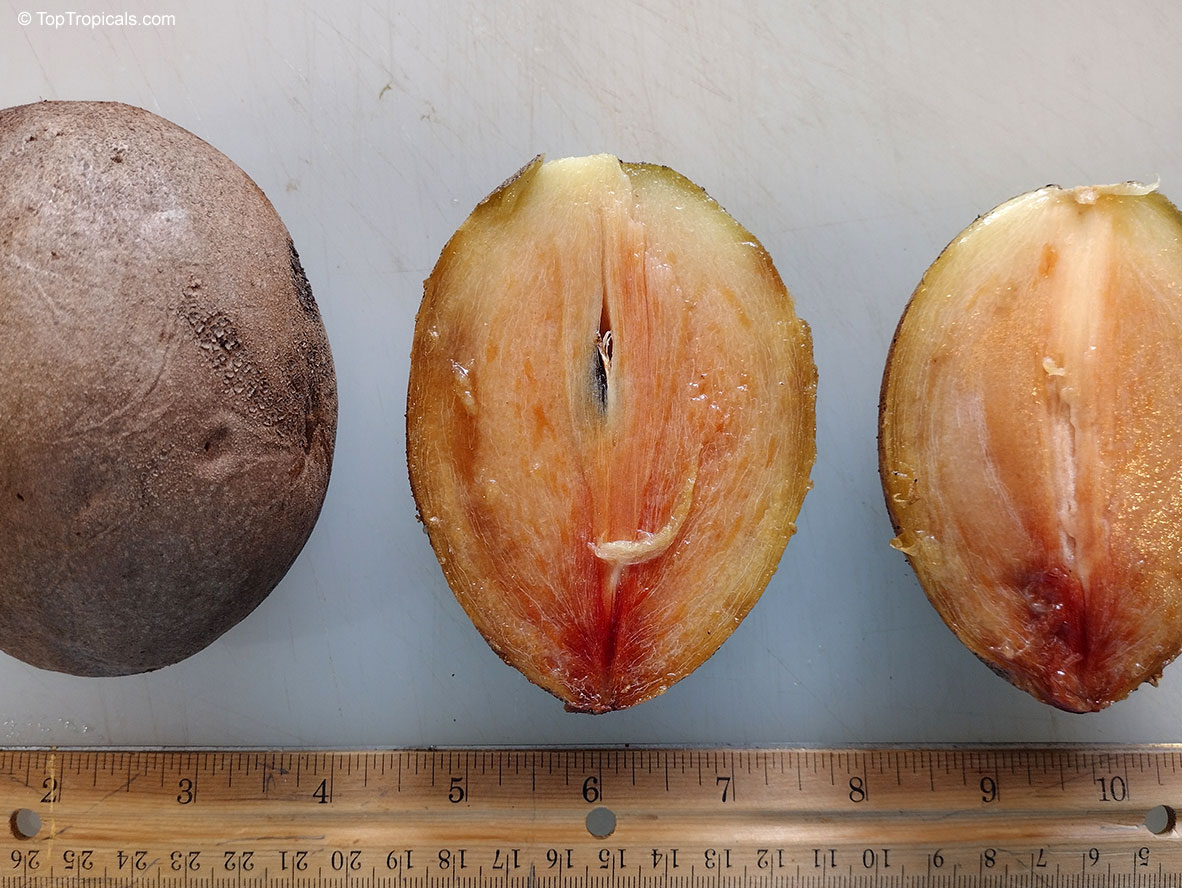
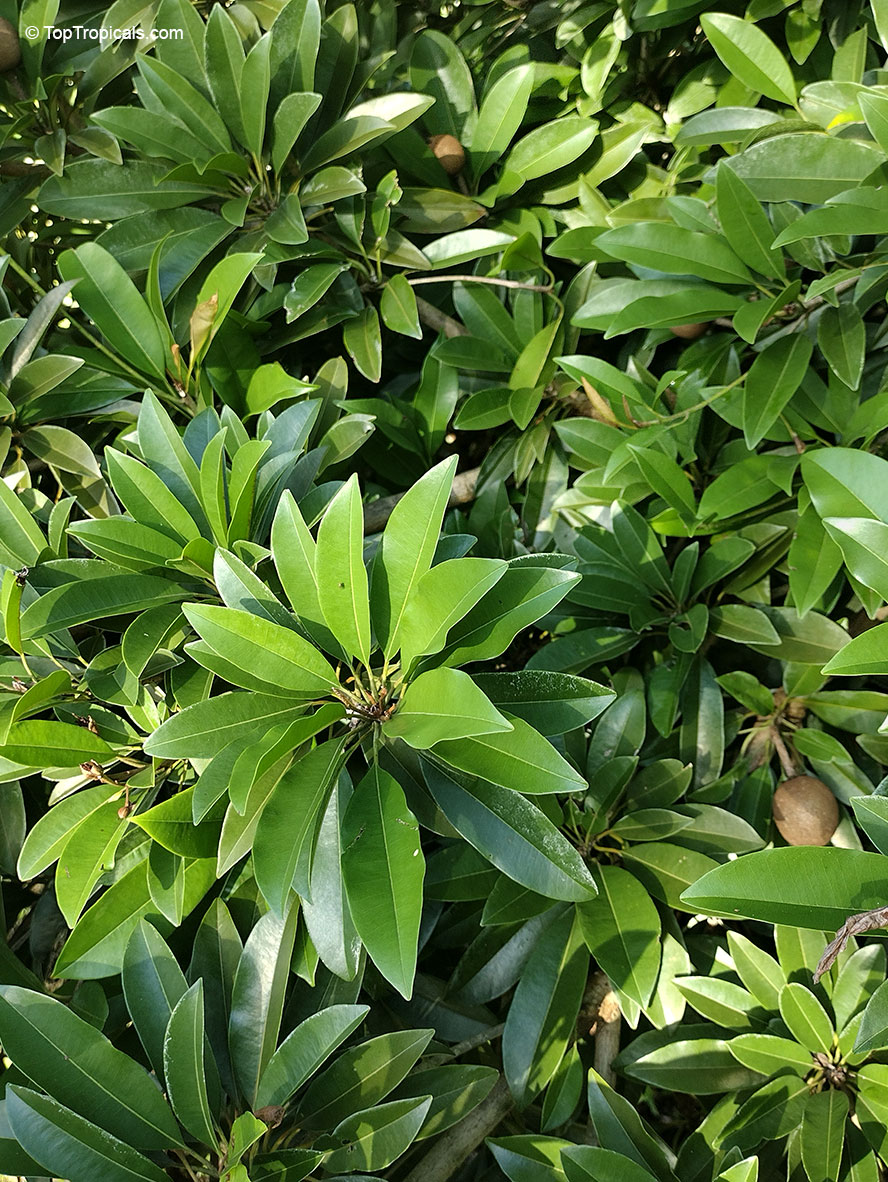
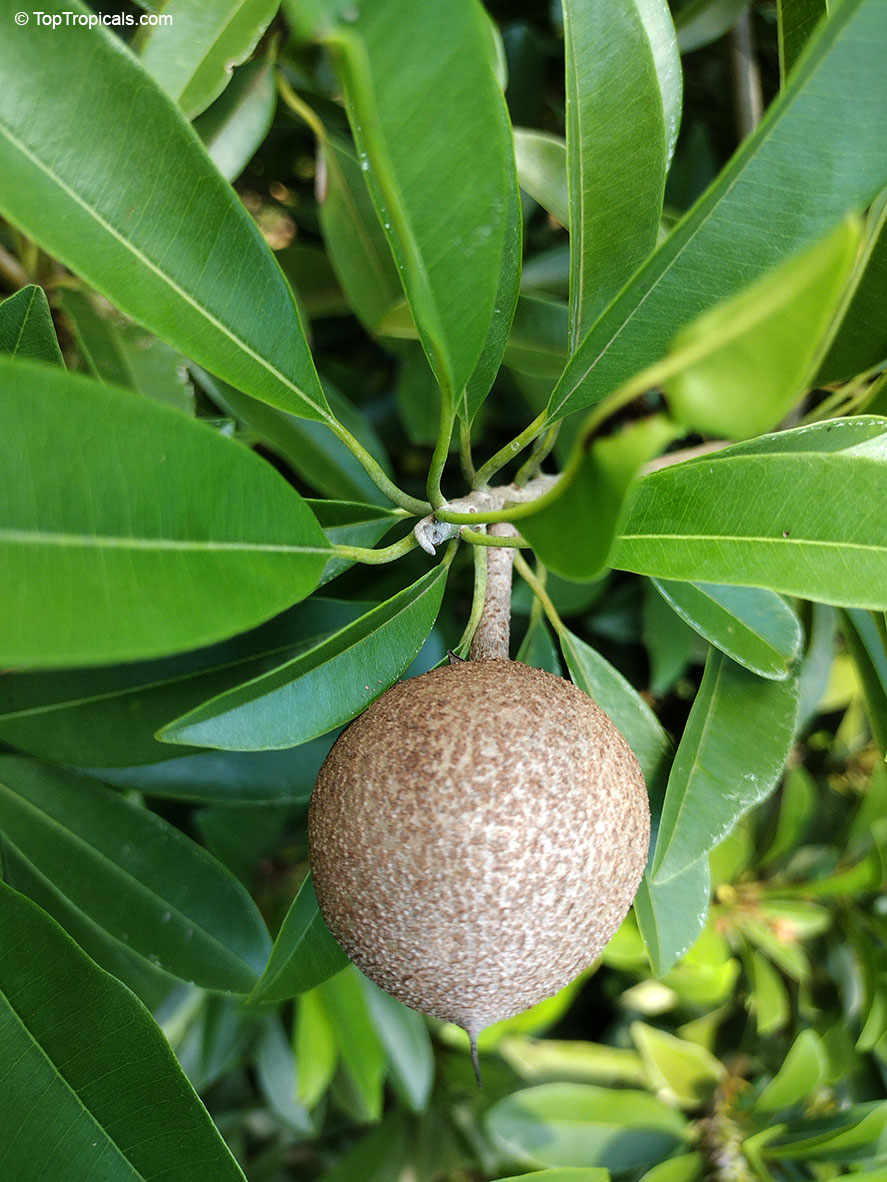
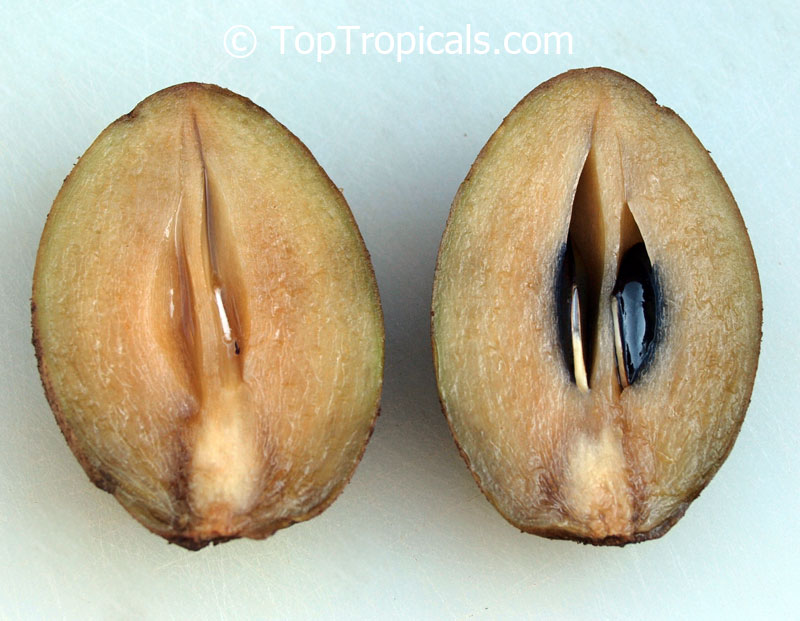
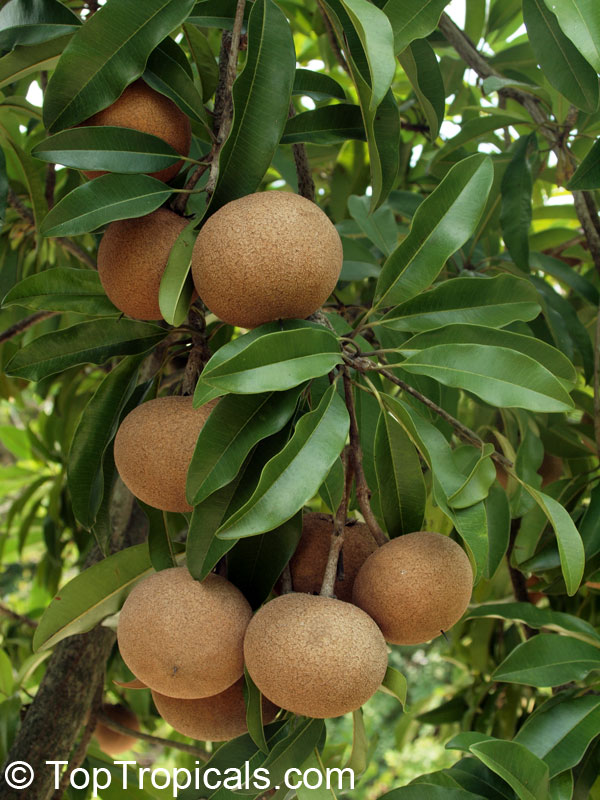
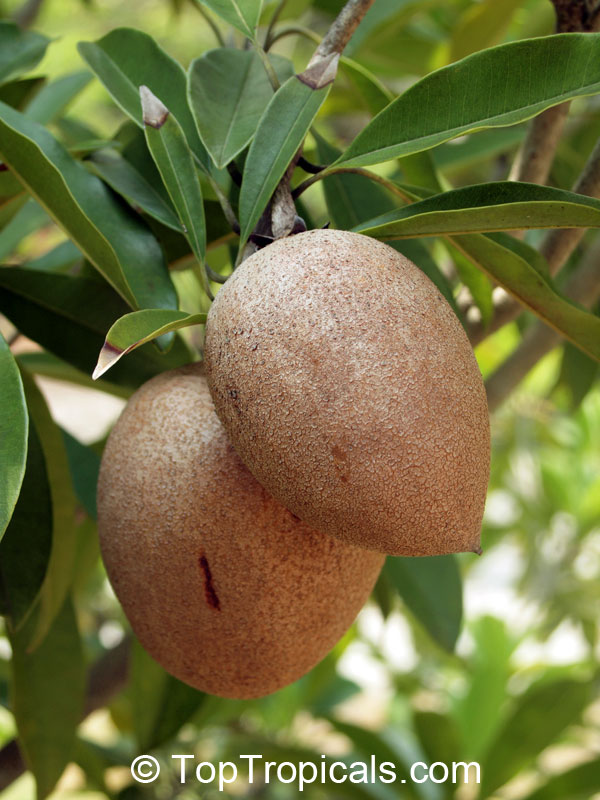
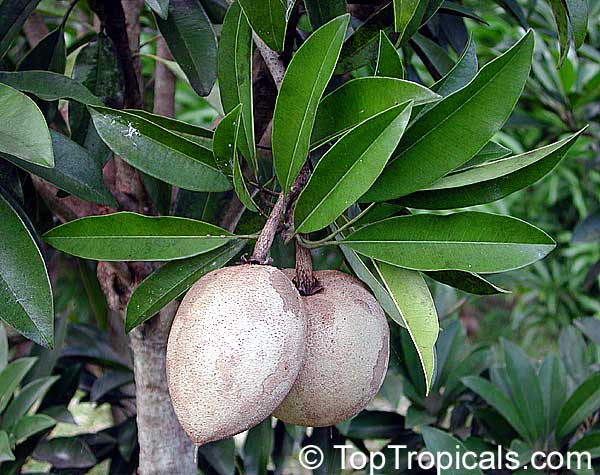
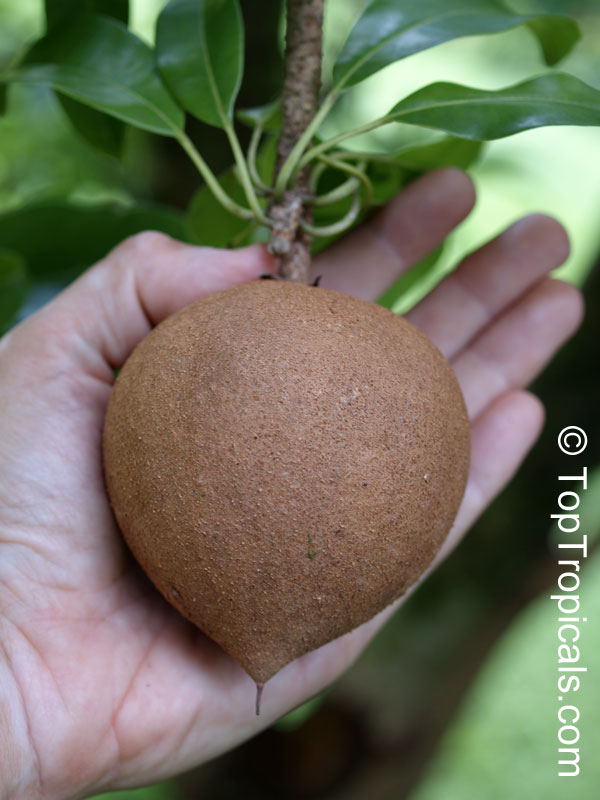
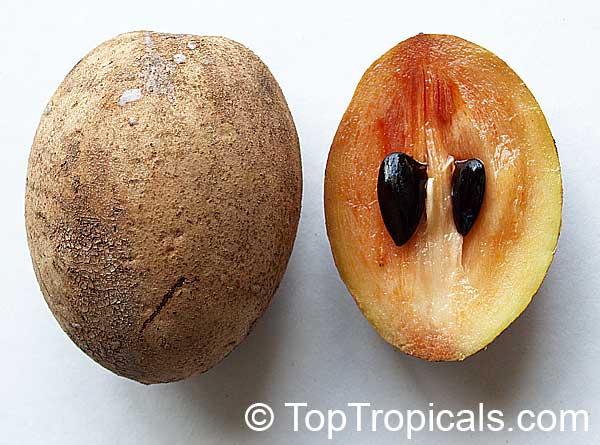
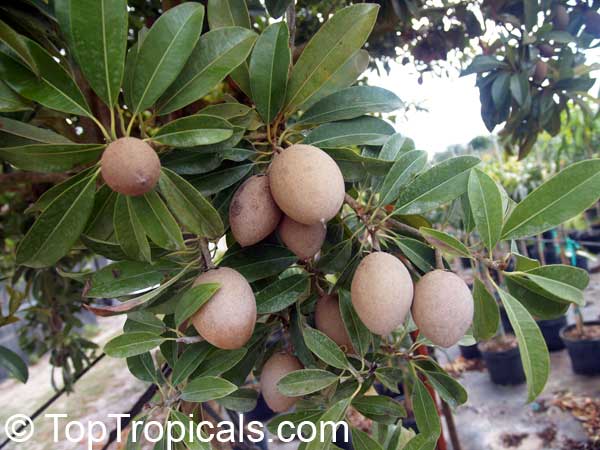
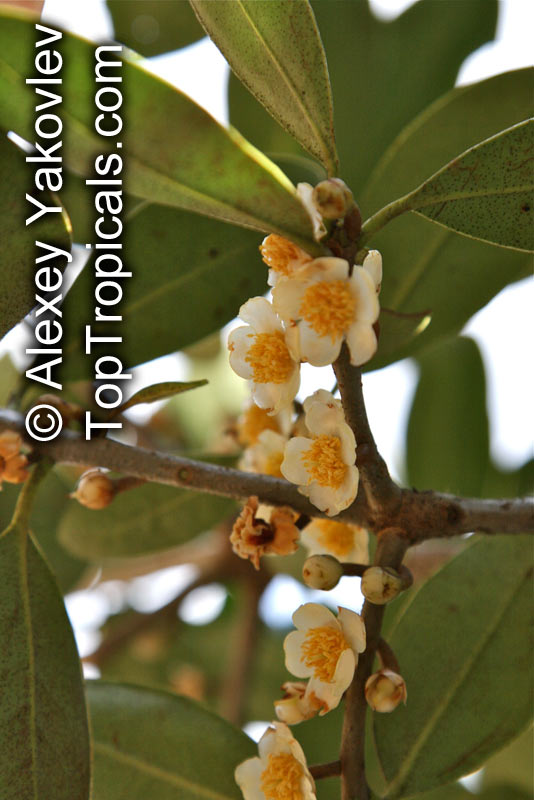
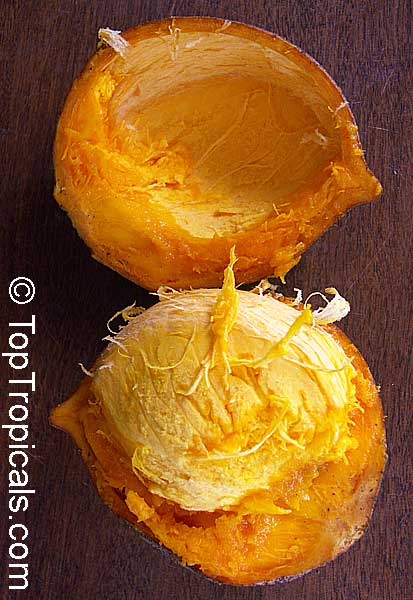
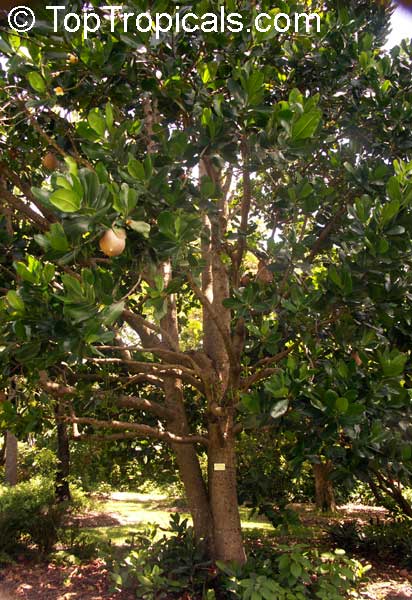
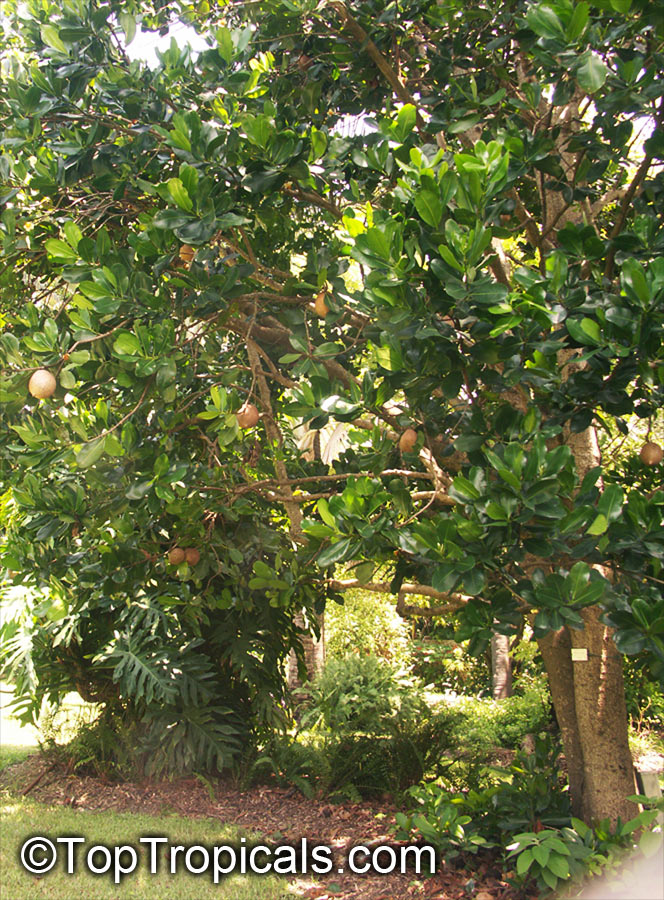
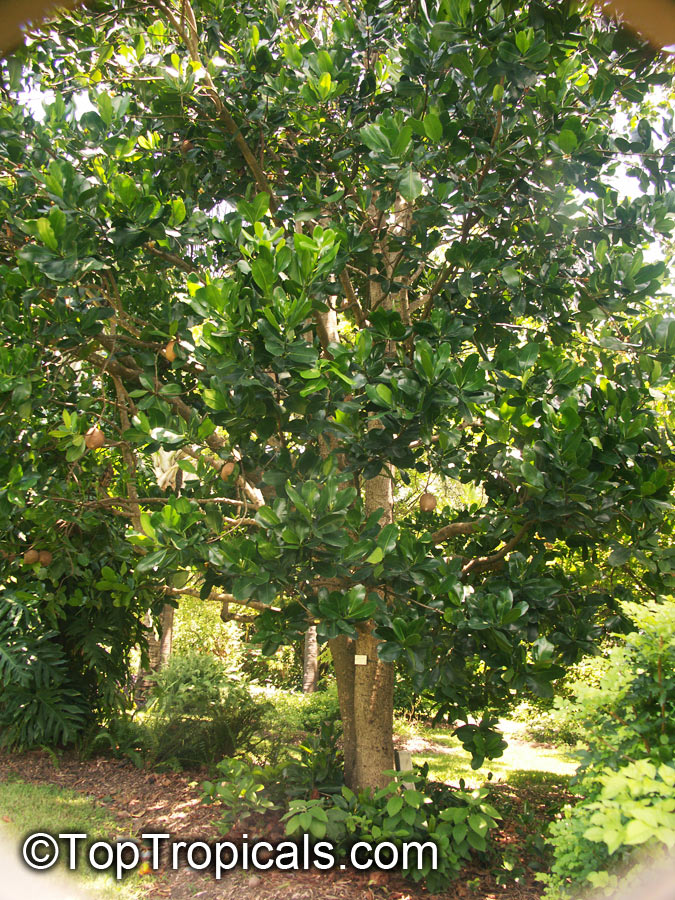
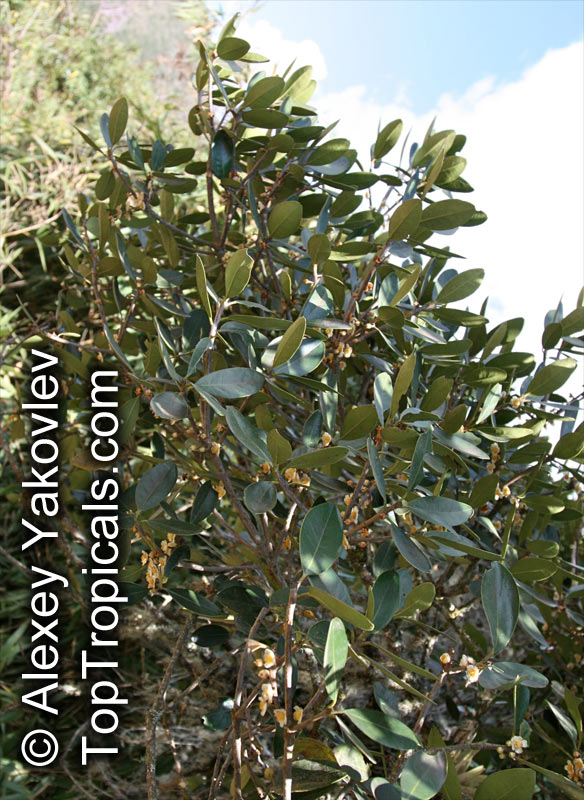
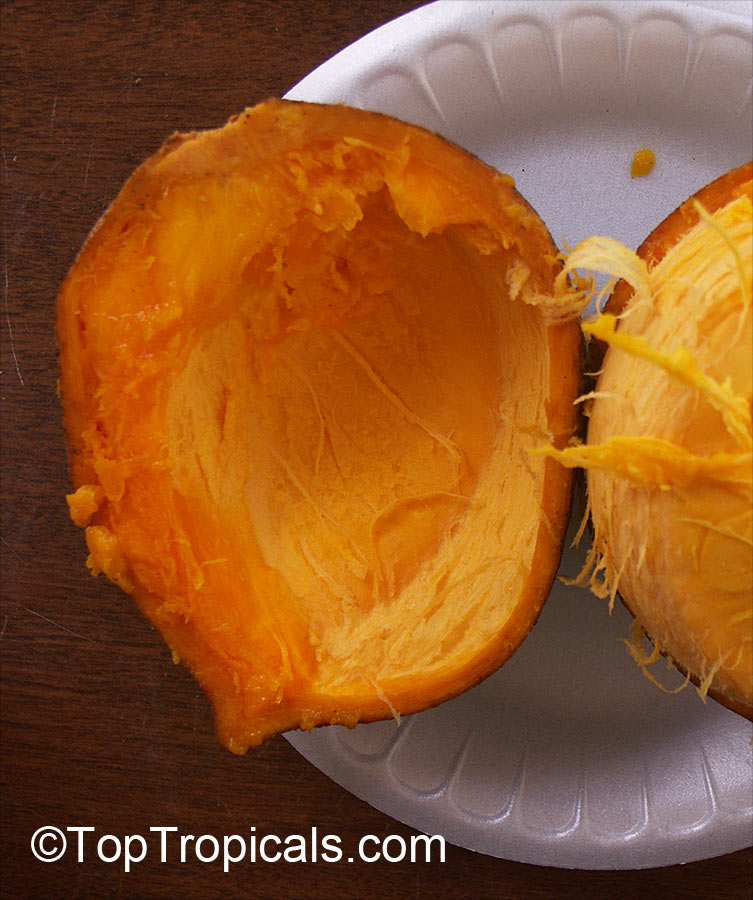
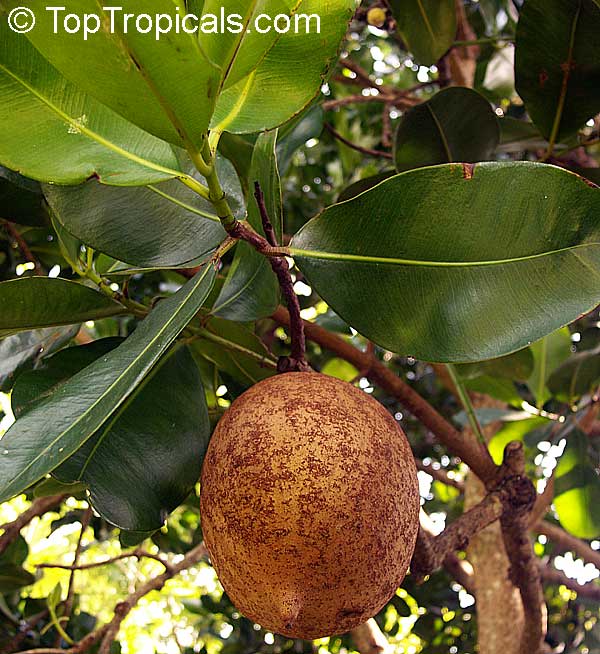
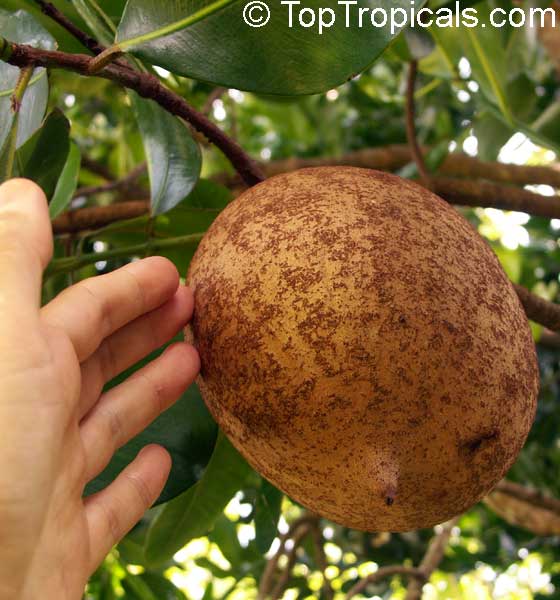
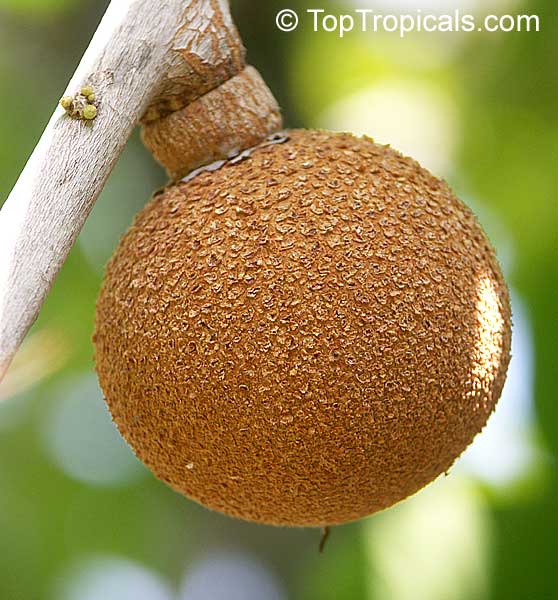
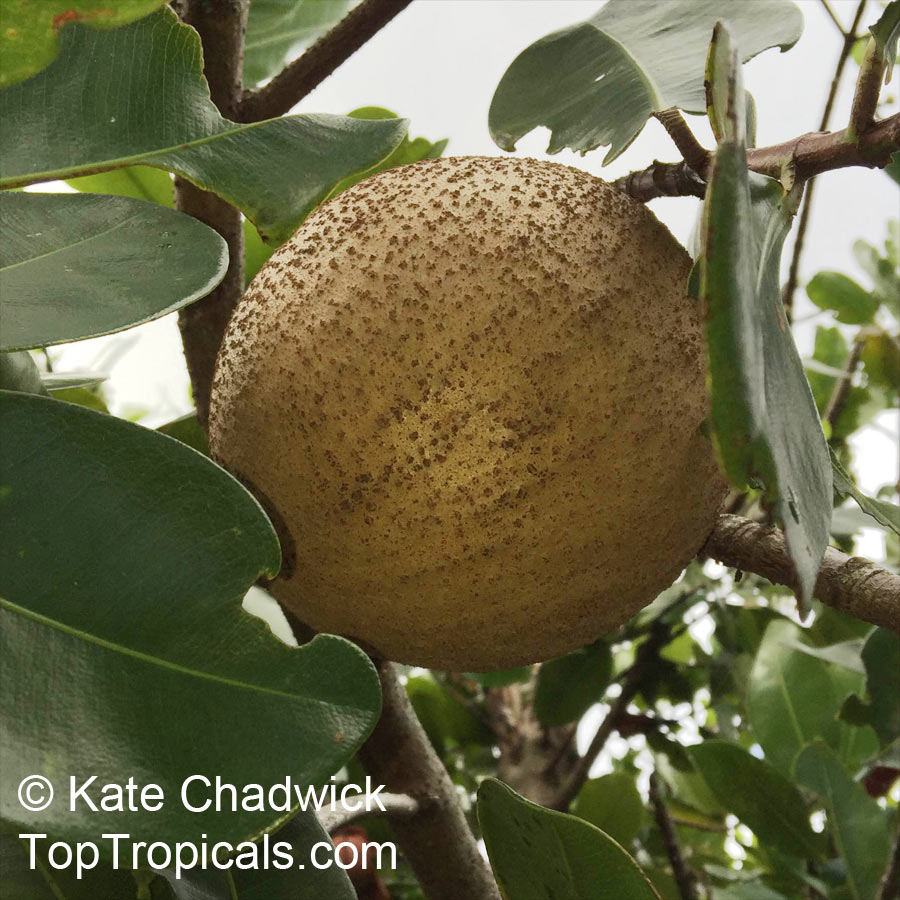
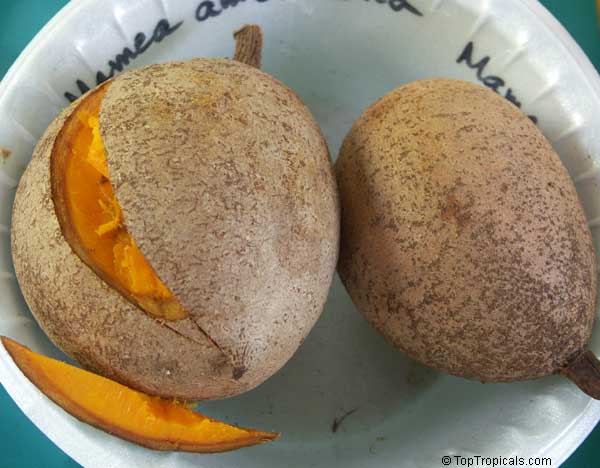
Sapodilla is a fairly slow-growing, long-lived medium-size tree, upright and elegant, dense and distinctly pyramidal, with thick glossy green leaves. Flowers are small and bell-like, borne on slender stalks at the leaf bases. The fruit has gray-brown rough textured skin and pinkish-brown, moist, soft and delicious flesh that tastes like a pear soaked in brown sugar. Each fruit has a few hard, black seeds that can be easily separated from the flesh. There is great variation in the size and form of the fruit, from almost round and large, to small and elongated. Numerous varieties and hybrids have been selected throughout the world. Sapodilla trees fruit prolifically, at frequent intervals throughout the year. In the tropics, some cultivars bear almost continuously. The fruits mature 4 to 6 months after flowering.
Most often eaten fresh. After the peel is removed, the fruit is sliced into pieces which are often carved into decorative shapes.
Sapodilla fruit is usually cut in half and the flesh is eaten with a spoon. It is an ideal dessert fruit as the skin, which is not eaten, remains firm enough to serve as a "shell". The flesh may be scooped out and added to fruit cups or salads. A dessert sauce is made by adding orange juice, and topping with whipped cream. Sapodilla flesh may also be blended into an egg custard mix before baking. The fruit is sometimes fried or stewed with lime juice or ginger. Mashed sapodilla pulp can be added to pancake batter and bread mix before baking. Cooking with sugar changes the brown color of the flesh to a pleasing red.
Sapodilla wine is also very good. Young leafy shoots are eaten raw or steamed with rice in Indonesia, after washing to eliminate the sticky sap.
A major by-product of the sapodilla tree is the gummy latex called "chicle", containing 15% rubber and 38% resin.
The plant grows naturally in the calcareous marl and disintegrated limestone, and is well adapted to Florida soils; it flourishes also in other types of soil, from deep, loose, organic soil, to loam, light clay, sand or even gravel, but requires excellent drainage. It is strong, wind-resistant, highly drought-resistant, and can stand salt spray. In India, brackish or saline water is sometimes used to reduce vegetative growth and promote fruiting. Commercially grove trees receive no watering, although irrigation in dry seasons will increase productivity.
Unlike most of tropical fruit, Sapodilla seeds remain viable for several years if kept dry. They germinate readily but growth is slow and the trees take 5 to 8 years to bear. Grafted trees start fruiting right away.






Recommended Fertilizer: SUNSHINE C-Cibus - Crop Nutrition Booster
SUNSHINE-Honey - sugar booster
Recommended Fertilizer: SUNSHINE C-Cibus - Crop Nutrition Booster
SUNSHINE-Honey - sugar booster
Recommended Fertilizer: SUNSHINE C-Cibus - Crop Nutrition Booster
SUNSHINE-Honey - sugar booster
This is a hot seller, limited quantities. This is small plant. Demand is very high, these plants sell faster than we can grow them bigger. Please do not order if size matters to you. Contact us before making purchase if you have any questions
Recommended Fertilizer: SUNSHINE C-Cibus - Crop Nutrition Booster
SUNSHINE-Honey - sugar booster
Local pickup only. This item is not available for shipping. Local delivery may be available in Ft. Myers or Sebring, Florida. Contact us for an estimate. Non-pickup orders are subject to restocking fees.
Recommended Fertilizer: SUNSHINE C-Cibus - Crop Nutrition Booster
SUNSHINE-Honey - sugar booster
Recommended Fertilizer: SUNSHINE C-Cibus - Crop Nutrition Booster
SUNSHINE-Honey - sugar booster
Recommended Fertilizer: SUNSHINE C-Cibus - Crop Nutrition Booster
SUNSHINE-Honey - sugar booster
This is a hot seller, limited quantities. This is small plant. Demand is very high, these plants sell faster than we can grow them bigger. Please do not order if size matters to you. Contact us before making purchase if you have any questions
Recommended Fertilizer: SUNSHINE C-Cibus - Crop Nutrition Booster
SUNSHINE-Honey - sugar booster
This is a hot seller, limited quantities. This is small plant. Demand is very high, these plants sell faster than we can grow them bigger. Please do not order if size matters to you. Contact us before making purchase if you have any questions
Recommended Fertilizer: SUNSHINE C-Cibus - Crop Nutrition Booster
SUNSHINE-Honey - sugar booster
This is a hot seller, limited quantities. This is small plant. Demand is very high, these plants sell faster than we can grow them bigger. Please do not order if size matters to you. Contact us before making purchase if you have any questions
Recommended Fertilizer: SUNSHINE C-Cibus - Crop Nutrition Booster
SUNSHINE-Honey - sugar booster
This is a hot seller, limited quantities. This is small plant. Demand is very high, these plants sell faster than we can grow them bigger. Please do not order if size matters to you. Contact us before making purchase if you have any questions
Recommended Fertilizer: SUNSHINE C-Cibus - Crop Nutrition Booster
SUNSHINE-Honey - sugar booster
This is a hot seller, limited quantities. This is small plant. Demand is very high, these plants sell faster than we can grow them bigger. Please do not order if size matters to you. Contact us before making purchase if you have any questions
Recommended Fertilizer: SUNSHINE C-Cibus - Crop Nutrition Booster
SUNSHINE-Honey - sugar booster
This is a hot seller, limited quantities. This is small plant. Demand is very high, these plants sell faster than we can grow them bigger. Please do not order if size matters to you. Contact us before making purchase if you have any questions
Recommended Fertilizer: SUNSHINE C-Cibus - Crop Nutrition Booster
SUNSHINE-Honey - sugar booster
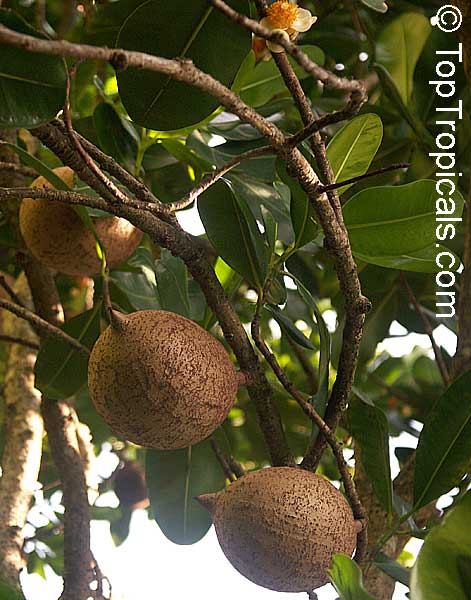
Botanical name: Mammea americana
Common names: Mammee Apple, Abricodo Para
Family: Calophyllaceae
Origin: Caribbean, Central America and Northern South America
USDA Zone: 9-10
Mammea americana (Mammee Apple) is a tropical tree that is native to the Caribbean, Central America and Northern South America. It is a large tree, growing to more than 20 feet tall, with dark-green, leathery, 10-inch waxy leaves and inconspicuous 1-1/2-inch white and yellow flowers. Trees may have all male flowers, but the Redland variety has a perfect flower that are both male and female.
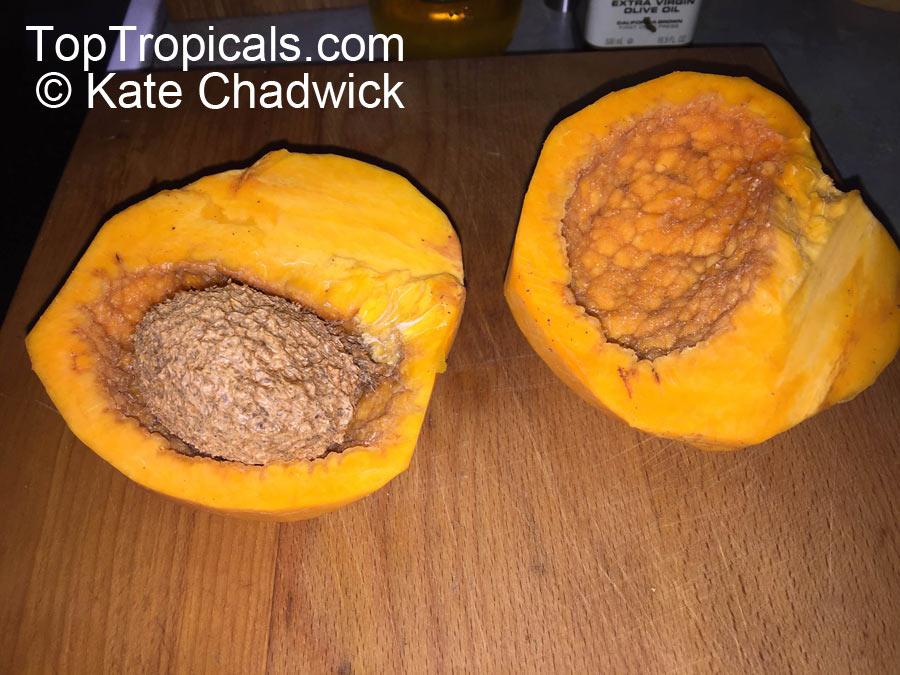
When fully mature, the Mammee Apple tree produces round to oval, scurfy brown fruits with sweet to slightly sub-acid, crispy flesh. The exterior of the fruit is similar in texture to the Mamey or Sapodilla. It is usually eaten fresh, although it can also be used in drinks, compotes and jams. The tree needs full sun exposure and regular watering. It is usually planted in USDA zones 9-11, and grafted trees may bear fruit in as little as 3-4 years.
In regions with cold winters, the Mammee Apple tree can be grown in containers and brought indoors when the temperature drops. It is important to protect Mammee Apple trees from extended periods of cold temperatures. The trees are relatively easy to care for and can grow in a variety of soil types and depths.
The fruit of a Mammee Apple tree is incredibly nutritious and offers various health benefits. It is rich in fiber, Vitamin C and antioxidants. It also provides small amounts of Vitamin A and B, as well as several other trace minerals and phytochemicals. Depending on the size and health of the tree, it can produce up to 50 fruits per season.
Use link to repeat this search:
https://toptropicals.com/cgi-bin/garden_catalog/cat.cgi?find=sapodilla&search_op=and&keyword_op=and&language=e&number=10
&no_change_lang=1&user=tt&sale=1&first=0