Date: 12 Jan 2022
Strobilanthes, Chinese Rain Bell
- a source of Blue, Green, and Purple...
by Alex Butova, the Witch of Herbs and Cats
...Spectacular, elegant, fountain-like small shrub, featuring thin
arching branches covered with pink bell flowers from Fall throughout Winter and
Spring. And yet is has a rich history of use: extensive medicinal properties as
well as a source of the famous dye Assam Indigo. The leaves and stems
contain indican, used in production of the classic Blue Indigo Dye. A dark Blue dye is obtained
from the twigs. It is combined with Turmeric (Curcuma longa) to make Green, and with Safflower (Carthamus tinctorius) to make Purple...
...Cold hardy, compact, yet fast growing and easy, it makes a wonderful container specimen even for beginners...
CONTINUE READING >>
Date: 5 Jan 2022
Wake up to the smell of Coffee...
New Video:
Grow your own Coffee plant - Free Coffee
Everyday!
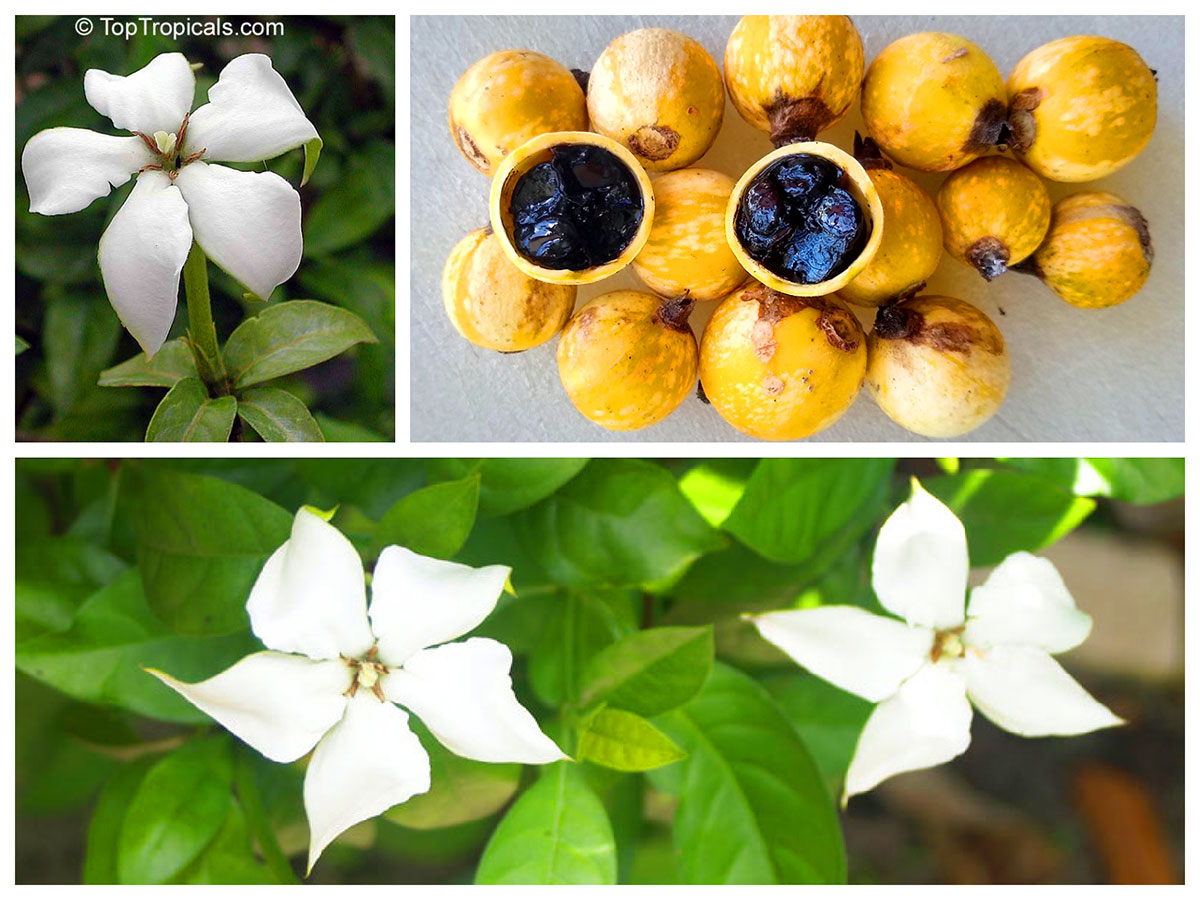
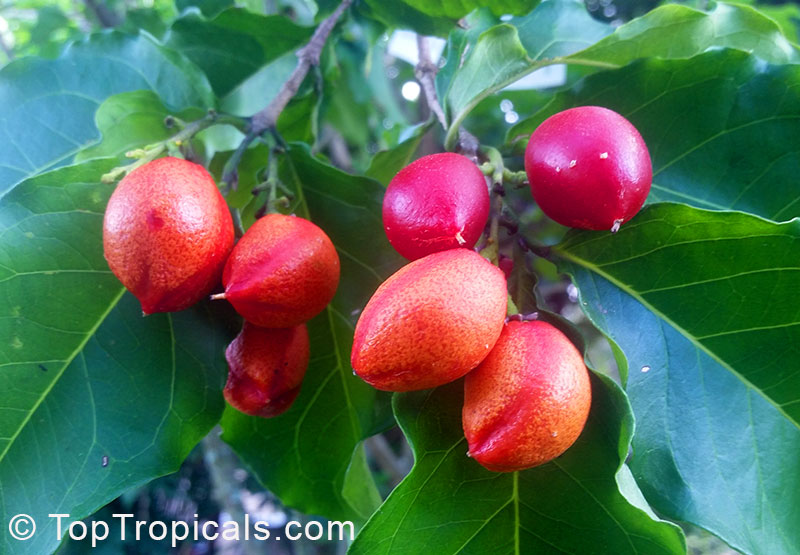
In this video we talk about growing Coffee easily in your own yard. Coffee is the best gift plant and perfect house plant or container fruit tree. The white, fragrant, star-shaped flowers are clustered and resemble gardenias to which they are related. The whole fruit is edible, it is a small fleshy berry changing in color from green to yellow to red. The seeds are the actual "coffee beans" as they called, they can easily be dried, roasted and ground at home. The most common coffee is Coffea arabica; other varieties include Coffea catura - Dwarf Coffee Nanico and Coffea Kona - Hawaiian Coffee Tree Mauna Loa.
WATCH NEW VIDEO >>
Stay updated with TopTropicals Videos by subscribing to our channel at YouTube.com/TopTropicals and get our latest video news of what is fruiting and blooming!
Date: 16 Dec 2021
Zebrina Rojo - Blood Leaf Banana
by Alex Butova, the Witch of Herbs and Cats
...The showy Blood Banana plants grow 6-8 ft tall in the wild, but are well-adapted to container growing and can be maintained at only 3-5 ft. They produce huge paddle-shaped leaves that grow to 6 ft long! The undersides of these large leaves are purple to red...
CONTINUE READING >>
Date: 4 Dec 2020
Establishing Cerbera Manghas
after a long shipping trip
Q: I live in Hawaii. I purchased Cerbera x manghas - Enchanted Incense. I followed the repotting instructions but it looks like dying? Is the normal for all the leaves to fall off? I only use purified water to mist and water the plant. I let it dry between watering and still it looks sad. Please help!
A: Cerbera is very sensitive to shipping stress (in particular to
darkness) and it often loses leaves in transit. Considering long trip to Hawaii, it had extra 1-2 days in transit, longer than to most of the
states.
Your plant looks very much alive, however we understand your concern about lost leaves.
You need to treat it like Plumera: keep on a dry side until it starts
sprouting new leaf growth. Once it gets re-established, you may move it out into regular irrigation or
rain.
We recommend to keep it under roof to control water input, but in very blight spot, preferably
sunny.
Make sure the soil doesn't get soggy, too much water may kill the plant especially when it is leafless and hence doesn't consume/evaporate much water.
Water only when top of the soil gets slightly dry.
Do not put into bigger container until roots start growing.
The plant should recover and start new growth under proper care. Keep us in loop how the plant is
doing!
Date: 30 May 2019
Triple Sec Mango
By Onika Amell, tropical plant specialist
Q: I live in Mesa, Arizona. I am considering purchasing two of you Triple Sec Mango trees. Can you please give me some information on this variety and how to grow it successfully here in hot and arid Arizona, if at all?
A: Triple Sec Mango is a new name for the superior variety Seacrest. The
aroma of this fruit resembles Triple Sec - an orange liqueur. It's a juicy,
mid-season variety that has good disease resistance.
Mango has pretty good heat and drought tolerance. It loves sun, but there
are a lot of factors to consider when growing Mango in your area.
Check your soil. Soil quality is always first and foremost: when you
live in an area of Arizona with
hardpan (extremely compacted desert soil) or caliche (layers of soil
cemented by calcium carbonate) you
will have to learn how to deal with such soil types. Amend the soil as
needed.
The best time to plant is spring or fall to give your Mango a chance to
get established before the really intense Summer heat starts. Alternatively,
protect the tree with a shade cloth. Tender, new growth will not stand a
chance unprotected, especially newly planted and/or young trees.
Mangoes are tropical and sensitive to frost and freeze damage. Young
trees especially will also need winter protection when temperatures go near or
below freezing. Always plant trees in a location where they will be protected
from cold wind. Consider staking your newly planted Mango trees for the
first year. It's never a bad idea to even stake during periods of high winds.
Make sure your planting site has very good drainage. Always use a good
quality mulch around your tree as it helps to trap moisture, keeping the
ground and the roots beneath it cool. Keep mulch a couple of inches from the
trunk of the tree. Avoid a location that gets full day sun. Morning sun,
afternoon shade is ideal. Give regular watering until the tree is established. Once
established, water only when the soil feels dry.
Fertilizer with a Mango-Food. A foliar spray of micronutrient solution is always
recommended during the active growing period. Use plant stimulants and microelements to improve cold hardiness and vigor.
See more info on growing mango in hot climate and container grown mangoes in Arizona.