Q: I have ordered plumeria pudica from you in March and it is
thriving really well here in Rancho Cordova, California. The current
temperatures are ranging from 68 to 32 degrees Fahrenheit. My USDA zone is 9b. Does this
plumeria pudica survive outside with temperatures dropping in coming winter
in CA?
A: From our experience, Plumeria pudica is pretty cold hardy and takes some cold spells in
spite of being a tropical species.
Our trees (well-established) took a few hours of freeze with no
significant damage.
Potted plants are less hardy than in-ground plants. However, their
advantage is, they are easy to move indoors or inside warmer place like garage,
etc. If the temperature stays borderline around 32F for a few hours, the plant
should be safe as long as warm day temperatures follow a cold night. For
longer periods of cold, move the plant inside.
Make sure do not overwater and keep Plumeria on a dry side during
winter, since cold and wet is a bad combination and may cause root problems.
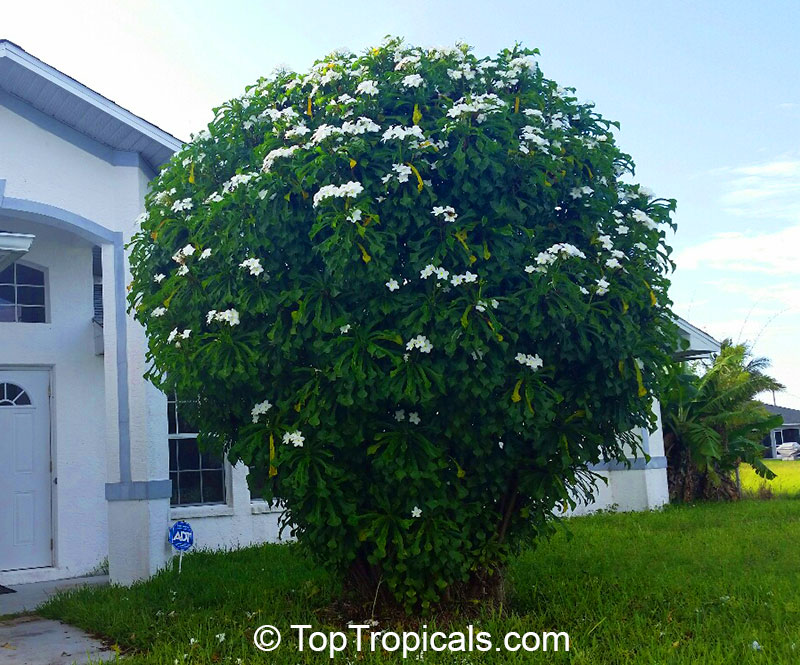
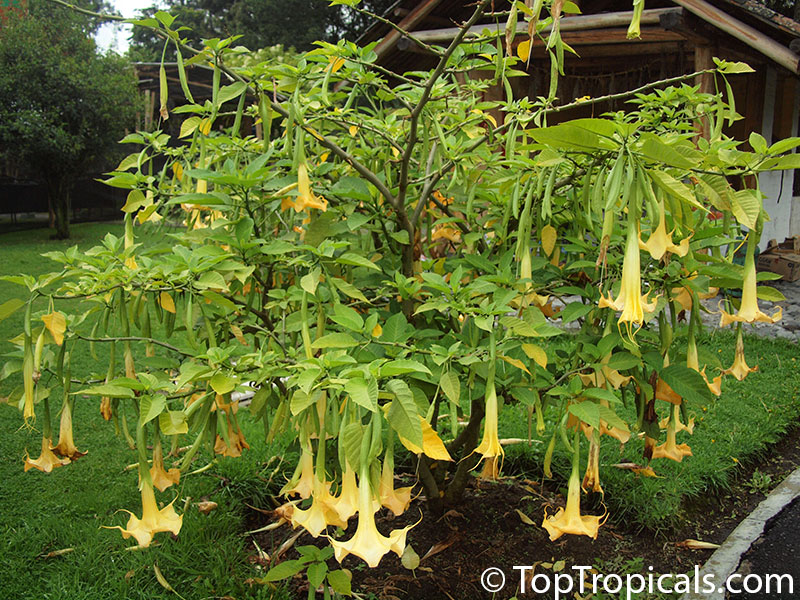
Above is the picture of Plumeria pudica tree growing in Cape Coral, FL
where low temperatures in winter sometimes go down to upper 20's for a few
hours.
To improve cold hardiness of Plumerias and other tropical plants, use SUNSHINE-Epi-T for plant thermal protection and immune system boost.
Make sure to fertilize plants on regular basis to keep them strong and
vigorous. The stronger and bigger the plant, the hardier it is!
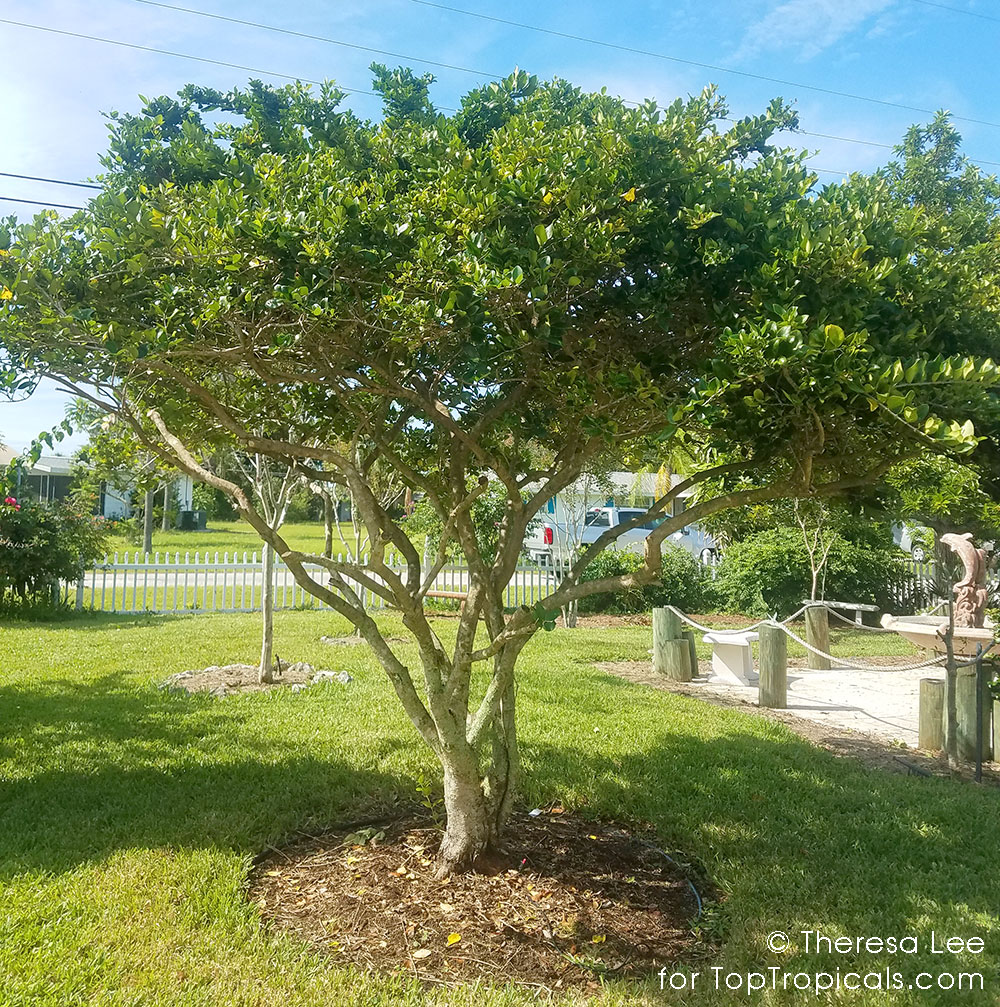
Q: I have been so worried about the beautiful ligustrum on my
property since my husband decided to "prune" it 2 days ago. He removed about 20
branches from the tree and completely altered the look of the canopy which
was so full and lovely ðŸ˜. Please advise me if there is anything I can do to
help this tree. Will any of the branches grow back? Will the canopy return?
It looks practically bare to me now.... so heartbroken. Any advice and
reassuring would be greatly appreciated.
A: The good news is, the tree will regrow new leaves and will
branch out. The question is, how soon. Ligustrum is pretty slow-growing species
and it may take a while until it gets to the shape that is close to the
original.
On the other hand, pruning is beneficial almost for every plant, it
promotes new growth and bushy shape.
So do not panic, your beautiful tree has good chances to become even
prettier.
To speed up the process of re-leafing and promote healthy new growth,
we recommend the following:
1) Provide extra watering, assuming you have a sprinkler system that
covers the yard. Water additionally 1-2 times a week using a garden house, for
1-2 minutes, saturating the soil around the tree and up to a drip line.
3) In addition to fertilizers, we recommend these 2 supplements that
will enhance effect of fertilizers and make re-grow process even faster:
SUNSHINEâ„¢ SuperFood SUNSHINEâ„¢ HumiHum - a natural humate vitamin for plant
4) Mulch well around the tree, keeping it 2-3"away from the trunk
This should help to get your tree back in shape!
Date: 30 May 2019
Selecting the right jasmine
Q: Would you please help me select the right jasmine? I want to
find a jasmine that smells like lily of the valley or honeysuckle or roses,
not the one that smells like gardenia. I'm in Missouri, zone 6, so I want a
jasmine for my deck for the summer, so I want it to bloom this season.
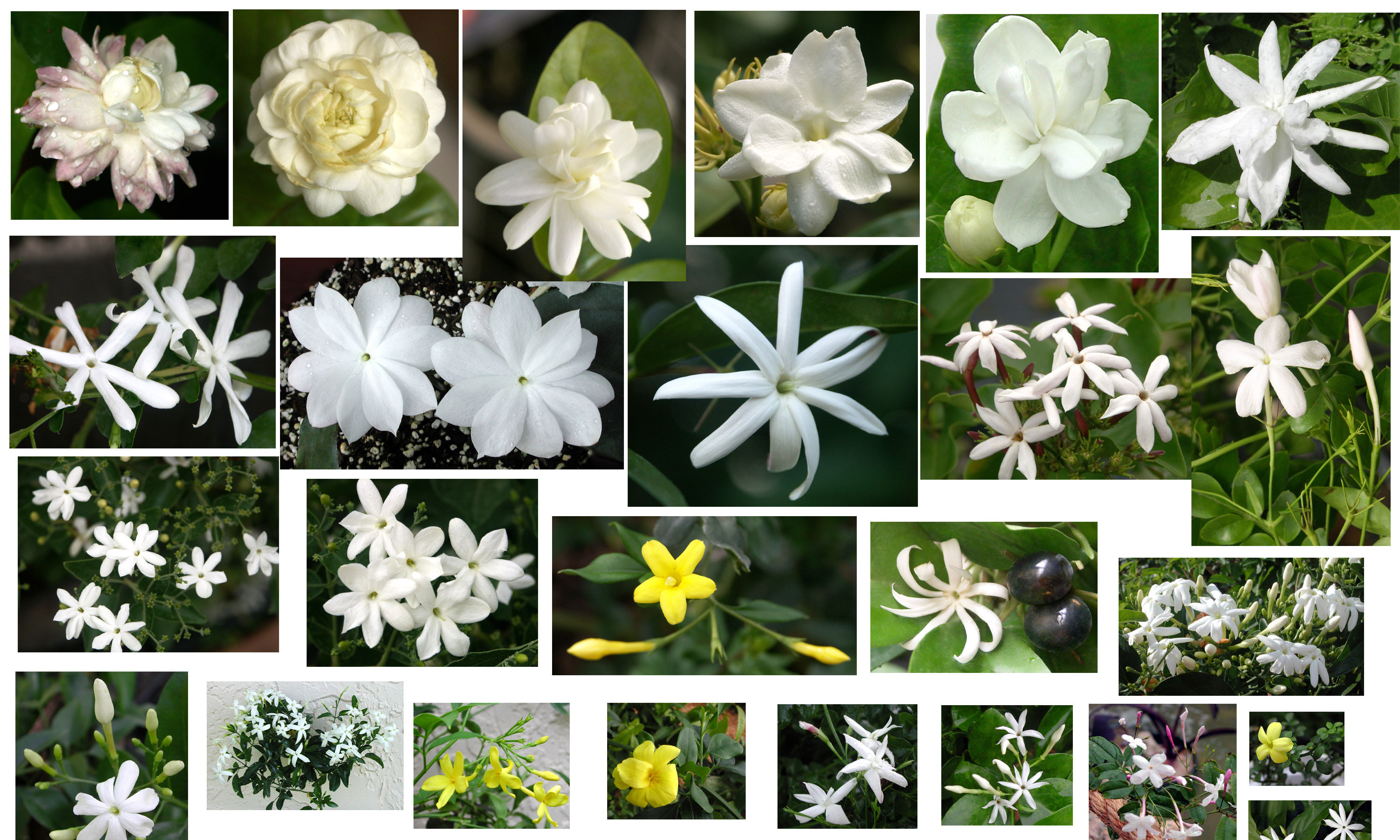
A: There are 3 major types of tropical flower fragrances - Sweet,
Fresh, and Fruity (including Lemony). Below are the most interesting
fragrant tropical flowers, excluding Gardenias (which are sweet type). These are all
same-year bloomers, so you can enjoy the fragrance this year assuming proper
care and bloom booster feeding.
* - The fastest growers that can be treated as annuals. Others can be
grown in a pot and brought inside for winter, and be enjoyed every year.
TROPICAL GARDENING: How to grow Brugmansia (Angel Trumpet) in the ground outside.
Q: I
recently moved from New Jersey to Florida and I brought with me my Brugmansia that
I used to have as a house plant. Can I plant it in the ground now?
A:Angel Trumpet - Brugmansia - is a very popular container plant
valued for its large, stunning fragrant flowers. Originated from South
America, it will be happy to grow in tropical to subtropical climate outdoors.
These are a few useful tips to get the most out of this beautiful plant:
1) Light. Plant it in full sun - the more sun, the more flowers
you get, although Brugmansias tolerate shade. If the plant was previously
grown in container indoors, to avoid leaf burn, keep it protected with a shade
cloth or simply white sheet for a while and gradually open to adjust to full
sun.
2) Soil and fertilizer. Use fertile soil with lots of organic
matter (add compost to existing soil). It must be very well drained, Angel
Trumpet won't tolerate waterlogged conditions. Plant it on a little "hill"
elevated 3-4"above the surrounding area. Brugmansias are very heavy feeders. Once
the plant is established, fertilize on regular basis with Slow Release Fertilizer - a handful once a
month.
3) Water. Water daily until established. Once the root system is
well developed, the plant is drought tolerant and won't require too much
care. But at the beginning, watch the leaves - the lush foliage droops quickly
if the plant is thirsty.
4) Plan space. Brugmansia is a short tree, but it needs a lot of
room to spread branches with its heavy hanging flowers. Think 12" wide and
maybe almost as much tall.
5) Support. Being widespread plant, Brugmansia can be blown with
strong winds. Stake with strong support until established.
6) Propagation. Brugmansia is one of the few plants that
propagates with semi-woody cuttings; soft green cuttings usually have little
success. Other than that, it is pretty easy!
Do Fruit Trees Increase Property Value? Tropical Plants That Pay Off
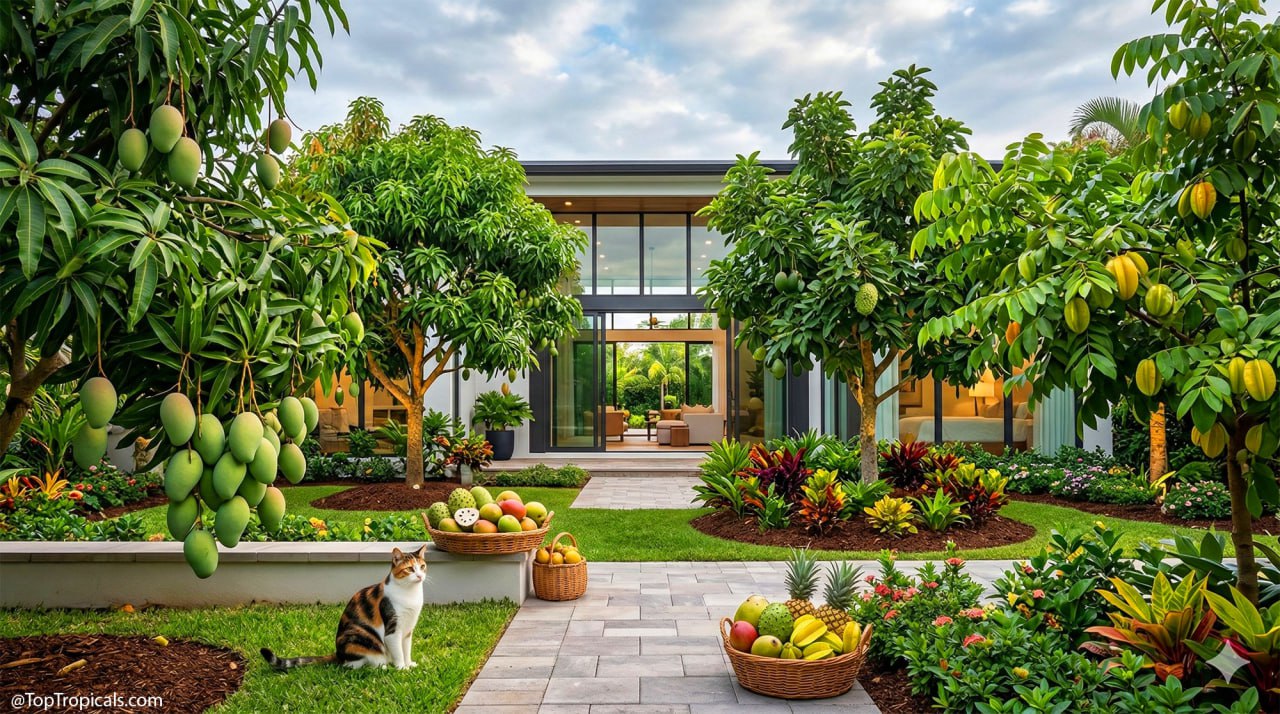
Yard with fruiting tropical trees
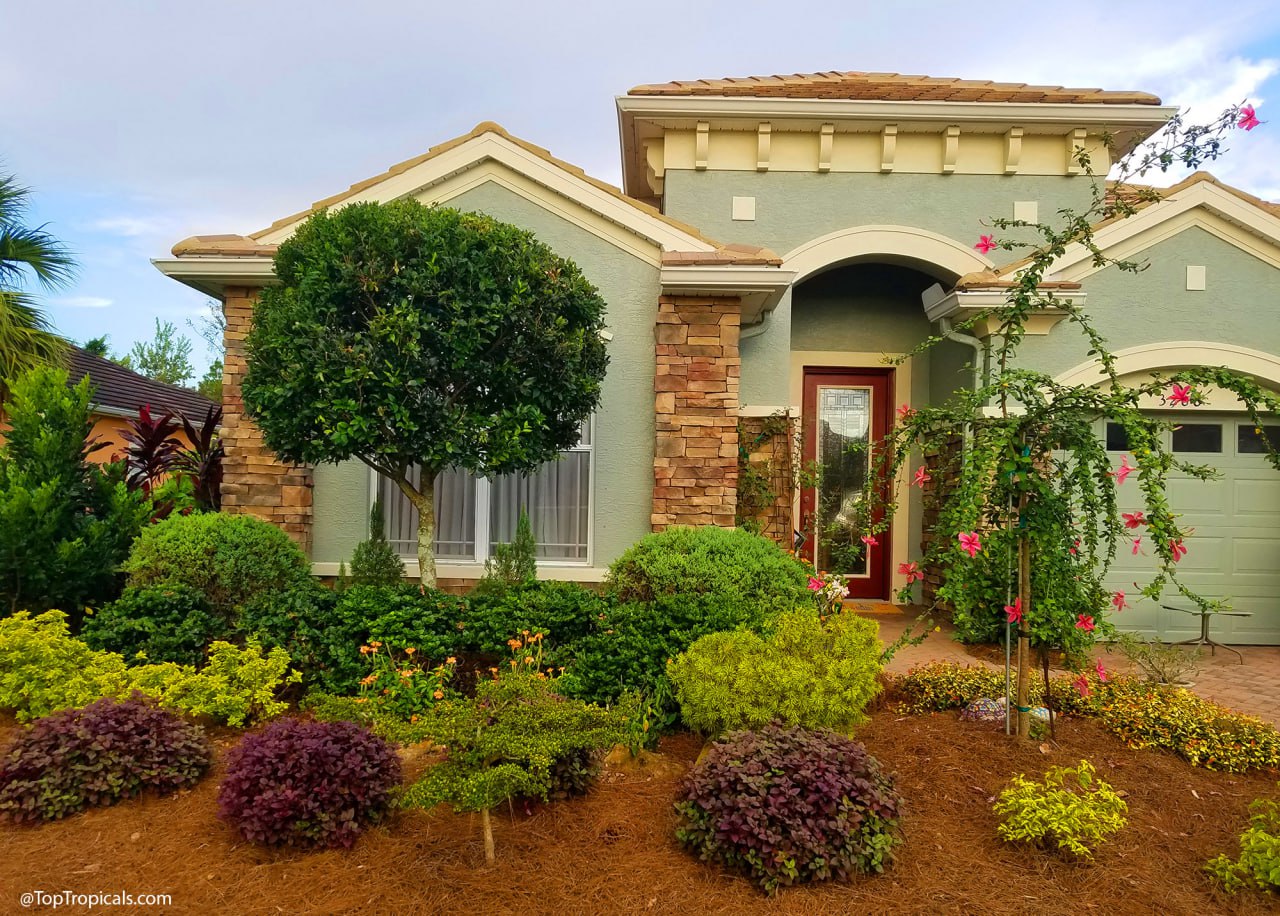
Landscaped yard in Florida
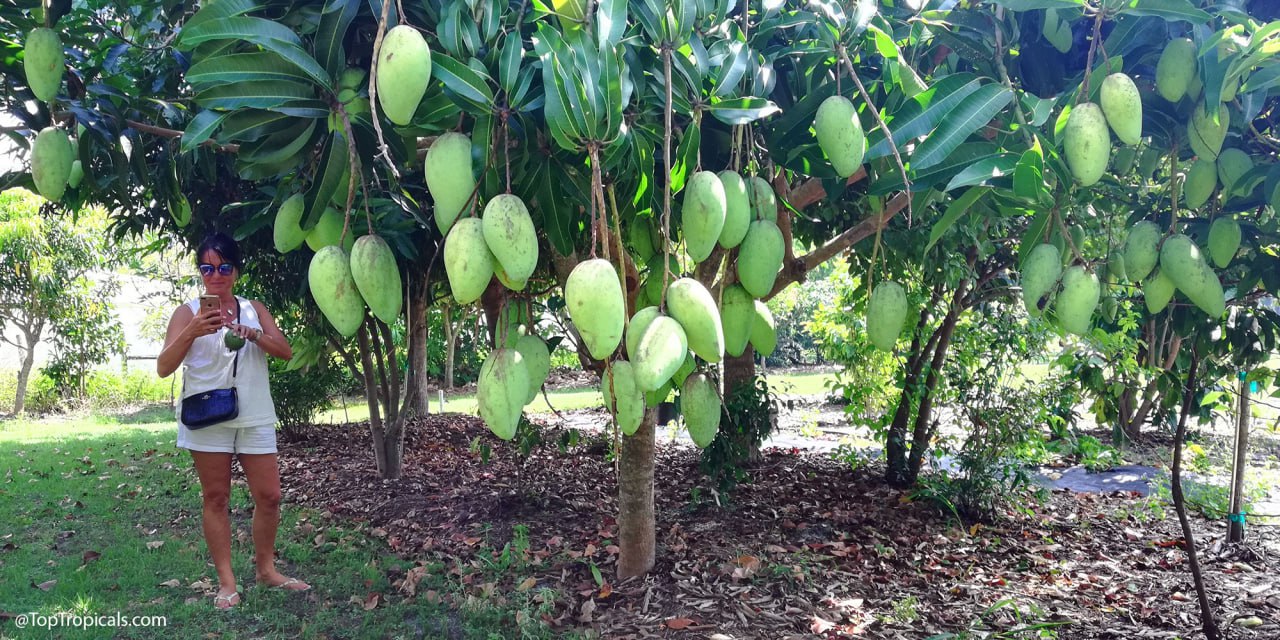
Mango tree fruiting in the garden
Do Fruit Trees Increase Property Value? Tropical Plants That Pay Off 🏡
Can your backyard pay for itself? Learn which 12 tropical fruit trees real estate experts say are the smartest investment for your landscape. Discover how tropical fruit trees like mango and avocado add "edible equity" and curb appeal to your property, making it more desirable to future buyers. Turn your yard into a private paradise that lowers grocery bills and boosts home value.
In warm climates like Florida, a mango tree isn't just landscaping - it’s a food-producing asset. Mature tropical fruit trees offer "edible equity," saving homeowners hundreds in grocery bills while creating a unique, memorable aesthetic for buyers.
Mango Plant Facts
Botanical name: Mangifera indica Also known as: Mango
USDA Zone: 9 - 11
Highligths
🥭 1. Focus on "Instant Recognition" Favorites
Trees buyers already know and love provide the strongest ROI. They signal that the yard is already productive - something new builds can’t offer.
• Top Picks: Mango, Avocado, Papaya, Banana, Guava, and Loquat.
Avocado Plant Facts
Botanical name: Persea americana, Persea gratissima Also known as: Avocado, Alligator Pear, Aguacate, Abacate
USDA Zone: 9 - 11
Highligths
• The Value: A single mature avocado or mango tree can yield hundreds of pounds of fruit annually.
🥭 2. Create a "Memorable Discovery" with Exotic Varieties
Unusual fruits turn a standard yard into a tropical orchard, acting as a conversation piece during home tours.
• The Exotic List: Jackfruit, Sugar Apple, Soursop, Sapodilla, Ice Cream Bean, and Star Fruit.
🥭 3. Strategic Placement for Energy Savings
Large-canopy trees like jackfruit or mango do more than provide food; they act as natural insulation.
• Natural Cooling: Strategic planting reduces afternoon sun exposure and lowers AC costs. • Indoor/Outdoor Flow: Use trees to frame window views, block neighbors, and create private "outdoor rooms."
🥭 4. The Power of the "Mini Orchard"
A collection of 3–5 trees creates a stronger emotional pull than a lone plant. Buyers begin to visualize a lifestyle of smoothies and harvests.
• Winning Combos: Mango + Avocado + Papaya or Guava + Star Fruit + Banana.
🥭 5. Maintenance: Health Equals Value
Fruit trees only add value if they look manageable. A neglected tree suggests a neglected home.
• Pre-Sale Prep: Prune for tidiness, mulch the base, and clear fallen fruit. • Spacing Matters: Avoid overcrowding; ensure buyers can walk comfortably through the yard without feeling "closed in."
🥭 The Long-Term Play
Unlike decorative plants that may need frequent replacement, fruit trees appreciate over time. Because a mango tree takes years to reach peak production, the best time to plant for future resale value is now. By the time you list, your yard will offer shade, privacy, and a harvest that buyers find hard to resist.