Q: I had
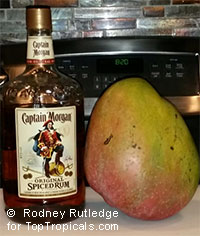
a mango tree, the fruit was very large and no one knew the
name of it. Can you please tell me the name of it or
something about it? I have never seen this variety before.
It weighed in at 7 lbs, it smells a little like bubble
gum, its flesh is fiberless and the taste is watery with a
little sweet. And do you have it for sale? I don't have
the tree anymore. My pictures are about a year or two old,
lighting struck the tree and it died so I have been trying
ever since then to find another tree but I don't know what
kind it is. I originally bought the tree on side of the
road cause I always wanted a mango tree so I didn't care
at the time what kind it was so I bought it but I was
shocked at how big the mango was. However I collected
rotten mangoes off the ground and planted the seeds. Only
one germinated.
A: This
mango is called Elephant. We will try to
find this grafted variety and let you know when we have
it. Unfortunately seedlings take many years to fruit (8-15
for mango) and usually do not come trues to seed.
The closest variety by fruit size is Lancetilla, it is a giant 5
lb fruit, of a very good quality. And the best tasting and
the most popular - Nam Doc Mai!
Remember at Top Tropicals, we can help you to identify
plants for you! Just send us a picture. Close up of leaves
and/or flowers/fruit will be always helpful. Top Tropicals
plant experts are always here to help!
Date: 24 Jun 2018
What you need for successful growing
Adeniums
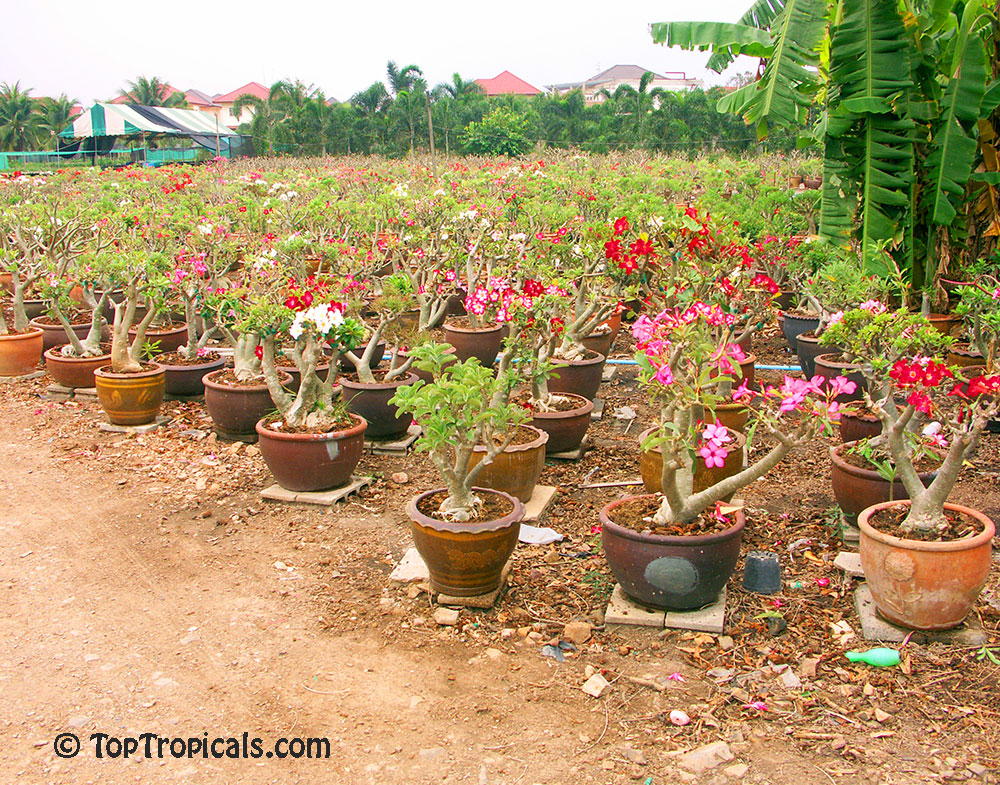
1) Adenium plants - from TopTropicals Endless selection of
Adeniums. We have double flower, red, purple, yellow
and even black flowers! 2) A small pot with excellent drainage is a must.
Position the plant in a pot, size of root system. 3) Adenium soil mix. TopTropicals Adenium Soilless Mix.
Use only well-drained soil. 4) Lots of light. Adeniums need lots of light for
heavy flowering. However from our own experience, in super
hot climates, they look healthier in filtered bright
light. After initial planting, once the plant is
established and starts growing new leaves (may take a few
weeks), gradually move it into brighter light. 5) Little water. Adeniums like a neutral to hard
water. Acidic water tends to sour the soil too fast and
may cause root rot. Water plants preferably in the early
morning, and allow them to drink up throughout the day.
Watering can be done daily to every few days. Do not water
again until soil dries on surface. Never allow your plants
to sit in a saucer of water, but don't let them to dry out
too often - this causes adeniums to go into early
dormancy. Adeniums do not like both over-watering or
drying-out. 6) Fertilizer. To make your plant develop a large
swollen base/trunk, you'll need a good quality fertilizer.
Use slow-release granulated fertilizer
for overall plant health, and liquid water soluble
fertilizer for swelling up trunks that is also used to
increase flowering. It shouldn't be too high in nitrogen,
the middle number should be the highest (similar to
10-50-10). Never apply fertilizer directly on roots and do
not liquid feed when a plant is thirsty: always water
first slightly to avoid root burn and leaf drop. Do not
wet leaves. 7) SuperFood micro-elements. Besides
macro-nutrients provided by fertilizer, Adenium needs
micro-elements for balanced development of root system and
especially caudex: Sunshine-SuperFood. 8) SUNSHINE-BC. Spray leaves with SUNSHINE-BC once a month to
encourage young growth, profuse flowering and large
caudex. 9) Growing caudex. There is a secret how to create
a large swollen caudex: raise the plant a bit every time
you re-pot it, so that the upper part of roots will be a
little exposed. The plant will form more roots that will
go down.
Mysterious Night Blooming Cactus -
Epiphyllum. How to grow it?
Q:
My friend has a huge Queen of the Night Cactus, and the
blooms are so gorgeeous! She gave me a cutting but I am
not sure how do I plant it? How long will it take till it
starts blooming? Is it true that it has only one flower
once a year and only at night?
A:
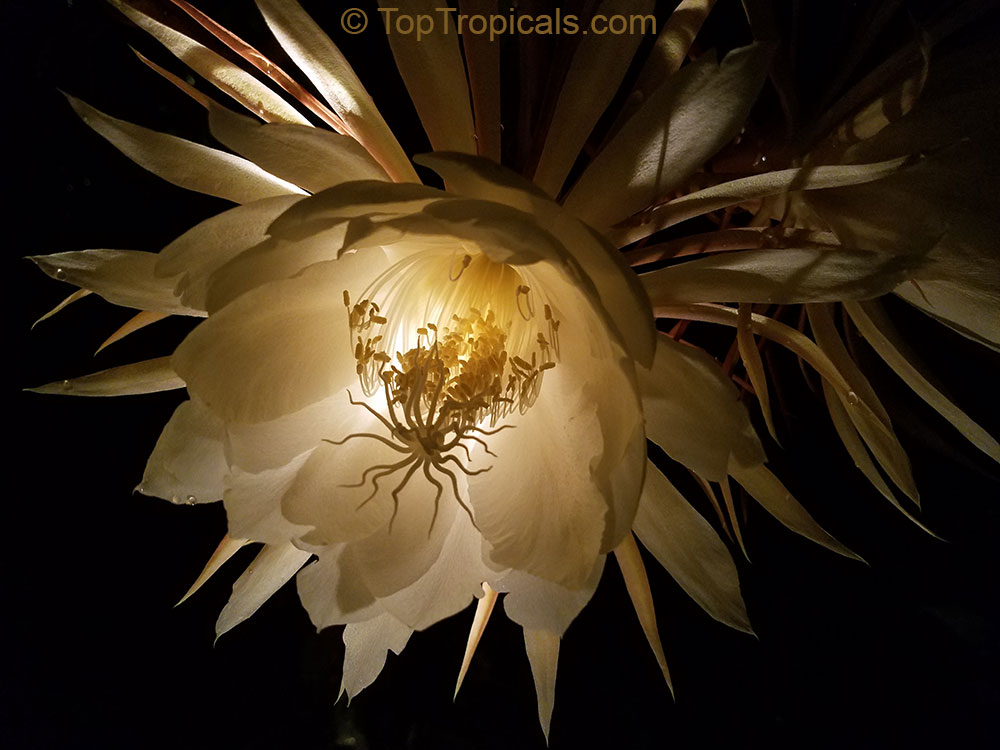
Queen of the Night is a very popular and yet mysterious
plant. The flowers open once a year after sunset for one
night. However the flowering period can last a month or
two during the warm season. So each flower lasts only one
night, but there will be more flowers to come! In the
Nature, Epiphyllum oxypetalum - Queen of
the Night - grows on trees in the jungles of Central
and South America. It is actually very easy to grow as an
indoor plant in colder climates. Here is South Florida we
grow them outside in hanging baskets. This is how to start
Queen of the Night from a cutting:
1) Put the cutting in a dim, dry place for three days,
with no soil and its base exposed to the air, so it will
form a callus.
2) Fill a 4-6-inch pot with slightly damp potting soil or succulent mix. Insert the
cutting 1 or 2 inches into the soil and tamp the soil
around its base.
3) Place the pot where the cutting will get bright light,
but no direct sun. Spritz it occasionally with a spray
bottle of water to keep the soil only slightly moist. It
should root in couple weeks.
4) Keep the plant on an east- or west-facing windowsill
where it will receive direct sunlight only in early
morning or late afternoon. Water the cactus until water
runs out of the pot's drainage holes. Dump the excess out
of the pot's saucer immediately, and wait until the
surface of the soil is dry to the touch before watering
your cactus again.
5) Fertilize once a month from March through October with
a balanced plant food, and
apply micro-elements once a month
for a healthy vigorous growth. Refrain from feeding the
plant in December and January.
6) Position the cactus in partial shade under a porch roof
or tree, if you decide to move it outdoors during the
summer. This plant likes summer humidity!
7) Repot the cactus only once every two years or so, to
keep it slightly root bound. Wait until after it flowers
in summer, and repot it after it blooms. Prune off any
damaged growth at that time as well.
8) Move the plant to a cooler room over the winter months,
one that remains dark during the evening hours with
temperatures above 45 degrees. Reduce the frequency of
watering, waiting until its soil is dry. Resume regular
watering in March.
If grown from cutting, it may take 2-3 years until the
plant starts blooming, so if you don't want to wait that
long - just get a blooming size plant from our
store!
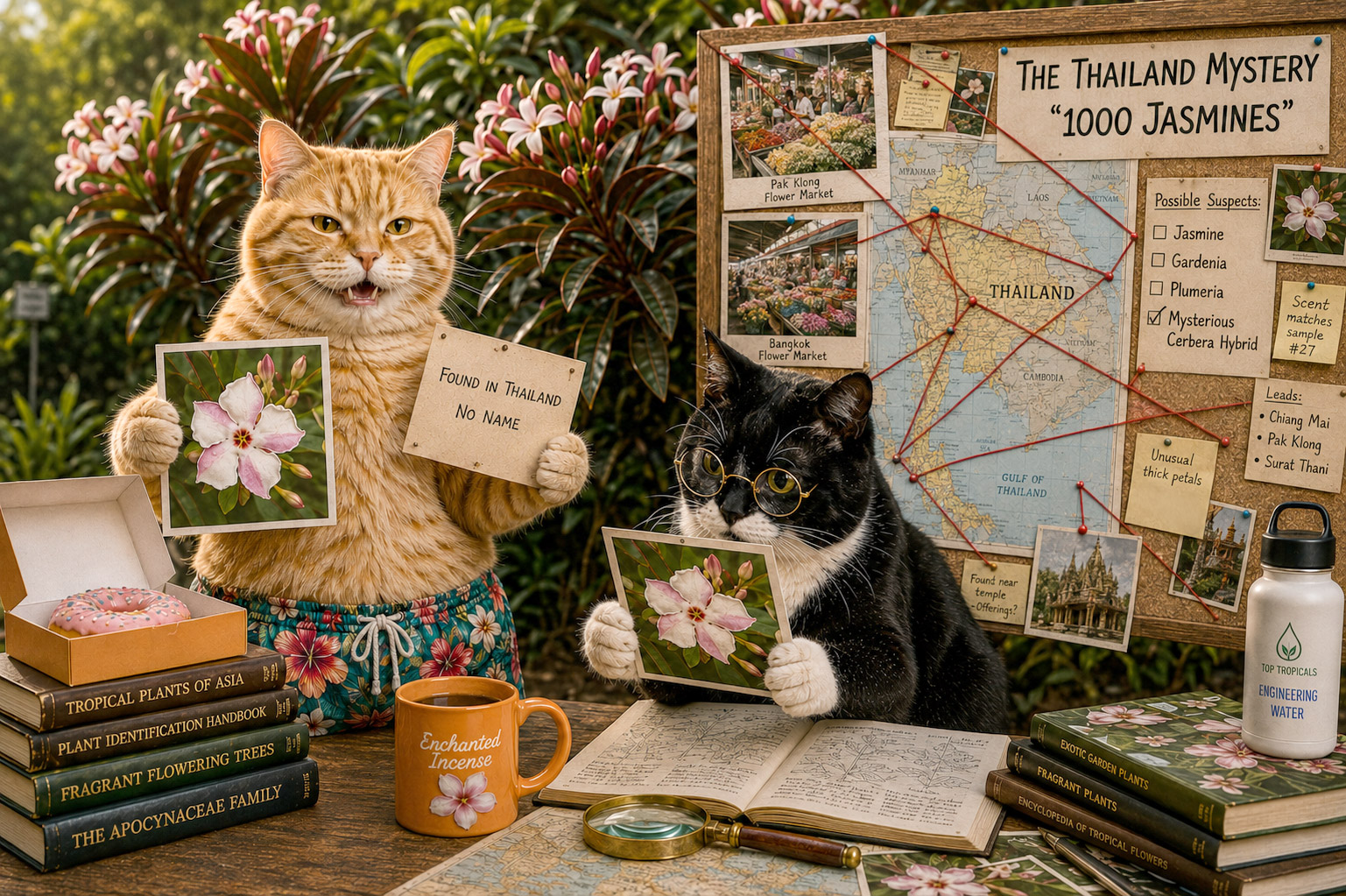
Sunshine: John said it smelled like a thousand
jasmines. Smokey: And somehow that's all the information he brought
back from Thailand. Sunshine: He brought a photo, too. Smokey: Excellent. We can begin our international manhunt.
Well, Smokey and Sunshine have closed the case and found the mystery
plant. The cork board is coming down, the magnifying glass is back in the
drawer, and the "Enchanted
Incense" mug is finally empty.
Now let's talk about the plant itself.
🌸 Some plants arrive with a label. Some arrive with a
story.
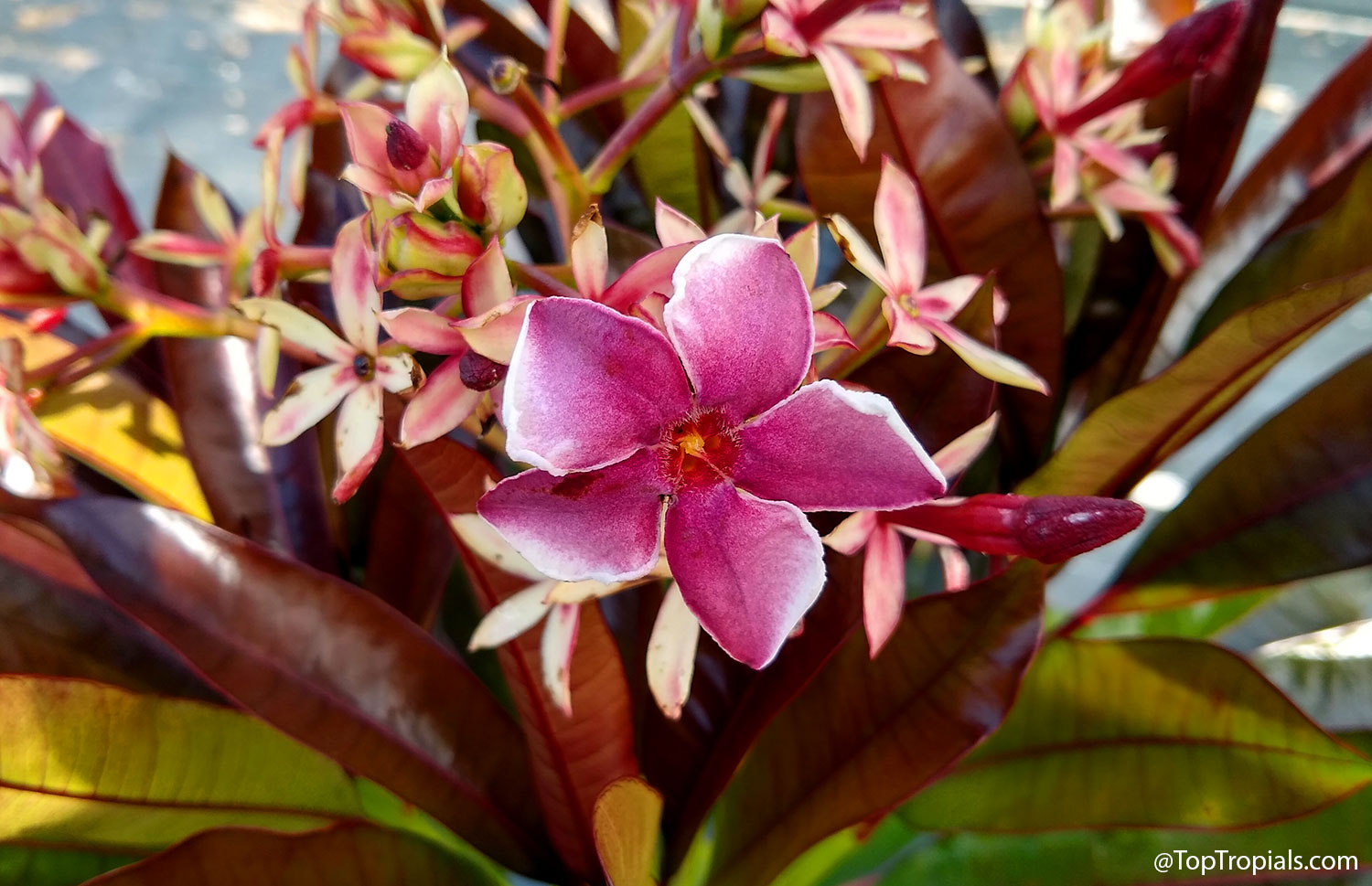
Cerbera x manghas - Enchanted Incense - produces some of the most
unusual
fragrant flowers in the tropical garden. Its velvety reddish blooms,
outlined in white and carried on vivid pink tubes, create an exotic display
that looks hand-painted.
When our good friend John Mood returned from a plant conference in
Thailand, he did not bring us a plant. He brought us a mystery.
John had spent decades growing and collecting rare tropical plants. When he
said he had found something special, we paid attention.
On a visit to Chatuchak
Market, one of the most famous plant markets in Asia,
something stopped him. Not the flowers. The fragrance.
"I found a plant that smells stronger than a thousand jasmines," John
told us.
That one sentence stayed with us for years.
He had photographs. He had his memory of that scent. What he did not have
was a name. No tag. No seller information. Just the photos and the certainty
that he had smelled something genuinely unusual.
So we started looking.
We showed the photographs around. We asked collectors. We compared flowers.
Every lead turned into another question. But eventually, after years of
searching on and off, we found it.
The mystery plant turned out to be an unusual Cerbera
unlike anything we had grown before.
Today we call it Enchanted Incense. Fragrance lovers recognized
immediately what John had recognized in that Bangkok market. This was not
just another pretty tropical flower.
🌸 The Plant
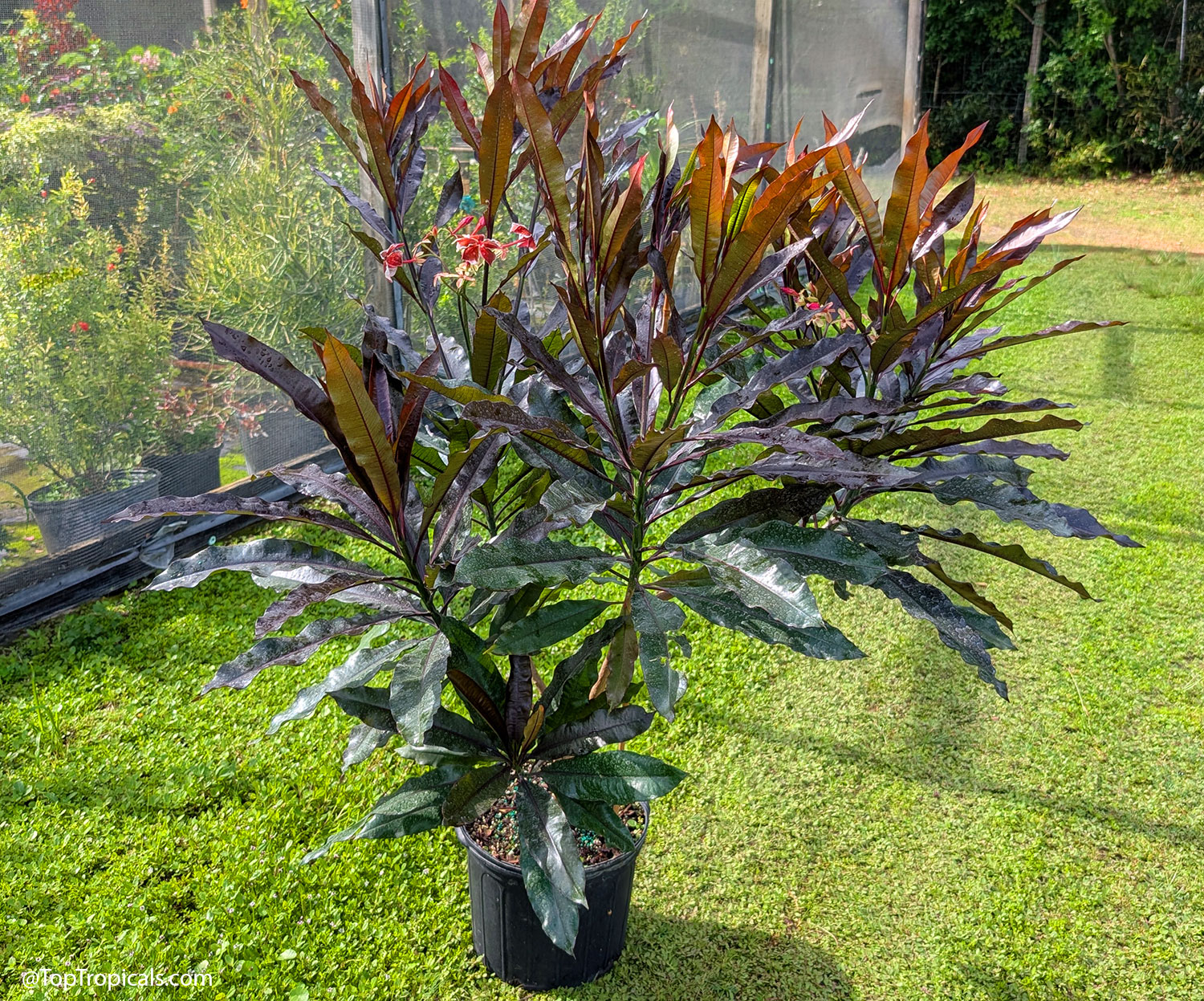
Even when
not in full bloom, Cerbera
x manghas Enchanted Incense is a standout plant. Its glossy, deep
burgundy foliage and bronze new growth create a bold tropical presence,
while the unusual flowers add an extra layer of intrigue.
Visitors at our nursery still walk past it and stop. Not because they
noticed the plant. Because they noticed something in the air and could not
figure
out where it was coming from.
The flowers start soft pink and white, then deepen to rich red and auve as
they mature. They come in clusters, four to five inches across, and the
fragrance they produce does not stay close to the flower. It moves. It fills
the space around the plant. On a warm morning it can perfume an entire
patio.
The foliage is worth mentioning too. Deep green leaves with burgundy and
mauve tones that make it attractive even when it is not blooming. The growth
habit is slow and slightly weeping, similar to plumeria,
which is no coincidence since they are close
relatives. Unlike plumeria, Enchanted Incense stays evergreen in warm
climates.
It is a compact, slow-growing small tree that is happy in a container. That
makes it practical for gardeners in colder climates who need to bring it in
for winter, and for anyone who wants a fragrant plant near a seating area
rather than somewhere across the yard.
🌸 Why We Grow It
The
flowers of Cerbera
x manghas - Enchanted Incense - look otherworldly. Deep reddish petals,
bright pink
tubes, and contrasting white edges combine to create one of the most
distinctive fragrant blooms.
We grow thousands of plants, and most can be described in a sentence or
two.
This one cannot.
A large Enchanted Incense grows right outside our office. Every year it
reminds us why we
spent so much time searching for it.
Visitors stop beside it and ask the same question: "What is that
smell?"
They usually notice the fragrance before they notice the plant.
Some follow the scent across the nursery. Others stop in the middle of a
conversation and start looking around. Nearly
everyone ends up standing next to the tree trying to figure out where that
incredible fragrance is coming from.
In a world full of beautiful tropical plants, Enchanted Incense remains
one of the few that announces itself before you even see it.
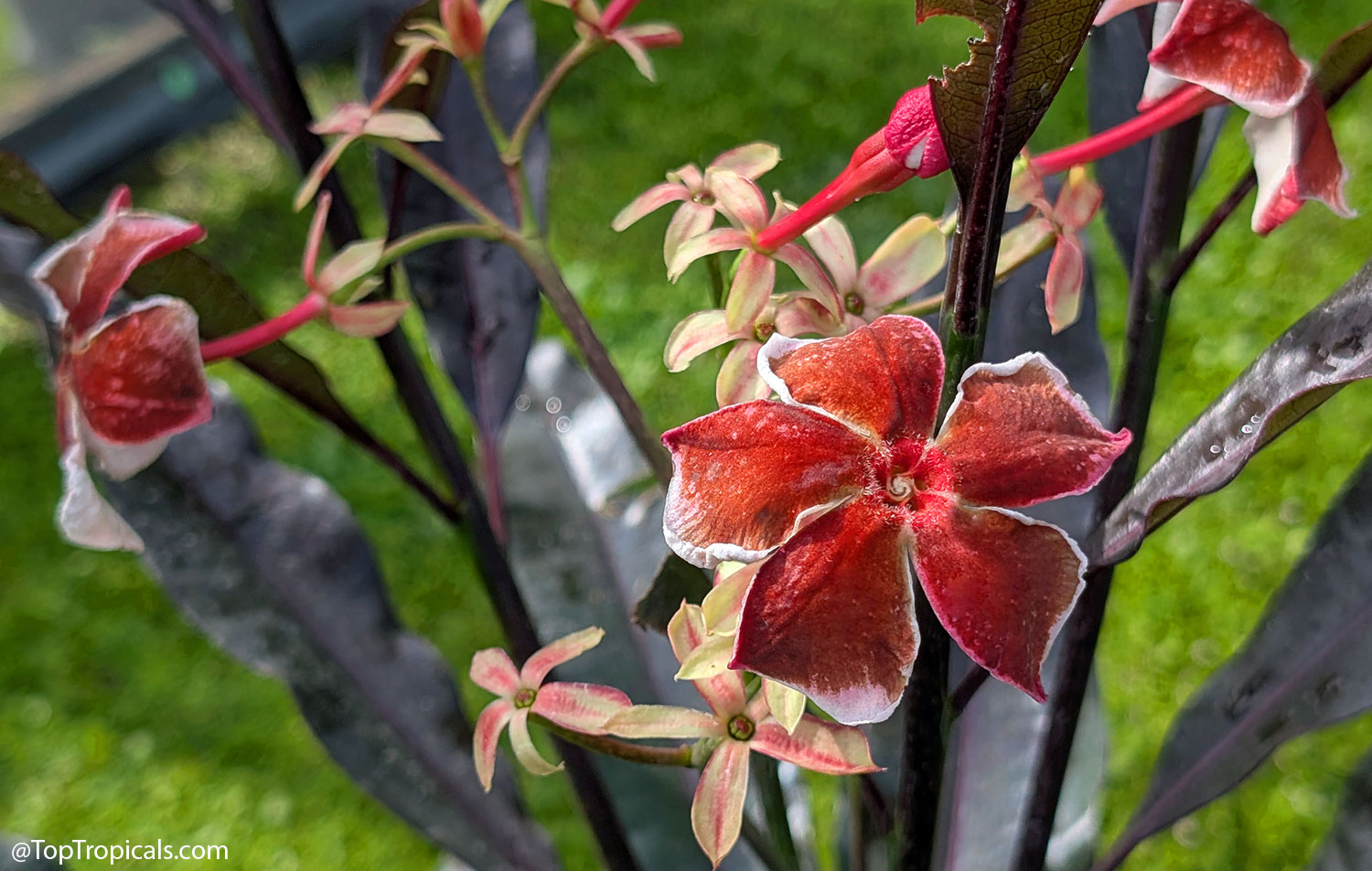
Cerbera
x manghas -
Enchanted Incense can display remarkable variation in flower color. This
form
combines soft rose-pink blooms with white-edged petals and rich burgundy
foliage, creating a striking contrast throughout the plant.
Light: Full sun is best (at least
six hours
daily). It will tolerate partial shade but blooms much more generously in
good
light.
Watering: Water regularly during
warm weather. In cool weather and winter, keep the soil on the drier side.
Overwatering when
temperatures are low is the most common mistake.
Soil: Use a well-draining mix. This
plant absolutely does not want wet feet.
Fertilizer: Feed with a
Green Magic
controlled-release fertilizer for flowering plants in spring, supplemented
with occasional liquid fertilizer through the summer. For non-stop blooms
without the risk of
salt build-up in containers, we highly recommend
Sunshine
Boosters™.
Read
our Guide to Sunshine Boosters™ and Green Magic fertilizer
Winter Care: Bring it indoors
when temperatures approach the mid-30s°F. The rootstock is fairly
tough,
but the foliage is not. Cold and wet conditions combined are the real risk.
One Last Thing
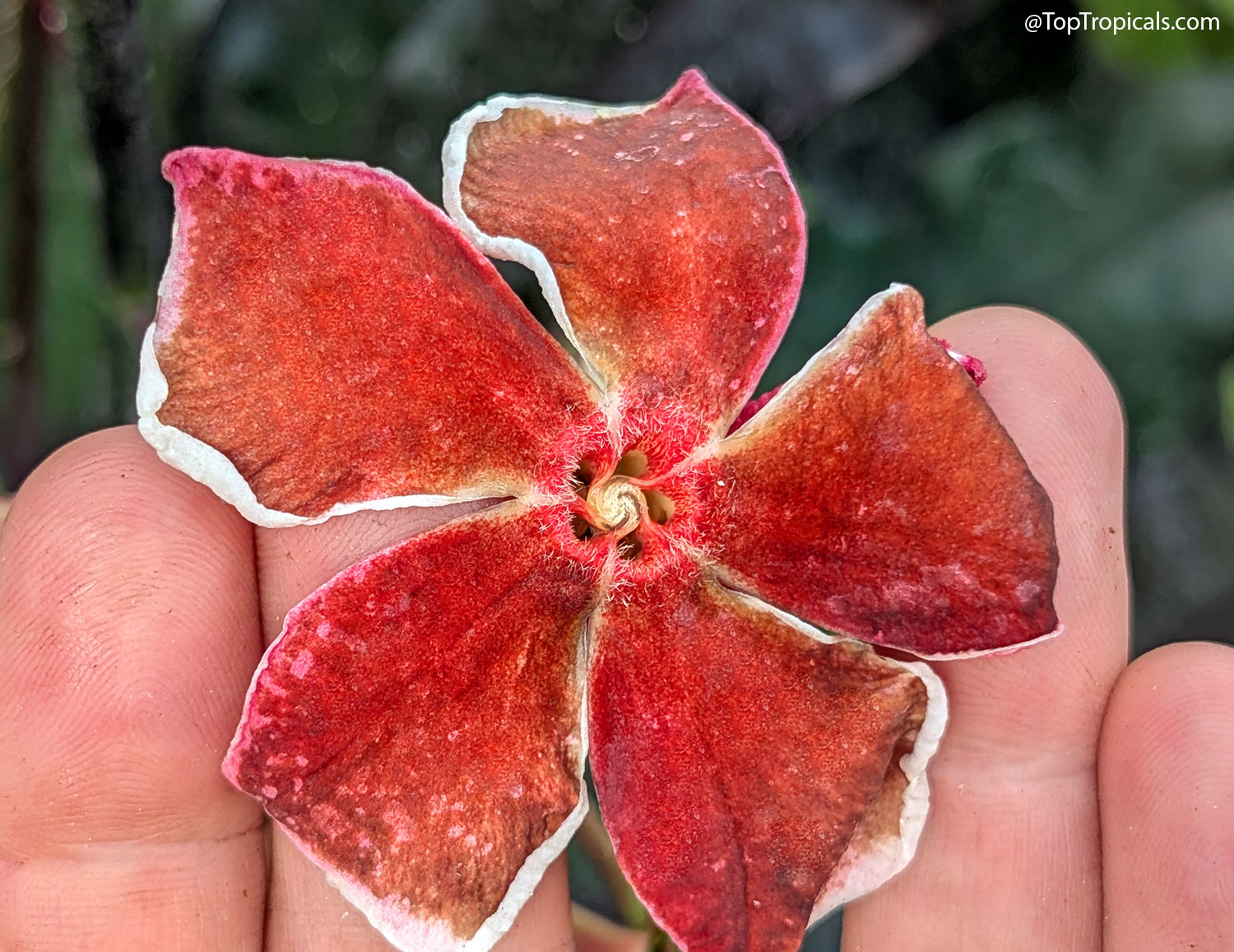
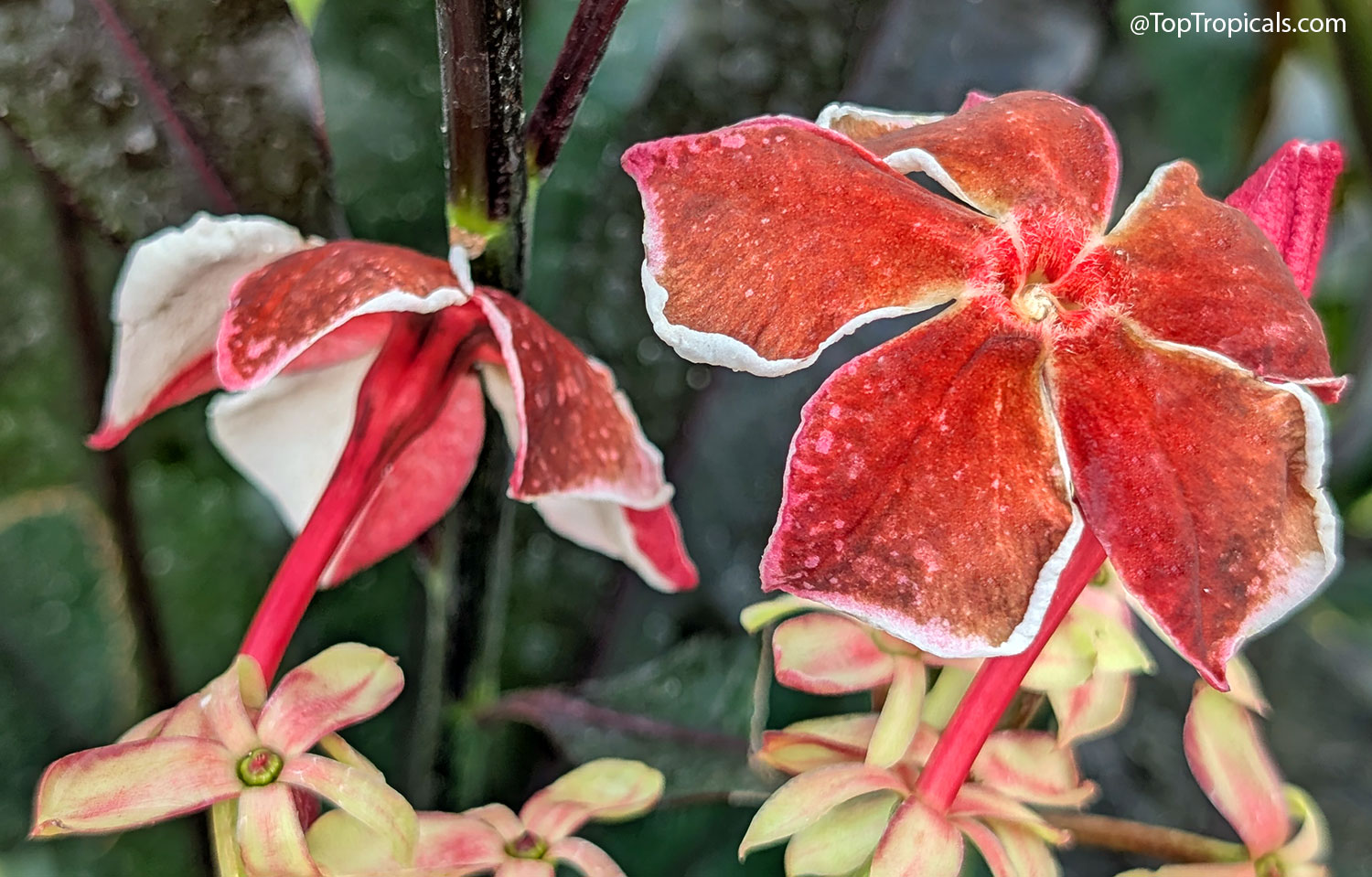
A closer
look reveals the remarkable details of Cerbera
x manghas - Enchanted Incense.
The velvety petals, crisp white edging, and fuzzy pink center give the
flower an appearance
unlike anything else in the garden. And then comes the scent...
John came back from Bangkok with a few photographs and a fragrance he
could not forget. It took us years to track down the plant behind that
memory. We have never regretted a single minute of the search.
Sunshine: So after all those years, what's the answer? Smokey: Stand next to the plant. Sunshine: That's it? Smokey: The fragrance explains the rest.
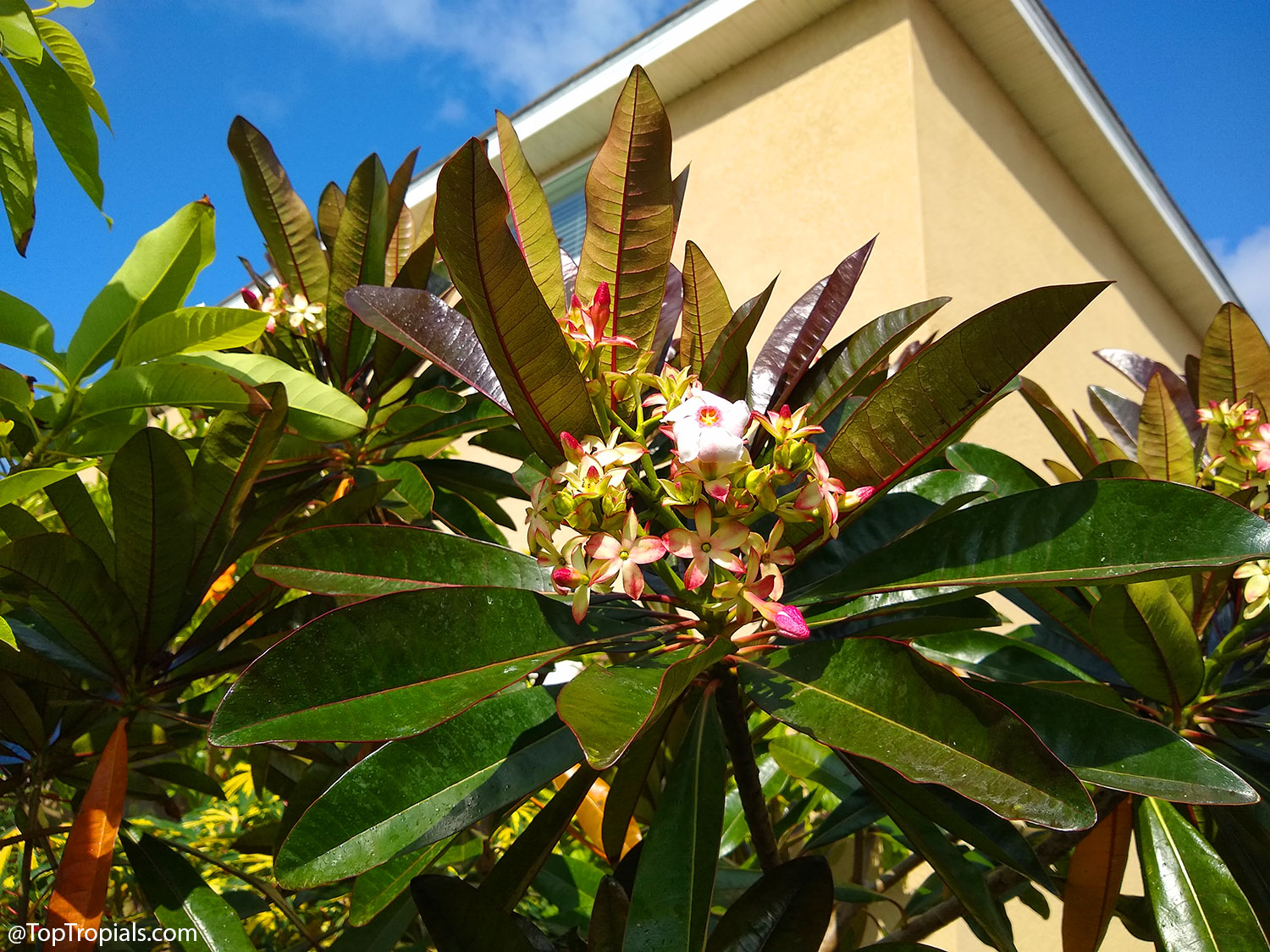
A closer
look reveals the remarkable details of Cerbera
x manghas - Enchanted Incense develops into an attractive small tree
with lush evergreen foliage and colorful new growth. In the
landscape, it combines year-round structure with clusters of bright
redding-pink fragrant flowers that stand out beautifully against the glossy
leaves.
Date: 5 Jan 2022
Five Favorite Winter Bloomers
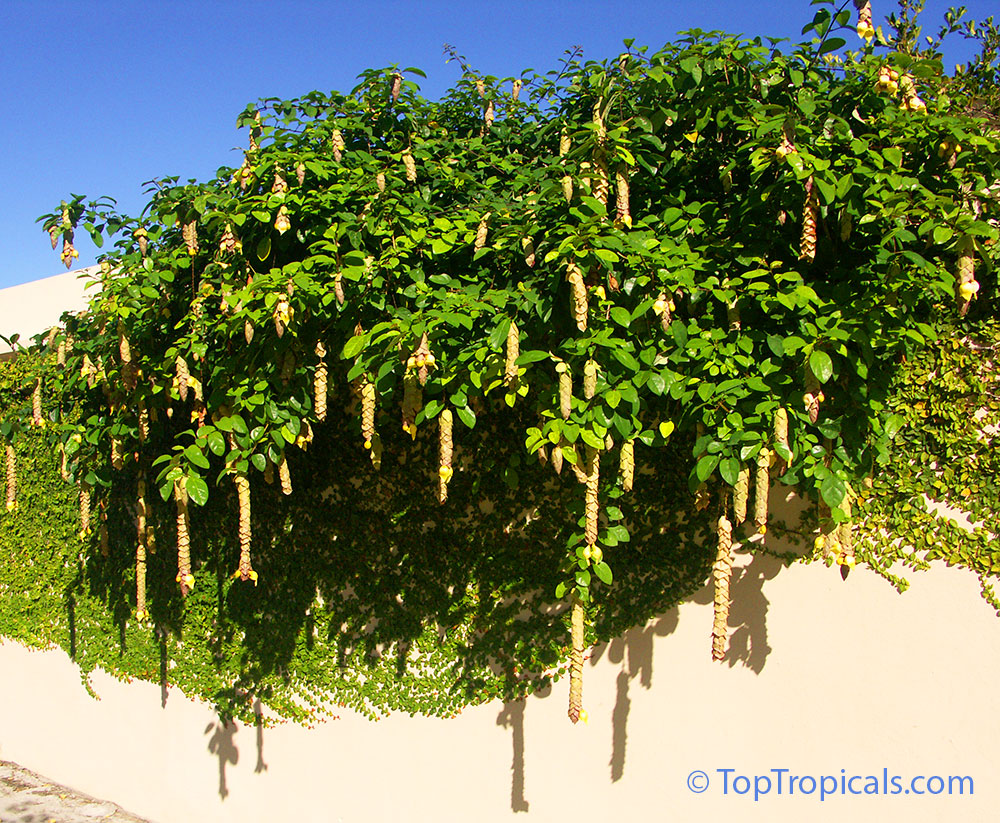
#5. Parrots Beak
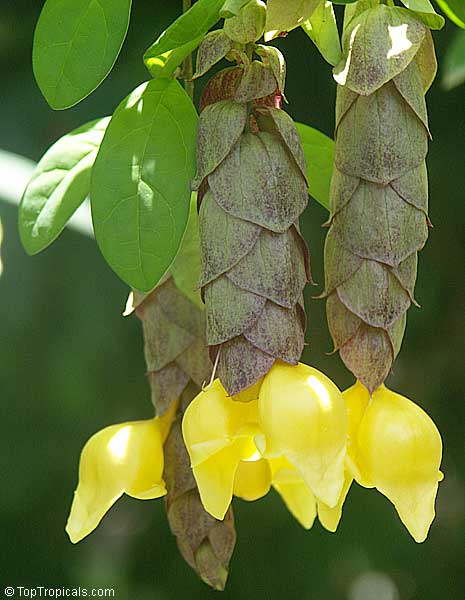
Gmelina philippensis - Parrots Beak. An extraordinary fountain-like shrub
with pendant branches, large long leaves and exotic flowers comprised of
yellow blossoms which emerge at the end of a tube-like structure of overlapping
bracts. The flower resembles parrot's beak!
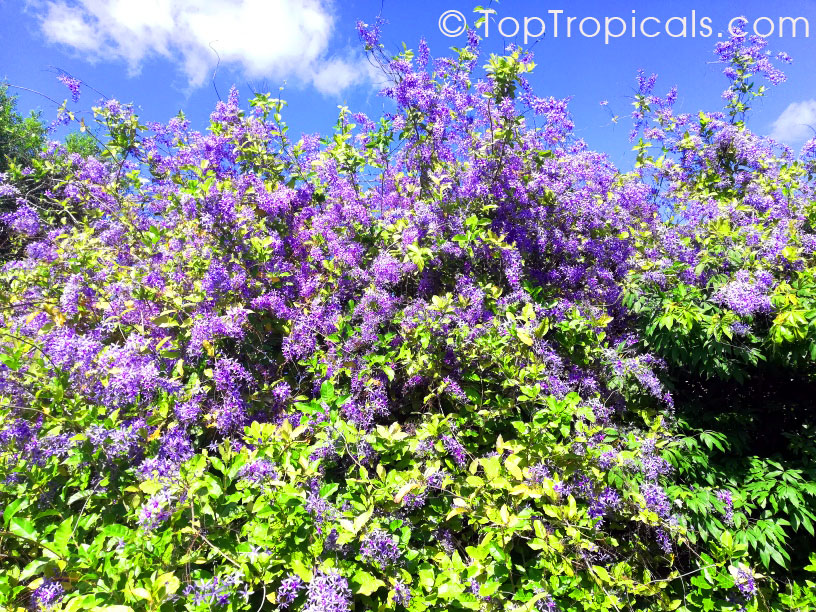
#4. Royal Queens Wreath
Petrea - Royal Queens Wreath, Tropical Wisteria. Spectacular tall
clusters of purple flowers similar to those of Wisteria come in racemes reaching
over 1 foot long!
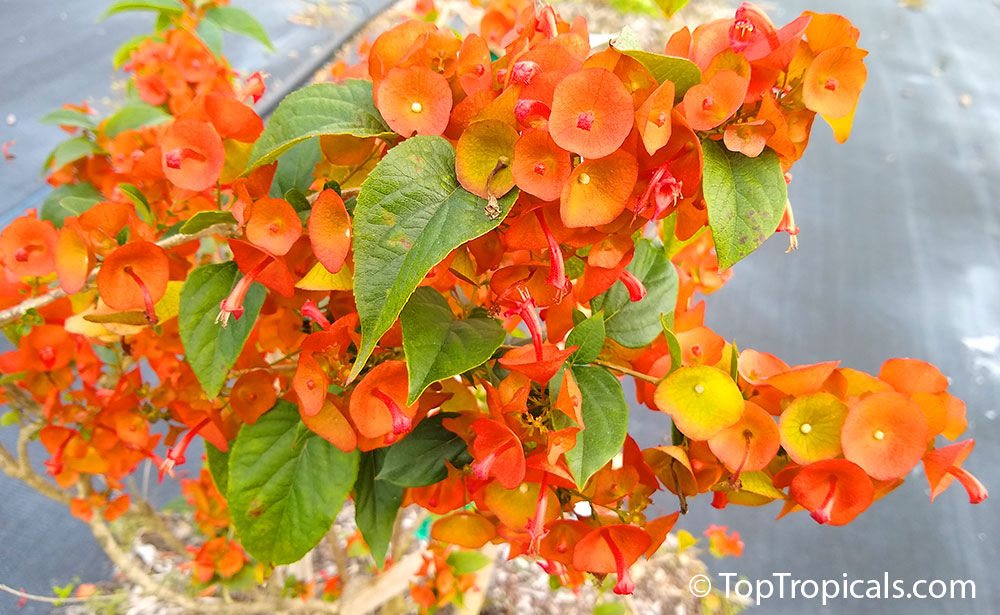
#3. Chinese Hat
Holmskioldia sanguinea - Bronze Chinese hat. Rare variety with
orange-bronze flowers. Unique flowers are the main interest: each is a narrow tube
backed by a broad, circular calyx, just like an oriental hat!
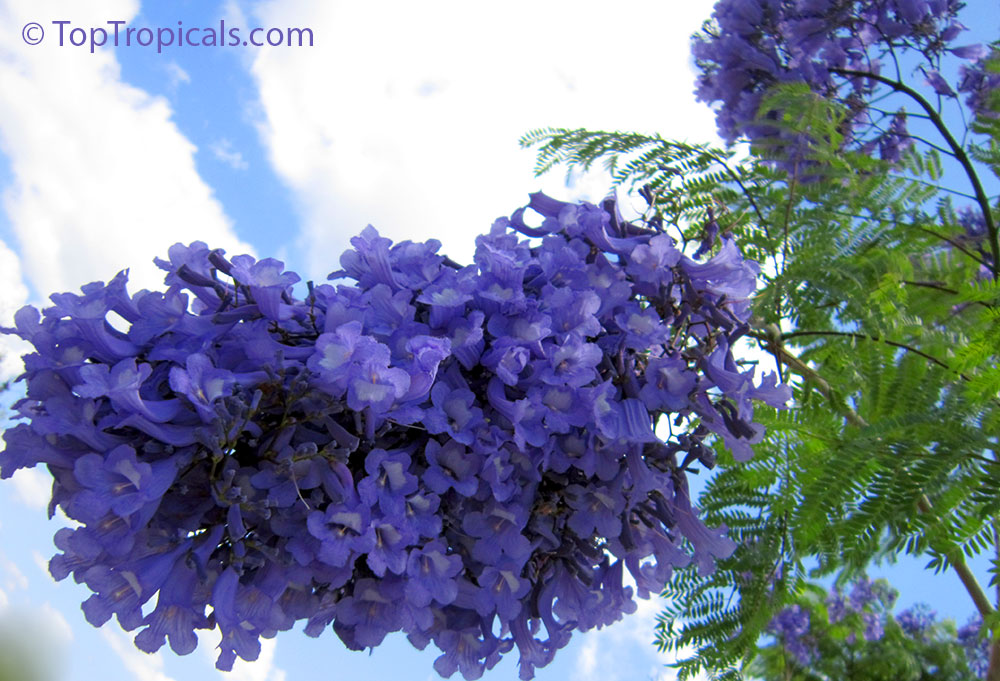
#2. Jacaranda
Jacaranda - all-time favorite winter flowering tree. Hypnotizing
bluish-purple, trumpet-like flowers create the magical image of the tree...
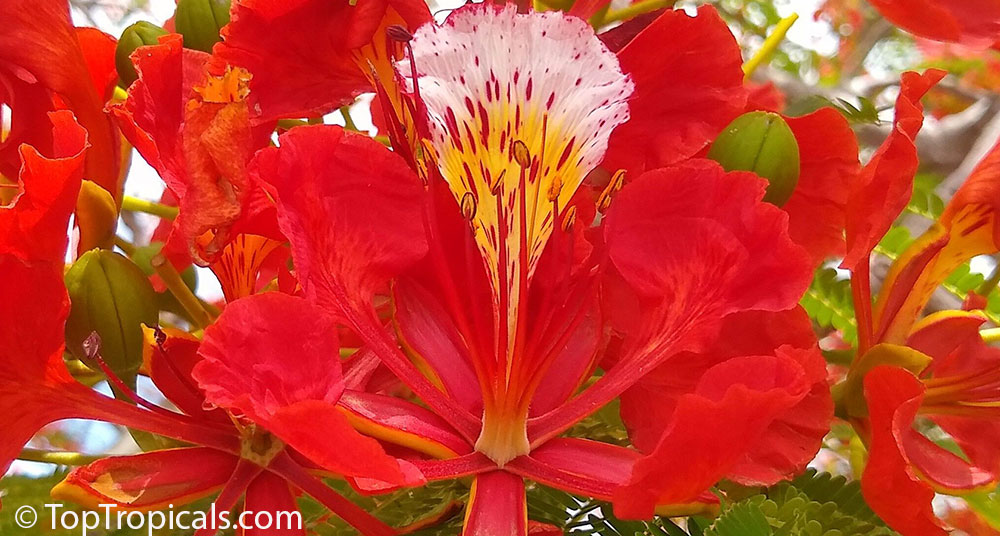
#1. Royal Poinciana
Delonix regia - Royal Poinciana, Flamboyant. one of the most popular
tropical trees covered with bright red orchid-like flowers from late winter
through early summer. A must for any tropical garden, this tree however requires
space since it spreads its branches 30-40 ft wide or more.


 Growing Tips