Garden Blog - Top Tropicals

Date: 29 Nov 2023

What plants are good to order in Winter?

Christmas  dog  and  night  moon  with  snow

Photo above: Christmas time in Ukraine (left) and Florida (right)

Q: Are there any tropical plants that will do well if I order them in Winter? We just bought a house in New Jersey with a large sunroom, and I can't wait to fill it with tropical beauties! Should I wait until Spring, or do you have something for a Winter start?

A: This is indeed a very good question, as many tropical plant collectors grow their treasures outside the tropics. The short answer is - yes! You can start filling your tropical sunroom any time of the year, but some plants are easier to deal with in Winter than others. Below are some guidelines.
Winter  bloomers:  Jatropha,  Champaka,  Brunfelsia,  Calliandra,  Leonotis

Winter bloomers today, left to right: Jatropha, Champaka, Brunfelsia, Calliandra, Leonotis.

1. Plants that prefer Winter shipping to avoid overheating stress:
- All plants with lush foliage such as Philodendrons, Medinilla
- Trees with fine feathery leaves such as Moringa, Jacaranda, Poinciana
- Some fruit trees sensitive to overheating during shipping: Papaya, Stawberry Tree, Starfruit (Carambola), Bilimbi.

2. Subtropical plants that are relatively cold hardy
- Fruit trees: Loquats, Olives, Avocados, Tropical Cherries: Eugenia, Malpighia, Noni (more cold hardy than you may think), Canistel.
- Flowering trees: Champaka, Tabebuia.
- All Bananas
- see all relatively cold hardy plants

3. Winter-dormant and/or deciduous plants: Adeniums, Plumerias, Gingers, Sugar Apple , Peaches and Plums, June Plum and Hog Plum.
See all deciduous/winter dormant plants.

4. Orchids, including Ground Orchids.

5. Winter flowers. Keep in mind that many tropical plants are winter bloomers, and their flowering is most profuse in Winter months, so you can enjoy the blooms right away:
Dombeya, Thunbergia, Gloxinia, Brunfelsia, Calliandra, Tibouchina, Barleria, Leonotis, Clerodendrums, Chinese Hat (Holmskioldia).
See all Winter bloomers.
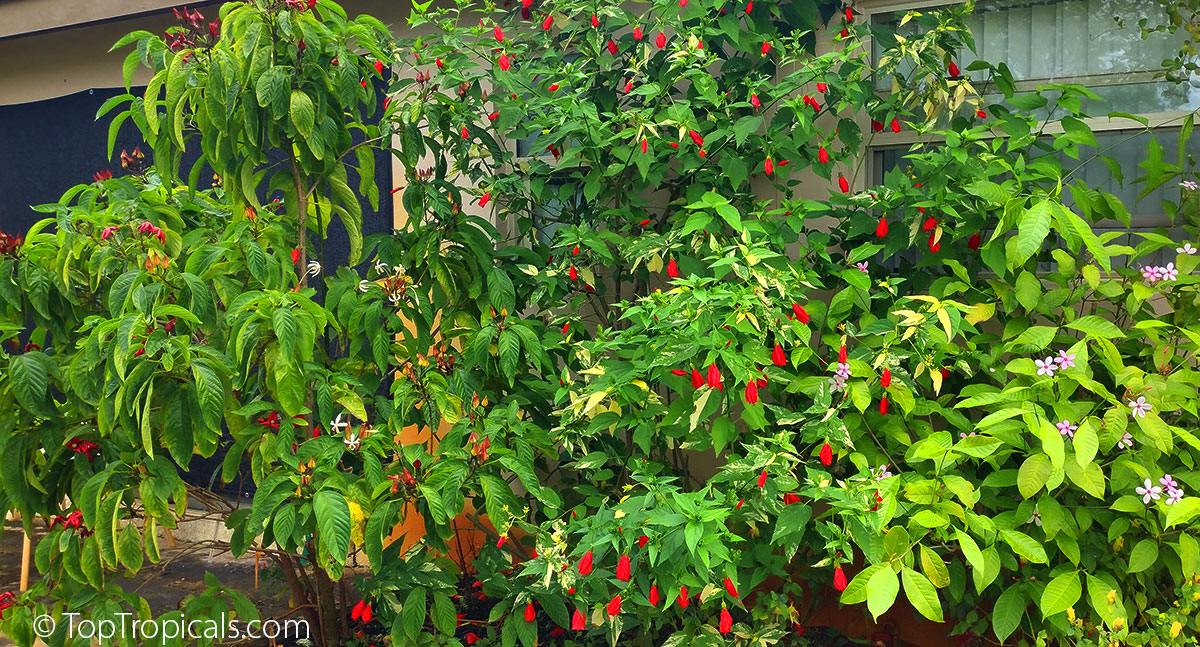
Winter  bloomers:  Clerodendrum  minahasse,  Malvaviscus  Summer  Snow,  Kopsia 
 fruticosa

Winter bloomers today, left to right: Clerodendrum minahasse, Variegated Malvaviscus Summer Snow, Kopsia fruticosa

6. Winter plant care. During Winter the daylight is shorter and temperatures are cooler.
- Reduce watering
- Use only liquid amino-acid based fertilizer Sunshine Boosters (safe to use year around)
- Monitor insects.

7. Shipping in Winter. We ship year around. However, if it gets below freezing in your area, you may use FedEx Hold location, they are temperature controlled so you don't have to worry about a box being dropped off at your cold porch outside.

8. A note for mild climate residents. Most tropical plants can be planted in the ground year around. Some ultra-tropical tender species such Chocolate tree, Ylang Ylang, or small size Mango trees can be grown in pots until Spring and planted out once chances of cold spell are gone. Until then, they can be moved indoors for cold nights.

Think outside the box and bring tropical paradise indoors during the time when we need warmth the most! Tropical plants will brighten your short winter days and help you to have truly HAPPY HOLIDAYS!
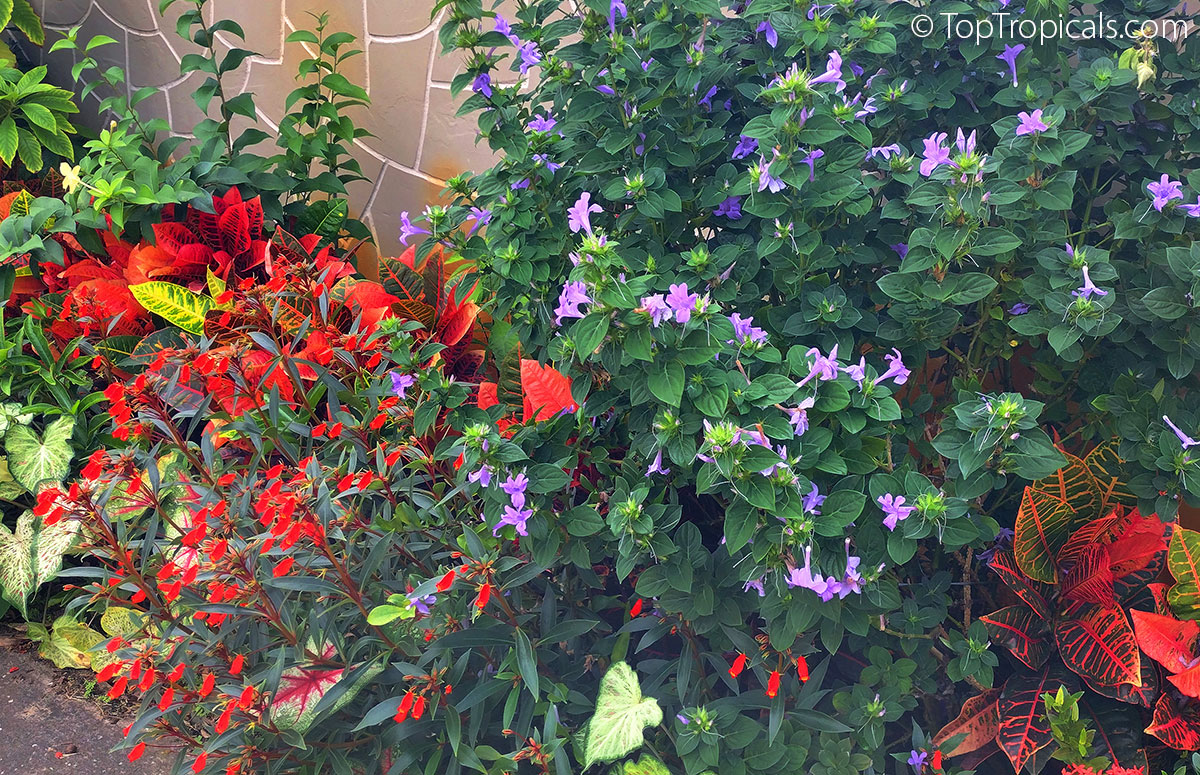
Winter  bloomers:  Gloxinia,  Barleria,  and  ever-bright  Crotons

Winter bloomers today, left to right: Gloxinia, Barleria, and ever-bright Crotons...
Date: 5 Mar 2023

How to move plants from indoors to outdoors

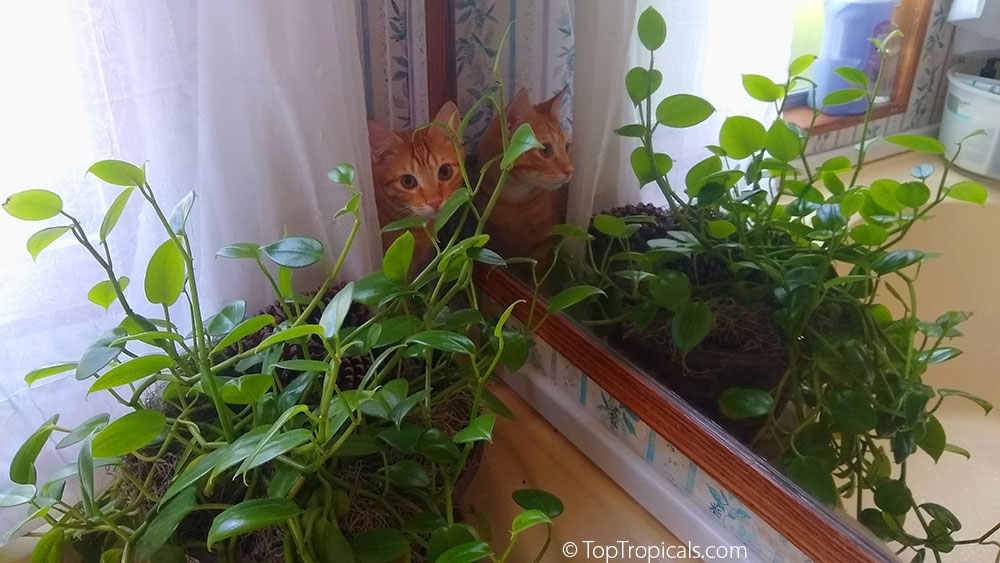
Cat  with  indoor  plant  hiding  behind  curtain

Q: When moving my tropical plant collection outside in the garden, what do I need to know to get them adjusted to this change?

A: As a tropical plant gardener, it's important to assess the temperatures outside before moving your plants outdoors. Most tropical plants thrive in sustained temperatures above 60F.
Moving your plants outside during the summer creates optimal growing conditions for sun-loving plants, providing them with more light and warmth than they can ever get inside. This active time of growth, along with the outdoor conditions of humidity, heat, sunlight, and natural day length, gives the plant a chance to experience growth in an outdoor environment, making for a much stronger plant.
However, be aware of sun burn. Direct sunlight can burn patches of white or brown on the surface of the tender leaves, so it's best to move your plants outside by hardening them off first. Gradually increase the amount of direct sunlight they receive over several days before moving them into full sun.
It's also a good time to prune your plants and repot them if needed, providing better aeration to the root system. But avoid root pruning as it can make your plant susceptible to disease and shock.
Overall, moving your tropical plants outside encourages their natural bloom cycle and provides extra vigor for the upcoming indoor season. However, be aware that you may have to deal with insects when you bring your plants back inside in the fall, so use preventive sprays like Sunshine NoBug before bringing them back inside. Leaf drop is also common when plants come back inside, so make sure to provide a well-lit location.
When moving plants outside, it's important to provide them with proper nutrients through fertilization. Outdoor conditions can deplete the soil of essential nutrients, so giving your plants a boost of fertilizer before moving them outside can help them acclimate to their new environment. Apply Sunshine Boosters with every watering, include micro-elements and bio stimulants to boost their immune system.

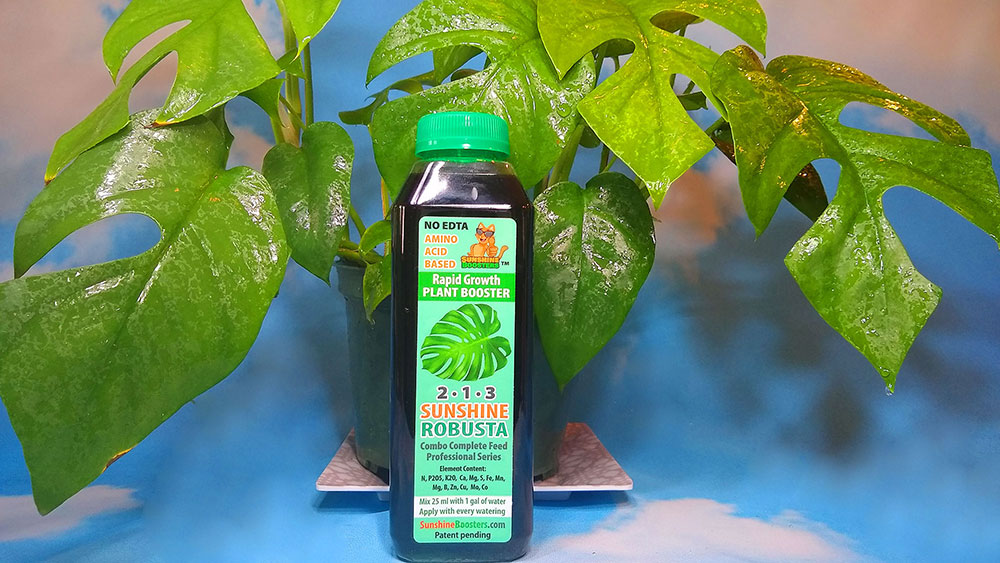
Sunshine  Robusta  Booster  with  lush  foliage  indoor  plant

Date: 21 Feb 2020

When plants are ready for a meal?

Q: We have an early Spring here in Florida. All plants in my garden flushing out new leaves and buds opening. Can I start fertilizing? I have Mango, Avocado, Peach trees, many medicinal herbs and flowering shrubs: Angel trumpets, plumerias, bromeliads. I prefer mild organic fertilizers; can you suggest something that is safe for edibles and butterflies?

Q: As a rule of thumb, tropical gardeners start regular fertilizing when the minimum temperatures (at night) go above 65F. Keep in mind that Sunshine Boosters fertilizers can be applied year around because they have mild formulas and used with every watering; during cooler period, you water less frequently, so feeding is reduced accordingly. Another advantage of Sunshine Boosters - they are natural (derived from organic amino acids which is the basics of Life). They are safe for edibles as well as pollinating insects.

Here is the feeding plan for your plants:
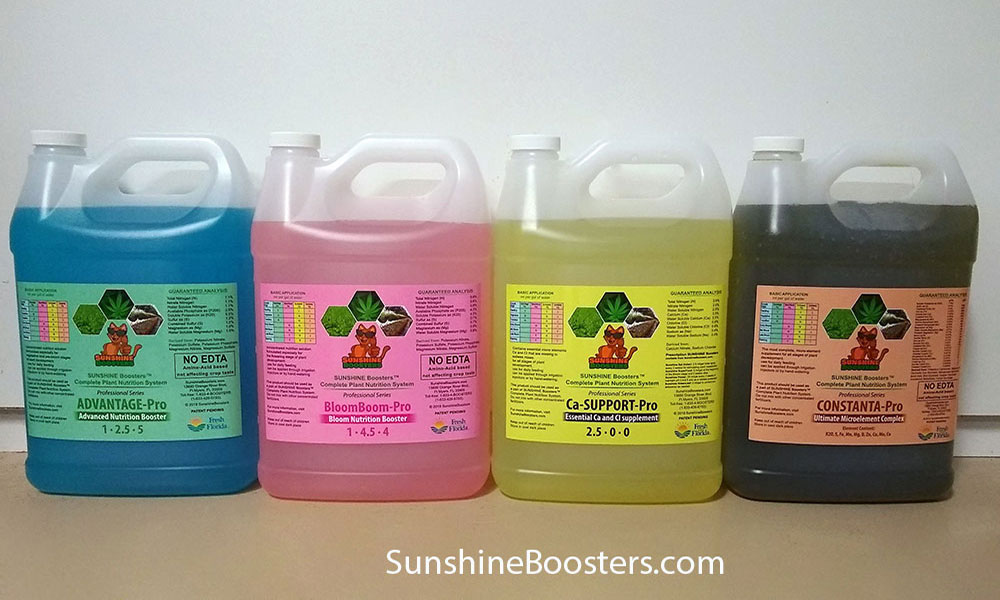
1. The most universal solution for all plants (both potted and in-ground): get a complete set of Sunshine Boosters Pro system: Advantage-Pro for vegetative growth, BloomBoom Pro for flowering stage, and Ca-Support-Pro + Constanta-Pro as necessary daily supplements. You will need all these 4 components for your garden.
2. Start adding these liquid boosters with every watering according to dozing directions and you will notice amazing growth boost within a week.
3. Apply Sunshine Epi plant hormone every 2 weeks as a foliar spray to boost immune system and metabolism of plants and protect them from diseases. Epi makes plants (especially young plants and those "waking up" from dormancy) grow twice faster! It also enhances effect of fertilizers by increasing plant metabolism.
4. After cool winter temperatures, some plants may develop element deficiencies like chlorosis (yellowing leaves). Additional microelement boost can be provided with Sunshine Greenleaf (iron supplement) and Sunshine Superfood (micro-elements).
5. For additional boosting of flowering and setting fruit, use the following individual boosters:
Sunshine Robusta - for foliage plants and when you need rapid vegetative growth
Sunshine TotalFeed - for Plumerias and other fragrant plants
Sunshine Megaflor - for Brugmansias and other flowering heavy feeders
Sunshine C-Cibus - for improving fruit production and quality
Sunshine Honey - for sweeter fruit (must be applied 4-5 times a year)
6. For young/small plants (seedlings, rooted cuttings) as well as tender tropicals like bromeliads, and orchids - Sunshine Bombino is a perfect choice due to its mild formula.
7. To save money, order complete sets rather than individual boosters; you will be able to safe up to 40%! Sunshine Complete Nutrition System Kits: Combo Kit, and Pro Kit.

If you are a fan of organic gardening, do not use dry fertilizers. While water-soluble and granulated (smart-realease) fertilizers are popular choice in plant nurseries due to their convenience, they are not as safe as liquid boosters because they create salt build-up in soil and have a high risk of overdosing/burning plant roots, especially potted plants, plants at breaking dormancy, at establishing, and at early stages of plant development. Besides, dry fertilizers may affect the taste of your fruit and herbs. See advantages of liquid boosters over dry fertilizers.

Learn more about Sunshine Nutrition System - a Natural solution for your garden.

Date: 7 Aug 2024

Florida native plants for Florida and beyond

Florida  Native  Plants

If you live in Florida community with HOA, you may need these plants!

Did you know that we carry Native Florida plants?

At Top Tropicals, we have the biggest selection of tropical plants from around the World, with a special selection of Florida Natives. If you are looking for a particular Florida Native plant, just let us know - we can get them for you, because... we are here in Florida and we know them all!

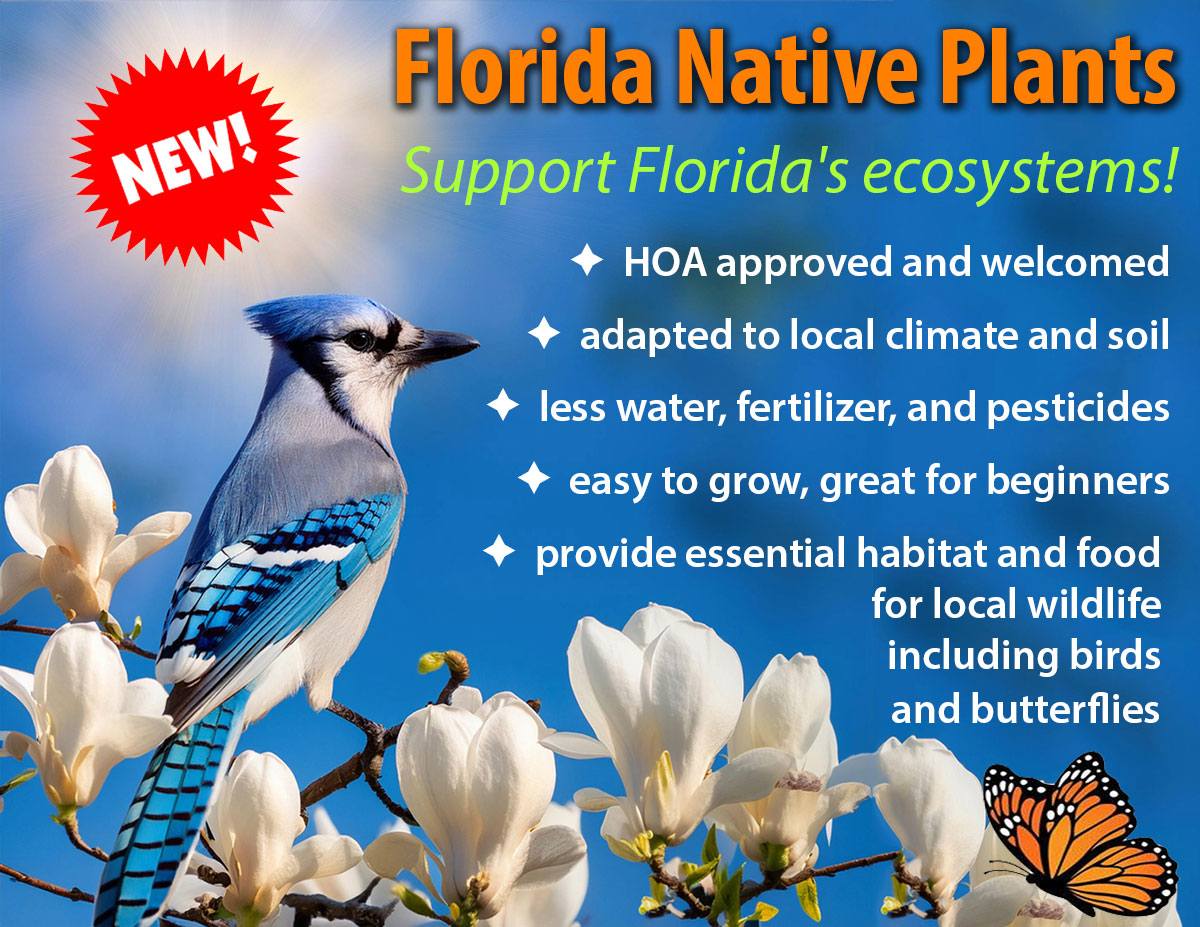
If your Florida yard is regulated by a Homeowners Association, you may be required to plant native plants or those species on approved list. Why? These policies aim to promote sustainable landscaping practices and protect Florida's unique ecosystems. Although this may seem to limit your choices, there are plenty of Florida-friendly plants to choose from!

In general, native plants are adapted to the local climate and soil conditions, making them more resilient and requiring less water, fertilizer, and pesticides. This makes them easy to grow and great for beginners.

Native plants provide essential habitat and food sources for local wildlife, including birds, butterflies, and other pollinators. And Florida flora has a lot to offer for the wildlife!

If you live outside of Florida, our native plants may appear to you as much exotic and rare as those from Asia, S. America or Africa! Let's take a peak at some Natives...

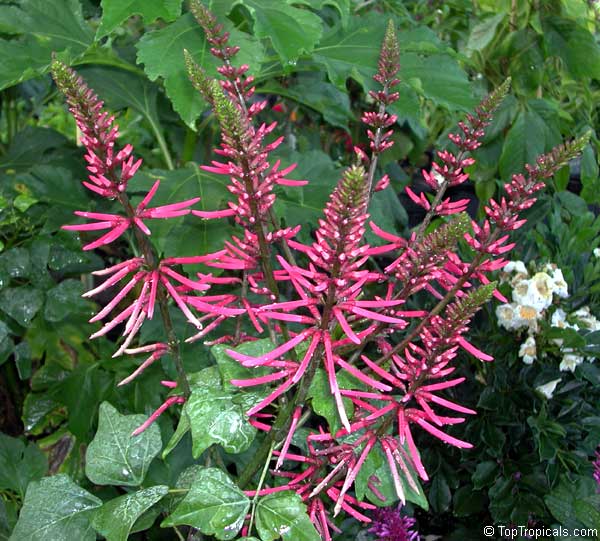
Erythrina  herbacea  -  Coral  Bean

In the photo above: Erythrina herbacea - Coral Bean. Coral trees - Erythrinas are very showy, red-flowering small trees that are perfect for locations with poor soil and limited irrigation, very easy to grow, great butterfly and hummingbird attractors..

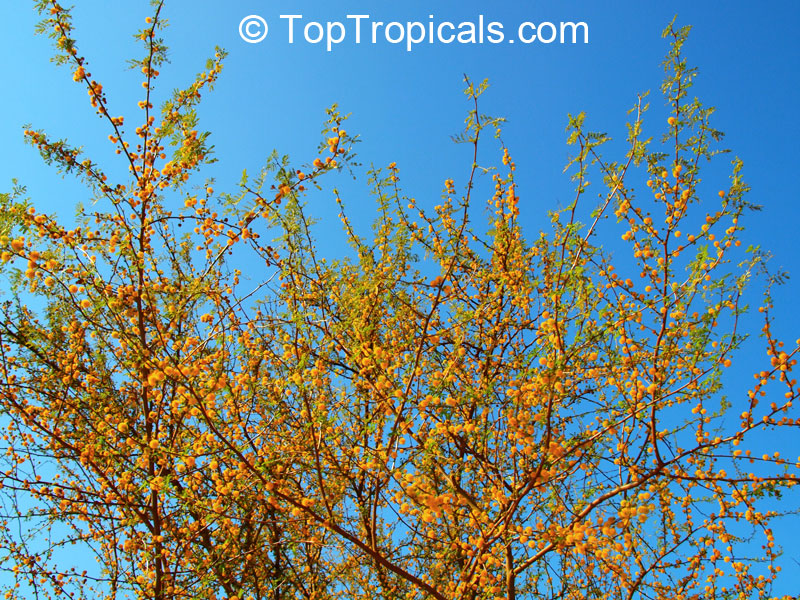
Acacia  farnesiana  -  Sweet  Mimosa

In the photo above: Acacia farnesiana - Sweet Mimosa. One of the most useful tropical plants that is very cold tolerant, blooms all winter through spring with honey-fragrant flowers - canary yellow powder puffs, attracting bees and butterflies. Fast growing bushy tree, tolerates poor soils and drought.

Date: 24 Jun 2018

TopTropicals

Spring is coming, plants need food! Time to fertilize...

Last winter was long and snowy in the most part of our country. Hold on fellow gardeners up North, it is almost over!
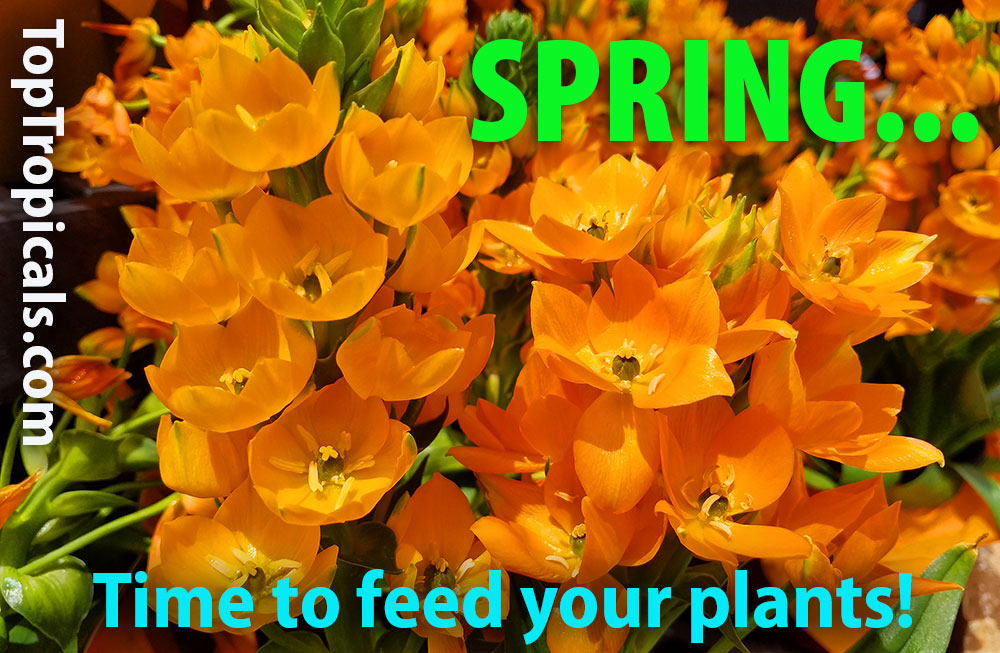
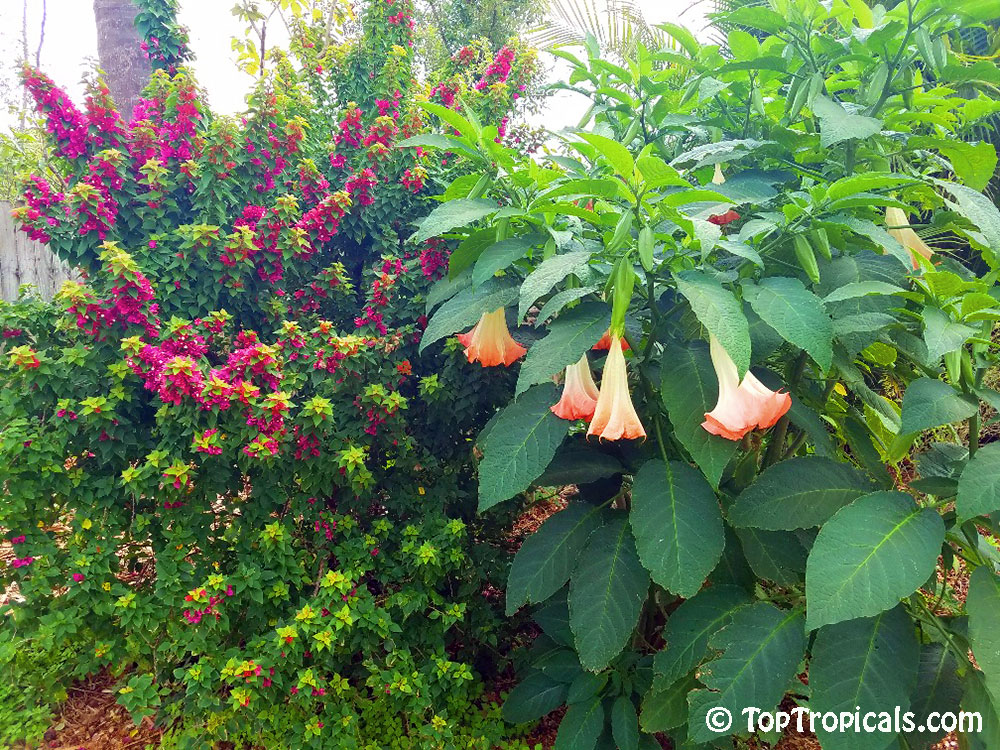
Here in Florida we have been blessed again with a mild winter without serious cold snaps. Early Spring that is already in the air. Look at this picture of flowers in our front yard now.
If the weather is already warm in your area (low temperatures above 55), it is time to start fertilizing. We are sending our love and support to tropical Puerto Rico suffered from hurricane last year, and will be happy to help you guys to restore your lost gardens!

CHECK LIST

what to do to give your garden a good kick start:

1. Slow release granulated food. Apply Slow Release Fertilizer and continue once a month. 1 tsp per gallon of pot, or a handful for in-ground plants. This will provide essential macro elements (NPK) required for a plant growth.

2. Water soluble micro-elements. Besides macro-elements, plants need many other elements that most of the time missing in soil. A lack of micro-elements causes different deficiencies, resulting in weak root systems, slow growth, deformed leaves, leaves yellowing, lack or no flowers/fruit. Apply these supplements as a foliar spray once a month to induce healthy growth and flower/fruit development. We recommend the following micro-element products to keep your plants healthy and vigorous year round:
a) SUNSHINE SuperFood - plant health booster. This revolutionary new liquid complex contains ALL microelements needed and can fix all possible problems occuring to your tropical plants - from roots to flowers and fruit. We have convenient dropper bottles of 5 ml for small plant collections, 50 ml for larger gardens, and 100 ml for professional landscape applications.
b) SUNSHINE-Micro - Microelement booster - for common iron deficiency (pale leaves)
c) SUNSHINE-Super-Iron - Microelement booster - for severe iron deficiency (severe yellowing leaves)

3. SUNSHINE plant boosters - SUNSHINE-E, -BC (caudex plants and bonsai), -H (house plants). Apply these natural plant stimulants to help plants recover from cold, dormancy, increase plant's metabolism and make a plant more readily absorb both Macro- and Micro-elements. SUNSHINE boosters also will help plants grow vigorously, withstand Summer heat and drought, and produce bigger and better flowers and fruit.

4. Kickstart a sweeter fruit. To get a better and sweeter crop in Summer and Fall, you need to start first application now. SUNSHINE Honey - is natural, Amber-colored, honey-like liquid microelement product for fruiting and edible plants that will make them sweeter, tastier and more flavorful! Very effective for tropical fruits, tubers, vegetables. Great for tropical fruit trees: Mango, June Plum, Annonas, Tropical Cherries, Carambola, Citrus; subtropical fruit trees: Peaches, Apricots, Loquat and berry plants (blackberry, mulberry, etc.)

5. SUNSHINE-S. Don't forget to plant seeds! It's a perfect timing now to start your tropical garden indoors even if it is still cold outside. Soak them in SUNSHINE-S solution to increase germination rate.

See full list of SUNSHINE boosters. All these products are essential plant elements. They are not toxic and can be used safely for edible landscapes.