This Father's Day, celebrate with a food forest - don't just mow, grow! Plant something meaningful
that will not only bring joy today but also provide delicious fruit,
edibles, and fragrant
blooms for years to come. Whether you're a father or celebrating one, this
is the perfect day to plant and nurture a garden that will thrive, just like
the love you share with your family. Plant today to enjoy the fruits of your
labor tomorrow!
Use the code below to save 15% on your entire order:
Join our local event:
June 14, 2025 - Father's Day Plant Market, 9 am - 4 pm
Join us on Saturday June 14 for Father's Day Plant Market
- Kids, bring your dads and surprise them with the gift of a tree! Let them
pick any tree they like and plant it together.
- Fathers, bring your kids and teach them how to connect with nature - show
them how to plant a tree and grow something lasting!
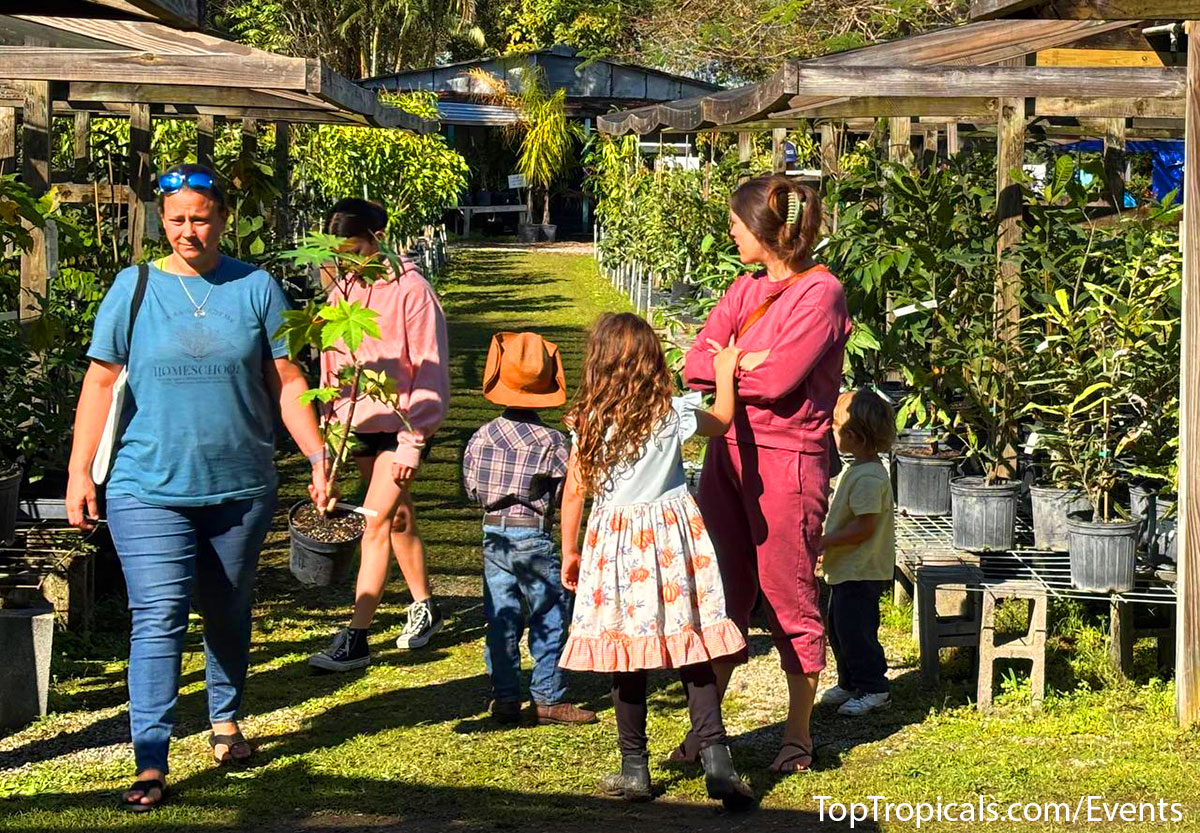
Stroll through our lush gardens, meet the friendly PeopleCats, and enjoy a fun day for the whole family. Our team will
help you choose the perfect plants for your space and guide you every step of
the way.
Event Highlights:
30% OFF online prices
FREE plant with any purchase (including Guava)
Gift bags for first 25 customers with $50+ order
$5-10 specials
$10-20 Large
Banana Trees - many varieties!
Exciting raffle prizes Green
Magic fertilizer FREE samples
Live music by the Famous Hand Pan Lady!
When northern gardens fade into gray, our tropicals wake up. Winter is
color season here - and even if you live up north, you can still enjoy these
same flowering trees indoors or on a sunny patio.
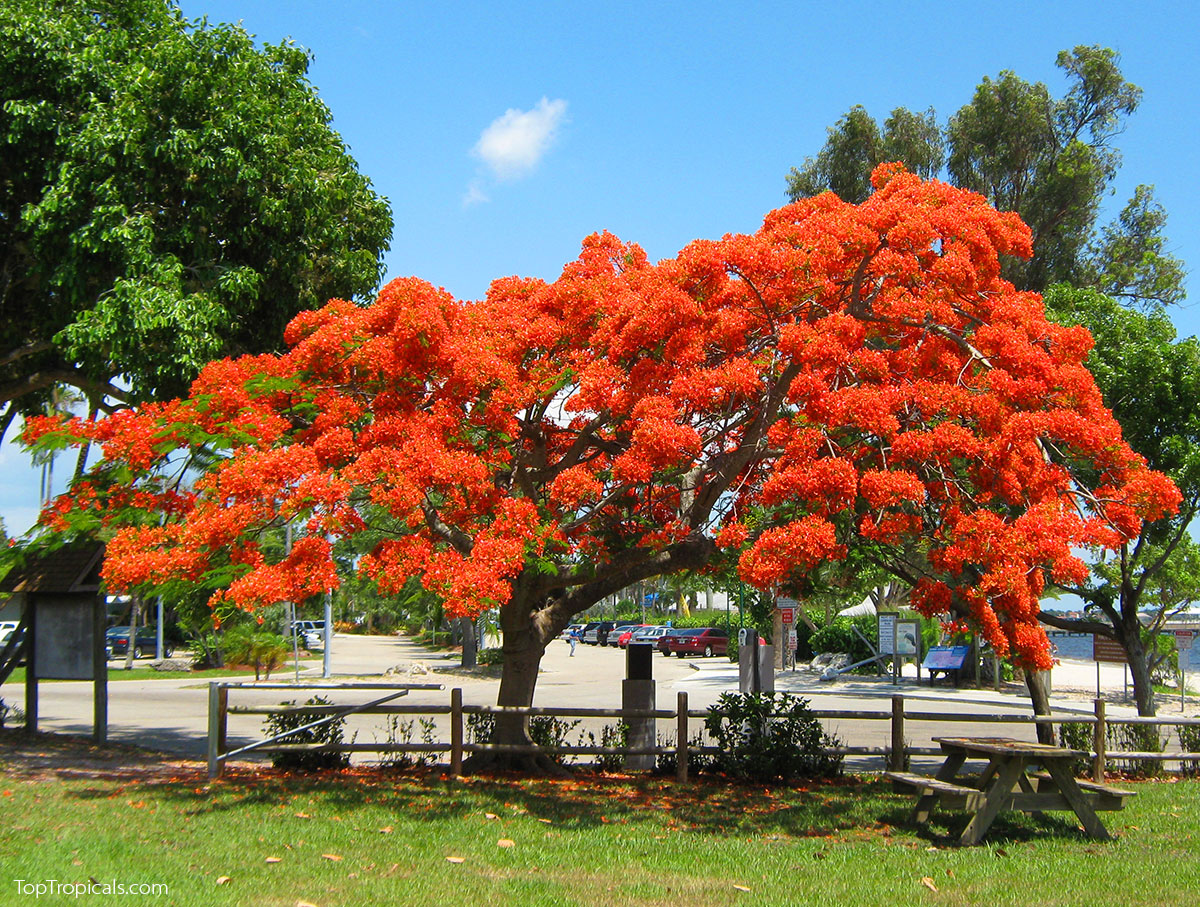
From the fiery Royal
Poinciana to the golden Tabebuia and
violet Jacaranda,
these eight trees prove that winter can bloom anywhere
How to Care for Winter-Flowering Trees
We're often asked, at Top Tropicals, “Can I really grow tropical
trees in winter?”
Yes — with the right light and care, you can.
Here’s what works best both outdoors and indoors, according to our
expert, Tatiana Anderson.
🌡️ Fall Planting Guide
Let’s talk about timing, because that’s the part most people
get nervous about.
Everyone asks: “Isn’t it too cool to plant now?” —
and the answer is no!
Fall and early winter are actually the best months for tropicals in Zones 9
to 11.
Here’s why: the air has cooled off, but the soil is still warm.
Roots love that combination. They quietly spread underground while the rest
of
the plant takes a break.
By spring, those roots are ready to feed a burst of new growth — and
that’s when you’ll see the first big flush of flowers.
Pick a sunny spot that gets plenty of light — six to eight hours
if you can.
Loosen the soil and mix in compost or pine bark so it drains well.
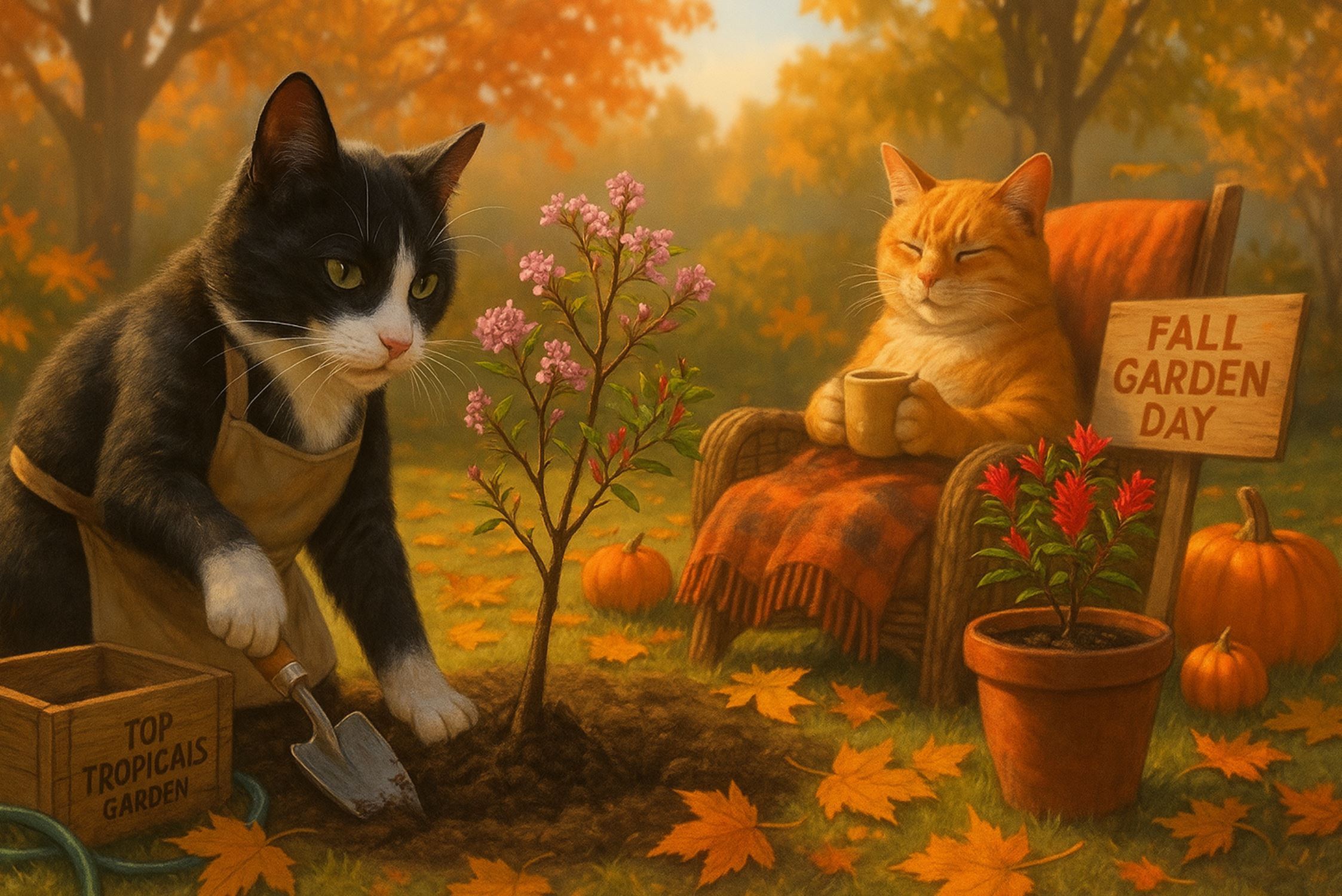
Dig a hole about twice as wide as the pot and just as deep.
Set the plant level with the ground, backfill, and water it deeply to
settle everything in.
Then add mulch — two or three inches is plenty — but keep it
away from the trunk so it can breathe.
Tatiana’s tip: “Fall planting builds roots while everyone
else is resting. By spring, your tree wakes up ready to grow.”
🌳 Outdoor Care (Warm Climates Zones 9–11)
Now, let’s talk about what happens after planting — because
real gardening starts once the plant is yours. Tropical trees thrive on
routine: steady sunlight, deep watering, and just a bit of attention.
Water them about once a week when the weather is mild, more often if
it’s dry or windy.
Always check the soil first — if it feels dry two inches down, go
ahead and water.
Mulch helps more than most people realize — it keeps roots cool in
summer and warm in winter, and it saves you from watering as often.
Now, for those of you in Zone 9, here’s the truth: your trees can
take a chill, but they don’t love surprises.
A quick night in the upper 20s F won’t hurt mature plants, but young
ones appreciate a little help — a frost cloth or being planted at the
south side.
And don’t underestimate the wind. Cold, dry gusts can burn leaves
faster than frost.
Use fences, hedges, or taller shrubs as windbreaks, and take advantage of
microclimates — those warm pockets next to the house, brick patios, or
corners that get extra afternoon sun.
Tatiana’s tip: “A tropical garden in Zone 9 isn’t
about fighting nature — it’s about cooperating with it. Find the
warm corners, protect from the cold wind, and your trees will thank you with
flowers all winter.”
🏚️ Indoor & Patio Care (Cooler Climates)
For our northern friends — yes, you can grow tropicals indoors!
You just need good light, warm air, and a little attention.
Pick a large pot, with drainage holes and a light tropical soil mix.
Place it in a bright window — south or southwest if you can —
or under grow lights for about 12–14 hours a day.
Keep temperatures between 65 and 85 F, and water when the top inch of soil
dries out.
Misting helps keep leaves clean and adds humidity.
Rotate the pot every couple of weeks so all sides get sun. In summer, move
your plant outdoors gradually so it can enjoy real sunlight — then
bring it back in before nights drop below 40 F.
Tatiana’s tip: “Don’t be afraid of growing trees in
pots. They adapt beautifully — just select the right trees and pay
attention to their needs.”
It's this time of the year again when a million dollar question arises:
"What do I get them for Christmas?" It's an easy task to buy a gift for a
gardener - because we always have a long wish-list! But what to get for everybody else? The answer a simple -
buy a live plant... that can bring: Surprise, Love, Joy, Meaning, Convenience,
and an Action into their lives! Below are a few wise suggestions.
2. Love. Gardenia Aimee Yoshioka First Love. With a dramatic history behind this
cultivar, it is a perfect expression of Love that one can bring to another for Christmas...
3. Joy of Miracle.Miracle
fruit. It speaks for itself and is one of the greatest container plants.
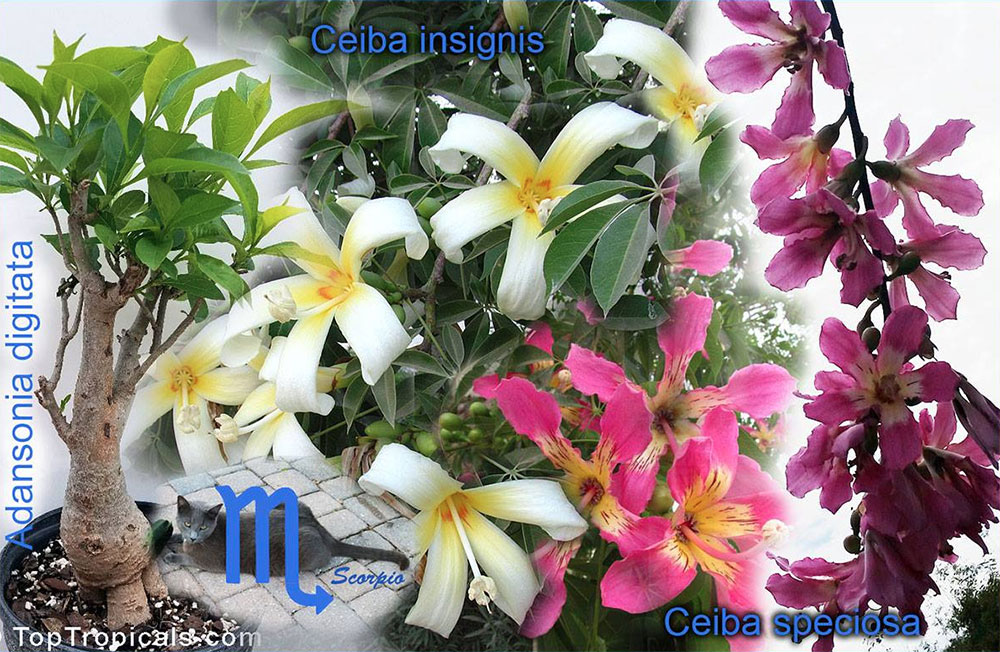
4. Meaning. Symbol of Long Life! Adansonia digitata - Baobab, also called the Tree of Longivity, can live for 5000 years. Pass this remarkable plant in your family from generation to generation! Regarded as the largest
succulent plant in the world, the Baobab tree is steeped in a wealth of mystique, legend and superstition wherever it
occurs in Africa, being a tree that can provide food, water, shelter and relief from sickness.
FREE shipping and easy to maintain bonsai.
5. Convenience. A gift card will give your loved ones a chance to browse amazing wonderland of Tropical Plant World, pick something they like and have it shipped to them weather permitting. The gift card (certificate) has no
expiration date!
6. Action. Coffea
arabica - Coffee. Want to give your kids a project to drag them away from
their smartphones? Have them grow a Real Coffee tree. It is a rewarding plant that is happy indoors and gives you a feeling of Creator - for your care, it will bloom for you with fragrant flowers and fruit for you with real coffee beans!
If you need further advice on great looking gift plants for Christmas, contact us! Or call Anna Banana direct @ 239-771-8081.
Happy Shopping!
Date: 14 Nov 2018
Recovering Soursop after shipping and cold
From Irene &
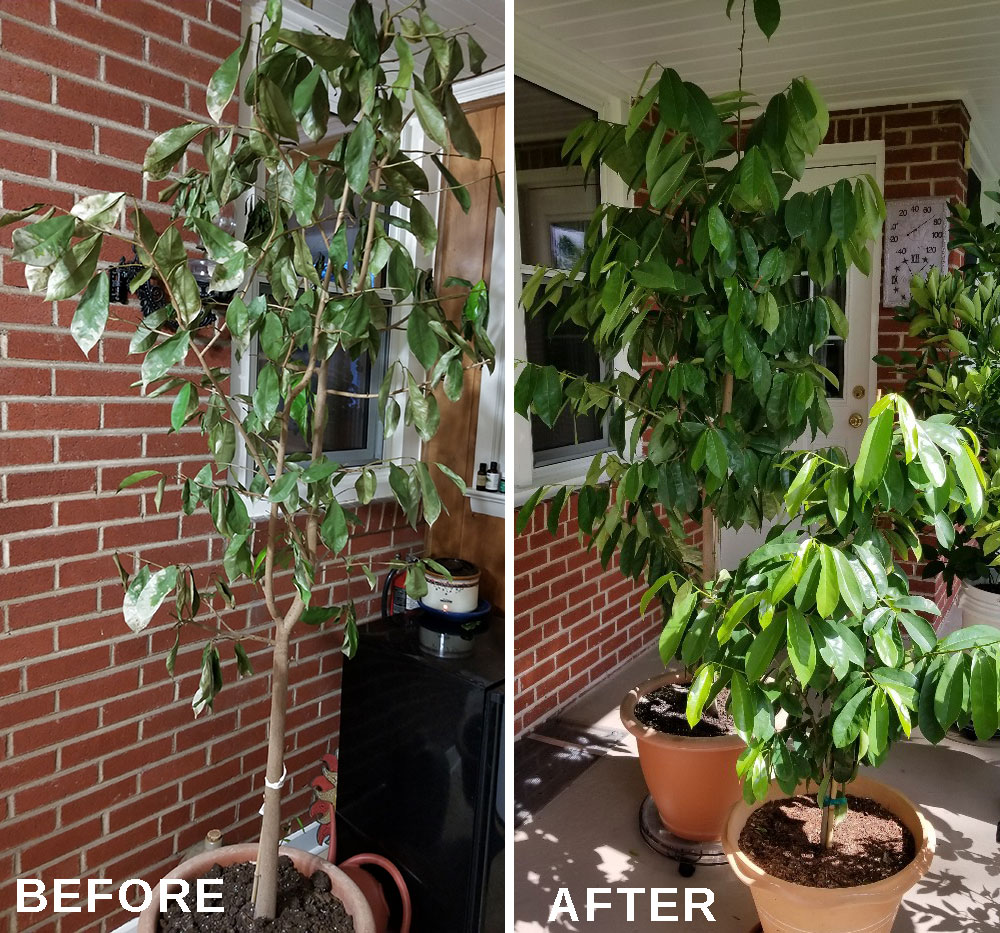
Marjorie, PA: We wanted to share our pics with you (after Summer). I
attached also the photo of the way the tree looked before your advice (back in
April). The big is the one we almost lost and you gave us these instructions and
it came back. These were your instructions:
"The soursop is one of my favorite fruits and I was so sad to hear
yours may be dead. Good news - the tree looks great! Yes, it does have some cold
damage but I'm surprised it still has leaves on it at all! In cooler weather,
they typically drop all of their leaves and stay that way until spring. You
can remove the damaged leaves and it will resprout new growth with the warmer
temperatures."
Taking care of
Soursop after shipping Soursop - Annona muricata trees are very sensitive to temperature drops. This
always causes leaf loss. After shipping, do not water until the soil gets
slightly dry; keep it in bright shade. No fertilizer until the plant shows active
new growth. Be patient with your plant, and it should recover soon.
Soursop is an ultra-tropical tree and doesn't take any freeze. If you
live in a cooler climate, keep the plant in a pot (the good news is, Annonas,
in general, have a compact nature and are perfect for container culture).
Bring the tree indoors during the cold period, providing bright light.
We have a very interesting article about growing and fruiting Soursop
in an apartment. Check out 4534 Tropical Treasures Magazine # 7.
Date: 14 Nov 2018
Plant Horoscope. Scorpio Zodiac lucky plants: Plants with thorns, red in color, and grow under adversity
Scorpio - 10/23-11/21. A WATER sign ruled by both Mars and Pluto.
Scorpio's plants are often found in remote places or on poor ground.
They will likely have thorns, can be red in color, and grow under adversity.
The good news is, most of these plants are nearly indestructible! This makes
them desirable for every gardener.
The reproductive organs are ruled by Scorpio, so these are plants that
balance the hormones, regulate the menstrual cycle, help with childbirth and
pregnancy. Until this century, Scorpio was ruled by Mars, and the herbs
associated with it had to do with the urogenital system and the colon. Many of the
herbs related to Scorpio are cleansing and revitalizing. Now, astrologers
assign Scorpio to Pluto, discovered in 1930 (Pluto is said by astrologers to be a higher octave of Mars). Physiologically, Scorpio involves the processes of catabolism and anabolism, the death and regeneration
of body cells. Diseases of Scorpio are often involved with the slow buildup of
toxic substances in the body (carcinogens, etc) or in the mind (anger,
jealousy). Scorpio loves a spice with depth and complexity. Camphor Basil adds
rich flavor to every dish it seasons, and its own aphrodisiac tendencies appeal to
Scorpio's lusty nature.

 How to Care for Winter-Flowering Trees