Date: 16 Oct 2022
This Fall Special:
Avocados and Champakas in large containers
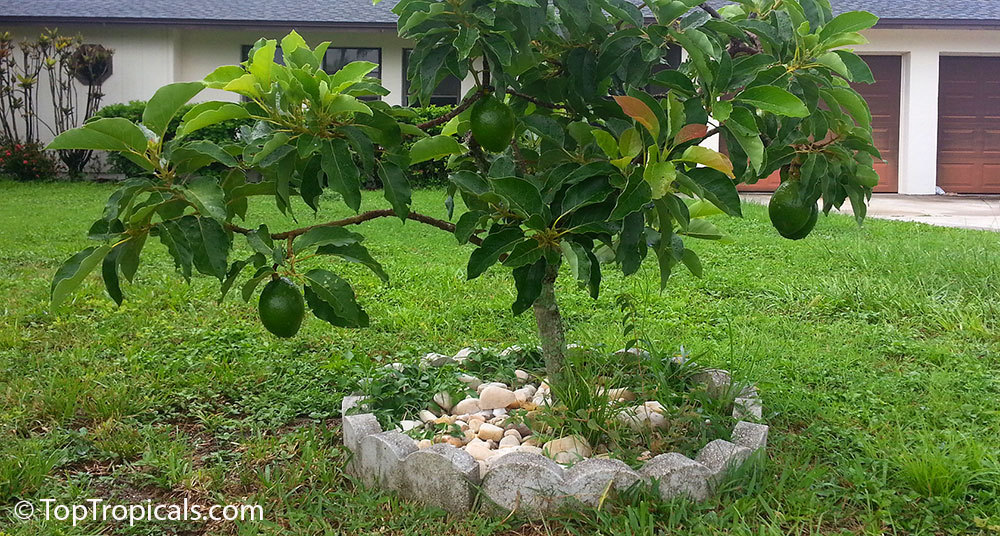
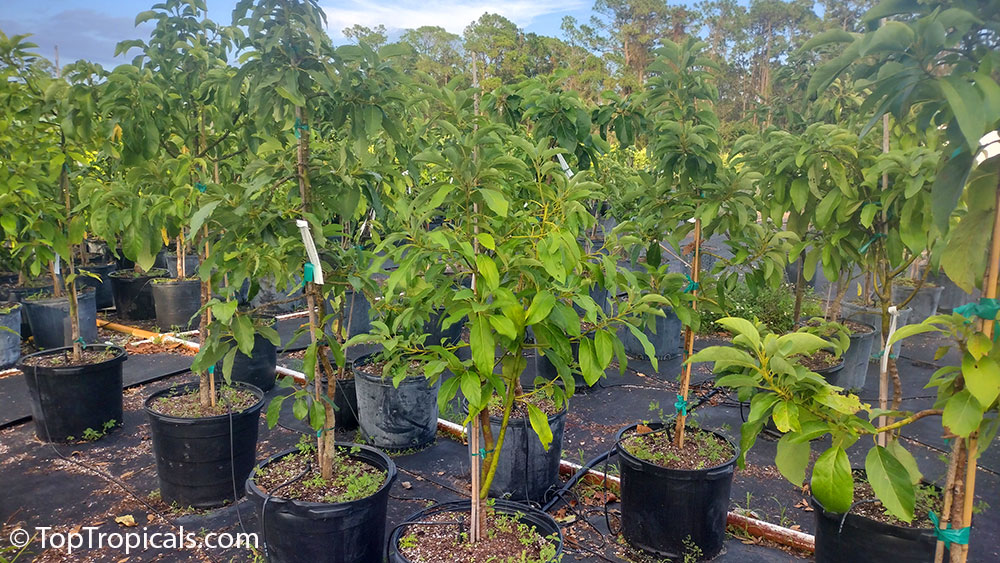
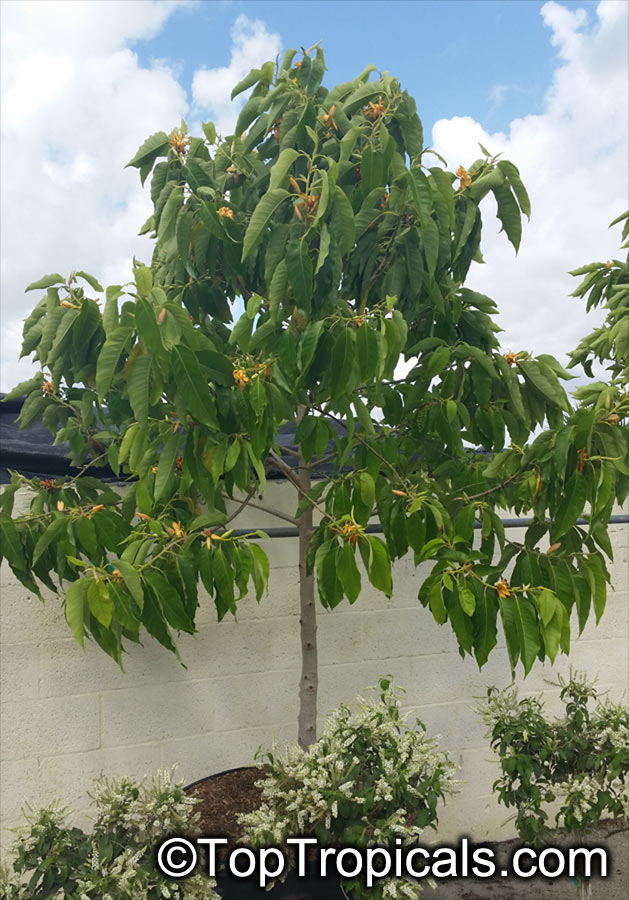
The clean-up and restoration after Hurricane Ian continues for many of us across Florida and the Southeast. Some people In SW Florida lost their homes, and almost every home owner lost a tree or even the whole garden. TopTropicals is here to help. We started introducing special Re-Leaf offers to help local gardeners replace broken trees. When it's time to restore your garden, we have 15-25 gallon Avocado trees in many varieties and oversized Magnolia Champaca trees available for pick up at our Fort Myers Garden Center or B-Farm in Sebring.
These trees are 6-8 feet tall (some larger) and ready to bear fruit!
Please call or visit our Garden Center to select your own tree.
Delivery and installation available
Limited time offer!
Date: 20 Feb 2026
What tropical plants survived Floridas historic freeze without protection
Florida historic freeze
In the first week of February 2026, arctic air pushed deep into Florida. For many areas, this was the coldest event in over a century.
We received one question over and over: How did your gardens do?
Top Tropicals Farm in Sebring, Florida is up and running - and this freeze became a real-world hardiness test for tropical and subtropical plants. Below is our initial field report after inspecting established plantings.
📊 Weather data - February 1-6, 2026
Sebring, Florida - 132 years of recorded observations
This was not a light frost. It was prolonged, windy, penetrating hard freeze.
🌡 Minimum temperature: 25F
❄️ Wind chill: 14F
⏳ Duration: 3 nights of 8-10 hour hard freeze
☀️ Daytime temperatures: around 50F for 7 days
🌀 Wind: sustained 20 mph, gusts 40-50 mph
Cold protection
In-ground trees: selected plants covered with frost cloth, especially mango and young avocado trees.
Tender container plants: moved into greenhouses with propane heat above 34F.
Hardy container plants: frost cloth and wind protection only - no plastic
Nutrition support: plants fertilized regularly during the growing season with Green Magic and Sunshine Boosters to maintain vigor and hardiness.
However, the plants listed below had no protection at all.
All were established trees 2-3 years in the ground.
The plants below had NO PROTECTION, established trees 2-3 years old
✅ Survived with no damage:
🍑 Tropical Fruit Trees and Edibles:
Citrus
Loquats
Mulberries
Macadamia Nut
Jaboticabas
Pomegranates
Avocado - cold hardy varieties
Feijoa - Pineapple Guava
Psidium littorale - Cattley Guavas
Eugenias (Grumichama, Rio Grande, Surinam and more)
Olive trees
Bay Leaf (Laurus nobilis)
Fig trees (Ficus carica)
Prunus sp - Peaches, Plums, Nectarines
Persimmons
Rubus (Blackberries) including Tropical Mysore Raspberry
Elderberry (Sambucus)
Yerba Mate - Ilex paraguariensis
Opuntia - Nopal Cactus, Prickly Pear
🌸 Flowering Trees and Shrubs:
Beaucarnea recurvata - Pony Tail
Callistemon - Bottlebrush
Yucca
Tabebuias
Magnolia figo and Little Gem
Calliandra tweedii - Red Powderpuff
Sophora tomentosa
Galphimia gracillis - Thriallis
Acacia trees
Osmanthus fragrans
Abutilon trees
Erythrina - several species
Monkey Ear tree - Enterolobium cyclocarpum
Bauhinia Orchid Trees - several species
Pseudobombax ellipticum - Shaving Brush Tree
Bulnesia arborea- Vera Wood
Caesalpinia mexicana, Mexican Bird of Paradise
Sansevieria - Snake Plant
Foxtail fern - Asparagus densiflorus
Lonicera - several varieties
Jacaranda tree
Eucalyptus
Plumbago Imperial Blue
Philodendron bipinnatum
Gardenias
Gingers (dormant rhizomes)
✳️ Minimal leaf damage only:
(These plants showed light cosmetic damage but no structural injury)
🍑 Tropical Fruit Trees and Edibles:
Glycosmis pentaphylla - Gin Berry
Black sapote tree
Tamarind tree
Syzygiums: Rose Apple and Java Plum
🌸 Flowering Trees and Shrubs:
Pandora vine
Jasminum - several species
Stenocarpus sinuatus - Firewheel Tree
Xanthostemon
Quisqualis indica
Schotia tree
Eranthemum pulchellum - Blue Sage
Hiptage benghalensis - Helicopter Flower
🏡 What this means for Florida gardeners
This freeze was a stress test few gardens are prepared for. Yet many species handled 25F, wind, and multi-night freeze conditions without protection.
Choosing proven survivors, planting in smart microclimates, and maintaining strong plant health during the growing season makes a measurable difference.
More updates will follow as full recovery continues - but these early results already help define a stronger plant palette for future winters.
🛒 Explore cold tolerant tropical plants and cold hardy Avocados
📚 Learn more:
- · To trim or not to trim? When and how to trim damaged plants after winter
- · Cold-hardy avocado varieties - what freezing they really survive
- · Cold-hardy avocado survival groups - what the numbers really mean
🎥 These Avocados survived 3 nights of 25F hard freeze, Florida Record Freeze
#Discover #How_to
🟢 Join 👉 TopTropicals
Date: 26 Feb 2026
Stop Sugar Crashes: 5 Tropical Fruit Hacks for Healthy Dessert
Exotic Tropical Fruits for Blood Sugar Management
🍨 Stop Sugar Crashes: 5 Tropical Fruit Hacks for Healthy Dessert
The smarter way to handle sugar cravings - no restriction required
Tired of the post-cookie slump? Sugar cravings are a physiological response to blood glucose fluctuations, not a lack of willpower. Refined sugars trigger an insulin spike followed by a hypoglycemic crash, trapping you in a cycle of fatigue and hunger.
The secret to metabolic health is managing glycemic load. By choosing nutrient-dense tropical fruits, you satisfy your sweet tooth while maintaining stable energy homeostasis.
The solution is not to give up dessert. It is to change what dessert means. Here is how to use tropical horticulture to hack your biology and regulate insulin:
🍭 1. Choose fruit that comes with fiber
Whole tropical fruits deliver sweetness wrapped in fiber, water, and nutrients. That slows sugar absorption and keeps energy steady.
Try:
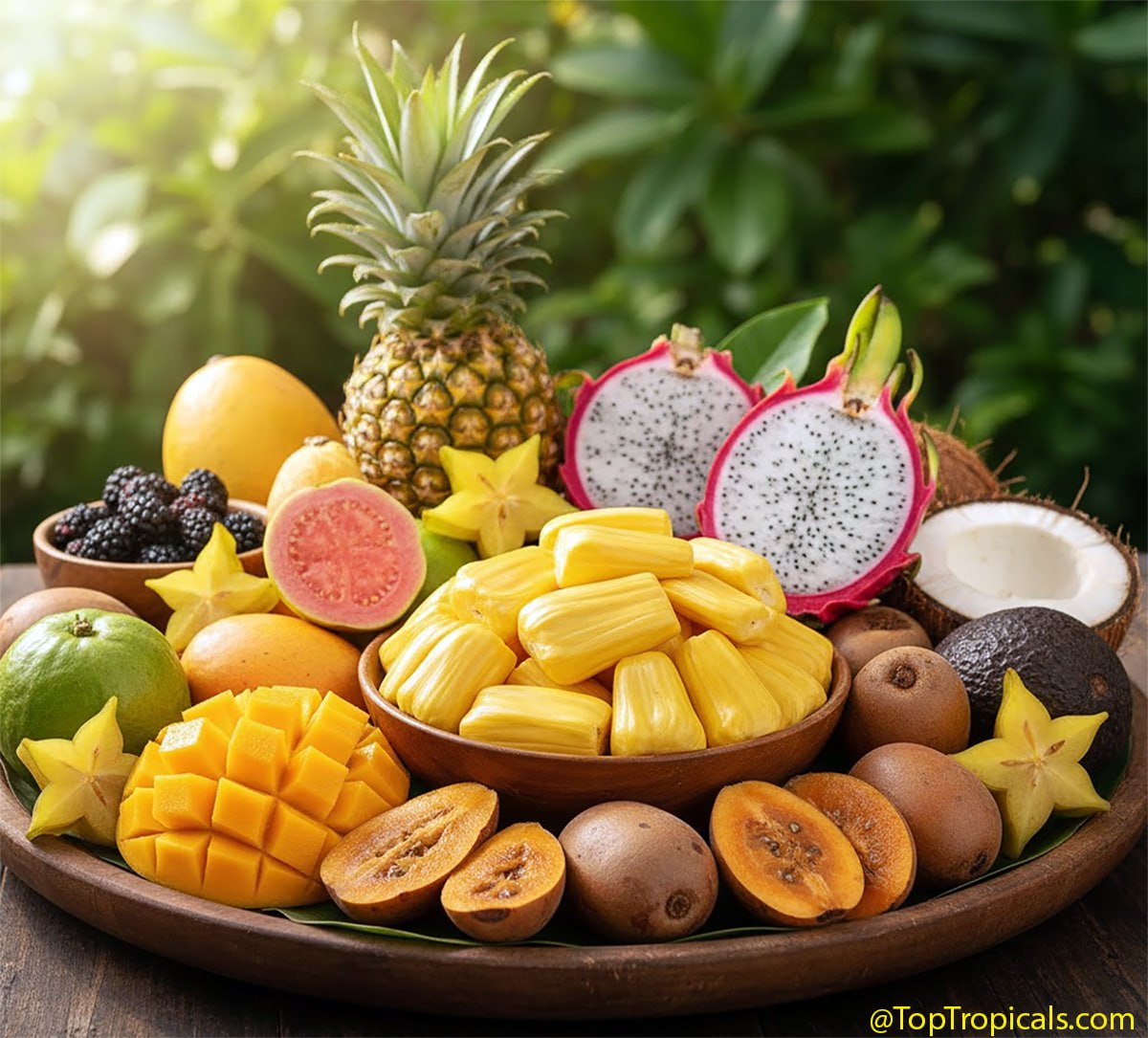
· Mango, chilled and sliced
- · Sapodilla - naturally caramel-sweet
- · Mulberries by the handful
- · Loquat halves straight from the fridge
- · Dragon Fruit for light, clean sweetness
🍭 2. Pair sweet with fat to blunt the glucose spike
Healthy lipids are a biological hack for your metabolism. Fats slow gastric emptying, ensuring a steady glucose release rather than an inflammatory spike. Furthermore, lipids trigger cholecystokinin (CCK) - the hormone that signals satiety to the brain - effectively "turning off" cravings at the source.
· Avocado blended into a chocolate-style mousse: The monounsaturated fats create a creamy texture while blunting the sugar response.
- · Banana with nut butter: Combining fast-acting fruit sugars with dense protein and fats.
- · Pineapple with raw nuts: The bromelain in pineapple aids digestion, while the fats in nuts provide long-lasting satiety.
- · Mango mixed into full-fat yogurt: The combination of probiotics, protein, and lipids turns a simple fruit into a complete, low-glycemic snack.
🍭 3. Use naturally rich fruits in place of sugar
Some tropical fruits taste like dessert already.
· Jackfruit has candy-like sweetness
- · Sapote is creamy and custard-like
- · Guava brings floral depth
- · Cherries add brightness
- · Mash Banana into baking instead of white sugar.
- · Blend Mango into yogurt instead of syrup.
- · Top oatmeal with Mulberry instead of brown sugar.
🍭 4. Balance sweet with tart
Adding contrast reduces the urge to overeat sweetness.
· Carambola adds crisp tang.
- · Pineapple brightens the palate.
- · Loquat gives gentle acidity.
🍭 5. Start the day right
Skipping breakfast increases late-day sugar cravings.
A morning smoothie with Avocado, Banana, and Mango prevents the afternoon energy dip. Hydration also matters - thirst often disguises itself as a sweet craving.
🍭 In essence
Dessert is not the enemy. Refined sugar is.
When sweetness comes from nature's bounty, it nourishes instead of draining energy.
You do not need to quit dessert.
You just need to let nature handle it.
Consult with a healthcare professional before making significant dietary changes, especially if you have diabetes or metabolic conditions
🛒 Start your tropical fruit journey
Annona · Guava · Mango · Sapodilla · Mulberry · Pineapple · Avocado · Banana · Loquat · Dragon fruit · Jackfruit · Sapote · Cherries · Carambola
📚 Learn more:
- A leaf you grow, not a pill you buy: Insulin ginger - the plant people actually use
- How to lose weight naturally with tropical fruit and plants
- What's for breakfast? Guava versus Banana
- 11 tropical fruits to eat instead of taking a fiber supplement
- How to make lots of Insulin Ginger plants quickly and get more health benefits
- Truth about which fruit helps you lose weight faster: Mango or Papaya?
- Five best tropical fruits to naturally boost your energy
- Finally: a sugar that’s good for your health
#Food_Forest #Remedies #Discover
🟢 Join 👉 TopTropicals
Date: 24 Jun 2018

Avocado, Lychee and Mango setting fruit... give them some FOOD!
Q: Do I need to fertilize tropical fruit when they set fruit?
A:
It is traditionally believed that mango and other tropical
fruit shouldn't be fertilized during fruiting period. It
is true to an extent: you don't want fruit to burst from
fast excessive growing. Instead, try to feed fruit trees
wisely, because they still need proper nutrition to
produce flowers and fruit.
Our spring specials of Lychee, Avocado and Mango are full of buds and
some already set tiny fruit (see examples on the photo).
Here is the feeding plan for these plants once you receive
your mail order:
1) Once received the plant, pot it into container size of
the root ball and let establish for couple weeks. Use SUNSHINE-E to help the plant
recover from shipping stress and establish root system.
2) Apply SUNSHINE-Honey right before
flowering, and next time at setting fruit, to provide
sweeter and bigger fruit, eliminate fruit cracks and help
resist fungus and other fruit diseases.
3) Use balanced granulated fertilizer,
1 tsp per each gallon of soil. Apply once a month during
Spring-Summer season. This gives the plant balanced
macro-elements (NPK) necessary for overall plant health.
Do not use on fruit trees fertilizers with high Nitrogen
content.
4) Apply SUNSHINE SuperFood
micro-element booster to keep fruit trees vigorous,
develop strong root system and avoid deficiencies.
5) In case of signs of chlorosis (yellowing leaves with
darker veins), give the tree SUNSHINE-GreenLeaf and watch
the leaves turning green quickly.
After harvesting, don't forget to make another treatment
of SUNSHINE-Honey
Date: 11 Mar 2026
📅 Do Not Miss: March 21 - Spring Equinox Plant Market
🍩 Saturday, March 21, 2026: 9 am - 4 pm

Smokey: You'd be perfect for a Gulf beach cafe. But gardeners don't come here for donuts.
Sunshine: Really? Then why do they come?
Smokey: Some gardeners lost plants to the freeze. Others want trees that will handle winter better. Cold-hardy avocados. Macadamia. Grumichama. And some just come for fun - to see the PeopleCats.
Sunshine: And my charm... and my donuts will make it more fun.
Read more about Smokey & Sunshine
Ft Myers Garden Center: 13890 Orange River, Ft Myers,
FL
Sebring B-Farm
: 9100 McRoy Rd, Sebring, FL
More Spring Equinox Plant Market details
🌞 Welcome to our Spring Equinox Plant Market, proudly hosted by the PeopleCats of Top Tropicals.
This one feels different.
After Florida’s record freeze, many gardens are brown, trimmed back, or missing a few old friends. We felt it too. And now - we rebuild.
The equinox marks equal day and night. More light ahead. New growth beginning.
And the PeopleCats are ready🐾.
- 🐱King is back on gate duty - inspecting every vehicle for proper plant-hauling capacity.
- 😺Paisley is rearranging freeze survivors and new arrivals like a design consultant.
- 😼Snitch is supervising recovery efforts from a comfortable chair.
- 😸Persephone is checking under tables for "hidden spring energy."
- 😻Sushi and Loki are preparing for guided garden tours - recovery edition.
This is not just a plant market. This is the spring reset.
👍 Why You Should Come
It is finally warm in Florida. After several nights of hard freeze, some plants survived - and some didn’t. This event is your chance to see real freeze champions in person.
If you lost plants, you are not alone. If you are ready to plant smarter, this is your moment.
Walk the gardens. See proven winter survivors. Discover cold-hardy fruit trees and resilient ornamentals. Get practical advice about replanting after freeze. This is rebuilding - Florida style.
♥️ What Makes This Event Special
We are featuring:
- Verified freeze survivors
- Cold-hardy fruit trees
- Tough flowering trees and shrubs
- Replacement plants for damaged landscapes
- Smart layering ideas for frost-resilient gardens
- You will see which species handled 25F with wind and multiple nights of freeze - with no protection.
Real-world test. Real results.
Cold hardy fruit favorites include:
- Cold-hardy Avocado varieties, including varieties, which are cold hardy to 15-20°F: Joey, Fantastic, Mexicola, Poncho, Brogdon and more.
- Macadamia Nut Trees
- Eugenia Cherries, including Rio Grande and Grumichama
- Gin Berry and Jaboticaba
- Loquat and Cattley Guava
- Peaches and Pomegranates
🌸 Cold hardy subtropical flowering trees including:
- Bauhinias and Tabebuias
- Mexican Bird of Paradise - Caesalpinia mexicana
- Jacaranda and Magnolia
🎉Event Highlights
- 30% OFF online prices
- FREE plants with purchase
- $5-10 specials
- Exciting raffle prizes
🌳Don't just mow - grow!
Start your food forest, beat rising prices, and plant a future your family will thank you for.