Garden Blog - Top Tropicals

Date: 22 Sep 2024

Which fertilizer to use: Organic or Inorganic?

Sunshine Boosters

Sunshine Boosters

Inorganic fertilizers

Inorganic fertilizers

Cow

Cow

💩 Which fertilizer to use: Organic or Inorganic?


ℹ️ Fertilizers help plants grow. They give plants nutrients they need. There are two types of fertilizers:

🐮 Organic Fertilizers:

  • · Made from natural materials: compost, manure, plant waste.
  • · Good for the soil and environment.
  • · Release nutrients slowly, which helps plants over time.


Inorganic Fertilizers:

  • · Made from chemicals in factories.
  • · Can give plants quick nutrients.
  • · Might harm the soil and environment over time.


⏺Pros of Organic Fertilizers:
  • · Better for the health of the soil.
  • · Helps good microorganisms live in the soil.
  • · Safer for pets and kids.


🔴 Cons of Inorganic Fertilizers:

  • · Can cause pollution.
  • · Might make soil unhealthy if used too much.


🟢 Sunshine Boosters is your ultimate solution:

  • based on organic fertilizers (organic amino-acids).
  • help plants grow strong and healthy without harming the environment.
  • make the soil better, support friendly bugs, and are safe for everyone.
  • Using Sunshine Boosters means you’re taking care of your plants and the planet!


📚 Learn more, with charts:


Organic or inorganic fertilizers, which is best?

🛒 Shop Sunshine Boosters

#Fertilizers

🔴 Join 👉 TopTropicals

Date: 26 Feb 2023

Organic or inorganic fertilizers, which is best?

A very smart article by Fedor, Mike, and Ed

Colorful  garden

Q: Which one is better - organic or inorganic fertilizer?

A: When it comes to fertilizer, gardeners always wonder if one better than the other. Does a total organic fertilizer make sense for you? Is it easier to just use a cheap granular fertilizer a few times per year? You may be surprised to learn that there is one fertilizer that has advantages over both!

While organic fertilizers may be all the rage, there is the difference between Sunshine Boosters fertilizers, organic and inorganic fertilizers. Sunshine Boosters fertilizers have been especially developed to provide optimal conditions for cultivating crops in pots and greenhouses. These specialized nutrient blends are essential in order to maintain an appropriate environment for successful crop production, as they compensate for the lack of natural beneficial bacteria and nitrifying organisms which are specific to open soil cultivation.
Learn about why Sunshine Boosters is the best choice...

Hungarian  hot  wax  pepper

In the photos: Hungarian hot wax pepper (above) and a Baby Cucumber (below), both grown in Ed's organic garden with Sunshine Boosters

Baby  Cucumber  in  organic  garden

Date: 24 Dec 2018

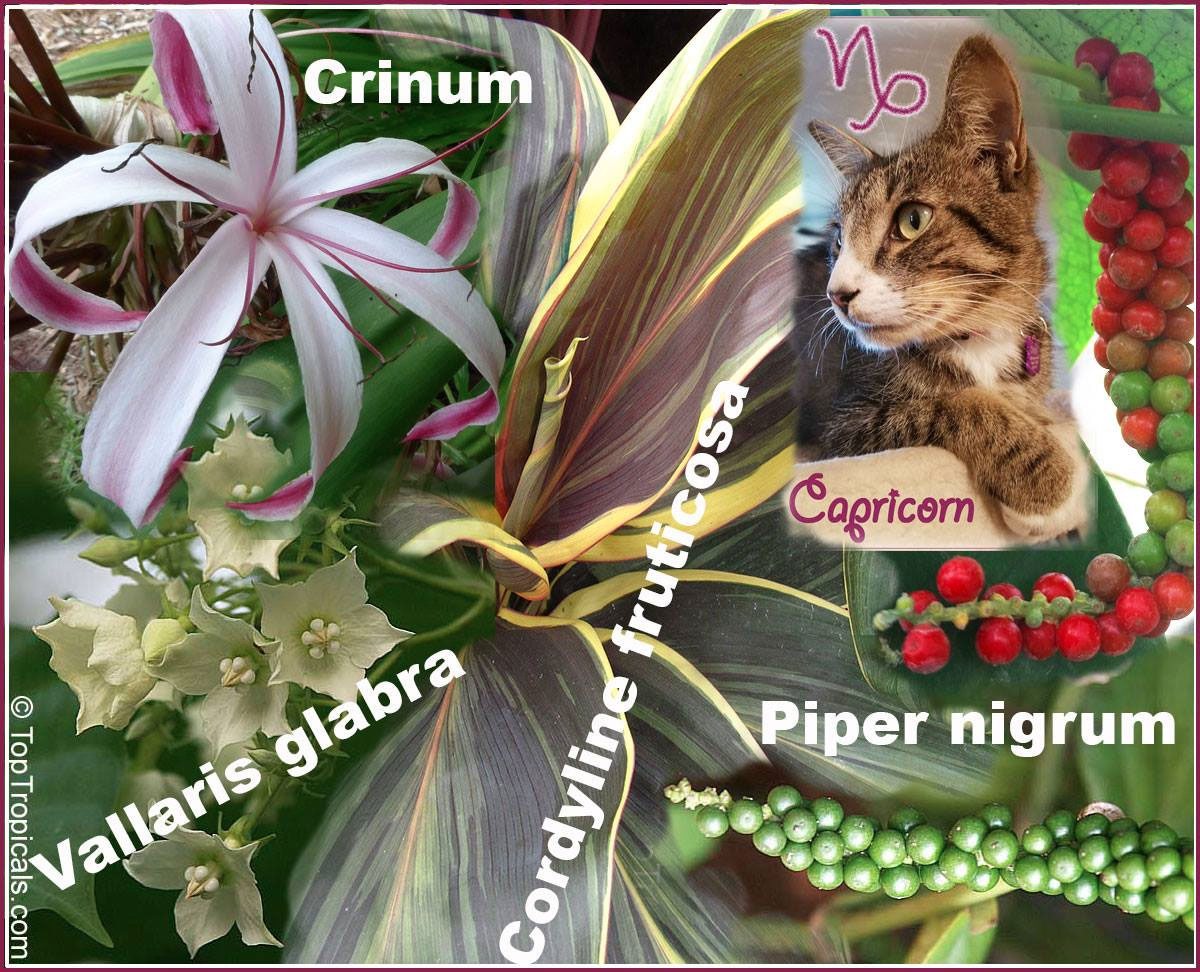
Plant Horoscope. Capricorn Zodiac lucky plants: Cordyline and Croton

TopTropicals.com

Capricorn - 12/22 - 1/19. An EARTH sign ruled by the planet Saturn. Capricorn's plants usually have few flowers, or small flowers, are knobby or woody, and may have an unpleasant smell or taste. Saturn rules plants with long lives and slow growth, so plants with annual rings are also associated with the Goat.
Physiologically, Saturn rules the systems that give the body its structure and form: the skeletal system, and the skin, teeth, joints, and knees, so plants that are high in calcium can be very beneficial. Those can be woody plants and shrubs that show annual rings, as well as some poisonous or narcotic plants. Saturn plants are useful in treating arthritis and rheumatism. Traditional Capricorn appreciates a spice that is powerful but familiar. Black pepper adds flavor and a bit of heat to both food and life, creating movement without too much change.

Capricorn Zodiac lucky plants: Baobab, Peach Palm, Patchouli, Bamboo, Cordyline, Spider Lily, Serissa, Desert Rose, Croton, Aloe, Palms, Giraffe knee plant - Gonatopus boivinii, Adenanthera, Black Pepper, Solanums, Loquat, Aglaonema, Jacaranda, Rosemary, Shisham - Dalbergia sissoo, Neem Tree, Nutmeg, Calendula, Brugmansia, Cannabis, Coca, Kava-Kava, Root Beer plant, Kratom, Banesteriopsis, Psychotria, Quince, Almonds, Ginkgo, Olive, Strophanthus, Bread Flower, Amorphophallus, Areca Palm, Anadenanthera, all Pipers, Brunfelsia, Chaya, Persimmons, Surinam Cherry, Bel Fruit, Ashoka Tree, Calla Lily.

For other signs information, see full Plant Horoscope

Date: 22 May 2016

Plant Horoscope. Gemini Zodiac lucky plants: Anthurium and Philodenron

Gemini - 5/21-6/20. Ruled by the mutable, changeable planet Mercury (also patron of the art of medicine), Gemini is an AIR sign. Plants ruled by Mercury tend to have ferny or highly-divided leaves or stems (like the bronchi of lungs), hairy or fuzzy leaves (related to the cilia in the lungs), or subtle odors.

Gemini rules the lungs, shoulders, arms, and hands. Its plants help to strengthen the lungs and respiratory system, relax the nervous system, strengthen ears and hearing, the tongue and speaking, the vocal cords, lungs and thyroid, as well as the shoulders, arms, and hands. Gemini has so much going on mentally that they may need a little help to digest all the information they're constantly absorbing. Herbs that have clean, pure flavor not only help physical digestion, but assist spiritual and mental intake as well.

Gemini Zodiac lucky plants: Ferns, Blechnum, Tree ferns and Cyatheas, Fern Tree, Aralias, Jackfruit and Breadfruit, Paulownia, Anthurium, Philodendron, Philadelphus, Clerodendrums, Anise, Lavender, Myrtle, Nut trees, Macadamia, Ficus, Piggyback plant - Tolmiea menziesii, Aloe vera, Fig, Honeysuckle, Azalea, Mint Tree Satureja, Vitex, Ironwood, Mulberry, Osmoxylon, Acalypha, Allamanda, Aphelandra, Iboza, Ruda, Kiwi, Caesalpinia, Cyphomandra, Monstera, Kalanchoe, Magnolia, Oregano, Ocimum, Naranjilla, Zamia, Delionix, Acacias, Calliandra, Patchoili, Palms, Geranium, Grevillea, Eucalyptus.

For other signs information, see full Plant Horoscope

Date: 24 Feb 2019

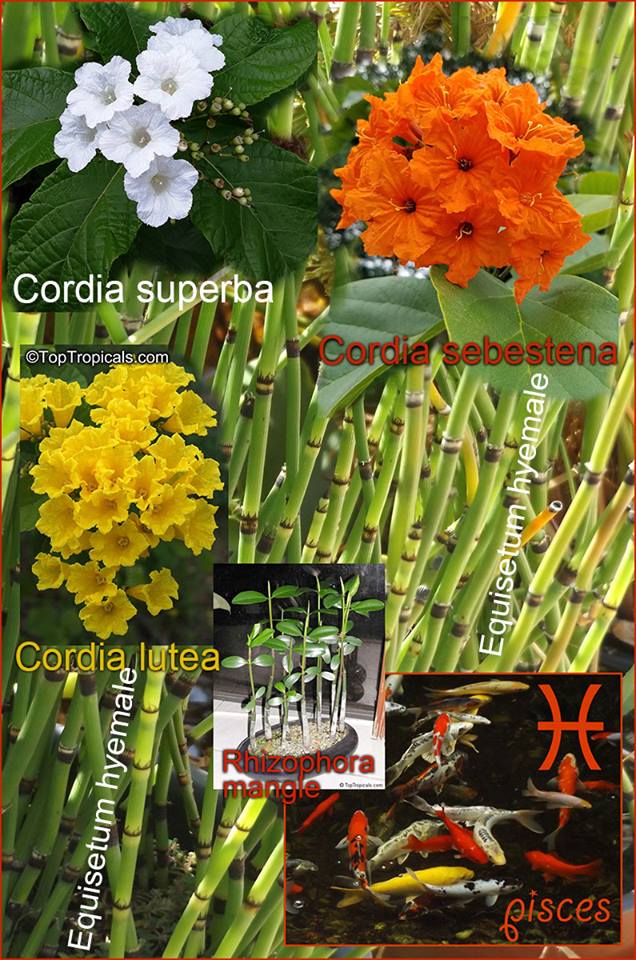
Pisces Zodiac lucky plants

TopTropicals.com

Pisces- 2/19 - 3/20. As a WATER sign ruled by both Jupiter and Moon (and Neptune, that was not discovered until 1846, after the plant correspondences were established; Neptune is considered a "higher octave" of the Moon), Pisces plants are often large but hard to find, and may grow near the ocean. The most healing plants for Pisces are those that strengthen the immune system or have an antibacterial effect. Pisces plants may also catalyze expanded states of awareness and be helpful in dream work.
Herbs connected to Pisces are ruled by its former ruler, the Moon (Neptune, the current ruler, was not discovered until 1846, after the plant correspondences were established; Neptune is considered a “higher octave” of the Moon). Diseases of Pisces have traditionally included psychotic disorders, various forms of substance addiction, lung diseases such as tuberculosis, and ailments of the foot; contemporary herbalists also add immune system diseases. Pisces is strengthened by rosemary's ability to promote an aura of centered grounding. This protective herb helps strengthen boundaries and cultivate a closer connection to the physical realm.

Pisces Zodiac lucky plants: Water lily, Lotus, Clematis, Wisteria, Lisianthus, Brunfelsia, Echinacea, English Lavender, Rosemary, Coconut palm, Cranberry, Clove, Coccoloba, Sea Oats, Mangroves, Ochrosia, Aquatic plants, Colocasia, Alocasia, Aralia, Ficus trees, Banyan, Peepal, Banana, Mango, Mimosa, Olive, Anise, Vilca and Yopo, Kava-kava, Nutmeg, Anthuriums, Eucalyptus, Bauhinia, Clusia, Caesalpinia, Callistemon, Bucida, Cassia fistula, Cordia, Calabash, Lipstick palm, Delonix, Elaeocarpus, Erythrina, Fatsia, Guaiacum, Mahoe, Koelreuteria, Kopsia, Macaranga, Pandanus, Peltophorum, Psychotria, Banesteriopsis, Tabebuia.

For other signs information, see Plant Horoscope Page