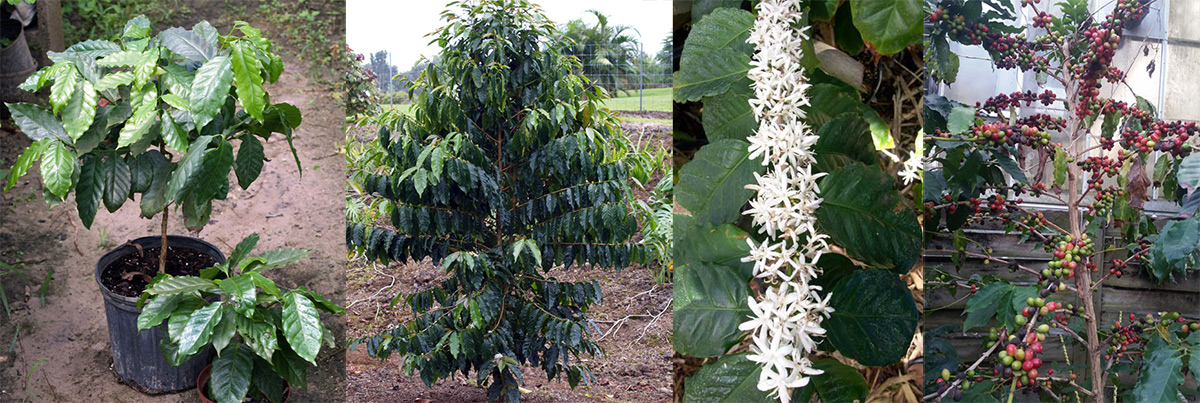
Coffee is shade-loving and easy to grow with regular water
It grows into a dark green shrub or small tree (about 3 to 5 feet tall
in a pot)
Its fragrant, star-shaped flowers resemble gardenias
The whole fruit is edible and turns green to yellow to red
The seeds are real "coffee beans" that can be dried, roasted, and ground at home.
Five Reasons to Grow a Coffee Plant
Perfect Indoor Fruit Tree: Thrives in filtered light and stays compact
Low Maintenance: Forgiving, adaptable, and ideal for new
gardeners
Aesthetic Appeal: Glossy green leaves and clusters of white blooms
Homegrown Coffee: Yes, you can roast your own beans.
Year-Round Beauty: Evergreen with seasonal fragrance
Coffee Plant Care Tips
Light: Bright, indirect light is best. Avoid harsh afternoon
sun.
Water: Keep soil lightly moist but not soggy. Let the top inch dry out before watering again.
Humidity: Loves higher humidity. Mist regularly or place on a pebble tray.
Fertilizer: Use a balanced, gentle fertilizer like Sunshine Boosters C-Cibus every few weeks during growing season.
Soil: Loose, rich, and well-drained. High in organic matter and slightly acidic. For potted plants, use a quality indoor tropical mix, such as Top Tropicals Abundance mix
Repotting: Refresh soil and size up the pot every 1–2 years to keep roots healthy.
Can I grow it outdoors?:
Yes - bring it outside in warm months and back indoors before frost. It's best suited for USDA zones 10-11, but container growing gives you flexibility in cooler climates.
How long until I get beans?:
Expect flowers and fruit within 3 to 4 years from seedling stage - often sooner if you start with a young tree.
What does the fruit taste like?:
Mild and sweet-tart, like a mix between a cherry and a cranberry. You can eat it fresh.
How to Make Coffee from Your Own Tree
Harvest: Pick the ripe red cherries
Pop and Soak: Squeeze out the beans and ferment 1-2 days to remove pulp
Dry: Spread out to dry for 1-2 weeks until hard and papery
A Miracle for every special
garden:
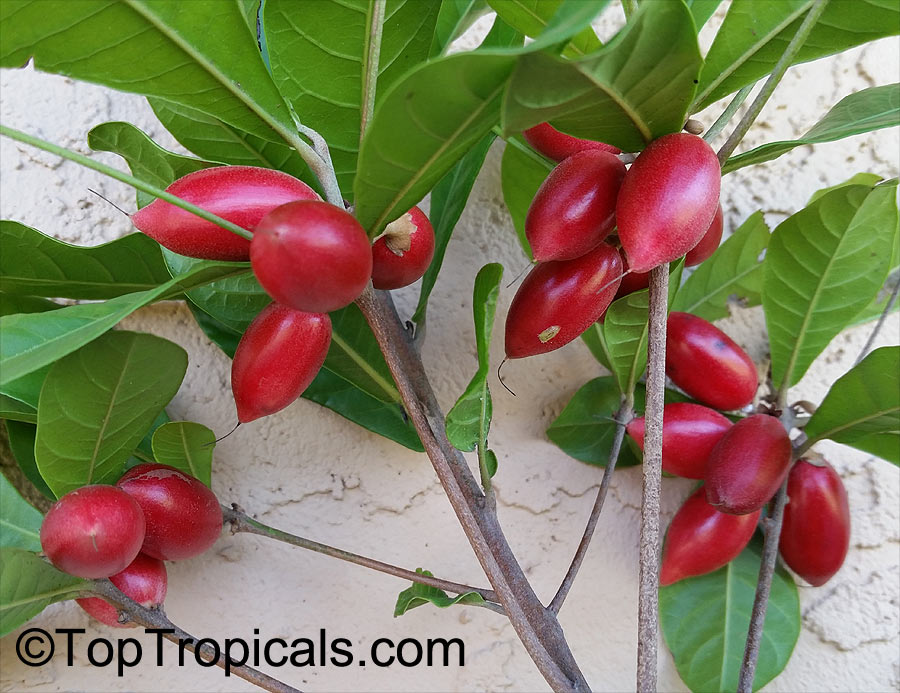
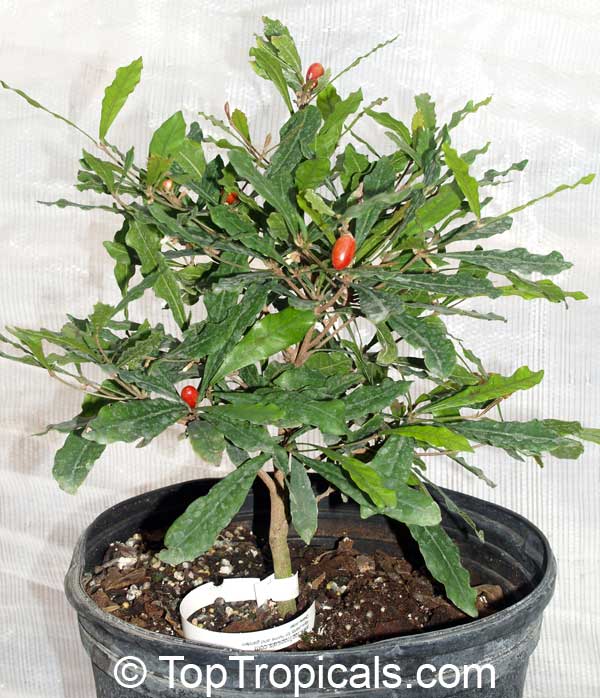
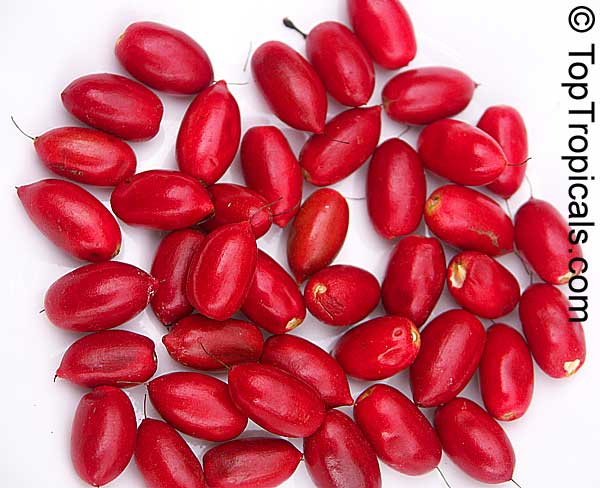
Synsepalum - Miracle Fruit
...Every tropical plant lover wants to have this plant in their collection. And there are at least three good
reasons for it:
1) it is a true miracle fruit
2) It enjoys growing in a pot, stays compact and brings you miracle berries nearly year
around
3) it can be grown indoors as it has very low water and light needs.
Miracle fruit is one of the strangest tropical fruits. The most unusual thing about it is the
effect it has on one's taste after this miraculous berry has been consumed. The
"miracle" is that if lemon or other sour food is eaten after the miracle
fruit, the sour tastes sweet, as if sugar has been added. That kind of magical
experience is unforgettable! The interest in this plant is so high that anyone who has a plant always finds eager volunteers to test its sweetening
properties. A natural chemical in the fruit masks the tongue's sour taste buds so that lemons taste like lemonade or lemon pie, or lemon candy; beer
tastes like Malta drink, sour strawberries taste super sweet, and a grapfruit
tastes delicions and not bitter! What causes the miracle? The fruit has a unique taste changing glycoprotein that inhibits tastebuds' perception of
sour taste. The sweet sensation lasts for half an hour to a few hours...
🌵Selenicereus megalanthus - Yellow Pitaya, Dragon Fruit Palora, is the best tasting Dragon Fruit in the world that is not only sweet, it has a great flavor (unlike most pitayas that are pretty watery).
🌵This particular species of Dragon fruit doesn't mind regular water and rains but is also drought-tolerant. Watch a short video how to grow it: 📱
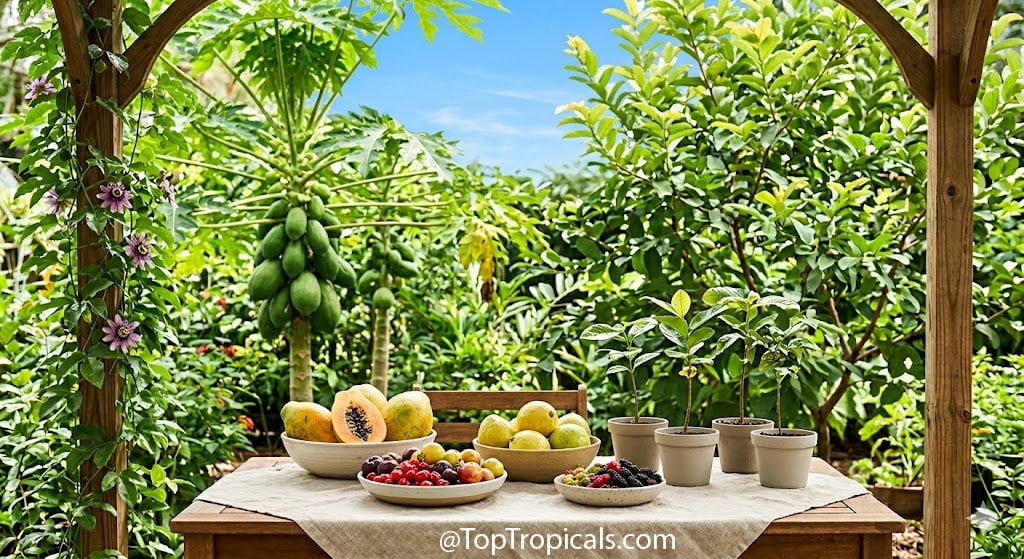
Want fruit without the wait? These tropical powerhouses deliver a "fast-food" garden in record time.
🍓 The Top 3 Speed Demons
1. The Favorite: Papaya🍊 If you want speed, Papaya is king. It can go from a small seedling to heavy fruit in 6-10 months. It behaves more like a giant herb than a tree: it is fast, has shallow roots, and is incredibly responsive to water and fertilizer. In warm climates, it is a plant it and watch it go legend. More details
2. The Reliable: Guava🍉 Guava is the most forgiving fruit tree you can own. It handles heat, poor soil, and the occasional week of neglect without missing a beat. Most varieties begin producing in just 1-2 years, staying compact enough for small yards or large pots. More details
3. The Surprise: Eugenias 🍒 This family (including Surinam Cherry, Grumichama, Cherry of the Rio Grande, and Pitomba) often flies under the radar. They look like ornamental shrubs, but they establish quickly and can fruit within year two. They handle pruning beautifully, making them perfect for edible hedges. More details
🍓 The Fast-Fruit Honor Roll
🍓Ultra-Fast (Under 1 Year) Papaya and Banana: The heavyweight champions of speed. Strawberry Tree (Muntingia calabura): Non-stop cotton candy berries. Grafted Favorites: High-quality Mango, Avocado, Peach, Nectarine, and Persimmon.
Mango Plant Facts
Botanical name: Mangifera indica Also known as: Mango
USDA Zone: 9 - 11
Highligths
Avocado Plant Facts
Botanical name: Persea americana, Persea gratissima Also known as: Avocado, Alligator Pear, Aguacate, Abacate
USDA Zone: 9 - 11
Highligths
Peach Plant Facts
Botanical name: Prunus persica, Amygdalus persica Also known as: Peach
USDA Zone: 5 - 10
Highligths
🍓Very Fast (1-2 Years) The Berries: Mulberry (especially Everbearing), Fig, and Barbados Cherry. The Exotics: Strawberry Guava, Loquat, and the curious Peanut Butter Tree (Bunchosia). The Sweet Treats: Blackberry Jam Fruit (Randia formosa).
🍓Tropical Staples (2-3 Years) Starfruit (Carambola): A heavy producer that looks stunning in the garden. Annona Family: Sweet Sugar Apples and creamy Atemoyas. Macadamia Nut: A long-term investment that starts surprisingly early.
🍓Fast Climbers and Bush Fruit Passionfruit: Will cover a fence and fruit in a single season. Berries: Mysore Raspberry and classic Blackberries for quick returns.
 Coffee Plant Care Tips