Garden Blog - Top Tropicals

Date: 25 Feb 2024

Avocado pollinating and crops

Avocado  fruit

Photo above: Avocado Joey - very buttery fruit, cold hardy variety.

Q: I bought an anise leaf-scented avocado from you, and it is finally quite large and doing great. I live in California, the coldest temperatures we seem to get in some winters is around 25 to 28F, and it never lasts long. The tree might get a bit of frost nipping on the new growth, but it has done very well. It has flowered profusely for the last two years but hasn't set any fruit. What variety you might recommend to help with pollinating?

A: We are glad your avocado is doing great. Anise is one of our favorite varieties, with the wonderful smell of leaves and tasty fruit.

Cold hardiness and flower quality

It is true that cold damage may affect avocado production, especially in setting fruit. To improve the tree's cold hardiness, make sure to provide balanced plant food, especially during the season of active growth. For our avocado trees, we use Sunshine C-Cibus year-round.

If you prefer to use dry (granulated, slow-release) fertilizers, make sure they contain micronutrients, or apply Sunshine Superfood microelement complex once a month.

To improve flower quality (including the ability to set fruit), we recommend a special micronutrient supplement called Sunshine Honey. It contains Boron and Molybdenum - elements that are responsible for setting fruit and for developing fruit (meaning not dropping at the early stage of development).

Cross-pollination and crop

In general, every avocado tree is self-fertile, meaning it can produce some fruit with its own pollen and doesn't necessarily require a second tree for pollination. So even if you don't do anything, sooner or later your tree will set fruit. However, it is also true that the amount of fruit and crop reliability depends on pollination factors. One type of avocado classification is by flowering and pollination behavior - type A or B.

When both types of trees are grown in proximity to each other, their overlapping flowering patterns significantly enhance the chances of cross-pollination. This can lead to improved fruit set and higher yield, making it especially important for commercial production and, to a lesser extent, for home growers.

Therefore, it's advisable to plant different varieties of avocado in your garden - the more, the merrier! The greater the diversity of avocado trees with overlapping flowering periods, the better your crop is likely to be. If you're growing an avocado tree without other avocados nearby, it becomes helpful to have more than one tree with different flowering patterns (A and B) to increase yield in your garden.

Anise Avocado is type B. So to increase your crop, you may consider planting type A variety from the list: Bernecker, Black Prince, Catalina, Choquette, Day, Donnie, Fantastic, Florida Hass, Lila, Loretta, Lula, Mexicola, Mexicola Grande, Red Russell, Reed, Russell, Simmonds, Ulala , Waldin .

To learn more about avocado types, fruit characteristics, cold hardiness and much more, refer to our Avocado Variety Guide - a page with very convenient interactive chart allowing you to quickly sort types of avocado by requirements of your choice (just click on column header to sort data). You may also buy a Book or download a PDF.

PAvocado  Variety  Guide  Book

Avocado  trees  in  pots

Photo above: 15 gal Avocado trees for local pick up. Delivery and installation available!

Date: 8 Jul 2025

How to grow Dragon Fruit from a cutting - Quick Guide

Dragon fruit, Pitaya - Hylocereus sp.

🌵 How to grow Dragon Fruit from a cutting - Quick Guide

  • 🐉 Get a healthy cutting


    Use a 6-10 inch long stem cutting from a mature dragon fruit plant. Let the cut end dry in the shade for 2-5 days so it forms a callus. This also helps prevent rot and fungus.
  • 🐉 Prepare the soil


    Use well-draining soil - well drained potting mix, Adenium mix, or cactus mix is ideal. Dragon fruit hates wet feet!
  • 🐉 Plant the cutting


    Stick the callused end about 2-3 inches deep into the soil. Make sure it's planted upright (the way it grew on the parent plant).
  • 🐉 Support it


    Add a trellis or post. Dragon fruit is a climbing cactus and needs something to grow on.
  • 🐉 Water lightly


    Water once after planting, then wait until the soil dries before watering again. Overwatering can rot the cutting.
  • 🐉 Give it sun and warmth


    Place in bright, indirect sunlight while it roots. Once established, it can handle full sun.
  • 🐉 Watch it grow!


    Roots usually form in 2-4 weeks. New growth means it's taking off! This is the time to Ferilize it!


🛒Shop Dragon Fruit plants and cuttings

📚 Learn more:


#Food_Forest #How_to #Dragon_Fruit

🟢 Join 👉 TopTropicals

Date: 19 Feb 2026

10 ways to enjoy Wild Medlar - Spanish Tamarind

Vangueria infausta (Spanish Tamarind, Wild Medlar)

Vangueria infausta (Spanish Tamarind, Wild Medlar)

🍊 10 ways to enjoy Wild Medlar - Spanish Tamarind


Vangueria infausta (Spanish Tamarind, Wild Medlar) from Africa to your backyard: the fruit, the medicine, the tradition.

Spanish Tamarind may look like a small, unassuming fruit - but don’t let it fool you. In its native Africa, this tree is a food staple, a home remedy, and a cultural favorite, all wrapped into one. And now, it’s ready to bring that same magic into your garden and kitchen. People have used this fruit for generations - and how you can too.

🍊 1. Eat it fresh, off the tree


When ripe, the fruit turns golden brown and softens slightly. Its flavor is sweet-tart, almost like a tangy apple or tamarind with a hint of citrus. Just peel and eat!

🍬 2. Dry it for snacks


In many African regions, the fruit is sun-dried and enjoyed like natural fruit leather. It keeps well, travels well, and makes a great healthy snack.

🍵 3. Brew it into a fruit tea


Dried fruit can be steeped into a tart, refreshing tea that’s packed with vitamin C and antioxidants. Add honey or ginger for a soothing drink.

🍷 4. Ferment it into traditional beer or wine


In some local cultures, the fruit is fermented into a mild alcoholic drink, similar to fruit wine or beer. This is one of the tree’s oldest known traditional uses.

🍧 5. Make jams and preserves


Boil the pulp with sugar and lemon juice to make tangy medlar jam. Spread it on toast, stir into yogurt, or use it in baking.

6. Add to porridge or smoothies


Crushed or juiced medlar fruit is added to traditional maize porridge for a nutrient boost. You can do the same with oatmeal or smoothies.

7. Try traditional fruit pudding


A simple medlar mash with a little sweetener makes a rich, apple-like pudding with hints of spice. Great as a chilled dessert.

🌿 8. Use the leaves and bark medicinally


In folk medicine, leaves are brewed into a tea for treating fever, colds, and stomach aches. Bark is used for chest congestion and coughs. Roots are sometimes used for even stronger remedies like malaria treatment.

9. Clean your teeth the traditional way


Believe it or not, people use medlar leaves to clean their teeth! The leaves are antimicrobial and have a slight astringent taste that leaves your mouth feeling fresh.

🎨 10. Dye fabric naturally
Crush the bark or boil the leaves to create natural dyes in yellow, green, and even purple tones. This use is still practiced in rural areas of southern Africa.

✍️ Why this tree belongs in your life


Wild Medlar is more than just a fruit. It’s a versatile, resilient, and deeply cultural plant that connects generations. It’s food, it’s healing, it’s art—and now it can be part of your garden story.
Grow it for the fruit, the medicine, the tradition… or just for the joy of growing something wild and wonderful.

🛒 Plant Spanish Tamarind and enjoy exotic fruit benefits

📚 Learn more:


#Food_Forest #Remedies #Recipes #Discover

🟢 Join 👉 TopTropicals

Date: 7 Apr 2025

Grow Your Own Exotic Dragon Fruit Garden - Part 3

Dragon Fruit varieties collage

Dragon Fruit varieties collage

🐲 Grow Your Own Exotic Dragon Fruit Garden - Part 3


Continued from previous post ⤴️

🛍 Limited-Time Offer:


This week only, enjoy an instant 5% discount on all dragon fruit plants, no code needed! Hurry - some varieties are in limited supply and highly sought after!​

🎮 Explore Our Unique Varieties:
  • 💋David Bowie - Red-skinned with white flesh, offering a sweet, tangy, lemon-like flavor. Self-pollinating and best enjoyed fresh.
  • 💋 Delight - Pink-skinned with light pink flesh, this variety is exceptionally fertile and produces large, flavorful fruits.
  • 💋 Eureka Red - Large, red-skinned fruit with red flesh, known for its sweet and tangy flavor. Self-pollinating and originally from Nicaragua.
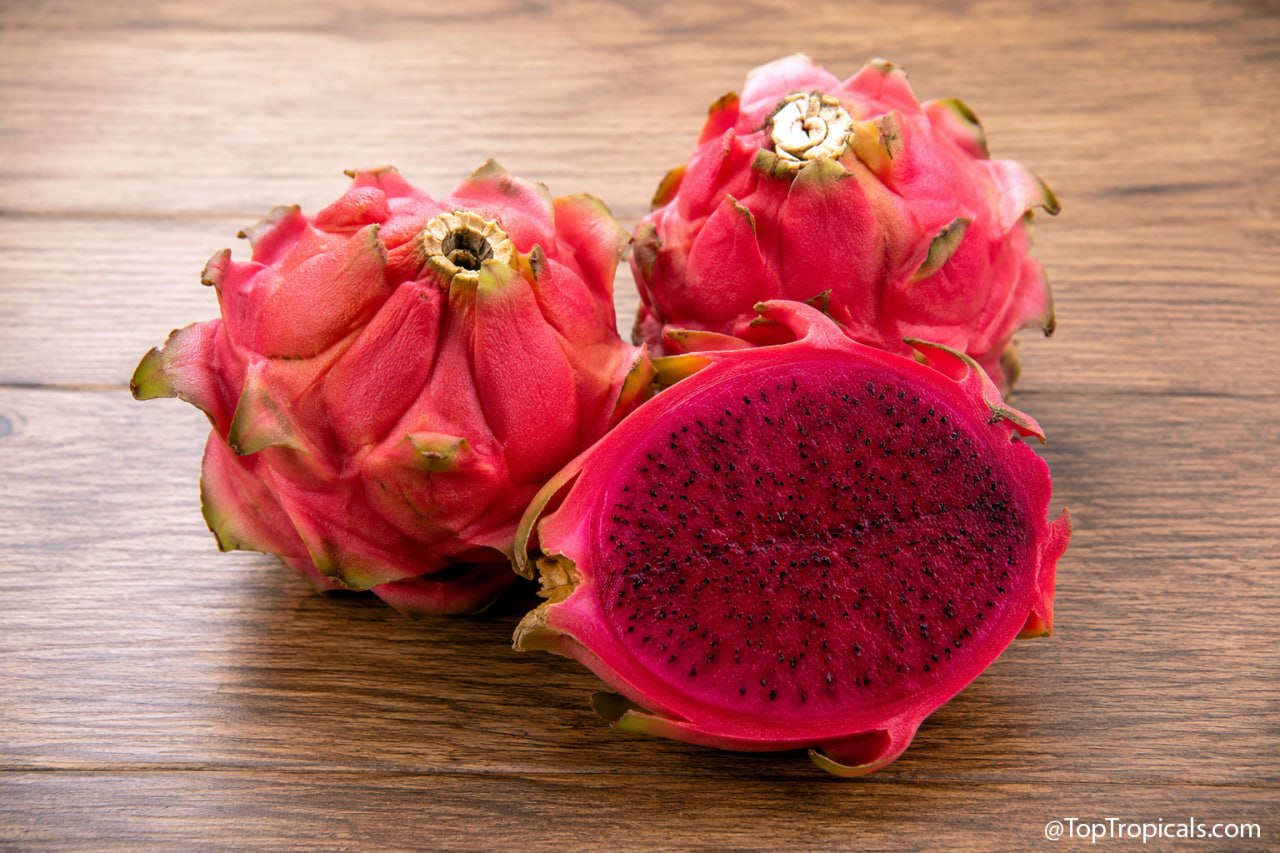
  • 💋 Halleys Comet - A hybrid with pink skin and purple flesh, producing impressively large fruits up to 2 pounds. The flesh is sweet, and the plant features large, striking flowers. ​
  • 💋 Lake Atitlan - Named after the Guatemalan lake, this variety has pinkish-red skin with white flesh, offering a sweet and tangy taste. Fruits typically weigh between 0.75 to 1.5 pounds.
  • 💋 Palora (Ecuador, Columbian) - Yellow-skinned with white flesh, Palora is renowned for being the sweetest dragon fruit variety. It originates from Ecuador and is self-fertile.
  • 💋 Seoul Kitchen - This variety produces medium to large red-skinned fruits with white flesh. The pulp is smooth and sweet, excellent when chilled and eaten fresh. Self-pollinating.
  • 💋 Thai Gold - A rare yellow-skinned variety with white flesh, known for its sweet flavor with a hint of tartness. ​
  • 💋 Vietnamese Jaina - Pink-skinned with white flesh, this variety is among the most common and is known for its mild, sweet flavor with a hint of Strawberry.


📚 Learn more about Dragon fruit:


🛒 Start your dragon fruit journey today and savor the unmatched flavors of homegrown, exotic fruits!

#Food_Forest #Discover #Dragon_Fruit

🔴 Join 👉 TopTropicals

Date: 23 Jul 2025

Five best fruit trees to plant in Summer

James Coconuts and Bob introducing Five best fruit trees

🌳 Five best fruit trees to plant in Summer


☀️ Summer might be scorching, but it’s actually a great time to plant fruit trees that love the heat. If you've got sunshine and a little space, these five tropical picks will reward you with fresh, homegrown fruit - some you’ll never find in a store!

1.🥭 Mango - the King of all fruit, a must have in every garden. Fiberlress varieties only! You can't buy those in the store.

2. Avocado - a must have super-fruit in everyone's diet, grow your own!

3.🐲 Dragon fruit - heat tolerant easy plant with low water needs, sweet fruit-bearing cactus

4. 🍉 Guava - by far the most flavorful tropical fruit, great for Summer drinks

5. 🍐 Black Sapote - fast growing, heat- and flood-tolerant, fruit tastes like chocolate pudding

📚 Learn more from previous posts:

🛒 Explore the finest rare tropical fruit trees

#Food_Forest #Discover

🟢 Join 👉 TopTropicals