Garden Blog - Top Tropicals

Date: 24 Jul 2023

Easy, stress-free plants
for Summer planting

Cat  with  Bananas

Q: With the rising temperatures, I'm concerned about shipping my plants safely. Can they withstand the heat during transit? Also, is it okay to plant them in the ground now, or should I wait for cooler Fall weather?

A: Your concern about shipping plants in hot weather is valid. For sensitive plants, we'll delay shipping until conditions are more favorable in your area. However, there are plenty of heat-tolerant tropical plants that handle shipping well with minimal stress. These plants adapt easily when planted during the hot summer months. Simply follow the included planting instructions, gradually acclimate them to full sun, and they should thrive.

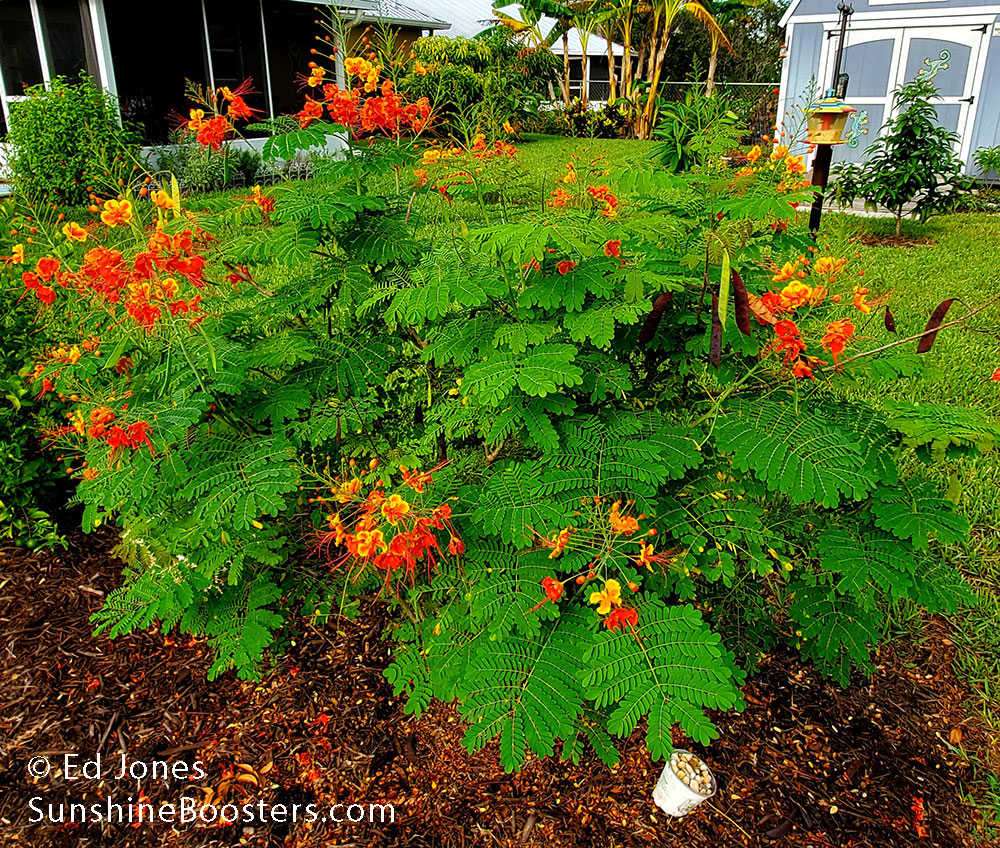
Certain flowering tropical plants, such as Allamandas, Calliandras, Caesalpinias, Adeniums, and Clerodendrums, are excellent options for shipping and establishing during the summer. Flowering vines like Jasmines also adapt well. Consider using Sunshine Booster fertilizers to promote robust growth, they are safe to use right after planting.

Additionally, many fruit trees flourish in heat. Mangoes, Avocados, Pomegranates, Pineapples, Loquats, Eugenias - Tropical cherries, Bananas, Jackfruits, Dragon Fruit, and Olive trees are great choices for summer planting. Noni trees are hardy survivors and usually ship and grow well during the summer, in spite of their lush tropical leaves.

Feel free to check with us about the specific plant you plan to order for its suitability in summer shipping. We're here to take care of your green babies and address your year-round planting needs!

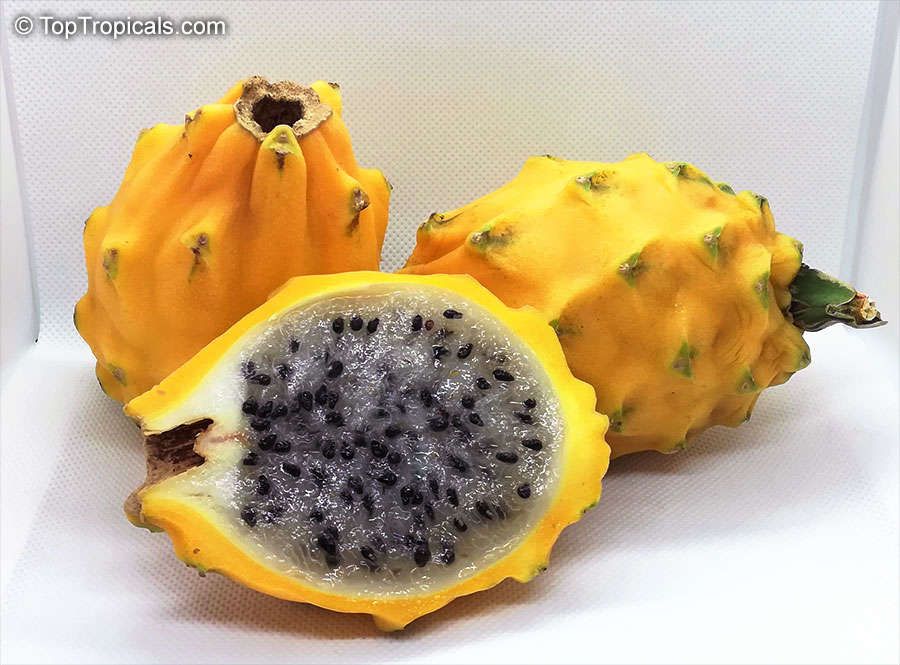
Pitaya  Yellow  Dragon  Fruit,  Selenicereus  megalanthus

Pitaya, Yellow Dragon Fruit, Selenicereus megalanthus

Cat  with  Bananas

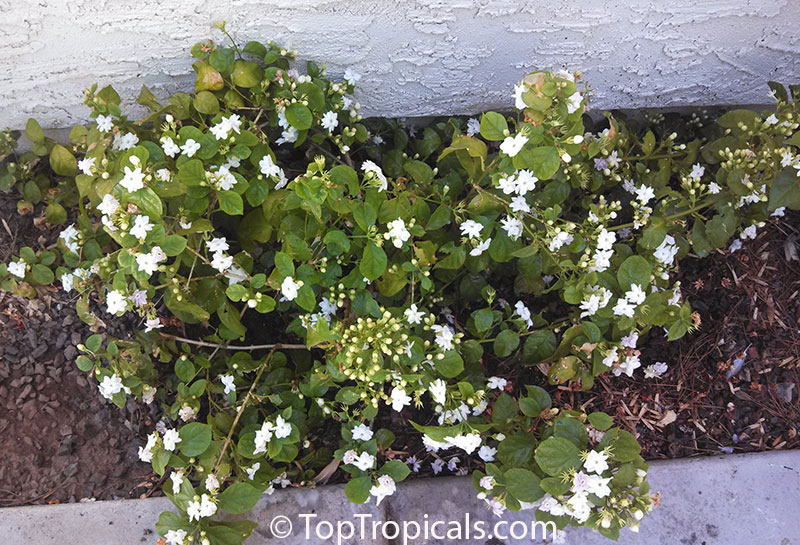
Jasminum sambac Maid of Orleans thrives and blooms in hot sun

Cat  with  Bananas

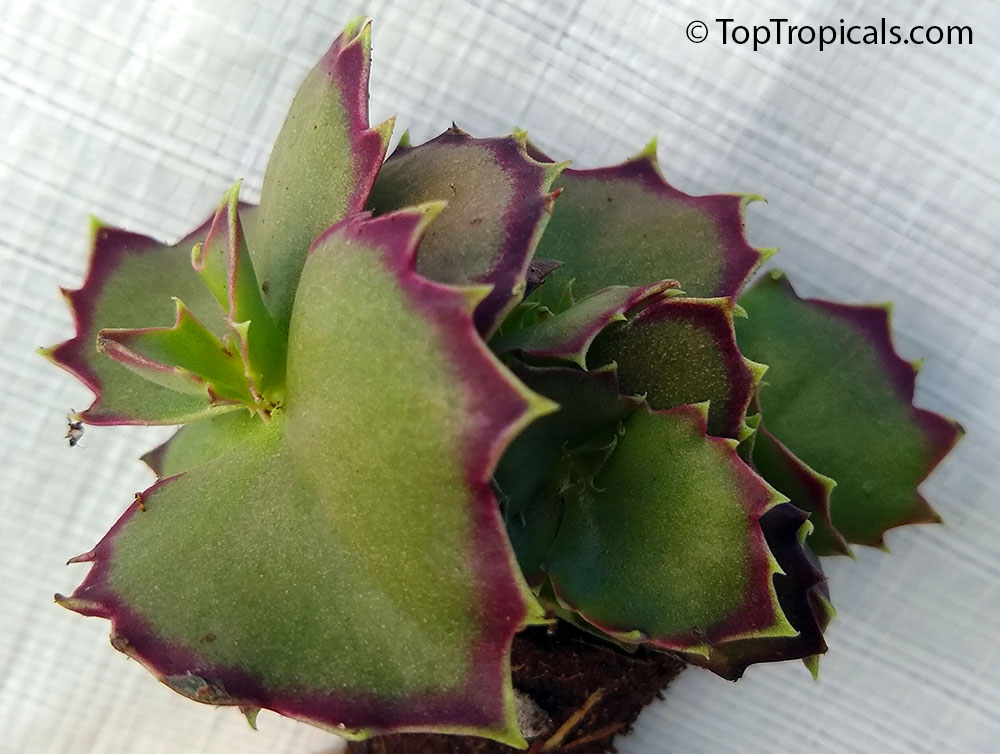
Kalanchoe synsepala Magnificent - Walking Cup Kalanchoe, spectacular plant, loves dry and hot conditions

Date: 29 Sep 2020

Healthy Plant Food: Q&A from Mr Booster

Why my Sapodilla is not fruiting?

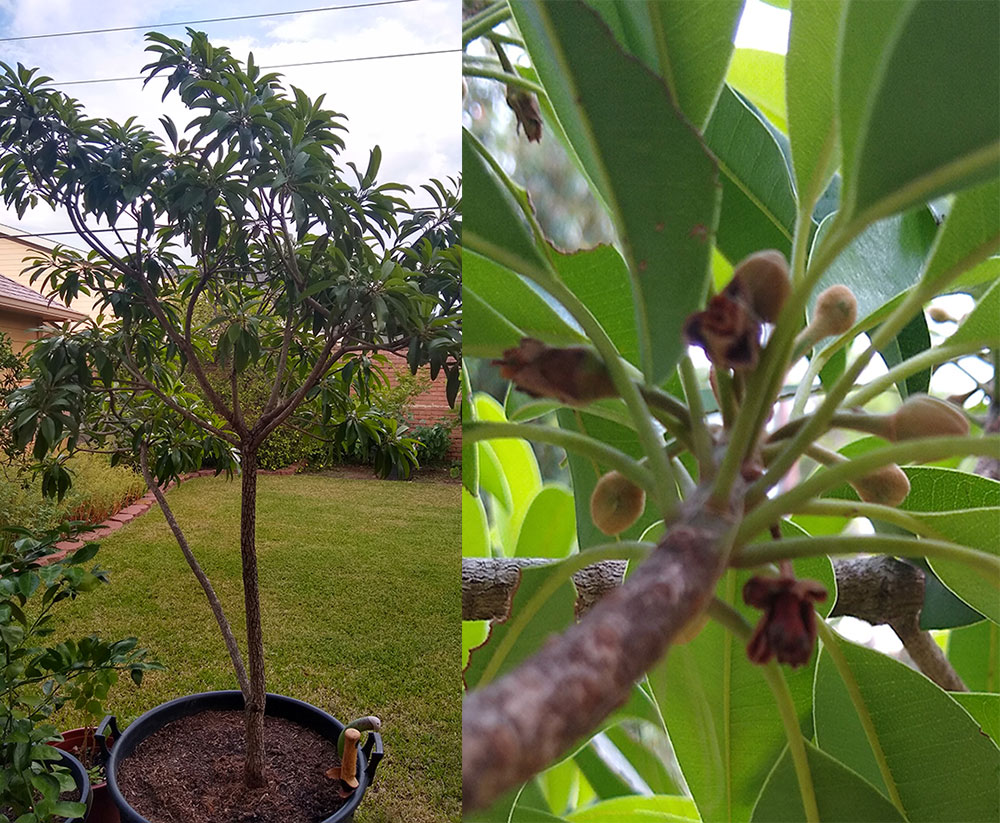
Q: I bought a Sapodilla tree from you several years ago, Silas Woods. I live in Houston area. The tree grows and produces blossoms for fruits, but then they just dry up and fall off. To-date, I have not gotten any fruits off the tree. Is there a reason for this? I really want a fruiting tree because Sapodilla is one of my favorite fruits. I have attached pictures of the tree. Please help.

A: Silas Woods is a free-flowering variety and in favorable conditions it should produce fruit almost year round, considering warm temperatures. The fact that the tree is producing flowers indicates that it is strong, overall healthy and ready for production, but for some reason these flowers don't set fruit. There may be several reasons for such behavior.

1) Too high temperature and too low humidity
In Houston area, humidity should be good in summer. However, if temperatures stay above 90F for a long time, this may cause flower dry-n-drop.
Solution: try to move the potted tree into filtered light, or in a spot where it does not get direct burning sun during the hottest hours of the day (morning sun is the best)

2) Root bound.
Solution: check if the tree needs stepping up into a larger container.

3) Lack of certain nutrients that are responsible for proper fruit formation.
In particular, elements B (Boron), Mo (Molybdenum), and a few other micro-elements (Fe - iron, Cu - Copper, etc.). This is most likely the cause of a flower drop. This is very common reason for undeveloped fruit or lack of fruit in container-grown fruit trees. When grown in the ground, plants can reach out to all necessary elements in surrounding soil (considering soils are not too poor on necessary elements). In a pot, a supply of nutrients can be exhausted very quickly, so a quality fertilizer program is very important. Fertilizer must include all necessary nutrients in easy accessible form, and a plant must have their constant supply for proper development.
Solution: prescribe to your Sapodilla tree the following combination of plant food:
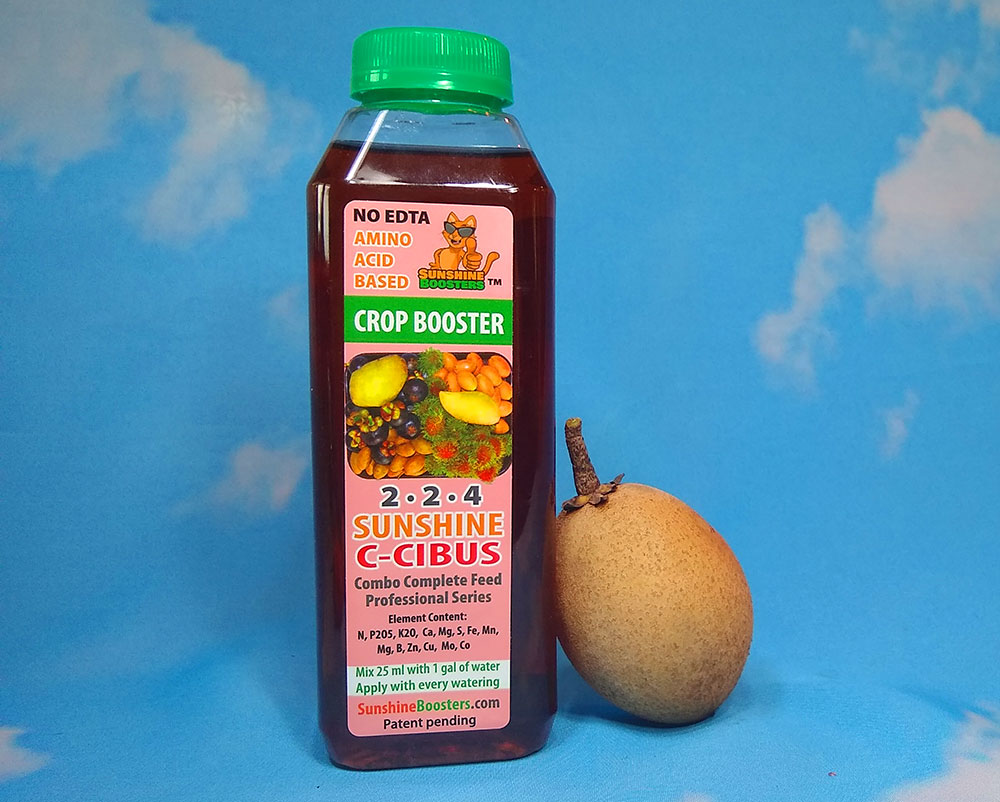
- SUNSHINE C-Cibus - Crop Nutrition Booster. It will provide well-balanced amounts of high absorption Nitrogen, as well as other macro-elements - to provide enough energy to the tree, plus a combination of all necessary micro-elements. It is safe to apply this fertilizer as frequent as with every watering, including winter time.
- SUNSHINE-Honey - sugar booster. This supplement has a high content of elements Mo and B - once the tree starts getting them on regular basis (a few times a year, according to the label), it will change its habit dropping flowers and/or premature fruit drop. As extra bonus, Sunshine Honey makes fruit sweeter by bringing sugars from all over the plant and concentrating them into fruit.

4) Lack of pollinating insects.
Solution: For most effective pollination, we always recommend to put some pieces of fruit under the tree, apple peels, or even banana peel. Those attract tiny beetles that are responsible for small flower pollination.

With winter time approaching, fruiting season is about to end, however, do not get discouraged and start the fertilizing program right away: this will bring up the plant into a healthy stage within a few months, and by next season it should be covered with fruit you like so much! Remember, Sunshine liquid fertilizers can be used year round, including winter, without a risk to burn roots or overdose, as long as you follow label instructions.

SUNSHINE C-Cibus - Crop Nutrition Booster from Garden Series, or Combo Total Feed Collection - all nutrients in just one bottle, for fruit trees and edibles.

Date: 7 Oct 2019

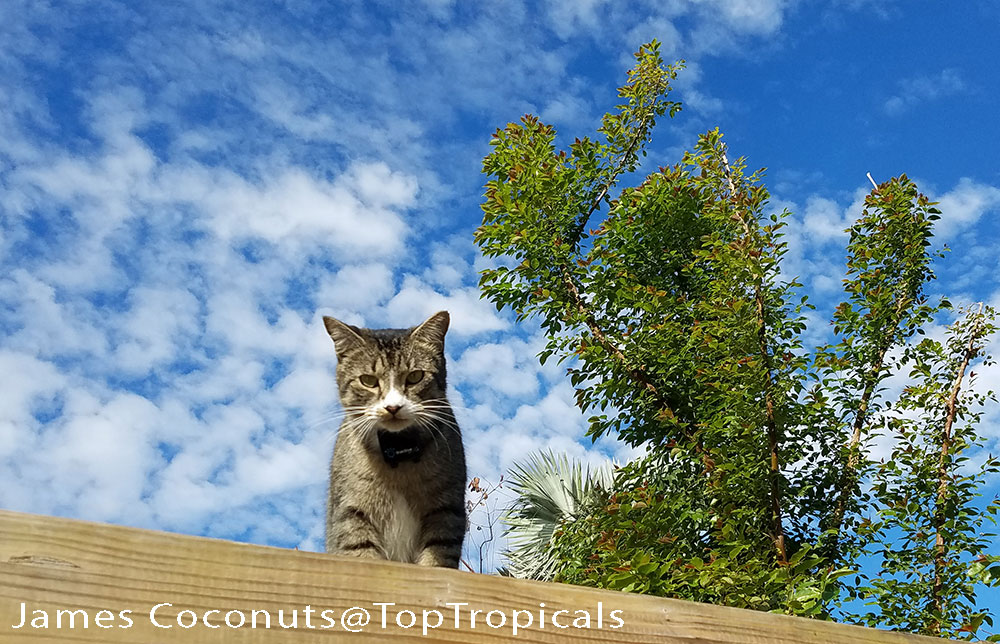
Meet PeopleCats of TopTropicals. Cat of the Day: James Coconuts

Winning a Lucky Ticket for a Croissant

Many of you have already met James Coconuts who has been in charge of our Customer Service Team for a long time. After many years of hard work, Coconuts is now finally retired in a comfortable home but still does some consulting for Anna Banana and other office team members. So you will hear from him again in our Blog, helping with planting, and organizing holiday events.
Originally, Coconuts came from the Middle-of-Nowhere (what a surprise). Tenants from our old property in Punta Gorda left him behind when they moved out... So Coconuts lived in woods for a month and, considering being deaf (but not dumb!) from birth, living in the wild was quite a challenge for him. When he saw our car, he jumped right into the open trunk and never regretted that decision. We left us no choice but to take him into our big CatFamily. He had starved so much that he ate a whole croissant... as we had nothing else to offer at the moment... Since then, Coconuts went through lots of troubles including a minor stroke, being run over by a truck, lost in woods again for a month, and surviving a wild animal fight followed by a life-threatening abscess. Finally, he decided to stay away from trouble and happily landed on his couch with Margaritas and Nachos, getting chubby, singing his favorite opera songs, and writing poetry.

Date: 29 Jun 2019

Variegated Shell Ginger - Alpinia zerumbet

By Onika Amell, tropical plant specialist

Q: I live in Deltona, Florida and hoping to find spreading ginger with interesting foliage to grow in a partially shaded area in my garden under a group of trees. Any suggestions?

A: Variegated ginger Alpinia zerumbet variegata is a clumping ginger valued for its beautiful variegated foliage. The dark, green leaves have striking yellow stripes. This ginger is sought-after, not only for the stunning foliage but also for its beautiful flowers. The flowers are different from other members of the ginger family and appear in drooping racemes from the ends of leafy stems rather than directly from the rhizomes. This ginger is also commonly known as Shell Ginger because the flowers resemble seashells! They are pink-tinged, fragrant and appear in summer. This evergreen perennial grows in upright clumps 3-5 feet tall. You may prune the plant to control size.
It does not tolerate drought or a hard freeze but can take a few hours or light frost (goes dormant in such case). In colder areas, rhizomes should be dug up and stored in a cool room during winter.
This ginger will love a shaded corner in your garden. Plant it in organically rich, well-drained soil in full sun to part shade. Keep the soil moist but not soggy, and spread a thick layer of organic mulch around the plant for moisture retention. There are no serious insect or disease problems to worry about!
This ginger can be also be grown as a house plant as long as it has bright light and humid conditions. It will grow to around 3-4 feet tall as a houseplant.

Recommended fertilizers:

Broad Leaf Plus - Ginger-Heliconia-Banana Booster
Tropical Allure - Smart-Release Booster

Limited time special offer:
Instant $5 off Variegated Ginger - Alpinia zerumbet

Date: 24 Feb 2019

Pisces Zodiac lucky plants

TopTropicals.com

Pisces- 2/19 - 3/20. As a WATER sign ruled by both Jupiter and Moon (and Neptune, that was not discovered until 1846, after the plant correspondences were established; Neptune is considered a "higher octave" of the Moon), Pisces plants are often large but hard to find, and may grow near the ocean. The most healing plants for Pisces are those that strengthen the immune system or have an antibacterial effect. Pisces plants may also catalyze expanded states of awareness and be helpful in dream work.
Herbs connected to Pisces are ruled by its former ruler, the Moon (Neptune, the current ruler, was not discovered until 1846, after the plant correspondences were established; Neptune is considered a “higher octave” of the Moon). Diseases of Pisces have traditionally included psychotic disorders, various forms of substance addiction, lung diseases such as tuberculosis, and ailments of the foot; contemporary herbalists also add immune system diseases. Pisces is strengthened by rosemary's ability to promote an aura of centered grounding. This protective herb helps strengthen boundaries and cultivate a closer connection to the physical realm.

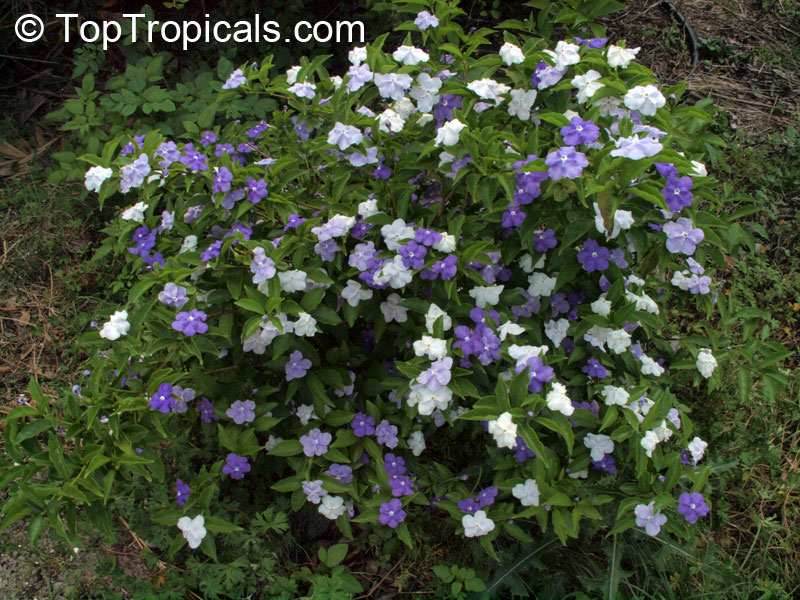
Pisces Zodiac lucky plants: Water lily, Lotus, Clematis, Wisteria, Lisianthus, Brunfelsia, Echinacea, English Lavender, Rosemary, Coconut palm, Cranberry, Clove, Coccoloba, Sea Oats, Mangroves, Ochrosia, Aquatic plants, Colocasia, Alocasia, Aralia, Ficus trees, Banyan, Peepal, Banana, Mango, Mimosa, Olive, Anise, Vilca and Yopo, Kava-kava, Nutmeg, Anthuriums, Eucalyptus, Bauhinia, Clusia, Caesalpinia, Callistemon, Bucida, Cassia fistula, Cordia, Calabash, Lipstick palm, Delonix, Elaeocarpus, Erythrina, Fatsia, Guaiacum, Mahoe, Koelreuteria, Kopsia, Macaranga, Pandanus, Peltophorum, Psychotria, Banesteriopsis, Tabebuia.

For other signs information, see Plant Horoscope Page.