Garden Blog - Top Tropicals

Date: 12 Sep 2025

What flowers do NOT attract bees?

Butterfly on a flower that doesn't attract bees

❌ What flowers do NOT attract bees?


Most tropical flowers bring in pollinators, and bees are usually first in line. But what if you’d rather avoid them? Maybe you’re allergic, or just don’t want bees buzzing around. Good news: some flowers attract butterflies, hummingbirds, moths, or even flies - but not bees.
  • 👉 Quick rules:


  • ✔️ Night-blooming + strong fragrance = moths or bats, not bees.
  • ✔️ Red tubular flowers with little scent = hummingbirds or butterflies, not bees.
  • ✔️ Rotten or fermented smell = flies, not bees.
  • ✔️ Carnivorous plants = trap insects, no bee nectar.

1.

Night-blooming, fragrant - moth and bat flowers


Bees forage by day, so many night-fragrant flowers skip them.
  • Brugmansia - Angel’s Trumpet - big, hanging blooms, moth and bat pollinated.
  • Cestrum nocturnum - Night-blooming Jasmine - powerful night scent, moths only.
  • Hylocereus Dragon Fruit - huge cactus flowers, bats and moths.
  • Brunfelsia - Lady of the Night - sweet fragrance at dusk, no bee interest.

2.

Hummingbird and butterfly flowers


Bees don’t see red well. Tubular reds, oranges, and yellows usually go to birds and butterflies.
3.

🐱 Fly-pollinated oddballs


Some flowers smell bad to us but irresistible to flies.
  • Amorphophallus (Voodoo Lily) - rotting meat scent.
  • Tacca (Bat Head Lily) - spooky black flowers, fly-pollinated.
  • Stapelia (Carrion Flower) - also fly-pollinated.
  • Aristolochia (Pelican Flower) - giant, bizarre fly-traps.

4.

🌸 Specialized orchids


Not all orchids rely on bees. Many use moths, butterflies, or beetles instead.
  • Vanilla orchid - its natural bee pollinator is absent in most regions, so no bee appeal elsewhere.
  • Brassavola nodosa and others - open at night for moths, not bees.

5.

🕷 Bonus: carnivorous curiosities


Carnivorous plants don’t offer nectar. They trap insects instead, so bees stay away.

Nepenthes (Pitcher Plant) - uses pitchers of liquid to lure and digest insects.

These flowers keep the beauty, fragrance, and wildlife appeal - but without making your garden a bee hotspot.

🛒 Explore butterfly attractors

#Butterfly_Plants #How_to #Discover

🟢 Join 👉 TopTropicals
Date: 18 Sep 2025

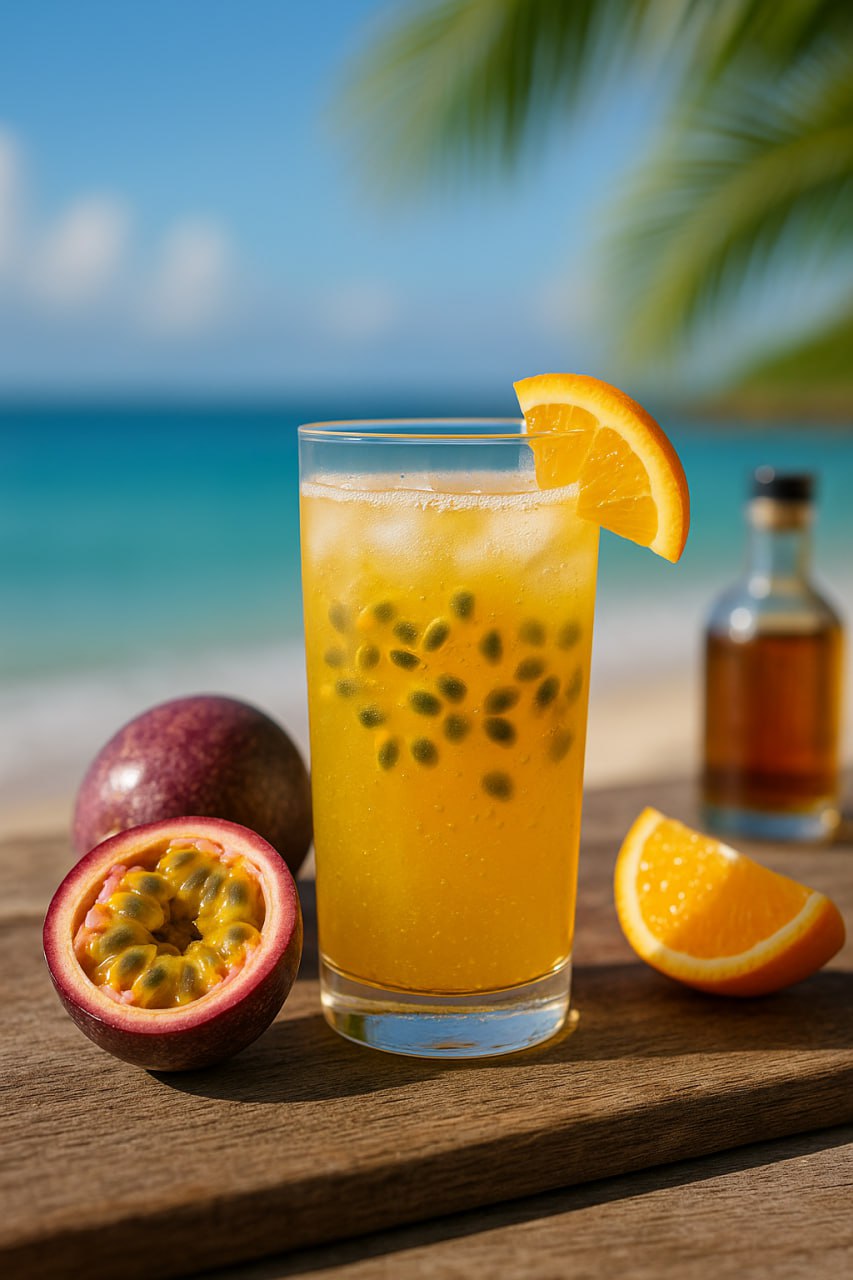
Passion fruit fizz: Quick-n-Fun exotic recipes

Passion fruit fizz: Quick-n-Fun exotic recipes

🍴 Passion fruit fizz: Quick-n-Fun exotic recipes 🍹


  • 🔴Scoop passion fruit pulp into sparkling water with a squeeze of orange juice.
  • 🔴A bubbly, tangy tropical soda!
  • 🔴You may add a plash of Rum (optional)


🛒

Passion fruit fizz recipes

Ingredients

  • 2 passion fruits (pulp scooped)
  • 1 cup sparkling water
  • 1 tbsp orange juice
  • (Optional) 1 shot rum

Instructions

  1. Scoop passion fruit pulp into a glass.
  2. Add sparkling water and orange juice, stir gently.
  3. Optionally add a splash of rum.
  4. Serve chilled with an orange slice garnish.
Shop Passion fruit plants

#Food_Forest #Recipes

🟢 Join 👉 TopTropicals

Date: 28 Sep 2025

10-minute recipe Bo La Lot with a leaf youve never cooked before!

Bo La Lot recipe with Vietnamese pepper Lalot (Piper sarmentosum)

🍴 10-minute recipe Bo La Lot with a leaf you’ve never cooked before!

  • 🌮 Forget boring tacos - this wrap will blow your mind! In Vietnam they call it Bo La Lot - beef wrapped in peppery Lalot leaves.
  • 🌮 It started as grape leaf wraps in the Middle East, but in tropical Asia grapes don’t grow, so people swapped to Lalot. Way more flavor than grape leaves!
  • 🌮 Grilled beef, garlic, onion, lemongrass - all can be tucked into these shiny green leaves. Smoky, juicy, and so good you’ll wonder why you didn't try it sooner! It's better than grape leaf wraps, because it has so much flavor!
  • 🌮 Most large leaf pepper plants will work for this recipe - Vietnamese pepper Lalot (Piper sarmentosum), Betel Leaf (Piper betle), or even large leaves of the traditional Black Pepper plant (Piper nigrum).


🌯 BO LA LOT RECIPE


✔️ Ingredients

  • · 1 pound ground beef or turkey
  • · 2 tablespoons chopped lemongrass (optional)
  • · 1 tbsp spice powder
  • · 1 tbsp curry powder
  • · 1 tbsp finely minced garlic
  • · 1 tbsp oyster sauce or fish sauce (optional)
  • · 1 tsp ground black pepper
  • · 1 tbsp finely minced shallots
  • · 1 tbsp soy sauce
  • · 2 tsp sugar or honey
  • · 1/2 tbsp olive oil
  • · 1/2 tbsp salt
  • · 10-15 fresh Lalot leaves


👉 Directions

  • · Preheat the grill.
  • · Combine all ingredients in a large mixing bowl and mix well.
  • · Wrap about 2 tablespoons of the mixture into each betel leaf.
  • · Spear 3 to 4 betel leaf wraps onto a skewer and grill until the meat is thoroughly cooked.
  • · Be sure to eat immediately.


🛒 Grow Leaf Pappers for tasty, peppery recipes

📚 Learn more:


📱

#Food_Forest #Recipes #Container_Garden #How_to

🟢 Join 👉 TopTropicals

Date: 3 Oct 2025

Plant for birds: feast for wildlife and people from a tiny vine!

Passiflora suberosa - Corkystem Passion Vine

Plant for birds: feast for wildlife and people from a tiny vine!

  • Passiflora suberosa - Corkystem Passion Flower: did you know this Florida native passion vine is more than just a butterfly host? Birds love it too - they’ll happily snack on the little fruits and sing you thank-you songs all day long!
  • And yes, the fruit is edible for people as well! The berries are small, but they make a fun and exotic treat.
  • The plants has a tiny flower and a tiny fruit – both only about half an inch – but together they create a mighty native habitat.
  • It's a triple win: butterflies, birds, and people can all enjoy something from this charming little plant. Plus, it’s the larval host for Gulf Fritillary, Zebra Longwing, and Julia butterflies, and its tiny greenish flowers provide nectar all year long. Fast-growing, easy, and full of life – a real gem for any Florida garden.
  • This vine is delicate and compact, perfect for a medium trellis or climbing a small tree. Unlike the big, aggressive passion vines that can cover a whole fence, this one stays manageable.
  • This Passion vine is not just charming and wildlife-friendly, it’s also tough as nails. Cold hardy and easy to grow, this native vine takes whatever Florida throws at it – heavy rains, long droughts and heat, poor sandy soils, even total neglect – and still thrives. A perfect choice if you want beauty, wildlife, and resilience all in one little plant.


🛒 Plant this small and tough vine with food and wildlife benefits

📚 Learn more:


#Food_Forest #Hedges_with_benefits #Butterfly_Plants #How_to

🟢 Join 👉 TopTropicals

Date: 21 May 2019

Colors of Cannas

TopTropicals.com

By Onika Amell, tropical flower specialist

Q: I'm a beginner gardener and looking for something easy to grow that will add a lot of color to my garden fast.

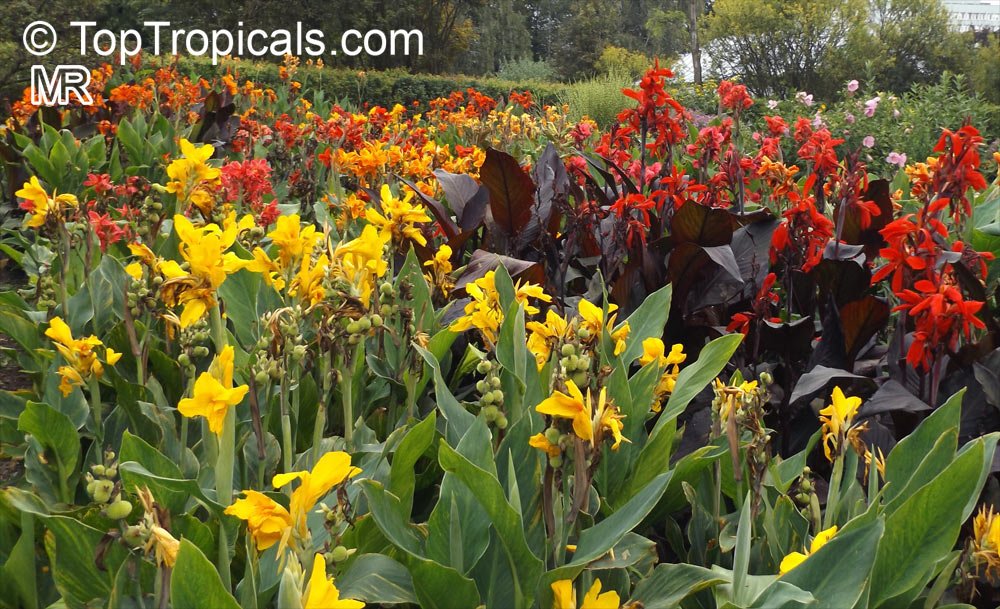
A: Try growing Canna lilies. They are a favorite of many gardeners as they are so easy to grow and always provide a reliable, beautiful show of flowers. In fact, Cannas are one of those plants that are spectacular even if they never bloomed. The leaves are tropical-looking, banana-like and huge! They range in a wide variety of shades and colors, always accentuating the large showy flowers on top.
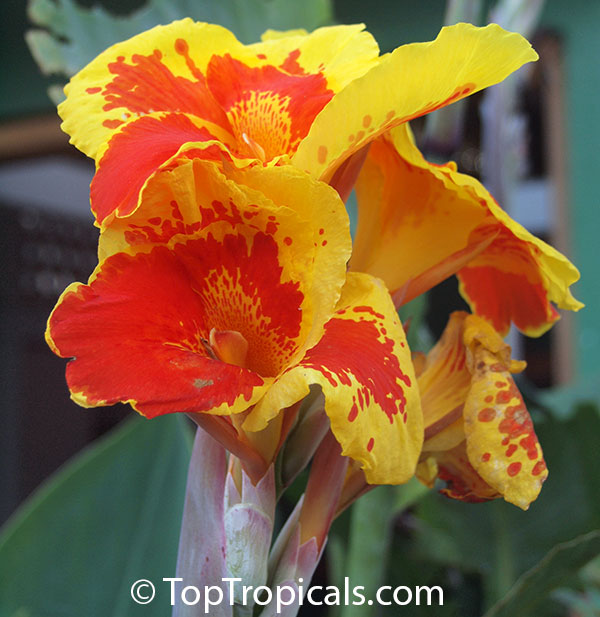
One of our favorite cannas right now is Canna Cleopatra - very striking and most unique. Large yellow flowers speckled with red spots, or red flowers and even flowers with a little bit of both. Foliage is exotic and very beautiful, often dark green, dark chocolate or a combination of both. This is a canna that will definitely illuminate your garden!

Caring for Cannas

Cannas like a lot of water, full sun and high heat. They are also heavy feeders and prefer soils that are well drained, organically rich and moist. The leaves will quickly tell you when the plant is hungry. Feed your cannas weekly with a water-soluble 20-20-20 fertilizer Broad Leaf Plus, and they will quickly respond with beautiful, lush growth. Deadhead often to encourage continued flowering. Cannas are winter hardy in US hardiness zones 7 and warmer. If you live in colder areas, the rhizomes need to be lifted in the fall, and stored indoors in a dark, warm spot until spring arrives. Be sure to divide clumps every three or four years. Give them lots of room as they grow into large plants, forming spreading colonies up to 7 feet high and 4 feet wide. Show them off in mass plantings, in large containers or in mixed flower borders. Lure in hummingbirds with these beauties!

TopTropicals.com