Garden Blog - Top Tropicals

Date: 29 Nov 2018

Mangosteen fever

TopTropicals.com

Mangosteen availability. Yesterday we received 6 Mangosteen trees from Hawaii - on the photo Anna Banana is holding one of these very much wanted trees. We had 378 customers on a waiting list for this amazing fruit tree. After we sent wishlist notifications, the plants were all sold within a couple hours for $349.95 each on "first come, first serve" basis. We even over-sold one... our shopping cart could not catch up with so many requests! We also had 12 smaller size (1 gal pot) plants, and most were also sold right away. As of now, only 3 plants left.

We know many people want this tree, and we apologize that we had only a few. We are searching all our sources around the world for these plants and seeds to supply the Mangosteen for you!

ATTENTION to all Mangosteen seekers! Please re-submit your request for Mangosteen using our Wishlist form. We will find more plants for you, as well as will grow them from seeds. Be on top of our Mail-list news and make sure to re-submit a wish-list request for this plant, since your original request was removed as soon as notification was sent.

You may follow the BUY button below, and if all plants sold out, simply click on a link "Notify me when available". We will notify you as soon as we have the Mangosteen back in stock!

Date: 9 Nov 2018

Taste of Mango

TopTropicals.com

Mango harvest season is over, and now it's the time to plant young Mango trees for the next year season of flowering and fruiting. When choosing a mango tree, researching your location for proper growing conditions is relatively easy. But refining your decision-making process based on the taste of mango is both easy and fun (and filling)! However, since it is often difficult to find a convenient source for sampling a wide variety of mango fruits; we at Top Tropicals sat down and tasted a handful of varieties for you... Just another opinion on taste!

Pickering - Sweet, juicy, fiberless, with a hint of an apricot fragrance. (A universal favorite amongst the group.)

Nam Doc Mai - A slightly fibrous marmalade-like texture, with a sweet and floral flavor.

Cogshall - Very little fiber with a slightly tart and piney flavor.

Florigon - A mild, even flavor. Not too sweet, not too tart, and fiberless.

Mallika - A fiberless cantaloupe-like consistency. Slightly tart, with some semblance to non-acidic orange juice.

Valencia Pride - Slightly fibrous, with a tangy near citrus flavor.

Glenn - Very mild flavor, less sweet compared to other varieties, but very refreshing.

Read more about Mango varieties...

Date: 26 Oct 2018

Improving cold hardiness before winter: fertilizer and micro-elements

TopTropicals.com

Q: I live in New Jersey and it is getting cool here, with temperatures in the upper 40s, but my tropical plant collection is in a heated sunroom (still around 70s). Should I continue fertilizing my plants? And if yes, my second question about deciduous Sugar Apple tree. Should I continue fertilizing it until it drops leaves?

A: First of all, even though you live outside tropical climate, your plants enjoy warm temperatures year round, and can be treated like if they were in a Southern garden.
Plant nutrients, both macro-elements (regular fertilizer) and micro-elements (such as iron, manganese, magnesium, copper, and other elements) play an important role not only in overall plant health but also in plant hardiness.
The rule of thumb is, even in warm climates we cut off any fertilizer by the end of October. You still have time for the last treatment this year (next will be in March, or when your plants start showing new growth). You may apply just a bit of slow-release granulated fertilizer, or water-soluble by foliar spray, diluted 1/2 of label strength, to all evergreen species in your collection.
The most important application before winter is micro-elements and other plant boosters that will help you plant collection survive winter months with a shorter daylight and cooler temperatures. Now it is a perfect time to make these simple steps:

1) Miscro-element applications, any one of: Superfood, Iron Supplement, Greenleaf.
2) Sunshine-T application: for improving cold hardiness, plus immune system resistance to insects and deceases.
3) Sunshine-Honey application for all fruit trees to encourage bigger and sweeter fruit next year.

Regarding your second question. Deciduous tropical plants like Annonas, Adeniums, Plumerias, etc - do not need regular fertilizer at this time, however, go ahead and apply microelements Superfood complex, as well as Sunshine-Honey, while leaves are still green. These two will give a kick-start to provide better flowering in spring, and production of sweeter fruit later.

Check out SUNSHINE boosters - all with free shipping!

Date: 20 Oct 2018

Featured Plant. Bilimbi, Cucumber tree, Tree Sorrel

TopTropicals.com

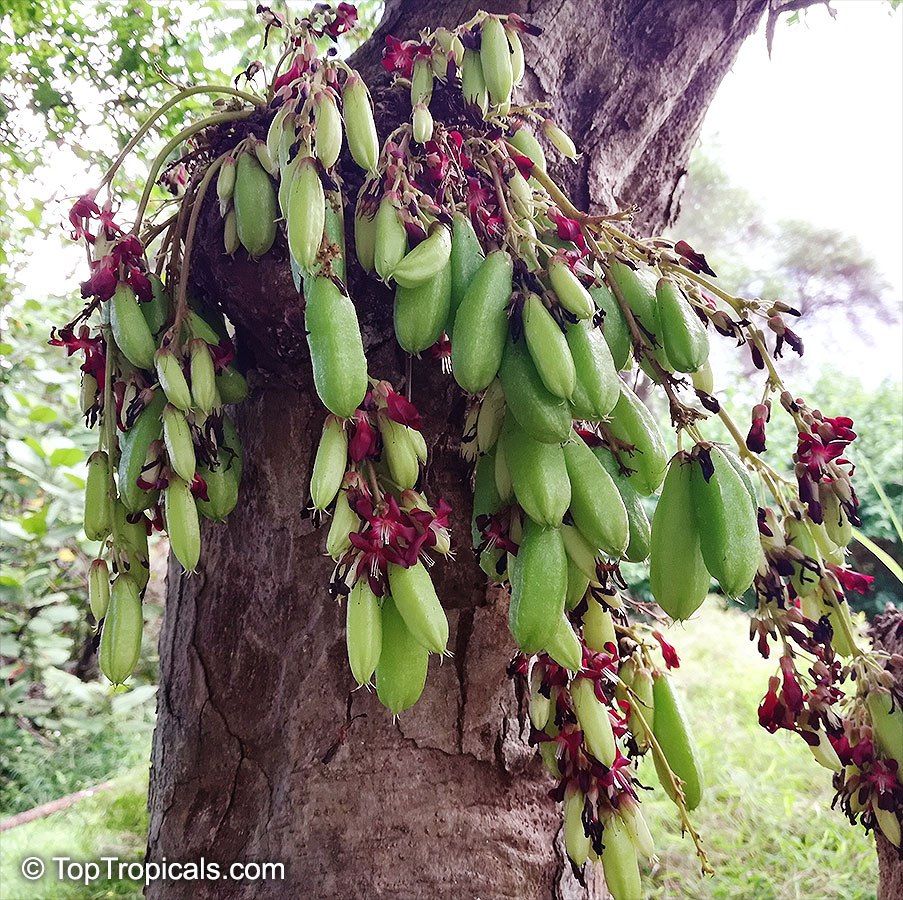
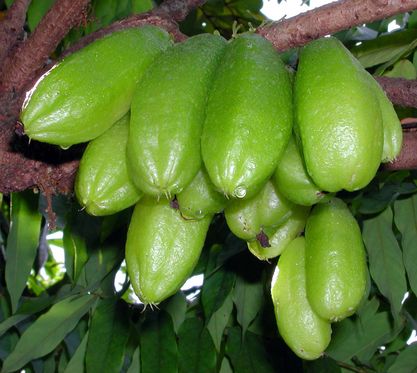
Bilimbi, Cucumber tree, Tree Sorrel

Ethnic names are: Kamias, Belimbing Asam, Belimbing Buloh, Bimbiri. This rare exotic fruit is very popular in Thailand, Malaya and Singapore. In India, where it is usually found in gardens, the bilimbi has gone wild in the warmest regions of the country. Outside native habitat, Bilimbi is hard to find plant, very few growers produce them, although it is not so hard in cultivation.
The bilimbi is closely allied to the carambola but quite different in appearance, manner of fruiting, flavor and uses. The only strictly English names are"cucumber tree"and"tree sorrel"."Bilimbi"is the common name in India and has become widely used. Many people are more familiar with the close ralative - Averrhoa carambola - Star Fruit, which foliage looks very similar to bilimbi. The bilimbi leaves and taste of fruit are quite similar to those of the Phyllanthus acidus - Otaheite Gooseberry), although these plants are not related. Continue reading...

Check out this plant...

Date: 24 Jun 2018

TopTropicals

Carambola (Star Fruit) in winter

A word from our customer:
I just wanted to let you know that the Dwarf Carambola Kari has survived last winter and turned into a nice bushy tree this summer.I have been trying to grow this tree forever it never survived winters here. Then last year you suggested me to plant Carambola in wind protected corner, so I picked a place next to the house,South side very close to the wall. I covered it several times with a sheet on windy days like you said. The tree did lose leaves during winter but it survived and established well. I had my first crop this year nearly 20 fruit!Just thought your other customers wanted to know keep it protected from winds this is the secret,it works! (M., Avon Park, FL)

Check out this plant...