Star fruit chili relish: quick-n-fun exotic recipes
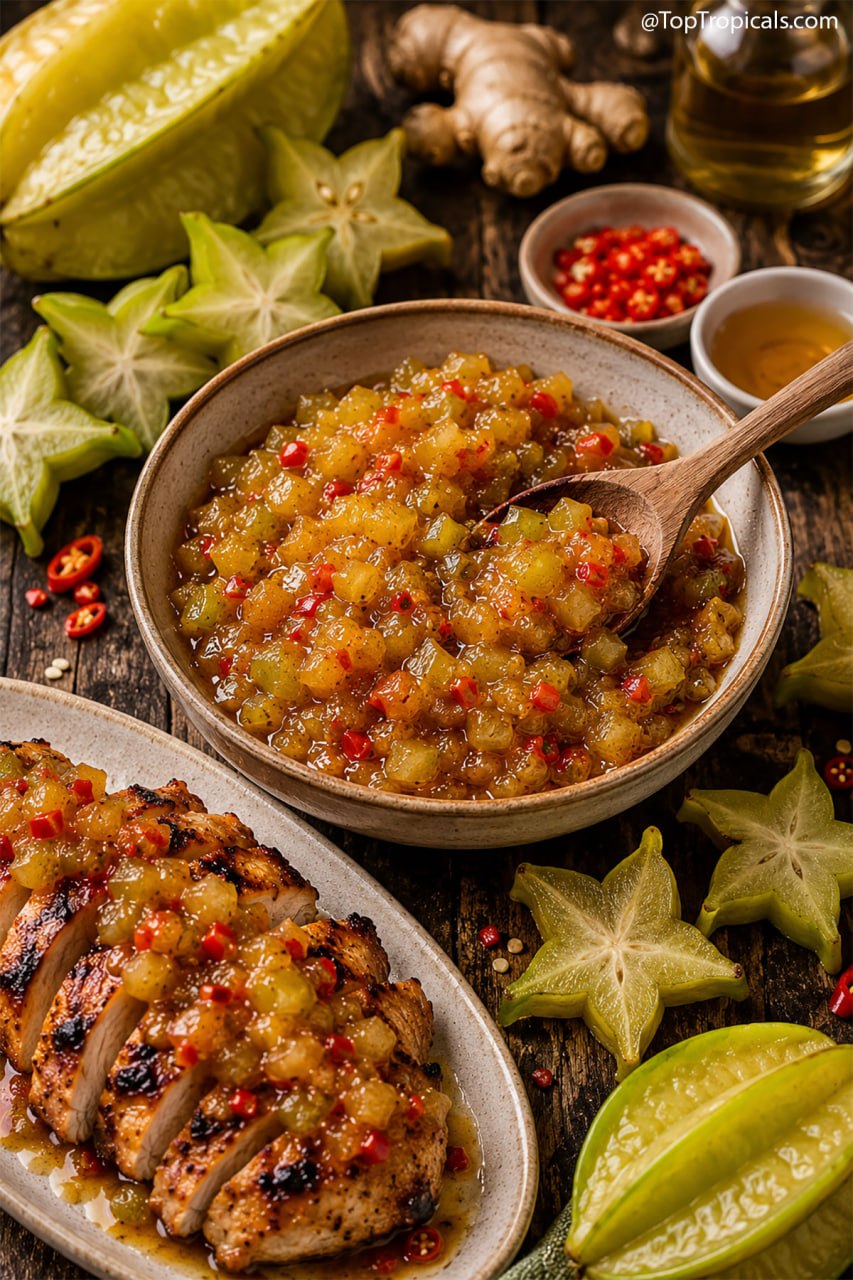
Star fruit chili relish
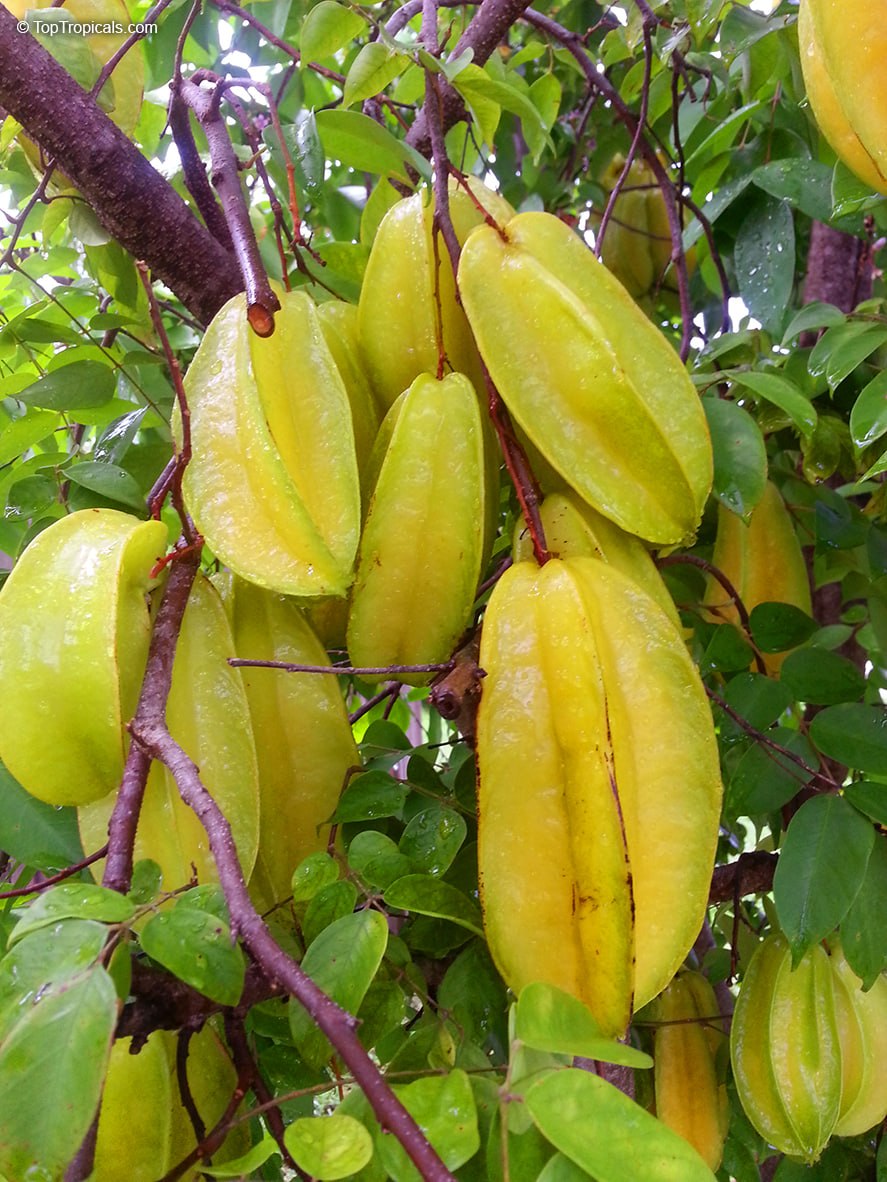
Carambola - Starfruit
🍴 Star fruit chili relish: quick-n-fun exotic recipes
🟡Dice ripe star fruit into small cubes and combine with finely chopped chili peppers, grated ginger, and a splash of vinegar in a saucepan. 🟡Simmer over medium heat, stirring occasionally, until the fruit softens and releases its juices. 🟡Continue cooking until the mixture thickens into a glossy sweet-and-spicy relish with tender fruit pieces throughout. 🟡Spoon generously over grilled chicken, pork, or fish for a bright tropical kick.
🌿 About the plant:
Carambola, Averrhoa carambola, produces delicate pink-lavender flowers that grow along the branches before forming ribbed fruit. The distinctive five ridges create those clean star shapes when sliced.
🏡 In the garden:
Trees stay relatively compact and respond well to light pruning. Flowering can occur several times a year in warm climates, leading to multiple harvests. Good drainage is essential - they dislike soggy roots.
Pitaya Hana: dragon fruit beyond pink and white - A Collectors Guide
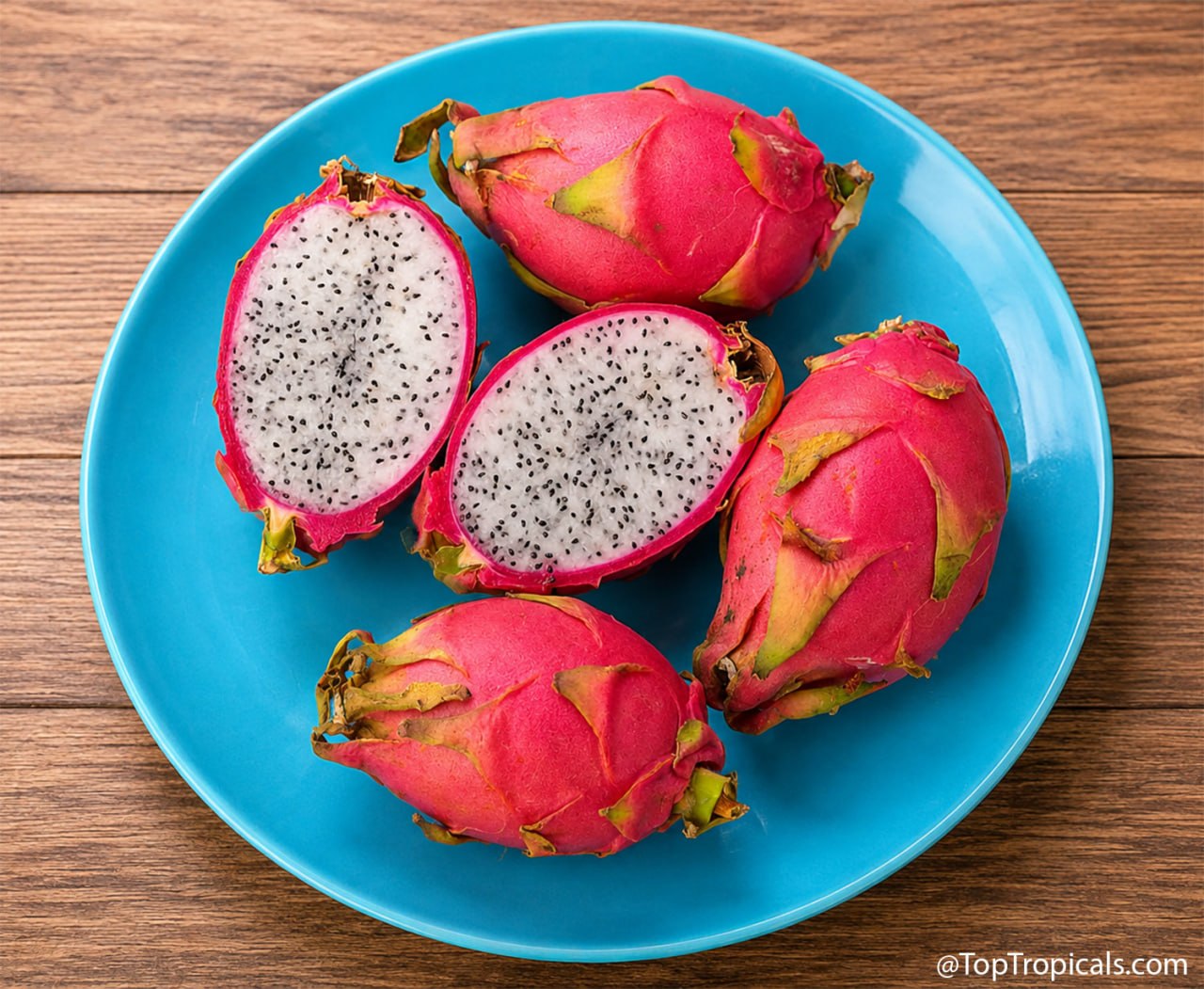
Pitaya Hana: white dragon fruit Hylocereus
🍉 Pitaya Hana: dragon fruit beyond pink and white - A Collector's Guide
Most dragon fruit varieties are known for their colorful fruit. Hana stands out for something else - speed.
Originally discovered along Hawaii's famous Hana Highway on the island of Maui, Hana has earned a reputation as one of the fastest-growing dragon fruit varieties in cultivation. Under good conditions, the plant can grow more than six feet per year and may begin producing fruit in as little as 14 months from a cutting.
🔸 A dragon fruit with Hawaiian roots
Hana is a hybrid of Hylocereus undatus and Hylocereus monacanthus, combining vigorous growth with excellent fruit quality. The plant is easy to recognize by its relatively thin stems and unusually long thorns, giving it a different look from many modern dragon fruit varieties.
Like many Hawaiian treasures, Hana remains somewhat uncommon outside collector circles, making it a prized addition to a dragon fruit collection.
🔸 Fragrant flowers and dependable production
Hana is self-fertile, so a single plant can produce fruit without requiring another variety nearby. It is also known as an excellent pollen producer and is often used to help pollinate other dragon fruits.
Its large night-blooming flowers open after sunset, filling the air with a sweet fragrance. Unlike most dragon fruit flowers, Hana's blooms often show a delicate pink blush near the base of the petals, adding extra beauty to an already spectacular display.
🔸 Sweet flavor with a floral twist
The fruit are typically small to medium-sized, though some can exceed a pound. The skin is bright pink with green-tipped scales, while the flesh is white and filled with tiny black seeds.
What makes Hana memorable is its flavor. Many growers describe it as sweet melon with subtle floral notes and a pleasant rosy aftertaste - a combination that sets it apart from ordinary white-fleshed dragon fruits.
🔸 Why collectors love it
Fast growth, early fruiting, fragrant flowers, self-fertility, and unique flavor make Hana one of the most interesting dragon fruit varieties available to home gardeners. It is proof that some of the most rewarding dragon fruits are not always the biggest or the most colorful - sometimes they are simply the ones that grow fast and taste unforgettable. 👉 More...
The easy orchid that blooms like a tropical sunrise: Epidendrum
Orange Reed Ground Orchid or Sunrise Orchid - Epidendrum
🌅 The easy orchid that blooms like a tropical sunrise: Epidendrum
Most people think orchids are fussy plants that belong in greenhouses or on windowsills. Epidendrum radicans - also known as Orange Reed Ground Orchid or Sunrise Orchid - proves otherwise. This colorful orchid grows in the ground, tolerates heat and humidity, multiplies easily, and can bloom for months with very little care.
🔥 Not your typical orchid
Unlike many orchids that grow on trees, Epidendrum radicans is a terrestrial orchid native to Mexico, Central America, and northern South America. It naturally grows on the ground and even among rocks.
Its upright reed-like stems are topped by clusters of brilliant orange flowers with golden-yellow highlights. A single mature stem can carry dozens of blooms, and large plantings resemble patches of miniature tropical sunrises.
🔥 Easy to grow, easy to share
Epidendrum thrives in Florida's heat and humidity and performs best in bright light and well-drained soil. In warm climates it often blooms throughout the year.
One reason gardeners love it is its ability to spread. The stems naturally produce roots along their length, making division and propagation remarkably easy. A single plant can eventually develop into a large, colorful colony.
🔥 A pollinator favorite
The vivid orange flowers attract butterflies and hummingbirds and stand out brightly against green foliage. This makes Epidendrum a valuable addition to pollinator gardens and tropical landscapes.
🔥 Better than a flowering annual
Unlike annual flowers that must be replaced each season, Epidendrum returns year after year and gradually expands into larger clumps. It works well along walkways, patios, entryways, borders, and mixed tropical beds where its upright growth adds height and color.
🔥 The orchid that deserves more attention
Some plants become famous because they are difficult or rare. Epidendrum radicans deserves attention for the opposite reason.
It is colorful, dependable, beginner-friendly, and generous with flowers. Give it sunshine, good drainage, and a place to grow, and it will reward you with months of vibrant blooms that bring the warmth and energy of a tropical sunrise into your garden. 👉 More...
📌 The common name "Crucifix Orchid" comes from the tiny cross-shaped structure in the center of each flower. 📌 Unlike many orchids, it naturally produces roots along its stems, which is one reason it spreads and propagates so easily. 📌 In Florida, it's often used as a landscape orchid rather than a houseplant.
📚 Learn more:
Bamboo Orchid Plant Facts
Botanical name: Arundina graminifolia, Arundina affinis, Bletia graminifolia Also known as: Bamboo Orchid, Bird Orchid
Pitaya Eureka Red: dragon fruit beyond pink and white - A Collectors Guide
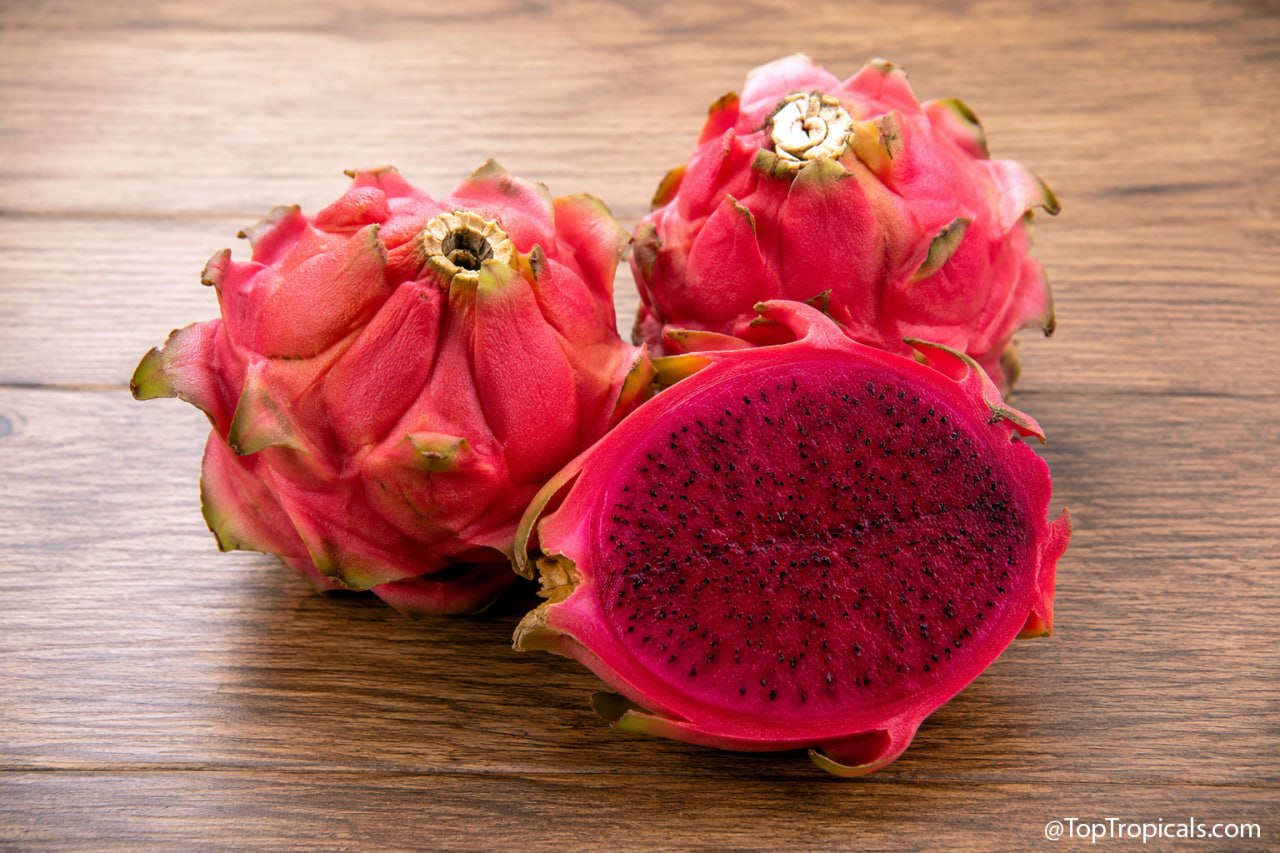
Pitaya Eureka Red: dragon fruit, Hylocereus
🍉 Pitaya Eureka Red: dragon fruit beyond pink and white - A Collector's Guide
Most people think dragon fruit is a mild, white-fleshed fruit with bright pink skin; then they discover Eureka Red - the highly sought-after, red-fleshed dragon fruit variet, a hybrid of Hylocereus polyrhizus and Hylocereus costaricensis. It is prized for its bold tropical flavor, intense sweetness, and vibrant, antioxidant-rich dark red juice. Originally selected in Nicaragua, Eureka Red is a self-pollinating variety that produces large fruit with deep red flesh and a flavor that is noticeably richer than many common white-fleshed dragon fruits. It belongs to a group of dragon fruits prized not only for their beauty but also for their intense color and higher antioxidant content.
🔸 A fruit that stands out
The first thing you'll notice is the flesh. Slice open a ripe Eureka Red and you'll find a vivid ruby-red interior packed with tiny black seeds. The contrast between the bright pink skin and dark red flesh makes it one of the most striking dragon fruits you can grow.
The fruit are typically large, often larger than many standard white-fleshed varieties, making them especially rewarding for home gardeners. 🔸More flavor than you might expect
Many people describe white-fleshed dragon fruits as refreshing and mildly sweet. Eureka Red takes things a step further.
The flavor is richer and more complex, with berry-like notes and a deeper sweetness balanced by a pleasant tang. The texture remains smooth and juicy, making it excellent for eating fresh, blending into smoothies, or adding dramatic color to fruit salads and desserts.
🔸 Easy to grow and productive
One reason Eureka Red has become popular among collectors is that it is self-pollinating. A single plant can produce fruit without requiring a second variety for cross-pollination.
Like other dragon fruits, it is a climbing cactus that thrives in warm climates, appreciates good drainage, and rewards growers with enormous fragrant white flowers that open after sunset. Once established, the plants can be remarkably productive.
🔸 Why collectors love it
Dragon fruit enthusiasts are always searching for varieties that combine beauty, flavor, and reliability. Eureka Red checks all three boxes. Its large fruit, deep red flesh, self-pollinating nature, and excellent flavor have earned it a place among the most desirable dragon fruit varieties for home gardens.
If you've only tasted the typical supermarket dragon fruit, Eureka Red is a reminder that the world of dragon fruits is far more colorful - and flavorful - than most people realize. 👉 More...
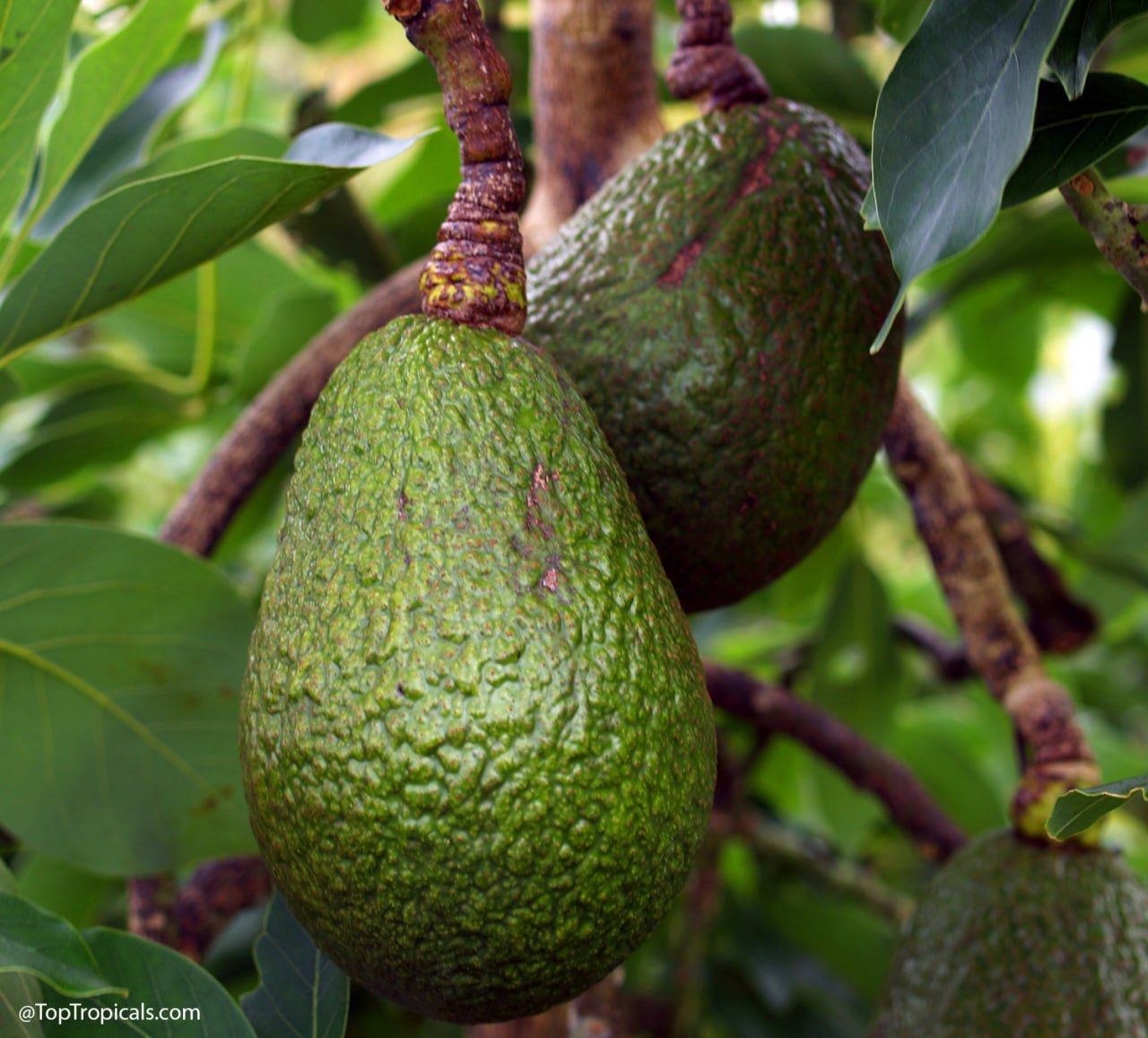
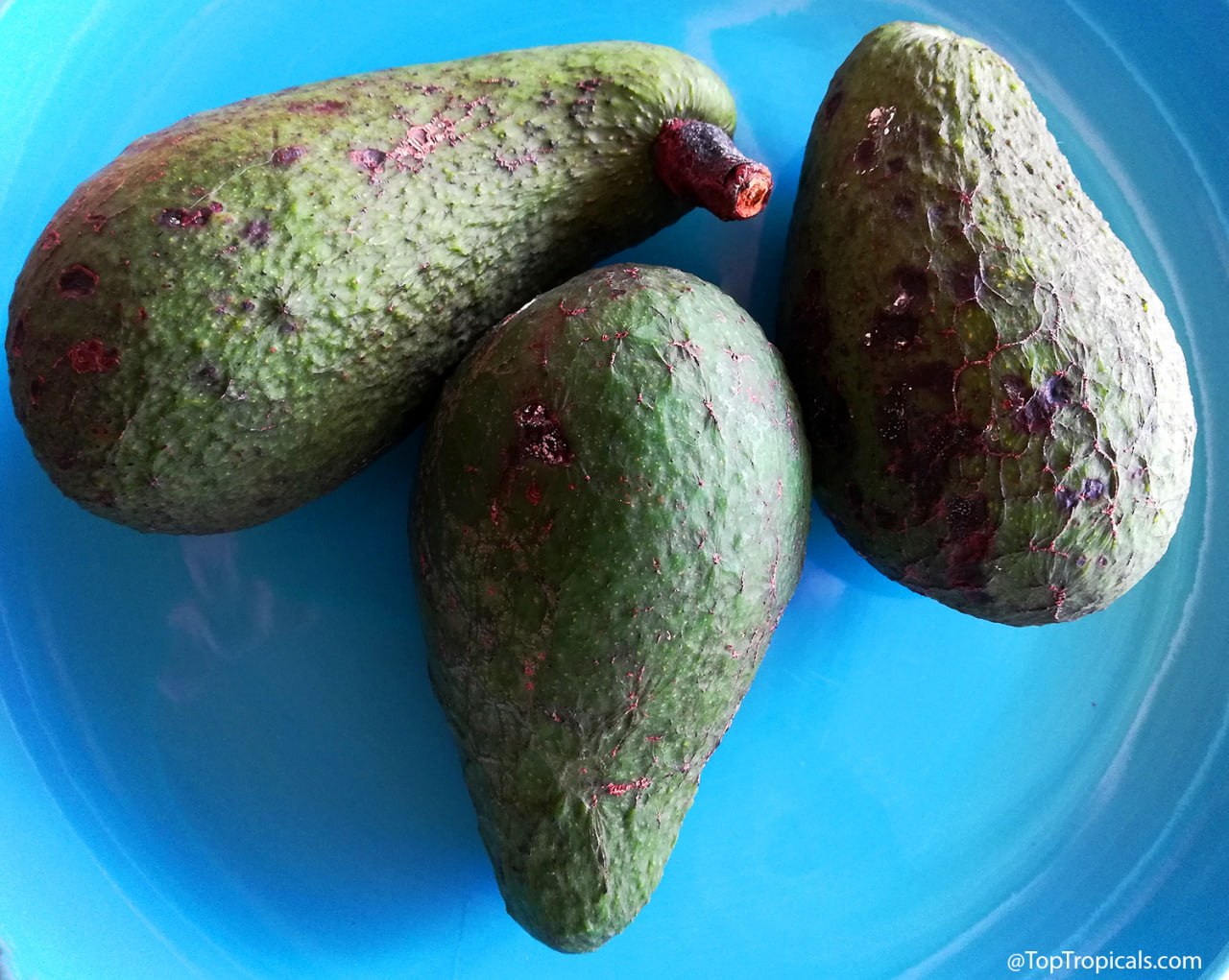
Avocado Fuerte: the hidden world beyond green and black
Avocado Fuerte
Avocado Fuerte
Avocado Fuerte: the hidden world beyond green and black
Before Hass became the world's dominant avocado, Fuerte was considered the gold standard. This historic Mexican-Guatemalan hybrid produces medium-sized pear-shaped fruit with exceptionally smooth, buttery flesh and outstanding flavor. Cold-hardy and productive, Fuerte remains one of the finest eating avocados ever developed; and it's one of the very few dwarf varieties suitable for containers.
· Botanical name: Persea americana 'Fuerte' · Origin: Guatemalan x Mexican hybrid · Cold hardiness: Tolerates temperatures around 20°F and is one of the more cold-hardy classic avocado varieties · USDA zones: 9a-11 · Flower type: B · Tree size: Approximately 15 ft x 20 ft · Growth habit: Compact to semi-dwarf, making it easier to manage than many traditional avocado varieties, well suited to home gardens and containers · Foliage: Dense evergreen foliage with an attractive, spreading canopy · Fruit size: 12-14 oz · Fruit shape: Pear-shaped · Fruit color: Green to green-black · Skin: Medium-thin, smooth, and easy to peel · Flesh: Creamy, buttery, and rich in oil · Flavor: Rich, nutty, and widely regarded as one of the finest-tasting avocados · Season: November-June · Best use: Fresh eating, slicing, salads, and gourmet dishes · Special feature: Historic variety that dominated the avocado industry before Hass became popular · Why growers love it: Fuerte combines exceptional flFuerte combines exceptional flavor, good cold tolerance, and a compact growth habit that makes it easier to fit into smaller landscapes. One of the few avocado varieties considered suitable for container culture, it has long been a favorite among collectors and home gardeners who appreciate its rich buttery flesh, manageable size, and extended harvest season. 👉 More
💡 Avocado tip: Prune for width, not height When a branch grows 10-12 inches, trim the tip. This encourages multiple side branches and creates a stronger, more productive tree.