Garden Blog - Top Tropicals

Date: 21 Apr 2026

13 tropical flowers to plant in spring to attract pollinators year around
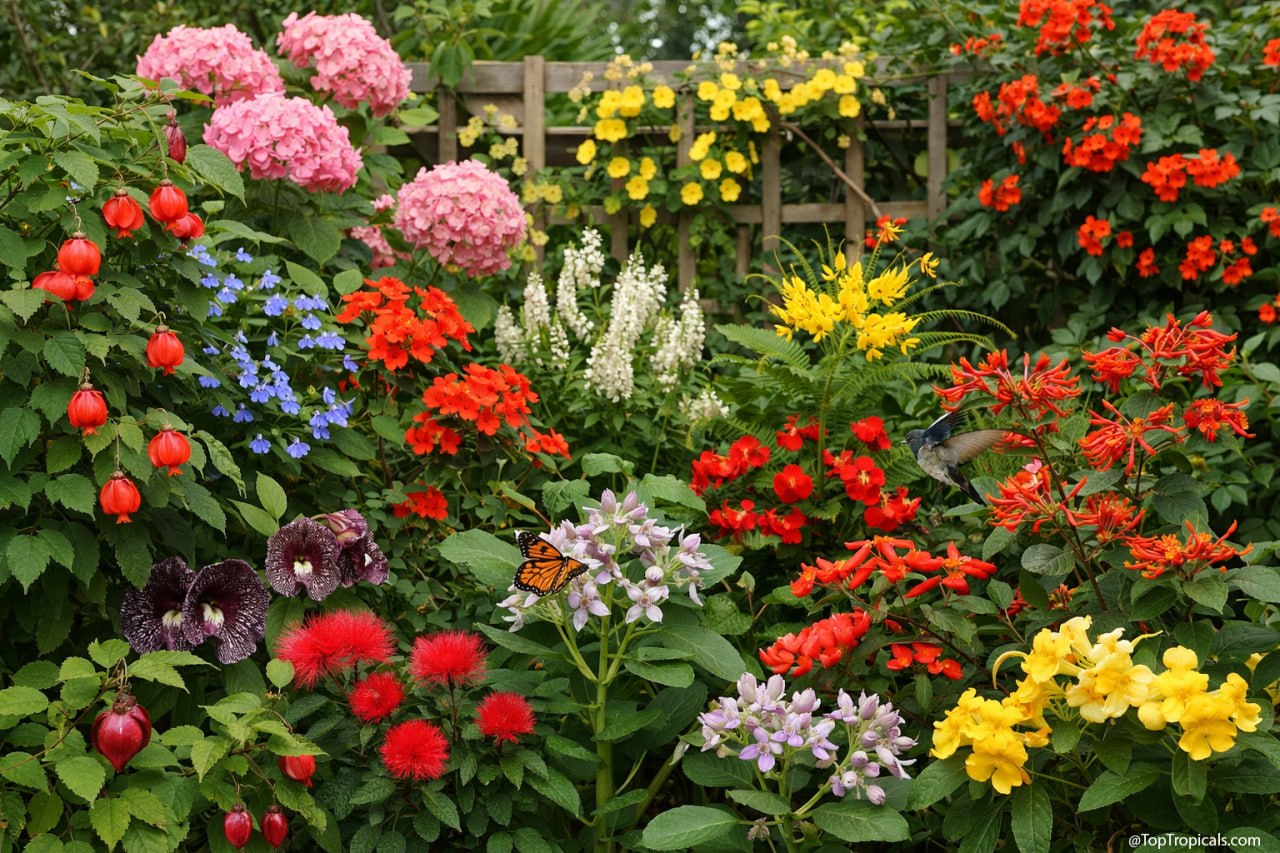
13 tropical flowers to plant in spring to attract pollinators year around: Abutilon Fireball (Abutilon darwinii x striatum), Almond Bush (Aloysia virgata), Calico Flower (Aristolochia littoralis), Pride of De Kaap (Bauhinia galpinii), Mexican Bird of Par

13 tropical flowers to plant in spring to attract pollinators year around: Abutilon Fireball (Abutilon darwinii x striatum), Almond Bush (Aloysia virgata), Calico Flower (Aristolochia littoralis), Pride of De Kaap (Bauhinia galpinii), Mexican Bird of Paradise (Caesalpinia mexicana), Red Tassel Flower (Calliandra tweedii With Love), Giant Milkweed (Calotropis gigantea), Blue Butterfly (Clerodendrum ugandense), Tropical Hydrangea (Dombeya wallichii), Fire Bush (Hamelia patens), Butterfly Orchid

13 tropical flowers to plant in spring to attract pollinators year around


Spring is when everything wakes up - and if you plant smart now, your garden can stay alive with butterflies, bees, and hummingbirds all year long. The key is mixing tropical bloomers that flower in waves, not all at once. These plants don’t just look good - they keep pollinators coming back season after season, turning your yard into a living, moving ecosystem.
  • 1. Abutilon Fireball (Abutilon darwinii x striatum)


    Bell-shaped flowers in warm red and orange tones hang like little lanterns. Very cold hardy, blooms on and off through the year, especially in mild climates. A steady nectar source for hummingbirds. More 👉
  • 2. Almond Bush (Aloysia virgata)


    Light, airy clusters of tiny white flowers with a strong almond scent. Bees absolutely cover this plant when it’s in bloom. Flowers repeatedly through warm months. More 👉
  • 3. Calico Flower (Aristolochia littoralis)


    One of the most unusual flowers you can grow - patterned like fabric. More importantly, it’s a host plant for butterflies, giving them a place to lay eggs. More 👉
  • 4. Pride of De Kaap (Bauhinia galpinii)


    Bright orange-red blooms cover this shrub for months. Tough, fast-growing, and constantly visited by butterflies and bees. More 👉
  • 5. Mexican Bird of Paradise (Caesalpinia mexicana)


    Sunny yellow flowers with a light fragrance. Handles heat, freeze, and poor soil easily. A reliable nectar plant for bees and butterflies. More 👉
  • 6. Red Tassel Flower (Calliandra tweedii With Love)


    Very showy red-flowered powderpuff, fast-growing and spacey shrub. Cold tolerant to hard freeze, making it a strong choice for subtropical gardens. Forms a dense, many-stemmed plant with fine, feathery foliage that folds at night or by touch. Large scarlet tassel flowers bloom from spring to autumn and attract pollinators nonstop. More 👉
  • 7. Giant Milkweed (Calotropis gigantea)


    A bold plant with thick leaves and waxy flowers. Important host plant for butterflies, especially monarchs. Handles heat and drought well. More 👉
  • 8. Blue Butterfly (Clerodendrum ugandense)


    Flowers really do look like little blue butterflies. Blooms frequently and attracts actual butterflies along with bees. More 👉
  • 9. Tropical Hydrangea (Dombeya wallichii)


    Large clusters of soft pink flowers appear in cooler months when little else is blooming. A major nectar source in winter. More 👉
  • 10. Fire Bush (Hamelia patens)


    One of the best all-around pollinator plants and a tough bush - takes both cold and heat. Tubular orange-red flowers attract hummingbirds nonstop, plus butterflies and bees. More 👉
  • 11. Butterfly Orchid Vine (Mascagnia macroptera)


    A climbing, cold hardy vine covered in bright yellow flowers and butterfly-like seeds. Great for fences or trellises, adding vertical color and feeding pollinators. More 👉
  • 12. Mexican Flame Vine (Senecio confusus)


    Fast-growing, hardy vine with intense red blooms. Flowers heavily and brings in butterflies quickly. More 👉
  • 13. Yellow Elder (Tecoma stans)


    Bright yellow trumpet flowers that bloom over a long season. A dependable plant for both bees and hummingbirds. More 👉


✔️ Planting a mix of these gives you something in bloom almost every month.
That’s the real trick - not just planting for spring, but building a rotation of flowers that keeps pollinators fed all year long.

🛒 Transform your yard into a Butterfly Haven with exotic plants

📚 Learn more:


#Butterfly_Plants
Butterfly Haven or a Heaven on Earth?
Top 20 plants for a Butterfly Haven
Five best butterfly attractors for a Southern garden
Top Eight irresistible vines for a hummingbird haven: Part 1 - Part 2

#Hedges_with_benefits #Butterfly_Plants #How_to #Discover

🟢 Join 👉 TopTropicals
Date: 19 Apr 2026

Complete Adenium Care Guide: 9 tips how to keep it simple and thriving

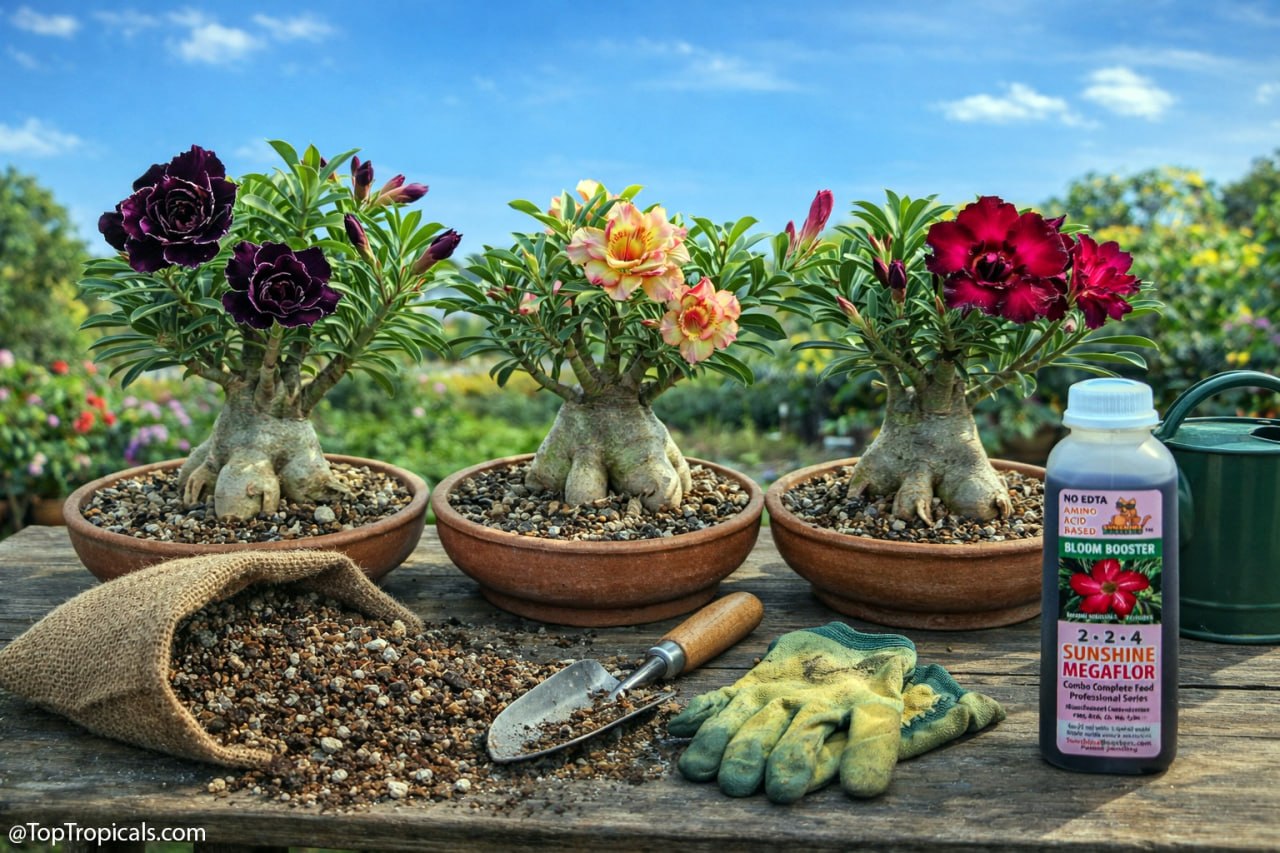
Asdenium plants on the table with adenium soil mix and fertilizer

Asdenium plants on the table with adenium soil mix and fertilizer

🌸 Complete Adenium Care Guide: 9 tips how to keep it simple and thriving


Adeniums don’t need intense care - just the right balance.
Most problems come from too much water, not enough light, or the wrong soil.
  • 🌸 1. Soil is everything


    Why it matters
    Adeniums are succulents with thick roots and a caudex that stores water. They must never sit in wet, heavy soil.
    Most problems come from soil that stays wet too long - leading to root rot, soft caudex, weak growth, and poor flowering.
    Good soil builds strong roots, dries faster, supports a healthy caudex, and improves blooming.

    Ideal soil formula
    Use a very fast-draining, airy mix with perlite, bark, sand, coconut fiber. Avoid heavy peat-based mixes.
    A simple formula: TopTropicals Abundance potting mix + coarse sand (50/50). Use coarse sand (for construction), not fine beach sand. Sand improves drainage, structure, and aeration.
    You can also add lava rock and charcoal.

    Soil pH
    Adeniums prefer slightly alkaline soil. Too much peat (acidic) holds moisture and increases rot risk.
    Tip: add a few sea shells on top - watering slowly raises pH.

    Golden rule
    Better too fast-draining than too heavy.
    You can water more. You can’t fix rot.
  • 🌸 2. Containers


    Use shallow, unglazed clay pots. They dry faster, improve airflow, and stabilize the plant as the caudex gets heavy.
    Do not oversize - keep close to root ball.
    When repotting, raise the caudex slightly each time to develop that thick base.
  • 🌸 3. Light


    Give as much light as possible.
    Full sun is best, but in very hot climates, bright filtered light prevents leaf burn and helps flowers last longer.
    Too little light = weak growth and poor blooming.
  • 🌸 4. Watering


    Water deeply, then let soil dry out completely before watering again.
    Do not keep soil constantly wet. Adeniums prefer the dry side and hate sitting in moisture.
    In rainy climates, protect from excess water. Keep under cover - bright light, no constant soaking.
  • 🌸 5. Fertilizer


    Feed lightly and regularly during active growth.
    Use liquid fertilizer Sunshine Megafloк Bloom Booster on soil and lightly on leaves - avoid the caudex.
    Bloom boosters (high phosphorus) support flowers and caudex growth.
    Add controlled-release fertilizer (Green Magic) twice a year - spring and late summer. Do not fertilize during winter dormancy.
    Add microelements (iron, boron, molybdenum) - Sunshine Superfood supplement - for healthier leaves and longer blooms.
  • 🌸 6. Trimming (pruning)


    Trim after flowering, especially leggy branches.
    Pruning encourages branching - more branches = more flowers.
    Don’t be afraid to cut - it improves structure and blooming.
  • 🌸 7. Caudex development (secret trick)


    When repotting, raise the caudex slightly above soil level.
    Combined with regular feeding (bloom booster), this helps develop a thicker, more pronounced base.
  • 🌸 8. Seedlings vs grafted plants


    Seed-grown plants form a natural caudex but take 2-3 years to bloom and do not come true to type (often simple pink).
    Grafted plants combine a developed caudex with a known variety.
    Best choice for predictable, high-quality blooms.
  • 🌸 9. Troubleshooting


    If something goes wrong, check these first:

· Too much water
  • · Not enough light
  • · Soil too heavy
Fix these, and your plant will recover.

🛒 Explore Exotic Thai Adeniums

📚 Learn more:

Plant Facts

Adenium sp.
Adenium, Desert Rose, Impala Lily
USDA Zone: 9-11
Plant with caudexLarge shrub 5-10 ft tallSmall tree 10-20 ftFull sunDry conditionsModerate waterYellow, orange flowersRed, crimson, vinous flowersUnusual colorBlue, lavender, purple flowersWhite, off-white flowersPink flowersToxic or Poisonous

#Container_Garden #Adeniums #How_to #Discover

🟢 Join 👉 TopTropicals

Date: 2 May 2026

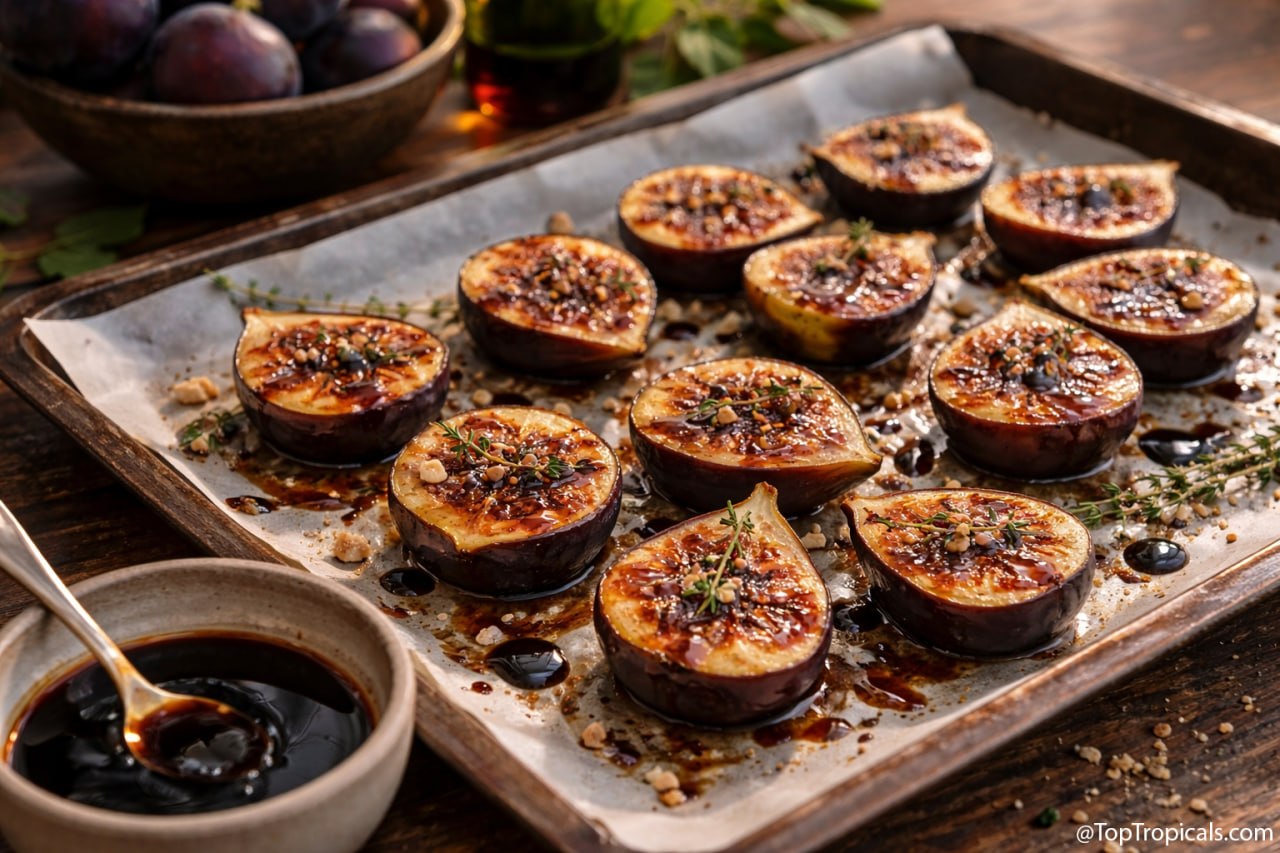
Roasted figs with balsamic: quick-n-fun exotic recipes

Roasted figs with balsamic: quick-n-fun exotic recipes Roasted figs with balsamic: quick-n-fun exotic recipes

🍴 Roasted figs with balsamic: quick-n-fun exotic recipes


  • 🟡Slice ripe figs in half and place them cut-side up on a baking tray.
  • 🟡Roast until they soften and start to caramelize at the edges.
  • 🟡Drizzle with a little balsamic reduction while still warm, letting it soak into the fruit.
  • 🟡Serve right away - sweet, tangy, and rich with that deep roasted flavor.


🌿 About the plant:


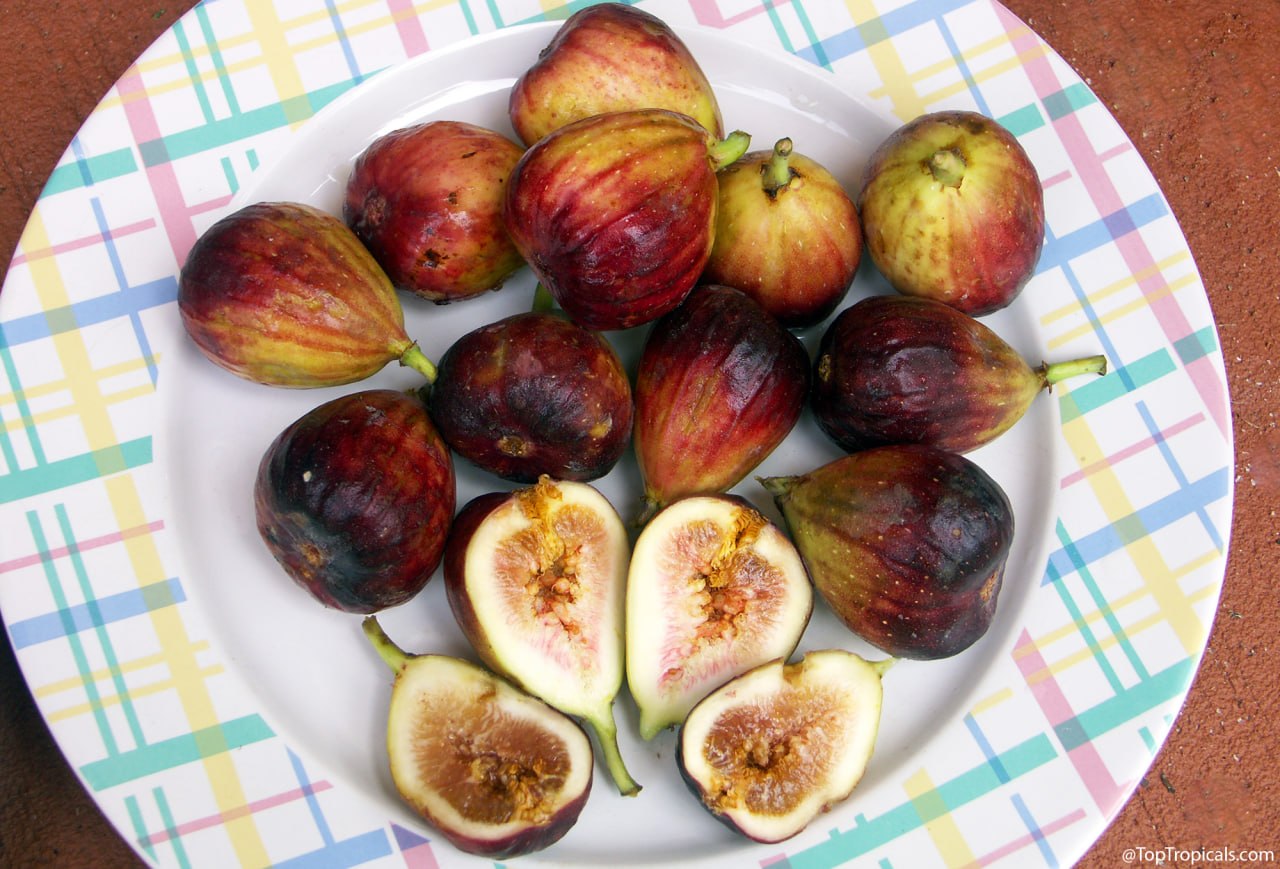
Figs are ancient fruit trees producing soft, honeyed fruit with edible seeds inside.

🏡 In the garden:


Many varieties grow well in warm climates and even containers. Prefer sun and good drainage.

🛒 Plant a hardy fig tree

📚 Learn more:

Plant Facts

Ficus carica
Fig Tree, Brevo
USDA Zone: 9-11
Plant used for bonsaiSmall tree 10-20 ftFull sunModerate waterOrnamental foliageEdible plantDeciduous plantSubtropical plant. Mature plant cold hardy at least to 30s F for a short timeFlood tolerant plantSeaside, salt tolerant plant

#Food_Forest #Recipes

🟢 Join 👉 TopTropicals

Date: 3 May 2026

Mango Rainbow: a miniature Angie

Mango Rainbow: a miniature Angie
Mango Rainbow: a miniature Angie 🌈

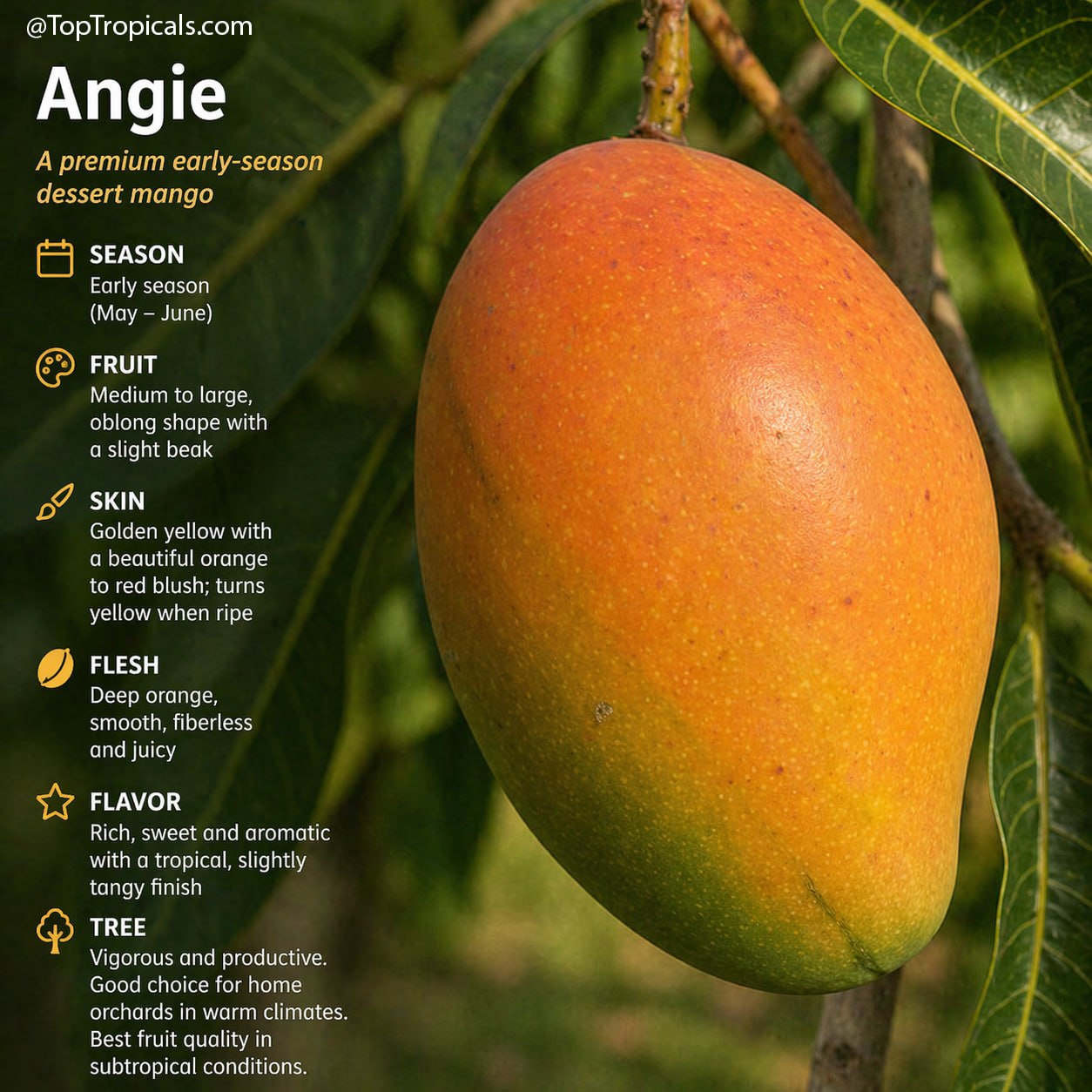
  • 🥭 Angie mango is a South Florida selection named after Angie Whitman, wife of the legendary mango collector Bill Whitman and a trustee of Fairchild Tropical Botanic Garden.

  • 🥭 It is prized for its rich, complex flavor in the Alphonso class, with deep sweetness and layered apricot notes. The fruit is oblong, about 1 lb on average, with smooth yellow to orange skin and an Indian-orange blush on sun-exposed shoulders. The flesh is deep tangerine orange, fiberless, and intensely flavorful.

  • 🥭 Trees are semi-dwarf, good as Condo Mango, highly manageable with pruning, and known for excellent disease resistance. Its early season is another major advantage in South Florida, often allowing fruit to mature before the heavy summer rains. More 👉


🛒 Shop Mango varieties

📚 Learn more:
#Food_Forest #Mango #Mango_Rainbow

Plant Facts

Mangifera indica
Mango
USDA Zone: 9-11
Large tree taller than 20 ftSmall tree 10-20 ftFull sunModerate waterYellow, orange flowersPink flowersEdible plantSeaside, salt tolerant plant
🟢 Join 👉 TopTropicals

Date: 3 May 2026

3 Olive Trees Worth Planting in Your Yard Right Now

3 Olive Trees Worth Planting in Your Yard Right Now

3 Olive Trees Worth Planting in Your Yard Right Now


Olive trees aren’t just for the Mediterranean anymore. In warm parts of the U.S. - including much of Florida - certain varieties handle heat, humidity, and even occasional cold better than people expect. If you’ve been thinking about adding something useful, low-maintenance, and long-lived to your garden, olives deserve a spot on your list. Here are three varieties that actually make sense to grow.

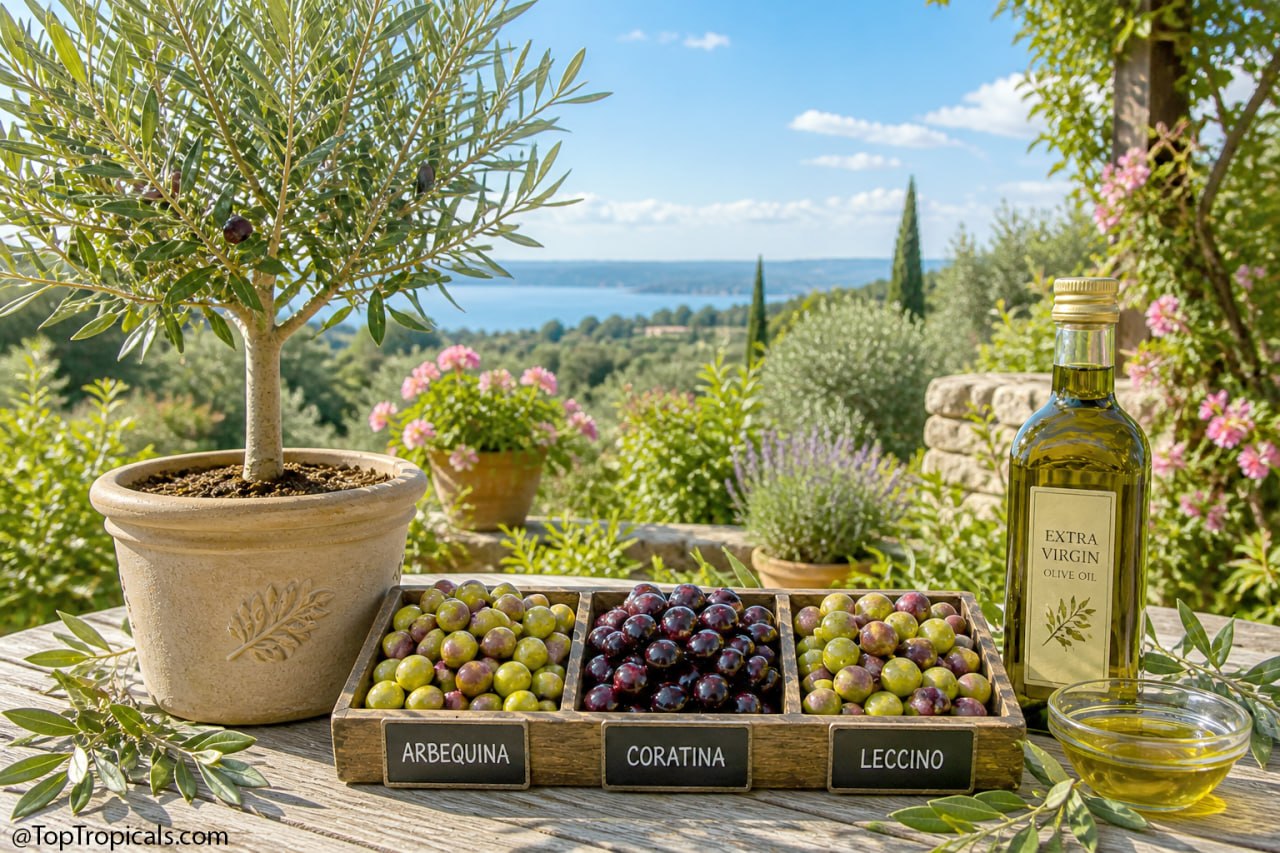
  • 1. Arbequina: Compact, Productive, and Beginner-Friendly


Arbequina is one of the easiest olives to grow, especially if space is limited. It is naturally compact, which makes it great for containers or small yards. It starts producing early compared to other olives, handles heat well, and adapts to different soils. The fruit is mild, buttery, and excellent for oil. If you want an olive tree that behaves well and produces without much fuss, this is the one. 👉 More...

  • 2. Coratina: Bold Flavor and Strong Growth


Coratina is a completely different type of olive - vigorous, tough, and known for intense flavor. It is fast-growing and very hardy once established, and it produces heavily under the right conditions. The fruit is high in oil content with a flavor that is strong and peppery, making it prized for premium olive oil. This is a great choice if you want a more traditional, high-performance olive tree with character. 👉 More...

  • 3. Leccino: Reliable and Cold-Tolerant


Leccino is known for consistency and is one of the most widely planted olives for a reason. It is more cold-tolerant than many other varieties and is a reliable producer year after year. It has a medium growth habit that is easy to manage, and the fruit works well for both oil and curing. If your area gets occasional cold snaps, Leccino is a safer bet. 👉 More...

  • Why olives make sense in your garden


Olives check a lot of boxes most fruit trees don’t. They are drought-tolerant once established and don’t need rich soil; average or even poor soil is fine. They are long-lived trees that can produce for decades and have low pest pressure compared to many tropical fruits. They’re not high-maintenance, and they don’t demand constant attention.

What to know before you plant


A few practical points make all the difference. Full sun is non-negotiable, and drainage matters because if water sits, the roots suffer. Light pruning keeps trees productive and manageable. Some varieties produce better with cross-pollination. In Florida conditions, airflow and avoiding overly wet soil are key.

If you want a tree that looks good, produces something useful, and doesn’t need babysitting, olives are hard to beat. Choose Arbequina for small spaces and ease, Coratina for strong growth and bold oil, or Leccino for reliability and cold tolerance. Plant one - or plant all three - and you’ll start to see why olive trees have been grown for thousands of years.

📚 Learn more:

Plant Facts

Olea europea
Olive
USDA Zone: 9-11
Plant used for bonsaiSmall tree 10-20 ftFull sunDry conditionsModerate waterEdible plantPlant attracts butterflies, hummingbirdsEthnomedical plant.
Plants marked as ethnomedical and/or described as medicinal, are not offered as medicine but rather as ornamentals or plant collectibles.
Ethnomedical statements / products have not been evaluated by the FDA and are not intended to diagnose, treat, cure, or prevent any disease. We urge all customers to consult a physician before using any supplements, herbals or medicines advertised here or elsewhere.Subtropical plant. Mature plant cold hardy at least to 30s F for a short time


🛒 Shop Olive trees

#Food_Forest #How_to #Discover

🟢 Join 👉 TopTropicals