Garden Blog - Top Tropicals
Date: 26 Nov 2026
🐲 Anthurium Black Dragon: Wing-Shaped Leaves, Shifting Color, and a Red Surprise
By Tatiana Anderson, Plant Expert, Top Tropicals
How Many Donuts Does It Take to Feed a Dragon Army?

Sunshine: That's how they start.
Smokey: And how do you plan to control an army of dragons?
Sunshine: Never underestimate the strategic importance of donuts.

Our young Black Dragon is green. See how dark the foliage can get and what that little ear of red "corn" turns out to be...
In the photograph below, pick one leaf and follow it from the crown out to its pointed tip. A raised rib runs down the center like a spine. Veins branch off it at an angle toward the edge, and the edge never lies flat. It rises, dips, and rises again, so the whole blade takes the outline of a wing folded at rest. Put a few hundred of those leaves on nursery benches and an army is not much of a stretch.

The pot would fit on a narrow plant stand. The leaves would not. Even on a young plant, the outer blades reach well past the rim.

A Foliage Anthurium
If you know anthuriums from the red-flowered plants sold as gifts, you may be looking for the glossy red heart held above the leaves. 'Black Dragon' has none. It is a foliage anthurium, grown for a dense rosette of long blades, some standing almost upright and others arching out far enough to show their rippled edges. Its own flowers are subdued and easy to miss.
As for the name, you may have noticed something else about our Black Dragon. It's green.
🐉 How Black Is a Black Dragon?
The color depends on light and on the leaf. In lower light, the foliage can be dark green with a maroon cast. In bright filtered light, it can deepen to nearly black. Leaves also darken as they age, so a young plant fresh from the nursery bench shows only one point on that range. The younger plants in our photograph above sit at the greener end.
Even on one plant, no two leaves match exactly. A new leaf, an older leaf, and a leaf that gets a little more light from the open side of a patio can all look different at the same time.
The other end of the range: a mature plant with nearly black leaves:

The Spike You Might Miss, and the Red "Corn"

Bronze-purple underneath, green on top. Between them, a flower spike almost the same color as the shadows.
Among the leaves in this close-up stands a dusky brownish spike. That's the spadix, the stalk that carries the tiny flowers, and the spathe is the modified leaf beside it. On a florist anthurium, the spathe is the big red heart everyone notices. On 'Black Dragon', their brown and maroon tones blend into the foliage. Once the spike sets fruit, you can spot it from across the bench. It looks like a little ear of brilliant red corn tucked into the dark leaves.


Growing Black Dragon Through the Year
Pot or Ground?
Allow roughly 2 to 4 feet of height in a container, and leave room on either side for the arching outer leaves.
We grow Black Dragon in pots because we can give the roots an airy mix, move a greener plant into brighter filtered light, and carry it inside when a cold front comes through.
Planting it in the ground makes sense only in a reliably frost-free tropical garden with filtered light, a sheltered spot, and soil that drains freely. Before you plant, check the bed after a heavy rain. If water stands where the crown would sit, choose higher ground, build a raised bed, or keep the plant in a pot.
A pot is not automatically healthier, though. A nursery pot set inside a decorative planter can sit in an inch of trapped water for days. If you use a cachepot, lift the nursery pot out after watering or rain and pour off what has collected underneath.
Pot, Mix, and Repotting
Use a pot with open drainage holes and a mix that holds some moisture but lets water run through and air reach the roots. A practical blend combines fine pine bark, coarse perlite, and a peat- or coir-based potting mix. The bark and perlite keep it open, and the potting mix holds enough water to last between waterings.
Long leaves reaching past the rim are normal for this plant. Repot based on the roots. Slide the plant out of its pot and look at the root ball. When roots densely fill the container, move up one pot size, not three. Set the plant so the crown sits at the same depth as before, and fill in around it with fresh mix.
Water and Feeding
Water when the surface of the mix has dried slightly. If the top feels dry but the pot still feels heavy, push a finger a little deeper before deciding. When you water, water thoroughly, until it runs from the drainage holes, then empty the saucer or cachepot. Expect the timing to change with the season. A pot that dries in two days outdoors can stay wet much longer indoors.
At our nursery, we use a controlled-release fertilizer (Green Magic) as the regular feed. During active growth, we also use SUNSHINE Robusta as a supplemental booster. At home, follow the fertilizer's label rate for the size of your pot, and cut back when growth slows. Read more about fertilizers: Sunshine Boosters: Advanced Amino Acid Biostimulant & Fertilizers for Tropical Plants
A Florida Year
On a Florida patio or lanai, look for the bright edge of the covered area: a spot that sees plenty of open sky, with sun coming through a screen, shade cloth, or tree canopy but rarely landing on the leaves at full strength. Check that spot in the afternoon as well as the morning. A position that is gentle at 9 a.m. can catch hard sun at 3 p.m., and the angle changes with the seasons.
If the foliage is healthy but greener than you'd like, move the pot a little closer to the bright edge and give it time. Change happens through new leaves and aging leaves, not overnight. If pale, bleached patches appear after a move into stronger light, the new spot is too bright. Move it back a step.
Summer brings the rain. After a week of afternoon storms, lift the pot before you reach for the hose. It will often tell you the rain has already done the watering.
Winter depends on where in Florida you live. On the coast, winter is mild, and the plant can stay on a sheltered lanai through most of it. Inland, frost-prone gardens see more cold nights, and around our growing grounds in Sebring, hard freezes do happen. There, the plant comes inside more often and stays longer.
When to Bring It In, and How Much Cold It Takes
Bring your potted anthurium indoors when forecast nighttime lows start dipping into the 50s F, especially if several cool nights are on the way. In Fort Myers, that may mean a night or two inside. In Minnesota, it usually means the end of the patio season.
'Black Dragon' is frost-sensitive. We bring the pot in while the leaves are still in good shape.
Before the plant joins your indoor collection, inspect it. Turn the leaves over and look at the undersides, check where each leaf stalk meets the crown, and look at the surface of the mix. A gentle rinse of the foliage outdoors is a good last step. Pests that went unnoticed on a porch can spread quickly among houseplants.
A Minnesota Year, or Any Year Indoors
In Minnesota, 'Black Dragon' is an indoor plant with a summer vacation. It can spend the warm months on a bright, shaded porch and come inside for the season as described above. If your plant arrives in winter, it skips the porch and goes straight to its indoor spot.
Indoors, a comfortable growing range is about 65 to 75 F. A house that runs a few degrees cooler at night is fine, as long as the plant sits away from cold window glass and drafts. Keep it away from heating vents too.
If the goal is nearly black foliage through a northern winter, plan on supplemental grow lighting. A window alone in December and January is unlikely to give it the bright light that brings out the darkest color.
Start with 12 to 14 hours a day on a timer. Follow the fixture's hanging-distance guidance, and check that the outer leaves still get light as the plant spreads. If bleached patches appear on the leaves nearest the lamp, raise it.
In a heated room, the leaf edges can dry while the mix around the roots is still wet. Check both before you reach for the watering can. Extra water won't fix dry air. It only keeps the roots wet longer. If the room air is dry, a humidifier is the direct fix.
Back Outside in Spring
Once nights are reliably around 60 F or warmer, the plant can go back out. Start it in a sheltered, shaded spot, and move it toward its summer position of bright filtered light over a couple of weeks. Leaves that grew under a grow light are adapted to indoor light, and even a strong lamp is far weaker than the sun. A plant carried straight from the basement shelf into bright sun can scorch in an afternoon.
Recheck your watering too. A pot that stayed damp for a week indoors can dry out in a day or two on a warm, breezy porch.
If Something Looks Wrong
Leaf color alone rarely tells you what is wrong.
| What you see | What to check first |
|---|---|
| Healthy leaves stay greener than expected | Check how much filtered light reaches the plant. Indoors, make sure the grow light reaches the outer leaves. |
| Pale or bleached patches after moving outdoors | Check where direct sun hits the damaged leaves, especially in the afternoon. Move the pot into bright shade and introduce stronger light gradually. |
| Leaves wilt while the pot still feels wet and heavy | Check for trapped water in the outer pot and blocked drainage holes. If the mix stays soggy, inspect the roots. Damaged roots can leave a plant looking thirsty. |
| Leaf tips turn brown during the heating season | Check moisture in the root ball, dry air from a nearby heating vent, and fertilizer salt buildup. Several problems can produce the same brown tips. |

Taking One Home
If you have a bright spot where those long leaves can spread, that's where we'd put a Black Dragon. Give it a pale wall behind it, and even the greenest leaf in the bunch will show you where we got the wings.
📚more Black Dragon photos in the Top Tropicals Plant Encyclopedia
📚 Learn more from Top Tropicals Garden Blog:
- From berry to beast: how Black Dragons are born
- Why every collector wants the Gothic Black Dragon Anthurium
- What is the most rare and unique plant of your collection
🛒 SHOPPING LINKS:
Date: 22 Sep 2025
 Dragon Fruit Plant Care – Tips
from the Garden Expert
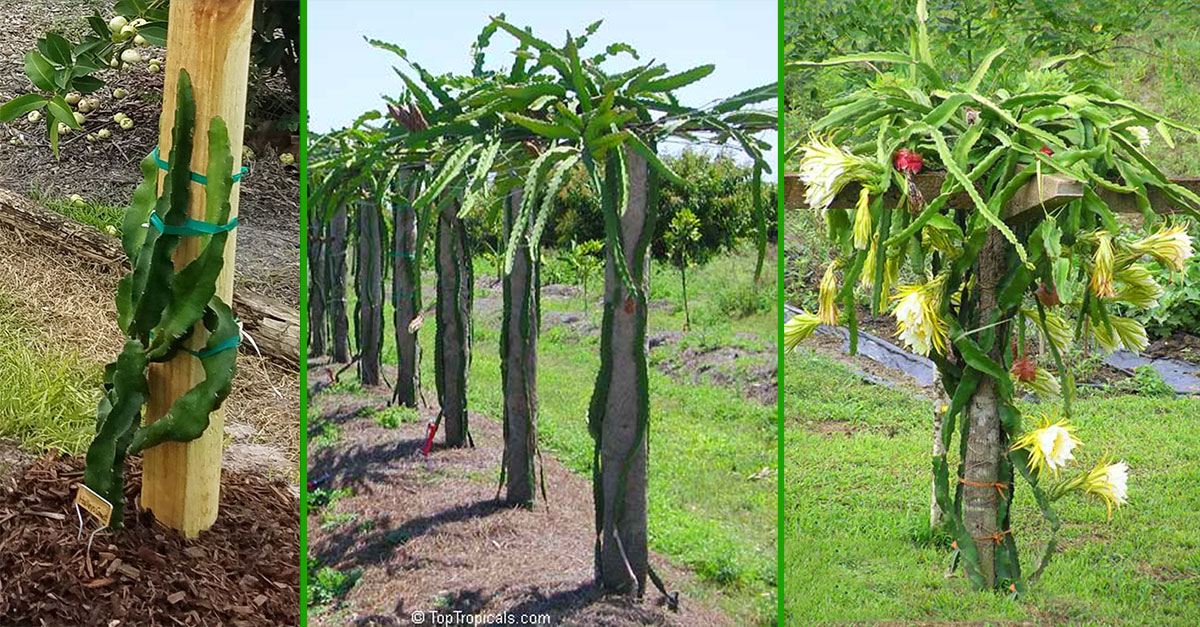
Dragon fruit is one of those plants that look exotic but are surprisingly easy once you know the basics. Here is what works best in the garden:
- Soil: They hate wet feet. A sandy, fast-draining soilless-mix is your friend. If water sits around the roots, rot comes fast.
- Watering: Deep watering is better than frequent sips. Let the soil dry between waterings. In rainy season they cope well, but in pots you need to be careful.
- Sunlight: Full sun is great, but in very hot places a touch of afternoon shade keeps them happy.
- Support: They are natural climbers. A wooden post, concrete pole, or trellis will give them something to grab and makes harvest easier.
- Fertilizer: Feed lightly but often. A gentle liquid like Sunshine C-Cibus liquid booster with every watering, or Green Magic controlled release fertilizer every 5-6 months. It encourages strong roots, lush growth, and lots of flowers.
- Pruning: Trim off tangled or weak stems. This guides energy into strong branches that will flower and fruit.
Think of it as training a cactus vine into a small tree. Once it settles in, it almost takes care of itself — and pays back with fruit you can’t buy in stores.
🌱 Dragon Fruit Plant Care – Outdoors and Indoors
Outdoors: Dragon fruit thrives in USDA Zones 10–11 year-round. In warm regions like Florida, Texas, California, and Hawaii, you can grow it outside in the ground. Give it fast-draining soil, full sun with a little afternoon shade in the hottest months, and a sturdy trellis or post to climb. Deep watering with drying periods in between keeps roots healthy. A yearly pruning shapes the plant and boosts flowering.
Indoors or Patio Pots: Gardeners in cooler zones can still enjoy dragon fruit in containers. Use a large pot with sandy, well-draining mix or soilless-mix and a pole for support. Place the pot in the brightest spot — a greenhouse, sunroom, or patio that gets 6+ hours of light daily. Move pots inside when temperatures drop below 40F. Even indoors, a healthy plant can bloom and fruit if it has enough light and warmth.
❓ Dragon Fruit FAQ
How soon will a dragon fruit start producing?
Cuttings can flower and fruit in as little as 2–3 years. Seed-grown plants take longer, often 4–6 years. Large developed specimens can start flowering and fruiting within a year or even the same season.
Do I need more than one plant for pollination?
Some varieties are self-fertile, others need a second plant for cross-pollination. Even self-fertile types usually set more fruit with a partner nearby.
How big do they get?
In the ground, dragon fruit can climb 15–20 ft if you let it. With pruning and a trellis, you can keep it shaped like a small tree, 6–8 ft tall.
Can I grow it in a pot?
Yes. A large container with sandy mix or soilless-mix and a pole for climbing works well. Indoors it will need bright light or a grow lamp.
What does a dragon fruit taste like?
Sweet and juicy, like a blend of blackberry and raspberry. Varieties differ: flesh can be white, pink, deep red, or purple, wrapped in skins of red, pink, or yellow. White flesh is mild and refreshing, red flesh is sweeter, and yellow flesh is the sweetest with a honey-pineapple flavor.
What zones can I grow dragon fruit outside?
USDA Zones 10–11 are best for year-round outdoor planting. In cooler areas, grow it in containers and bring inside for winter.
How often should I water?
Deep water, then let the soil dry. Too much water causes root rot. Think “desert cactus with a taste for rain.”
Is dragon fruit easy to grow?
Yes. Pitayas grow like cactus trees on strong supports, but they are easy to care for — little water, sun or semi-shade, and they thrive.
How long do they live?
A healthy dragon fruit cactus can produce for 10 years or more with proper care.
What are the health benefits?
Dragon fruit is high in fiber, supports digestion, and is low in calories. It is rich in antioxidants and vitamin C, making it good for immunity and overall wellness. Many gardeners enjoy it as a healthy snack or in smoothies.
Date: 19 Jun 2026
Pitaya Yellow Palora: dragon fruit beyond pink and white - A Collectors Guide
Pitaya Yellow Palora
🍉 Pitaya Yellow Palora: dragon fruit beyond pink and white - A Collector's Guide
Most dragon fruits are pink or red; Palora - Selenicereus megalanthus - breaks all the rules. With bright yellow skin, white flesh, and an intensely sweet tropical flavor, Palora has earned a reputation as one of the most desirable dragon fruit varieties in the world. Many collectors consider it the finest-tasting dragon fruit available, and once you've tried one, it's easy to understand why.
🔸 The dragon fruit that tastes like candy
Palora is an Ecuadorian selection of Selenicereus megalanthus, a species native to parts of Ecuador, Colombia, Peru, and Bolivia. Unlike the more common red dragon fruits, Palora produces smaller golden-yellow fruit covered with soft spines that naturally fall off as the fruit ripens.
Inside is translucent white flesh packed with tiny edible seeds.
What truly sets Palora apart is the flavor. The fruit is remarkably sweet, often testing much higher in sugar than red dragon fruit varieties. Growers commonly describe the flavor as a blend of honey, pineapple, pear, and tropical fruit, with a richness that many dragon fruits simply don't have.
🔸 Why collectors hunt for it
Ask experienced dragon fruit growers to name the best-tasting variety, and Palora frequently appears near the top of the list.
Unlike some dragon fruits that can be mild or watery, Palora has concentrated sweetness and a smooth, juicy texture. The flavor is so distinctive that many people who are unimpressed by ordinary dragon fruit become instant fans after tasting a ripe yellow Palora.
🔸 Different from other dragon fruits
Palora belongs to a different species than most popular dragon fruits. The plant tends to have thinner stems and a somewhat different growth habit.
It is self-fertile, meaning a single plant can produce fruit on its own. The fruit are generally smaller than red dragon fruits, but what they lack in size they more than make up for in flavor.
Another pleasant surprise is the plant's adaptability. It appreciates regular watering and rainfall but also handles dry conditions remarkably well once established.
🔸 Why it deserves the hype
Every fruit category has its superstar variety. For mangoes it might be Coconut Cream or Lemon Zest. For avocados, perhaps Oro Negro and Fantastic. In the dragon fruit world, Palora is often that variety.
Its bright yellow skin, exceptional sweetness, tropical pineapple-honey flavor, self-fertility, and collector appeal have made it one of the most sought-after dragon fruits available.
If you're only going to grow one dragon fruit for flavor, many experienced collectors would tell you to make it Palora. 👉 More...
🛒 Explore and collect Dragon Fruit varieties
📚 Learn more:


· Yellow Dragon fruit (Selenicereus megalanthus) in Plant Encyclopedia
· Pitaya Vietnamese Jaina White: dragon fruit beyond pink and white
· Pitaya Tricia: dragon fruit beyond pink and white
· Pitaya "Sweet Red": dragon fruit beyond pink and white
· Pitaya Purple Haze: dragon fruit beyond pink and white
· Pitaya Hana: dragon fruit beyond pink and white
· Pitaya Eureka Red: dragon fruit beyond pink and white
· Pitaya David Bowie: Dragon Fruit Beyond Pink and White
· A Quick Guide to Dragon fruit varieties: Red, White, Yellow, Purple and more...
· What is the best Dragon fruit with red flesh?
· Planting your own Dragon Fruit plantation
· Do-It-Yourself Support Structure for Dragon Fruit
· Why you need to grow your own dragon fruit
· Do red, white and yellow Dragon fruit taste differently?
#Food_Forest #Dragon_Fruit #Discover
🟢 Join 👉 TopTropicals
Date: 22 Sep 2025
🐲 The taste you will never forget

If you only know dragon fruit from the grocery store, you probably think it looks pretty but tastes bland. That is because most commercial fruit is picked early, shipped far, and loses its sweetness. The truth? Homegrown dragon fruit is juicy, sweet, and full of flavor. The best of all is the yellow variety, Palora (Selenicereus megalanthus), a cactus fruit from Ecuador that bursts with tropical taste.
🌵 Pitaya or Dragon fruit – what is the difference?
Both names describe the same climbing cactus. In Latin America it is called Pitaya, while Asia and English speakers say Dragon fruit. There are three main kinds:
- Red skin, white flesh (Hylocereus undatus)
- Red skin, red flesh (Hylocereus costaricensis)
- Red skin, purple or pink flesh (Hylocereus x costaricensis hybrids)
- Yellow skin, white flesh (Selenicereus megalanthus)
Some hybrids give purple or magenta flesh. All are beautiful, all are easy to grow at home.
⚡️ Do red, white, and yellow taste different?
Yes. White types are mild and refreshing. Reds are sweeter and juicier. Yellows are the sweetest of all.
⚡️ Flowers from a fairy tale
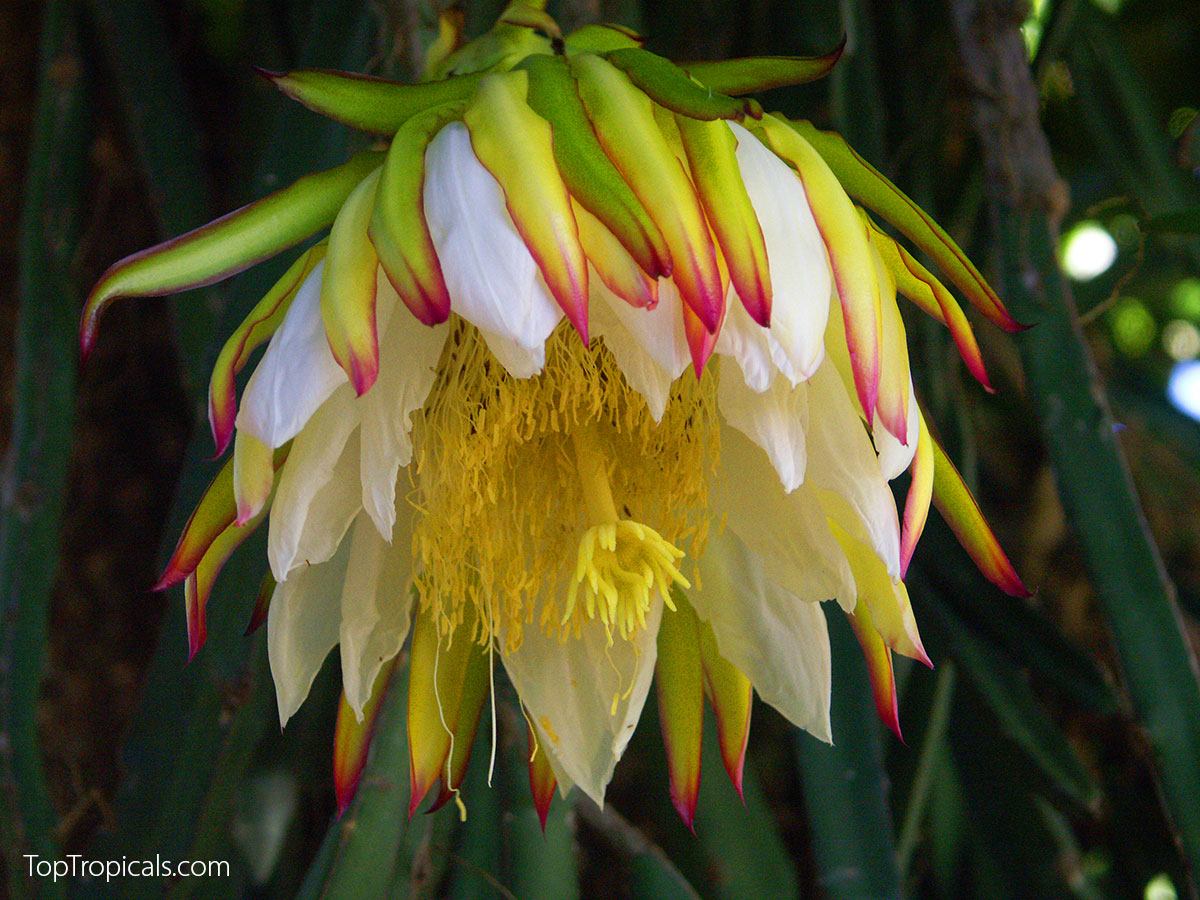
Dragon fruit flowers are among the most spectacular in the plant world. They open at night, glowing under moonlight, with pale petals and a sweet fragrance. Each flower can be a foot wide. Seeing one bloom feels like stepping into another world.
⚡️ Top Dragon Fruit Health Benefits
- High in fiber for digestion and gut health
- Low in calories but full of vitamins
- Great for weight management
- Adds color and freshness to smoothies and salads
🍹 Dragon Fruit Smoothie recipe
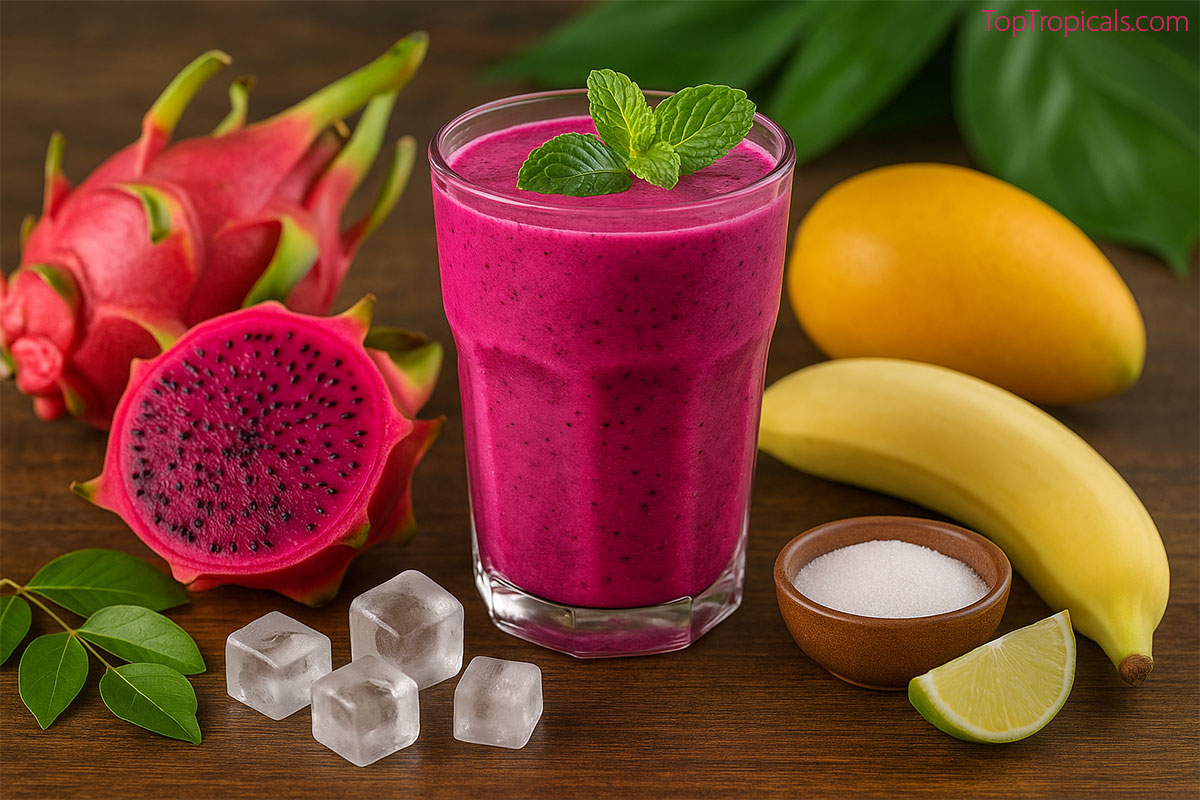
Blend together:
- 2 dragon fruits, peeled
- 1/2 cup mango pulp
- 1 banana
- 1 cup milk of your choice
- 2 tbsp sugar
- 1/2 tsp lime juice
- Ice cubes to taste
Top with mint for a refreshing tropical treat.
Watch Dragon Fruit short videos:
Date: 9 Oct 2026
7 delicious ways to use Dragon Fruit: quick-n-fun exotic recipes
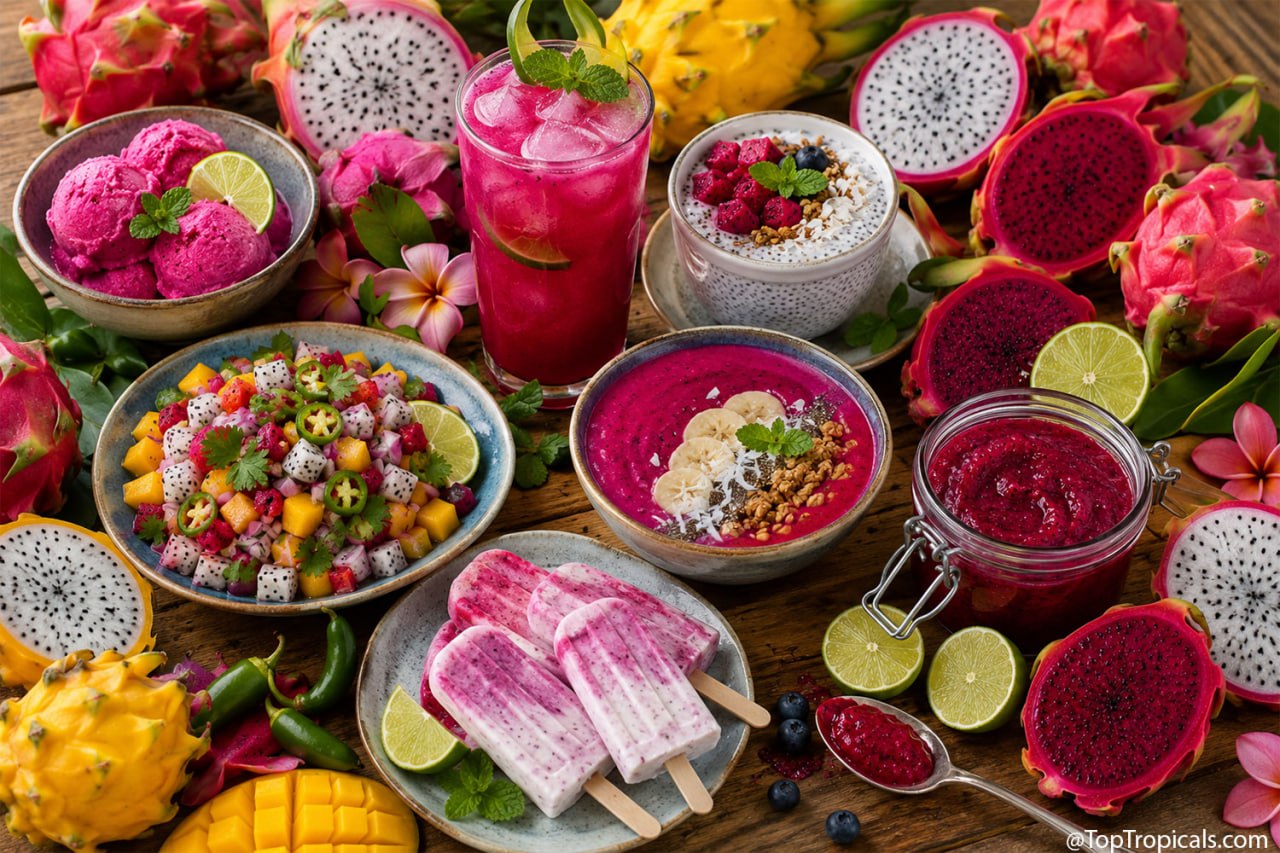
🍴 7 delicious ways to use Dragon Fruit: quick-n-fun exotic recipes
Dragon fruit looks spectacular - but the flavor can be surprisingly shy. It’s juicy, mildly sweet, and yes, sometimes downright watery. So what do you do with a beautiful fruit that doesn’t bring much flavor on its own? Give it some help. Lime, coconut, berries, honey, chili, and other stronger flavors can turn dragon fruit into something genuinely delicious while keeping that gorgeous tropical color and texture.
- 🍉 1. Dragon Fruit Lime Sorbet
Blend dragon fruit pulp with fresh lime juice, sugar or honey, and a tiny pinch of salt. Chill the mixture, then freeze in an ice-cream maker - or freeze in a shallow container and stir several times as it firms up. Lime is especially good here because it wakes up dragon fruit's mild flavor. - 🍉 2. Dragon Fruit Coconut Smoothie
Blend dragon fruit with coconut milk, banana, lime juice, and a little honey if needed. The banana adds body while coconut gives the watery fruit some richness. Serve very cold for an easy tropical breakfast or snack. - 🍉 3. Dragon Fruit Salsa
Dice dragon fruit and combine it with mango, red onion, cilantro, jalapeño, and plenty of fresh lime juice. Add a pinch of salt and let it sit for about 10 minutes before serving. It's colorful, fresh, sweet-spicy, and excellent with grilled fish, shrimp, or chicken. - 🍉 4. Dragon Fruit Chia Pudding
Mash or blend dragon fruit with coconut milk, chia seeds, and a little honey or maple syrup. Refrigerate for several hours or overnight until thick. Top with fresh fruit, toasted coconut, or nuts for extra texture. - 🍉 5. Dragon Fruit Lemonade
Blend dragon fruit with fresh lemon or lime juice, water, and sugar or honey, then strain if you prefer it smooth. Serve over lots of ice. Red-fleshed dragon fruit makes an especially spectacular naturally bright pink drink. - 🍉 6. Dragon Fruit Yogurt Pops
Blend dragon fruit with Greek yogurt, honey, and lime juice. Pour into popsicle molds and freeze until solid. The creamy yogurt fixes the fruit's watery texture, while lime gives the pops enough tang to keep them interesting. - 🍉 7. Dragon Fruit Jam with Lime
Dragon fruit alone can make a rather bland preserve, so add fresh lime juice and zest to give it some personality. Simmer chopped or mashed fruit with sugar and lime until thickened; use pectin if you want a firmer traditional jam. The result is bright, tropical, and much more flavorful than the fresh fruit suggests.
💡 The dragon fruit rule
Don't expect it to carry the recipe. Pair its beautiful color and juicy texture with something tart, creamy, spicy, or strongly aromatic - and suddenly this mild fruit gets a lot more interesting.
🛒 Collect Dragon Fruit varieties
📚 Learn more:


· Dragon fruit Hylocereus in Plant Encyclopedia
· You tried the fruit, but have you seen the Dragon Fruit flower?
· Pitaya Yellow Palora: dragon fruit beyond pink and white - A Collector's Guide
#Food_Forest #Dragon_Fruit #Discover #Recipes
🟢 Join 👉 TopTropicals