Garden Blog - Top Tropicals
Date: 26 Oct 2026
Daily Dose of Cat: How Simon became a daddy - meet Zhu-Zhu, the Bumblebee
Remember that mysterious box of miscellaneous cats someone dropped at the Top Tropicals gate?
Five kittens of different ages, plus one-eyed Marie, who turned out to be a kitten herself.
Well, meet Zhu-Zhu. The smallest member of that miscellaneous collection.
🐝 The kitten nobody noticed
One by one, his sisters were adopted. But poor Zhu-Zhu was so tiny and shy that people coming to choose a kitten barely noticed him.
Eventually, he was the only one left.
So, following One-Eye Marie and Toothless Simon, he moved from our Fort Myers cat family to B-Farm, where 13 PeopleCats were waiting.
And that's when his life changed!
🐝 How Simon became a daddy
Remember Simon, our former street tomcat? The one we rescued skinny, sick, and almost toothless?
Well, Simon took one look at Zhu-Zhu and decided he was his son.
After all, they came from the same hood...
Simon wasn't taking any chances.
He immediately assumed full parental responsibility.
Now he follows Zhu-Zhu everywhere. Grooming him. Playing with him. Making sure he's well fed. Protecting him from grumpy PeopleCats who might hiss at the newcomer.
And keeping him out of trouble.
🐝 Meet Zhu-Zhu, the bumblebee!
Then Zhu-Zhu discovered the catio.
And the quiet, tiny kitten transformed into a buzzing, zooming, unstoppable little hooligan!
Up the cat trees! Down the cat trees! Into the swings! Attack the toys! Chase everything that moves!
That's how he got his name: Zhu-Zhu (Жужик), from the word жужжать - to buzz like a bumblebee.
And poor Daddy Simon? He's suddenly got a full-time job keeping up with this little tornado!
🐾 Cat lesson: Can tomcats be good fathers?
Surprisingly, YES!
Male cats aren't generally known for raising kittens. In the wild, mothers usually do the parenting, and many tomcats have little involvement.
But some males, especially friendly, socialized cats, show remarkable caregiving behavior toward kittens - even kittens that aren't biologically theirs. They groom them, cuddle with them, play gently, and sometimes act as protectors.
This is called alloparental care - caring for young that aren't necessarily your own.
Remember how nursing mother cats sometimes adopt kittens from other litters?
Male cats can surprise us with their parenting skills, too!
We don't know whether Simon is Zhu-Zhu's biological father. But one thing is certain:
Zhu-Zhu has found his daddy. And Simon has found someone to love.
❤️ And did we mention Zhu-Zhu has a HEART-shaped marking on his side?
Apparently, he was born for this job!
🐈🎬 Top Tropicals rescued cat Zhu-Zhu zooming, climbing, swinging, playing, and driving Daddy Simon crazy at PeopleCats.Garden.
📚 Learn more:
• Orphaned kittens finding the Right Door
• Simon "Walkie-Talkie" - the cat who made the right decision
• Marie the Pirate: Pets don't know they're disabled
🐈 Stay with us for your #DailyDoseOfCat!
#DailyCatLesson #PeopleCats
🟢 Join 👉 TopTropicals
Date: 26 Oct 2026
Tamarind glazed chicken:

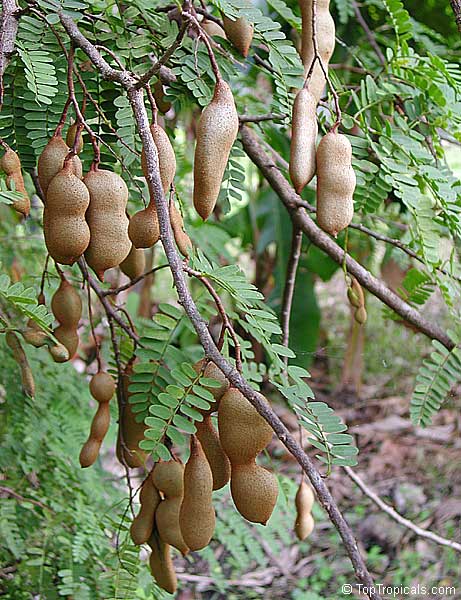
🍴 Tamarind glazed chicken: quick-n-fun exotic recipes
🟡Simmer tamarind paste with honey and a splash of soy sauce until slightly thick.
🟡Brush over grilled or pan-seared chicken during the last 5 minutes of cooking.
Sticky, tangy, deeply flavorful.
🌿 About the plant:
Tamarind - Tamarindus indica - is a tropical tree native to Africa but widely grown across India, Southeast Asia, and Latin America. The long brown pods contain sticky dark pulp with a bold sweet-sour flavor. That tangy pulp is what gives many Asian and Mexican dishes their signature depth.
🏡 In the garden:
Tamarind grows into a large, long-lived shade tree in warm climates - USDA zones 9-11. It loves heat, sun, and well-drained soil. In South Florida it thrives, but it needs space. Seed-grown trees take years to fruit; grafted trees produce faster.
🛒 Plant your own Tamarind tree
📚 Learn more:


Tamarindus indica in Plant Encyclopedia
Tamarind Agua Fresca: quick-n-fun exotic recipes
Tamarind mango chutney: quick-n-fun exotic recipes
Tamarind shrimp stir-fry: quick-n-fun exotic recipes
Tamarind date dipping sauce: quick-n-fun exotic recipes
Top 10 fruit you'll ever need for your health benefits: #7 Tamarind
How to use Tamarind in cooking
#Food_Forest #Recipes
🟢 Join 👉 TopTropicals
Date: 25 Oct 2026
What tropical plants dont mind alkaline soil
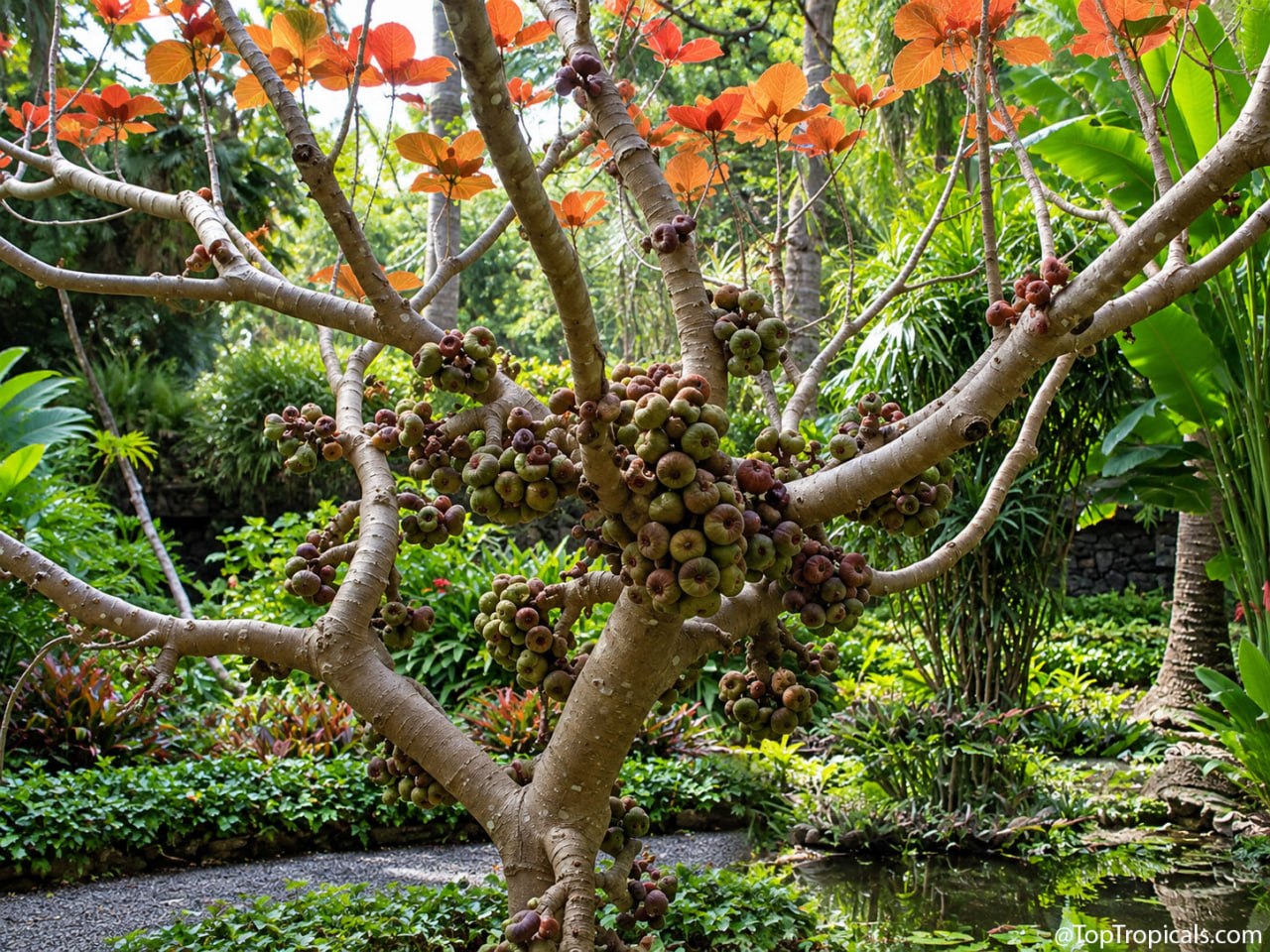
What tropical plants don't mind alkaline soil
Limestone, sand, high pH?
Florida soils range from pure sand to alkaline limestone. At pH above 7.5, many tropical plants struggle to absorb nutrients, causing yellow leaves and slow growth.
The good news? Some tropical plants tolerate alkaline soil naturally. Others just need a little help!
🌳 Fruit trees that tolerate alkaline soil
These are among the best choices for challenging Florida gardens:
Fig Tree (Ficus carica) - One of the most reliable choices. Thrives in well-drained, moderately alkaline soil.
Mulberry (Morus) - Tough, productive, and adaptable to a wide range of soils, including alkaline.
Jujube (Ziziphus) - A champion of poor, dry, and alkaline soils.
Sapodilla (Manilkara zapota) - Naturally adapted to South Florida's limestone soils.
Tamarind (Tamarindus indica) - Long-lived, drought-tolerant, and comfortable in moderately alkaline conditions.
Sea Grape (Coccoloba uvifera) - A Florida coastal native, well adapted to sandy, limestone-rich conditions.
Barbados Cherry (Malpighia) - Adaptable and productive, although very high pH may cause chlorosis.
Cas Guava (Psidium friedrichsthalianum) - An unusual fruiting option; best in mildly alkaline conditions.
Java Plum (Syzygium cumini) - Vigorous and adaptable, with some tolerance of alkaline soils.
Pomegranate (Punica granatum) - Tolerates some alkalinity.
Loquat (Eriobotrya japonica) - Adaptable to moderately alkaline conditions, with good drainage.
🌳 Flowering tropicals for alkaline gardens
Who says difficult soil can't have spectacular flowers?
Portlandia - Fragrant trumpets; some species thrive on limestone.
Tabebuia – Spectacular yellow or pink blooms; several species tolerate alkaline soils.
Bougainvillea - Loves sun, drainage, and tolerates alkalinity.
Plumeria - Thrives in well-drained, mineral-rich soil.
Bauhinia - Orchid-like flowers; several species tolerate alkalinity.
Candle Bush (Senna alata) - Brilliant yellow spikes; tolerates mild alkalinity.
Cordia – Several species thrive in coastal limestone soils.
🌳 Succulents and architectural tropicals
Many dry-climate tropicals are naturally comfortable in mineral-rich soils.
Desert Rose (Adenium) - Excellent drainage matters more than acidity.
Ponytail Palm (Beaucarnea recurvata) - Tough, drought-tolerant, and adaptable.
Snake Plant (Sansevieria) - One of the easiest choices for difficult soil.
Agave - Many species naturally thrive in limestone-rich soils.
Crown of Thorns (Euphorbia milii) - Tolerates dry, moderately alkaline conditions.
Dragon Fruit (Hylocereus) - Likes excellent drainage.
🌳 How to help tropical plants in alkaline soil
Don't replace your soil. Improve the root zone!
Add peat moss – Naturally acidic, helps retain moisture.
Add compost – Improves soil structure and nutrient retention.
Mulch generously – Pine bark and leaves protect roots and gradually enrich soil.
Use Sunshine Boosters – Amino-acid-based nutrients help support plant nutrition; acidic ingredients may also help lower pH locally.
Check your water – Alkaline irrigation water can undo your efforts.
🌳 Yellow leaves with green veins?
That's iron chlorosis – nutrients become unavailable at high pH.
Try Sunshine Superfood, our amino-acid-based micronutrient formula, to help restore healthy green growth.
💡Work with your soil.
Choose plants that tolerate alkalinity, improve the root zone, and feed wisely.
Remember: Tolerating poor sandy soil doesn't necessarily mean tolerating alkaline limestone!
🛒 Shop Sunshine Boosters
📸 In the photo: Figs (Ficus) are champions of alkaline soils! From the familiar Fig Tree (Ficus carica) to this spectacular Ficus auriculata, many species tolerate limestone-rich conditions remarkably well.
📚 Learn more:


· Fig tree (Ficus carica) in Plant Encyclopedia
· Stop Fixing Your Soil: 15 "Bulletproof" Fruit Trees for Tough Ground
· Why my plant turned yellow? The answer is: they need Superfood!
· How to keep plants green, and fruit trees - productive?
#Food_Forest #How_to #Discover
🟢 Join 👉 TopTropicals
Date: 24 Oct 2026
Cashmere Bouquet: a bunch of spicy
💐 Cashmere Bouquet: a bunch of spicy carnations in one bush!
Cashmere Bouquet (Clerodendrum philippinum), also known as Scent Malli in India, is soft as cashmere, spicy as carnations, and determined to conquer your garden!
Imagine a lush tropical shrub covered with fluffy white bouquets, filling the air with the sweet, spicy fragrance of carnations.
Beautiful, fragrant, shade tolerant, and incredibly easy to grow. But this romantic beauty has a secret!
💮 A bouquet that never stops giving
The flowers look like miniature carnations or tiny double roses, packed into generous clusters above large, velvety green leaves.
Their fragrance is rich, sweet, and spicy, especially noticeable when several clusters bloom together. And unlike many sun-loving flowering shrubs, Cashmere Bouquet performs beautifully in partial shade.
💡 Perfect for bringing fragrance into a tropical shade garden.
💮 Not a jasmine. Not a carnation!
Despite its appearance and perfume, Cashmere Bouquet belongs to the Mint family (Lamiaceae)!
Its unusual double flowers are another botanical surprise. Some stamens transform into extra petals, creating those fluffy, layered blossoms.
Its accepted botanical name is Clerodendrum chinense, although gardeners still widely know it as C. philippinum.
💮 An Asian beauty with an Indian connection
Cashmere Bouquet originates from tropical and subtropical Asia, including the eastern Himalayan region, southern China, and Southeast Asia.
It's especially beloved in Indian fragrant gardens, where it's called Scent Malli.
And despite the romantic name, there's no confirmed connection between Cashmere Bouquet and the famous Kashmir region.
💮 The secret underground army
Here's the catch!
This delicate-looking beauty is a vigorous grower that sends out underground runners. One innocent little plant can become an entire fragrant hedge within a couple of growing seasons!
Wonderful if you want a lush screen. Not so wonderful if you're trying to keep a tidy flower bed.
💡Our advice: Give it an isolated garden corner where it can spread, or grow it in a container to keep those ambitious roots under control.
💮 Easy tropical fragrance
✦ Light: Partial shade or filtered sunlight; tolerates some sun.
✦ Water: Regular watering with good drainage.
✦ Growth: Fast-growing, bushy, and easily pruned.
✦ Climate: Tropical and subtropical; protect from hard freezes.
✦ Containers: Excellent for patios and bright indoor spaces.
✦ Maintenance: Trim after flowering and watch for wandering suckers.
Cashmere Bouquet is a fragrant tropical treasure with a wonderfully unruly personality. Give it boundaries, and it will reward you with bouquets of spicy perfume!
🛒 Grow your own fragrant bouquet!
📚 Learn more:
• Clerodendrum philippinum in Plant Encyclopedia
• The shrub that smells like a royal bouquet and grows like a weed
• How to get a large, lush and fragrant bush in no time
• What is the most spectacular Clerodendrum
• How to grow Clerodendrums
• How to grow fragrant Cashmere Bouquet
• Cashmere Bouquet
#Hedges_with_benefits #Perfume_Plants #Shade_Garden #Container_Garden


Date: 23 Oct 2026
😌 A Little Zen, a Lot of Gold
By Tatiana Anderson, Plant Expert, Top Tropicals
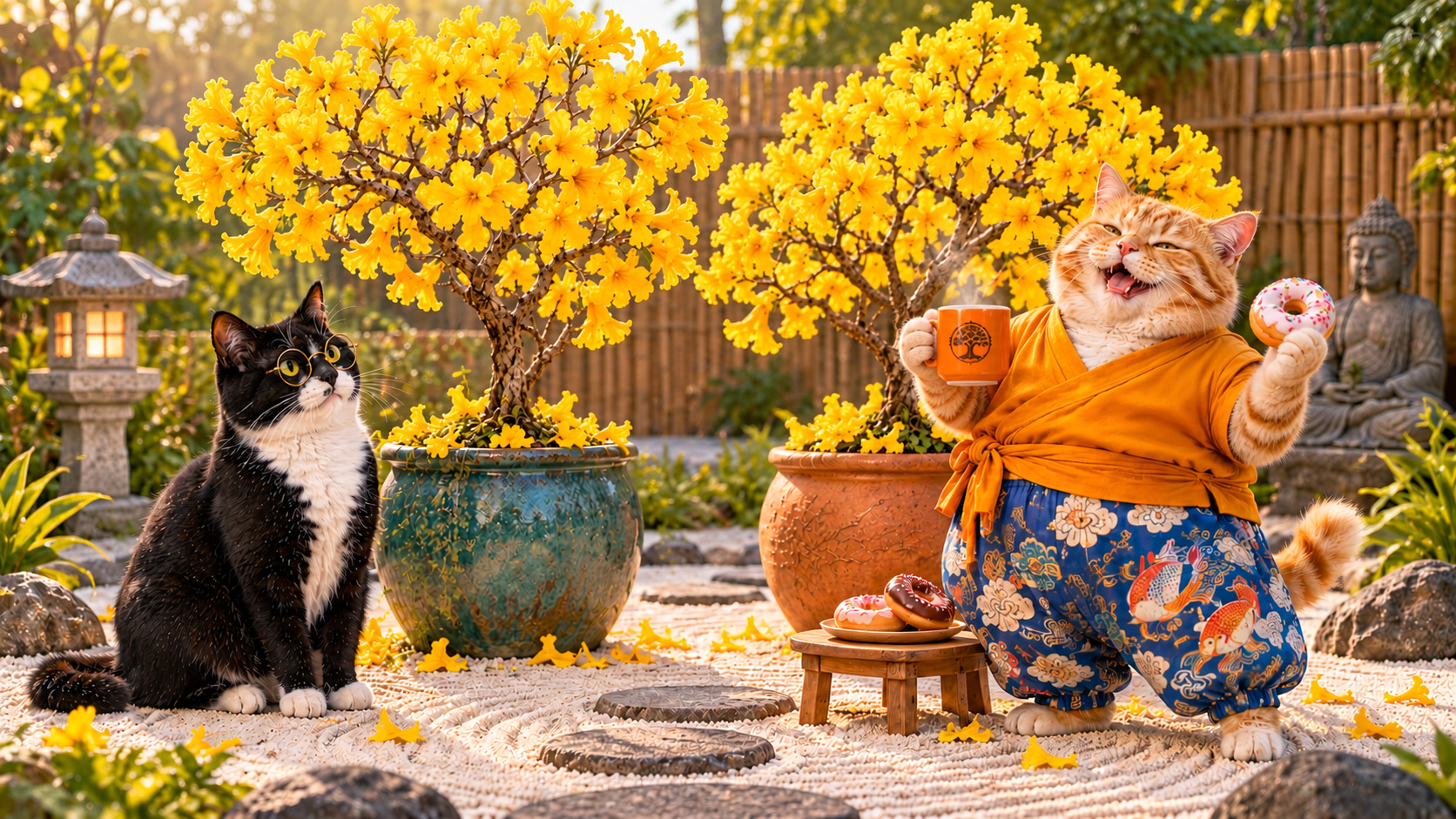
Sunshine: And now they are from my Zen garden..
Smokey: That is not a recognized geographical region.
Sunshine: Who cares? They look great. This is my style.

⭐ Gold on Bare Branches
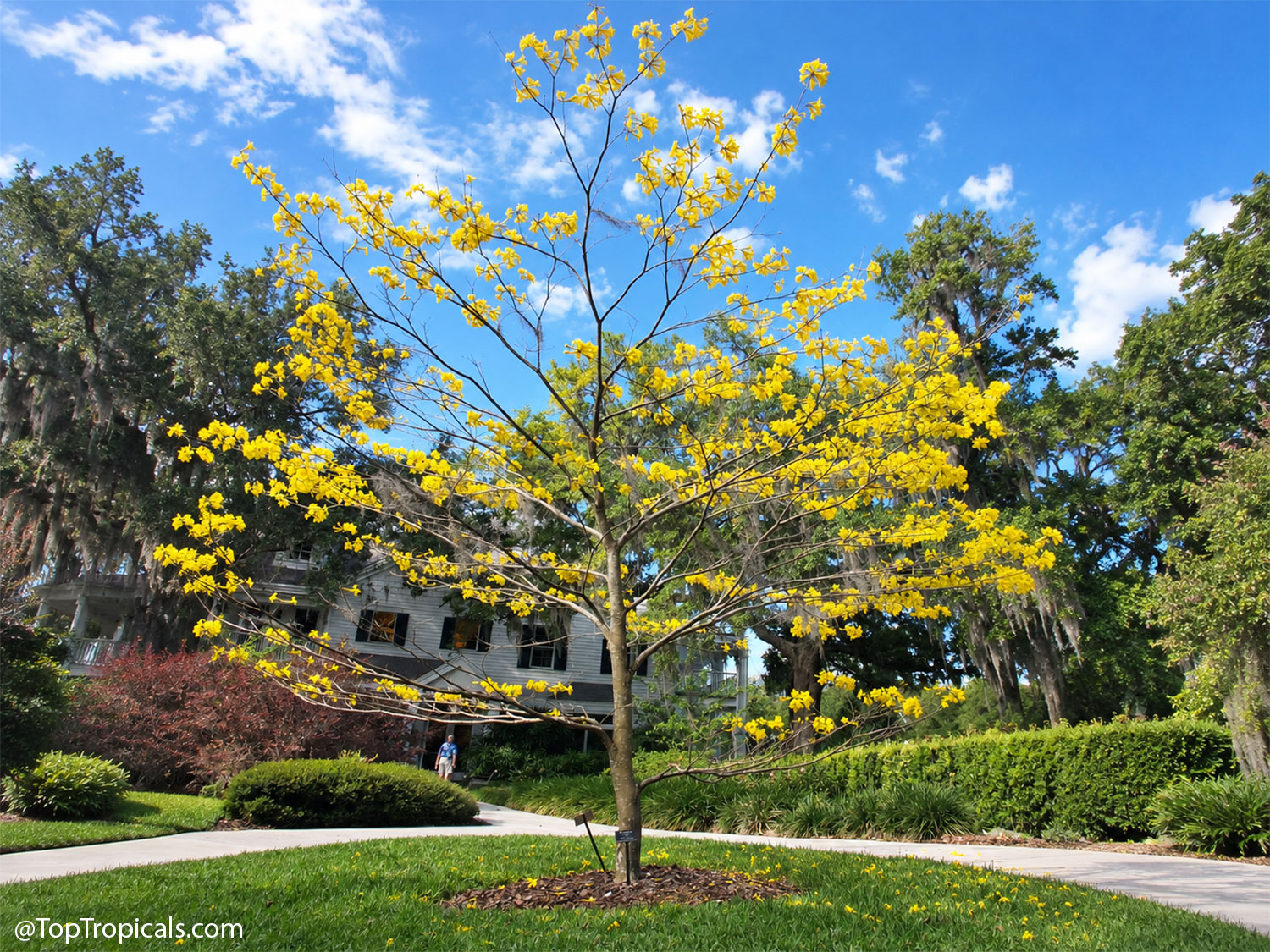
Toward the end of winter, a Golden Tabebuia pulls off a trick. Buds swell at the tips of its bare twigs, and within days the whole crown opens into clusters of bright yellow trumpets. There is little or no green anywhere. Just gray branches and flowers, so many that the tree seems lit from inside. People who drove past it all year without noticing slow down, and some pull over to take pictures.
The rest of the year, it is a tidy small tree with hand-shaped leaves, minding its own business. That is what makes the change so startling. One week it is part of the scenery. The next week it is the scenery.
This is Handroanthus chrysotrichus, still known to many gardeners by its older name, Tabebuia chrysotricha. It is a South American tree and a member of the Bignoniaceae, the same family as the Jacaranda and the Trumpet Vine. For me, it has been a favorite for twenty-five years.
Love at First Bloom
I first saw Tabebuia chrysotricha at the home of Jesse Durko, the legendary Fort Lauderdale horticulturist and flowering tree expert. There it was, growing in a pot in front of his house, completely covered in brilliant golden flowers. I fell in love instantly!
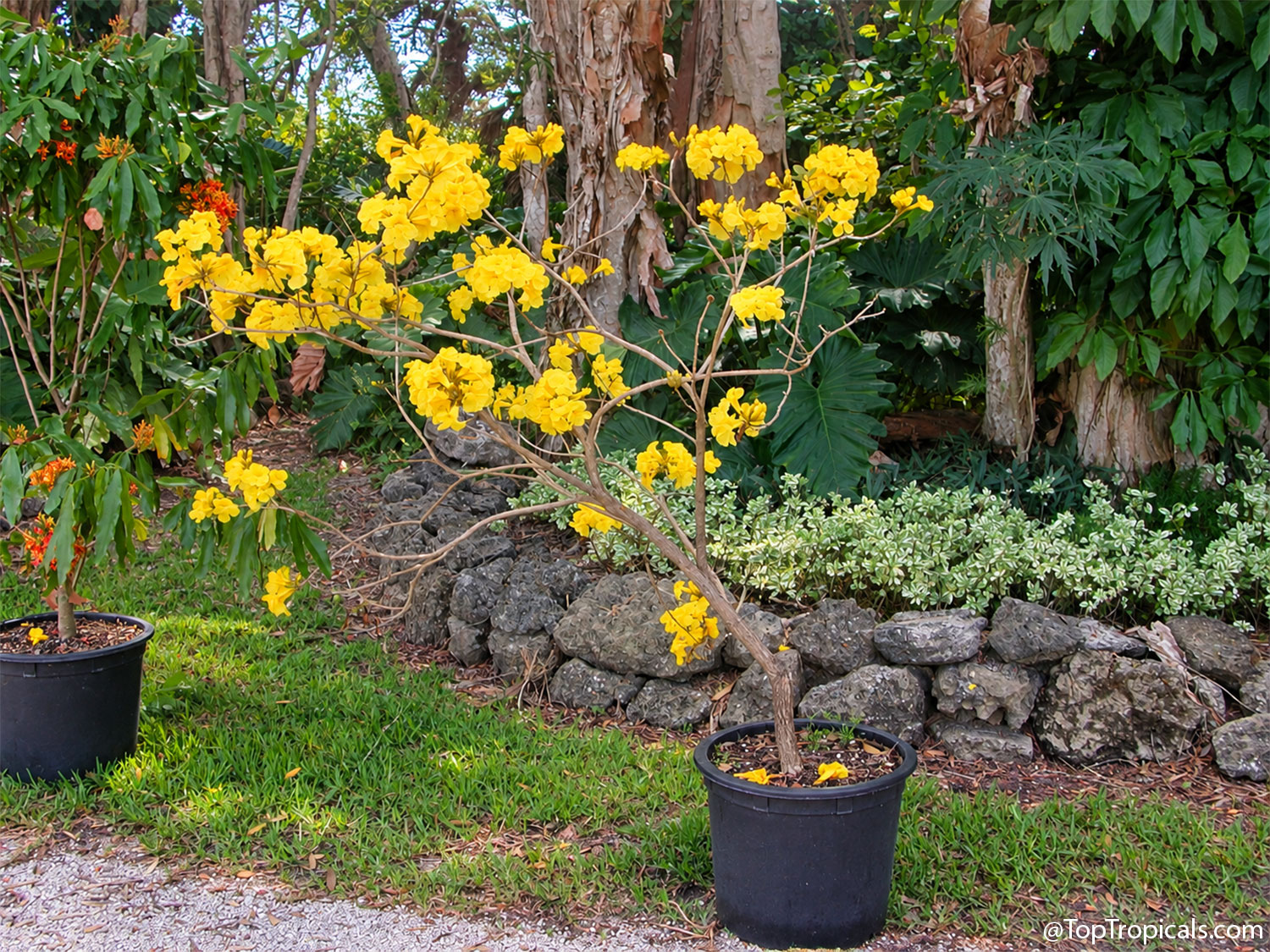
Our dear friend Jesse passed away a year ago. What a loss to all of us who knew him and loved his wonderful plants! My first plants came from his collection a quarter-century ago, and some, including my Xanthostemon, are still growing in my garden today.
Later, I saw Golden Tabebuia blooming in Central Florida landscapes. What a show!
Why It Blooms on Bare Branches
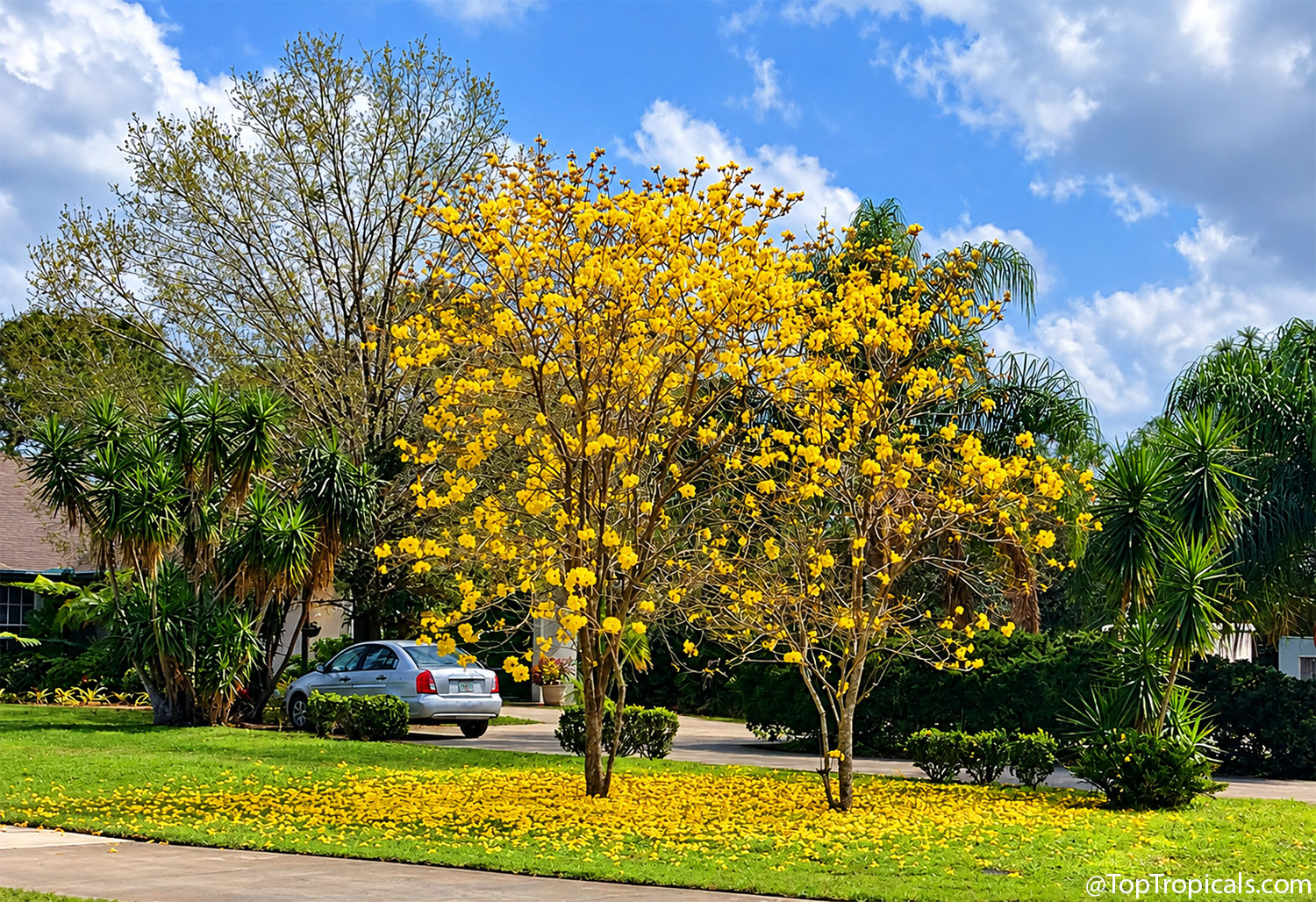
Most flowering trees bloom in the middle of their foliage, so the flowers have to share the view with the leaves. Golden Tabebuia doesn't bother with sharing. In the cooler, drier part of the year it drops most or all of its leaves, and then it opens its flowers on the bare wood, before the new leaves arrive. With nothing green in the way, the yellow carries a long way.
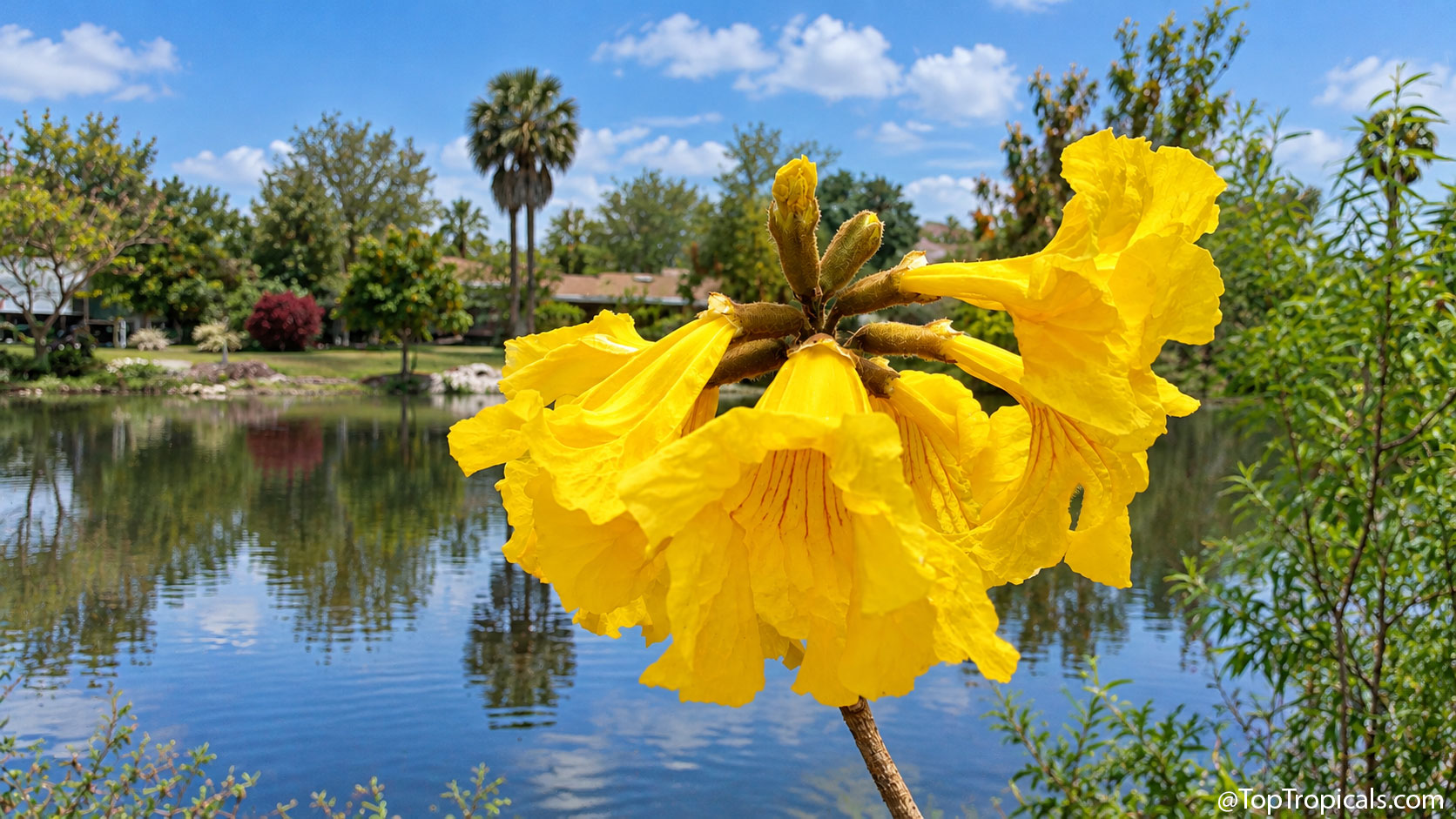
Up close, each flower is a ruffled trumpet a few inches long, packed into rounded clusters at the ends of the branches. The show builds for a few days, peaks, and can go on for several weeks. Then the flowers start to drop, leaving a yellow carpet under the tree, and fresh leaves follow.
The species name points to a detail most people miss. Chrysotrichus means "golden-haired," for the fine rusty-gold fuzz on the young leaves, the flower buds, and the seed pods. Run a finger along a new shoot and you can feel it. So the tree is golden even when it isn't blooming. It just doesn't advertise.
No two years are quite the same. A cooler, drier winter usually brings a cleaner leaf drop and a heavier bloom. That is part of why the trees I saw in Central Florida made such an impression: a little more winter chill, and the whole tree goes gold at once.
Florida helps the effect in another way. Our late-winter landscape is mostly evergreen: palms, live oaks, clipped hedges, all in the same steady green. A tree that suddenly turns solid yellow against a clear blue sky has no competition.
A Golden Tree for Smaller Gardens
Not everyone has room for a full-sized Golden Tabebuia, which can reach 25 to 35 feet. That's where the Dwarf Golden Tabebuia comes in. This more compact form typically grows to about 10 to 20 feet in the ground, bringing the same spectacular golden flowers to smaller gardens, front yards, and patios.
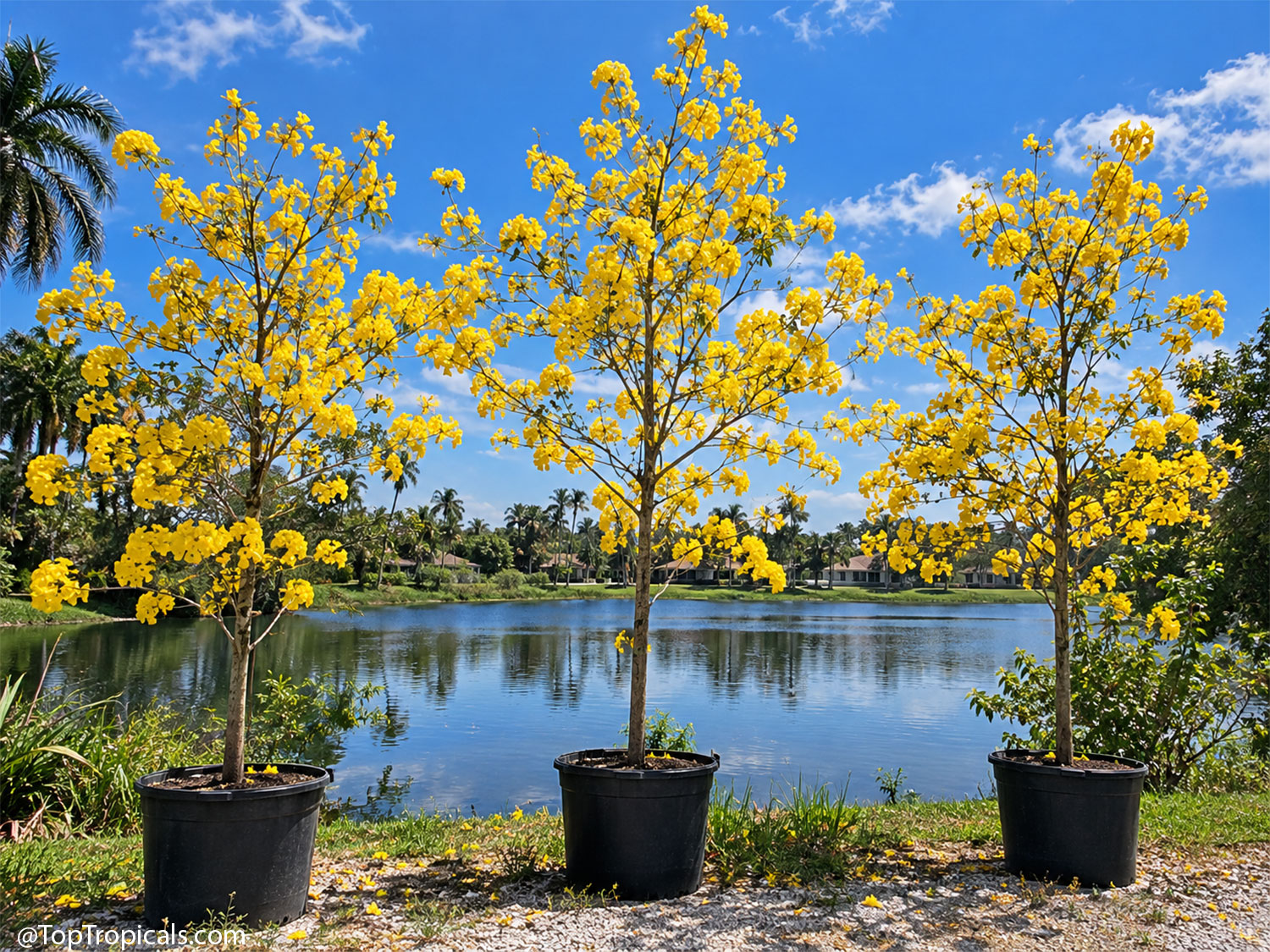
But here's the best part: you don't even need to plant it in the ground. Dwarf Golden Tabebuia is an excellent candidate for container growing. In a large pot, with occasional pruning, you can keep it at a manageable size. A flowering tree covered in golden trumpets beside your front door or on the patio is hard to ignore!
Growing it in a container also opens up possibilities for gardeners farther north. Give it plenty of sunshine outdoors during the warm months, then move it into a bright, frost-free sunroom or greenhouse for winter. You can enjoy a tropical flowering tree even where winters are too cold to grow one in the ground.
And the wait for flowers is shorter than you might think. Our seed-grown trees start flowering at around three years old, and some of our current plants bloomed last winter.
That's why I love this one. You get the same gold on a tree that fits in a regular yard, or even in a big pot on the patio.
Growing Your Own
Golden Tabebuia is a fairly easy tree to grow in the right climate. Give it full sun, and it will give you the heaviest bloom. Water it regularly while it is young. Once it is settled in the ground, rain does most of the work. It isn't fussy about soil: sand, clay, acidic, or alkaline will do, as long as water drains away. Our trees are perfectly happy in the poor sandy soil of Highlands County. For pots, use a fast-draining mix such as our Abundance mix.
It grows best outdoors in Zones 10 and 11, and in the warmer parts of Zone 9. Established trees can usually handle a brief light frost, but young trees and potted plants appreciate a blanket or a trip indoors on cold nights.
And when your tree drops its leaves in winter, don't panic. It isn't dying. It is getting ready.
A Tree Worth Waiting For
For most of the year, a Golden Tabebuia asks very little of you. It grows quietly, drops its leaves on schedule, and spends part of the winter looking like a bundle of sticks. Then, for a few weeks, it gives you everything at once.
That is the bargain of flowering trees like this one. You plant them for a short season of color, and they end up staying in your memory much longer than the bloom itself.
📚 Tabebuia in Top Tropicals Garden Blog
📚 LEARN MORE:
📚2 most favorite flowering trees for small yards
📚 Top Ten Flowering Tree Winners of Florida 2026 Record Freeze
📚8 best flowering trees that will bloom for you in Winter
📚7 best exotic dwarf trees for maximum impact in small tropical landscapes
📚9 Showy Trees to Plant This Fall for a Colorful Florida Winter
📚 Eight most spectacular winter blooming trees