Garden Blog - Top Tropicals
Date: 20 Oct 2026
The tree that brings snow to Florida
❄️ The tree that brings snow to Florida 🐊
Baccharis halimifolia - Aster Tree, Snow Bush, Groundsel Tree.
When we bought our first acreage property in Florida, I noticed compact green native trees scattered around the land. Nothing special. Just ordinary, rather boring bushes.
Until one morning in November.
Almost overnight, they had exploded into clouds of fluffy white "snow"! The display lasted for weeks, brightening our landscape through the cooler months. I had discovered Snow Bush - one of Florida's most surprising natives.
Yes! Snow Bush belongs to Asteraceae, the huge family of daisies, asters, sunflowers, and chrysanthemums. Unlike most familiar members, it grows into a woody, often multi-trunked shrub or small tree, usually 6-10 feet tall. It's among the unusual tree-like asters native to eastern North America.
Baccharis halimifolia is the only member of the Aster family in eastern North America to reach tree stature!
- NC State's wetland plant guide
❄️ Those clouds aren't flowers... Think dandelions!
The tiny flowers are easy to miss. The spectacular white show comes later, from silky hairs attached to the fruits. Like thousands of miniature dandelion parachutes, they catch the light and carry seeds on the wind.
Snow Bush flowers in fall, offering late-season nectar and pollen for bees, butterflies, and other insects. Its dense branches provide cover for wildlife, too. The snowy seed display follows flowering and can persist for weeks, depending on weather.
❄️ From freezing winters to scorching summers🔥
Don't let those delicate clouds fool you. This plant is tough!
During our February 2026 Florida freeze, temperatures fell to 25°F with fierce winds and prolonged freezing nights. Many tropical plants suffered. Our Snow Bush? Not a scratch - one of the clear winners! And here is why -
Baccharis halimifolia is reported hardiness extends into USDA Zone 5!
- University of Florida
At the other extreme, it handles blazing Florida summers. From deep winter cold to triple-digit heat, its climatic range spans well over 100°F.
Drought after establishment? Fine.
Poor sandy soil? Fine.
Salt spray? Also fine. It tolerates periodic wet conditions, too. Give it sun, room to grow, and little fuss.
All year, Snow Bush quietly blends into the greenery. Then, just as other plants slow down, it puts on its white winter coat.
Florida snow - no freezing weather required!
🛒 Grow your own Florida snow!
📚Learn more:
• Baccharis halimifolia in Plant Encyclopedia
• The most unique Florida Native
• 9 tough trees for hot, dry spots that actually thrive
• What tropical plants survived Floridas historic freeze without protection
• 15 "Bulletproof" Fruit Trees for Tough Ground
#Discover #Trees #Butterfly_Plants


🟢 Join 👉 TopTropicals
Baccharis halimifolia - Aster Tree, Snow Bush, Groundsel Tree.
When we bought our first acreage property in Florida, I noticed compact green native trees scattered around the land. Nothing special. Just ordinary, rather boring bushes.
Until one morning in November.
Almost overnight, they had exploded into clouds of fluffy white "snow"! The display lasted for weeks, brightening our landscape through the cooler months. I had discovered Snow Bush - one of Florida's most surprising natives.
❄️ The only tree in the Daisy family
Yes! Snow Bush belongs to Asteraceae, the huge family of daisies, asters, sunflowers, and chrysanthemums. Unlike most familiar members, it grows into a woody, often multi-trunked shrub or small tree, usually 6-10 feet tall. It's among the unusual tree-like asters native to eastern North America.
Baccharis halimifolia is the only member of the Aster family in eastern North America to reach tree stature!
- NC State's wetland plant guide
❄️ Those clouds aren't flowers... Think dandelions!
The tiny flowers are easy to miss. The spectacular white show comes later, from silky hairs attached to the fruits. Like thousands of miniature dandelion parachutes, they catch the light and carry seeds on the wind.
❄️ A feast when gardens are winding down
Snow Bush flowers in fall, offering late-season nectar and pollen for bees, butterflies, and other insects. Its dense branches provide cover for wildlife, too. The snowy seed display follows flowering and can persist for weeks, depending on weather.
❄️ From freezing winters to scorching summers🔥
Don't let those delicate clouds fool you. This plant is tough!
During our February 2026 Florida freeze, temperatures fell to 25°F with fierce winds and prolonged freezing nights. Many tropical plants suffered. Our Snow Bush? Not a scratch - one of the clear winners! And here is why -
Baccharis halimifolia is reported hardiness extends into USDA Zone 5!
- University of Florida
At the other extreme, it handles blazing Florida summers. From deep winter cold to triple-digit heat, its climatic range spans well over 100°F.
‼️ From bitter northern winters to Florida's triple-digit summer heat - Snow Bush thrives across an astonishing climatic range of more than 100 degrees!
Drought after establishment? Fine.
Poor sandy soil? Fine.
Salt spray? Also fine. It tolerates periodic wet conditions, too. Give it sun, room to grow, and little fuss.
All year, Snow Bush quietly blends into the greenery. Then, just as other plants slow down, it puts on its white winter coat.
Florida snow - no freezing weather required!
🛒 Grow your own Florida snow!
📚Learn more:
• Baccharis halimifolia in Plant Encyclopedia
• The most unique Florida Native
• 9 tough trees for hot, dry spots that actually thrive
• What tropical plants survived Floridas historic freeze without protection
• 15 "Bulletproof" Fruit Trees for Tough Ground
#Discover #Trees #Butterfly_Plants
Date: 19 Oct 2026
Cold-hardy tropical fruit: How cold is cold?
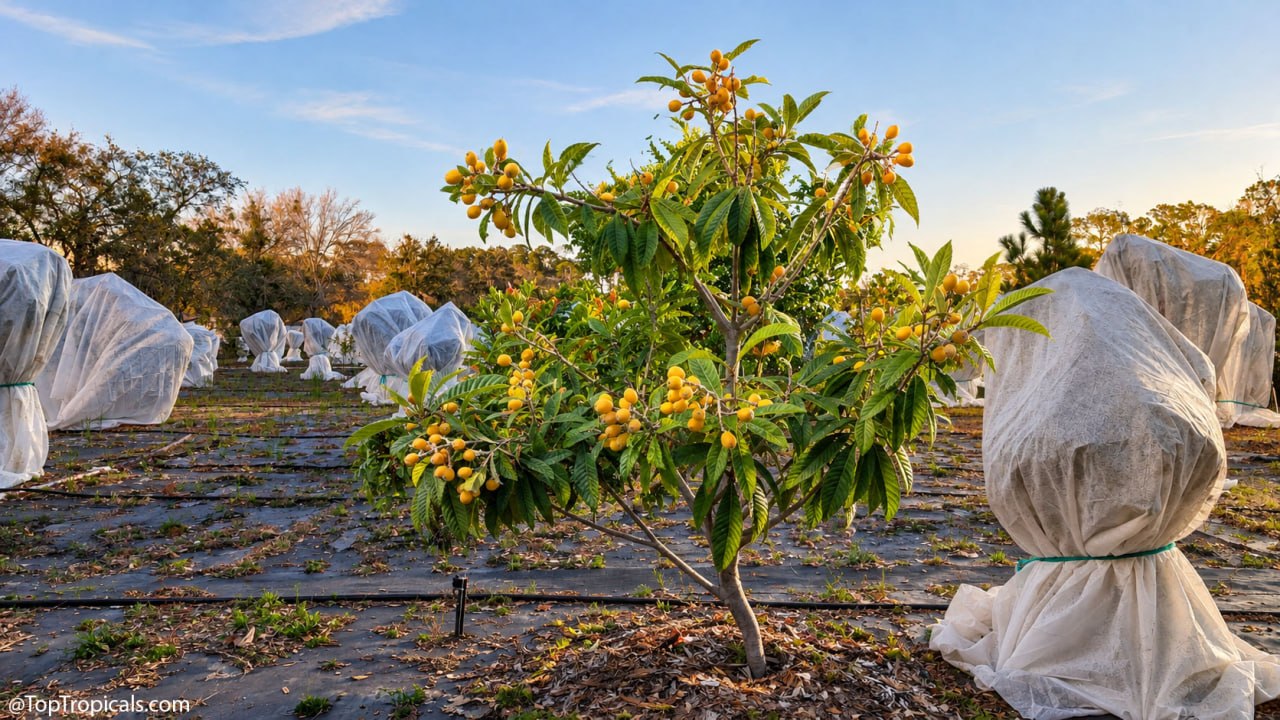
❄️ Cold-hardy tropical fruit: How cold is cold?
Dreaming of tropical fruit outside the tropics? Some exotic trees are surprisingly tough. But before planting an avocado in Michigan, read this!
- ❄️ Cold-hardy doesn't mean snow-hardy!
A customer once complained:
"I planted a Mango tree last year. But after the snow melted, it never sprouted back. I need a replacement!"
Unfortunately, tropical plants don't read winter forecasts!
Cold-hardy is relative. A tree surviving 28F may be considered hardy compared with one damaged at 40F. But neither belongs outdoors through a Michigan winter.
A brief frost and months of freezing weather are different challenges. Established trees tolerate more cold than young plants. And survival doesn't guarantee a harvest - flowers and fruit may be lost. - ❄️ Florida's great freeze test of 2026
In February 2026, our Top Tropicals farm in Sebring became an accidental cold-hardiness testing ground:
25F minimum temperature
Three freezing nights, 8-10 hours each
20 mph winds, gusting to 50 mph
Daytime temperatures near 50F for over a week
Many established trees, 2-3 years old, had no protection. Some suffered badly. Others escaped with little or no damage.
❄️ Meet the freeze survivors!
🍑 Loquat (Eriobotrya japonica) - One of the toughest subtropical fruits. Mature trees survive temperatures into the teens, although winter flowers and fruit are vulnerable.
🍒 Eugenia Cherries (Eugenia) - Surinam Cherry, Cherry of the Rio Grande, and Grumichama survived. Beautiful evergreens with delicious berries.
🍇 Jaboticaba (Myrciaria / Plinia) - The Brazilian tree that fruits directly on its trunk! Established trees survived; young plants need protection.
🍐 Pineapple Guava (Feijoa sellowiana) - A subtropical champion! Much hardier than most tropical fruits, with edible flower petals and aromatic fruit.
Macadamia (Macadamia) - Our Macadamia nut trees survived 25F. Flowers and young growth are more sensitive.
🍈 Cattley Guava (Psidium cattleyanum) - Tougher than Tropical Guava. Compact evergreen with aromatic fruit.
Cold-hardy Avocados (Persea americana) - Mexican-derived varieties are tougher than typical avocados. Fantastic, Joey, Lila, Stewart, Brazos Belle, Winter Mexican, and others survived. Detailed field report coming soon!
❄️ More hardy edibles!
Not all are truly tropical, but all passed our freeze test:
Mulberry (Morus) - Productive and hardy; dwarf varieties suit small gardens.
Fig (Ficus carica) - Deciduous, adapted to winter dormancy.
Pomegranate (Punica granatum) - Loves heat, tolerates freezing winters.
Persimmon (Diospyros) - American and Asian types tolerate cold.
Peach, Plum, Nectarine (Prunus) - Choose low-chill varieties for Florida.
Blackberry, Mysore Raspberry (Rubus) - Hardy berries.
Grape (Vitis) - Many varieties tolerate freezing winters.
Olive (Olea europaea) - Mediterranean, not tropical, but cold-tolerant.
Also surviving: Gin Berry, Bay Leaf, Elderberry, Yerba Mate, and Nopal Cactus.
❄️ Survived underground
Moringa and edible Gingers survived underground.
Their tops may die back, but roots and rhizomes regenerate in warm weather.
❄️ Help your trees survive!
Plant in spring and feed well to establish roots.
Choose sheltered locations away from cold-air pockets.
Mulch and protect young trees with frost cloth.
Delay pruning until spring growth reveals the damage.
In colder climates, grow suitable tropical fruits in containers and overwinter indoors or in a greenhouse.
Our freeze showed that many subtropical fruits can handle 25F, strong winds, and three freezing nights.
But remember: these were established trees in Central Florida, not newly planted trees in Michigan!
🛒 Shop cold hardy tropicals
📚 Learn more:


· Loquat tree (Eriobotrya japonica) in Plant Encyclopedia
· 2026 Freeze Guide: Cold-Hardy Avocados and Fruit Trees
· What tropical plants survived Florida's historic freeze without protection
· Cold-hardy avocado survival groups - what the numbers really mean
#Food_Forest #How_to #Discover
🟢 Join 👉 TopTropicals
Date: 18 Oct 2026
Daily Cat Lesson: What Is Your Cats Tail Saying?
🐾 Daily Cat Lesson: What Is Your Cat's Tail Saying?
A cat's tail isn't just decoration. It's a balancing tool, communication system and mood indicator all in one.
🐾 Why do cats need such a long tail?
The tail helps with balance during climbing, jumping and quick turns. Cats can move it as a counterbalance when their body suddenly changes direction, during climbing, jumping and those spectacular high-speed turns.
A typical full-tailed house cat has a tail roughly 10-12 inches long, made up of about 18-23 small vertebrae.
And tails come in VERY different sizes.
The current Guinness record belongs to a Maine Coon named Mr. Pugsley Addams, whose tail measures an astonishing 18.5 inches (46.99 cm).
- Guinness record
At the other extreme are the bobtails.
An American Bobtail's tail averages only 1-4 inches, while some Manx cats are born with just a tiny stub - or essentially no external tail at all, like Top Tropiucals cats Matilda & Timo.
So a cat tail can range from practically zero to a foot and a half long!
And somehow, regardless of length, it will eventually end up directly in your coffee ☕️
🐾 A tail can talk:
• Straight up usually means a friendly, confident greeting.
• A relaxed curve often means contentment.
• A rapidly swishing or thumping tail can mean irritation or intense excitement.
• And the famous giant Halloween-cat tail happens when the hairs stand on end, making the cat look bigger when frightened or threatened. 🐈
🐾 Why does a cat wrap its tail around you - or another cat?
It's often friendly social contact, rather like putting an arm around someone.
🐾 Can cats control their tails?
Yes. The tail is an extension of the spine, made up of many small vertebrae surrounded by muscles, nerves and tendons.
Most cats have 18-23 tail vertebrae, although the number varies.
⛔️ Important: never pull a cat's tail.
Because the nerves at its base are closely associated with nerves serving the hindquarters, bladder and bowel, a serious tail injury can cause much bigger problems than an injured tail.
🐾 Plants have Cat Tails too!
Plant people apparently saw fuzzy flowers and immediately thought CAT.
• Acalypha hispida - Cat Tail, Chenille Plant grows spectacular long, dangling, fuzzy red flower spikes that really do resemble giant fluffy cat tails. Its smaller cousin -
• Acalypha pendula (reptans) - Kitten's Tail, Dwarf Cat's Tail, stays much more compact and produces adorable little fuzzy red "kitten tails." Great for hanging baskets and ground covers.
🛒 So if your household doesn't have enough cat tails already - you can grow a few more!
🐈📸 Top Tropicals rescued cats James Coconuts and Niki showing off their tails at PeopleCats.Garden.
🐈 Stay with us for your #DailyDoseOfCat!
#DailyCatLesson #PeopleCats
🟢 Join 👉 TopTropicals
Date: 18 Oct 2026
Why Isnt Your Doctor Prescribing Insulin Ginger?
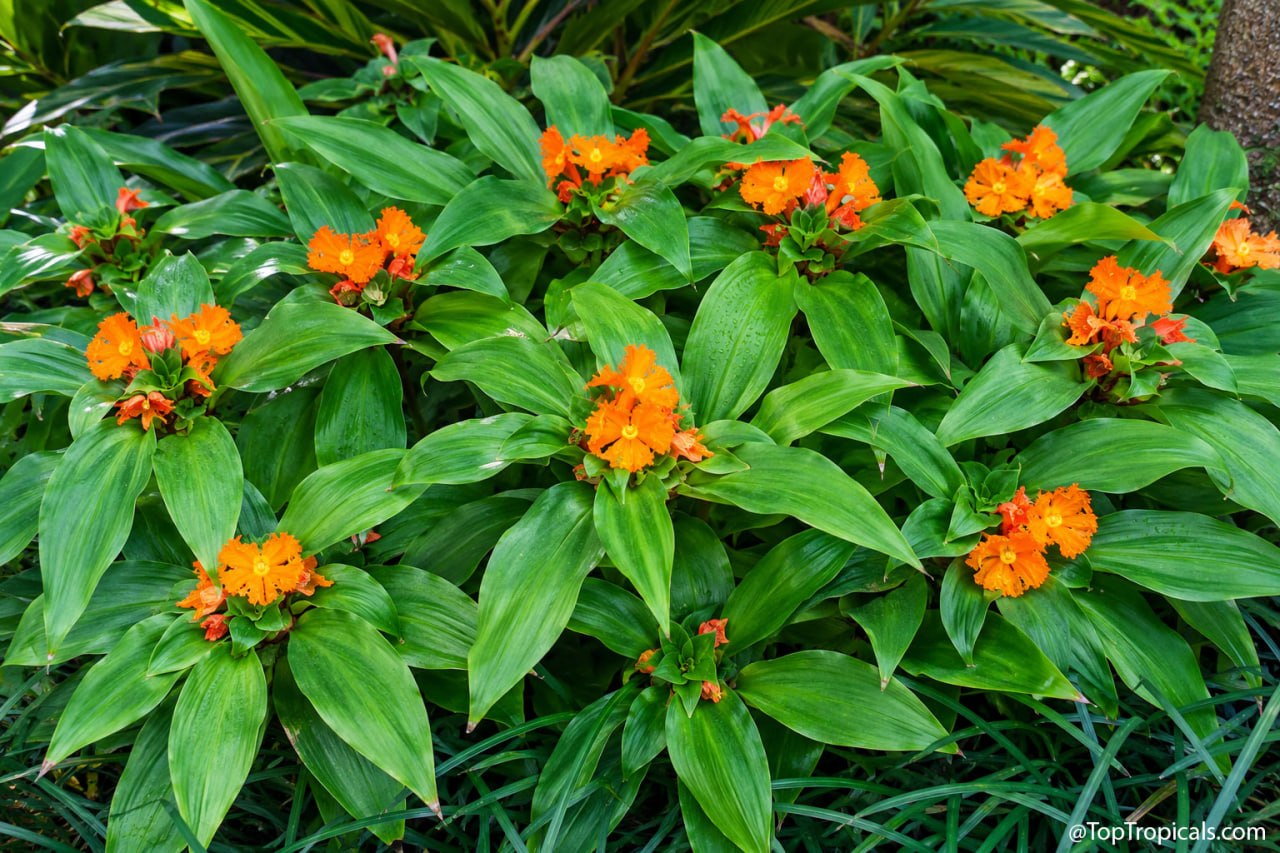
💊 Why Isn't Your Doctor Prescribing Insulin Ginger?
If you’ve searched for natural blood sugar support, you’ve likely come across Insulin Ginger (Chamaecostus cuspidatus, formerly Costus igneus). It’s one of the world's most talked-about tropical herbs - yet most physicians never bring it up. So why isn't it sitting on pharmacy shelves?
The explanation is simpler than you might think.
🌿 How It Got Its Name
Insulin Ginger didn’t earn its nickname because it produces actual insulin.
Instead, the moniker caught on in India, where chewing its fresh leaves became a popular traditional practice for blood sugar management. As gardeners shared divisions around the world, the name "Insulin Plant" stuck. 👉 See the Study
While laboratory and animal studies show that active compounds in the leaves may help lower blood glucose, these findings are not standardized in human clinical trials.
The Risk: Because compounds in Chamaecostus cuspidatus can lower blood sugar, consuming it alongside prescription diabetes medications (like metformin or insulin) can cause blood glucose levels to drop dangerously low (hypoglycemia). 👉 See the study
🌿 The Multi-Million-Dollar Patent Problem
Why haven't pharmaceutical companies run those large human trials?
Massive Costs: Bringing a prescription drug through FDA-style approval often costs tens to hundreds of millions of dollars.
No Patent Rights: Naturally occurring plants cannot be patented. Without the ability to protect their investment, drug companies have little financial incentive to fund multi-stage clinical research.
A lack of prescription approval doesn't mean a plant lacks value - it simply means the regulatory bar for pharmaceuticals is fundamentally higher than for home-grown herbs.
🌿 What Does It Actually Taste Like?
Despite the "ginger" moniker, it isn't culinary ginger and lacks that signature fiery burn.
Flavor Profile: Crisp, slightly succulent, with a mild, green, leafy taste.
How It's Prepared: Many chew a raw leaf whole, while others steep the leaves into tea, blend them into smoothies, or mix them into citrus juices to soften the green flavor.
🌿 An Easy Tropical Herb to Grow at Home
You don't need expensive dried supplements to access this plant. Insulin Ginger thrives in warm climates and containers, forming a dense clump that expands via underground rhizomes. A single plant can yield fresh foliage for years and generate dozens of new plants through simple root division.
🛒 Start Your Own Insulin Ginger Patch
📚 Learn more:


Costus igneus (Chamaecostus cuspidatus) - Insulin Ginger in Plant Encyclopedia
Insulin Ginger: Myths vs Facts
One plant today - dozens tomorrow: why gardeners love Insulin Ginger
Insulin Ginger traditional remedies: Quick-n-fun exotic recipes
A leaf you grow, not a pill you buy: Insulin ginger - the plant people actually use
How to make lots of Insulin Ginger plants quickly and get more health benefits
The fiery plant that fights sugar: Nature secret insulin?
#Food_Forest #Remedies #Shade_Garden #Discover
🟢 Join 👉 TopTropicals
Date: 17 Oct 2026
Fragrant jasmine recommendations for growing indoors
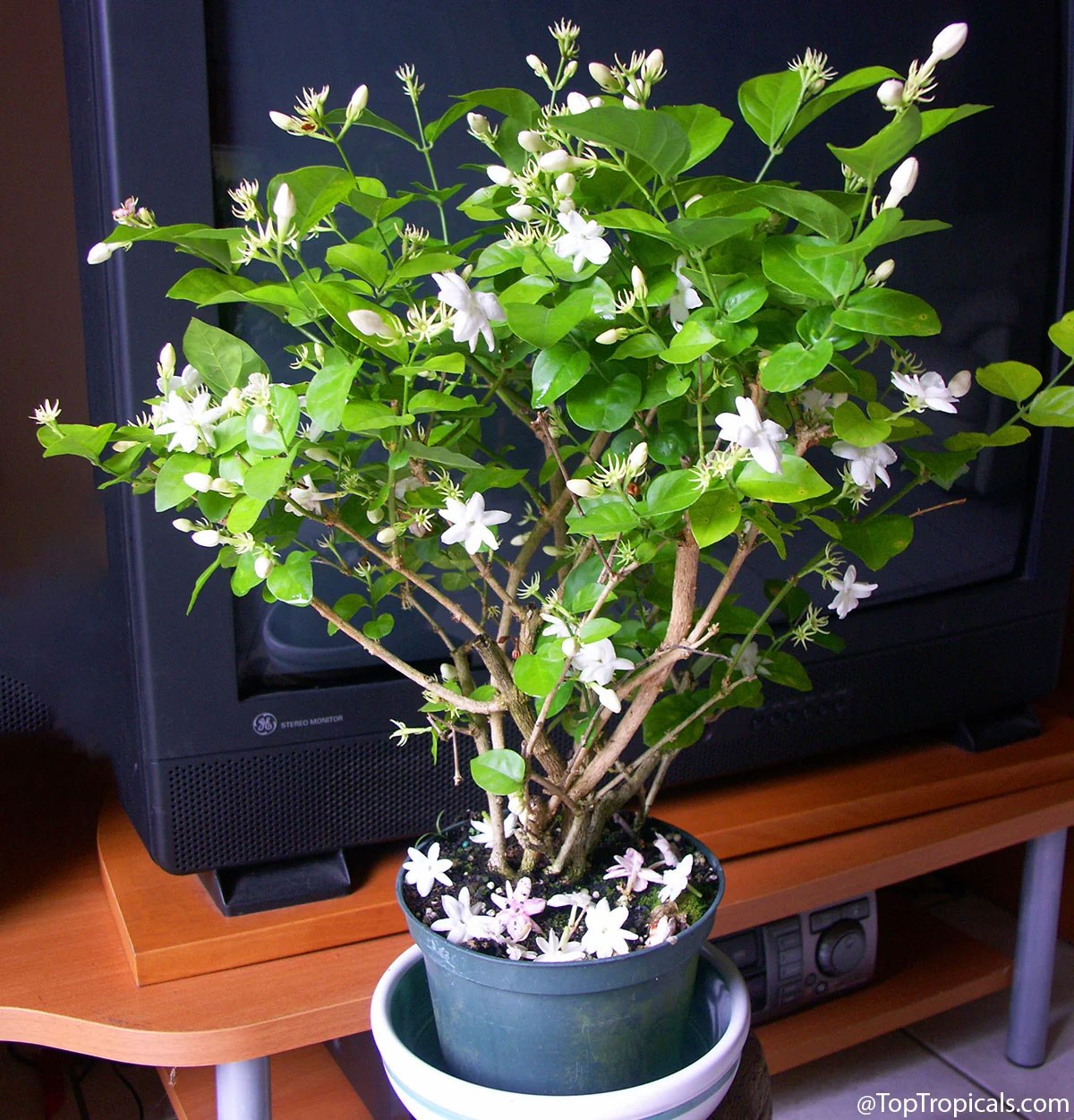
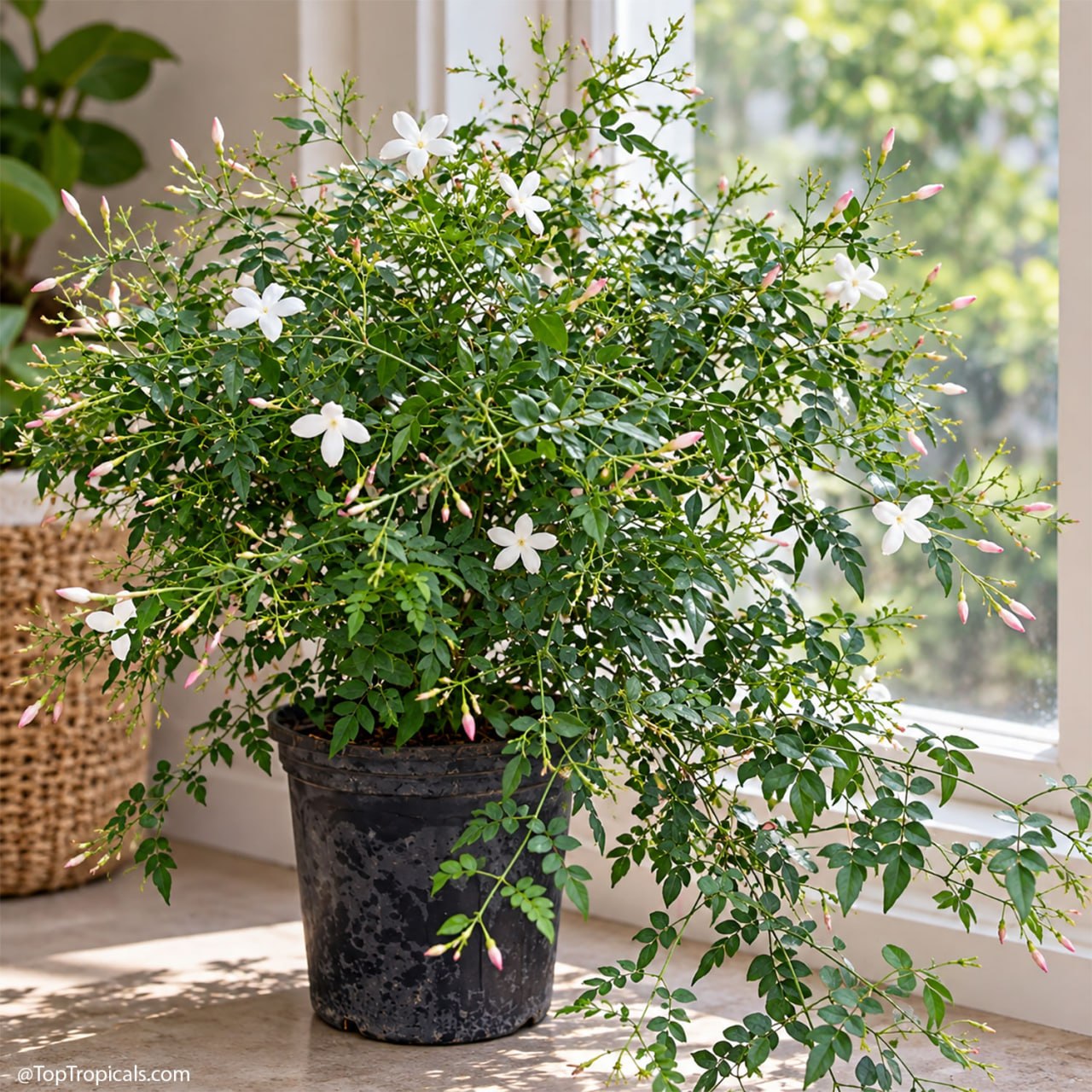
🏡 Fragrant jasmine recommendations for growing indoors
❓ I'd like to order fragrant jasmine for indoor, balcony, and outdoor container growing in Nashville. I’m particularly interested in Arabian jasmine and French perfume jasmine. Which available varieties would you recommend for strong fragrance, beautiful blooms, and manageable container growth? Please include ordering links, and guidance on bringing them indoors during colder months.
You can absolutely grow jasmine in containers in Nashville! Enjoy the beautiful blooms and fragrance on your balcony or patio during warmer months, then bring the plants indoors for winter. Here are our recommendations:
💮 Arabian Jasmine (Jasminum sambac)
💡 At Top Tropicals, we grow every known variety of Jasminum sambac in cultivation. From compact bushes to vigorous climbers, each has its own personality!
✦ Arabian Nights - Abundant, strongly fragrant double flowers. Compact, easy to grow, blooms frequently, and responds beautifully to pruning. Excellent for containers.
✦ Belle of India - Delicate, fragrant flowers with long, slender petals. A graceful, compact vine that prefers partial shade.
✦ Grand Duke of Tuscany - One of our most popular varieties! A vigorous, bushy plant with intensely fragrant, carnation-like double flowers. Excellent for containers.
✦ Grand Duke Supreme - A larger, more vigorous version of Grand Duke, with even bigger flowers.
✦ Gundu Malli - An unusual hybrid of Arabian Nights and Grand Duke, combining characteristics of both parents.
✦ Little Duke - A miniature version of Grand Duke, perfect for small spaces and containers.
✦ Maid of Orleans - A vigorous, sun-loving climber with intensely fragrant single white flowers. Ideal for hedges, fences, and trellises.
✦ Mali Chat - A rare, delicate variety with exquisite miniature, three-tiered flowers. Prefers shade and requires extra care to establish.
✦ Mysore Mulli - A vigorous, fragrant vining shrub that thrives in full sun or partial shade.
🛒 Collect Sambac varieties
💮 French Perfume Jasmine (Jasminum officinale)
French Perfume Jasmine is a wonderful choice if fragrance is your priority! French Perfume Jasmine is famous for its rich, sweet scent, traditionally associated with fine perfumes. It produces beautiful white flowers and has a more vigorous, climbing growth habit than most Arabian Jasmines. Give it a small trellis or support and prune regularly to control its size.
🛒 Get French Perfume Jasmine
💮 Growing jasmine indoors
All these varieties can grow beautifully in containers.
· During warmer months, place them outdoors where they receive plenty of sunshine.
· Use well-draining potting soil and water regularly, allowing the top layer to dry slightly between waterings.
· Arabian Jasmines are tropical plants, so bring them indoors before nighttime temperatures consistently drop below 50F.
· French Perfume Jasmine can tolerate cooler temperatures, but we still recommend protecting container plants from freezing.
· During winter, keep them near a bright, sunny window or under grow lights.
· Reduce watering and expect slower growth and fewer flowers until spring.
· Light pruning will keep your jasmines compact and encourage branching.
👉 To get more jasmine flowers, apply Sunshine Pikake plant booster and enjoy the perfume all day long, all year around! Sunshine Boosters are safe to use with every watering, year around.
📚 Learn more:
• Jasminum sambac and Jasminum officinale in Plant Encyclopedia
• Choosing the Right Variety of Jasmine Sambac
• What is your favorite variety of Jasmine Sambac?
• The most wanted fragrant plant
• How to tell the difference between Jasmine Sambac Varieties
• What is the Jasmine Oil made of?
• Six most desired perfume plants
📚 Jasminum Sambac Absolute Flower - book download
📱
📱 Jasminum Sambac Page
#Perfume_Plants #Discover #Container_Garden
🟢 Join 👉 TopTropicals