Garden Blog - Top Tropicals
Date: 22 Oct 2026
Tropical paradise in the shade, Part 2:
🌳 Tropical paradise in the shade, Part 2:
What to plant? Shade-tolerant tropical plants.
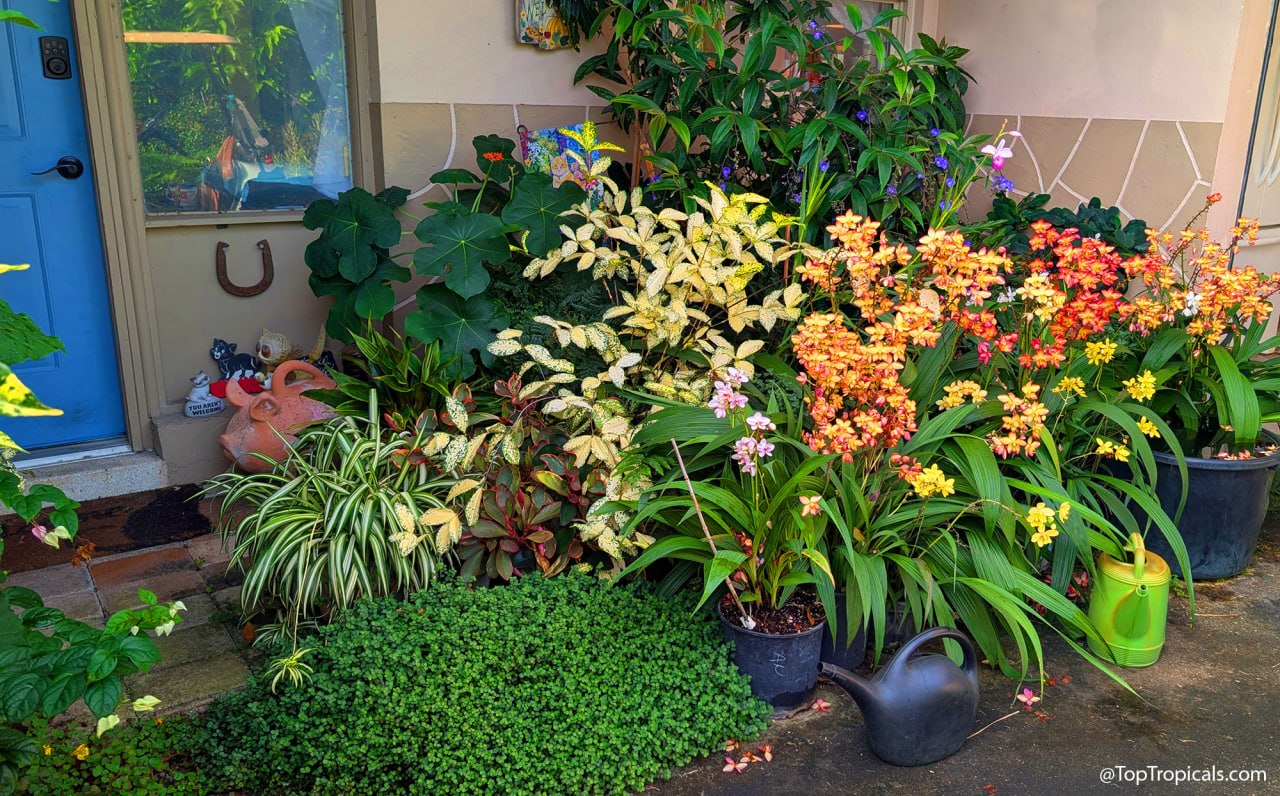
Not enough sunshine? You can still grow a tropical paradise with lush foliage, fragrant flowers, and even fruit! Here are our favorite plants for partial shade.
Alocasias and Colocasias create dramatic tropical foliage; many varieties adapt to sun or shade. Macaranga produces enormous leaves, while Jatropha podagrica can develop surprisingly giant leaves in shade.
For year-round color, try Cordylines, Iresine, Eranthemums, Pseuderanthemums, and Graptophyllums, with foliage in pink, purple, burgundy, and variegated patterns.
Rainforest classics - Philodendrons, Monsteras, Anthuriums, and Calatheas - are natural choices for bright indirect light.
Justicia, Barleria, purple Brunfelsias (Yesterday-Today-Tomorrow), Clerodendrums, Wrightia, and Serissa offer blooms in filtered light or morning sun.
Sclerochyton adds unusual blue flowers; Medinilla produces spectacular hanging clusters in humid, sheltered spots. Tibouchina, Plumbago, Hibiscus, and Azaleas tolerate partial shade but bloom best with some direct sun. Don't overlook the delicate, unusual flowers of Eucrosia lily.
Arabian Jasmine (Jasminum sambac), especially Malichat, Mysore Mulli, Baby Duke, and Arabian Nights, is worth trying in bright filtered light.
White-blooming Brunfelsias perfume the garden, often most strongly in the evening.
Artabotrys offers wonderfully fragrant flowers, though brighter light encourages blooming.
Patchouli contributes aromatic foliage.
Thunbergia, Hiptage, Solandra, Tecomanthe, Chonemorpha, and Mexican Flame Vine can grow in partial shade, especially when their stems reach sunlight above the canopy.
Clitoria (Butterfly Pea) produces vivid blue flowers, also used for colorful tea. A little morning sun helps these vines bloom more generously.
Many Gingers flourish in filtered light.
Amorphophallus and Tacca bring wonderfully bizarre flowers to sheltered beds.
Ground Orchids suit bright, partially shaded locations.
Vanilla Orchids climb sheltered supports and tree trunks.
For hanging baskets, try Hoyas, Schlumbergera (Christmas Cactus), Epiphyllums, and other jungle cacti. Their flowers can be spectacular!
Nepenthes adds colorful insect-trapping pitchers, provided the light is bright enough.
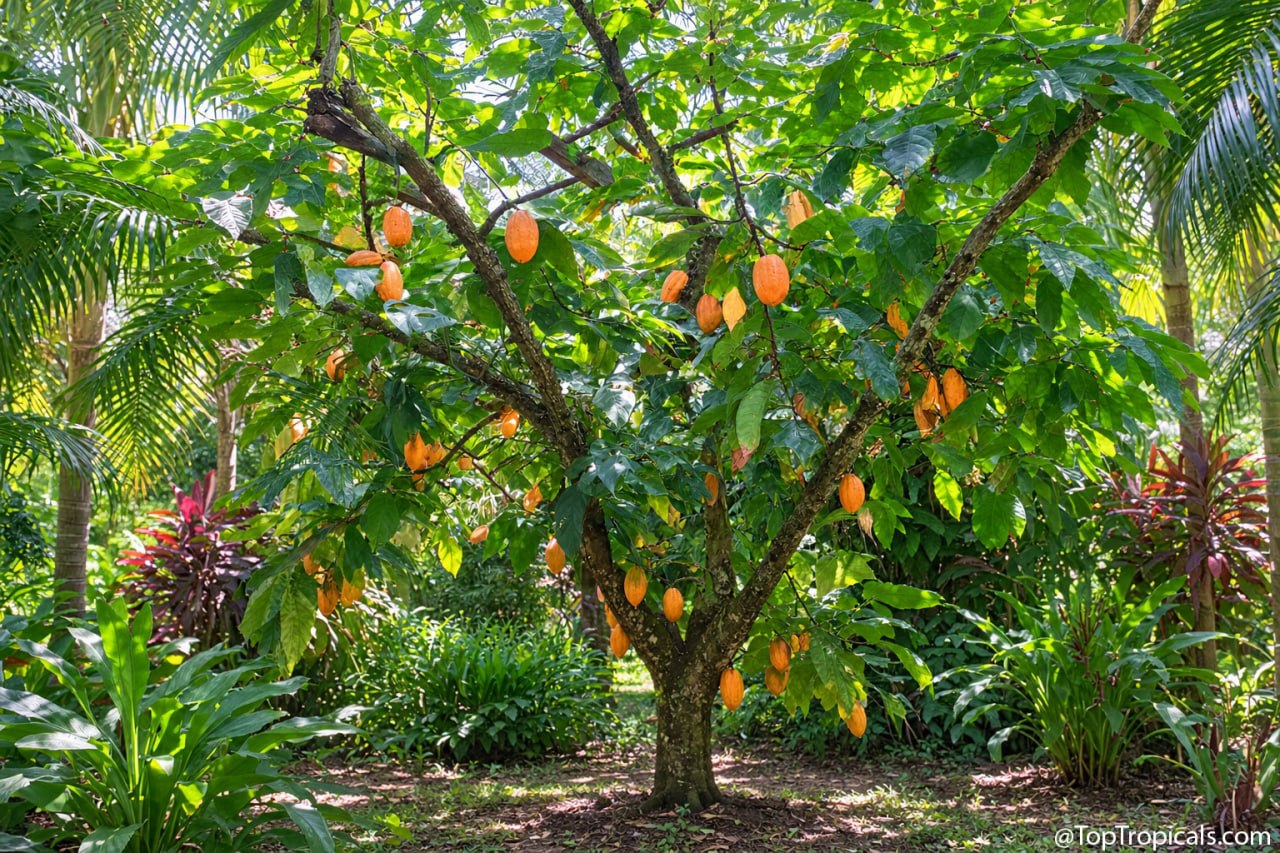
Coffee and Cacao are classic understory crops. Miracle Fruit (Synsepalum) also grows well in bright filtered light, producing berries that make sour foods taste sweet.
Randia, Bunchosia, and Neea offer less familiar fruiting possibilities; success depends on species and available light.
Bananas grow lush foliage in partial shade, but need more light for good harvests.
Even Peaches and Plums can benefit from relief from Florida's scorching afternoon sun - provided they still receive ample sunlight for fruiting.
Pipers include ornamental and useful plants adapted to filtered light; some provide edible leaves or spices, like Black Pepper, Lalot and Betel Leaf.
Gynura (Longevity Spinach) and Sauropus (Tropical Asparagus, Katuk) grow readily beneath open canopies, supplying edible greens.
Layer bold foliage beneath trees, add flowering shrubs and vines, and hang orchids or jungle cacti in brighter openings. Shade-tolerant doesn't mean darkness-loving: give each plant as much suitable light as you can.
You don't need full sun to grow a tropical paradise. Just the right plants!
🛒 Explore low-light tolerant plants for more inspiration
· Tropical paradise in the shade, Part 1: Making the most of limited sunshine
· Full Sun Isn't Always Best for Peach Trees - Especially in Florida
· When Is the Best Time to Water Your Plants?
· How much water is too much?
#How_to #Discover
🟢 Join 👉 TopTropicals
What to plant? Shade-tolerant tropical plants.
Not enough sunshine? You can still grow a tropical paradise with lush foliage, fragrant flowers, and even fruit! Here are our favorite plants for partial shade.
• 🌿 Big leaves, bold colors, instant jungle
Alocasias and Colocasias create dramatic tropical foliage; many varieties adapt to sun or shade. Macaranga produces enormous leaves, while Jatropha podagrica can develop surprisingly giant leaves in shade.
For year-round color, try Cordylines, Iresine, Eranthemums, Pseuderanthemums, and Graptophyllums, with foliage in pink, purple, burgundy, and variegated patterns.
Rainforest classics - Philodendrons, Monsteras, Anthuriums, and Calatheas - are natural choices for bright indirect light.
• 🌺 Flowers without full sun
Justicia, Barleria, purple Brunfelsias (Yesterday-Today-Tomorrow), Clerodendrums, Wrightia, and Serissa offer blooms in filtered light or morning sun.
Sclerochyton adds unusual blue flowers; Medinilla produces spectacular hanging clusters in humid, sheltered spots. Tibouchina, Plumbago, Hibiscus, and Azaleas tolerate partial shade but bloom best with some direct sun. Don't overlook the delicate, unusual flowers of Eucrosia lily.
• 🌸 Fragrance for shady patios
Arabian Jasmine (Jasminum sambac), especially Malichat, Mysore Mulli, Baby Duke, and Arabian Nights, is worth trying in bright filtered light.
White-blooming Brunfelsias perfume the garden, often most strongly in the evening.
Artabotrys offers wonderfully fragrant flowers, though brighter light encourages blooming.
Patchouli contributes aromatic foliage.
• 🌼 Vines that climb toward the light
Thunbergia, Hiptage, Solandra, Tecomanthe, Chonemorpha, and Mexican Flame Vine can grow in partial shade, especially when their stems reach sunlight above the canopy.
Clitoria (Butterfly Pea) produces vivid blue flowers, also used for colorful tea. A little morning sun helps these vines bloom more generously.
• 🌴 Gingers, orchids, and rainforest curiosities
Many Gingers flourish in filtered light.
Amorphophallus and Tacca bring wonderfully bizarre flowers to sheltered beds.
Ground Orchids suit bright, partially shaded locations.
Vanilla Orchids climb sheltered supports and tree trunks.
For hanging baskets, try Hoyas, Schlumbergera (Christmas Cactus), Epiphyllums, and other jungle cacti. Their flowers can be spectacular!
Nepenthes adds colorful insect-trapping pitchers, provided the light is bright enough.
• 🍒 Tropical fruit in filtered sunlight
Coffee and Cacao are classic understory crops. Miracle Fruit (Synsepalum) also grows well in bright filtered light, producing berries that make sour foods taste sweet.
Randia, Bunchosia, and Neea offer less familiar fruiting possibilities; success depends on species and available light.
Bananas grow lush foliage in partial shade, but need more light for good harvests.
Even Peaches and Plums can benefit from relief from Florida's scorching afternoon sun - provided they still receive ample sunlight for fruiting.
• Edibles for the food forest
Pipers include ornamental and useful plants adapted to filtered light; some provide edible leaves or spices, like Black Pepper, Lalot and Betel Leaf.
Gynura (Longevity Spinach) and Sauropus (Tropical Asparagus, Katuk) grow readily beneath open canopies, supplying edible greens.
• 👍 Make the most of your shade
Layer bold foliage beneath trees, add flowering shrubs and vines, and hang orchids or jungle cacti in brighter openings. Shade-tolerant doesn't mean darkness-loving: give each plant as much suitable light as you can.
You don't need full sun to grow a tropical paradise. Just the right plants!
🛒 Explore low-light tolerant plants for more inspiration
📚 Learn more
· Tropical paradise in the shade, Part 1: Making the most of limited sunshine
· Full Sun Isn't Always Best for Peach Trees - Especially in Florida
· When Is the Best Time to Water Your Plants?
· How much water is too much?
#How_to #Discover
🟢 Join 👉 TopTropicals
Date: 22 Oct 2026
Tropical paradise in the shade, Part 1:
🌳 Tropical paradise in the shade, Part 1:
Making the most of limited sunshine.
More sunshine, more flowers and fruit. Right?
Usually! But Florida's blazing summer sun can scorch leaves and overheat roots, while too little light limits growth and blooming.
What if your garden is shaded by trees, your patio is covered, or your tropicals spend winter indoors?
Can you still grow a tropical paradise? Absolutely! The secret is knowing your shade.
Bright filtered light: Sunlight passing through an open tree canopy or shade cloth. Excellent for many tropical plants, including flowering and fruiting species.
Partial shade: A few hours of direct sun, preferably morning sun, followed by shade during the hottest hours. Often ideal for flowering tropicals in Florida.
Bright indirect light: Plenty of daylight without direct sun, as on a covered patio or near a bright window. Great for foliage and some flowering plants.
Deep shade: Dense canopy, dark corners, or areas between buildings. Mostly suited to foliage plants. Don't expect abundant flowers or fruit.
Even a shaded outdoor garden often receives much more light than a bright-looking indoor room.
You don't need a light meter to evaluate your garden.
On a sunny day, look at the shadow your hand casts on the ground:
Sharp, dark shadow: Strong direct sunlight.
Soft, blurry shadow: Filtered light or light shade.
Barely visible shadow: Deep shade or weak indirect light.
Check the same spot in the morning, at noon, and in the afternoon. Light changes throughout the day and across seasons.
Best trick: Count the hours of direct morning sunshine. Even 2-4 hours can make a big difference for many flowering tropicals.
Tropical forests grow in layers. Philodendrons and Aglaonemas thrive beneath trees, Coffee and Cacao tolerate filtered light, while vines climb toward the sun.
But shade-tolerant doesn't mean darkness-loving. Even understory plants often grow and bloom better with brighter light.
A plant may grow lush foliage in shade but never bloom. Less light means less energy for flowers and fruit.
Rule of thumb: More light means more bloom, bigger harvests. But not necessarily full sun! Morning sun and filtered afternoon light often work great.
Watch how sunlight moves through your garden. Even shady spots may get valuable morning sun.
Save brighter spots for flowers and fruit; place foliage plants in deeper shade.
Create jungle layers with shrubs, vines, and groundcovers.
Thin tree canopies to let in filtered light.
Grow vertically: let vines climb toward sunshine.
Move containers as seasonal light changes.
Water less: shaded soil stays moist longer.
Don't overfertilize: fertilizer can't replace sunlight.
Allow airflow to prevent fungal problems in damp shade.
🌳 Growing indoors?
Indoor light drops sharply away from windows. Choose the brightest spot or add grow lights.
Overwintering tropicals? Just keep them healthy until spring. Slower growth is normal. Reduce watering and feeding, and avoid cold window glass.
In Florida, afternoon shade protects leaves from scorching, keeps roots cooler, and reduces water stress. Tree canopies may even offer some frost and wind protection.
The secret is balance: enough light for healthy growth without excessive sun.
Don't fight your garden's conditions. Choose plants that make the most of them!
👉 Coming next: Part 2: What to plant: tropical foliage, fragrant flowers, vines, and even fruit trees that grow in filtered light.
🛒 Explore shade-tolerant tropical plants
· Tropical paradise in the shade, Part 2: What to plant? Shade-tolerant tropical plants.
· Full Sun Isn't Always Best for Peach Trees - Especially in Florida
· When Is the Best Time to Water Your Plants?
· How much water is too much?
#How_to #Discover
🟢 Join 👉 TopTropicals
Making the most of limited sunshine.
More sunshine, more flowers and fruit. Right?
Usually! But Florida's blazing summer sun can scorch leaves and overheat roots, while too little light limits growth and blooming.
What if your garden is shaded by trees, your patio is covered, or your tropicals spend winter indoors?
Can you still grow a tropical paradise? Absolutely! The secret is knowing your shade.
🌳 Not all shade is created equal
Bright filtered light: Sunlight passing through an open tree canopy or shade cloth. Excellent for many tropical plants, including flowering and fruiting species.
Partial shade: A few hours of direct sun, preferably morning sun, followed by shade during the hottest hours. Often ideal for flowering tropicals in Florida.
Bright indirect light: Plenty of daylight without direct sun, as on a covered patio or near a bright window. Great for foliage and some flowering plants.
Deep shade: Dense canopy, dark corners, or areas between buildings. Mostly suited to foliage plants. Don't expect abundant flowers or fruit.
Even a shaded outdoor garden often receives much more light than a bright-looking indoor room.
🔎 Quick shade test: Look at the shadows!
You don't need a light meter to evaluate your garden.
On a sunny day, look at the shadow your hand casts on the ground:
Sharp, dark shadow: Strong direct sunlight.
Soft, blurry shadow: Filtered light or light shade.
Barely visible shadow: Deep shade or weak indirect light.
Check the same spot in the morning, at noon, and in the afternoon. Light changes throughout the day and across seasons.
Best trick: Count the hours of direct morning sunshine. Even 2-4 hours can make a big difference for many flowering tropicals.
🌳 Learn from the rainforest
Tropical forests grow in layers. Philodendrons and Aglaonemas thrive beneath trees, Coffee and Cacao tolerate filtered light, while vines climb toward the sun.
But shade-tolerant doesn't mean darkness-loving. Even understory plants often grow and bloom better with brighter light.
🌳 Growing isn't the same as flowering or fruiting
A plant may grow lush foliage in shade but never bloom. Less light means less energy for flowers and fruit.
Rule of thumb: More light means more bloom, bigger harvests. But not necessarily full sun! Morning sun and filtered afternoon light often work great.
🌳 Work with your shade, not against it
Watch how sunlight moves through your garden. Even shady spots may get valuable morning sun.
Save brighter spots for flowers and fruit; place foliage plants in deeper shade.
Create jungle layers with shrubs, vines, and groundcovers.
Thin tree canopies to let in filtered light.
Grow vertically: let vines climb toward sunshine.
Move containers as seasonal light changes.
Water less: shaded soil stays moist longer.
Don't overfertilize: fertilizer can't replace sunlight.
Allow airflow to prevent fungal problems in damp shade.
🌳 Growing indoors?
Indoor light drops sharply away from windows. Choose the brightest spot or add grow lights.
Overwintering tropicals? Just keep them healthy until spring. Slower growth is normal. Reduce watering and feeding, and avoid cold window glass.
🌳 A little shade can be a blessing
In Florida, afternoon shade protects leaves from scorching, keeps roots cooler, and reduces water stress. Tree canopies may even offer some frost and wind protection.
The secret is balance: enough light for healthy growth without excessive sun.
Don't fight your garden's conditions. Choose plants that make the most of them!
👉 Coming next: Part 2: What to plant: tropical foliage, fragrant flowers, vines, and even fruit trees that grow in filtered light.
🛒 Explore shade-tolerant tropical plants
📚 Learn more
· Tropical paradise in the shade, Part 2: What to plant? Shade-tolerant tropical plants.
· Full Sun Isn't Always Best for Peach Trees - Especially in Florida
· When Is the Best Time to Water Your Plants?
· How much water is too much?
#How_to #Discover
🟢 Join 👉 TopTropicals
Date: 22 Oct 2026
Tropical paradise in the shade, Part 1:
🌳 Tropical paradise in the shade, Part 1:
Making the most of limited sunshine.
More sunshine, more flowers and fruit. Right?
Usually! But Florida's blazing summer sun can scorch leaves and overheat roots, while too little light limits growth and blooming.
What if your garden is shaded by trees, your patio is covered, or your tropicals spend winter indoors?
Can you still grow a tropical paradise? Absolutely! The secret is knowing your shade.
Bright filtered light: Sunlight passing through an open tree canopy or shade cloth. Excellent for many tropical plants, including flowering and fruiting species.
Partial shade: A few hours of direct sun, preferably morning sun, followed by shade during the hottest hours. Often ideal for flowering tropicals in Florida.
Bright indirect light: Plenty of daylight without direct sun, as on a covered patio or near a bright window. Great for foliage and some flowering plants.
Deep shade: Dense canopy, dark corners, or areas between buildings. Mostly suited to foliage plants. Don't expect abundant flowers or fruit.
Even a shaded outdoor garden often receives much more light than a bright-looking indoor room.
You don't need a light meter to evaluate your garden.
On a sunny day, look at the shadow your hand casts on the ground:
Sharp, dark shadow: Strong direct sunlight.
Soft, blurry shadow: Filtered light or light shade.
Barely visible shadow: Deep shade or weak indirect light.
Check the same spot in the morning, at noon, and in the afternoon. Light changes throughout the day and across seasons.
Best trick: Count the hours of direct morning sunshine. Even 2-4 hours can make a big difference for many flowering tropicals.
Tropical forests grow in layers. Philodendrons and Aglaonemas thrive beneath trees, Coffee and Cacao tolerate filtered light, while vines climb toward the sun.
But shade-tolerant doesn't mean darkness-loving. Even understory plants often grow and bloom better with brighter light.
A plant may grow lush foliage in shade but never bloom. Less light means less energy for flowers and fruit.
Rule of thumb: More light means more bloom, bigger harvests. But not necessarily full sun! Morning sun and filtered afternoon light often work great.
Watch how sunlight moves through your garden. Even shady spots may get valuable morning sun.
Save brighter spots for flowers and fruit; place foliage plants in deeper shade.
Create jungle layers with shrubs, vines, and groundcovers.
Thin tree canopies to let in filtered light.
Grow vertically: let vines climb toward sunshine.
Move containers as seasonal light changes.
Water less: shaded soil stays moist longer.
Don't overfertilize: fertilizer can't replace sunlight.
Allow airflow to prevent fungal problems in damp shade.
🌳 Growing indoors?
Indoor light drops sharply away from windows. Choose the brightest spot or add grow lights.
Overwintering tropicals? Just keep them healthy until spring. Slower growth is normal. Reduce watering and feeding, and avoid cold window glass.
In Florida, afternoon shade protects leaves from scorching, keeps roots cooler, and reduces water stress. Tree canopies may even offer some frost and wind protection.
The secret is balance: enough light for healthy growth without excessive sun.
Don't fight your garden's conditions. Choose plants that make the most of them!
👉 Coming next: Part 2: What to plant: tropical foliage, fragrant flowers, vines, and even fruit trees that grow in filtered light.
🛒 Explore shade-tolerant tropical plants
· Tropical paradise in the shade, Part 2: What to plant? Shade-tolerant tropical plants.
· Full Sun Isn't Always Best for Peach Trees - Especially in Florida
· When Is the Best Time to Water Your Plants?
· How much water is too much?
#How_to #Discover
🟢 Join 👉 TopTropicals
Making the most of limited sunshine.
More sunshine, more flowers and fruit. Right?
Usually! But Florida's blazing summer sun can scorch leaves and overheat roots, while too little light limits growth and blooming.
What if your garden is shaded by trees, your patio is covered, or your tropicals spend winter indoors?
Can you still grow a tropical paradise? Absolutely! The secret is knowing your shade.
🌳 Not all shade is created equal
Bright filtered light: Sunlight passing through an open tree canopy or shade cloth. Excellent for many tropical plants, including flowering and fruiting species.
Partial shade: A few hours of direct sun, preferably morning sun, followed by shade during the hottest hours. Often ideal for flowering tropicals in Florida.
Bright indirect light: Plenty of daylight without direct sun, as on a covered patio or near a bright window. Great for foliage and some flowering plants.
Deep shade: Dense canopy, dark corners, or areas between buildings. Mostly suited to foliage plants. Don't expect abundant flowers or fruit.
Even a shaded outdoor garden often receives much more light than a bright-looking indoor room.
🔎 Quick shade test: Look at the shadows!
You don't need a light meter to evaluate your garden.
On a sunny day, look at the shadow your hand casts on the ground:
Sharp, dark shadow: Strong direct sunlight.
Soft, blurry shadow: Filtered light or light shade.
Barely visible shadow: Deep shade or weak indirect light.
Check the same spot in the morning, at noon, and in the afternoon. Light changes throughout the day and across seasons.
Best trick: Count the hours of direct morning sunshine. Even 2-4 hours can make a big difference for many flowering tropicals.
🌳 Learn from the rainforest
Tropical forests grow in layers. Philodendrons and Aglaonemas thrive beneath trees, Coffee and Cacao tolerate filtered light, while vines climb toward the sun.
But shade-tolerant doesn't mean darkness-loving. Even understory plants often grow and bloom better with brighter light.
🌳 Growing isn't the same as flowering or fruiting
A plant may grow lush foliage in shade but never bloom. Less light means less energy for flowers and fruit.
Rule of thumb: More light means more bloom, bigger harvests. But not necessarily full sun! Morning sun and filtered afternoon light often work great.
🌳 Work with your shade, not against it
Watch how sunlight moves through your garden. Even shady spots may get valuable morning sun.
Save brighter spots for flowers and fruit; place foliage plants in deeper shade.
Create jungle layers with shrubs, vines, and groundcovers.
Thin tree canopies to let in filtered light.
Grow vertically: let vines climb toward sunshine.
Move containers as seasonal light changes.
Water less: shaded soil stays moist longer.
Don't overfertilize: fertilizer can't replace sunlight.
Allow airflow to prevent fungal problems in damp shade.
🌳 Growing indoors?
Indoor light drops sharply away from windows. Choose the brightest spot or add grow lights.
Overwintering tropicals? Just keep them healthy until spring. Slower growth is normal. Reduce watering and feeding, and avoid cold window glass.
🌳 A little shade can be a blessing
In Florida, afternoon shade protects leaves from scorching, keeps roots cooler, and reduces water stress. Tree canopies may even offer some frost and wind protection.
The secret is balance: enough light for healthy growth without excessive sun.
Don't fight your garden's conditions. Choose plants that make the most of them!
👉 Coming next: Part 2: What to plant: tropical foliage, fragrant flowers, vines, and even fruit trees that grow in filtered light.
🛒 Explore shade-tolerant tropical plants
📚 Learn more
· Tropical paradise in the shade, Part 2: What to plant? Shade-tolerant tropical plants.
· Full Sun Isn't Always Best for Peach Trees - Especially in Florida
· When Is the Best Time to Water Your Plants?
· How much water is too much?
#How_to #Discover
🟢 Join 👉 TopTropicals
Date: 21 Oct 2026
Daily Cat Lesson: Pets dont know theyre disabled




🐾 Daily Cat Lesson: Pets don't know they're disabled
Pets don't know they're disabled. They don't feel sorry for themselves or worry about what they're missing. They simply adapt and enjoy life with whatever equipment they have!
A missing eye, a few teeth, or even three legs instead of four? No big deal!
Cats are remarkably good at adjusting to physical limitations, using their other senses and abilities to compensate. They don't dwell on what they've lost. They're too busy being cats!
🐾 Daily Dose of Cat: Meet Marie the Pirate! 🏴☠️
Remember our story about the box of kittens with a one-eyed mama?
Well, we owe you a correction! The tiny "mama" turned out to be just another kitten.
Yes, apparently it was just a box of miscellaneous cats!
Marie is is about 8 months old, and her vet recently discovered that she was actually born with only one eye!
Marie moved to our B-Farm, quickly made friends with Simon and 12 other cats, got spayed, and is now happily exploring her new catio.
One eye, zero worries, and a whole new life!
Marie will be reporting from her favorite Catio soon. Stay with us for more pirate adventures!
🐈📸 Top Tropicals rescued cat One-Eye Marie found her new home and new friend - Toothless Simon at PeopleCats.Garden.
📚 Learn more:
Orphaned kittens finding the Right Door
Simon "Walkie-Talkie" - the cat who made the right decision
🐈 Stay with us for your #DailyDoseOfCat!
#DailyCatLesson #PeopleCats
🟢 Join 👉 TopTropicals
Date: 21 Oct 2026
9 Exotic Mango Recipes From Around the World
🍴 9 Exotic Mango Recipes From Around the World
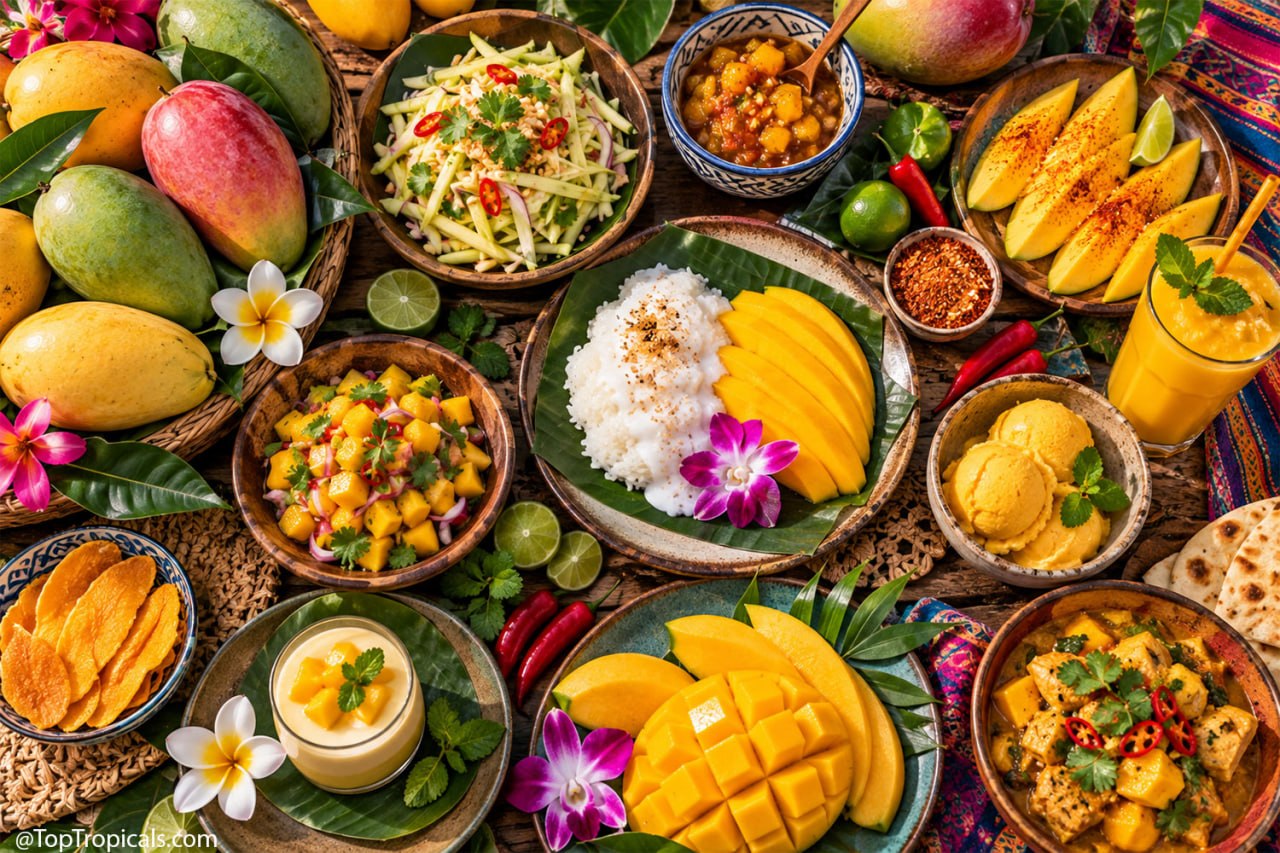
Got too many mangoes? Excellent problem to have. Here are nine delicious ways to take them around the world without leaving the kitchen.
- 🥭 1. Thai Mango Sticky Rice
Cook sticky rice and stir in warm coconut milk with a little sugar and salt. Serve with thick slices of ripe mango and drizzle with more coconut cream.
The trick: Use your sweetest, softest mango. Nam Doc Mai is perfect. - 🥭 2. Spicy Green Mango Salad
Julienne a firm green mango and toss with red onion, cilantro, fresh chili, lime juice and a splash of fish sauce. Add crushed peanuts for crunch.
Sweet, sour, salty, spicy and crunchy all at once. - 🥭 3. Indian Mango Chutney
Simmer diced mango with ginger, vinegar, brown sugar, chili and warm spices until thick and glossy.
Serve with curry, grilled chicken, cheese or simply attack the jar with a spoon. - 🥭 4. Mexican Chili-Lime Mango
Cut ripe mango into spears. Squeeze fresh lime over them and sprinkle generously with Tajín or chili-lime seasoning.
That's it. Three ingredients and somehow mango tastes completely different. - 🥭 5. Tropical Mango Salsa
Mix diced mango with red onion, cilantro, jalapeño and lime juice. Add a pinch of salt and let it sit for 10 minutes.
Fantastic with grilled fish, shrimp, chicken or tortilla chips. - 🥭 6. Mango Lassi
Blend ripe mango with plain yogurt, a splash of milk, cardamom and a little honey. Add ice and blend until thick and frothy.
Breakfast, dessert or emergency mango disposal system. - 🥭 7. Homemade Mango Sorbet
Blend ripe mango with lime juice and a little sugar or honey. Freeze, stirring a couple of times as it firms up.
For extra tropical flavor, replace a little of the mango with coconut milk. - 🥭 8. Mango Curry
Cook onion, garlic and ginger with curry spices. Add coconut milk, chunks of mango and chicken or vegetables and gently simmer.
Add the mango toward the end so you still get juicy pieces instead of mango disappearing into the sauce. - 🥭 9. Chili-Mango Dried Slices
Slice mango thinly, sprinkle lightly with lime juice and chili, then dry in a dehydrator or very low oven until chewy.
Make plenty. Somehow these disappear much faster than fresh mangoes. - 🥭 One Mango, Nine Adventures
Ripe, green, spicy, creamy, frozen, savory or sweet: mango is one of those rare fruits that can do almost anything.
The hardest part may be deciding which recipe gets the next mango.
🛒 Shop mango varieties
📚 Learn more:
Mango Tree - Mangifera indica - in Plant Encyclopedia
Mango Traditions From Around the World
Best Mango Varieties for Florida: It is Not Just About Taste
Early, Midseason & Late Mangoes: How to Get Fruit for Months
6 Best-Tasting Mango Varieties
6 Best Thai and Southeast Asian Mango Varieties
5 Best Indian Mango Varieties and Their Flavors
5 Best Dwarf Mango Trees for Small Yards
5 Best Mango Trees for Beginners
#Mango_Rainbow - varieties you should try
#Food_Forest #Recipes #Discover #Mango


