Garden Blog - Top Tropicals
Date: 19 Sep 2026
What to Do With a Bignay Harvest: Juice, Jam
🍷 What to Do With a Bignay Harvest: Juice, Jam & Homemade Liqueur
So your Bignay tree is suddenly covered with hundreds of red, purple and black berries.
Now what?
That's exactly what happened to me. I asked our friend Murray Corman who gave us the tree what to do with all that fruit.
His answer was short: "MAKE WINE!"
So I started researching - and experimenting.
Bignay (Antidesma bunius) has a tart flavor, abundant juice and gorgeous deep-red color, making it perfect for drinks, preserves, wine and liqueur.
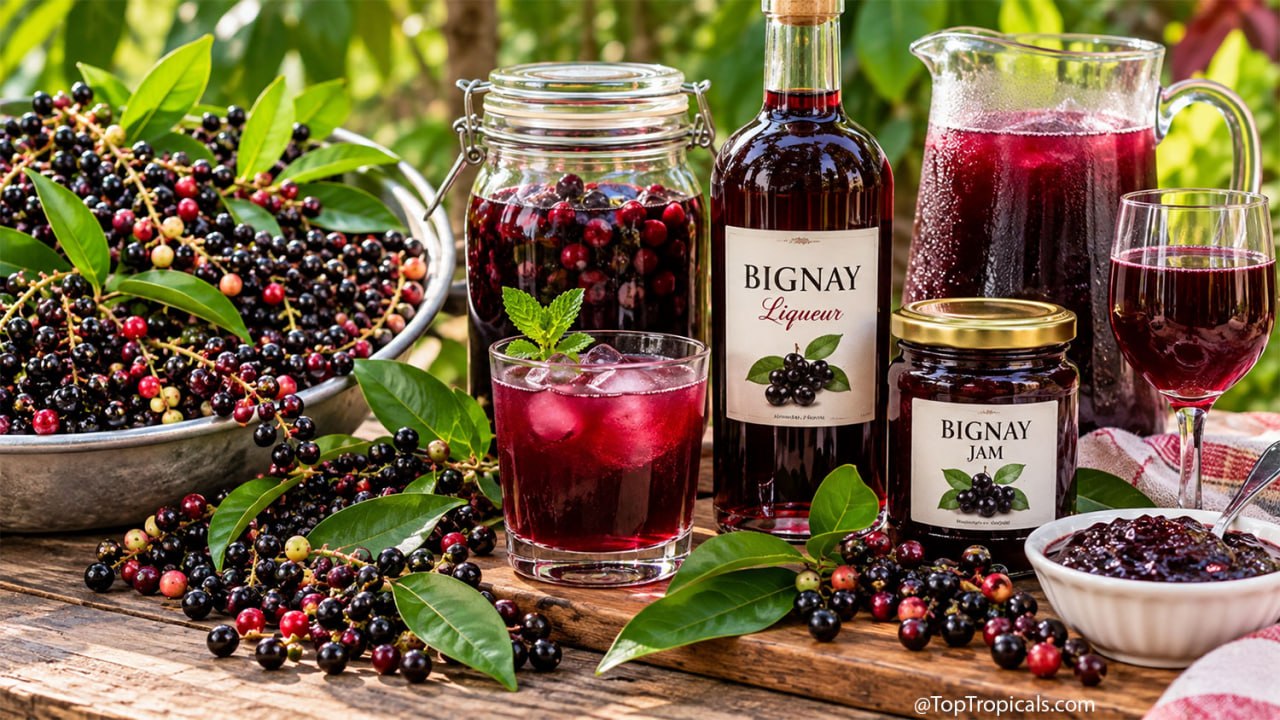
🍷 Easy Bignay juice
Use fully ripe, dark berries.
Put berries in a saucepan with just enough water to prevent scorching.
Simmer until soft and juicy.
Mash lightly and strain through a fine sieve or cheesecloth.
Sweeten with sugar or honey to taste.
Serve chilled over ice, dilute with sparkling water for a Bignay spritzer, or freeze the concentrate for later.
🍷 Homemade Bignay liqueur
This was my favorite experiment.
Fill a clean jar halfway with ripe berries and lightly bruise them without crushing the seeds. Cover completely with vodka or another neutral spirit.
Add ½–1 cup sugar per 2 cups of berries as a starting point. Keep the closed jar in a cool, dark place for several weeks, gently turning occasionally.
Strain and adjust sweetness if needed.
The result is a beautiful jewel-red, sweet-tart Bignay liqueur. Serve over ice, with sparkling water or in cocktails.
🍷 Bignay jam & jelly
Bignay's tart flavor and intense color are also perfect for preserves.
Cook ripe berries until soft. Mash and strain for jelly, or keep more pulp for jam. Add sugar and pectin according to your preferred recipe.
The result is a gorgeous dark-ruby preserve for toast, biscuits or soft cheese.
🍷 One tree, hundreds of experiments
Bignay can also become syrup or wine, and ripe berries can be frozen for later - handy because they don't all ripen at once.
That's what I love about unusual fruit trees.
Sometimes you plant something simply because you've never grown it before.
A couple of years later, you're standing in the kitchen with buckets of berries, making your own liqueur.
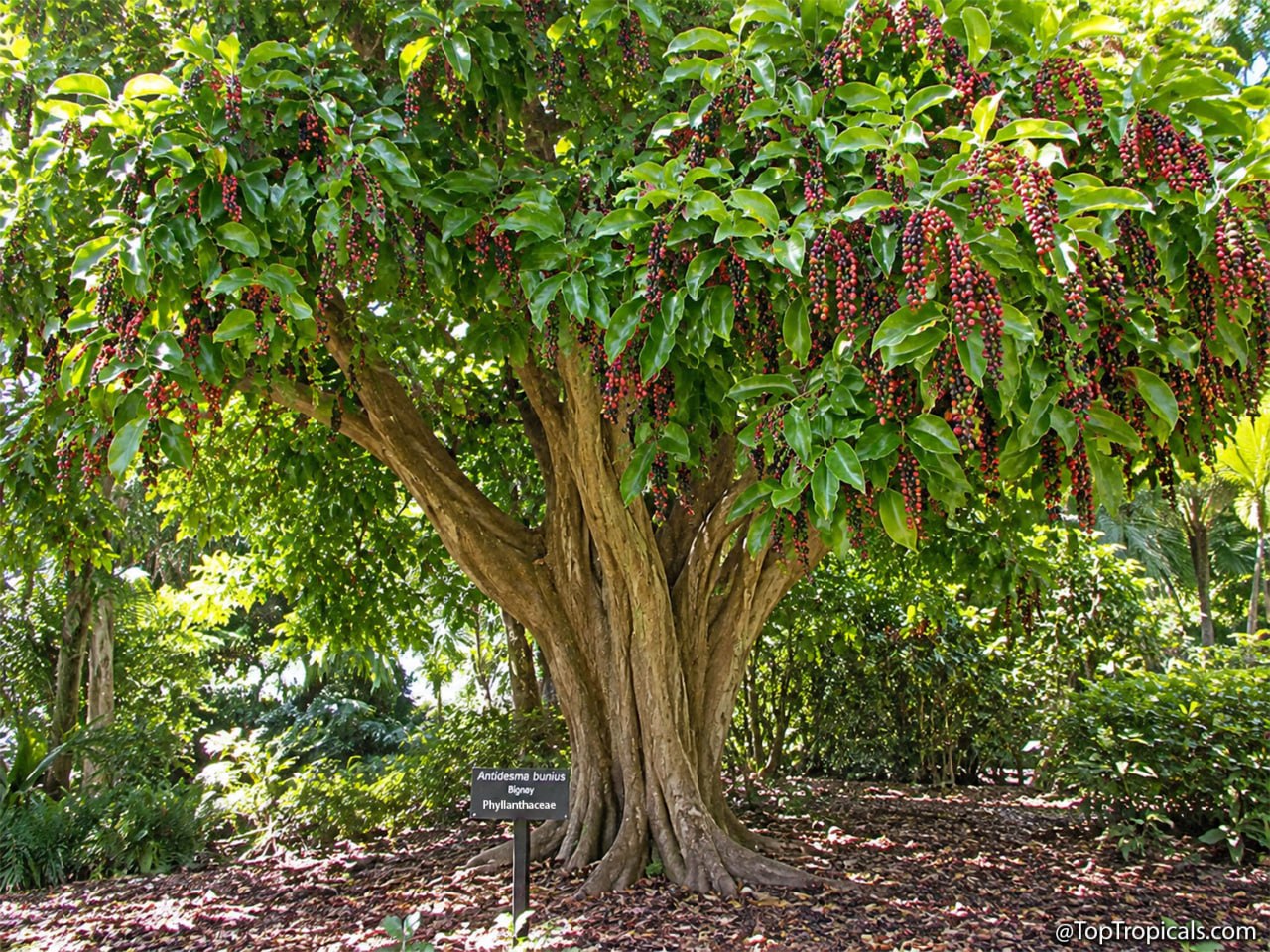
📸 In the photo: The tree that started our Bignay story!
This is the famous old Antidesma bunius at Fairchild Tropical Botanic Garden. We took this picture in 2005. Years ago, Murray Corman collected seeds from this very tree, grew his mother plant, and our Bignay came from his - a direct descendant of this remarkable Florida tree.
🛒 Grow Your Own Bignay Harvest
📚 Learn more:
• Antidesma bunius in Plant Encyclopedia
• Bignay: the rare fruit tree that gave me more berries than I knew what to do with
#Food_Forest #Recipes #Discover


Date: 19 Sep 2026
Bignay: the rare fruit tree that gave me more berries than I knew what to do with
Bignay: the rare fruit tree that gave me more berries than I knew what to do with
I walked up to our Bignay tree and couldn't believe my eyes.
The branches were weighted down with long, cascading clusters of vibrant red, deep purple and almost-black berries. Our Antidesma bunius, given to us by our friend Murray Corman, had only been in the ground for about two years - and suddenly, we had a massive harvest on our hands!
It seemed like the berries had ripened almost overnight. I hadn't even noticed them coming, which made the discovery even more exciting.
Of course, I asked Murray what I was supposed to do with all this fruit. His answer was short: "MAKE WINE!"
So I started researching - and that's when things got interesting.
Meet Bignay: The Gem of Southeast Asia
Bignay (Antidesma bunius) is an unusual fruit tree native to Malaysia, Southeast Asia. It is especially popular in the Philippines, where its berries are prized for making fresh juices, preserves, and traditional fruit wines.
What makes the tree so striking is how the fruit ripens. The berries hang in dense, grape-like strands, but they don't ripen all at once. A single cluster displays a gradient of color - from lime green and bright coral red to deep violet and glossy black.
For fresh eating: Wait for the berries to turn completely black. Unripe red berries are sharply acidic, but fully ripe black fruits deliver a complex, pleasantly sweet-tart flavor.
Bignay at a glance and basic care essentials
• Botanical Name: Antidesma bunius
• Flavor Profile: Sweet-tart, rich, similar to cranberry-pomegranate
• Cold Hardiness: Briefly tolerates upper 20s F once established
• Container Friendly: Thrives and fruits in big containers
• Light & Soil: Plant in full sun to partial shade with fertile, well-draining soil mix.
• Watering: Water regularly until established; mature trees are drought tolerant.
An Astonishingly Heavy Yield
The sheer volume of fruit is what catches most growers off guard.
Our tree isn't huge - it has stayed naturally compact and bushy. Yet once it decided to produce, the yield was incredible.
Historically, Bignay is famous for this heavy production: one legendary Florida tree at the home of famous plant explorer David Fairchild famously produced 22 bushels of berries and 72 gallons of juice in a single season.
Now that is a high-yield fruit tree.
And here is the best part: our tree is a direct descendant of that famous Fairchild tree. Murray's mother plant was grown from seeds he personally collected from it - and our tree came from his.
A Perfect Choice for Container Gardeners
While Bignay can reach substantial heights in tropical rainforests, it responds exceptionally well to pruning.
It fruits readily in large containers, making it an ideal choice for rare fruit collectors who want unusual edibles without sacrificing space to another giant mango or avocado tree.
What to Do With a Bignay Harvest
Its intense color and tart flavor are particularly good for drinks. In Southeast Asia, Bignay is traditionally used for juice, syrup and wine, and the fruit can also be fermented. So after my harvest, I experimented...
Pro tip: Crushing the ripe berries yields a rich, ruby-red juice. It will stain your fingers, so consider yourself warned!
Bignay isn't merely an obscure Asian fruit that happens to grow in Florida - it has a neat Florida tropical-fruit history, and Fairchild Tropical Botanic Garden still describes it as a Florida legacy fruit. This fruit is about abundance, not the individual berry. You probably don't know this fruit - but look what ONE little tree can produce!
👉 Coming up next: Bignay recipes
🛒 Grow Your Own Bignay Harvest
📚 Learn more:
• Antidesma bunius in Plant Encyclopedia
• What to do with a Bignay harvest: juice, jam and homemade liqueur
#Food_Forest #Recipes #Discover
Date: 18 Sep 2026
Daily Cat Lesson: Why Are Orange Cats So Crazy?
🐾 Daily Cat Lesson: Why Are Orange Cats So Crazy?
Orange cats have a reputation.
Friendly. Fearless. Loud. Social. And very good at sitting there looking like perfect little angels 😇 who have never caused trouble in their lives. Until...
The zoomies hit - sudden explosions of energy when a normal cat turns into a furry race car and tears through the house for no apparent reason.
In some languages, there’s a perfect word for it: tygydyk — the sound of little paws galloping through the house: tygy-dyk, tygy-dyk, tygy-dyk!
🐾 Is there actually a redhead gene?
Yes - sort of! 😎
The gene that makes a cat orange is carried on the X chromosome. That explains a famous orange-cat fact:
🐾 About 80% of orange cats are male.
Males have only one X, so one orange version is enough.
Females have two X chromosomes and usually need the orange version on both to be fully orange. With one orange and one non-orange X, they usually become tortoiseshell or calico!
🐾 Does the "orange" gene also cause legendary Orange Cat Behavior™?
Probably not. While some studies have found associations between coat color and behavior, there is no established “crazy orange cat gene.”
Personality comes from genetics, upbringing, environment - and the individual cat.
So science can explain why your cat is orange.
Why he suddenly goes tygy-dyk tygy-dyk tygy-dyk across the house at 3 AM, attacks a cardboard box and falls into the water bowl?
Science still has work to do.
🐈📸 Top Tropicals rescued cats Bob the Redhead and James Coconuts at PeopleCats.Garden.
🐈 Stay with us for your Daily Dose of Cat! #DailyCatLesson #PeopleCats
🟢 Join 👉 TopTropicals
Date: 18 Sep 2026
Ground Orchids 101: How to Grow a Garden Full of Flowers
🌸 Ground Orchids 101: How to Grow a Garden Full of Flowers
Ground orchids are some of the easiest and most rewarding flowers for a tropical garden.
Spathoglottis grows in regular garden soil or potting mix, takes sun or shade, doesn't mind Florida's brutal summer heat, and can bloom nearly year-round. Not many flowering plants, even tropical ones, can check all those boxes.
And look at these colors! Purple, pink, yellow, orange, white, lavender... Plant several together and turn an ordinary bed into an orchid garden.
Here is what we've learned about keeping them happy.
· 🌤 Sun or shade?
Both work.
Bright filtered light or partial shade is excellent, especially in Florida. Morning sun is great. More light generally means more flowers, but strong afternoon sun can scorch plants accustomed to shade.
And ground orchids don't mind our summer heat. Even when many tropical plants struggle through our hottest months, they usually keep growing and flowering.
Lots of leaves but few flowers? Try more light.
Bleached or burned leaves? Give them more shade.
· 🌿 Yes, plant them in soil
Unlike epiphytic orchids that grow on trees, Spathoglottis is a terrestrial orchid. Its roots grow in the ground.
Regular garden soil or loose potting mix works. The important part is drainage. Ground orchids like moisture, but don't want to sit in water.
Don't plant too deep. Keep the crown and pseudobulbs at or slightly above soil level.
· 💦 How much water?
Water regularly while establishing and during hot, dry weather, then let the upper soil begin to dry before watering again.
During Florida's rainy season, Mother Nature may handle most of this for you.
The biggest mistake is keeping the roots and crown constantly soggy.
· 🌸 Feed them for more flowers
Ground orchids respond well to feeding during active growth. A controlled-release fertilizer Green Magic makes this easy. Sunshine Orchidasm liquid plant food is safe to use year around with every watering.
You're feeding today's flowers and the new growth and pseudobulbs that produce tomorrow's flower spikes.
· ✂️ What about old flowers?
When a flower spike is finished, cut it near the base. Remove old brown leaves as needed.
That's about all the pruning required.
· 🌱 Turn one plant into many
A ground orchid gradually develops into a clump as new pseudobulbs form.
Once the clump gets large, dig it up and divide it, making sure each section has healthy roots and pseudobulbs.
Replant them around the garden. That's how a few ground orchids can eventually become a whole flowering border.
· Protect them from freezes
Ground orchids are tropical. Occasional light frost usually doesn't do much damage, but hard freezes can damage them, so gardeners in colder areas can grow them in containers and move them to protection when necessary. In warm climates, they make excellent perennial garden plants.
· 🌈 Our favorite way to grow Ground Orchids
Don't plant just one.
Mix several colors along a walkway, under palms, around a patio or in a garden bed. Let the clumps grow, divide them, and spread them around.
Regular soil. Sun or shade. Pots or garden beds. Flowers almost all year.
For the amount of color they give us compared with the work they require, ground orchids are hard to beat.
· 📌 Ground Orchid 101: Save This!
Light: Sun to partial shade; best flowering with plenty of bright light
Soil: Regular garden soil or potting mix; good drainage is essential
Water: Keep evenly moist, never constantly soggy
Fertilizer: Slow-release fertilizer during active growth
Temperature: Protect from hard freeze
Height: Usually 1–2 ft; flower spikes can rise higher
Bloom season: Nearly year-round in warm climates
Propagation: Divide established clumps and replant the pseudobulbs
🛒 Shop Ground Orchids
📚 Learn more:


· Spathoglottis plicata in Plant Encyclopedia
· The prettiest flower for shade
· Ground orchids: all-summer colors
· Why do we love Ground Orchids
#Container_Garden #How_to #Shade_Garden #Discover
🟢 Join 👉 TopTropicals
Date: 18 Sep 2026
Beyond Basil: 6 Tropical Edibles You've Probably Never Tried
By Tatiana Anderson, Plant Expert, Top Tropicals

Smokey: That is a donut in a leaf.
Sunshine: Exactly. Tropical fusion.
Smokey: Please stay out of the kitchen.

Most herb gardens have the same few plants: basil, parsley, mint, and maybe a pot of lettuce. Keep your basil. Just give it some more interesting neighbors.
You can buy basil at Home Depot. Fresh la lot, katuk, betel leaf, or black pepper leaves are another story. You won't usually find them at an ordinary garden center, and Asian groceries carry them only now and then, often wilted. The easiest way to get them is to grow them.
Which One First?
You don't need all six. Pick the one that fits your yard.
- For a spinach substitute, grow katuk.
- Got a shady spot under a tree? La lot will fill it.
- For a single pot on the porch, grow longevity spinach.
- For bold flavor and a trellis to cover, grow betel leaf.
- For peppercorns you picked yourself, try black pepper.
- For exotic tea with health benefits, plant insulin ginger.
🍃 1. Katuk (Sauropus androgynus)
Also called Tropical Asparagus or Sayur Manis
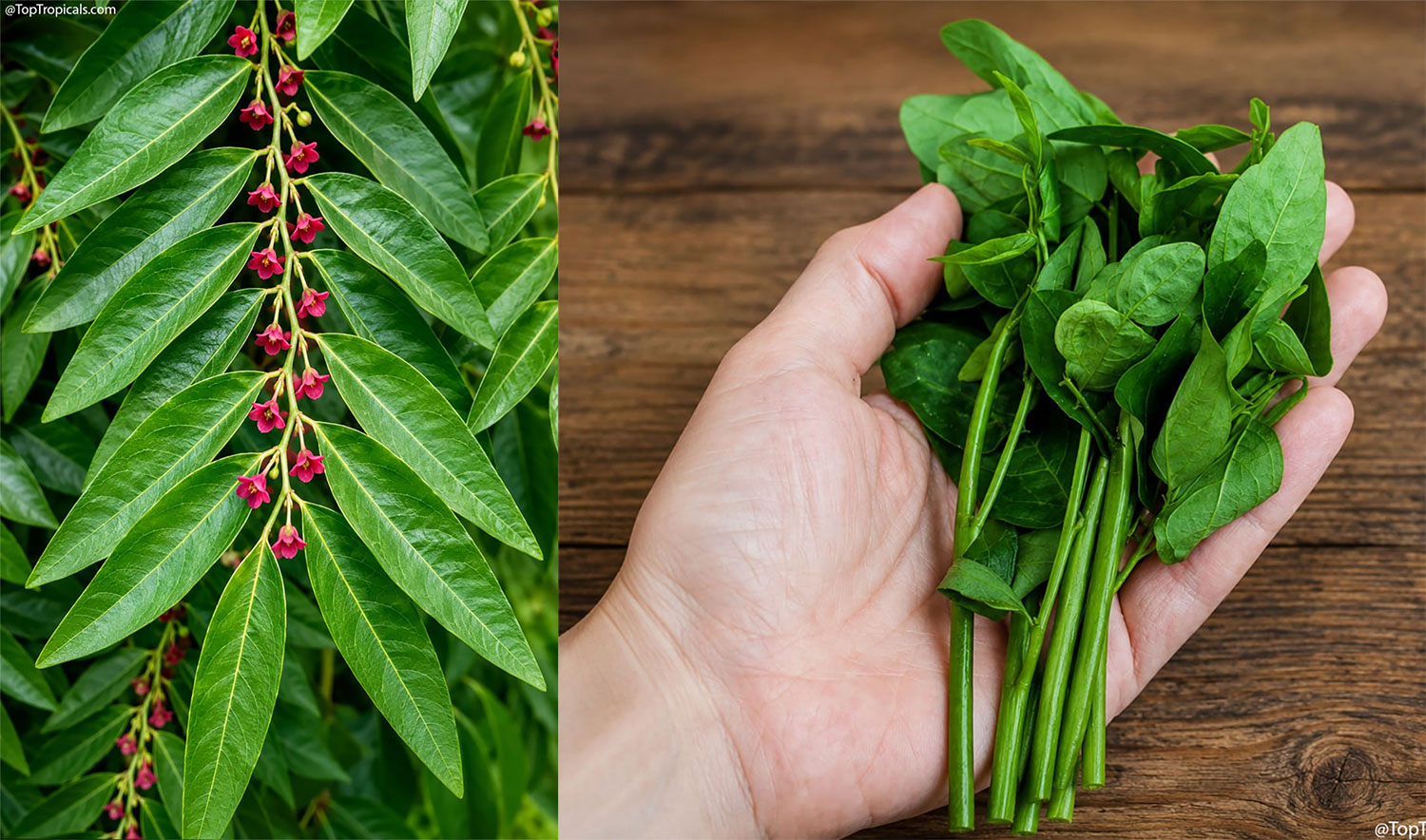
If someone in your house refuses to eat "weird vegetables," start with katuk. The young shoots are mildly sweet, like fresh peas, and the cooked leaves taste closer to asparagus.
At our B-Farm in Sebring, Florida, we've been growing katuk for several years, and our established plants are ready to harvest almost constantly. We cut the tender young shoots for the kitchen, and they grow right back. In warm weather, new shoots can be ready to trim again within days. And here's the nice part: the more you harvest the tops, the fuller and bushier the plant gets.
Katuk is an upright shrub with small oval leaves set in neat rows along thin stems. Pick the tips and young leaves. It is a common backyard vegetable in Malaysia and Indonesia. The Malay name, sayur manis, means "sweet vegetable."
One common Malaysian dish stir-fries katuk with garlic and egg. In Vietnam it is called rau ngot and goes into a simple soup with minced pork or shrimp. Indonesian cooks add it to sayur bening, a clear vegetable broth.
Eat it cooked, in ordinary portions, as people do in Southeast Asia. Don't juice it. In Taiwan in the 1990s, drinking large amounts of raw katuk juice for weight loss was linked to serious lung damage.
Size: About 5-6 ft left alone, or easily kept around 3-4 ft with regular harvesting.
Cold: Hardy to light frost. A hard freeze may damage or kill the foliage, but established plants can come back quickly from the roots.
First harvest: Our established plants are ready to harvest right away. After cutting, new tender shoots grow quickly, often within just a few days during warm weather.
How many: For most households, 1-3 plants can provide a steady supply of fresh "tropical asparagus" for the kitchen. And unlike annual vegetables, katuk is a perennial, so you keep harvesting from the same plants year after year.
📚 19
delicious authentic Katuk dishes: quick-n-fun exotic recipes
Forget Spinach:
The Underrated Multivitamin Plant You Can Grow in Your Backyard -
Katuk
🎥
🍃 2. La Lot (Piper sarmentosum)
Also called Lalot, Vietnamese Pepper or Wild Betel
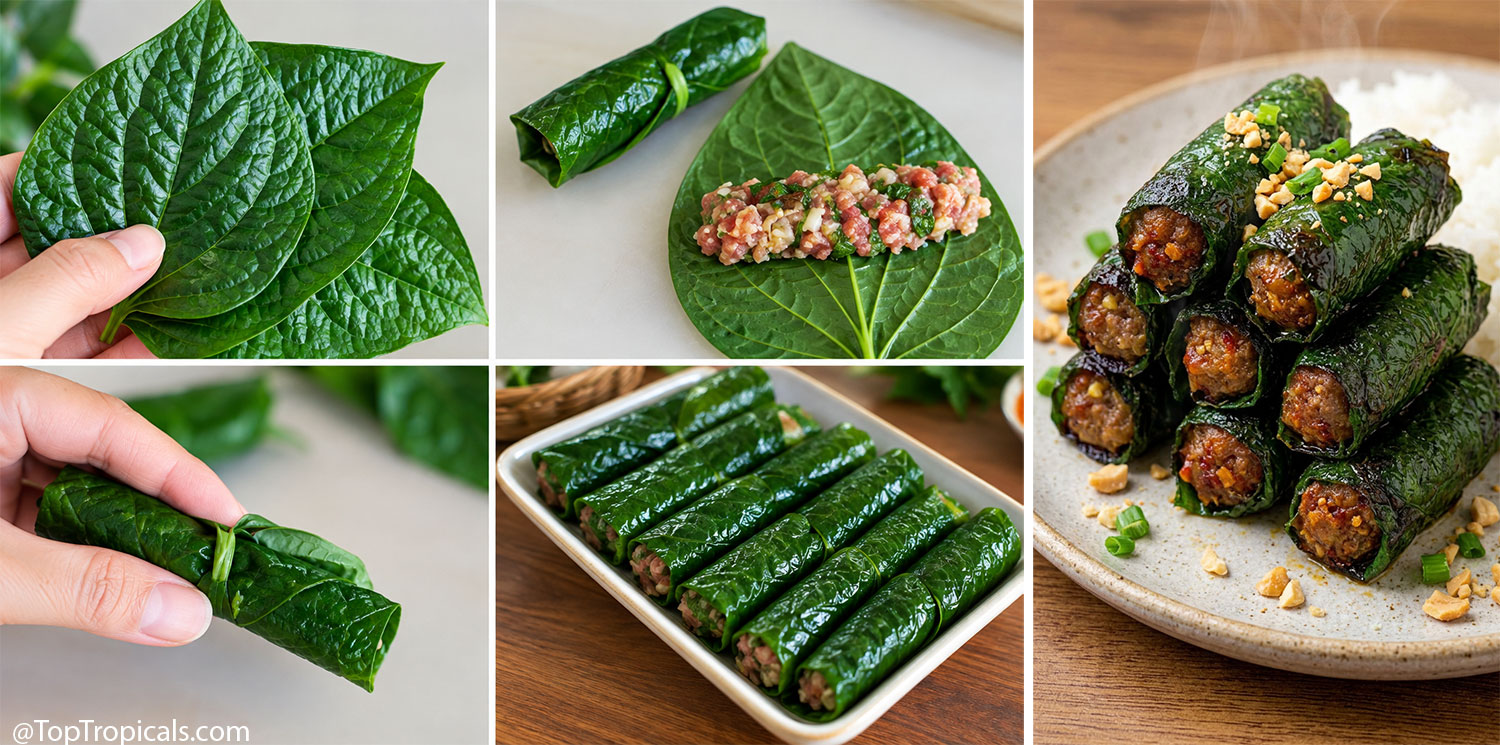
Crush a la lot leaf and you can smell that it is related to black pepper. The scent is warm and peppery, but the leaf itself is barely hot.
The plant grows low and spreads, with glossy heart-shaped leaves. The leaves are the harvest, and in Vietnam they are best known for bo la lot.
To make bo la lot, cooks season ground beef with lemongrass, garlic, shallot, and fish sauce, roll it inside the leaves into finger-sized logs, and grill them. The leaves char at the edges and turn smoky. The rolls are served with rice noodles, fresh herbs, crushed peanuts, and a dipping sauce. A small bed of la lot keeps the grill supplied all summer.
Mark, our facility manager, is not a gardener and usually leaves the plant talk to the rest of us. But La Lot won him over from the kitchen side. "I'm not the plant guy here, but I know what tastes good. We wrapped beef in La Lot leaves from the nursery, grilled it, and I went back for seconds. That's good enough for me."
In Thailand the plant is called cha plu, and its leaves wrap miang kham, a one-bite snack of toasted coconut, peanuts, lime, ginger, and shallot. Thai menus sometimes translate cha plu as "betel leaf," but the two are different plants.
La lot does best in part shade or bright filtered light. It grows well in a pot, even indoors near a well-lit window.
Size: About 1-2 ft tall, spreading along the ground for several feet.
Cold: Hardy to light frost. A hard freeze may damage the foliage, but established plants can quickly regrow from the roots.
First harvest: Established plants are ready to harvest right away. During warm weather, new leaves and shoots regrow within a couple of weeks after picking.
How many: Even one plant can supply plenty of leaves for regular cooking. Plant 2-3 if you also want a fast-growing edible ground cover.
🎥
🍃 3. Betel Leaf (Piper betle)
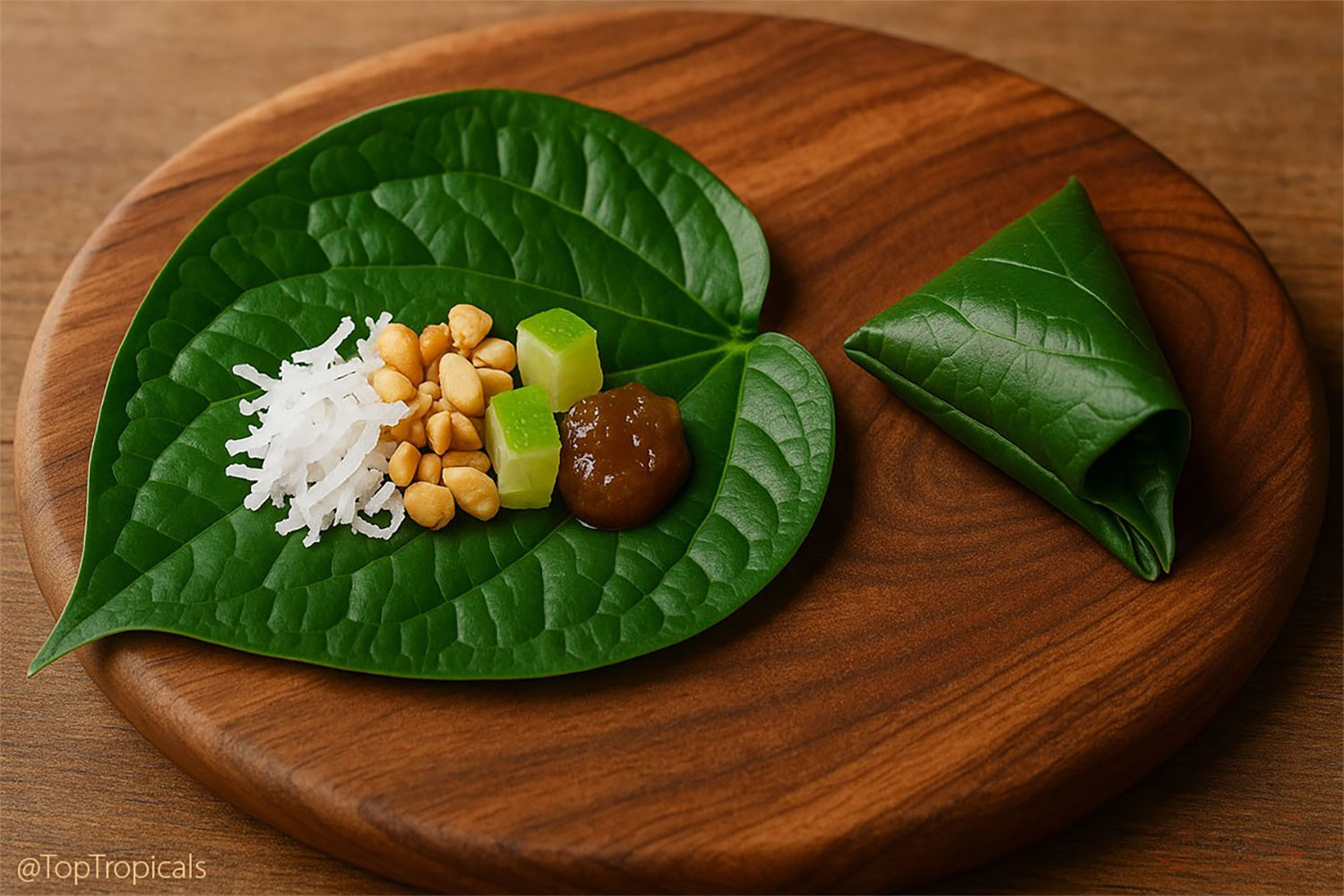
Betel leaf and betel nut come from two unrelated plants. Betel nut is the seed of the areca palm (Areca catechu), and chewing it carries known health risks. Piper betle is a climbing vine grown for its leaves.
The large, glossy, heart-shaped leaves look like oversized la lot. They are spicier, with a flavor some people compare to clove, so use only a few at a time.
Across South and Southeast Asia, people offer betel leaves to guests as a sign of hospitality and use them in religious ceremonies and weddings. Cooking with the leaves is more regional. They serve as wraps for small savory bites, and in parts of South India they are dipped in batter and fried.
Train betel up a trellis or post, either in the ground or in a large patio pot.
Size: A vigorous climbing vine that can grow many feet when given support and especially likes climbing trees. It can also be allowed to trail along the ground, where it makes a fast-growing, attractive ground cover. In a pot, keep it smaller with regular trimming.
Cold:Hardy to light frost. A hard freeze may damage the foliage, but established plants can quickly regrow from the roots.
First harvest: Established plants are ready to harvest right away. During warm weather, new leaves and shoots regrow within a couple of weeks after picking.
How many: Even one plant can supply plenty of leaves for regular cooking. Plant 2-3 if you also want a fast-growing edible ground cover or vine.
📚 9 tropical vegetables to grow indoors, or how to have garden-fresh produce all year
📚 How to grow your own Pepper plants. Five most valuable Pipers.
🎥
🍃 4. Longevity Spinach (Gynura procumbens)
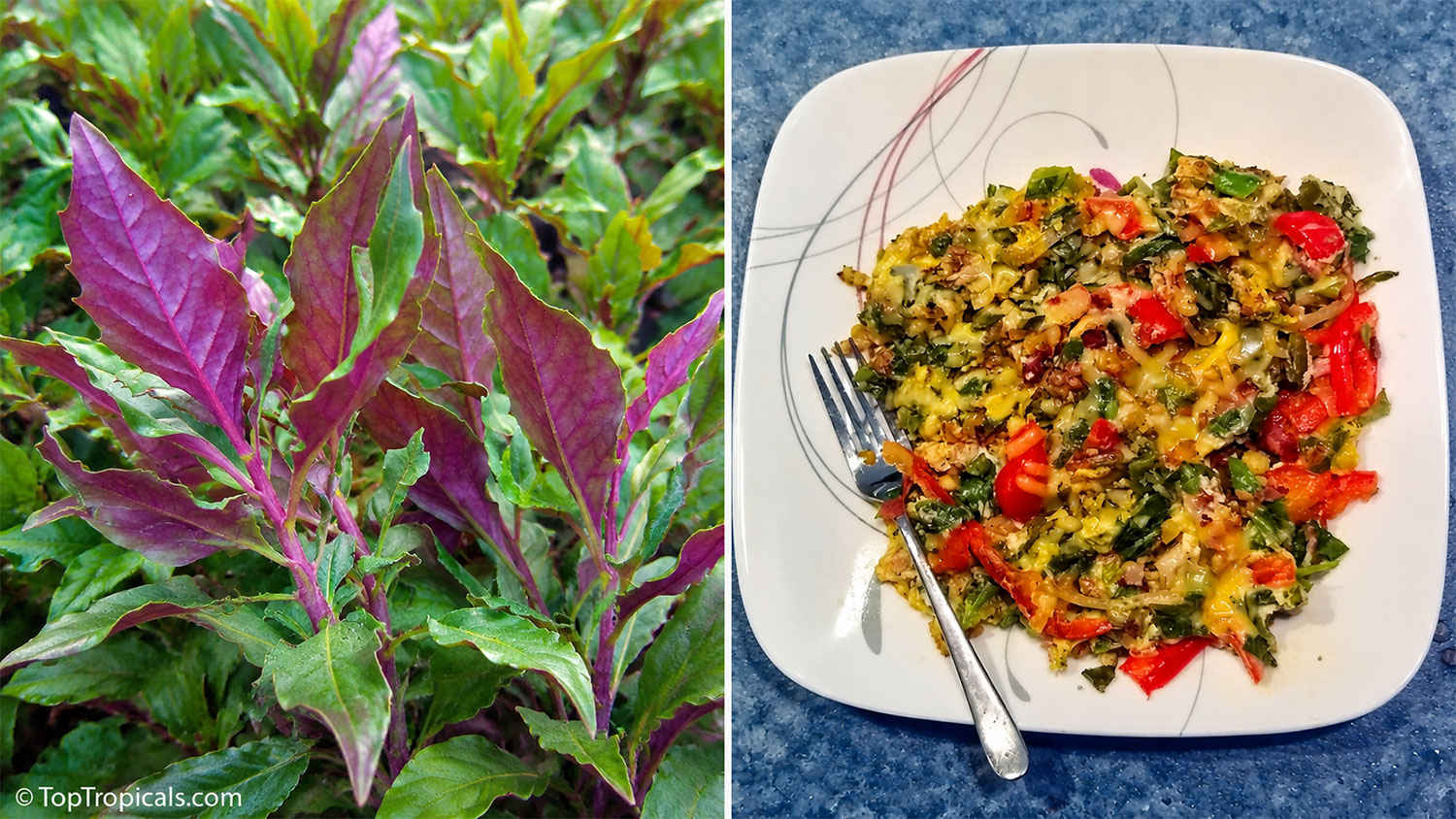
Longevity spinach won't win a taste test against real spinach. The leaves are mild and slightly juicy, and they pick up the flavor of whatever they are cooked with. It is worth planting because it grows fast, fills gaps in a bed, and comes back quickly after cutting.
You harvest the young leaves and shoot tips. Eat them raw in salads and sandwiches, or cooked in stir-fries, soups, and eggs.
Gynura procumbens is used in traditional medicine in Southeast Asia, and it is sometimes sold as "Cholesterol Spinach." It has been studied in the lab, but there is no established evidence that eating it treats or prevents any disease.
It does well in pots, hanging baskets, and raised beds.
Size: About 2-3 ft tall and spreading 5-6 ft wide in the ground. In a pot, it can easily be kept compact at around 3 × 3 ft.
Cold: Hardy to light frost. A hard freeze may damage the foliage, but established plants can quickly regrow from the roots.
First harvest: Established plants are ready to harvest right away. During warm weather, new leaves and shoots regrow within just a few days after picking.
How many: Just 1-2 plants can provide a family with a year-round supply of fresh, healthy greens for salads and cooking.
📚 Do you have Longevity Spinach in your garden?
📚 Gynura: Longevity Spinach Superfood Recipes
🎥
🍃 5. Black Pepper (Piper nigrum)
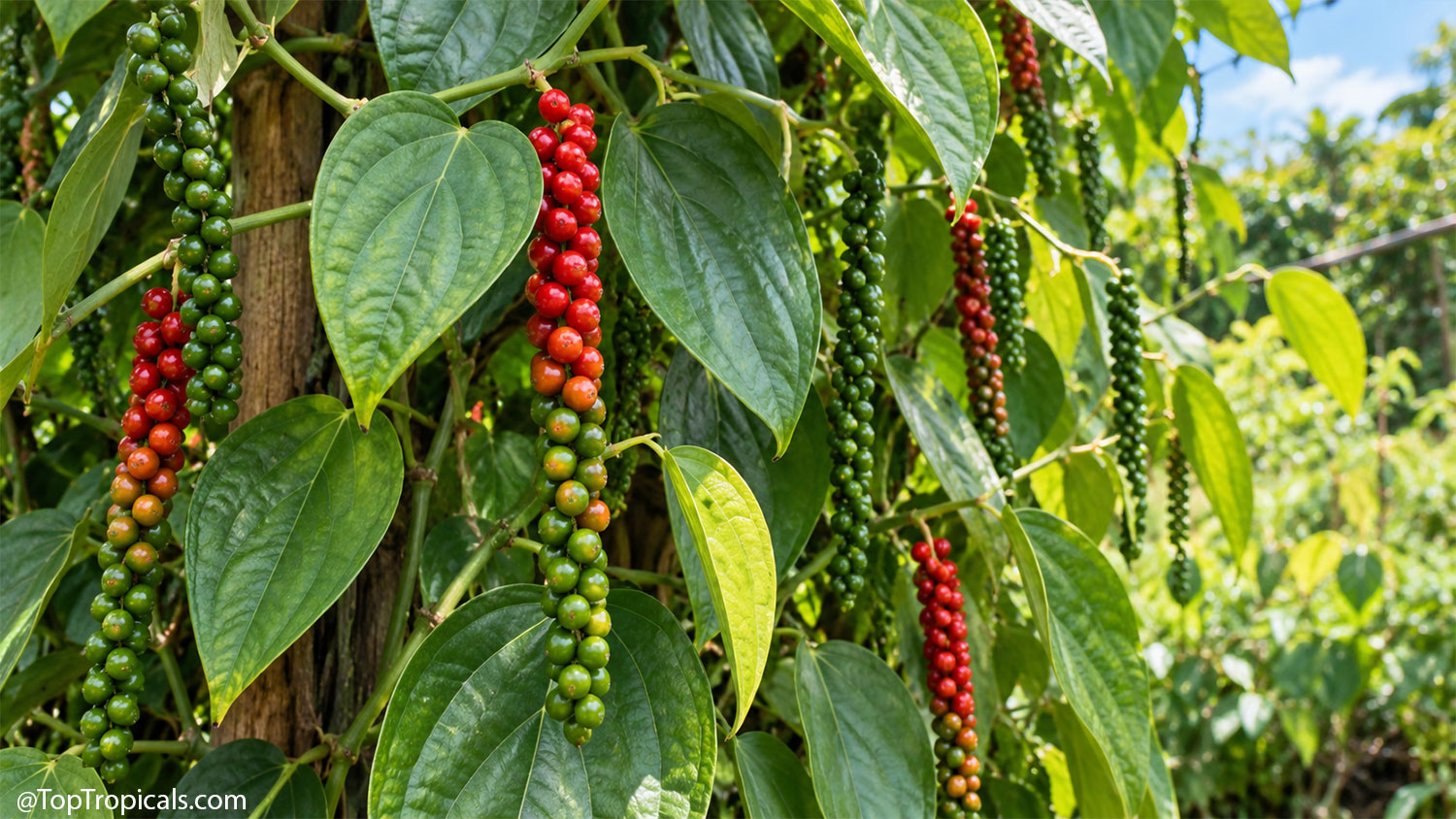
Show a guest this plant and the first question is usually "Wait, pepper grows on a vine?" It does. The pepper in your grinder comes from a woody climber with glossy, pointed leaves and strings of small green berries.
All four peppercorn colors come from this one plant. Black and green are picked unripe, and black is dried until it darkens. White and red are picked ripe, and white has the skin removed.
Fresh green peppercorns straight off the vine taste sharp and juicy, different from the dried kind. The leaves have a mild peppery scent. Use of the leaves varies by region. Growers wrap food in them and add them to soups, curries, chutneys, and teas.
Don't throw out your store-bought pepper yet. Expect to pick leaves for a while before the vine sets peppercorns. Plant it at the base of a sturdy post or tree trunk, and it will cling with small roots along the stem.
Size: A manageable climbing vine, easily trained on a 3-6 ft trellis. It also grows very well in containers, where regular pruning keeps it compact and easy to handle.
Cold: Protect from frost. Container growing makes this easy, since the vine can be moved indoors or into a protected area during cold weather. Reduce watering during cooler weather. Black pepper dislikes the combination of cold and wet conditions and can quickly become chlorotic when its roots stay too wet in cool weather. To fix chlorosis, apply Sunshine Superfood micro-element supplement.
First peppercorns: Usually begins producing peppercorns the following growing season once established and climbing well.
How many: Grow 2-3 vines for a more reliable harvest and a steady home supply of fresh peppercorns.
📚 What is Pepper Made From? Black, white, green, and red
📚 Watch this before cooking with black pepper
🎥
🍃 6. Insulin Ginger (Chamaecostus cuspidatus)
Also called Insulin Plant or Fiery Costus
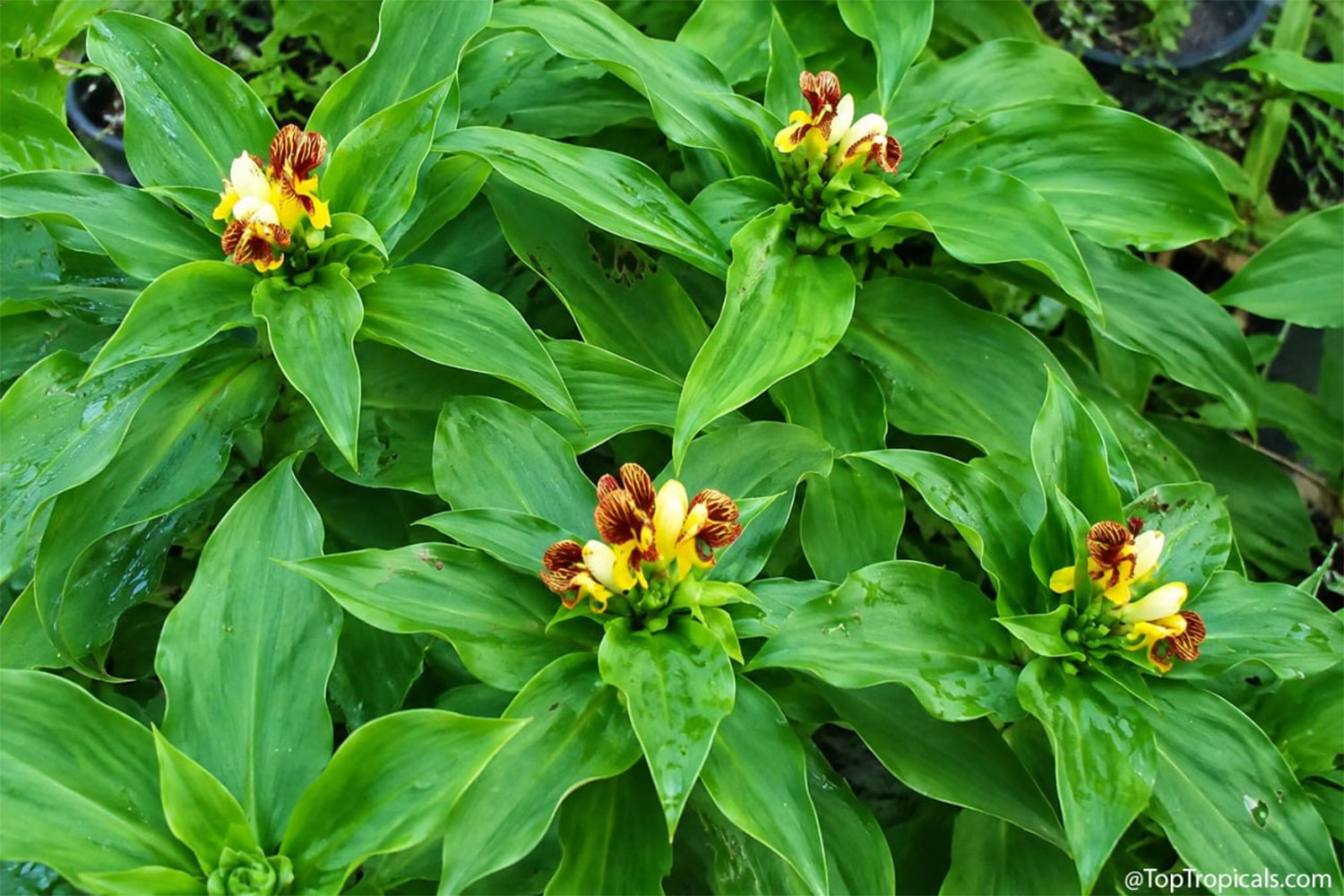
If you want a useful plant that keeps giving, Insulin Ginger is hard to beat. Its fresh leaves have a mild, green herbal taste, and the plant produces them generously as new shoots continually fill out the clump.
At our B-Farm in Sebring, Florida, we grow Insulin Ginger right in the ground year-round. It is vigorous and usually keeps growing through winter. If an unusually cold spell damages the foliage, the plants happily grow back from the rhizomes, just like our other gingers. During the warm growing season, a small plant can develop into a nice clump in only 2-3 weeks. It multiplies incredibly fast, too. One plant can easily become 5-10 plants within a single growing season.
Insulin Ginger is a lush tropical perennial with broad leaves arranged spirally around upright stems and bright orange flowers. It became famous as a traditional medicinal plant, particularly for its use in India for supporting healthy blood sugar. The nickname "Insulin Plant" comes from this traditional use. It does not mean the plant contains insulin.
The simplest traditional use is chewing a fresh leaf. The leaves can also be steeped for tea, finely sliced into food, or blended with water or coconut water. Their flavor is mild and herbal, not hot or spicy like culinary ginger.
Research has investigated its potential effects on blood glucose, but Insulin Ginger is not a replacement for diabetes medication. Anyone taking glucose-lowering medication should discuss regular medicinal use with their healthcare provider, since combining the two could potentially lower blood sugar too much.
Size: About 4-6 ft tall and quite spreading when left alone, both in the ground and in containers. With regular harvesting and pruning, it can easily be maintained around 4 ft. It responds very well to trimming and quickly produces fresh new leaves.
Cold:We grow it outdoors year-round in Sebring. Unusually cold weather can damage the foliage, but established plants readily regrow from the rhizomes when warm weather returns.
First harvest: Fast. During active warm-season growth, a plant can form a good leafy clump in just 2-3 weeks and responds to harvesting by quickly producing new growth.
How many: One established clump can provide plenty of leaves for a household, and it multiplies so quickly that you can easily divide it into several additional plants as it grows.
📚 Insulin Ginger: Myths vs Facts
📚 One plant today - dozens tomorrow: why gardeners love Insulin Ginger
📚 Insulin Ginger traditional remedies: Quick-n-fun exotic recipes
📚 A leaf you grow, not a pill you buy: Insulin ginger - the plant people actually use
🎥
Growing in a Tropical Garden
All six are perennial in warm climates, and they share a few needs.
Soil. Florida sand holds water about as well as a colander. Plant these straight into it and they will struggle. The Piper species in particular need soil rich in organic matter. Before planting, work compost into a wide area, not just the hole, and keep mulch on top, pulled back slightly from the stems.
Light. La lot, betel, and black pepper grow wild in forest understory and prefer part shade or bright filtered light. Katuk and longevity spinach take more sun, but some afternoon shade helps them through a Florida summer.
Cold. Each plant tolerates cold differently, so check the Cold line in each profile. During the February 2026 Florida record freeze, these edibles performed surprisingly well in our garden. Although the foliage was damaged with 25F freeze, all of them quickly grew back from the roots. Where frost is occasional, be ready to cover them, or plant them near the house or under tree canopy.
Water. Keep the soil moist, but don't let it stay wet. The pepper relatives dislike drying out.
Picking is pruning. Each time you snip a shoot tip, the plant branches and puts out new growth. A katuk left alone gets tall and sparse. One picked every week stays full and within reach.
Vigorous growers. La lot creeps along the ground, longevity spinach sprawls, and the two vines climb anything they can hold. None are hard to manage, but they need trimming near paths and smaller plants.
Food forests. Under mango, avocado, or jackfruit trees, la lot makes an edible groundcover. Black pepper and betel can climb the trunks, the way pepper is often grown on living support trees in India and Southeast Asia. Katuk works as an understory shrub or low hedge, and longevity spinach fills the front of a bed. Deep shade under a dense canopy can be too dark, though, and tree roots compete for water and nutrients, so choose dappled spots and feed and water these plants separately.
Edible landscaping. These plants don't need a vegetable plot. Heart-shaped la lot and betel leaves look as good as many ornamental groundcovers and vines, and a pepper vine hung with green berries earns its place on a post by the patio.
Feeding
These plants make a lot of leaves, and you keep cutting them off. The regrowth needs food.
In the ground, start with compost and mulch. Then feed through the warm season with a fertilizer labeled for edible plants. Leafy growers like katuk and longevity spinach need plenty of nitrogen. Sunshine Robusta for edibles does the trick.
Small, frequent feedings work better than large, infrequent ones, especially in sand and in pots. A heavy dose can burn roots and push soft growth that attracts pests.
Container plants need feeding more often, because every watering carries nutrients out of the drainage hole. Mix into your soil a scoop of Green Magic controlled release fertilizer every six months; Sunshine Robusta liquid fertilizer for edibales is safe to apply with every watering, year around. Feed less in winter, when plants in a dim window can't use much.
Pale green leaves usually mean the plant is hungry. Yellow between the veins of new leaves, common in sandy or alkaline soil, can point to a missing micronutrient, and a fertilizer that includes micronutrients often helps.
Our Sunshine Boosters are biostimulants, not fertilizers, and they work alongside regular feeding rather than replacing it. For herbs and vegetables we recommend Sunshine Robusta for fast, vigorous growth and quick regrowth after harvesting.
🎥
🎥 /
🌱 Growing in Pots
In cold-winter areas, all five can live in pots that move indoors.
Use containers with drainage holes and a well-draining potting mix. In summer, keep them on a patio or balcony with good light but out of harsh afternoon sun, and give betel and black pepper a small trellis or pole.
When nights drop toward 50F, bring them in to your brightest window or put them under a grow light. Keep them away from heating vents, since indoor winter air is dry. If you have cats or dogs, keep them from eating the plants.
Plan on a slow winter. Katuk may drop leaves, and longevity spinach tends to stretch in low light. La lot and betel handle indoor winters best.
☀️ The Summer Heat Advantage
Spinach grown through a hot, humid summer bolts, turns bitter, and collapses. Lettuce fares no better. Both are cool-season crops.
Katuk and longevity spinach are tropical plants. As long as you keep them watered, they usually keep producing through July and August, when those greens have given up.
Easy Ways to Cook Them
Start with dishes you already make. Katuk and longevity spinach need only a minute of heat, so add them at the end.
- Stir a handful of katuk into any noodle soup, even instant ramen.
- Wrap grilled shrimp or pork in a la lot leaf with a dab of chili sauce.
- Add chopped longevity spinach to an omelet, or put raw leaves on a sandwich.
- Fold a betel leaf around a spoonful of toasted coconut and peanuts.
- Slice black pepper leaves thin for a curry, or blend them into a chutney.
- Toss fresh green peppercorns into a stir-fry or pan sauce.
Use katuk or longevity spinach wherever a recipe calls for cooked spinach, and la lot wherever you would use a lettuce or grape leaf wrap.
🛒 ➕ Beyond Basil
Your edible garden doesn't have to look like everyone else's. A few of these plants will give you leaves most stores don't sell.
Start with one plant. If it does well, add another.