Garden Blog - Top Tropicals
Date: 9 Jul 2026
Blue Java Banana: the Ice Cream Banana that looks too good to be real
Ice Cream Banana
Ice Cream Banana
🍌 Blue Java Banana: the Ice Cream Banana that looks too good to be real.
Most bananas (Musa acuminata) look the same. Blue Java isn't one of them.
Every year, as soon as the growing season begins, gardeners start asking the same question: "Do you have Ice Cream bananas?" Last season it was one of our most requested plants - and this year is no different.
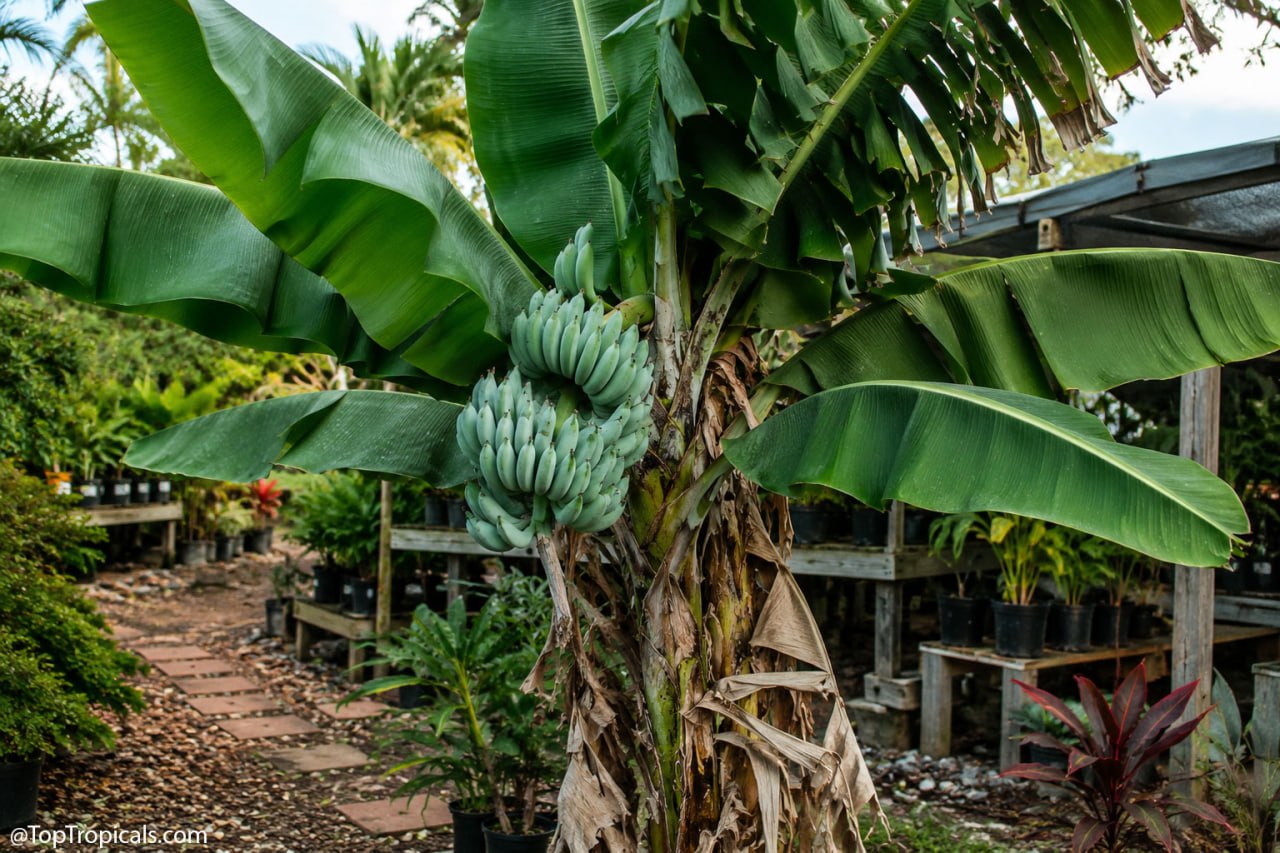
Known as the Ice Cream Banana, Blue Java has become one of the world's most talked-about banana varieties. Once you see a bunch hanging on the plant, it's easy to understand why. Before ripening, the fruit develops a natural silvery blue-green color that almost looks unreal. It's not painted, dyed, or edited - that's simply how this remarkable banana grows.
The real surprise comes after harvest.
As the fruit ripens, the blue-green skin gradually turns soft yellow. Inside is creamy white flesh with an unusually smooth, custard-like texture. Many gardeners describe the flavor as sweet with hints of vanilla, which earned it the nickname "Ice Cream Banana." Whether you enjoy it fresh, in smoothies, or frozen for desserts, it's unlike the typical supermarket banana.
Blue Java isn't grown only for its bananas.
The plant itself is spectacular, with huge tropical leaves, a sturdy trunk, and dramatic reddish-purple flower buds that develop into heavy clusters of fruit. Mature plants typically reach 10-15 feet tall and produce impressive bunches weighing 40-60 pounds under good growing conditions.
One reason Blue Java has become so popular is that it is more cold-tolerant than many dessert bananas. While it still loves warm weather, full sun, rich soil, and regular watering, established plants can handle cooler temperatures better than many other banana varieties, making them an excellent choice for gardeners in marginal tropical and subtropical climates.
Blue Java is still considered a specialty variety, which is why most people never get the chance to taste one. If you've only eaten standard Cavendish bananas, growing your own Blue Java is a completely different experience - from the unusual blue fruit to its creamy, dessert-like flavor.
It's one of those plants that makes visitors stop, point, and ask:
"Are those really blue bananas?"
👉 Grab it while it’s in stock.
🛒 Explore Banana Varieties


Bananas (Musa) in plant encyclopedia
Blue Ice Cream banana you’ll never find in stores
Is Blue Java Banana really blue?
Why is Mahoi banana called DOUBLE?
Why every garden needs a banana tree (or three!)
The best varieties of edible Bananas
#Food_Forest #Bananas #Discover
🟢 Join 👉 TopTropicals
Most bananas (Musa acuminata) look the same. Blue Java isn't one of them.
Every year, as soon as the growing season begins, gardeners start asking the same question: "Do you have Ice Cream bananas?" Last season it was one of our most requested plants - and this year is no different.
Known as the Ice Cream Banana, Blue Java has become one of the world's most talked-about banana varieties. Once you see a bunch hanging on the plant, it's easy to understand why. Before ripening, the fruit develops a natural silvery blue-green color that almost looks unreal. It's not painted, dyed, or edited - that's simply how this remarkable banana grows.
🔹 Why is it called the Ice Cream Banana?
The real surprise comes after harvest.
As the fruit ripens, the blue-green skin gradually turns soft yellow. Inside is creamy white flesh with an unusually smooth, custard-like texture. Many gardeners describe the flavor as sweet with hints of vanilla, which earned it the nickname "Ice Cream Banana." Whether you enjoy it fresh, in smoothies, or frozen for desserts, it's unlike the typical supermarket banana.
🔹 A beautiful plant even before it fruits
Blue Java isn't grown only for its bananas.
The plant itself is spectacular, with huge tropical leaves, a sturdy trunk, and dramatic reddish-purple flower buds that develop into heavy clusters of fruit. Mature plants typically reach 10-15 feet tall and produce impressive bunches weighing 40-60 pounds under good growing conditions.
🔹 Easier to grow than many tropical bananas
One reason Blue Java has become so popular is that it is more cold-tolerant than many dessert bananas. While it still loves warm weather, full sun, rich soil, and regular watering, established plants can handle cooler temperatures better than many other banana varieties, making them an excellent choice for gardeners in marginal tropical and subtropical climates.
🔹 A banana you'll probably never find at the grocery store
Blue Java is still considered a specialty variety, which is why most people never get the chance to taste one. If you've only eaten standard Cavendish bananas, growing your own Blue Java is a completely different experience - from the unusual blue fruit to its creamy, dessert-like flavor.
It's one of those plants that makes visitors stop, point, and ask:
"Are those really blue bananas?"
👉 Grab it while it’s in stock.
🛒 Explore Banana Varieties
📚 Learn more:
Bananas (Musa) in plant encyclopedia
Blue Ice Cream banana you’ll never find in stores
Is Blue Java Banana really blue?
Why is Mahoi banana called DOUBLE?
Why every garden needs a banana tree (or three!)
The best varieties of edible Bananas
#Food_Forest #Bananas #Discover
🟢 Join 👉 TopTropicals
Date: 8 Jul 2026
Rose Apple Cinnamon Bake: quick-n-fun exotic recipes
Rose Apple Cinnamon Bake
Syzygium jambos, Rose Apple
🍴 Rose Apple Cinnamon Bake: quick-n-fun exotic recipes
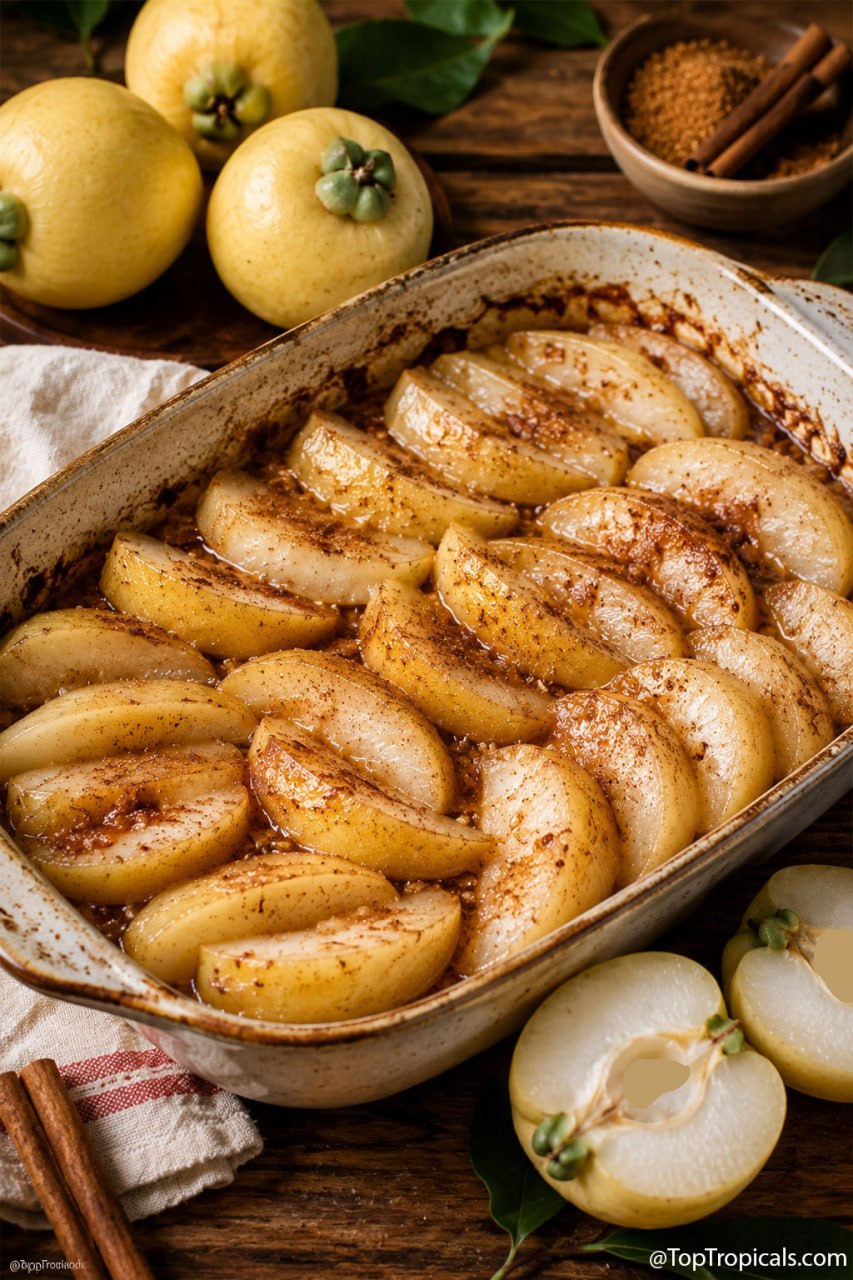
🟡Slice fresh rose apples into wedges, removing the core, and arrange them in a lightly buttered baking dish.
🟡Sprinkle each layer with a mixture of cinnamon, brown sugar (or honey), and a small pinch of nutmeg if desired.
🟡Bake at 375F (190C) for 20-25 minutes, just until the fruit is tender but still holds its shape.
🟡The rose apples develop a delicate floral aroma with a light cinnamon sweetness.
🟡Serve warm on their own, over vanilla ice cream, with yogurt, or alongside pancakes or waffles.
🌿 About the plant:
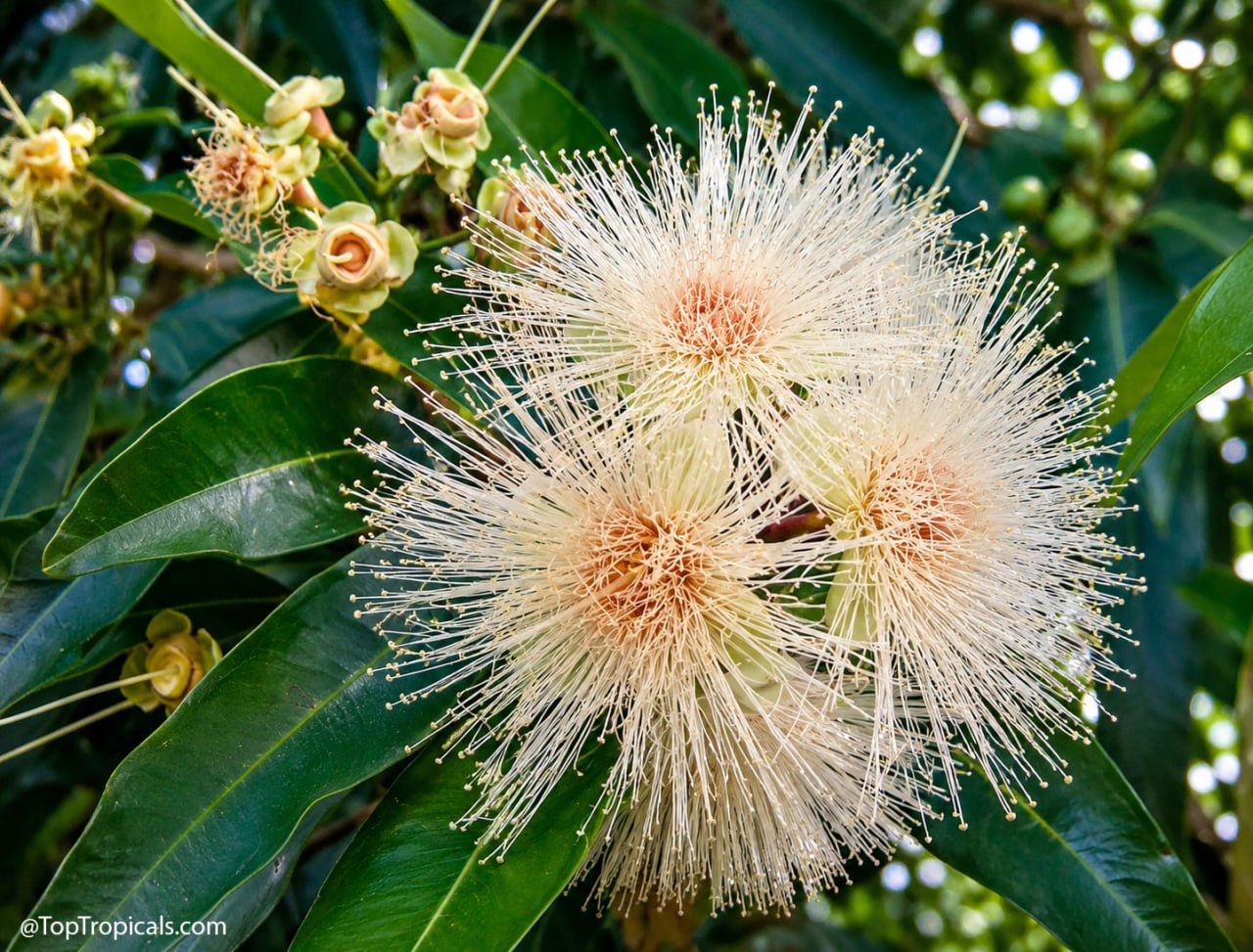
Rose apple, Syzygium jambos, belongs to the myrtle family and produces pale yellow fruit with a delicate rose-like fragrance. The tree also carries showy cream-colored flowers with long, fluffy stamens.
🏡 In the garden:
It thrives in tropical and subtropical climates with consistent moisture. The tree forms a dense canopy and can be shaped through pruning to maintain size.
🛒 Plant your own Rose Apple Tree
📚 Learn more:


Syzygium jambos, Rose Apple in Plant Encyclopedia
Rose apple stir fry: quick-n-fun exotic recipes
Rose apple salad: quick-n-fun exotic recipes
Fruit that smells like roses
#Food_Forest #Recipes
🟢 Join 👉 TopTropicals
Date: 8 Jul 2026
Why this Sleepy Hibiscus goes to sleep every afternoon
Hibiscus cannabinus - Sleepy Hibiscus
💤 Why this Sleepy Hibiscus goes to sleep every afternoon
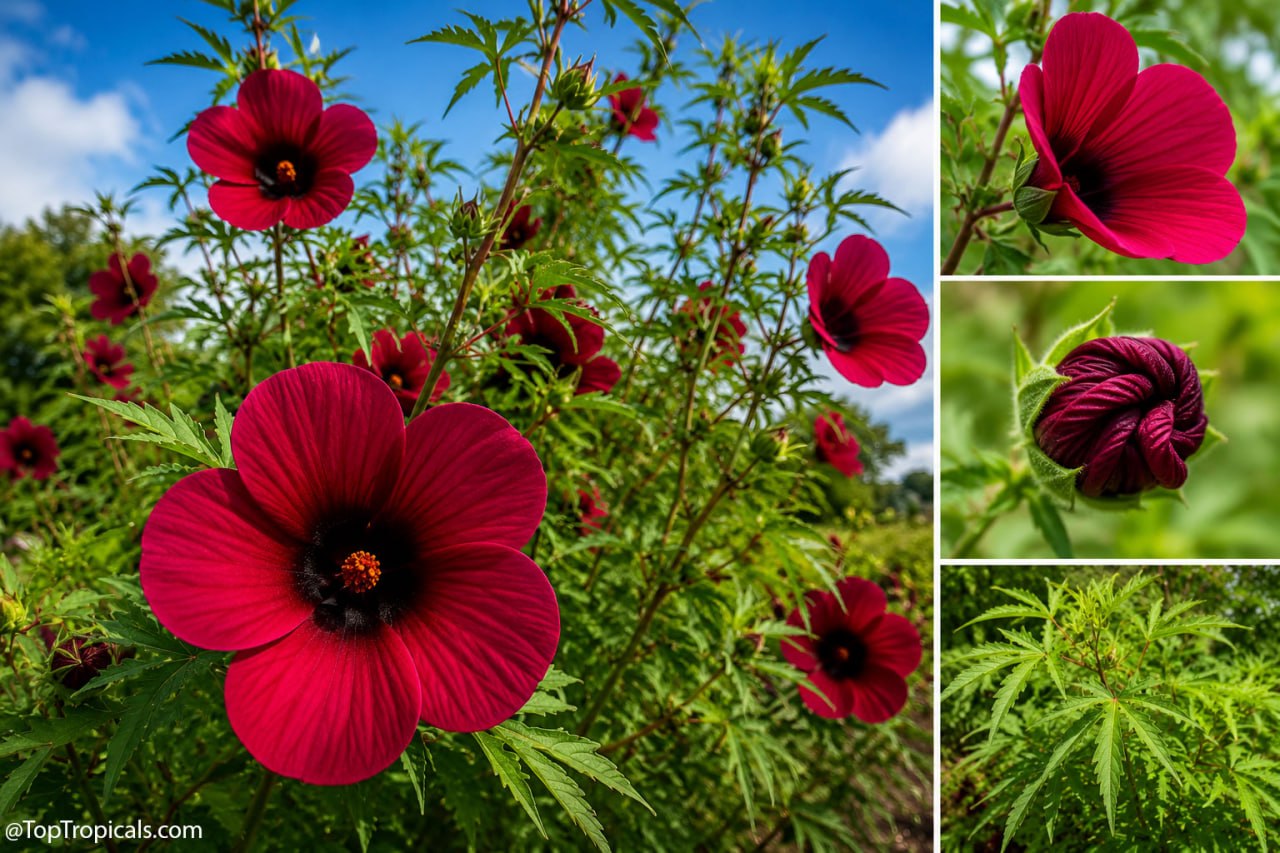
Most hibiscus flowers stay wide open all day long before eventually dropping; but the deep wine-red flowers of Hibiscus cannabinus (popularly known as Salad Hibiscus or Kenaf) open wide with the morning sun, putting on a spectacular show for local bees and butterflies. But by mid-afternoon, usually around 3 to 4 pm, each bloom slowly twists itself into a tight little knot, almost as if the flower has fallen asleep. This unusual curled shape lasts until the bloom finally drops, giving the plant one of the most fascinating daily performances in the garden.
A stunning tropical beauty that belongs in your salad bowl
Unlike traditional ornamental hibiscus bushes, this species is a double agent that belongs in both your flower beds and your vegetable garden.
The young leaves, flowers, seeds, and tender shoots are completely edible. The leaves carry a pleasantly tart, slightly tangy flavor remarkably similar to sorrel and are packed with vitamin C. You can toss them fresh into summer salads, cook them down exactly like spinach, or brew the leaves and flowers together into a vibrant herbal tea.
Extreme speed and a historical second career
If you love instant gratification in the garden, this plant delivers. It explodes into a large, lush structural bush in a single season, showing off handsome, deeply lobed leaves that closely resemble Japanese maple foliage.
Long before modern gardeners discovered its backyard appeal, kenaf was celebrated as one of the ancient world's most vital natural fiber crops.
Ancient History: Ancient Egyptians reportedly cultivated this exact plant thousands of years ago, using the tangy leaves for food while turning the fibrous stems into cordage and boat sails.
Modern Sustainability: Today, those same ultra-strong stem fibers are used globally for high-quality rope, paper, textiles, and eco-friendly, biodegradable packaging.
A Quick Garden ID Tip: Salad hibiscus Hibiscus cannabinus s frequently confused with Hibiscus furcellatus because they look nearly identical when young. It also shares a striking resemblance to Hibiscus acetosella, but instead of solid burgundy foliage, this species boasts fresh green leaves that make the dark, wine-colored flowers pop dramatically.
Give your edible landscape a major upgrade
Whether you want a fast-growing privacy screen, a conversation-starting "sleepy" flower, or a constant supply of tangy summer greens, this resilient plant checks every box. It handles intense summer heat, loves the sun, and becomes surprisingly drought-tolerant once established. This hibiscus feeds you, flowers for months, and grows like crazy! 👉 More...
🛒 Add a tasty conversation piece to your garden


· Hibiscus cannabinus in Plant Encyclopedia
· Did you know that you can eat and drink Hibiscus plants?
· Most useful Hibiscus plants and recipes
#Food_Forest #Remedies #Recipes
🟢 Join 👉 TopTropicals
Most hibiscus flowers stay wide open all day long before eventually dropping; but the deep wine-red flowers of Hibiscus cannabinus (popularly known as Salad Hibiscus or Kenaf) open wide with the morning sun, putting on a spectacular show for local bees and butterflies. But by mid-afternoon, usually around 3 to 4 pm, each bloom slowly twists itself into a tight little knot, almost as if the flower has fallen asleep. This unusual curled shape lasts until the bloom finally drops, giving the plant one of the most fascinating daily performances in the garden.
A stunning tropical beauty that belongs in your salad bowl
Unlike traditional ornamental hibiscus bushes, this species is a double agent that belongs in both your flower beds and your vegetable garden.
The young leaves, flowers, seeds, and tender shoots are completely edible. The leaves carry a pleasantly tart, slightly tangy flavor remarkably similar to sorrel and are packed with vitamin C. You can toss them fresh into summer salads, cook them down exactly like spinach, or brew the leaves and flowers together into a vibrant herbal tea.
Salad Hibiscus Growing Guide
- 🌸 Daily Routine: Opens at sunrise, twists into a tight knot by 3-4 pm
- Edible Perks: Tangy leaves rich in vitamin C; great fresh or cooked
- 🍁 Foliage Style: Deeply lobed green leaves that look like japanese maple
- ⏳ Growth Speed: Explodes into a massive, lush bush in just one season
Extreme speed and a historical second career
If you love instant gratification in the garden, this plant delivers. It explodes into a large, lush structural bush in a single season, showing off handsome, deeply lobed leaves that closely resemble Japanese maple foliage.
Long before modern gardeners discovered its backyard appeal, kenaf was celebrated as one of the ancient world's most vital natural fiber crops.
Ancient History: Ancient Egyptians reportedly cultivated this exact plant thousands of years ago, using the tangy leaves for food while turning the fibrous stems into cordage and boat sails.
Modern Sustainability: Today, those same ultra-strong stem fibers are used globally for high-quality rope, paper, textiles, and eco-friendly, biodegradable packaging.
A Quick Garden ID Tip: Salad hibiscus Hibiscus cannabinus s frequently confused with Hibiscus furcellatus because they look nearly identical when young. It also shares a striking resemblance to Hibiscus acetosella, but instead of solid burgundy foliage, this species boasts fresh green leaves that make the dark, wine-colored flowers pop dramatically.
Give your edible landscape a major upgrade
Whether you want a fast-growing privacy screen, a conversation-starting "sleepy" flower, or a constant supply of tangy summer greens, this resilient plant checks every box. It handles intense summer heat, loves the sun, and becomes surprisingly drought-tolerant once established. This hibiscus feeds you, flowers for months, and grows like crazy! 👉 More...
🛒 Add a tasty conversation piece to your garden
📚 Learn more:
· Hibiscus cannabinus in Plant Encyclopedia
· Did you know that you can eat and drink Hibiscus plants?
· Most useful Hibiscus plants and recipes
#Food_Forest #Remedies #Recipes
🟢 Join 👉 TopTropicals
Date: 7 Jul 2026
Noodle party: Quick-n-Fun Exotic Recipe Collection
Cats Noodle party
🍴 Noodle party: Quick-n-Fun Exotic Recipe Collection
🍍 Pineapple Ginger Noodles
Cook noodles and toss with fresh pineapple chunks, grated ginger, a splash of soy sauce, lime juice, and a drizzle of sesame oil. Top with chopped green onions and roasted peanuts for a sweet, tangy, tropical dinner.
👉 Add Pineapple to your garden
🥭 Mango Curry Noodles
Stir-fry cooked noodles with a spoonful of yellow curry paste and coconut milk. Add sliced ripe mango at the end, along with bell peppers and fresh cilantro. The creamy curry and sweet mango are surprisingly delicious together.
👉 Add Mango and Curry Leaf to your garden
Coconut Lime Noodles
Warm coconut milk with garlic, fresh ginger, and a squeeze of lime. Toss with cooked noodles and finish with toasted coconut flakes, cilantro, and a pinch of chili flakes for a bright tropical twist.
👉 Add Coconut to your garden
⭐️ Star Fruit Sesame Stir-Fry
Quickly stir-fry noodles with thin slices of star fruit, snow peas, carrots, and sesame oil. Add soy sauce and fresh ginger. The star fruit stays slightly crisp and adds a refreshing citrusy bite.
👉 Add Star Fruit to your garden
🍌 Banana Peanut Curry Noodles
Make a quick sauce with peanut butter, coconut milk, red curry paste, and a splash of soy sauce. Toss with noodles and top with lightly caramelized banana slices, chopped peanuts, and fresh cilantro. It sounds unusual but tastes rich, creamy, and slightly sweet.
👉 Add Banana to your garden
These recipes are all ready in about 15-20 minutes and pair well with chicken, shrimp, tofu, or can be enjoyed on their own.
They also make fun conversation starters because the tropical ingredients give familiar noodles an unexpected twist.
🛒 Shop tropical fruit trees
🐈📸 Rescued cats of TopTropicals PeopleCats.Garden - Jim II and Kiwi enjoying their noodle party.
#PeopleCats #Recipes #Food_Forest
🟢 Join 👉 TopTropicals
Date: 7 Jul 2026
What happens when two rare hibiscus species meet: a flower unlike any other
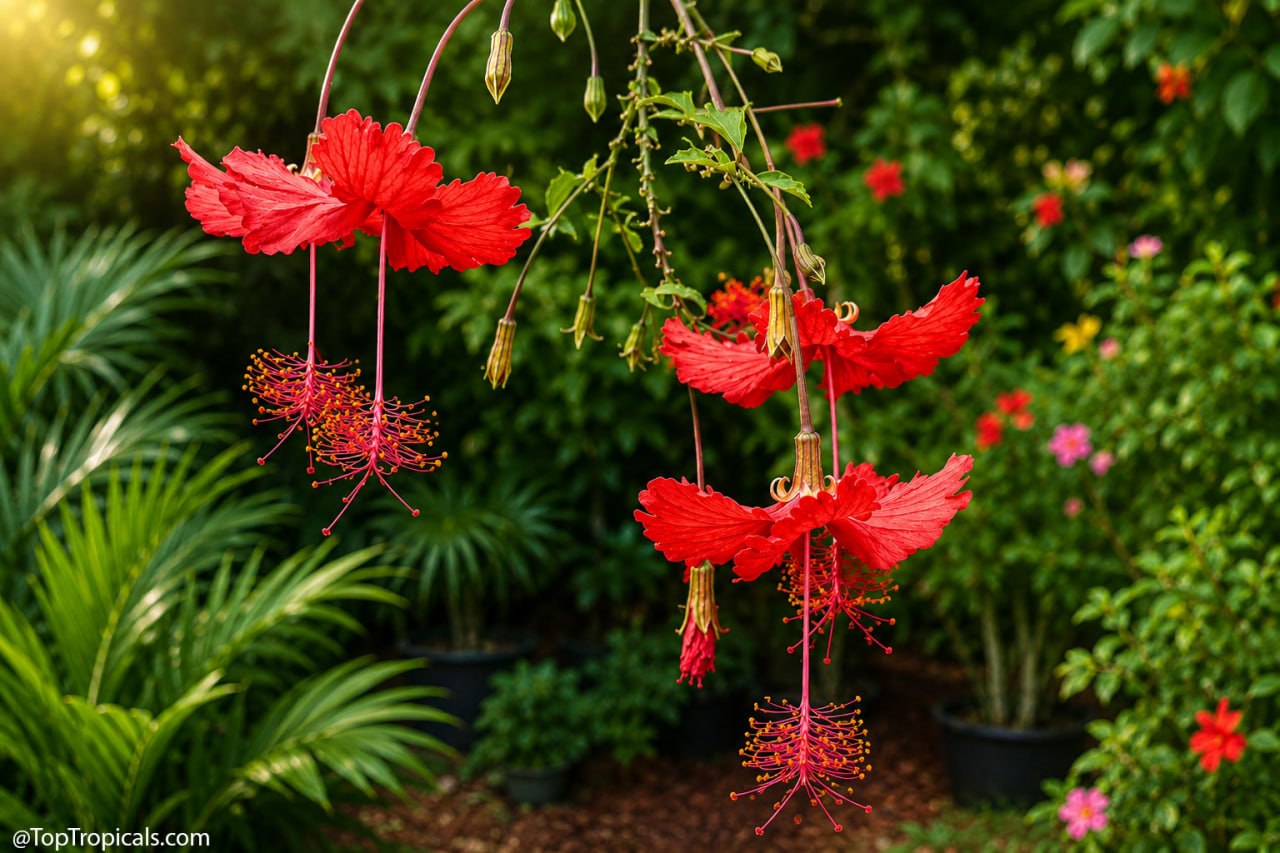
Hibiscus 'Fairy Dancer'
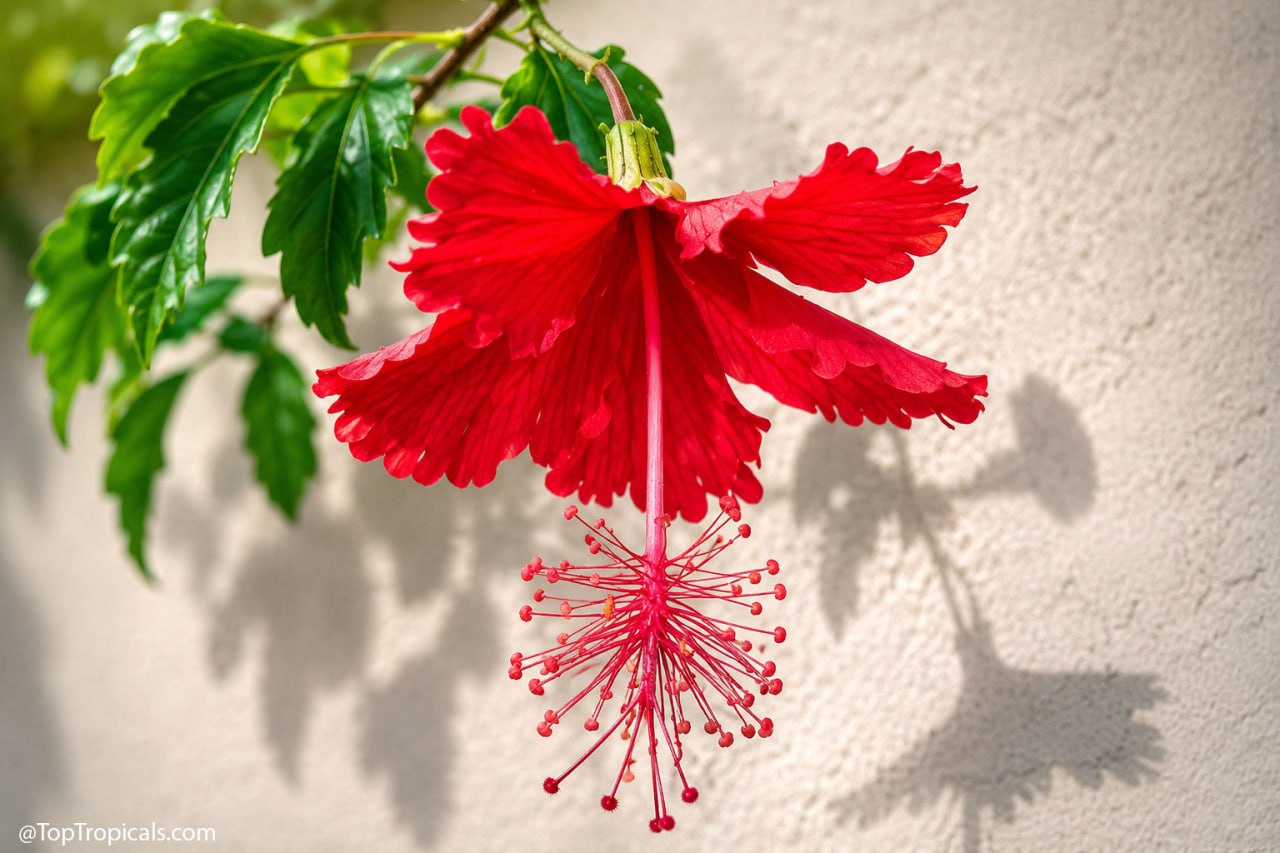
Hibiscus 'Fairy Dancer' flower close up
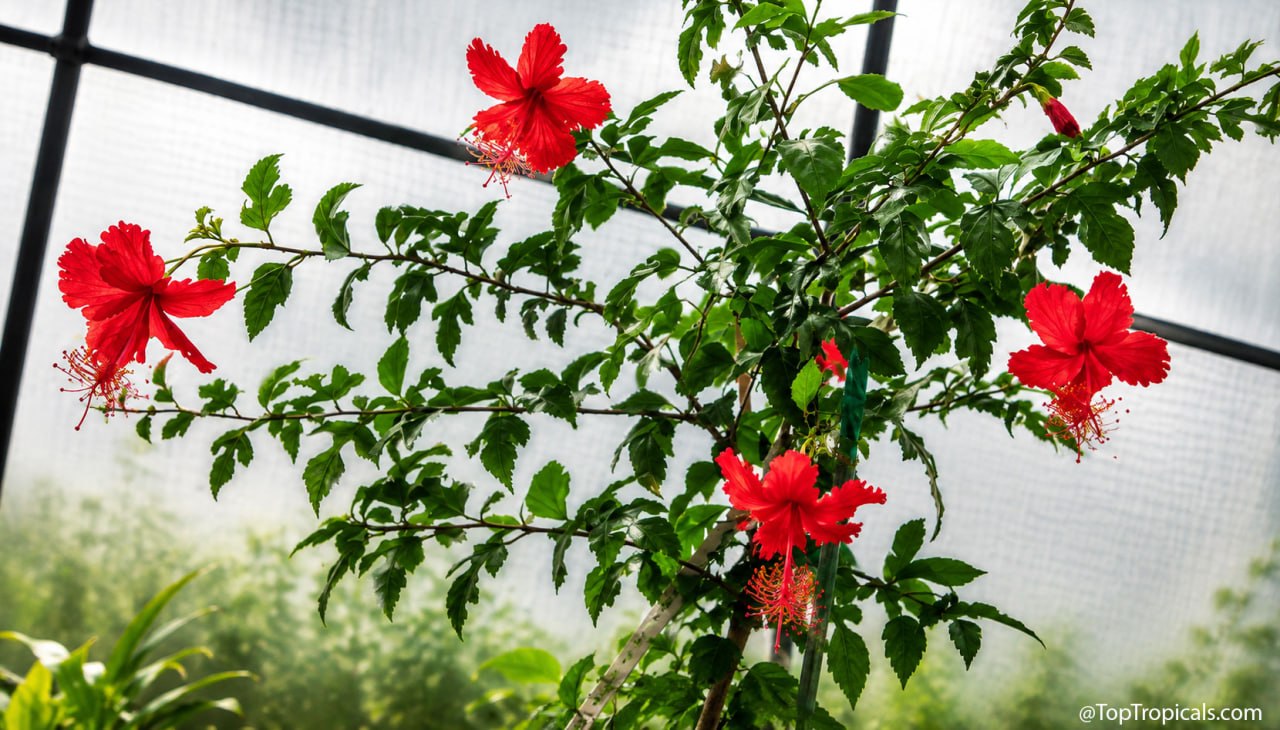
Hibiscus 'Fairy Dancer' plant
🌺 What happens when two rare hibiscus species meet: a flower unlike any other
Most hibiscus flowers put on a bold, classic tropical show; the Hibiscus 'Fairy Dancer' looks like it's caught in a permanent state of dance. It is a remarkable, historic hybrid created by TopTropicals resident, botanist and horticulturist Mark Hooten. This isn't just another color variant of a common garden shrub - it combines two extraordinary, wild, and geographically isolated species that had never before been paired in a registered hybrid.
🌺 A historic pairing of wild botanical treasures
To understand why this plant is causing such a stir among collectors, you have to look at its parents:
The Mother: The famous Coral Hibiscus (Hibiscus schizopetalus), native to the slopes of Mount Kilimanjaro in East Africa, celebrated for its complex, lacy, hanging blossoms.
The Father: The tiny, elusive, and extremely rare Madagascan species Hibiscus grandidieri. This plant is so uncommon in cultivation that it had never once appeared as a registered parent in the International Hibiscus Society's global database.
When these two wild species finally met, the resulting hybrid completely defied expectations.
Hibiscus 'Fairy Dancer' Growing Guide
- 🌸 Hybridizer: Mark Hooten from TopTropicals
- 🎨 Flower Style: Pendant, weeping crimson blossoms
- 🍃 Foliage: Small, deeply lobed, fig-like leaves
- 🏡 Habit: Arching, airy growth; exceptional for container styling
🌺 Elegant, bonsai-like growth habits
As captured beautifully in the cascading branches, the flowers hang gracefully from exceptionally long, thread-like stems. They seem to float effortlessly in midair, swaying elegantly with the slightest afternoon breeze like tiny crimson fairies performing an aerial ballet.
Every single bloom is entirely distinct from a standard garden hibiscus. As seen in the close-up, the vivid red petals are deeply divided and dramatically reflexed backward. Meanwhile, an elongated, delicate staminal column hangs far beneath the petals like a miniature, glowing chandelier, making the bloom fascinating to study from every single angle.
🌺 The world-first weeping hibiscus with delicate butterfly petals and fig-like leaves
Unlike typical, coarse tropical hibiscus bushes, 'Fairy Dancer' features an inherently artistic silhouette:
Continuous Blooming: While standard varieties mostly set buds at the very tips of their branches, 'Fairy Dancer' produces flowers all along its arching stems, creating a spectacular holiday-ornament effect.
Unique Foliage: Instead of broad, heavy leaves, it produces small, deeply cut foliage that resembles miniature fig or mulberry leaves.
Versatile Display: Because of its naturally airy, weeping growth, it adapts flawlessly to container culture. It looks absolutely stunning draping over patio walls, cascading from hanging baskets, or trained as a fine specimen plant.
🌺 Add a world-first hybrid to your collection
Some plants impress because they take up a massive amount of space. Others grab attention with loud, artificial colors. Hibiscus 'Fairy Dancer' steals the spotlight simply because it is an elegant, delicate masterpiece that your neighbors have guaranteed never seen before. 👉 More...
🛒 Explore Hibiscus species and varieties
📚 Learn more:
· Hibiscus grandidieri x schizopetalus in Plant Encyclopedia
· Skeleton Hibiscus with "crazy petals" - flower will blow your mind
· This Hibiscus is called President for a reason
· Many faces of hibiscus
· Much more than fancy flowers: discover the many faces of hibiscus
· Tequila Sunrise Hibiscus breaks the rules
· Hibiscus El Capitolio Bloody Mary
· How to get rid of pests on Hibiscus?
· How to make your Hibiscus plants thrive and bloom
#Fun_Facts #Hedges_with_benefits #Discover
🟢 Join 👉 TopTropicals