Garden Blog - Top Tropicals

Date: 7 May 2026

3 Best Trees for a Fast-Fruit Garden
3 Best Trees for a Fast-Fruit Garden
3 Best Trees for a "Fast-Fruit" Garden 🍒

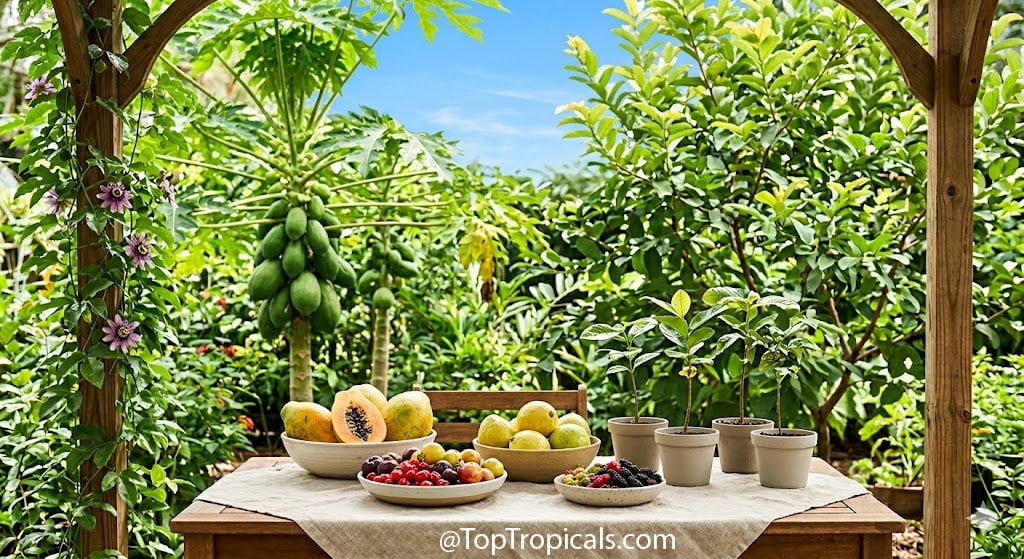
Want fruit without the wait? These tropical powerhouses deliver a "fast-food" garden in record time.

  • 🍓 The Top 3 Speed Demons


1. The Favorite: Papaya 🍊
If you want speed, Papaya is king. It can go from a small seedling to heavy fruit in 6-10 months. It behaves more like a giant herb than a tree: it is fast, has shallow roots, and is incredibly responsive to water and fertilizer. In warm climates, it is a plant it and watch it go legend. 👉 More

2. The Reliable: Guava 🍉
Guava is the most forgiving fruit tree you can own. It handles heat, poor soil, and the occasional week of neglect without missing a beat. Most varieties begin producing in just 1-2 years, staying compact enough for small yards or large pots. 👉 More

3. The Surprise: Eugenias 🍒
This family (including Surinam Cherry, Grumichama, Cherry of the Rio Grande, and Pitomba) often flies under the radar. They look like ornamental shrubs, but they establish quickly and can fruit within year two. They handle pruning beautifully, making them perfect for edible hedges. 👉 More

  • 🍓 The Fast-Fruit Honor Roll


  • 🍓 Ultra-Fast (Under 1 Year)

Papaya and Banana: The heavyweight champions of speed.
Strawberry Tree (Muntingia calabura): Non-stop cotton candy berries.
Grafted Favorites: High-quality Mango, Avocado, Peach, Nectarine, and Persimmon.

  • 🍓 Very Fast (1-2 Years)

The Berries: Mulberry (especially Everbearing), Fig, and Barbados Cherry.
The Exotics: Strawberry Guava, Loquat, and the curious Peanut Butter Tree (Bunchosia).
The Sweet Treats: Blackberry Jam Fruit (Randia formosa).

  • 🍓 Tropical Staples (2-3 Years)

Starfruit (Carambola): A heavy producer that looks stunning in the garden.
Annona Family: Sweet Sugar Apples and creamy Atemoyas.
Macadamia Nut: A long-term investment that starts surprisingly early.

🍓 Fast Climbers and Bush Fruit


Passionfruit: Will cover a fence and fruit in a single season.
Berries: Mysore Raspberry and classic Blackberries for quick returns.

🛒 Ready to harvest? Shop the "Fast-Fruit" Collection

📚 Learn more:

Plant Facts

Blepharocalyx salicifolius, Eugenia salicifolia
Murta
USDA Zone: 9-11
Small tree 10-20 ftSemi-shadeFull sunRegular waterWhite, off-white flowers

#Food_Forest #How_to #Discover

🟢 Join 👉 TopTropicals
Date: 6 May 2026

Why your plants need more than NPK

Why your plants need more than NPK


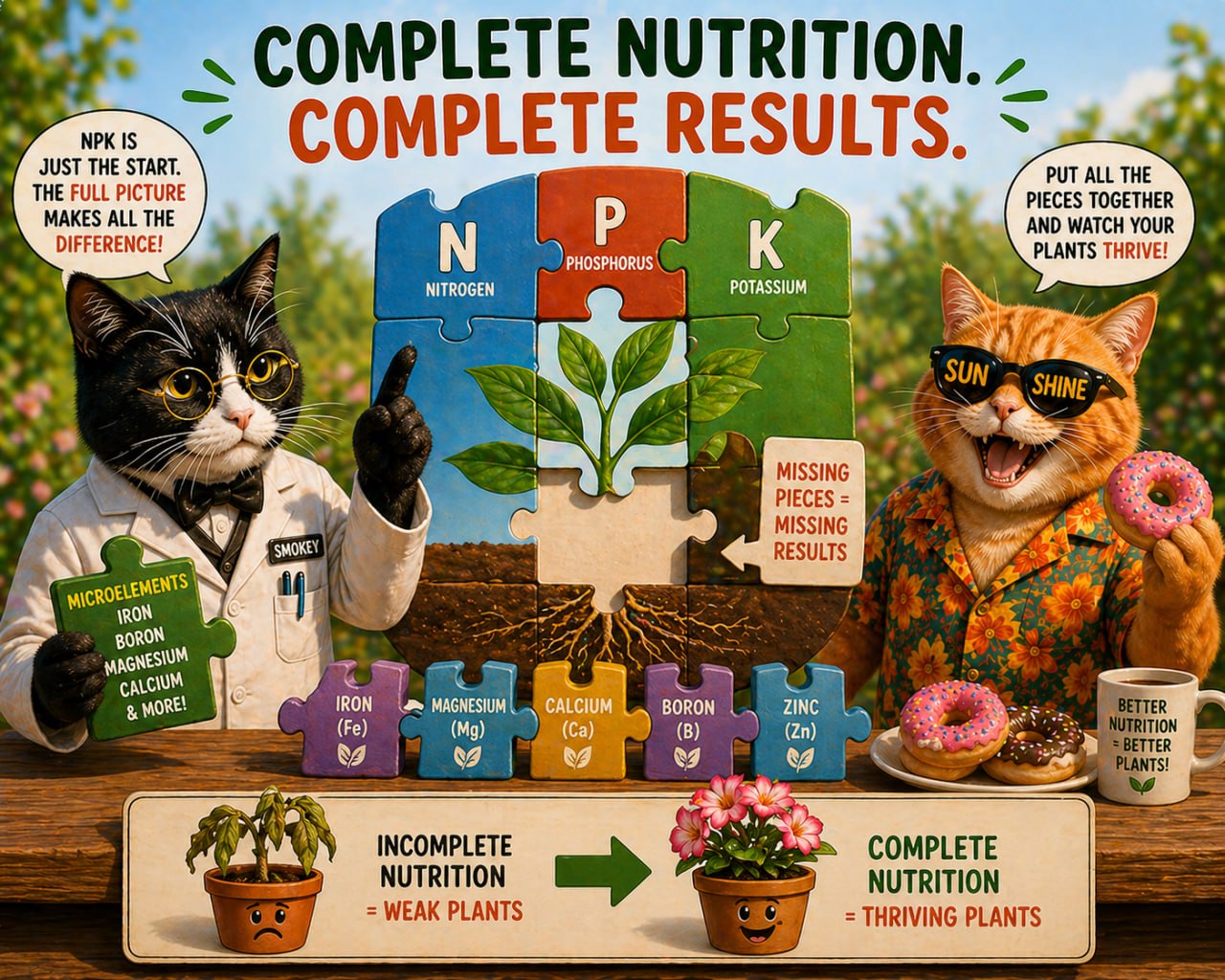
Most fertilizers focus on just three numbers - NPK. But that’s only part of the story. If your plants look okay but not amazing, or grow but don’t really thrive, they’re likely missing the smaller pieces that make a big difference.

  • ☘️ Complete nutrition your plants actually use


Plants need more than just NPK. They also require a full range of microelements like iron, boron, magnesium, calcium, and others. These support photosynthesis, sugar movement, and internal plant processes.

Sunshine Boosters include a full spectrum of these nutrients in balanced amounts. This gives plants complete nutrition without needing extra products for basic care.

  • ☘️ The "Potassium Pump" - how plants move water and energy


Potassium plays a central role in how plants move water and energy. You can think of plant cells as tiny rooms with doors that open and close. Potassium helps control these openings.

Where potassium goes, water follows. This movement fills plant cells, making them firm and strong. It also helps move energy through the plant, supporting fruit development and flowering.

With enough potassium, plants handle drought better, grow stronger, and produce better crops.

☘️ Calcium - the backbone of plant strength


Calcium plays a key role in building strong plant structure and keeping growth stable. It is a major part of cell walls, so it directly affects how firm and healthy the plant tissues are. When calcium is available, plants develop stronger stems, better roots, and more solid fruit with improved shelf life. It also helps regulate how nutrients move inside the plant and supports proper cell division, which is important for new growth, root tips, and developing fruit.

Calcium improves resistance to stress, including heat and disease, and helps prevent common problems like blossom end rot, weak growth points, and poor fruit quality. Because calcium does not move easily inside the plant, a steady and available supply is important throughout the growing cycle.

Calcium cannot be mixed with NPK dry fertilizers. It forms insoluble compounds with phosphates and sulfates, so it has to be dosed separately.

In Sunshine Boosters, Calcium is present along with additives - complex agents and pH regulators. This allows you to dose calcium, sulfates, trace elements and other additives in one solution without fear of fertilizer lockout.

🛒
Get your plants real food

📚
Learn more:
📱 What are Sunshine Boosters

#Discover #Fertilizers #How_to
🟢 Join 👉 TopTropicals

Date: 4 May 2026

How to cut a Mango

How to cut a Mango
How to cut a Mango 🥭

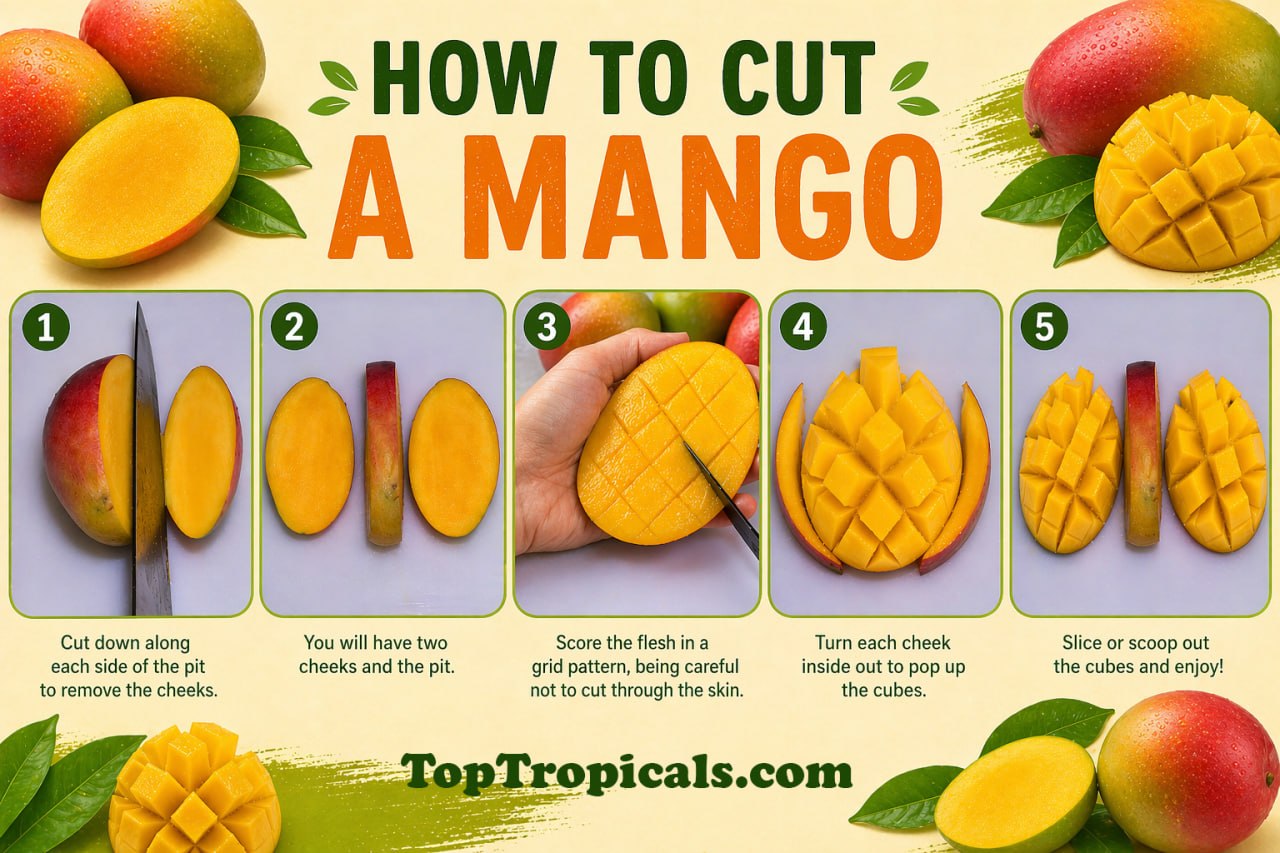
  • 🔸1. Cut down along each side of the pit to remove the cheeks.
  • 🔸2. You will have two cheeks and the pit.
  • 🔸3. Score the flesh in a grid pattern, being careful not to cut through the skin.
  • 🔸4. Turn each cheek inside out to pop up the cubes.
  • 🔸5. Slice or scoop out the cubes and enjoy!


🛒 Explore Mango varieties

📚 Learn more:

Plant Facts

Mangifera indica
Mango
USDA Zone: 9-11
Large tree taller than 20 ftSmall tree 10-20 ftFull sunModerate waterYellow, orange flowersPink flowersEdible plantSeaside, salt tolerant plant

#Food_Forest #Mango #How_to

🟢 Join 👉 TopTropicals

Date: 3 May 2026

3 Olive Trees Worth Planting in Your Yard Right Now

3 Olive Trees Worth Planting in Your Yard Right Now

3 Olive Trees Worth Planting in Your Yard Right Now


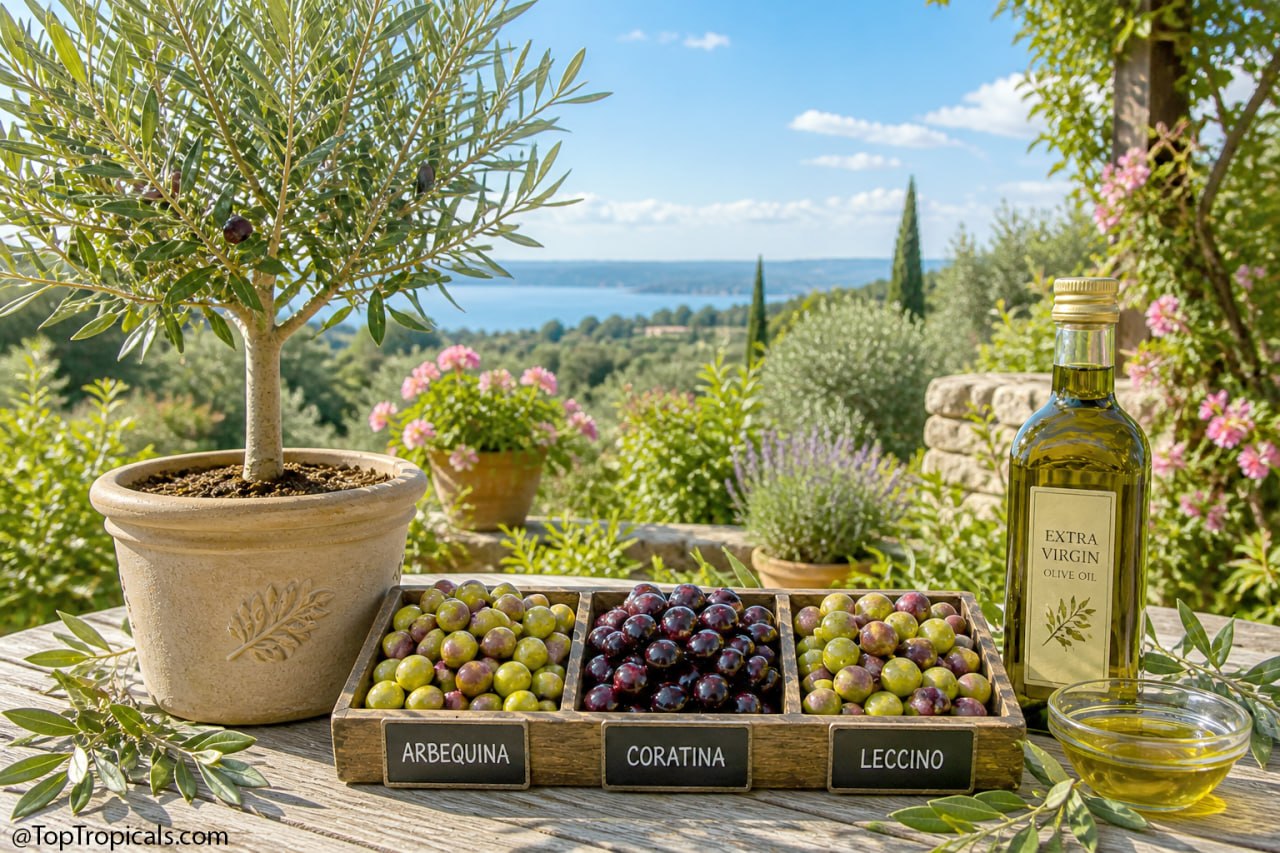
Olive trees aren’t just for the Mediterranean anymore. In warm parts of the U.S. - including much of Florida - certain varieties handle heat, humidity, and even occasional cold better than people expect. If you’ve been thinking about adding something useful, low-maintenance, and long-lived to your garden, olives deserve a spot on your list. Here are three varieties that actually make sense to grow.

  • 1. Arbequina: Compact, Productive, and Beginner-Friendly


Arbequina is one of the easiest olives to grow, especially if space is limited. It is naturally compact, which makes it great for containers or small yards. It starts producing early compared to other olives, handles heat well, and adapts to different soils. The fruit is mild, buttery, and excellent for oil. If you want an olive tree that behaves well and produces without much fuss, this is the one. 👉 More...

  • 2. Coratina: Bold Flavor and Strong Growth


Coratina is a completely different type of olive - vigorous, tough, and known for intense flavor. It is fast-growing and very hardy once established, and it produces heavily under the right conditions. The fruit is high in oil content with a flavor that is strong and peppery, making it prized for premium olive oil. This is a great choice if you want a more traditional, high-performance olive tree with character. 👉 More...

  • 3. Leccino: Reliable and Cold-Tolerant


Leccino is known for consistency and is one of the most widely planted olives for a reason. It is more cold-tolerant than many other varieties and is a reliable producer year after year. It has a medium growth habit that is easy to manage, and the fruit works well for both oil and curing. If your area gets occasional cold snaps, Leccino is a safer bet. 👉 More...

  • Why olives make sense in your garden


Olives check a lot of boxes most fruit trees don’t. They are drought-tolerant once established and don’t need rich soil; average or even poor soil is fine. They are long-lived trees that can produce for decades and have low pest pressure compared to many tropical fruits. They’re not high-maintenance, and they don’t demand constant attention.

What to know before you plant


A few practical points make all the difference. Full sun is non-negotiable, and drainage matters because if water sits, the roots suffer. Light pruning keeps trees productive and manageable. Some varieties produce better with cross-pollination. In Florida conditions, airflow and avoiding overly wet soil are key.

If you want a tree that looks good, produces something useful, and doesn’t need babysitting, olives are hard to beat. Choose Arbequina for small spaces and ease, Coratina for strong growth and bold oil, or Leccino for reliability and cold tolerance. Plant one - or plant all three - and you’ll start to see why olive trees have been grown for thousands of years.

📚 Learn more:

Plant Facts

Olea europea
Olive
USDA Zone: 9-11
Plant used for bonsaiSmall tree 10-20 ftFull sunDry conditionsModerate waterEdible plantPlant attracts butterflies, hummingbirdsEthnomedical plant.
Plants marked as ethnomedical and/or described as medicinal, are not offered as medicine but rather as ornamentals or plant collectibles.
Ethnomedical statements / products have not been evaluated by the FDA and are not intended to diagnose, treat, cure, or prevent any disease. We urge all customers to consult a physician before using any supplements, herbals or medicines advertised here or elsewhere.Subtropical plant. Mature plant cold hardy at least to 30s F for a short time


🛒 Shop Olive trees

#Food_Forest #How_to #Discover

🟢 Join 👉 TopTropicals

Date: 2 May 2026

What makes Sunshine Boosters different

What makes Sunshine Boosters different

What makes Sunshine Boosters different


If your plants look stressed, slow, or inconsistent, the issue might not be your care - it might be how you’re feeding them. Most fertilizers are harder to use than they should be. Once you understand why, everything starts to make sense.

  • ☘️ Why fertilizers are so confusing?


If you’ve ever stood in front of a shelf full of fertilizers thinking "what do I even pick?" - you’re not alone.
Most feeding programs are a mess. Different brands, different formulas, different schedules. One for growth, one for bloom, one for micros, one more "just in case".
And somehow it still feels like guesswork.
Easy to overfeed. Easy to underfeed. Easy to waste money.
That’s exactly the problem Sunshine Boosters were built to solve.
The formulas are balanced and mild, so you can use them regularly without stressing about mistakes.
Now here’s where it gets interesting.

  • ☘️ The problem with traditional fertilizers


Most traditional fertilizers weren’t made for how we actually grow plants today. Dry fertilizers are built for large field use. They often carry excess salts and don’t work well in containers or soilless mixes. Many don’t even include enough trace elements.
And over time, they can build up in the soil.
Sunshine Boosters works differently.

  • ☘️ Why liquid feeding wins


First - it’s liquid.
Plants don’t eat nutrients, they drink them. Liquid feeding means nutrients are available right away. Every watering becomes feeding. No waiting, no uneven supply.

  • ☘️ Amino-acid chelation - the real difference


Second - the way nutrients are delivered is completely different.
Most fertilizers use synthetic chelators like EDTA. They keep nutrients stable, but plants have to spend energy to use them.
Sunshine Boosters use amino-acid chelation instead.
That means nutrients come in a form plants already recognize and use naturally. Less effort for the plant, more energy for growth, flowers, and fruit.
And there’s no salt buildup over time.

  • ☘️ Low salt index - better water uptake


Speaking of salts - this is a big one.
High salt levels in fertilizers actually make it harder for plants to absorb water. That’s why plants can look stressed even when the soil is wet.
Sunshine Boosters has a low salt index.
Less resistance, better water flow into the roots, better hydration, stronger plants.

  • ☘️ Faster growth without the risk


Put it all together and you get faster growth, stronger structure, more flowers and fruit - without the usual risk of burning or overdoing it.
Because the nutrient levels are balanced and not overly concentrated, they do not affect the natural taste of fruits and edibles.
The products are also safe for regular use and friendly to pollinating insects, which is important for fruit production.

☘️ Feeding made simple


And the best part?
It’s simple.
Mix Sunshine Boosters with water. Use it when you water. That’s it.

  • 👉 Stay with us - next we’ll break down how different formulas match different plant needs, so you can get even better results. 👉 More...


🛒
Get your plants real food

📚
Learn more:
📱 What are Sunshine Boosters

#Discover #Fertilizers #How_to
🟢 Join 👉 TopTropicals