Garden Blog - Top Tropicals

Date: 2 Jun 2026

The Holy Grail of Medinillas: Why Collectors are Chasing the Philippine Pink
The Holy Grail of Medinillas: Why Collectors are Chasing the Philippine Pink

🎀 The Holy Grail of Medinillas: Why Collectors are Chasing the Philippine Pink


Some tropical plants are impressive because of their massive size, others capture attention with the delicate beauty of their flowers; Medinilla apoensis - popularly known as the "Philippine Pink" - stands out because it somehow does both at the same time.

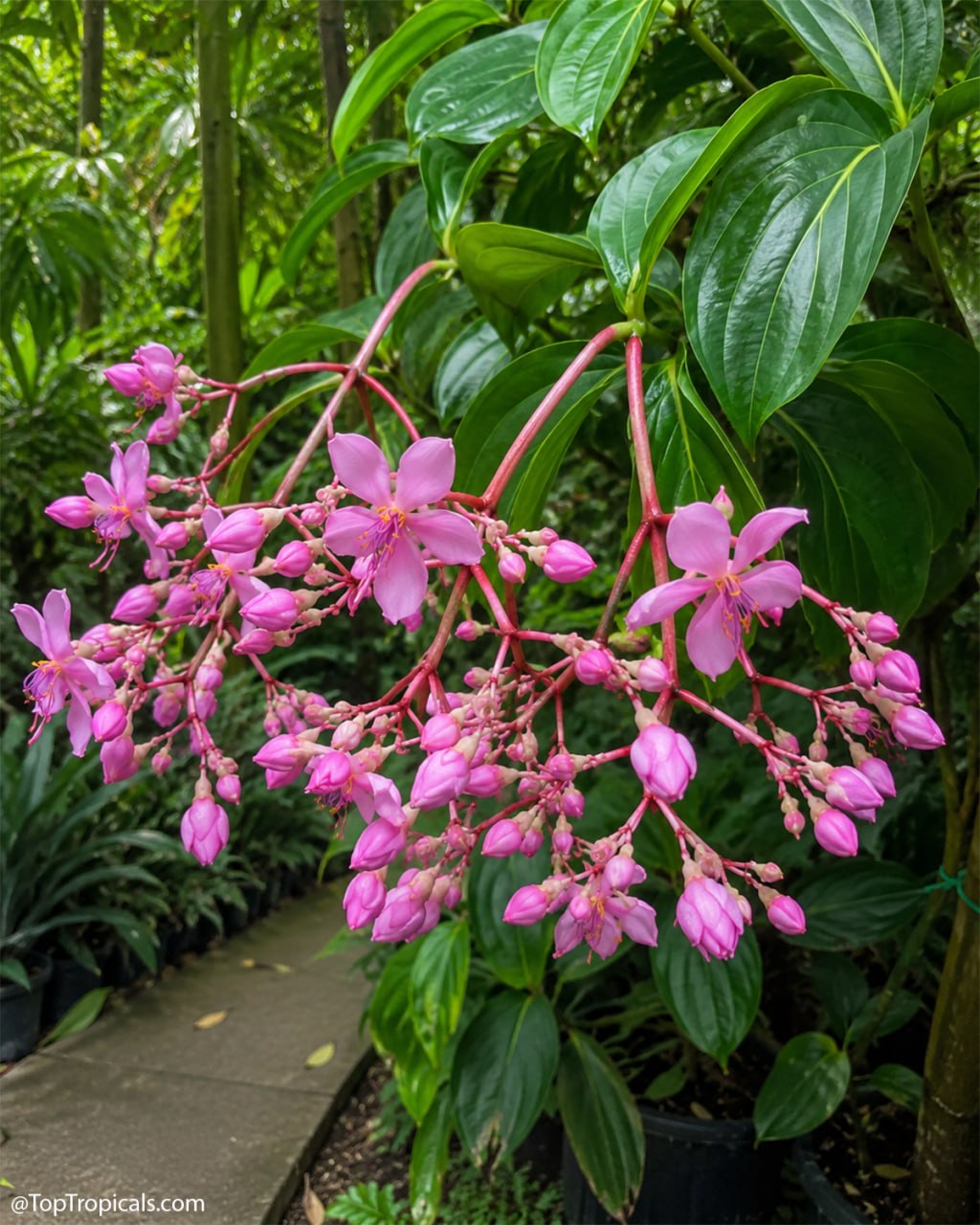
🎀This rare Philippine species produces vivid, bright pink flower clusters that rise and cascade above the foliage like glowing tropical chandeliers. Unlike many Medinillas that rely mostly on oversized pink bracts for their visual show, this species gets its dramatic appearance from the flowers themselves - large, intensely colored blooms arranged in elegant, pendant clusters.
The effect is so striking that many people assume the plant is artificial the first time they see it.

🎀 A Different Kind of Medinilla


Most indoor gardeners are familiar with the famous Medinilla magnifica, often called the "Rose Grape" plant. However, Medinilla apoensis has a completely different personality.

· Architectural Foliage: The leaves are heavily veined, lush, and deeply textured, giving the plant a rich rainforest appearance even when it isn't flowering.
· Floating Blooms: When it's time to bloom, the bright pink flowers emerge on branched, hanging stems, floating above and around the leaves instead of hiding beneath them.
· Oversized Flowers: The individual flowers can reach nearly 2 inches across—unusually large for the genus—creating a fuller and far more dramatic display than its relatives.

Its graceful, cascading growth habit only adds to the effect, making mature plants look almost sculptural.

🎀 A Rare Collectors Treasure from the Cloud Forests

As the name suggests, Medinilla apoensis originates from the Philippines, a tropical region famous for its extraordinary epiphytic plants and rich rainforest biodiversity. In the wild, these plants naturally grow perched on tree branches in humid mountain forests, where constant airflow, filtered light, and mist create the ideal microclimate.

Because it remains relatively uncommon in commercial cultivation, the "Philippine Pink" has that exact combination that plant enthusiasts love: it is rare, exotic-looking, and elegantly dramatic.

🏆 The Best Part? It is surprisingly manageable to grow indoors if you can mimic its native cloud-forest habitat.

🎀 How to Help It Thrive

Despite its finicky, ultra-tropical appearance, Medinilla apoensis isn't impossible to keep happy. Like many epiphytes, its success comes down to a few key elements:

· Light: Bright, filtered or dappled sunlight (avoid direct, scorching afternoon sun).
· Climate: Warm temperatures and consistently high humidity.
· Watering: Regular moisture, but never allow the roots to sit in stagnant water.
· The Golden Rule: Avoid dense, heavy soil. In nature, their roots are exposed to constant airflow. To prevent root rot, use a chunky, fast-draining tropical mix containing orchid bark, coco coir, and perlite.

🎀 The Ultimate Showstopper

Some plants blend seamlessly into the background of a collection. Medinilla apoensis is not one of them.

Between the heavily textured foliage, the sculptural cascading habit, and those glowing pink flowers suspended like fine jewelry, this is the kind of plant that instantly becomes the center of attention in a greenhouse, patio, or bright living room.

For the dedicated plant collector, finding one of these rare treasures in full bloom feels less like routine gardening and a lot more like discovering hidden tropical treasure.

🛒 Shop Medinilla plants

📚 Learn more:

Philippine Pink Medinilla Plant Facts

Botanical name: Medinilla apoensis
Also known as: Philippine Pink Medinilla
USDA Zone: 10
Highligths Small plant 2-5 ftSemi-shadeWatering: Moderate. Water when top soil feels dryWatering: Regular. Let topsoil dry slightlyPink flowers
Get personalized tips for your region

· Medinilla apoensis in Plant Encyclopedia
· What pot is good for Medinilla?
· Is this a Plant or a Coral?
· How to add a splash of tropical flair to your plant collection
· The Drama you want in your garden: dazzling Medinilla!
· Medinilla Gregori Hambali - an Exquisite Natural Wonder
· The Rolls Royce of House Plants: Medinilla

#Shade_Garden #Container_Garden #Discover

🟢 Join 👉 TopTropicals

Date: 30 May 2026

The Fake Bamboo That Blooms Like a Rare Orchid Year-Round

The "Fake" Bamboo That Blooms Like a Rare Orchid Year-Round


Bamboo Orchid (Arundina graminifolia): Ever seen a bamboo plant sprout stunning, pinkish-purple orchid flowers? It looks like a trick of nature, but it’s actually the Bird Ground Orchid! This exotic showstopper features tall, cane-like stems and long, alternating leaves that mimic real bamboo perfectly. But instead of just growing green, these towering plants - which easily reach hip height or taller - produce delicate, 3-inch blooms that look exactly like high-maintenance Cattleya orchids.

🌸 Why it’s perfect for your yard:


Continuous blooms: The flowers open one at a time at the top of the canes, keeping the colorful show going for weeks on end.
Year-round color: While they peak in the summer, these tropical beauties can bloom almost all year long.
Low maintenance: Unlike notoriously finicky orchids, the Bamboo Orchid is a hardy, easy-to-care-for addition that thrives beautifully in shade gardens.

If you want a unique, sky-reaching plant that brings instant tropical vibes to your landscape without the hassle, this is the one to plant. 👉 More...

📚 Learn more:

Bamboo Orchid Plant Facts

Botanical name: Arundina graminifolia, Arundina affinis, Bletia graminifolia
Also known as: Bamboo Orchid, Bird Orchid
USDA Zone: 9 - 10
Highligths Small plant 2-5 ftSemi-shadeShadeFull sunWatering: Regular. Let topsoil dry slightlyEpiphyte plantWhite, off-white flowersPink flowers
Get personalized tips for your region

· Arundina graminifolia in Plant Encyclopedia
· When Bamboo blooms with orchid flowers
· The prettiest flower for shade
· Ground orchids: all-summer colors
· Why do we love Ground Orchids
· Epidendrum radicans - Orange Reed Ground Orchid, Sunrise
· Terrestrial orchids
· What orchids can be grown in the ground
🎥 Ground orchids: all-summer colors for shady gardens

🛒 Shop Ground Orchids

#Container_Garden #Shade_Garden #Discover

🟢 Join 👉 TopTropicals

Date: 28 May 2026

The white-fleshed, low-acid pineapple disrupting tropical gardens

The white-fleshed, low-acid pineapple disrupting tropical gardens

🍍 The white-fleshed, low-acid pineapple disrupting tropical gardens


Most people think all pineapples taste roughly the same - sweet, tangy, yellow, and a little acidic. Then they try a Sugar Loaf pineapple and suddenly understand why rare fruit collectors are obsessed with this variety.
Sugar Loaf - also known as Kona Sugarloaf - completely changes expectations of what a pineapple can taste like. If regular pineapples leave your mouth burning after a few bites, this variety may change your mind about growing tropical fruit at home.

🍍 Why Kona Sugarloaf is completely different from store-bought pineapples


Originally associated with West Africa and later popularized in Hawaii, Sugar Loaf stands out for several unusual characteristics:

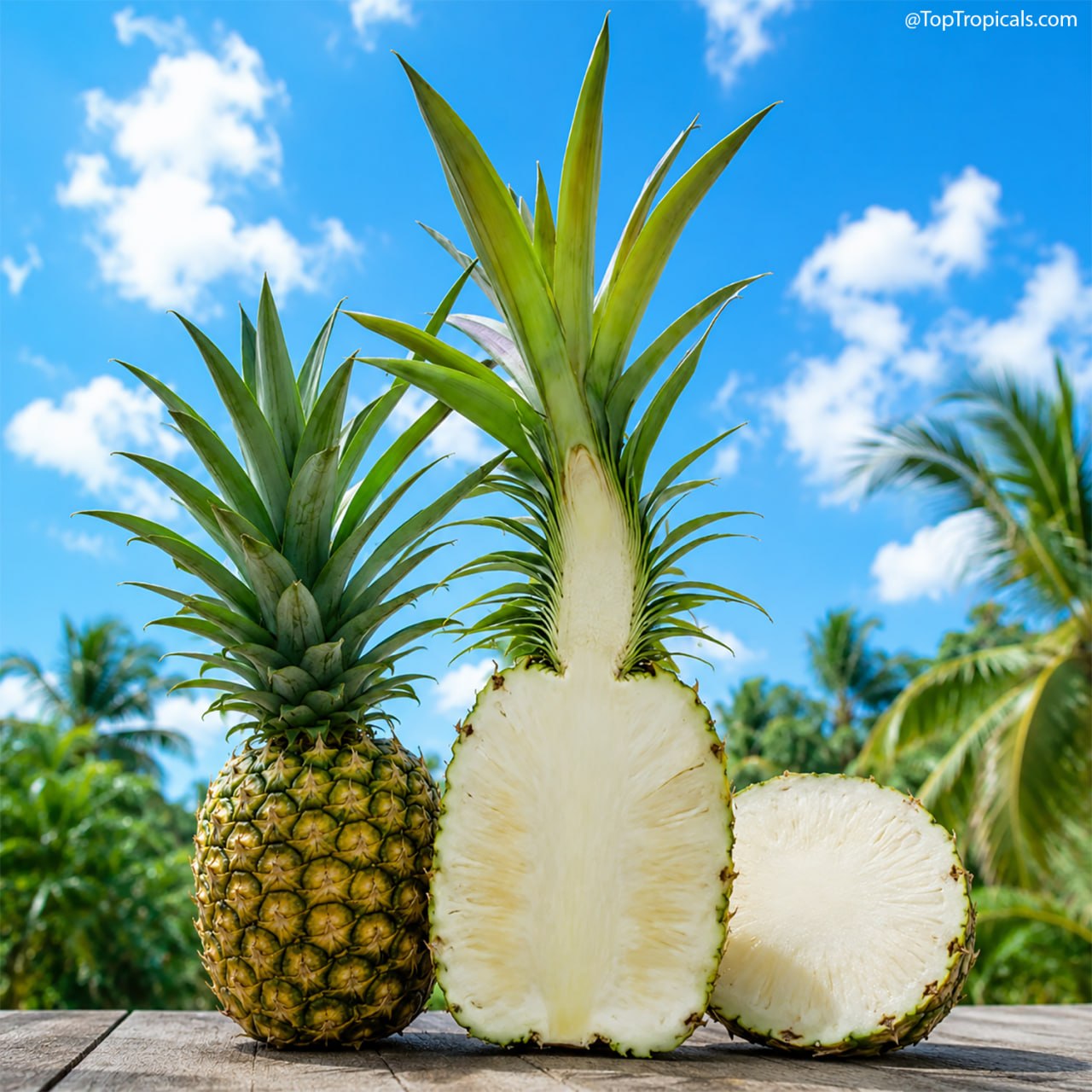
Creamy white flesh - Instead of the typical golden-yellow interior, Sugar Loaf produces soft, juicy, creamy-white fruit.
Very low acidity - The flavor is smooth, mild, and intensely sweet, with many growers describing notes of vanilla, honey, and coconut.
An edible core - Unlike regular pineapples with tough woody centers, the core of Sugar Loaf is tender and fully edible.
The green deception - One of the strangest things about this pineapple is that it often stays dark green even when fully ripe. Many first-time growers wait too long expecting it to turn gold.

Standard Pineapple:
Golden Skin ✦ Yellow Flesh ✦ High Acid ✦ Woody Core
Sugar Loaf Pineapple:
Green Skin ✦ White Flesh ✦ Low Acid ✦ Edible Core

🍍 A heavyweight performer in the garden


The fruit itself has a unique shape - taller, slimmer, and noticeably heavier for its size than standard pineapples. Under ideal tropical conditions, a single Sugar Loaf fruit can approach 10 pounds.

Beyond the fruit, gardeners love the plant for its ornamental appeal. It produces a dramatic pointed crown and arching tropical foliage, making it attractive even before fruit appears.

🍍 Kona Sugar Loaf at a glance

Pineapple Plant Facts

Botanical name: Ananas comosus
Also known as: Pineapple, Pina
USDA Zone: 9 - 11
Highligths Small plant 2-5 ftSemi-shadeFull sunWatering: Moderate. Water when top soil feels dryOrnamental foliageThorny or spinyEdible plantSubtropical plant. Mature plant cold hardy at least to 30s F for a short time
Get personalized tips for your region


Plant Type: Compact, self-fruitful bromeliad
Fruit Size: Up to 10 lbs under ideal conditions
Skin Color at Ripeness: Deep green
Flesh Color: Creamy white
Cold Tolerance: Tropical; protect from frost

🍍 Container-friendly for northern growers


You do not need a Hawaiian orchard to grow this collector favorite. Because Sugar Loaf grows as a compact bromeliad, it adapts well to patios, containers, and small gardens.

In tropical climates, it can be planted directly in the ground. In colder regions, gardeners often grow it in large pots outdoors during warm weather and move it indoors near a bright window for winter.

👉 Grower's Tip: Pineapples and bromeliads respond especially well to regular feeding during warm weather. SUNSHINE Ananas - Pineapple and Bromeliad Booster was designed specifically for bromeliads and fruiting pineapples to support vigorous growth and sweeter fruit production.

For tropical fruit enthusiasts, Sugar Loaf has quietly become one of those varieties that makes ordinary grocery-store pineapples feel surprisingly boring afterward.

🛒 Try the pineapple with the edible core and more pineapple varieties

📚 Learn more:


Ananas varieties (Pineapples) in Plant Encyclopedia
What are the best varieties of Pineapples?
What is the best pineapple to grow at home
How we ate all pineapples from that ugly corner
The most luscious Hospitality Fruit: Pineapple
Three must-have fruit for every tropical garden
Rare Pineapple that looks like a sunset and thrives on neglect
🎥 King of Fruits that makes you healthy and happy

#Food_Forest #Container_Garden #Discover

🟢 Join 👉 TopTropicals

Date: 27 May 2026

How to Root Plumeria Cuttings: The Dry Method for Success

How to Root Plumeria Cuttings: The Dry Method for Success
How to Root Plumeria Cuttings: The "Dry" Method for Success ✔️

Plumeria cuttings root with incredible ease if you respect their succulent nature. Most failures come from two mistakes: planting too early and watering too much. Whether you use the traditional potting method or the professional Thailand "Surface" Method, the secret is: Keep it dry until it grows

✍️ Stability Note: Cuttings vs. Grafted Trees


While cuttings are easy, they develop shallow, horizontal root systems.
Best for: Pots and sheltered garden spots.
For windy or hurricane-prone areas: Consider Grafted Plumeria. Grafted trees use a seedling rootstock with a strong taproot, providing much better anchoring and long-term stability.
  • 🌸 5 steps how to root plumeria cuttings - simple method that works
  • 🌸 Step 1: Prepare and Cure (The 5-Day Rule)


Before a cutting ever touches soil, it must heal.
Cut: Take healthy branches 6-12 inches long and remove all leaves.
Cure: Place the cuttings in bright shade with plenty of airflow.
The Goal: Wait 3-5 days until the cut end is bone-dry, firm, and callused.
Pro Tip: Planting a "wet" cutting is the #1 cause of stem rot. If it isn't callused, do not plant it.

🌸 Step 2: Use Fast-Draining Soil


Plumerias hate "wet feet." You need a medium that drains instantly.
The Recipe: 50% professional potting mix (like Top Tropicals Abundancу mix) and 50% coarse sand.
Why it works: The bark provides structure, while the sand ensures water runs straight through, leaving no stagnant moisture.

🌸 Step 3: Planting & The "Thailand Method"


You have two proven ways to set your cuttings:

Method A: The Traditional Pot
1. Hormone (Optional): Dip the dry end in rooting hormone and tap off the excess.
2. Depth: Insert only 2–3 inches deep. Roots emerge from the base, not the stem.
3. Secure: Firm the soil so the cutting doesn't wobble.

Method B: The Thailand Style (Surface Rooting)
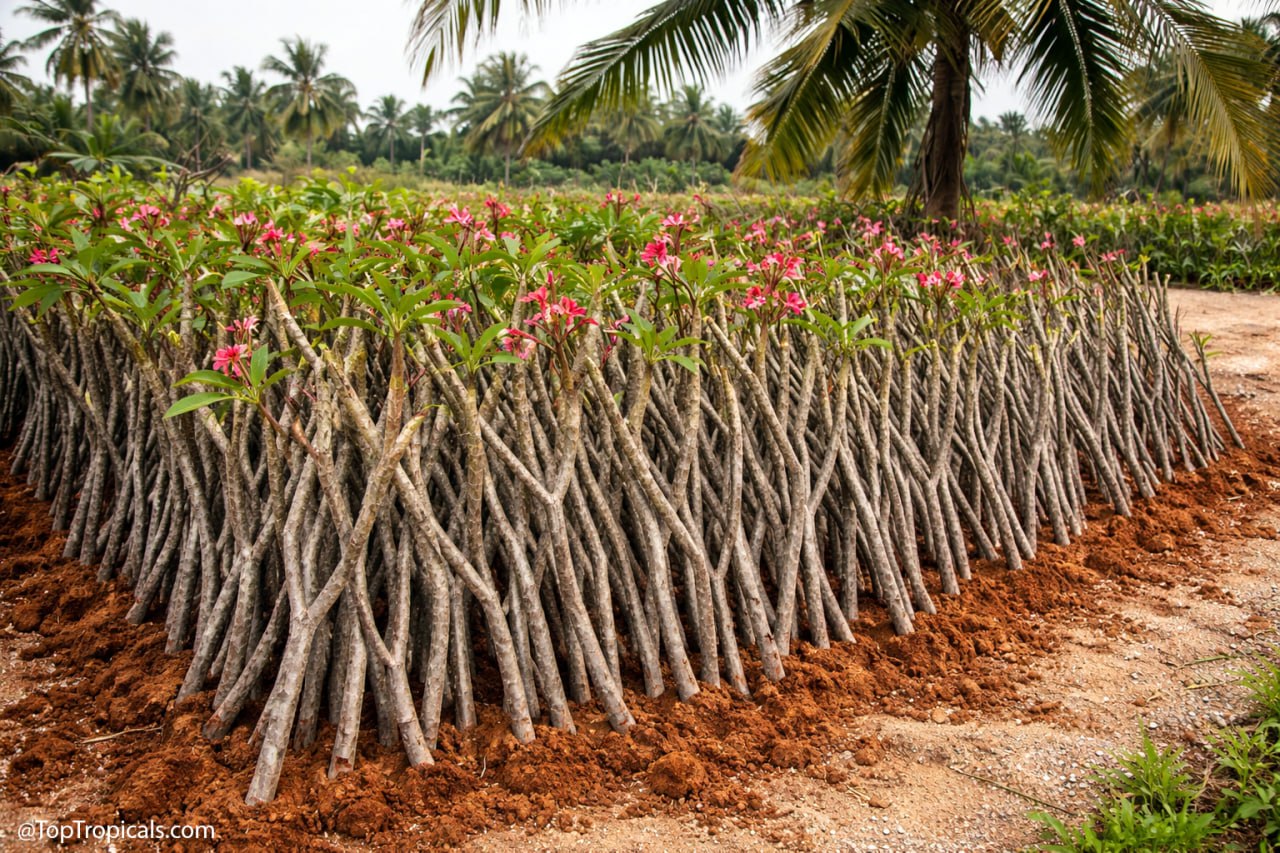
As seen in the image, large-scale growers often don't bury cuttings at all.
1. The Bed: Prepare a bed of well-draining soil.
2. The Placement: Stand the cuttings on top of the soil, leaning them against each other or a support.
3. The Benefit: This provides maximum airflow to the base and zero risk of rot. Roots will naturally dive into the soil as they emerge.

🌸 Step 4: Critical Watering Rules


This is where most gardeners fail.
Initial Watering: After planting, moisten the soil slightly—just once.
The Wait: Do not water again for 5–7 days. The Logic: No roots = No water intake. If the soil stays wet without roots to drink it, the cutting will rot.

🌸 Step 5: Heat, Light, and Air


Sun: Start in bright shade for a few days, then move to full sun. Heat is the catalyst for root growth.
Ground Heat: Placing pots on a warm surface (like a concrete patio or black ground cover) can accelerate rooting.
Airflow: Never root plumeria in a humid greenhouse or enclosed space. They need "open air" to thrive.

🌸 What to Expect


2-4 Weeks: Callusing ends and initial roots form.
4-8 Weeks: New leaf "claws" appear at the tip.
Success: Once you see full leaves, you can begin a regular watering and fertilization schedule.

✅ Quick Success Checklist


Dry the cutting for 3–5 days.
Use 50% sand for instant drainage.
Plant shallow (or use the Thailand surface method).
Wait a week before watering again.
Provide maximum sun and airflow.

❌ What NOT to do:


Avoid frequent watering. If you think it’s time to water, wait one more day.
Plumeria cuttings have no roots to drink with yet.
If the soil looks dry and you feel the urge to water, wait 24 hours. When in doubt, keep it dry.
Remember: You can save a dry cutting, but you can't save a rotten one.

🛒 Shop Grafted Plumeria Collection

📚 Learn more:
· Plumeria varieties in Plant Encyclopedia
· #PlumeriaRainbow

#Perfume_Plants #Container_Garden #How_to #Discover

Dwarf Plumeria Plant Facts

Botanical name: Plumeria alba
Also known as: Dwarf Plumeria
USDA Zone: 9 - 11
Highligths Large shrub 5-10 ft tallSmall tree 10-20 ftFull sunWatering: Moderate. Water when top soil feels dryWhite, off-white flowersFragrant plant
Get personalized tips for your region
🟢 Join 👉 TopTropicals

Date: 25 May 2026

Why Gardeners Are Secretly Obsessed With This Rare Brazilian Giant Walking Iris

Iris Regina - Neomarica caerulea

🔤 Why Gardeners Are Secretly Obsessed With This Rare Brazilian Giant Walking Iris


Meet Iris Regina - Neomarica caerulea: the rare, salt-tolerant Brazilian walking iris that blooms in under a year and thrives in shady, sandy soil where other tropicals fail.

One look at Iris Regina - and it's easy to see why tropical plant collectors quietly become obsessed with it. It pairs elegant, hand-painted blue-violet flowers with arching, sword-like leaves that instantly give your garden a lush, structural look.
But the real magic of this unusual Brazilian species isn't just its beauty - it's the fact that it thrives exactly where other tropicals fail.

The Plant That Thrives on Neglect (and Salt Air)


Originally discovered growing near the ocean in Brazil, Iris Regina naturally adapted to conditions that would frustrate most gardeners. Thriving in sandy soil, deep shade, and coastal salt spray, this plant is remarkably easygoing. While most flowering tropicals demand rich soil and perfect drainage, Iris Regina handles difficult planting zones with absolute grace.

👉 Quick Care Tip: While it loves moist, well-drained soil, overfeeding is a mistake. Too much fertilizer will give you massive leaves but fewer flowers!

Blooms in Less Than a Year


One of the most surprising traits of Iris Regina is how quickly it matures. Many rare ornamental plants test a gardener's patience for years before ever showing a bud. Fresh seedlings of this species, however, can reach blooming size in less than a year - an absolute rarity for a tropical perennial with such exotic flowers.

The blooms look like a cross between a rare orchid and a delicate iris. While individual flowers are short-lived, mature clumps continuously push out new blooms throughout the warm season, especially when kept evenly moist.

Light and Cold Tolerance: What You Need to Know


· Light: For the best foliage color and maximum blooming power, give it morning sun and afternoon shade. It can handle more sun, but only if you keep up with watering.
· Cold Hardiness: Iris Regina is comfortable down to about 30F. In warmer parts of Florida (Zones 9b-11), it performs beautifully outdoors year-round.
· Cold Climates: If you live in a freeze-prone zone, it makes an exceptional container plant. Just wheel it to safety when a freeze threatens.
Propagation: It's incredibly easy to divide, or you can grow it reliably fast from fresh seed.

25 Years of History: The Top Tropicals Connection


For us at Top Tropicals, Iris Regina isn't just another botanical listing - it carries a piece of our history. This specific variety was introduced by the legendary tropical plant collector Sid Gardino, who named it after his wife, Regina.

Sid and Regina have been longtime friends of Top Tropicals for over a quarter of a century. In fact, some of the very first plants in our nursery’s collection came from them more than 25 years ago. Plants like Iris Regina represent the early, passionate era of Florida plant collecting - treasures shared between friends long before rare plants became viral internet trends.

Today, Iris Regina still feels like a hidden gem compared to flashy orchids or massive aroids. But if you are looking for something elegant, salt-tolerant, and surprisingly easy to grow, this Brazilian walking iris might just become your favorite plant in the garden.

🛒 Get Iris Regina for a low-maintenance, always-blooming showstopper

📚 Learn more:

Walking Iris Plant Facts

Botanical name: Neomarica caerulea
Also known as: Walking Iris, Twelve apostles, Apostle Plant, Iris Regina
USDA Zone: 8 - 11
Highligths Small plant 2-5 ftSemi-shadeShadeFull sunWatering: Regular. Let topsoil dry slightlyBlue, lavender, purple flowersSubtropical plant. Mature plant cold hardy at least to 30s F for a short timeFlood tolerant plantSeaside, salt tolerant plant
Get personalized tips for your region

· Neomarica caerulea - Iris Regina in Plant Encyclopedia
· What flower is perfect for coastal gardens
· What is the best plant for a carefree flower border

#Container_Garden #Shade_Garden #How_to #Discover


🟢 Join 👉 TopTropicals