Garden Blog - Top Tropicals

Date: 11 Apr 2025

What is better than Apricot? Tropical Apricot!

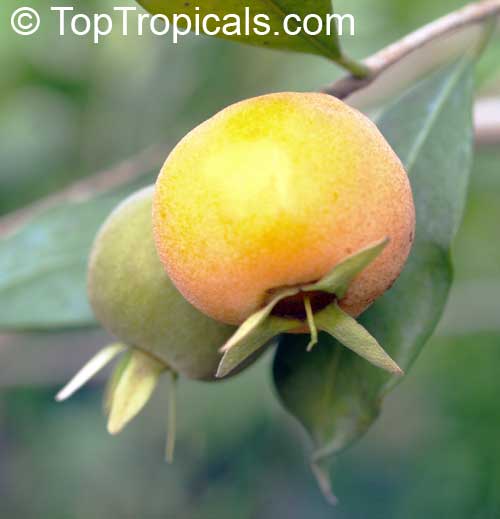
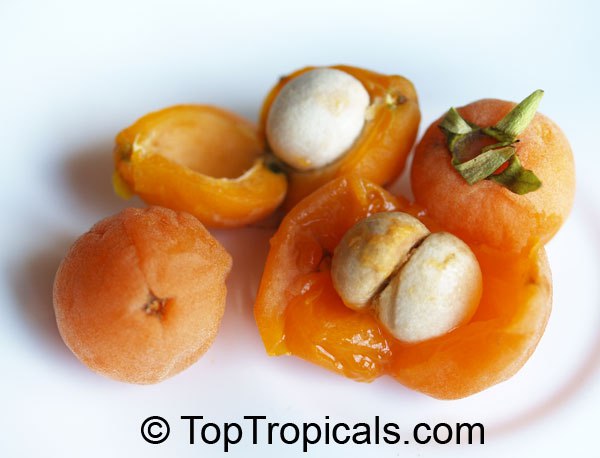
Pitomba, Eugenia luschnathiana - The Tropical Apricot Tree fruit

Pitomba, Eugenia luschnathiana - The Tropical Apricot Tree fruit

Pitomba, Eugenia luschnathiana - The Tropical Apricot Tree fruit

Pitomba, Eugenia luschnathiana - The Tropical Apricot Tree fruit

🍑 What is better than Apricot? Tropical Apricot!

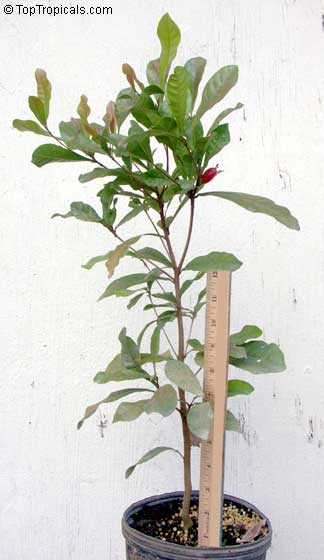
  • 🍑 Looking for a small, ornamental fruit tree with big flavor? Pitomba (Eugenia luschnathiana) - The Tropical Apricot Tree - is a Brazilian gem that's as beautiful as it is delicious.
  • 🍑 This slow-growing evergreen reaches 15-20 feet, with glossy dark green leaves and a striking light brown trunk. In spring, it bursts into white and yellow flowers, followed by apricot-colored fruits ripening from May to July.
  • 🍑 The fruit is juicy, aromatic, with a flavor and texture similar to apricots. Rich in vitamin C, minerals, and dietary fiber, Pitomba is perfect eaten fresh or turned into jams, jellies, and juices.
  • 🍑 Pitomba grows best in full sun, likes acidic soil, and appreciates regular water and feeding. Whether in the ground or in a pot, it’s a stunning and fruitful addition to your edible landscape.
  • 🍑 Why grow Pitomba?


🟡Unique tropical fruit with apricot-like flavor
  • 🟡Beautiful, compact tree for small yards or containers
  • 🟡Fruits in 2–3 years from seed
  • 🟡Cold-hardy to the upper 20s (°F) once mature. Grows in USDA zones 9–11 or indoors with winter protection
  • 🟡Traditional medicinal uses in Brazil for colds and digestive health


🛒 Buy Pitomba to add a small fruit tree with big flavor to your yard

#Food_Forest #Fun_Facts #Discover

🔴 Join 👉 TopTropicals

Date: 17 Apr 2025

Fuel Your Day Naturally: Grow Plants That Boost Your Energy

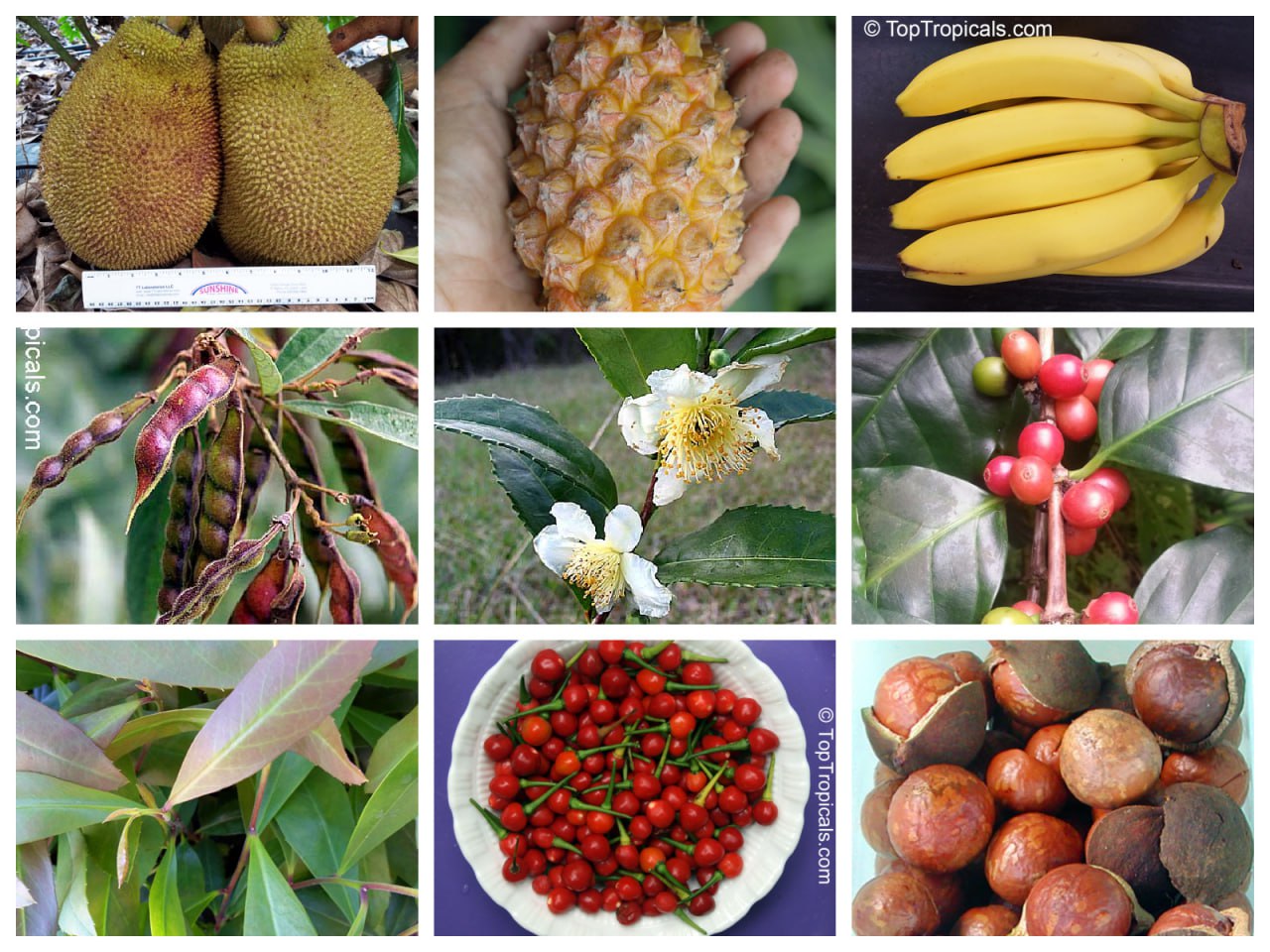
Tropical fruit that boost energy

Tropical fruit that boost energy

⚡️ Fuel Your Day Naturally: Grow Plants That Boost Your Energy


Feeling tired, sluggish, or mentally foggy? Your garden can be your energy station!
These tropical fruits and edibles are rich in Vitamin B1 (Thiamine), natural caffeine, and metabolism-enhancing compounds that help convert food into fuel, power your body, and sharpen your mind - naturally and sustainably.


⚡️ Top 9 Energy-Supporting Plants (Vitamin B1 - Thiamine):

  • 🟡 Jackfruit - A delicious tropical source of vitamin B1, supporting energy production and nervous system function.
  • 🟡 Pineapple - Contains thiamine, essential for turning food into usable energy.
  • 🟡 Banana - Supplies vitamin B1 and quick-access natural sugars, ideal for an energy lift.
  • 🟡 Pigeon Pea (Cajanus cajan) - A protein-rich edible legume packed with thiamine to aid in energy metabolism.
  • 🟡 Camellia sinensis (Tea Plant) - Leaves used to brew green and black tea, combining caffeine with L-theanine to promote sustained mental energy.
  • 🟡 Coffee - One of nature's most famous energy boosters - grown from a beautiful tropical tree.
  • 🟡 Yerba Mate - A South American favorite for mental clarity and physical stamina - with natural caffeine and nutrients.
  • 🟡 Wiri wiri and Biquinho Peppers - These fiery little peppers are rich in capsaicin, which may help boost metabolism, burn fat, and enhance overall energy levels.
  • 🟡 Macadamia Nut - Loaded with thiamine (B1) and healthy fats that support nervous system function and long-lasting energy.


📚 Learn more about health benefits of tropical plants:


TROPICAL FRUIT HEALTH BENEFITS GUIDE - Part 1 and Part 2

🛒 Shop Energy-Boosting Plants for Natural Energy

#Food_Forest #Discover #Remedies #Bananas

🔴 Join 👉 TopTropicals

Date: 6 Jan 2017

6 easiest fruit trees and 5 spices to grow in containers indoors

Q: This is why I want to move so that I can grow absolutely anything I want from your catalogue. Prefered Puerto Rico. Right now I live in New York and there is absolutely nothing I can grow there.

A: Of course living in Puerto Rico brings more opportunities to grow tropical species. However, you can create your unique tropical paradise even living in New York. We have many customers from up North who successfully grow tropical species (and get them to flower and fruit) in greenhouses, and even indoors.
Here are a few suggestions of tropical fruit trees that adapt well for container/indoor culture - for both beginners and advanced gardeners.

Top 6 fruit trees great for indoors / container culture / beginners
1. Mango (Mangifera indica). Select from one of smaller mango varieties
2. Sugar Apple (Annona squamosa)
3. Guanabana, Soursop (Annona muricata)
4. Miracle Fruit (Synsepalum dulcificum)
5. June Plum (Spondias cytherea)
6. Guava (Psidium guajava)

5 top spice plants (the spice will be with you right away, you don't have to wait for it to grow)
1. Allspice (Pimenta dioica)
2. Cinnamomon or Campor tree
3. Bay Leaf (Laurus nobilis)
4. Mint Tree (Satureja vimenea)
5. Vanilla orchid (Vanilla planifolia)

See a brief article of growing tropicals outside of tropics.

Don't forget to get some SUNSHINE boosters for your plant collection - for both successful indoor culture and cold protection!

See also our magazine Tropical Treasures) - Pushing the Limits of Tropical Gardening, with list of issues.

Date: 10 Oct 2016

Cold protection - winter action for your plant collection
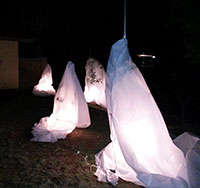
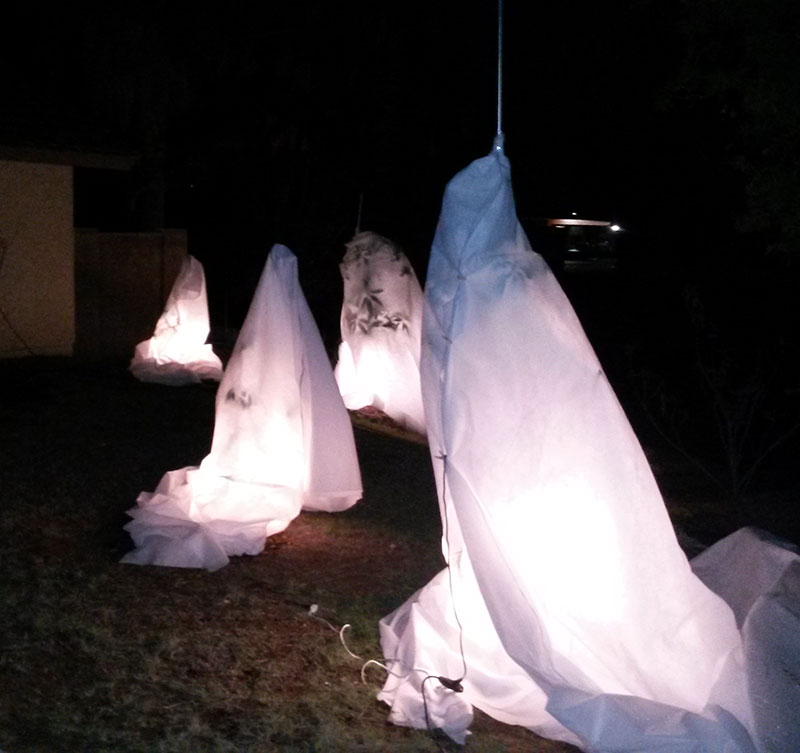
A note from our customer: Last winter was very cold here in Arizona, lower 30's. I used white synthetic sheets (called frost cloth, it is very light and yet effective) to cover my fruit trees, and kept simple light garlands on for the whole night. Sending you couple photos so you can share with others. It worked pretty well for my plants and no cold damage!

With winter approaching, it is time to take some actions to protect your rare plants from cold stress and damage.
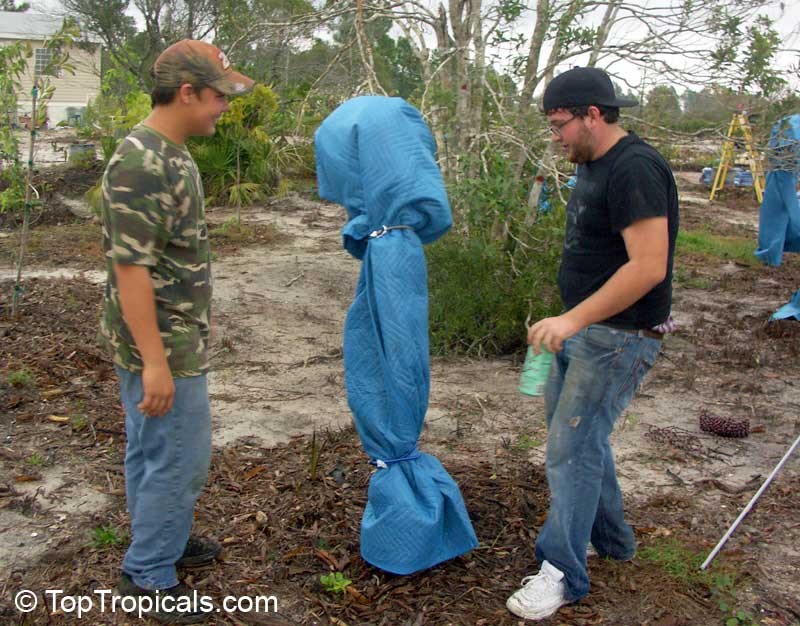
If you live in a mild climate, you still need to get ready for the cold nights. When expecting a cold night, individual plants and trees can be wrapped with sheets, or blankets, to protect them from the wind chill. Christmas lights is a good idea for an additional warm up.

For large collections of tropical plants, temporary winter greenhouse doesn't have to be expensive. An easy-assembly mobile carport from a hardware store covered with a plastic or fabric will cost you $100-200. It can fit a hundred plants or more!

If you live in area with a hard freeze, Southern exposure windowsill will work for most of the compact tropicals providing proper care. Larger collections may also move into your garage for a few cold nights, or for longer periods if the garage has a bright light source.

Factors affecting tropical plant winter survival:

1. Duration of cold period. Tropical plants can't stand long periods of cold. A few days of even upper 30's may kill a tropical plant. A few hours of frost may cause leaf drop but the plant will recover.
2. Minimum temperature - of course, the warmer the better. But see 1) - if cold is not for too long, it may be OK.
3. Wind-chill can be more dangerous than low temperatures.
4. Exposure. Southern slopes get warm during daytime and stay warm longer.
5. Protection with a house, fence, larger trees - where a "pocket" of warm air forms and stays - is beneficial.
6. Humidity. A lake or a river nearby (especially ocean) will mild the micro-climate.
7. Individual species hardiness. Don't try to grow Orchid Tree outdoors in New York.
8. Plant maturity and health. A well-established plant with developed root system has more chances to survive cold. If a plant had a good change to develop during warm season (bright light, enough water, fertilizer), it will be more cold hardy. Healthy plant can withstand lower temperature, so proper nutrition is important, including micro-element applications. Large specimens, even ultra-tropical, may survive cooler winter than they normally do in their natural habitat. The Nature provided plants with better hardiness level than it is normally used. To boost plant immune system and improve cold tolerance even more, use SUNSHINE plant boosters. SUNSHINE-T - thermo-protection booster, is specially formulated for winter protection of tropical plants. To improve cold hardiness, spray 1-2 days prior to cold with 5 ml/1 gal solution and continue applications with 2.5 ml/1 gal solution every 10-15 days throughout winter period.
9. Gradual temperature decrease is less dangerous than a sudden drop since it gives a plant a chance to adjust. One sudden freeze in December with prior warm fall may create more damage than a gradual temperature adjustment. If it starts to get cold early in the Fall, plants slow down their metabolism, and the new tender growth won't get hurt later in winter, since the plants are "expecting" the cold.
10. Do not fertilize plants during cool months. Not only because they don't need much food beyond growing season, but also because fertilizer (especially Nitrogen) encourages rapid tender growth that will be damaged by cold and this will stress the whole plant.

Stay warm!
Date: 18 Sep 2016

About Cold Protection...

Q: I have a question, if I'm in Okeechobee Florida zone 9b are there any plants that you sell that would have to be protected at all? I have a lot that I've purchased from you and don't want to lose any of them winter.

A: Sometimes it is hard to guarantee if certain plants are hardy enough in certain area. From our experience, tropical plant performance in non-tropical areas depend on many factors; a lot of times plants appear to be hardier than they are believed to be. Other times, an obviously hardy plant doesn't survive winter. So there always will be a chance of risk involved, while nice surprises are not an exception. We have been testing many tropical species throughout many years of our nursery experience. Wind protection in many cases is more important than temperature. Enclosed sections of your garden provide better chances to survive cold snaps. Generally speaking, here is the list of some plants (not complete list, just examples) that in our experience have been surviving light freezes without significant damage.

Q: I live in San Jose,CA. Got Mango Alphonso 2 yrs back and protected it for a year in a pot during winter. Last spring I planted it and during winter I put a freeze cloth to protect it but it died. How can I make sure it wont die if I buy this time plz?

A: Mango trees are tolerant only to light frost, once established. If it gets below freezing in your area for more than a few hours, and especially if you have numerous nights with frost throughout winter, we recommend to keep mango tree in a pot. This way it can be moved to protected area during cold night. The more established the tree, the more chances to survive colder temperatures.
We also use plant booster Sunshine to increase plants cold tolerance
Cold protection is a lengthy subject. You may also use propane heaters during cold nights.
Here is some more information on cold protection.
Also, we recommend to check out our magazine Tropical Treasures (about pushing the limits of tropical gardening) for a detailed article on cold protection.
These are specific articles on Zone-Pushing in different issue #s regarding dealing with cold. See downloadable issues:
(#1) Growing Tropicals in Nontropical Climate, Three Freezing Nights in Southwest Florida
(#2) Temperature drops - an alert or a rehearsal?
(#5) Dealing with cold snaps, Cold hardy beauties
(#7) When winter is around the corner, Growing exotic Cordyline in colder climate
(#8) When the weather outside is frightful
(#9) Winter champions
(#11) Ready-for-winter checklist for in-ground plants
(#13) Winter checklist
(#18) Dealing with cold damaged plants
You may also order hard copies.

If temperatures drop below freezing in your area, remember to add Heat Pack to your order!