Garden Blog - Top Tropicals

Date: 21 Jan 2026

Ice Cream Bean cool fluff: quick-n-fun exotic recipes
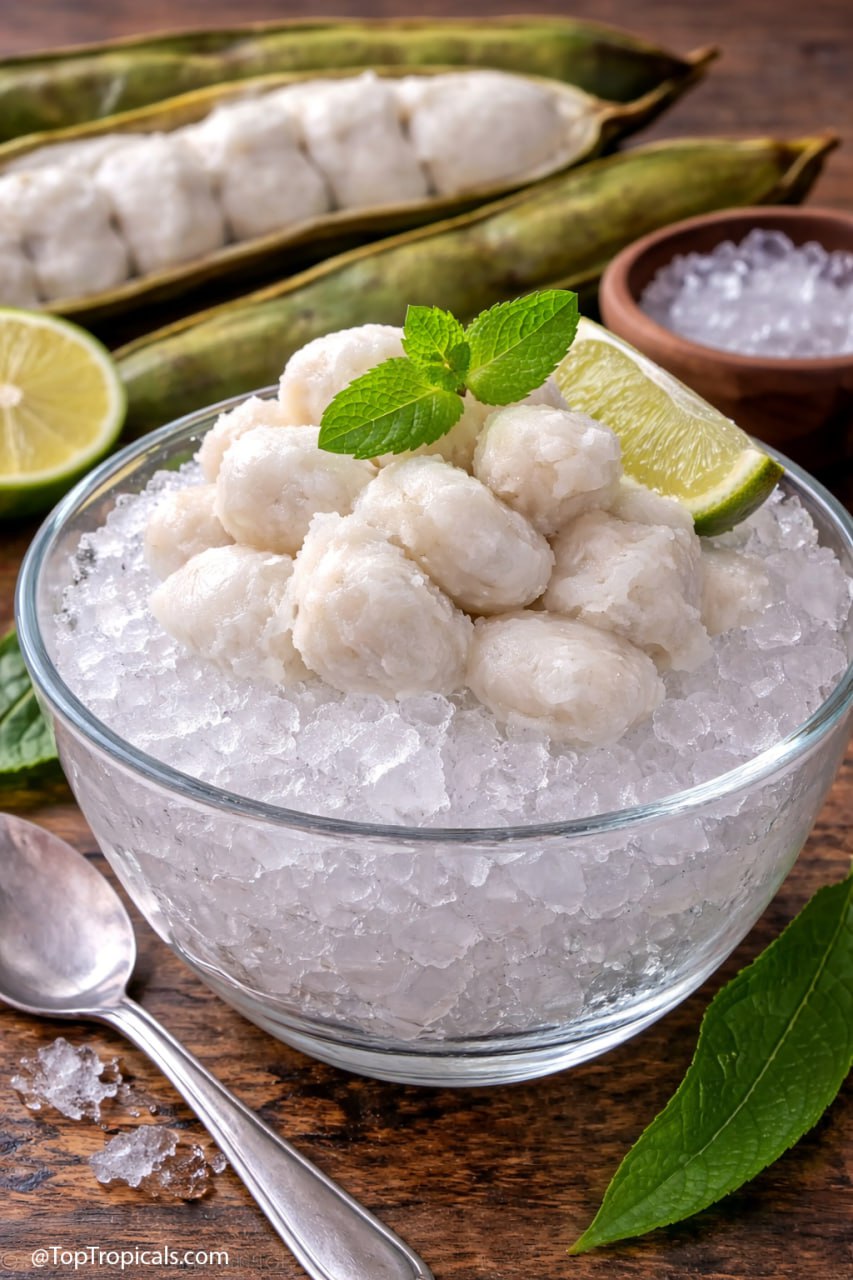
Ice Cream Bean cool fluff
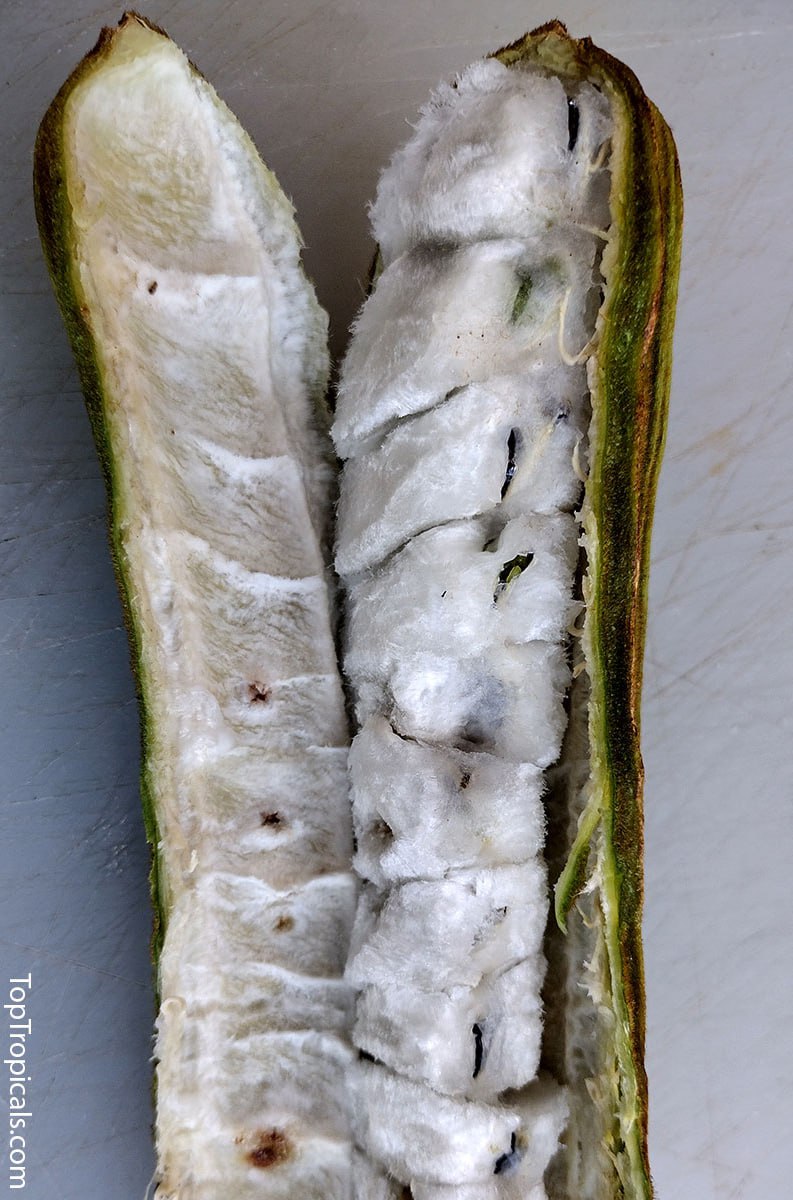
Ice Cream Bean cool fluff

Ice cream bean tree (Inga edulis) - fruit

Ice cream bean tree (Inga edulis) - fruit

🍴 Ice Cream Bean Cool Fluff

Ingredients

  • Fresh Ice Cream Bean pulp (Inga edulis)
  • Crushed ice
  • Optional: lime wedge or mint leaf for garnish

Instructions

  1. Open ripe Ice Cream Bean pods and scoop out the sweet white pulp.
  2. Remove and save the seeds if you want to plant more Ice Cream Bean trees.
  3. Chill the pulp for 20 to 30 minutes.
  4. Serve the chilled pulp over crushed ice as a natural shaved-ice dessert.

🌿 About the plant:


Ice cream bean (Inga edulis) produces long pods filled with sweet, cottony white pulp surrounding dark seeds. The flavor is mild, vanilla-like, and naturally creamy. The pulp is eaten fresh and used as a natural dessert across South and Central America.

Ice Cream Bean Plant Facts

Botanical name: Inga edulis, Inga feuilleei
Also known as: Ice Cream Bean, Inga, Guama, Guaba
USDA Zone: 9 - 11
Highligths Large tree taller than 20 ftFull sunWatering: Regular. Let topsoil dry slightlyWhite, off-white flowersEdible plantSubtropical plant. Mature plant cold hardy at least to 30s F for a short time
Get personalized tips for your region


🌱 In the garden:


Inga edulis is a fast-growing tropical tree with lush foliage and nitrogen-fixing roots that improve soil health. It is a perfect tree for a quick shade solution in just one season. While large in the ground, it can be managed with pruning in home orchards.

🛒 Plant Ice Cream Bean tree

📚 Learn more:


Ice Cream Bean tree (Inga edulis) in Plant Encyclopedia
Did you know that ice cream actually grows on a tree?
What does Ice Cream Bean fruit taste like?
Ice Cream Bean Tree: Eating the fruit and planting the tree

#Food_Forest #Recipes

🟢 Join 👉 TopTropicals
Date: 3 Jun 2026

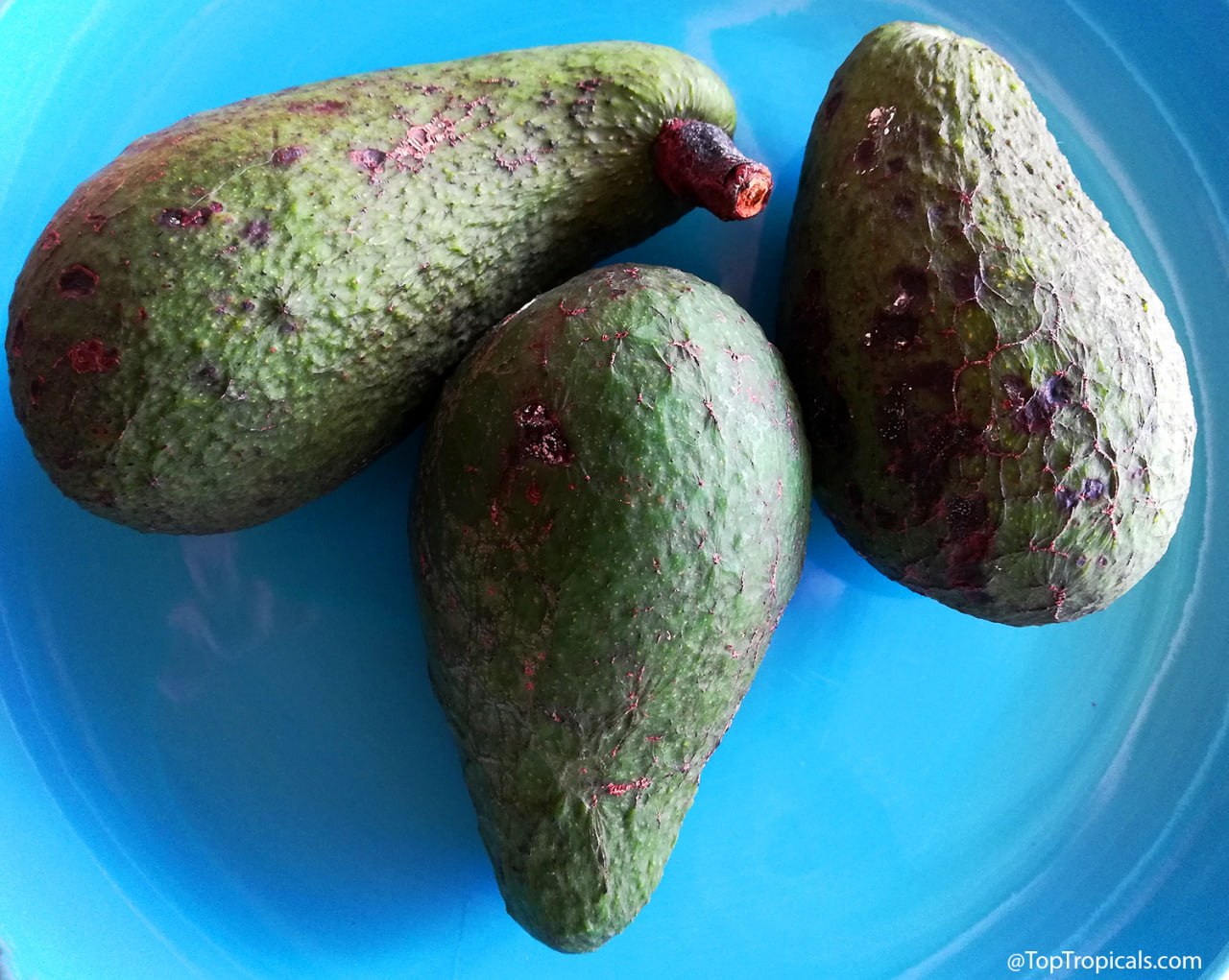
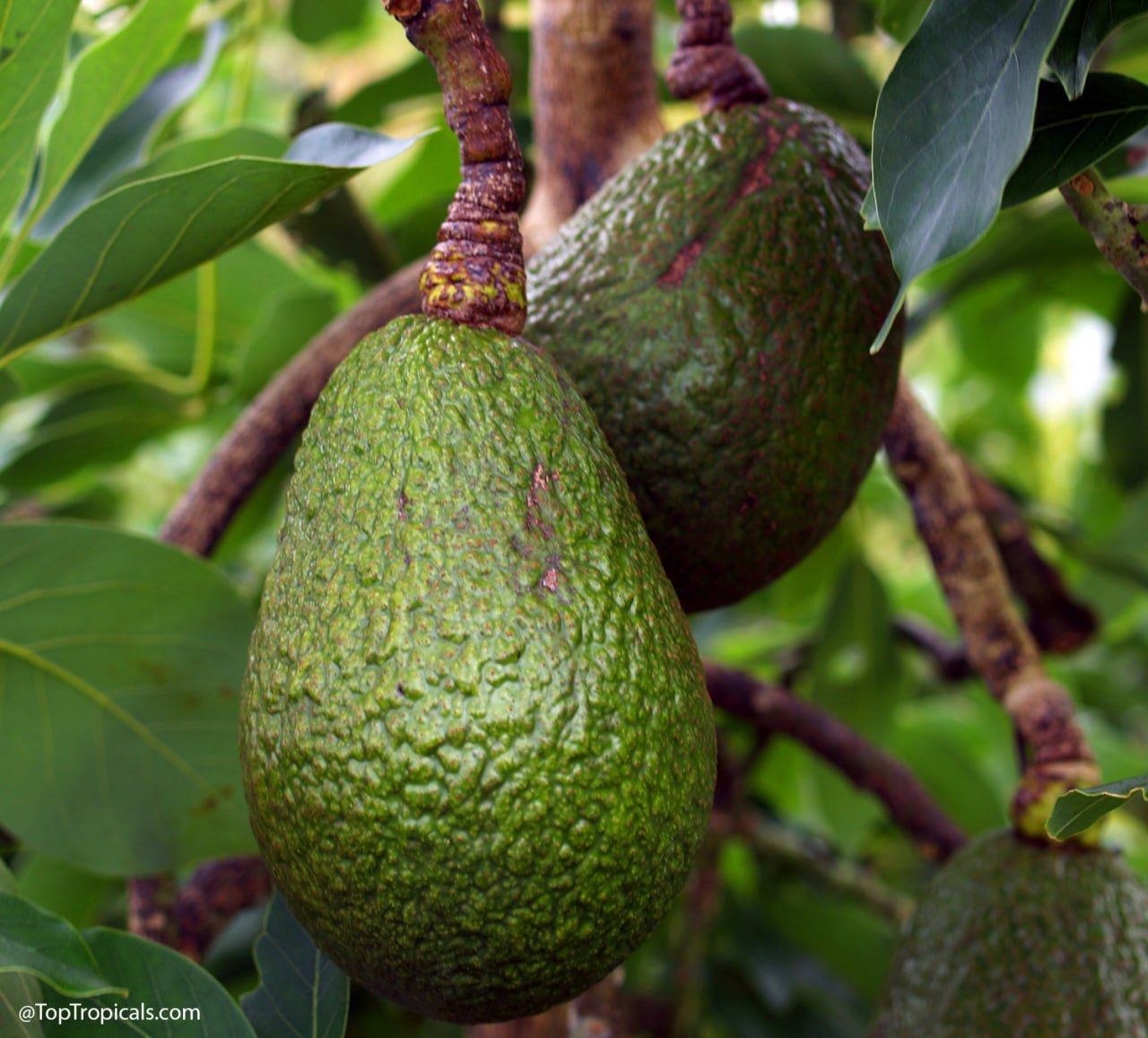
Avocado Fuerte: the hidden world beyond green and black

Avocado Fuerte: the hidden world beyond green and black Avocado Fuerte: the hidden world beyond green and black

Avocado Fuerte: the hidden world beyond green and black


Before Hass became the world's dominant avocado, Fuerte was considered the gold standard. This historic Mexican-Guatemalan hybrid produces medium-sized pear-shaped fruit with exceptionally smooth, buttery flesh and outstanding flavor. Cold-hardy and productive, Fuerte remains one of the finest eating avocados ever developed; and it's one of the very few dwarf varieties suitable for containers.

· Botanical name: Persea americana 'Fuerte'
· Origin: Guatemalan x Mexican hybrid
· Cold hardiness: Tolerates temperatures around 20°F and is one of the more cold-hardy classic avocado varieties
· USDA zones: 9a-11
· Flower type: B
· Tree size: Approximately 15 ft x 20 ft
· Growth habit: Compact to semi-dwarf, making it easier to manage than many traditional avocado varieties, well suited to home gardens and containers
· Foliage: Dense evergreen foliage with an attractive, spreading canopy
· Fruit size: 12-14 oz
· Fruit shape: Pear-shaped
· Fruit color: Green to green-black
· Skin: Medium-thin, smooth, and easy to peel
· Flesh: Creamy, buttery, and rich in oil
· Flavor: Rich, nutty, and widely regarded as one of the finest-tasting avocados
· Season: November-June
· Best use: Fresh eating, slicing, salads, and gourmet dishes
· Special feature: Historic variety that dominated the avocado industry before Hass became popular
· Why growers love it: Fuerte combines exceptional flFuerte combines exceptional flavor, good cold tolerance, and a compact growth habit that makes it easier to fit into smaller landscapes. One of the few avocado varieties considered suitable for container culture, it has long been a favorite among collectors and home gardeners who appreciate its rich buttery flesh, manageable size, and extended harvest season. 👉 More

💡 Avocado tip: Prune for width, not height
When a branch grows 10-12 inches, trim the tip. This encourages multiple side branches and creates a stronger, more productive tree.

🛒 Explore cold hardy Avocado varieties

📚 Learn more:


· Avocado Variety Guide: Snack or Guacamole? Collector's inspiration
· Avocado Florida Hass: the hidden world beyond green and black
· Avocado Brogdon: the hidden world beyond green and black
· Avocado Joey: the hidden world beyond green and black
· Avocado Fantastic: the hidden world beyond green and black
· Avocado Fantastic Quick Facts
· Cold-hardy avocado survival groups - what the numbers really mean
· How to protect Avocado from cold and how hardy is it?
· Avocado that laughs at frost: Mexicola Grande for cooler climates
· Cold hardy Avocado Joey - you eat it with the skin

📖 Our Book: Avocado Variety Guide, Snack or Guacamole?
·
Hard copy · PDF File Download

#Food_Forest #Avocado #Discover

🟢 Join 👉 TopTropicals

Date: 17 May 2023

Horoscope for Guanabana tree?

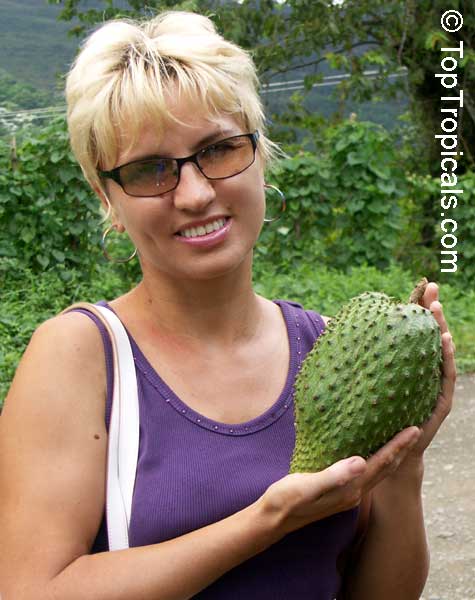
A  blonde  girl  holding  Soursop,  Guanabana  fruit

By Alex Butova, the Witch of Herbs and Cats

Q: What is the ruling planet of Guanabana? I have searched the internet, but can't find anything. Thought maybe you might know?

A: Annona muricata is native to the Caribbean and Central America, which falls under the patronage of the Pisces constellation. The planets that rule the house for this constellation are the Moon, Jupiter, and Neptune, with Water being a key element of its essence. These planets can be considered the ruling planets for the Guanabana plant...

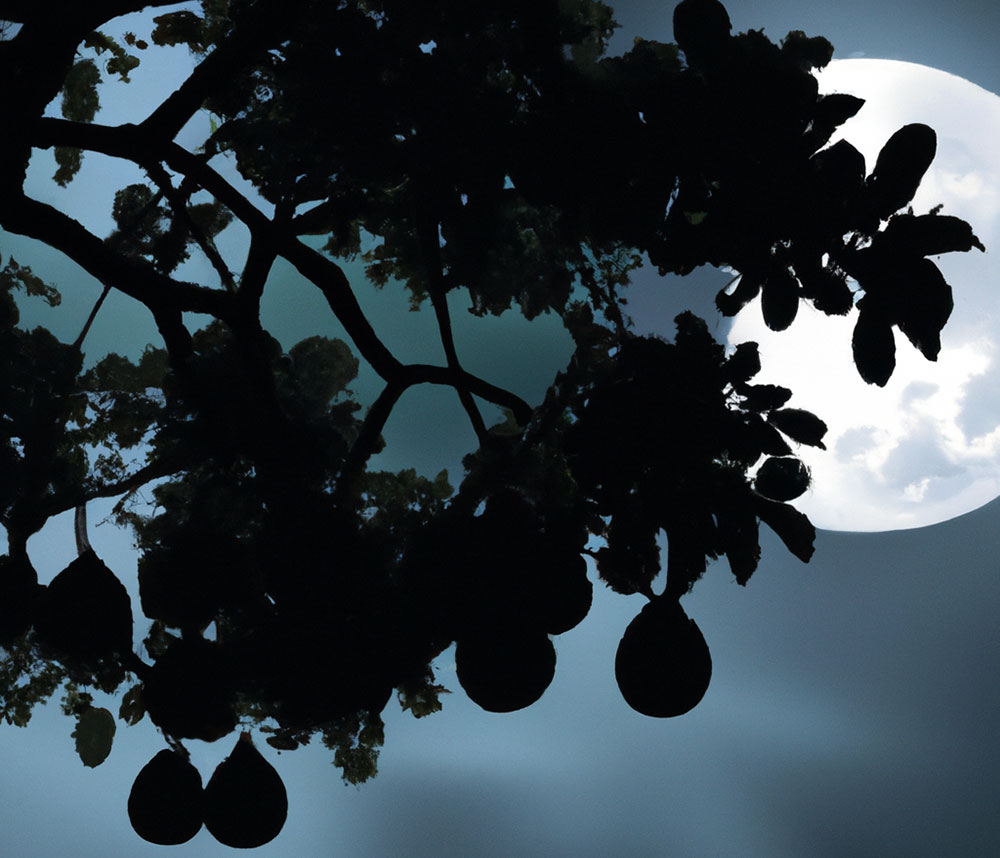
Guanabana  tree  with  full  moon

Date: 5 Apr 2023

What are Low Chill Apricots?

Prunus armeniaca (Armenian plum)

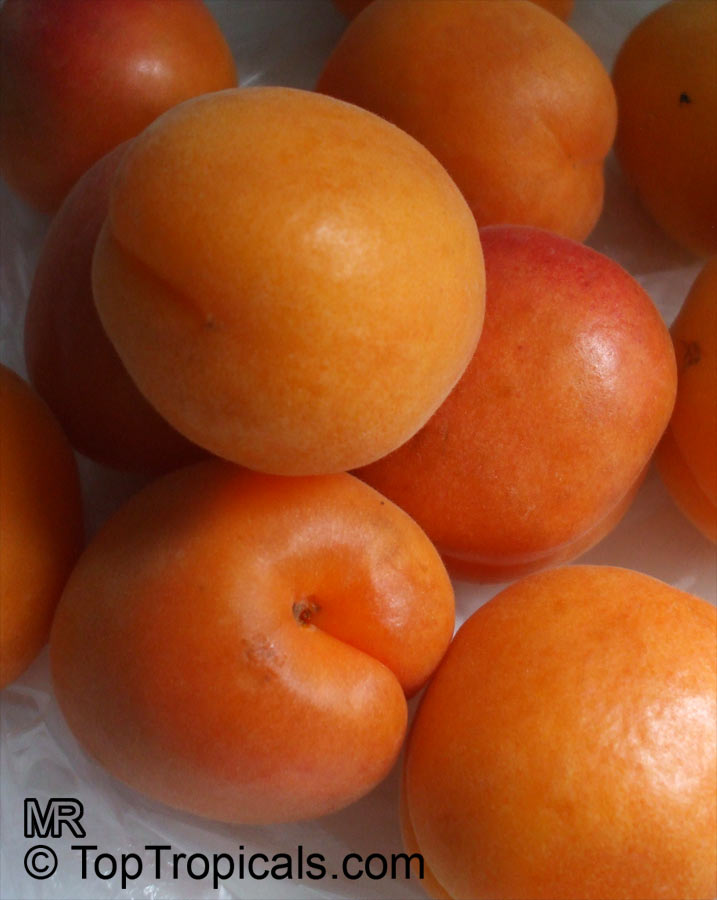
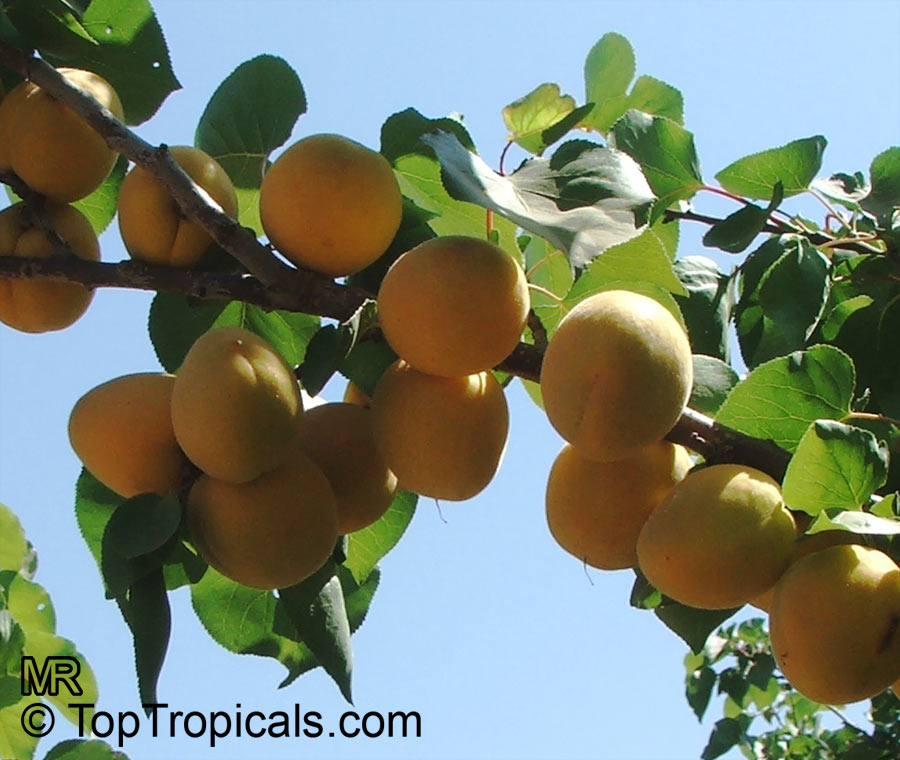
Apricot  var.  Katy  (Prunus  armeniaca)

Q: Can I grow apricots and plums in Florida?

A: Low chill apricots have been specially developed for subtropical regions like Central and South Florida, where the climate is not typically conducive for apricot cultivation due to the high number of chill hours required. This is also true for other fruit trees such as plums and peaches. However, through successful hybridization, several low chill varieties have been created that require less than 300 hours of cold weather below 45 degrees.
One such example is the low chill Katy Apricot tree, which only requires 250 chill hours and is self-fertile. It is a popular choice among homeowners due to its large size, rich flavor, and free-stone characteristics with a semi-sweet, low-acid taste. Katy Apricot tree typically bears fruit early, usually in May.

Apricot  fruit  on  a  tree

Date: 21 Jun 2022

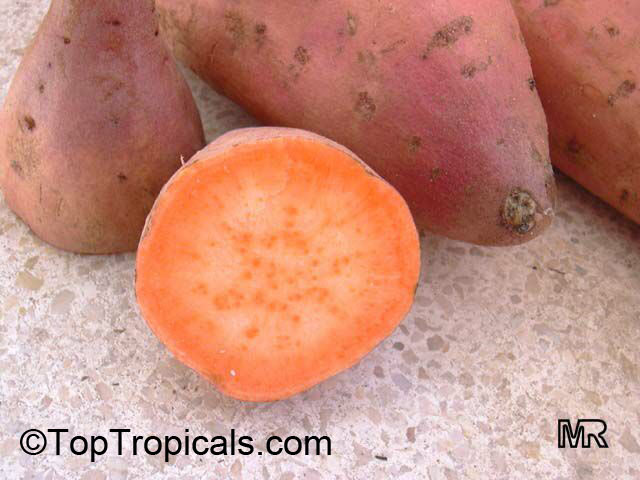
Sweet Potatoes - healthy food for every kitchen

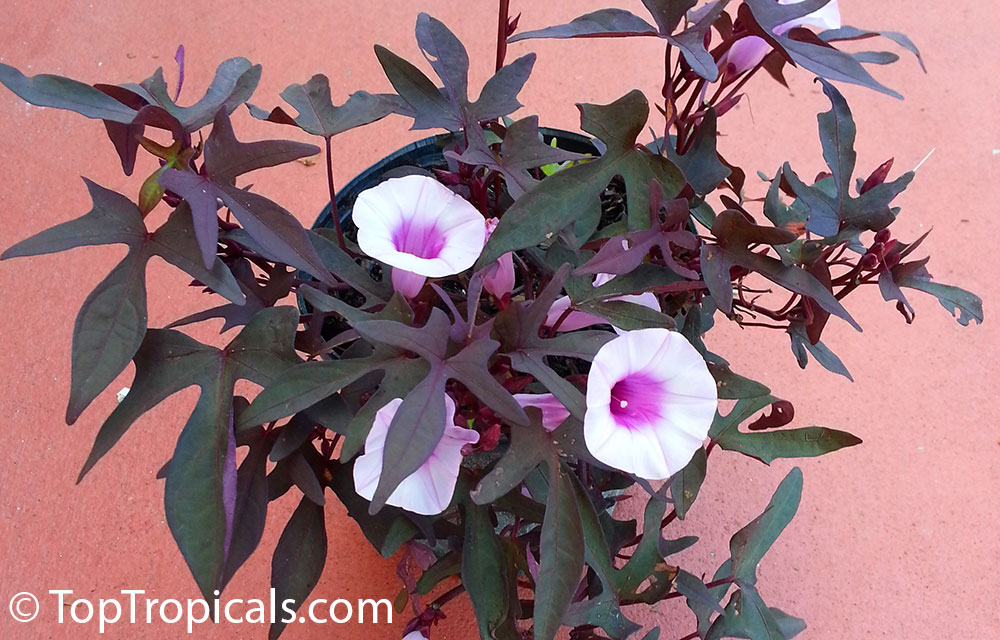
Ipomoea  batatas

by Alex Butova, the Witch of Herbs and Cats

"Oh my, what is this luxurious vine? These large, bright flowers! Looks like the Morning Glory and... is not like anything!"
"You want to know what this is? This is my favorite breakfast, lunch and dinner. For breakfast - sweet, but healthy porridge, for lunch - a wonderful side dish, and at last this plant makes a wonderful dessert after dinner!"
I didn't expect sweet potatoes to be represented by such a beautiful plant! So my old good friend introduced me to this supposedly ordinary, but spectacular and useful edible plant. Yet it is very fast growing and easy! Here is the story...

Ipomoea  batatas