Date: 14 Nov 2018
Plant Horoscope. Scorpio Zodiac lucky plants: Plants with thorns, red in color, and grow under adversity
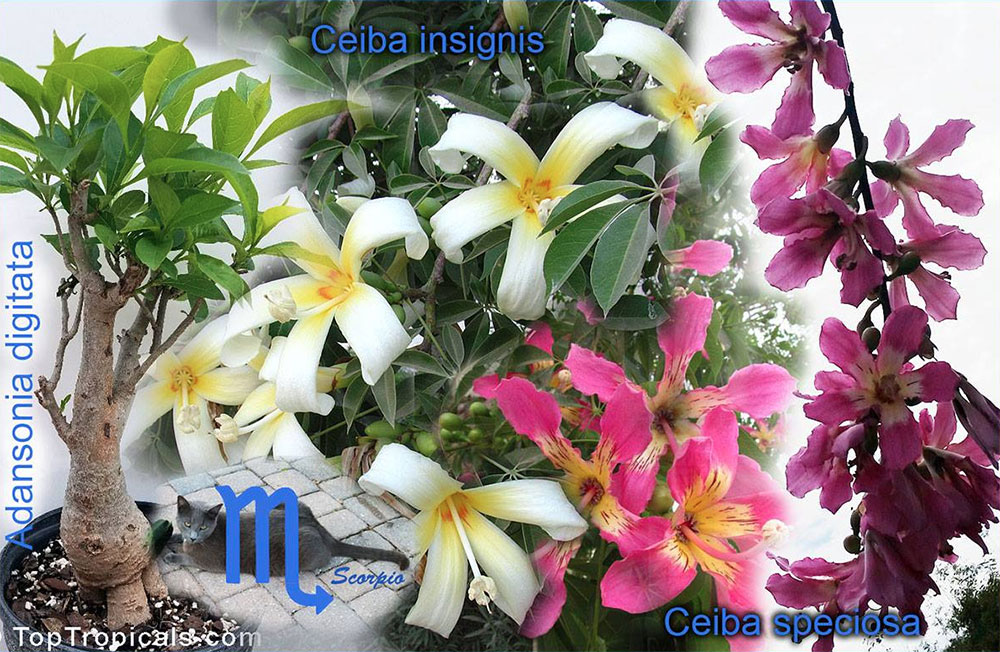
Scorpio - 10/23-11/21.
A WATER sign ruled by both Mars and Pluto.
Scorpio's plants are often found in remote places or on poor ground.
They will likely have thorns, can be red in color, and grow under adversity.
The good news is, most of these plants are nearly indestructible! This makes
them desirable for every gardener.
The reproductive organs are ruled by Scorpio, so these are plants that
balance the hormones, regulate the menstrual cycle, help with childbirth and
pregnancy. Until this century, Scorpio was ruled by Mars, and the herbs
associated with it had to do with the urogenital system and the colon. Many of the
herbs related to Scorpio are cleansing and revitalizing. Now, astrologers
assign Scorpio to Pluto, discovered in 1930 (Pluto is said by astrologers to be a higher octave of Mars). Physiologically, Scorpio involves the processes of catabolism and anabolism, the death and regeneration
of body cells. Diseases of Scorpio are often involved with the slow buildup of
toxic substances in the body (carcinogens, etc) or in the mind (anger,
jealousy). Scorpio loves a spice with depth and complexity. Camphor Basil adds
rich flavor to every dish it seasons, and its own aphrodisiac tendencies appeal to
Scorpio's lusty nature.
Scorpio Zodiac lucky plants:
Ceiba, Baobab, Pistachio, Nutmeg, Thunbergia, Combretums, Dragon fruit, Medinilla, Camphor Basil, Oregano, Vanilla orchid, Hibiscus, Various cacti and succulents,
Adenium, Honeysuckle, Peppers, Cordyline, Spider plant, Jasmine,
Gooseberries, Wild
indigo,
Bougainvillea,
Aloe vera, Raspberry
,
Palmetto, Horseradish tree, Camphor, Allspice and Bay Rum,Jujube, Sweet Mimosa, Agave,
Milkweed, Hong Kong
Orchid Tree, Pony Tail, Dwarf Poinciana, Bottlebrushes, Clusias, Crocosmia, Zig-Zag Cactus, Dracaena, Fire Bush, Hoyas, Jatropha
, Kalanchoe, Sausage tree, Devils Backbone, Pereskia, Red Plumeria, Firecracker, Rattlebox,
Rhoeo,
Calendula, Geranium, Thistles, Mint
, Sage,
Catnip,
Coriander, Sandalwood, Ginseng,
Euphorbias, Acacias
Date: 17 Oct 2018
October Tropical Garden: to do list
1. Prune. Last pruning before winter. Check the trees and shrubs one more time. Cut away dead wood and remove crossing limbs and branches.
2. Mulch. Continue to mulch to stop weeds and get ready for winter. Keep mulch 1-2 inches away from the stems. Evenings are starting to cool, so it is more comfortable working in the garden.
3. Pest control. Check for mealy bugs and scales. Remember that a garden with many kinds of plants has fewer pests than gardens with lots of mass plantings. So keep up with variety! Avoid pest magnets like Oleander, Oak, Hibiscus which require constant spraying.
4. Propagation. You still can take cuttings but do it as soon as possible. Days are getting shorter and less sunlight signals thу plants to slow down their growth. Cuttings will not root as quickly.
5. Seeds. Consider growing vegetables and perennials from seeds
Date: 7 Oct 2018
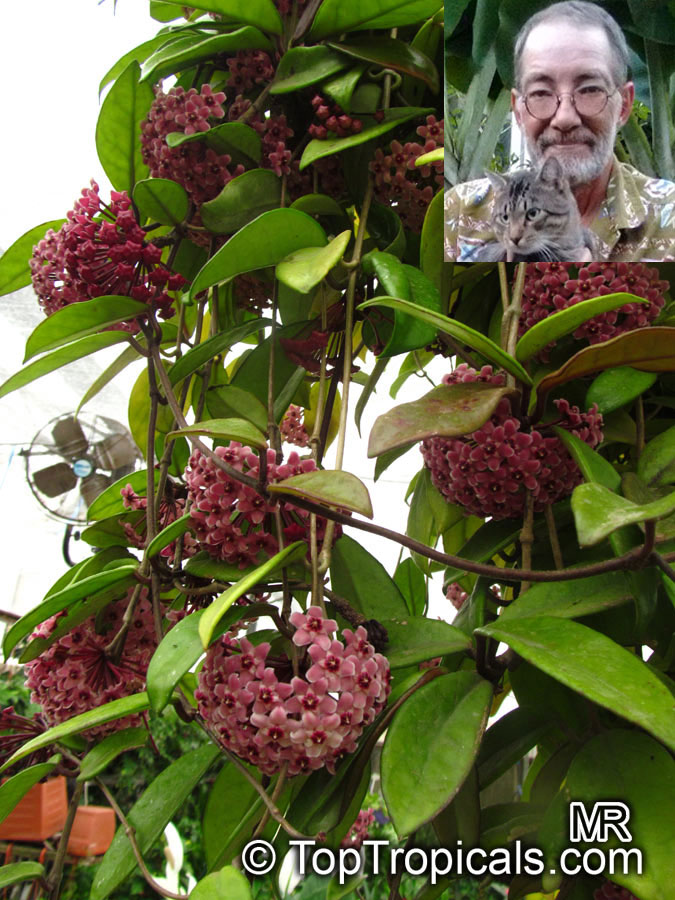
Multi-flowering Hoyas:
from Mark, the Garden Whiz
Q: A few months ago, i was given a Hoya vine. At the time, I was told to not cut-off the flowers but was never told why. However now that it IS flowering, they are so wonderful I would like to. Is there really a reason to not clip them off?
A: Actually, that was very good advise. Unlike most plants we encounter, hoyas develop perennial flower spikes. This means that each spike flowers more than just once! In other words, after the flowers on such a spike have gotten old and fall off, the knobby ended spike remains. Then, after a period of time, that same spike will develop another ring of flower buds. Depending on what kind of hoya it is, these perennial flower spikes may continue to periodically make more flowers for several years! And while the plant will continue to make more of these perennial spikes its whole life, the flowering display becomes better all the time as more and more spikes grow. (By the way, these are technically called "flowering spurs"). So every time a spur might be cut for ornamental purposes, it'll be one less place the vine can flower from in future years.
Date: 1 Oct 2018
Information on new exotic fruit
variety:
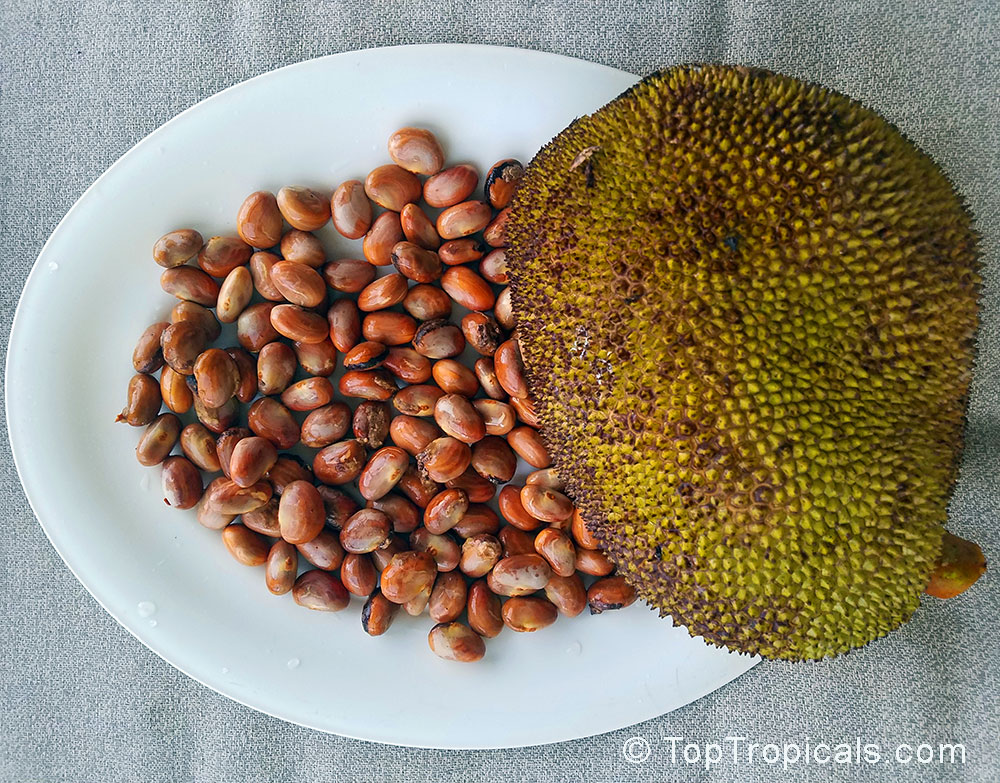
Artocarpus x integer (Jackfruit x Chempedak), Cheena cv.
TopTropicals
FRESH SEEDS! Grow exotic Chempedak from seeds and you will have the trees for only $1 each!
Check out a short video of the opened fruit.
Cheena is a natural hybrid between jackfruit and
chempedak. Comes true from seed.
This highly recommended variety has grown in TopTropicals
garden from a seedling of Cheena (Jackfruit x Chempedak)
that fruited within 3 years from planting. The fruit
(20-25"size) is probably the best we ever tasted! It is
super sweet, crunchy and has a rich, pleasant, excellent
flavor. It has very little latex which makes it easy to
handle when cutting up. The tree produces at the very base
of the trunk, so you can prune it as short as you want.
Our tree survived light frosts as well as 48 hours of 3ft
flooding, with no damage!
The tree has an open, low and spreading growth habit and
can be maintained at a height and spread of 8 ft with
annual pruning. It is very easy to grow and is not as cold
hardy as we thought for a Jackfruit x Chempedak types of
plants. The only two recommendations are - good fertilу
soil with a high content of compost and regular watering.
Cheena is a consistent producer. The fruit is up to 5 lbs,
long, narrow and uniform in size and shape. The skin is
green, with blunt spines that yellow and open slightly
upon maturity.
Check out Chempedak Cheena seeds - FRESH - FRESH -
FRESH
Check out Chempedak Cheena plants - special
offer $30 OFF!
Date: 30 Aug 2018
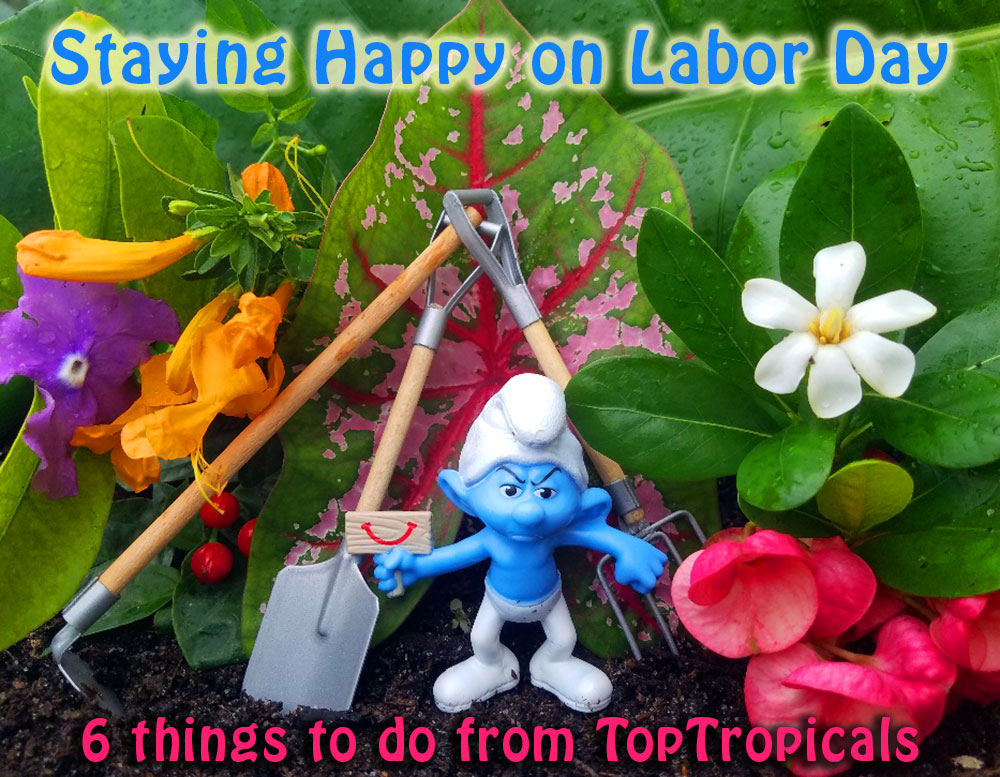
6 Things to Do on Labor Day Weekend
1. Plant a tree... or a shrub, even just a small perennial will do. This plant will make you feel good and accomplished for the whole year, until next Labor Day (or even longer!). You will always see this fruit of your work and remember your motivation, so things are not that bad with you!
2. Pull 66 weeds. Needless to say, you have plenty of those in your yard at the moment. Why 66? Just do it and see what happens. If you don't see any happy results, pull another 66.
3. Fertilize all plants in your garden or potted collection with slow release fertilizer and microelements. Remember, this is the last chance to give them food and strength to survive, before winter. Starting October, all leftover fertilizer goes to storage, even in tropical gardens.
4. Apply SUNSHINE
booster to protect your plants from cool temperature, help to go into
dormancy and rest without stress.
Remember, there are products for all your pre-winter needs: Sunshine-T for improving cold tolerance, Sunshine-BC for caudex and bonsai plants, Sunshine-H for houseplants, and general booster Sunshine-E to cover all occasions... 50 and 100 ml bottles available for large plant collections.
Sunshine-Honey