Garden Blog - Top Tropicals

Date: 22 Apr 2026

Mango Growing Guide
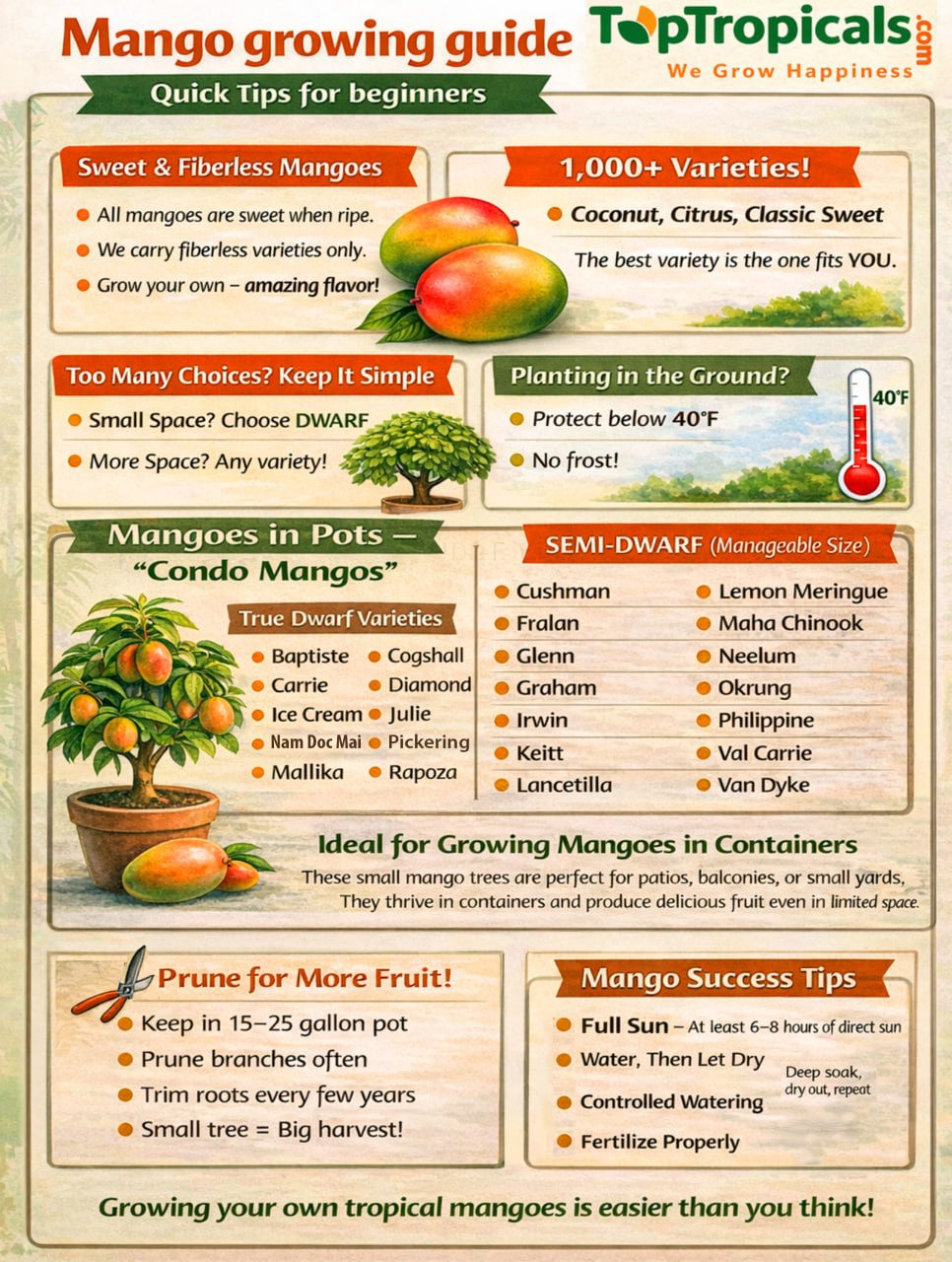
Mango Growing Guide

Mango Growing Guide

Mango Growing Guide 🥭

Growing mangoes at home is easier than most people think.

Mango Plant Facts

Botanical name: Mangifera indica
Also known as: Mango
USDA Zone: 9 - 11
Highligths Large tree taller than 20 ftSmall tree 10-20 ftFull sunWatering: Moderate. Water when top soil feels dryYellow, orange flowersPink flowersEdible plantSeaside, salt tolerant plant
Get personalized tips for your region


You don’t need a big yard. You don’t need perfect conditions.
You just need the right variety - and a few simple rules.

🔻Small space? Go with condo mango varieties
🔻Full sun is key
🔻Water deep, then let it dry
🔻Prune to keep trees compact and productive

Most store mangoes are picked early.
Homegrown fruit - completely different experience.
Sweeter, richer, and actually worth the wait.
Start with the basics, keep it simple, and your mango tree will reward you.

🛒 Explore Mango varieties

📚 Learn more:


· Mango Tree - Mangifera indica - in Plant Encyclopedia
· #Mango_Rainbow - varieties you should try

#Food_Forest #Mango #How_to

🟢 Join 👉 TopTropicals

Date: 8 Aug 2024

Mango Rainbow tasting table-2: whats the taste of that Mango variety?

Mango Rainbow tasting table

🌈 Mango Rainbow tasting table-2: what's the taste of that Mango variety?

🥭 We've had another mango tasting table and asked participants to describe the taste in a few words. And this is what we got:

🟠 Haden - mild, melting, classic heavenly mango flavor,dark yellow flesh, almost fiberless.

🟠 Ugly Betty - opposite to the name, the taste is excellent , juicy, melting, sweet.

🟠 Cotton Candy - true candy, fiberless, sweet, melting.

🟠 Madame Fransis - dark orange pulp, slightly fibrous, robust, meaty like a steak, good with cognac. A little pulpy but unique flavor.

🟠 Diamond - bright yellow, fiberless, sugary, juicy, no pulp at all, classic mango taste, good with ice cream, "wow" taste!

🟠 Pickering - zesty, waterfall: all the flavors come at once, eat with White wine and/or a cake. Oval fruit somewhat flat, very large for a dwarf tree!

🟠 Baptiste - hint of citrus, melts in your mouth, dark orange flesh, crisp, eat with Red wine and cheese.

🟠 Florigon - creamy, buttery, spicy. Eat with Ice cream!

🟠 Tommy Atkins - has a bit zing to it, perfect consistency, perfect taste. Super colorful, crimson red to purple skin!

🟠 Nam Doc Mai - gold standard! Perfect every day.

🟠 Carry - tastes even better than all others, smooth buttery, lite!

What Mango varieties have you tried this year?
Share in comments
👇

📝 Previous post: Mango Rainbow Tasting Table

🛒 Shop Mango varieties

#Food_Forest #Mango #Mango_Rainbow

🔴 Join 👉 TopTropicals

Date: 8 Jan 2026

Is winter killing your mango flowers? 33 winter-proof mid-season mango varieties in 90-sec tour

33 winter-proof mid-season mango varieties

❄️ Is winter killing your mango flowers? 33 winter-proof mid-season mango varieties in 90-sec tour


🥭 Mid-season mango varieties make up the heart of the mango harvest. They are not as early as the first winter bloomers and not as late as the extended-season types, but they fill out most of the season.

🥭 Mango trees are winter bloomers, but freezing temperatures can damage them, especially when the trees are still young.

🥭 Right now it is January, and many mid-season mango trees are in bloom or just starting to bloom. While a winter cold snap can damage flowers, mango trees are resilient and often re-bloom once warmer weather returns.

🥭 A list of winter-proof mid-season mango varieties in Top Tropicals garden - Winter 2026


Blooming time: late December - January, may re-bloom February-March

· All Summer
· Alphonso
· Angie
· Baptiste
· Carrie
· Cogshall
· Creme Brulee
· Cushman
· East Indian
· Edward
· Florigon
· Fralan
· Fruit Cocktail
· Fruit Punch
· Gary
· Glenn
· Gold Nugget
· Harvest Moon
· Julie
· Juliette
· Lemon Zest
· Madame Fransis
· Maha Chinook
· O-15 (OMG)
· Pim Seng Mun
· Pineapple Pleasure
· Rapoza (Dwarf Hawaiian)
· Super Julie
· Suvarnarekha (Sundari)
· Triplesec (Seacrest, 40-36)
· Ugly Betty
· Venus
· Venus
· Wise

🛒 Explore Mango varieties

📚 Learn more:


· #Mango_Rainbow - varieties you should try
· How to take care of a mango tree in winter
· Mango winter tips

#Food_Forest #Mango #How_to

🟢 Join 👉 TopTropicals

Date: 24 Jun 2018

TopTropicals

URBAN TROPICAL GARDENING:
10 secrets of successful Container Mango growing on a balcony.

Q: I live in Miami in apartment on a second floor, and I have a balcony with SE exposure. I wonder if I can grow a mango tree in a pot? Will it fruit for me? I recently moved to South Florida and I don't know much about tropical plants; but I tasted real fiberless mangos from someone's garden - it was so delicious and different from those in the grocery store. I wonder if I can have a fruiting tree on my balcony? And if yes, how do I plant and take care of it?

A: Yes, you can! Here is what you need to do:
1) Temperature. You are lucky to live in Tropics, keep it on a balcony year round.
2) Light. Position the pot in a spot with the most sun exposure. Mango trees can take filtered light too, but the less sun, the less fruit you will get.
3) Soil and Container. Use only well drained potting mix. Step up the purchased plant into next size container (3 gal into 7 gal, 7 gal into 15 gal). When transplanting, make sure to keep growth point (where roots meet the trunk) just at the top of the soil. Covering base of the trunk with soil may kill the plant.
4) Water. Water daily during hot season, but only if top of soil gets dry. If it still moist, skip that day. Mangoes (unlike Avocados!) prefer to stay on a dry side.
5) Fertilizer. Use balanced fertilizer once a month, 1 tsp per 1 gal of soil. Do not fertilize during fruiting - this may cause fruit cracks.
6) Microelements. Apply SUNSHINE-Superfood once a month. This will help your mango healthy, vigorous, and resistant to diseases. Use SUNSHINE-Honey to make your fruit sweeter.
7) Insect control. Watch for scales and mealybugs, clean with solution of soapy water + vegetable oil (may need to repeat 2-3 times with 10 days interval), or with systemic insecticide like imidacloprid only as needed (if non-harsh treatment didn't help). Most Flea shampoo for dogs contain that chemical, you may try that shampoo solution.
8) Trimming. Once potted, do not remove leaves that are discolored or have spots until new growth appears. Dark dots on mango leaves, especially in humid climate like Florida, may be signs of fungus. Treat with fungicide according to label, and remove only badly damaged leaves. Trim crown as needed after flowering and fruiting (by Fall). Train into a small tree, and you may remove some lower branches eventually.
9) Flower and fruit. Mangoes are winter bloomers with bunches of tiny flowers coming in thousands. Many of them set fruit (if pollinating insects present). Keep in mind that young trees can only bare a few fruit. Normally a tree will drop excessive fruit and keep only a few that it can manage. To save the young tree some energy, remove fruit if too many and leave only 2-3 for the first year. It will pay you next year with more abundant crop.
10) Variety. Last but not least: Choose the right variety for container culture! Pick from "condo" dwarf varieties such as Icecream, Nam Doc Mai, Carrie, Cogshall, Julie, Fairchild, Pickering, Graham, Mallika, and a few others - check out Mango Chart pdf and full list of our Mango varieties.

Date: 2 Apr 2026

Skip the Egg Hunt - Start a Plant Hunt 🐰

Smokey  the  black-and-white  cat  with  glasses  sits  on  a  patio  taking 
 notes  while  Sunshine,  a  fluffy  orange  cat  wearing  bunny  ears,  holds  a  small 
 potted  mango  tree  with  light  yellow 
 flowers.
Sunshine: I went egg hunting. Found something better. Let’s grow it on the balcony. Mango-filled donuts, here I come.

Smokey: Finally. You’re thinking.

Read more about Smokey & Sunshine

Mango Plant Facts

Botanical name: Mangifera indica
Also known as: Mango
USDA Zone: 9 - 11
Highligths Large tree taller than 20 ftSmall tree 10-20 ftFull sunWatering: Moderate. Water when top soil feels dryYellow, orange flowersPink flowersEdible plantSeaside, salt tolerant plant
Get personalized tips for your region

Groundhog said long winter… and it sure felt like it. But now it is finally over, and balconies and patios are waking up again.

Easter is here, and with it comes that fresh start feeling - time to open the doors, bring plants back out, and start growing.

We made it through the cold. For northern gardeners, that is every year; for borderline zones, it is a reminder that freezes happen. That is exactly why growing in pots makes sense - you stay flexible.

Container growing is not just about pots - it is about choosing the right plants. The best options stay manageable, produce well, and handle being moved.

Let's look at what works. Start with plants that naturally stay compact and adapt well to containers. These are the ones that won’t outgrow your space and will reward you quickly. These are proven performers in containers - compact, productive, and easy to manage:

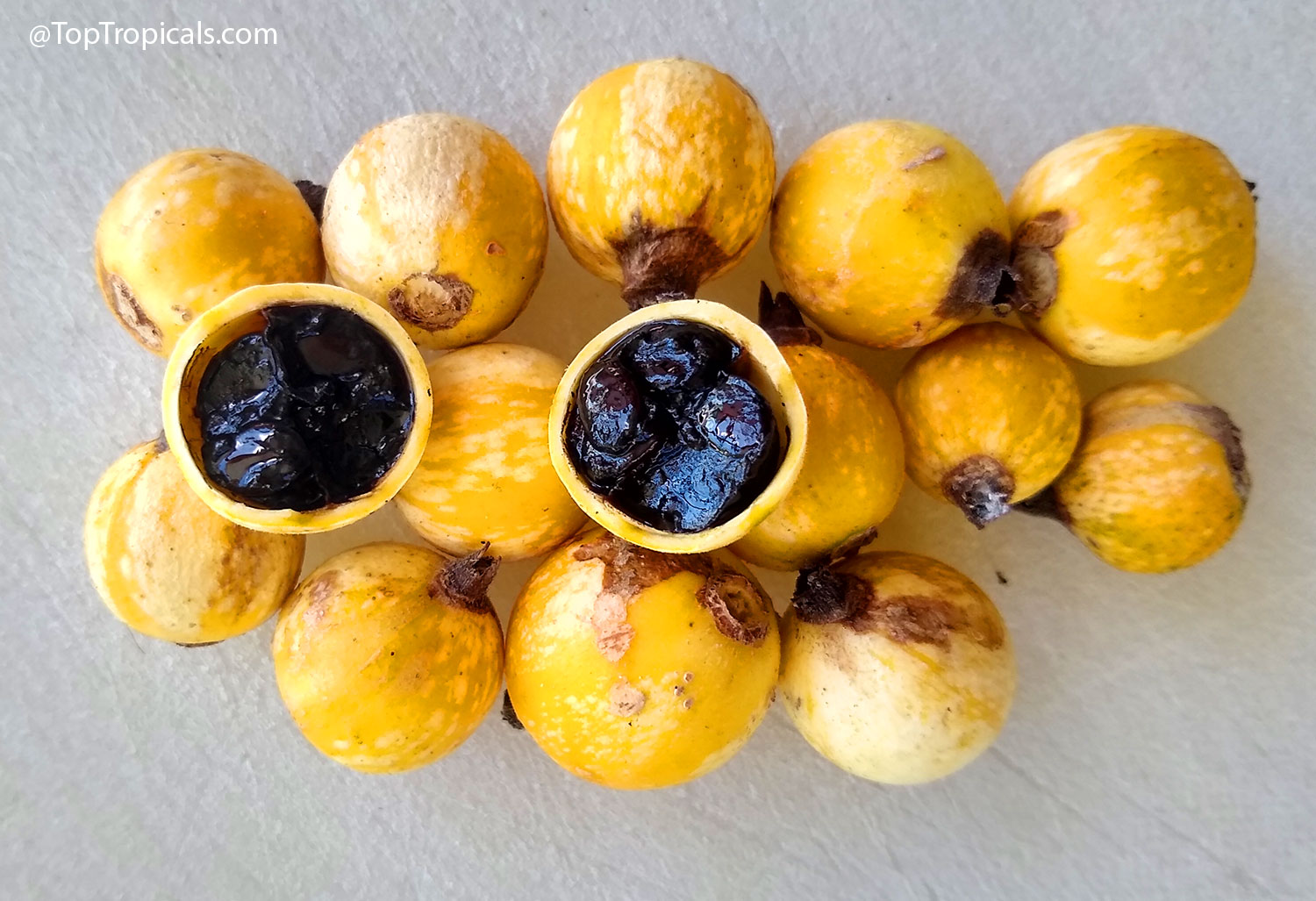
Blackberry Jam Fruit Plant Facts

Botanical name: Randia formosa, Mussaenda formosa, Randia mussaenda, Rosenbergiodendron formosum
Also known as: Blackberry Jam Fruit, Jasmin de rosa
USDA Zone: 9 - 11
Highligths Large shrub 5-10 ft tallSmall tree 10-20 ftSemi-shadeFull sunKeep soil moistWhite, off-white flowersEdible plantPlant attracts butterflies, hummingbirdsFragrant plantSubtropical plant. Mature plant cold hardy at least to 30s F for a short time
Get personalized tips for your region

Fig Tree Plant Facts

Botanical name: Ficus carica
Also known as: Fig Tree, Brevo
USDA Zone: 7 - 10
Highligths Plant used for bonsaiSmall tree 10-20 ftFull sunWatering: Moderate. Water when top soil feels dryOrnamental foliageEdible plantDeciduous plantSubtropical plant. Mature plant cold hardy at least to 30s F for a short timeFlood tolerant plantSeaside, salt tolerant plant
Get personalized tips for your region

Simple rule: if it stays compact and handles pruning, it works in a container.

Skip the egg hunt this year - go on a plant hunt instead. Start with one or two plants this Easter - not ten. Get them established, learn how they grow, and then expand.

Container basics (keep it simple):

  • Pot size: start with 3–7 gallon, upgrade as plant grows
  • Soil: fast-draining mix (never heavy garden soil)
  • Water: soak well, then let top inch dry
  • Feeding: consistent light feeding works better than heavy doses
  • Sun: most tropicals want full sun (6+ hours)

🐣 Browse our Easter Container Collection

Randia  formosa  (Blackberry  Jam  Fruit)  showing  yellow  ripe  fruits,  some 
 cut  open  to  reveal  glossy  dark  pulp 
 inside.

Randia formosa - Blackberry Jam Fruit

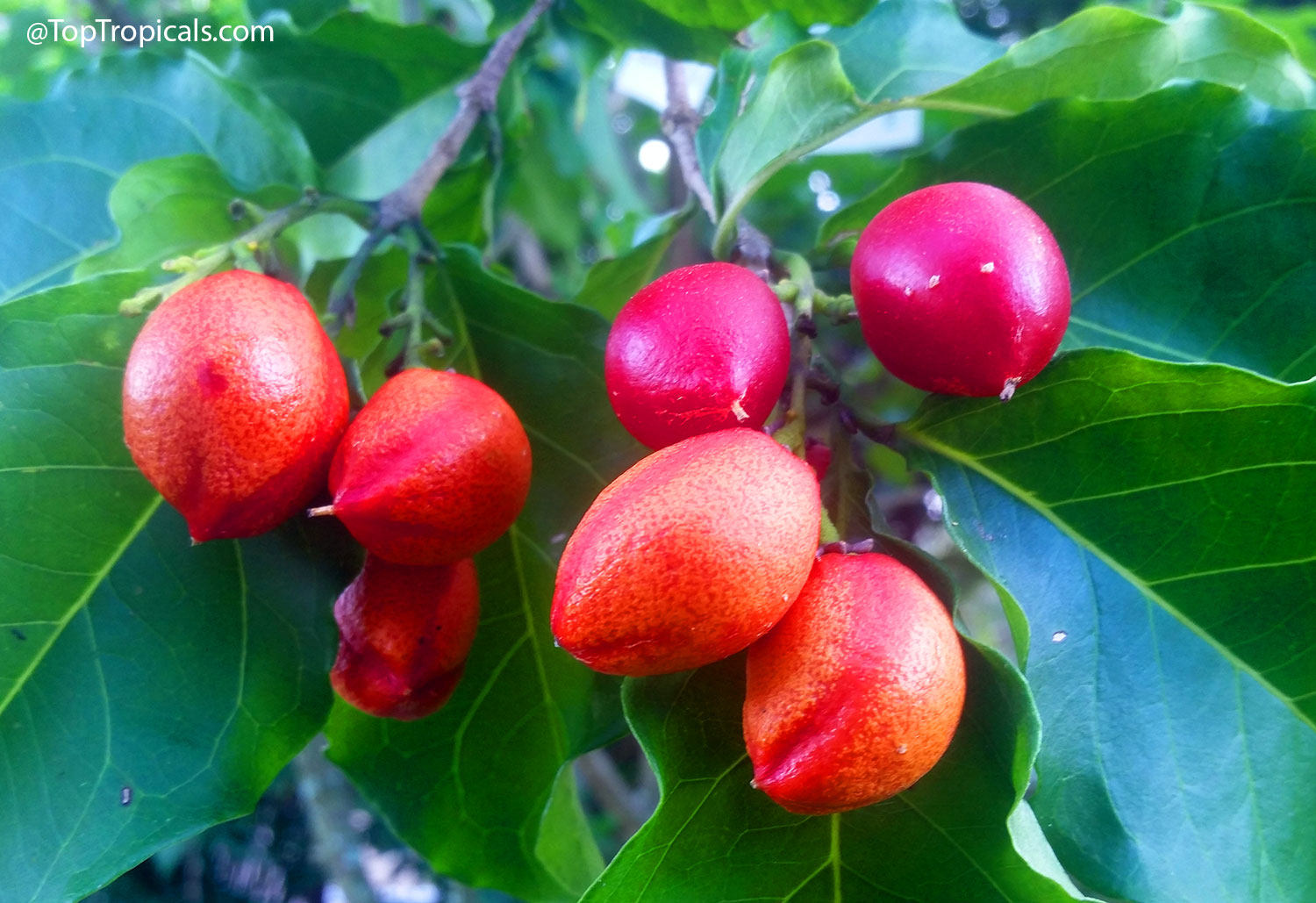
Bunchosia  argentea  (Peanut  Butter  Fruit)  showing  clusters  of  red  ripe 
 fruits  on  a  leafy 
 branch.

Bunchosia argentea - Peanut Butter Fruit

Peanut Butter Fruit Tree Plant Facts

Botanical name: Bunchosia argentea, Bunchosia armeniaca
Also known as: Peanut Butter Fruit Tree, Ciruela Del Monte
USDA Zone: 9 - 11
Highligths Large shrub 5-10 ft tallSmall tree 10-20 ftSemi-shadeFull sunWatering: Regular. Let topsoil dry slightlyYellow, orange flowersEdible plantSubtropical plant. Mature plant cold hardy at least to 30s F for a short time
Get personalized tips for your region

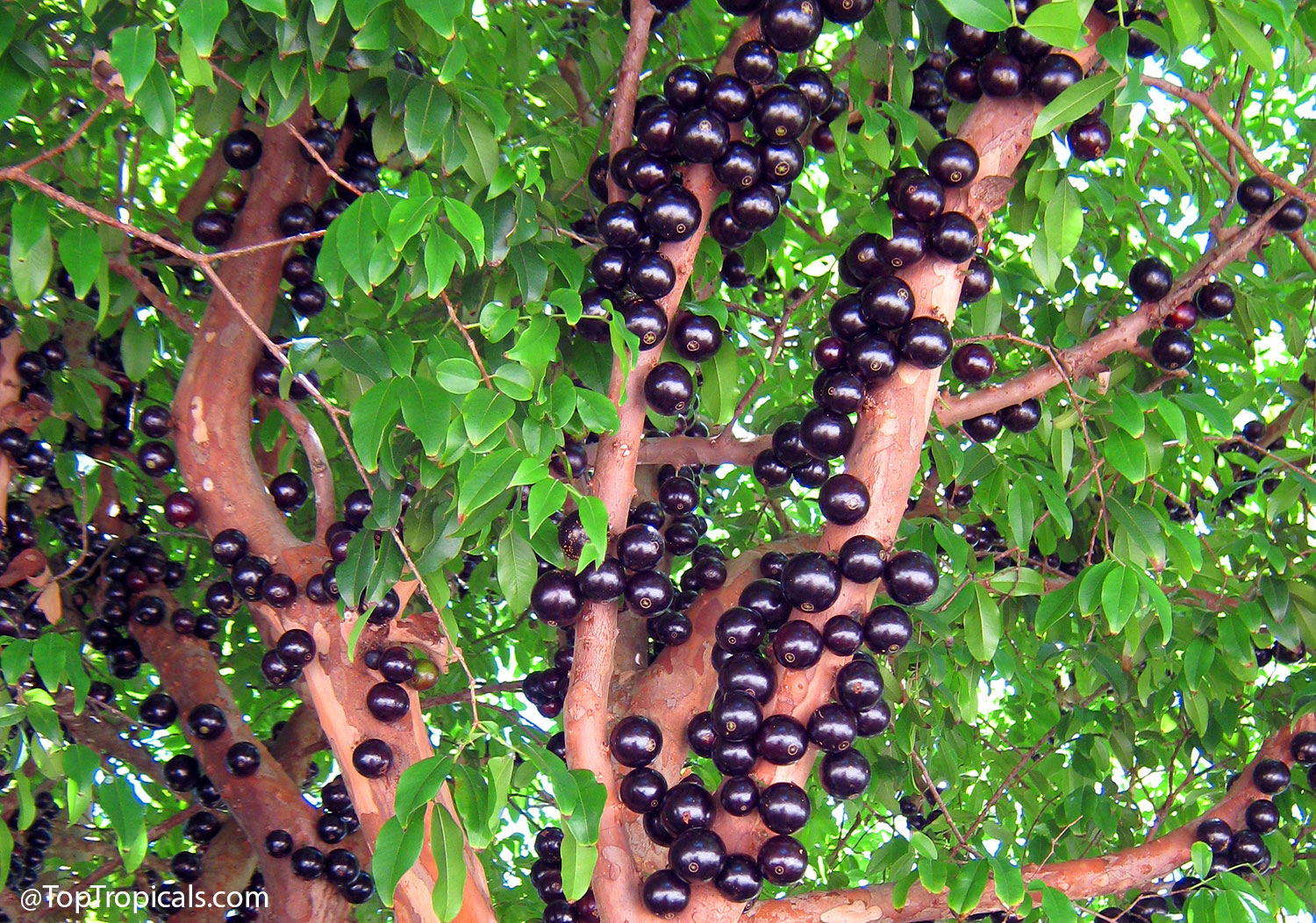
Myrciaria  cauliflora  (Jaboticaba)  tree  with  clusters  of  dark 
 purple-black  fruits  growing  directly  on  the 
 trunk.

Myrciaria cauliflora - Jaboticaba

Jaboticaba Plant Facts

Botanical name: Myrciaria cauliflora, Plinia cauliflora, Eugenia cauliflora
Also known as: Jaboticaba, Duhat
USDA Zone: 9 - 11
Highligths Plant used for bonsaiSmall tree 10-20 ftFull sunKeep soil moistEdible plantSubtropical plant. Mature plant cold hardy at least to 30s F for a short timeFlood tolerant plant
Get personalized tips for your region

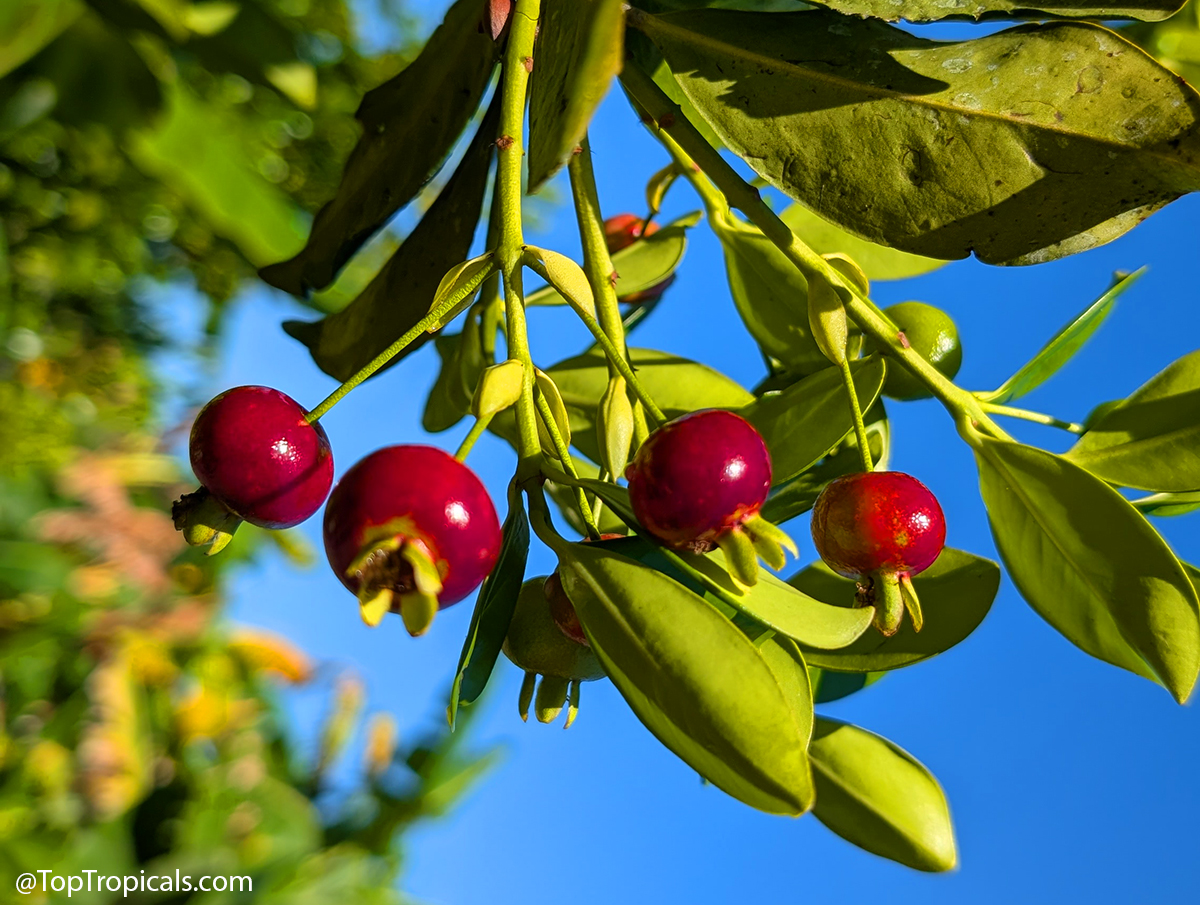
Eugenia  brasiliensis  (Grumichama)  with  red  ripe  cherries  hanging  from  a
   branch  against  blue 
 sky.

Eugenia brazilensis - Grumichama and more Eugenia Cherries

Grumichama Plant Facts

Botanical name: Eugenia brasiliensis, Eugenia dombeyi
Also known as: Grumichama, Brazilian Cherry
USDA Zone: 9 - 11
Highligths Small tree 10-20 ftSemi-shadeFull sunWatering: Moderate. Water when top soil feels dryEdible plantSubtropical plant. Mature plant cold hardy at least to 30s F for a short timeSeaside, salt tolerant plant
Get personalized tips for your region