Date: 24 Mar 2024
Bauhinias: trees with Orchid Flowers
and Butterfly Wings...
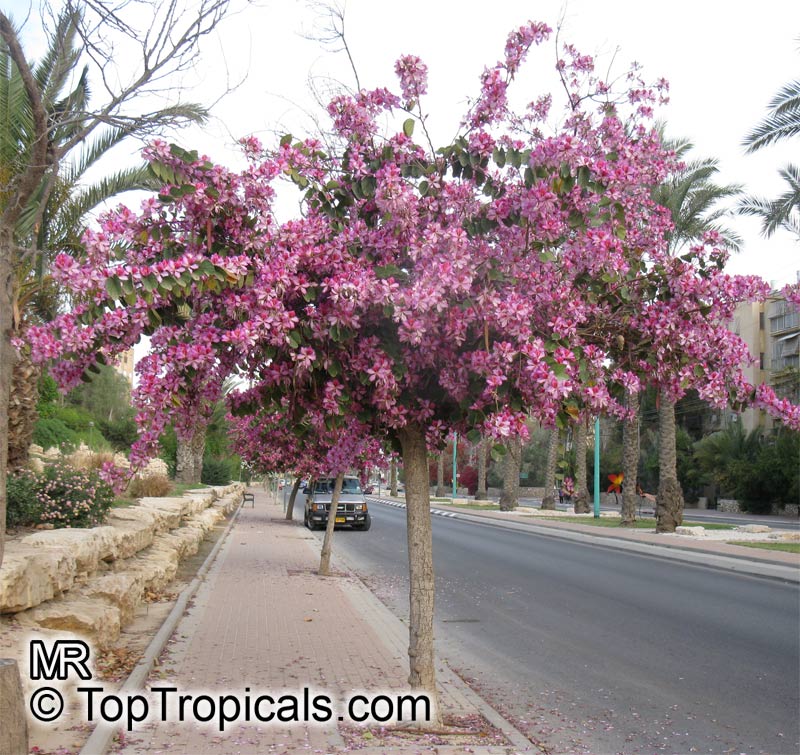
Photo above: Bauhinia variegata - Purple Orchid Tree, one of the most spectacular varieties.
Q: We just moved to Florida and I see these beautiful trees with large purple flowers. I was told these are Orchid trees, do you have them?
A: Bauhinias, commonly known as Orchid trees, are renowned for their captivating flowers and unique foliage. These trees typically grow to a moderate height of 15-25 feet with a spread of 10-15 feet, showcasing a rounded to vase-like shape. Thriving in hardiness zones 9-11, they exhibit resilience to heat and can withstand mild frost. There are over 300 species of Bauhinia, which are distributed in tropical and subtropical areas. These species vary in characteristics such as size, foliage, and flower color, contributing to the diversity and appeal of this genus. You can find them as trees, shrubs, and even vines.
Bauhinias are evergreen (in tropics) to semi-deciduous (in cooler climates), offering year-round beauty with intermittent blooming cycles. The peak bloom time varies depending on the species and location, often occurring in late winter to early spring, bedecking the tree with striking orchid-like flowers in hues ranging from white and pink to purple and red. The flowers boast delicate petals with intricate patterns, resembling the elegance of true orchids.
One of the distinguishing features of Bauhinia leaves is their unique bi-lobed or bilobed structure, which gives them a distinct appearance. The leaves are deeply divided, typically into two lobes or halves, hence the common name "Butterfly tree" due to their resemblance to butterfly wings. This characteristic is often used as an identifying trait for Bauhinia species. The bilobed leaves add to the visual appeal of the tree, contributing to its ornamental value in addition to its beautiful flowers.
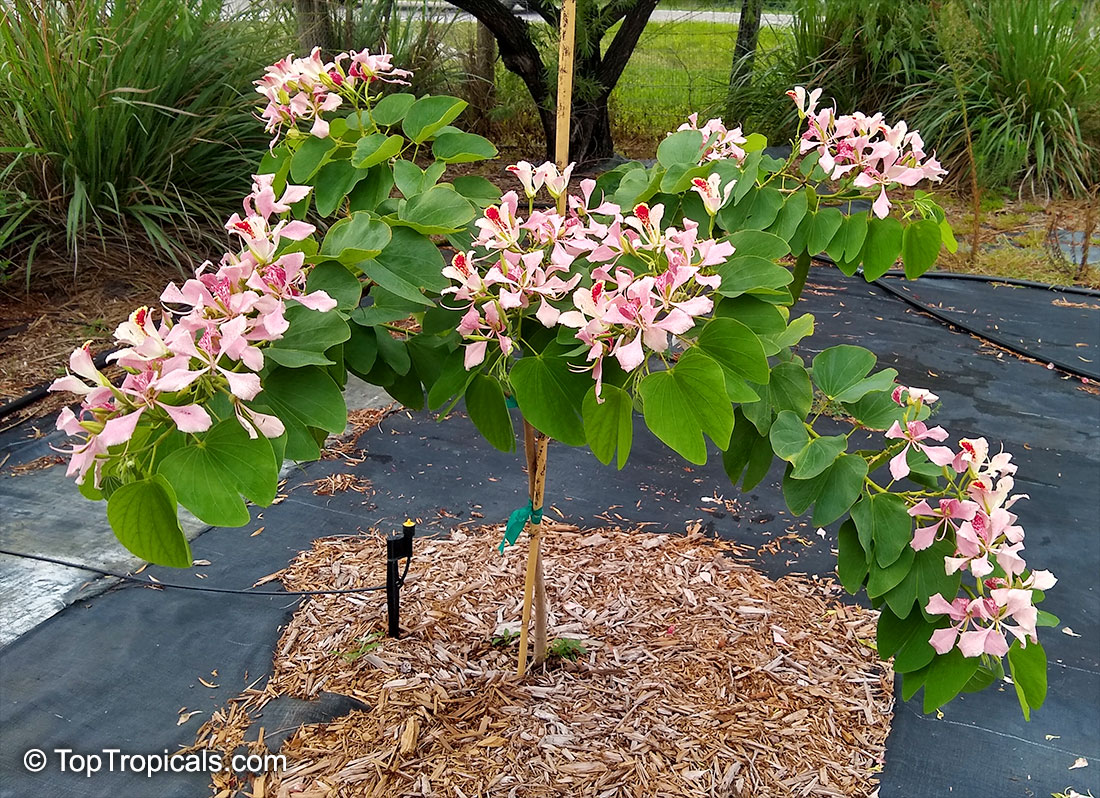
Photo above: Bauhinia monandra - Napoleons Plume, starts flowering in small size. This one is very beautiful but the most cold sensitive and should be grown in pots in areas with winter freeze. It will happily bloom in container!
Low-maintenance by nature, Bauhinias require minimal upkeep. Annual feeding with a balanced fertilizer enhances growth and flowering. Pruning is generally optional but can be done in late winter or spring, after flowering, to maintain shape or remove dead or damaged branches. These trees thrive in full sun, preferring well-drained soil. With their enchanting blooms and easy care requirements, Bauhinia orchid trees are a delightful addition to any landscape, and a colorful specimen for tropical winter gardens.
In addition, Orchid trees grow fast and provide excellent shade. They can make a shady spot in your garden in no time, giving relief from the hot sun. This is really valuable, especially in places where it gets very hot. So, not only are Orchid trees pretty to look at with their lovely flowers, but they're also great for keeping you cool!
Read more about Bauninias:
Bauihnias: Orchid trees with Butterfly flowers... and leaves
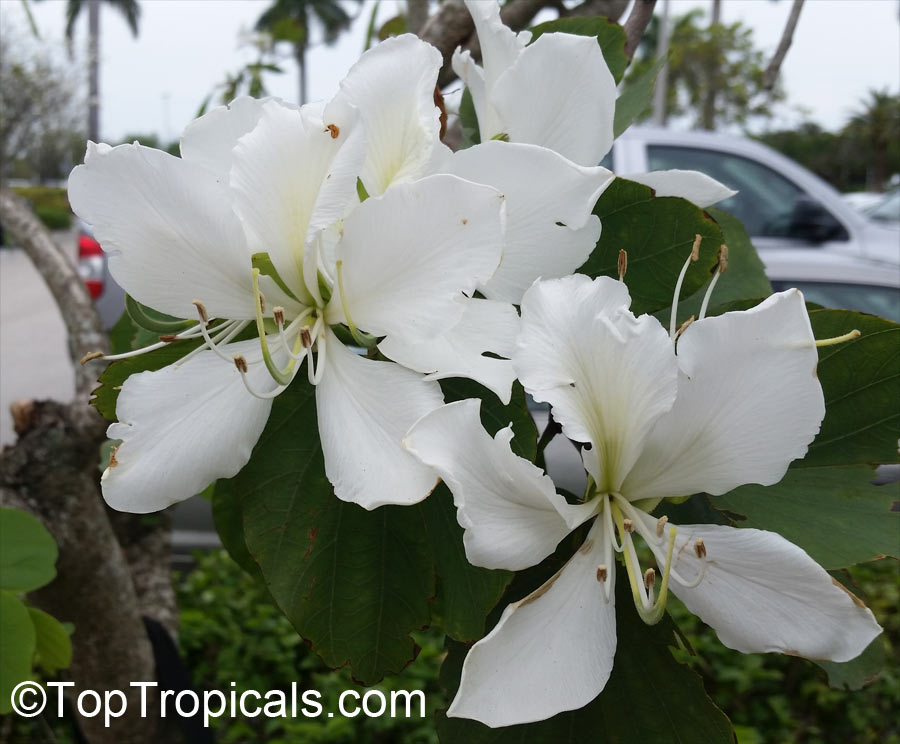
Photo above: Bauhinia x alba (candida) - White orchid tree, the most cold hardy variety that can take light freeze once established.
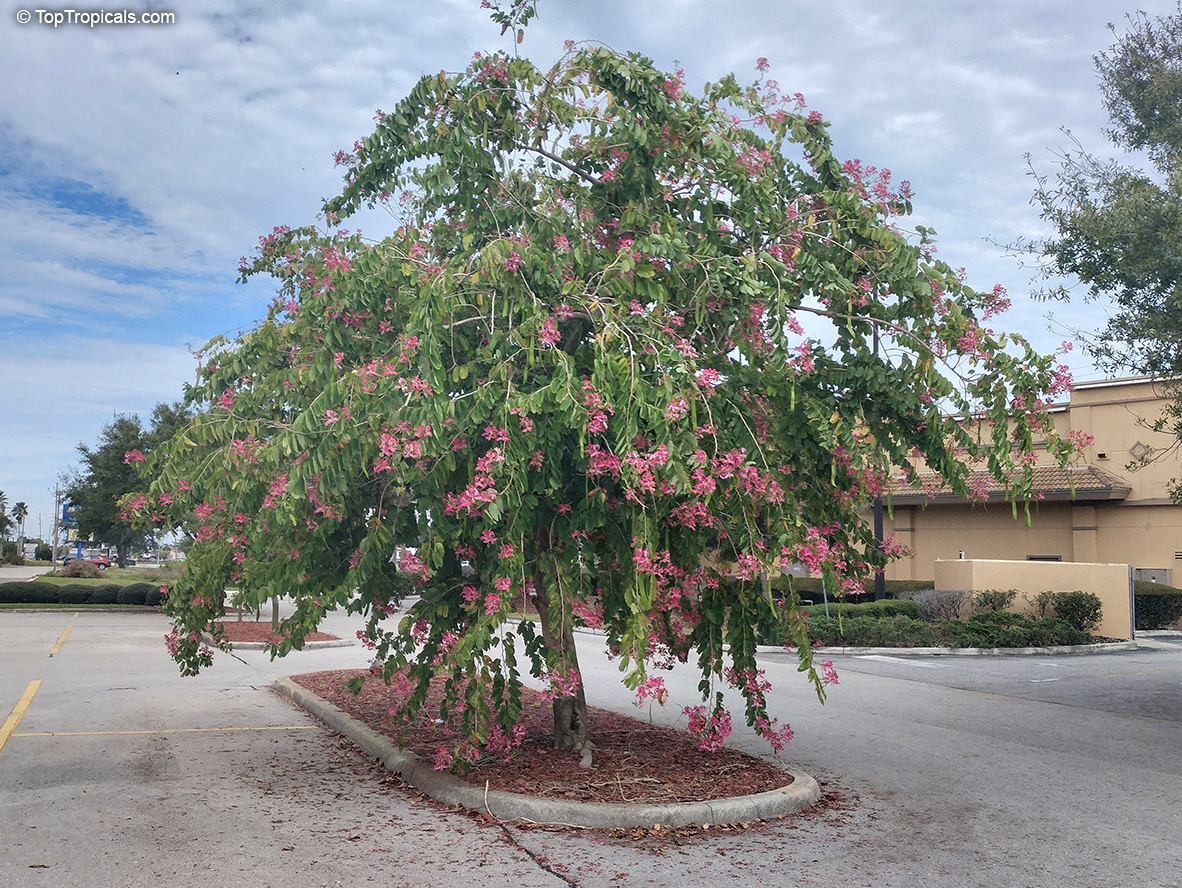
Photo above: Bauhinia purpurea
Date: 6 Jan 2024
Ten
New Year Resolutions:
Diversity in Tropical Garden
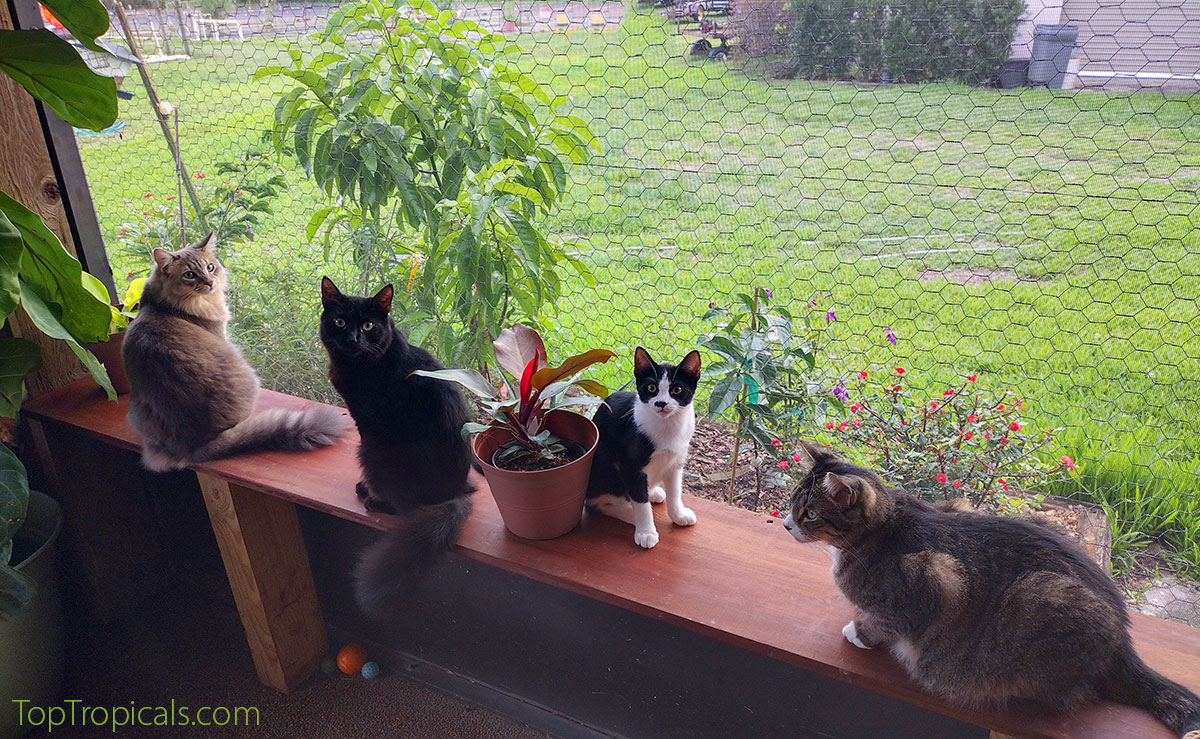
1. Diversity. Grow different plants. Add more types of tropical plants to your garden for a colorful and diverse look.
2. Save Water. Use water wisely by installing drip systems, collecting rainwater, and using mulch to keep the soil moist.
3. Improve Soil. Make your soil healthier by adding compost or manure regularly. Healthy soil promotes robust plant growth and enhances overall garden resilience.
4. Deal with Pests Smartly. Keep pests in check with a plan - use natural solutions and check your plants often. Preventing program is easier than dealing with infestations.
5. Right Fertilizing. Feed your plants with Eco-frintdly fertilizer such as Sunshine Boosters (safe to use year around). If you use slow-release fertilizers - apply in right amounts, from March to November.
6. Trim Regularly. Keep your garden tidy and healthy by pruning and removing dead or sick parts of the plants.
7. Companion Planting. Explore which plants work well together to enhance nutrient uptake, fight pests and provide shade for those species that need it.
8. Right Climate and Zone Pushing. Pick plants that love your climate, considering sunlight, temperature, and humidity. For more sensitive tropical plants, work on a plan for cold protection: grow them in pots or set up temporary covers.
9. Teach Others. Share your gardening knowledge with the community. Propagate your plants from seeds, cuttings, divisions - and share them with friends and neighbors. Remember: live plant is the best gift, and love is sharing!
10. Make a Relaxation Spot. Create a cozy corner in your garden with comfy seating or hammock, shade, and maybe a water feature for a peaceful retreat.


Date: 29 Nov 2023
What plants are good to order in Winter?

Photo above: Christmas time in Ukraine (left) and Florida (right)
Q: Are there any tropical plants that will do well if I order them in Winter? We just bought a house in New Jersey with a large sunroom, and I can't wait to fill it with tropical beauties! Should I wait until Spring, or do you have something for a Winter start?
A: This is indeed a very good question, as many tropical plant collectors grow their treasures outside the tropics. The short answer is - yes! You can start filling your tropical sunroom any time of the year, but some plants are easier to deal with in Winter than others. Below are some guidelines.
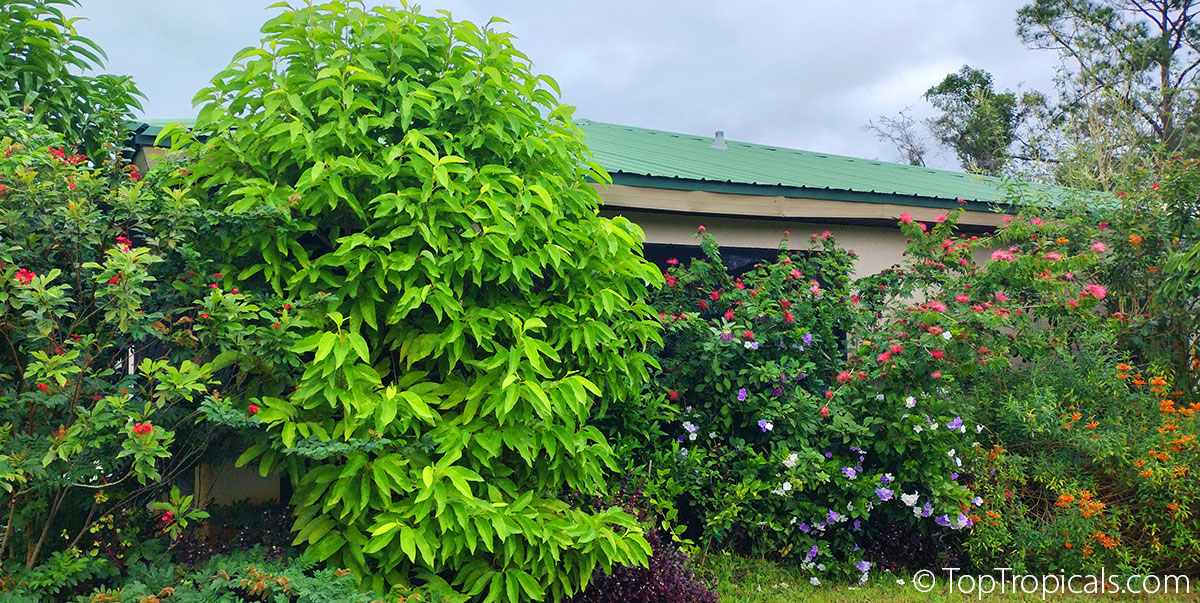
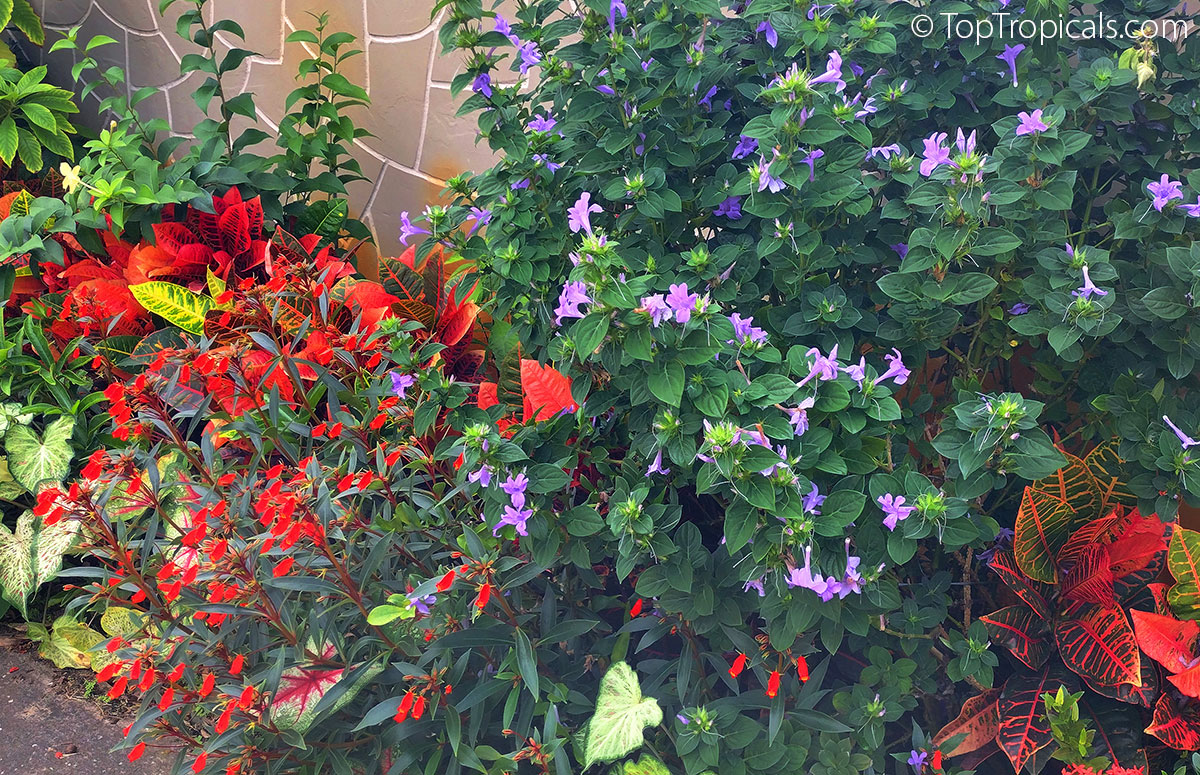
Winter bloomers today, left to right: Jatropha, Champaka, Brunfelsia, Calliandra, Leonotis.
1. Plants that prefer Winter shipping to avoid overheating stress:
- All plants with lush foliage such as Philodendrons, Medinilla
- Trees with fine feathery leaves such as Moringa, Jacaranda, Poinciana
- Some fruit trees sensitive to overheating during shipping: Papaya, Stawberry Tree, Starfruit (Carambola), Bilimbi.
2. Subtropical plants that are relatively cold hardy
- Fruit trees:
Loquats, Olives, Avocados, Tropical Cherries: Eugenia, Malpighia, Noni (more cold
hardy than you may think),
Canistel.
- Flowering trees: Champaka, Tabebuia.
- All Bananas
- see all relatively cold hardy
plants
3. Winter-dormant and/or deciduous plants: Adeniums, Plumerias, Gingers, Sugar Apple
, Peaches and
Plums, June Plum and Hog Plum.
See all deciduous/winter dormant plants.
4. Orchids, including Ground Orchids.
5. Winter flowers. Keep in mind that many tropical plants are
winter bloomers, and their flowering is most profuse in Winter months, so you
can enjoy the blooms right away:
Dombeya,
Thunbergia,
Gloxinia, Brunfelsia, Calliandra, Tibouchina, Barleria, Leonotis, Clerodendrums, Chinese Hat (Holmskioldia).
See all Winter bloomers.
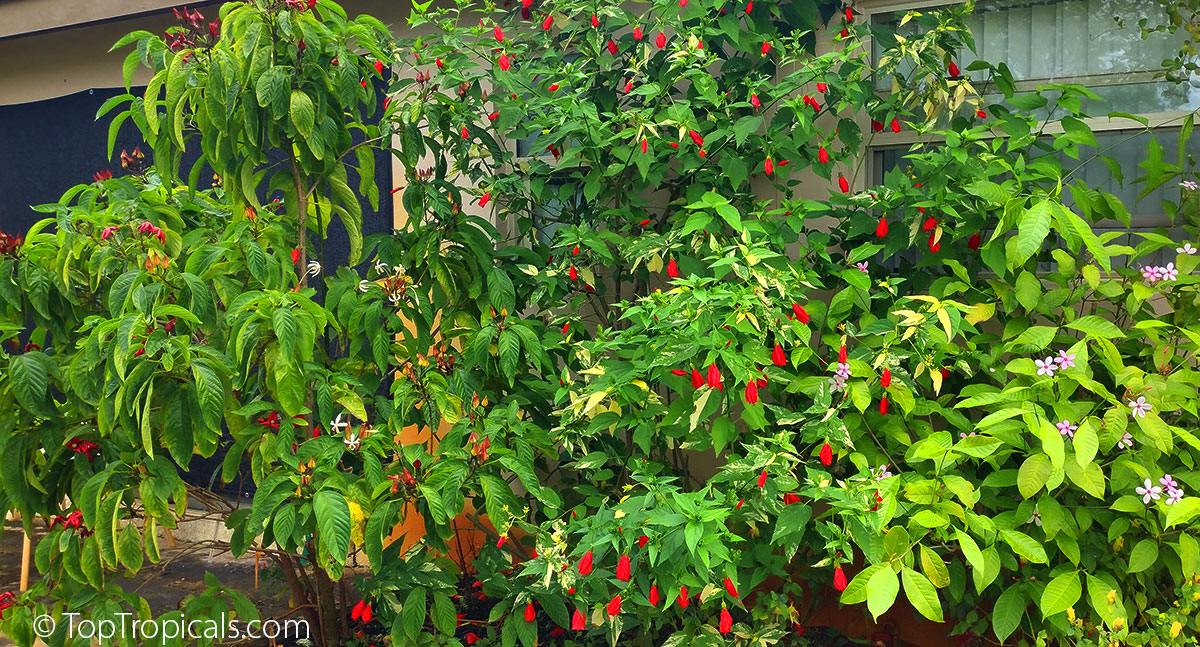
Winter bloomers today, left to right: Clerodendrum minahasse, Variegated Malvaviscus Summer Snow, Kopsia fruticosa
6. Winter plant care. During Winter the daylight is shorter and temperatures are
cooler.
- Reduce watering
- Use only liquid amino-acid based fertilizer Sunshine Boosters (safe to use year around)
- Monitor insects.
7. Shipping in Winter. We ship year around. However, if it gets below freezing in your area, you may use FedEx Hold location, they are temperature controlled so you don't have to worry about a box being dropped off at your cold porch outside.
8. A note for mild climate residents. Most tropical plants can be planted in the ground year around. Some ultra-tropical tender species such Chocolate tree, Ylang Ylang, or small size Mango trees can be grown in pots until Spring and planted out once chances of cold spell are gone. Until then, they can be moved indoors for cold nights.
Think outside the box and bring tropical paradise indoors during the time when we need warmth the most! Tropical plants will brighten your short winter days and help you to have truly HAPPY HOLIDAYS!
Date: 6 Nov 2023
How to grow a happy Moringa Tree
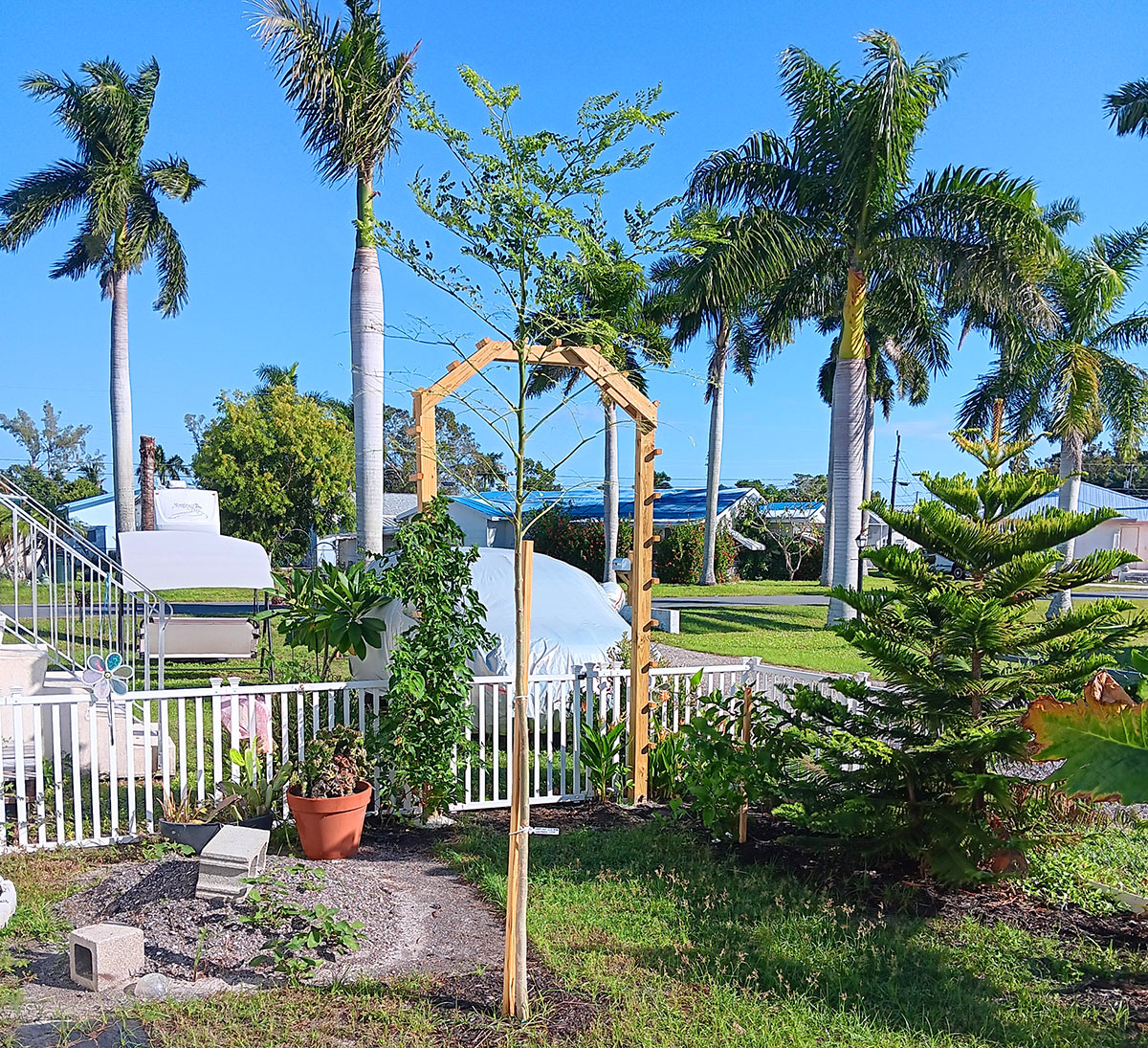
Q: We purchased some tropical edible and medicinal plants from you in August this year. I have a question pertaining to our Moringa tree. When we purchased it, it was about two foot tall. It has put on tremendous growth and is now a little under ten foot tall. My question is, should a Moringa be losing lower leaves at this point? The bare limbs are still green and the top looks to have healthy green leaves.
A: Thank you for choosing our Moringa tree, and sharing the picture. It's great to see that your tree appears healthy and happy - it's a resilient plant. Given the relatively dry Fall we've experienced this year, a little extra water can make a significant difference.
Here are some suggestions to ensure your Moringa thrives:
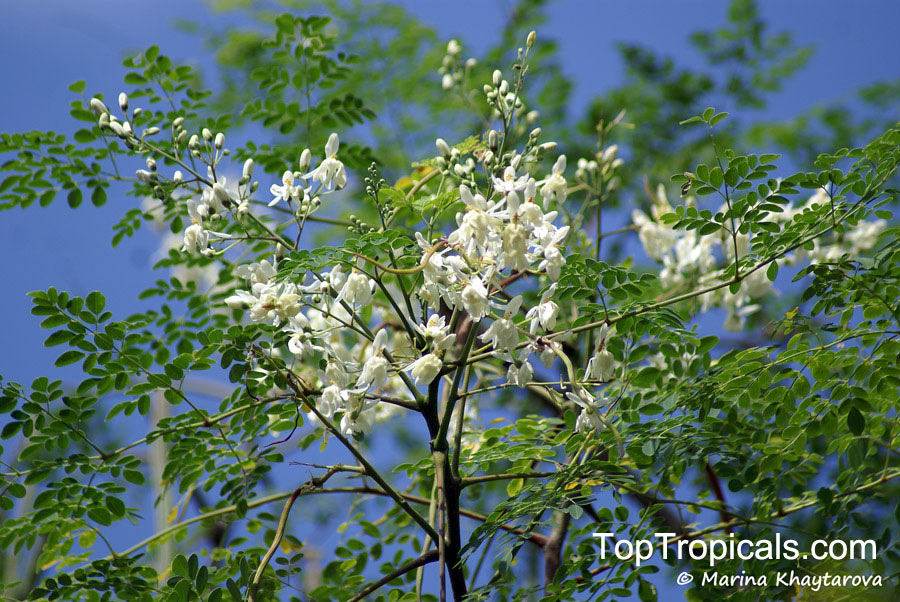
Watering: While Moringa is generally drought-tolerant, during dry periods, in addition to relying on your lawn sprinkler system, add some extra water with a hose. Adequate moisture is crucial for maintaining healthy foliage.
Pest Control: Moringa is not only a nutritious plant for humans but also attracts pests that appreciate its medicinal properties :) If you notice insect damage on the leaves, consider spraying with Neem oil or using an over-the-counter systemic insecticide containing imidacloprid or a similar ingredient.
Seasonal Behavior: Moringa trees are semi-deciduous to deciduous, and their leaf-shedding behavior can vary depending on the climate. In Florida, for instance, it's common for Moringa trees to shed leaves in the Fall. However, this is a natural process, and you can expect new growth in the Spring.
Fertilizing for Vigorous Growth: To promote the most vigorous growth of your Moringa tree and other plants in your garden, consider implementing a fertilizing program. If using dry, slow-release fertilizers, apply them only during the active growth season: from March through November. If you're looking for a year-round solution, liquid amino acid-based formulas like Sunshine Boosters can be a great option. You can easily add them to your watering routine or use injectors like The Robuster for convenient and consistent feeding. If you're planning to expand your garden with other medicinal plants or an edible forest, The Robuster smart fertilizing system is an excellent choice, offering the most efficient, care-free way to nourish your plants with natural nutrients throughout the year.
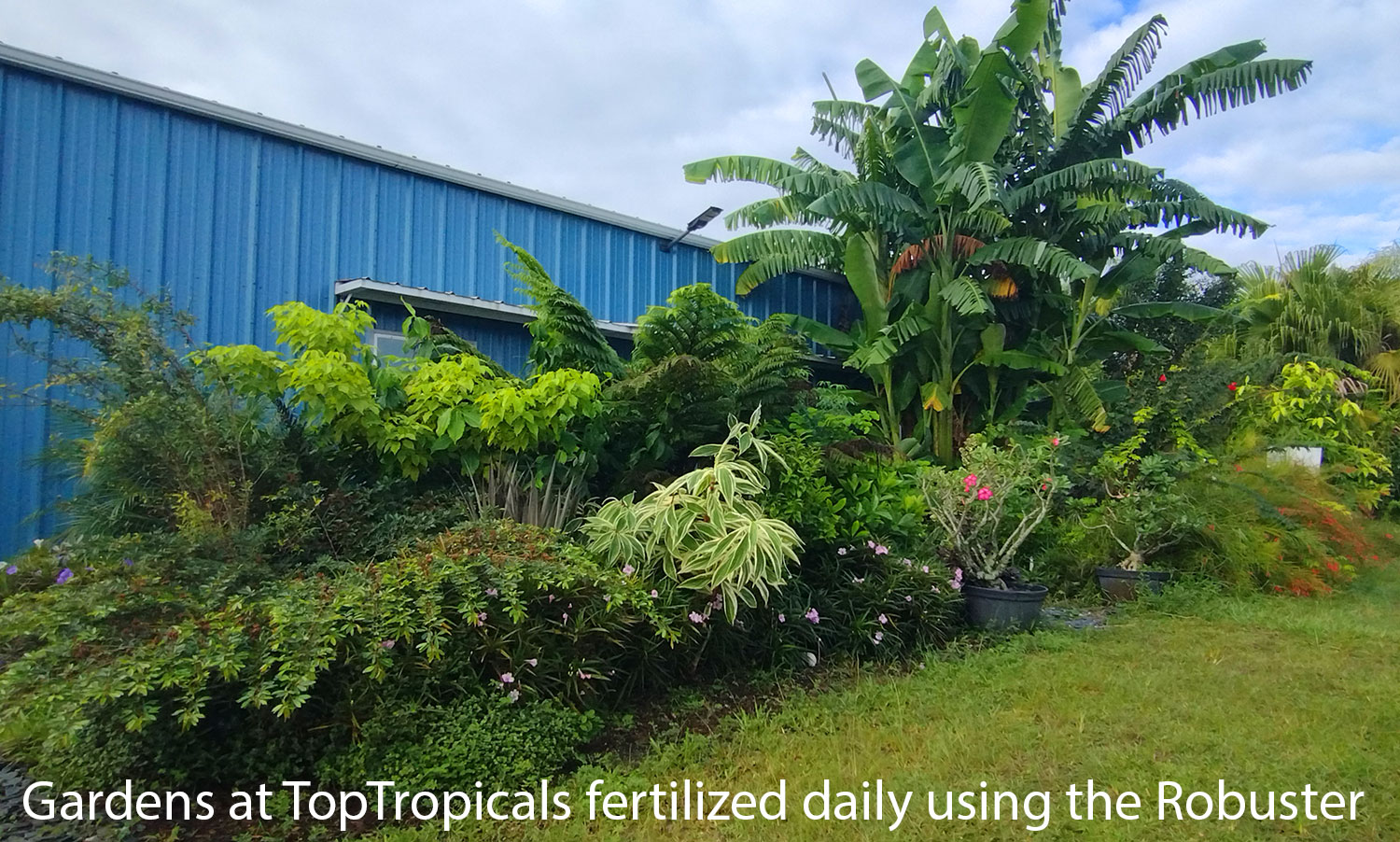
This garden doubled the size during just one season under the Robuster
Date: 24 Sep 2023
Paws of the week: Clifford, the Watch Dog

Introducing Clifford, the freshest face on the Top Tropicals team at the
Garden Center and an honorary partner of the PeopleCats (or should we say, PeoplePaws). This
dynamo has been appointed as the chief of our Security Crew, much to everyone's surprise and delight.
Now, the story goes like this: Clifford strolled in from who-knows-where and, with the charm only a puppy can muster, looked
up at Chiane with those soulful eyes as if to say, "Hey, can I crash here?" Well, what else could
she do? She gave him a warm bath, and lo and behold, beneath all that stray dust, Clifford turned out to be
white!
Clifford is a little ball of sunshine. He's got a heart of gold and a zest for life that's absolutely contagious.
When it comes to shipping activities, he's the first one to volunteer. And the best part? Clifford is the epitome of punctuality. You can set your watch by him. He shows up
for work every day with his tail wagging and ready to conquer the world.
Clifford is not just our head of Security Crew; he's our daily dose of happiness and a reminder that sometimes, the best things in life simply wander in when you least expect them!
Fruit image by jemastock on Freepik