Garden Blog - Top Tropicals

Date: 11 Nov 2025

Fruits with the most vitamin E, according to dietitians
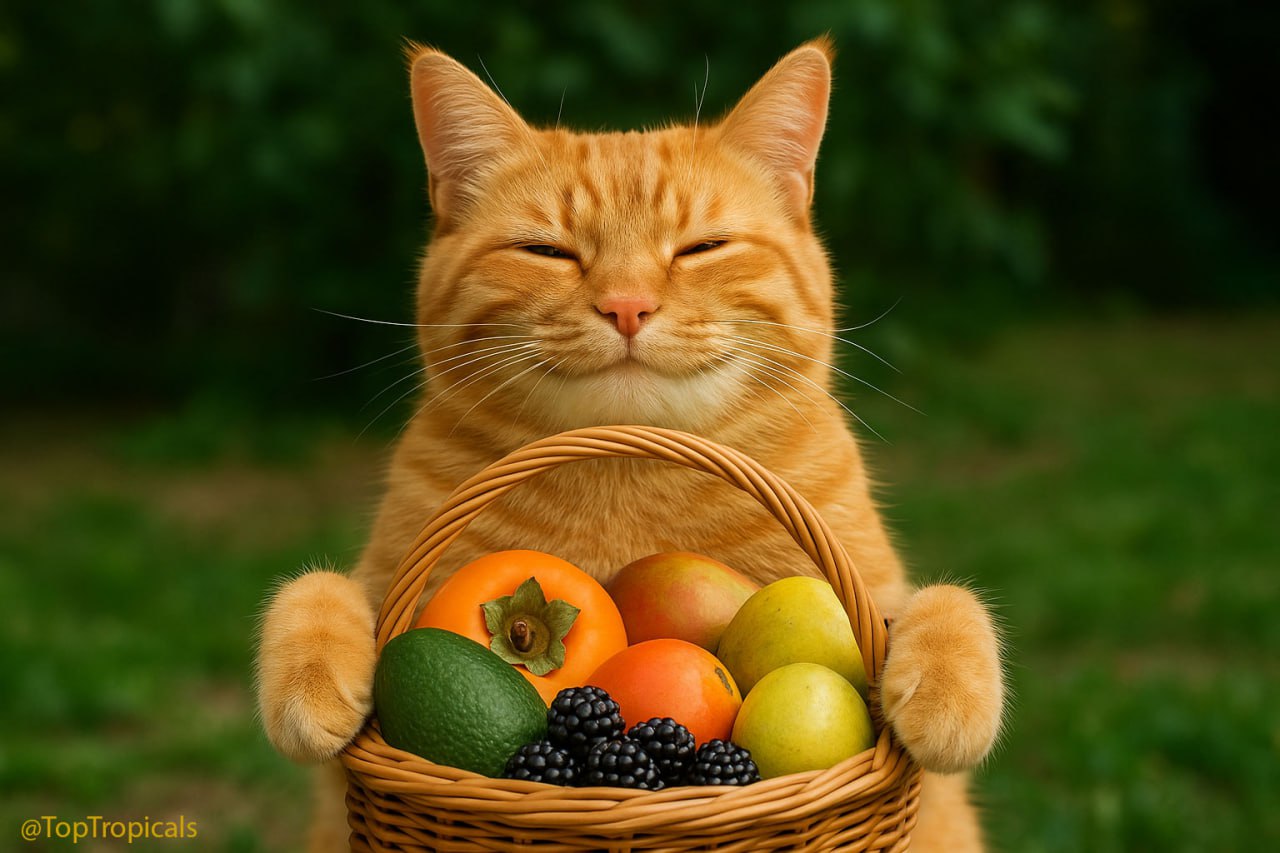
Fruits with the most vitamin E

Fruits with the most vitamin E

🥭 Fruits with the most vitamin E, according to dietitians

  • 🔛 Vitamin E works as an antioxidant that helps fight inflammation throughout the body. While nuts and seeds top the charts, some fruits quietly add their share to your daily needs - especially when eaten with a bit of healthy fat. According to New York City Nutrition, vitamin E anti-inflammatory action supports heart, brain, and skin health.
  • 🔛 Vitamin E is a fat-soluble vitamin that acts as an antioxidant, meaning it fights inflammation in the body. Because of this anti-inflammatory role, vitamin E is beneficial for immune health, heart health, eye health, brain health, and skin health.
  • 🔛 Adults need about 15 milligrams a day, according to the National Institutes of Health. Deficiency is rare, but it’s smart to get vitamin E from a variety of foods. Fruits alone don’t provide large amounts, but they can complement vitamin-E-rich foods like almonds or sunflower seeds.
  • 🔛 Since vitamin E needs fat for absorption, pair fruit with something creamy or crunchy - like yogurt, olive oil, nuts, or seeds - for best results.
  • 🔛 Here are some fruits that naturally offer vitamin E:

  • 🍊 Sapote 1 cup = 3.7 mg vitamin E. A tropical favorite with rich orange flesh and a flavor somewhere between pumpkin pie and sweet potato, with hints of honey and almond, Sapote is great fresh, blended in shakes, or scooped over ice cream. It also packs calcium, iron, potassium, and vitamins A and C.
  • Blackberries 1 cup = 1.7 mg vitamin E. Deep color, bold flavor, and plenty of antioxidants, Blackberries are high in fiber and low in calories. Dietitian Keri Glassman calls them her top fruit for fighting inflammation.
  • 🥭 Mango 1 cup = 1.5 mg vitamin E. The “king of fruits” brings more than tropical sweetness, Mango supports digestion, helps you feel full longer, and delivers both vitamin A and E in one juicy package.
  • 🍉 Guava 1 cup = 1.2 mg vitamin E. This fragrant fruit has a flavor that lands between strawberry and pear, Guava is also one of the highest-fiber fruits and surprisingly rich in protein for a fruit.
  • 🍑 Persimmon 1 fruit = 1.2 mg vitamin E. An autumn favorite that looks like an orange tomato but tastes sweet and mellow, Persimmons are rich in vitamins A and C and make a colorful, fiber-filled snack or dessert.
  • Avocado 1 fruit = 0.9 mg vitamin E. Creamy, mild, and versatile, Avocado’s healthy fats help your body absorb vitamin E while protecting heart health. Try it on toast, in salads, or as a smooth butter substitute in baking.

🛒 Plant more remedies in your food forest

📚
Learn more:
#Food_Forest #Remedies #Discover

🟢 Join 👉 TopTropicals
Date: 8 Sep 2025

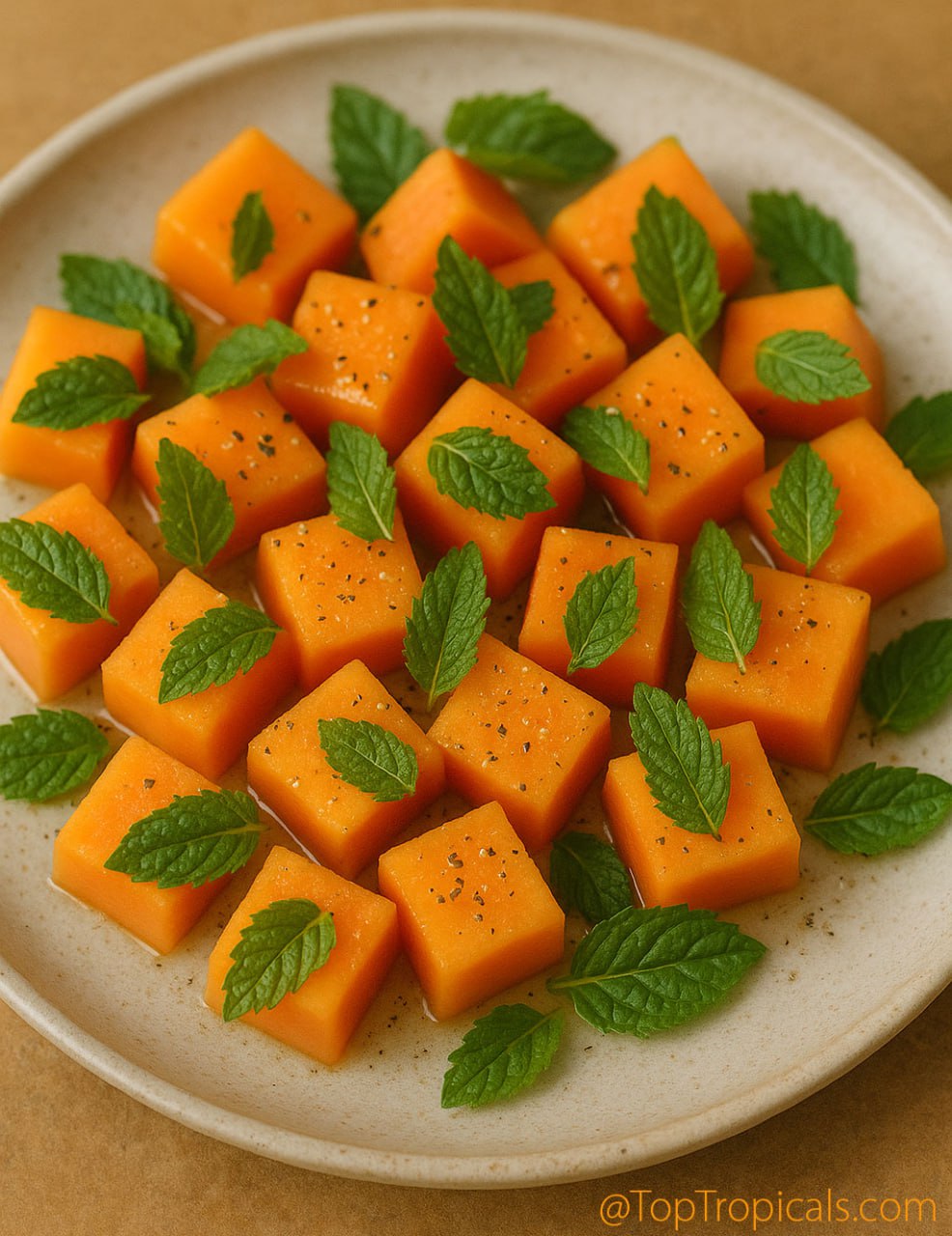
Papaya mint salad: Quick-n-Fun exotic

Papaya mint salad: Quick-n-Fun exotic

🍴 Papaya mint salad: Quick-n-Fun exotic recipes


  • 🟢Cube ripe papaya into bite-sized pieces.
  • 🟢Toss gently with fresh mint leaves, a drizzle of lime juice, and a pinch of black pepper.
  • 🟢Chill before serving for a refreshing, lightly spiced tropical snack.

Papaya Mint Salad

Ingredients

  • 1 ripe papaya, peeled and cubed
  • Fresh mint leaves
  • 1 tsp lime juice
  • Pinch of black pepper

Instructions

  1. Cube ripe papaya into bite-sized pieces.
  2. Toss gently with fresh mint leaves, a drizzle of lime juice, and a pinch of black pepper.
  3. Chill before serving for a refreshing, lightly spiced tropical snack.

🛒 Add Papaya trees to your garden

#Food_Forest #Recipes #Papaya

🟢 Join 👉 TopTropicals

Date: 14 Nov 2025

What is a Dwarf Condo Avocado that fruits at 3 ft tall?

Dwarf Condo Avocado Fuerte

What is a Dwarf Condo Avocado that fruits at 3 ft tall?

  • Every fruit lover dreams of growing lots of avocado varieties, but space often gets in the way. The good news is that some avocado trees stay naturally small and compact, making them perfect for patios, balconies, and even indoor growing. These are called Condo Avocados.
  • They have the same tasty fruit as full-sized trees but take up much less room. You can easily grow them in large pots or containers. They begin to fruit when it's just 2-3 feet tall and remain under 10-12 feet, even after 10 years of growth.
  • The most popular condo avocados are:


🟢 Wurtz (Little Cado): A true dwarf avocado tree that stays small and grows well in containers. It can even produce fruit indoors near a sunny window.
  • 🟢 Fuerte: A semi-dwarf variety that’s easy to manage and does well in pots or small yards.
  • 🟢 Joey: Not a true dwarf, but naturally compact. With a bit of pruning, it can stay small and fit nicely in limited spaces.


Condo avocados are a great way to enjoy homegrown avocados even if you don’t have a big yard. Just give them sun, good soil, and regular care - and you’ll have fresh avocados right on your porch!

✔️ Check outAvocado Variety Guide interactive chart. Sort them by flower type A or B, tree habit, fruit shape and quality, cold hardiness, origin, season and more!

🛒 Shop Avocado varieties

📖 Our Book: Avocado Variety Guide, Snack or Guacamole?

📚 Learn more:


#Food_Forest #Avocado

🟢 Join 👉 TopTropicals

Date: 25 Nov 2025

What Avocado is better - Type A or Type B?

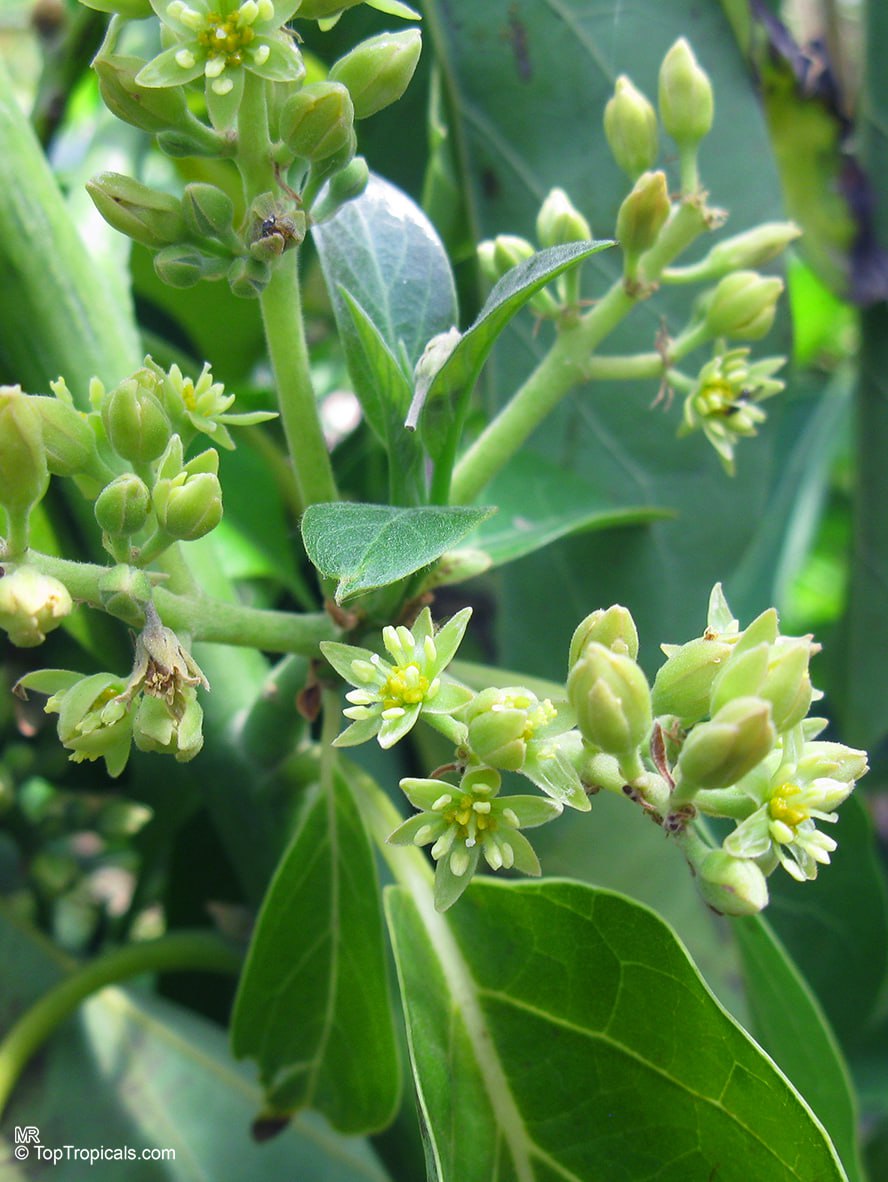
Avocado tree flowers

Avocado tree flowers

What Avocado is better - Type A or Type B?


Avocados are divided into two types based on how their flowers open - Type A and Type B. This has nothing to do with how the fruit looks, only with how the flowers work.

TYPE A:
The flowers open as female in the morning of the first day, then close. On the afternoon of the second day, they reopen as male.

The most popular type A avocado varieties:
Bernecker, Black Prince, Catalina, Choquette, Day, Donnie (Doni), Fantastic, Florida Hass (Haas), Lila (Opal), Loretta, Lula, Mexicola, Mexicola Grande, Red Russell, Reed, Russell, Simmonds, Ulala (Oh La La, Super Hass) , Waldin, Wurtz (Dual Type, A&B).

TYPE B:
The flowers open as female in the afternoon of the first day, then close. The next morning, they reopen as male.

The most popular type B avocado varieties:
Anise, Bacon, Beta, Booth 8, Brazos Belle (Wilma), Brogdon (Brogden), Buck, Ettinger, Fuerte, Hall, Hardee Red, Hialeah Red, Joey, Kampong (Sushi), Marcus Pumpkin, Maria Black, Miguel, Monroe, Nishikawa, Oro Negro, Pollock, Poncho (Pancho), Thomson Red, Tonnage, Winter Mexican, Wurtz (Dual Type, A&B), Yamagata.
  • 🟢 Each tree can make its own fruit (it’s self-fertile), but if you plant both types together, they will help each other make more fruit. The flowers of A and B types open at opposite times, so bees can carry pollen between them more easily. This means better pollination and a bigger harvest.
  • 🟢 For home gardeners, one tree is enough to get fruit, but having both A and B types nearby will give you a larger crop. If you grow avocados in pots, it’s a good idea to have at least one of each type.


✍️ In short:
One tree = some fruit
Two trees (A + B) = lots more fruit!

✔ ️Check out Avocado Variety Guide interactive chart. Sort them by flower type A or B, tree habit, fruit shape and quality, cold hardiness, origin, season and more!

🛒  Explore Avocado varieties

📖 Our Book: Avocado Variety Guide, Snack or Guacamole?


Hard copy
PDF File Download

📚 Learn more:


How Avocado trees flower and set fruit
Avocado Variety Guide
#Avocado #Food_Forest #How_to

Join 👉 TopTropicals

Date: 31 Jul 2025

Anthurium Collector Set

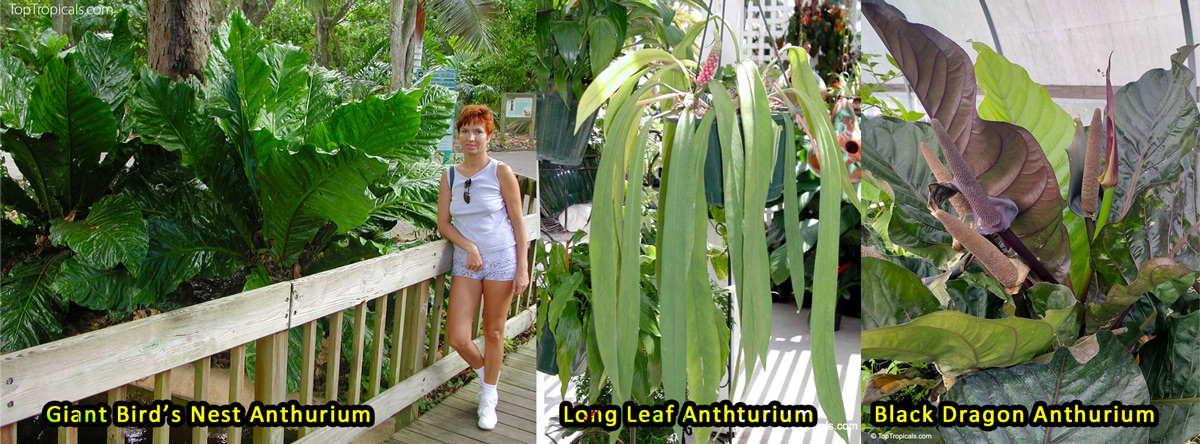
Giant  Bird's  Nest,  Long  Leaf,  and  Black  Dragon  Anthuriums  side  by 
 side,  showcasing  their  dramatic  foliage  and  size

These aren't your typical tropicals - they're collector-grade Anthuriums grown for foliage and texture. Each one brings something different, but they all thrive in the same kind of setting: shade or filtered light, warmth, and humidity. Perfect for growing in containers indoors or out.

Anthurium Black Dragon

This is the most dramatic of the trio. Upright, leathery leaves shift from dark green to nearly black depending on light. Instead of bright flowers, it produces a dark brown spadix and glowing red berries. A hybrid not found in the wild, it's grown from seed - no two are exactly alike.

  • Best for: Indoor focal plant, shaded patio, black ceramic pot
  • Height: 2–4 ft in container
  • Texture: Thick, architectural leaves
  • Highlight: Color shifts with light intensity

Grow Your Own Black Dragon

Read more about Black Dragon Anthurium

Anthurium hookeri – Giant Bird's Nest

This one's about scale. Broad, crinkled leaves with a cardboard-like texture form a bold rosette. It can get huge with time - up to 6 feet across. Perfect for gardeners who want the "instant jungle" look.

  • Best for: Shaded garden, large pots on porches
  • Height: Up to 5 ft; width even more
  • Texture: Wrinkled and leathery
  • Highlight: Bright red berries in maturity

Buy Giant Bird's Nest Anthurium

Read more about Giant Bird's Nest Anthurium

Anthurium vittariifolium – Long Leaf Anthurium

Graceful and rare, this species sends out narrow strap-like leaves that can reach 5–6 ft long. Ideal for hanging baskets or mounting. Bonus: it produces small pink fruit against deep green foliage.

  • Best for: Hanging displays, vertical planters, bright bathrooms
  • Height: Leaf length, not upright height - up to 6 ft
  • Texture: Smooth, ribbon-like
  • Highlight: Cascading growth and color contrast

Buy Long Leaf Anthurium

Read more about Long Leaf Anthurium

✅ How to Care for Anthuriums

  • Light: Bright, indirect light is best. Avoid direct sun, especially mid-day. These plants evolved in rainforest understory - think "dappled light under trees."
  • Water: Keep the soil lightly moist but not soggy. Let the top inch dry before watering. They hate wet feet.
  • Humidity: These are tropicals - they'll do fine in 50-60% humidity, but thrive at 70%+. Use pebble trays or place near other plants. Bathrooms with windows work great.
  • Soil: Use an airy mix: orchid bark + perlite + peat or coco coir. Drainage is key. Never use plain potting soil.
  • Fertilizer: Feed with SUNSHINE Robusta every 2–4 weeks during warm seasons. It's formulated for aroids and won't burn roots.
  • Potting: Use shallow, wide containers. Repot only every 2–3 years, or when roots crowd the pot. They don't like frequent disruption.
  • Temperature: Ideal: 65–85 F. Short dips to the 30s F are tolerated by mature plants, but avoid cold drafts.

Shop All Anthuriums