Date: 24 Jun 2018

URBAN TROPICAL GARDENING:
10 secrets of successful Container Mango growing on a
balcony.
Q: I live in Miami in apartment on a second floor, and I have a balcony with SE exposure. I wonder if I can grow a mango tree in a pot? Will it fruit for me? I recently moved to South Florida and I don't know much about tropical plants; but I tasted real fiberless mangos from someone's garden - it was so delicious and different from those in the grocery store. I wonder if I can have a fruiting tree on my balcony? And if yes, how do I plant and take care of it?
A:
Yes, you can! Here is what you need to do:
1) Temperature. You are lucky to live in Tropics,
keep it on a balcony year round.
2) Light. Position the pot in a spot with the most
sun exposure. Mango trees can take filtered light too, but
the less sun, the less fruit you will get.
3) Soil and Container. Use only
well drained potting mix. Step up the purchased
plant into next size container (3 gal into 7 gal, 7 gal
into 15 gal). When transplanting, make sure to keep growth
point (where roots meet the trunk) just at the top of the
soil. Covering base of the trunk with soil may kill the
plant.
4) Water. Water daily during hot season, but only
if top of soil gets dry. If it still moist, skip that day.
Mangoes (unlike
Avocados!) prefer to stay on a dry side.
5) Fertilizer. Use
balanced fertilizer once a month, 1 tsp per 1 gal of
soil. Do not fertilize during fruiting - this may cause
fruit cracks.
6) Microelements. Apply
SUNSHINE-Superfood once a month. This will help your
mango healthy, vigorous, and resistant to diseases. Use SUNSHINE-Honey to make your
fruit sweeter.
7) Insect control. Watch for scales and mealybugs,
clean with solution of soapy water + vegetable oil (may
need to repeat 2-3 times with 10 days interval), or with
systemic insecticide like imidacloprid only as needed (if
non-harsh treatment didn't help). Most Flea shampoo for
dogs contain that chemical, you may try that shampoo
solution.
8) Trimming. Once potted, do not remove leaves
that are discolored or have spots until new growth
appears. Dark dots on mango leaves, especially in humid
climate like Florida, may be signs of fungus. Treat with
fungicide according to label, and remove only badly
damaged leaves. Trim crown as needed after flowering and
fruiting (by Fall). Train into a small tree, and you may
remove some lower branches eventually.
9) Flower and fruit. Mangoes are winter bloomers
with bunches of tiny flowers coming in thousands. Many of
them set fruit (if pollinating insects present). Keep in
mind that young trees can only bare a few fruit. Normally
a tree will drop excessive fruit and keep only a few that
it can manage. To save the young tree some energy, remove
fruit if too many and leave only 2-3 for the first year.
It will pay you next year with more abundant crop.
10) Variety. Last but not least: Choose the right
variety for container culture! Pick from "condo" dwarf
varieties such as Icecream, Nam Doc Mai, Carrie, Cogshall, Julie, Fairchild, Pickering, Graham, Mallika, and a few others -
check out Mango Chart pdf
and full list of our Mango varieties
Date: 2 Dec 2021
New Video:
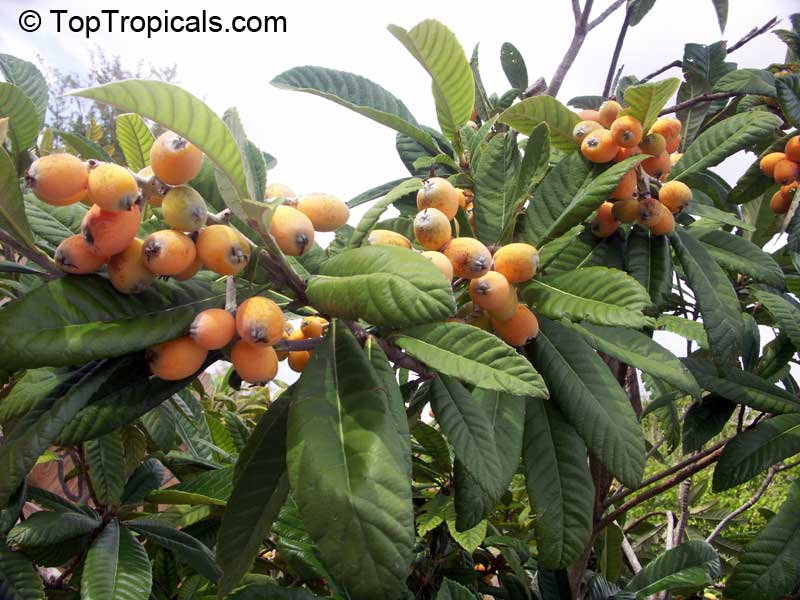
What is a Loquat?
Loquat is one of the easiest tropical/subtropical fruit trees to grow, with delicious fruit resembling Apricots (in fact, from the same family!). This video presented by our video host David Mortimer.
More information on Loquat trees:
Golden Loquat - the symbol of Prosperity
Kristi's Loquat Tropical BBQ sauce
Overlooked fruit: tasty Loquat recipes (PDF from Tropical Treasures
Magazine)
WATCH NEW VIDEO >>
Stay updated with TopTropicals Videos by subscribing to our channel at YouTube.com/TopTropicals and get our latest video news of what is fruiting and blooming!
Date: 19 May 2022
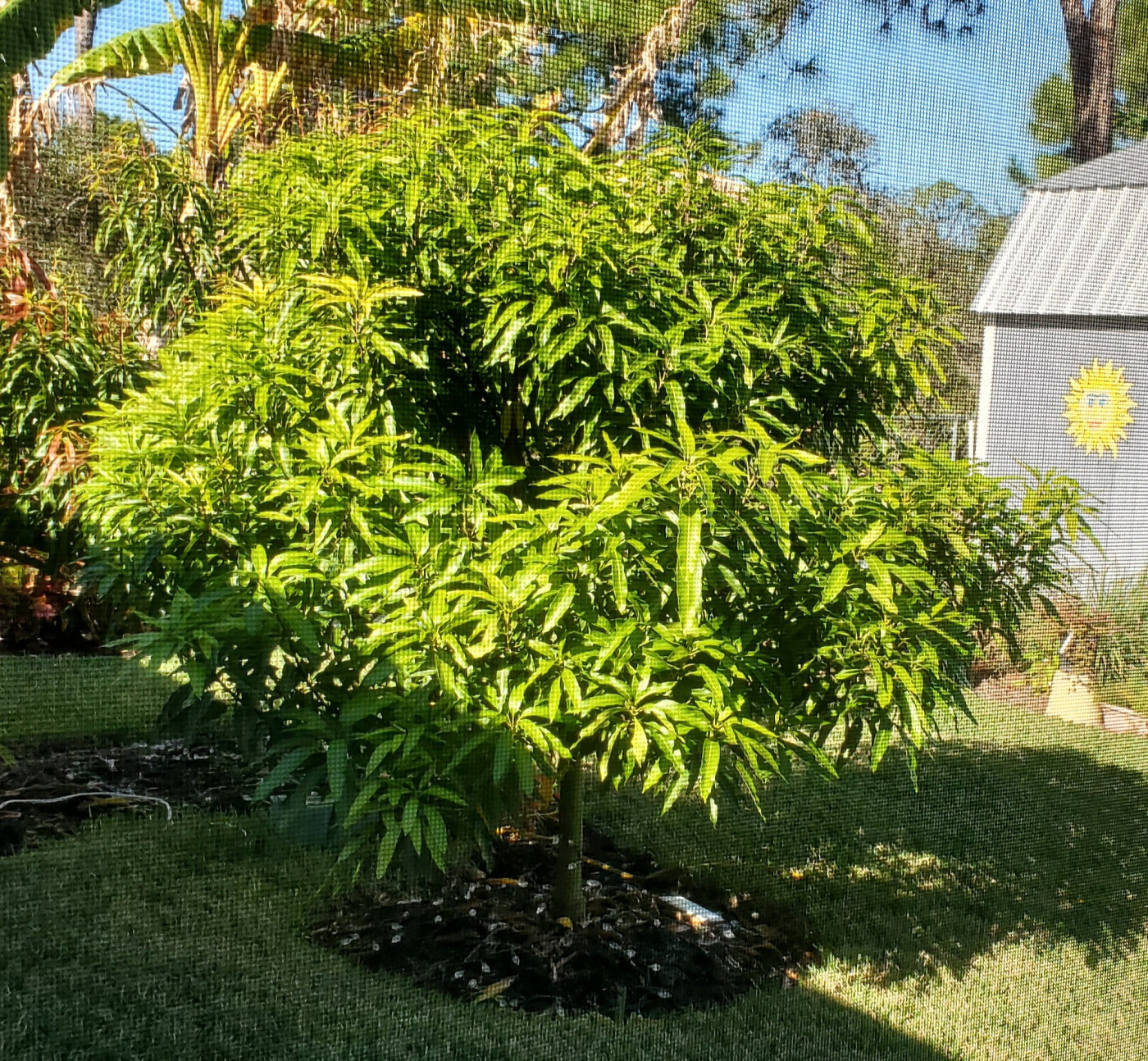
Top Story: The little mango tree that could
By Ed Jones, the Mango Guy
"...Until you dig a hole, you plant a tree, you water
it and make it survive, you haven't done a thing. You are just talking..."
- Wangari Maathai -
This is the story of the little mango tree that could. From the
beginning, it has been a fighter and has come through its latest battle with a few
scars, but it is still going...
...On January 30, the unthinkable happened. Cold weather was coming. We had
a low of under 25F on that Sunday morning...
...Then, on April 4, 2022 we had a very bad hail storm... Hail stones up to
3"fell for 20 minutes...
Learn more about what happened and see this mango tree today... What
helped it to survive and also what will help it to grow back into a beautiful
tree?
For information on how to shape your mango trees, see
Subscribe to our Channel:
Stay updated with TopTropicals Videos by subscribing to our channel at YouTube.com/TopTropicals and get our latest video news of what is fruiting and blooming!
REAL DEALS:
More specials
with instant 30% OFF!

Date: 1 Nov 2025
Tropical fruits that help you sleep better

Tropical fruits that help you sleep better: Cherries, Pineapple, Banana
🍒 Tropical fruits that help you sleep better
🌱 Looking for a natural way to fall asleep faster? Skip the pills and head for the fruit bowl. Some tropical fruits are surprisingly rich in melatonin, the hormone that tells your body it's bedtime. According to a study referenced by New York City Nutrition, eating melatonin-rich fruits about an hour before bedtime can naturally support better sleep quality.
😴 Melatonin naturally rises at night, helping you feel sleepy and cooling your body temperature. But things like blue light from phones, jet lag, or late-night stress can throw it off. That’s where certain fruits can help - they either contain melatonin or boost your body’s ability to make it.
🍒 Cherries
Both sweet and tart cherries are sleep boosters. Tart cherry juice is especially effective because it’s concentrated - studies show it can raise melatonin levels and increase total sleep time. Just go easy on added sugar. Try pairing the juice with almonds or cheese to keep your blood sugar steady before bed.
🍍 Pineapple
In one study, people who ate pineapple had a big jump in melatonin levels just two hours later. It’s also loaded with vitamin C and enzymes that aid digestion, making it a nice evening snack. Have it with a bit of protein, like yogurt or nuts, to avoid a sugar spike.
🍌 Banana
Bananas don’t contain much melatonin on their own, but they help your body make it. They’re full of tryptophan and magnesium, both of which support serotonin and melatonin production. A banana before bed can calm muscles and nerves - no wonder it’s a favorite natural sleep aid.
✅ Bottom line
A small fruit snack in the evening - cherries, pineapple, or banana - can help your body settle into sleep mode naturally. Eat it about an hour before bed, keep screens dim, and let nature do the rest.
🛒 Grow your own fruit and sleep better
📚 Learn more:
- Plant a fruit tree - and breathe easier: fruit might be the surprising key to healthier lungs
- 11 tropical fruits to eat instead of taking a fiber supplement
- Tropical fruit health benefits guide - what fruit and edibles can help with health issues and vitamin deficiencies, Part 1 and Part 2.
- Five best fruit trees to plant in Summer
- 10 best fruit trees to grow in Florida and Southern landscapes
- Top 10 fruiting plants you'll ever need for your health benefits
#Food_Forest #Remedies #Discover
🟢 Join 👉 TopTropicals
Date: 3 Nov 2025
Cashews: more magnesium than almonds!

Cashew Nuts - Anacardium occidentale
Cashews: more magnesium than almonds!
- 🌰 Cashews might be the real nutty winner when it comes to magnesium. One ounce provides about 83 mg, or roughly 20% of your daily need, slightly topping almonds at 76 mg, according to Verywell Health.
- 🌰 Magnesium plays a key role in your body’s daily operations - it helps your heart, muscles, and bones function properly, keeps blood pressure steady, and supports your energy and metabolism. Yet many people still fall short of getting enough.
- 🌰 Along with magnesium, cashews are packed with protein, healthy fats, copper, zinc, and iron - all nutrients your body depends on.
🏆 More magnesium-rich fruit:
Avocado
Avocados are famous for their healthy fats, but they’re also surprisingly high in magnesium - about 58 mg per medium fruit. That’s one of the highest amounts among fruits. Their creamy texture and fiber content make them especially gentle on the stomach, helping digestion and easing constipation. Regularly adding avocado to meals can support gut health, muscle function, and overall mineral balance in a naturally delicious way.
🍍 Pineapple
Best known for its enzyme bromelain, pineapple also provides a helpful 20 mg of magnesium per cup. While not the top source, it offers a rare combination of fiber, enzymes, and minerals that benefit the digestive system. Bromelain helps reduce inflammation in the gut, and magnesium keeps digestive muscles relaxed. Together, they make pineapple a light, refreshing choice for better digestion and a balanced system.
✅ How to get more magnesium:
- • Eat a mix of magnesium-rich foods every day - your body only absorbs about half of what you consume.
- • Try pairing magnesium-rich sources. Add Cashews, Avocados, Bananas, Pineapple, or Spinach to your meals and snacks.
- • Remember, caffeine, age, and certain medications can reduce absorption, so balance your diet and check with your doctor if needed.
- • A handful of cashews can go a long way - for your heart, your energy, and your bones.
🛒 Explore your future food forest: fruit and edibles
📚 Learn more:
- Grow your own brain food: avocado and cacao
- Plant a fruit tree - and breathe easier: fruit might be the surprising key to healthier lungs
- Tropical fruit health benefits guide - what fruit and edibles can help with health issues and vitamin deficiencies, Part 1 and Part 2.
- Five best fruit trees to plant in Summer
- 10 best fruit trees to grow in Florida and Southern landscapes
- Top 10 fruiting plants you'll ever need for your health benefits
#Food_Forest #Remedies #Discover
🟢 Join 👉 TopTropicals