Garden Blog - Top Tropicals

Date: 23 Sep 2020

Fast-fruiting trees?

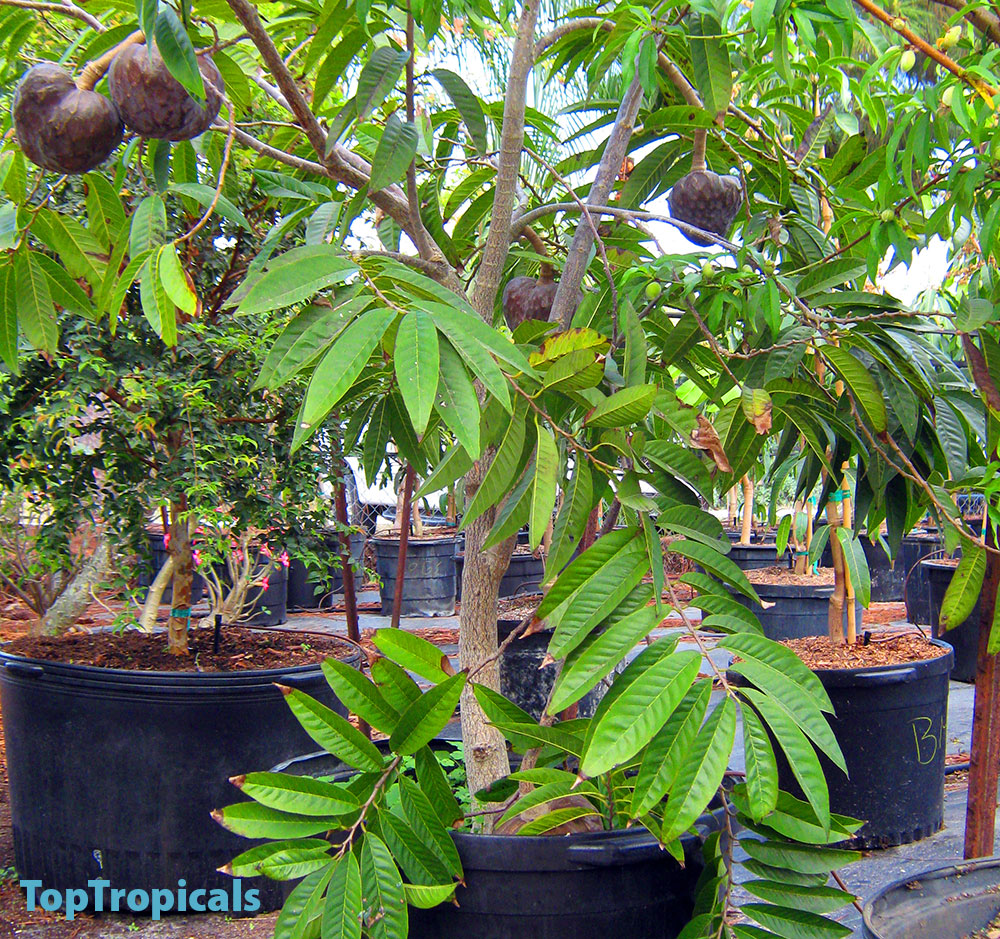
Photo above: Annona reticulata - Red Custard Apple

Q: More of a question than a review, but a review regarding your catalog, it would be easier for us buyers, if we could search for plants that produce fruit in 2 years or less, I don't have the patience to wait longer than that for fruit. I'm trying to buy for a fairly good sized garden but want some fast growers and fruit produced in 2 yrs. Can you help me out?

A: Fruiting time depends on many factors (established size, growing conditions, fertilizing, and even specific variety), this is why we can not just put a simple icon "will fruit within 2 years".
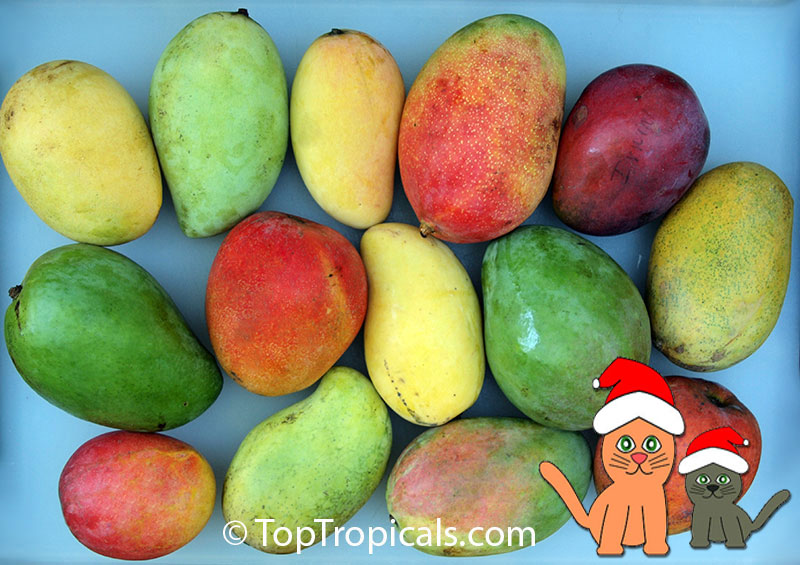
However, most grafted and air-layered fruit trees, including all Mango, Avocado, Loquat, Sapote, Sapodilla, Lychee/Longan, Peaches and Nectarines - will fruit right away. If you see in our store "grafted" or "air-layered" in plant description - these trees will fruit soon. Some of them already flowering and fruiting.
Some non-grafted trees or seedlings like Annona, Artocarpus (Jackfruit), Eugenia, Guava, Banana, Dragon fruit, Mulberry, Blackberry/Raspberry - will fruit within 3-4 years from seed or even sooner (Banana, Mulberry, Dragon fruit, Blackberry-Raspberry - within a year). Usually it says in description that this plant can produce fruit soon.
Bigger size plants are more established and have more energy to produce, so try to get larger size plants if your budget permits, and especially if you can pick up bigger plants rather than shipping them - obviously, shipping has size limitations.
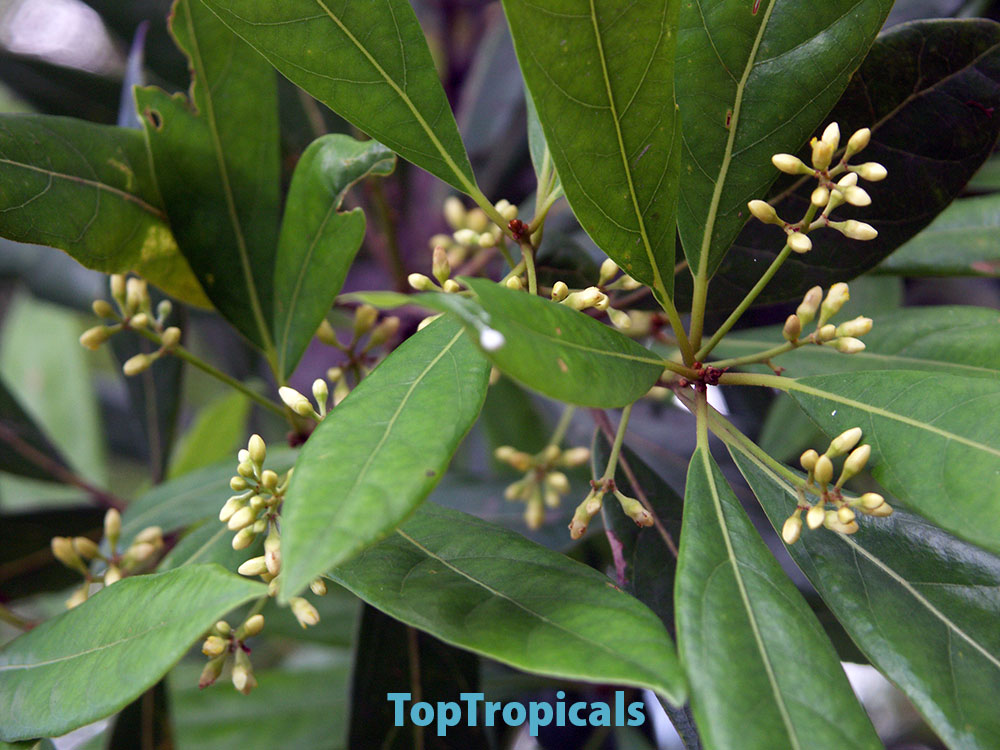
In addition, all spice trees like Bay Leaf, Bay Rum, Allspice and many more - they will produce spice for you right away, so you don't need to wait at all!
If you have questions about fruiting time on any specific plant you put your eye on, don't hesitate to ask!

Photo above: Pimenta dioica - Allspice

Date: 11 Sep 2020

The best Loquat varieties with big, sweet fruit

Q: I'm interested in loquat and read through the varieties you offer but wanted your recommendation. I'm looking for a variety that is big, sweet (not tart) with 1 seed. Of the varieties you offer... Which variety would you recommend?

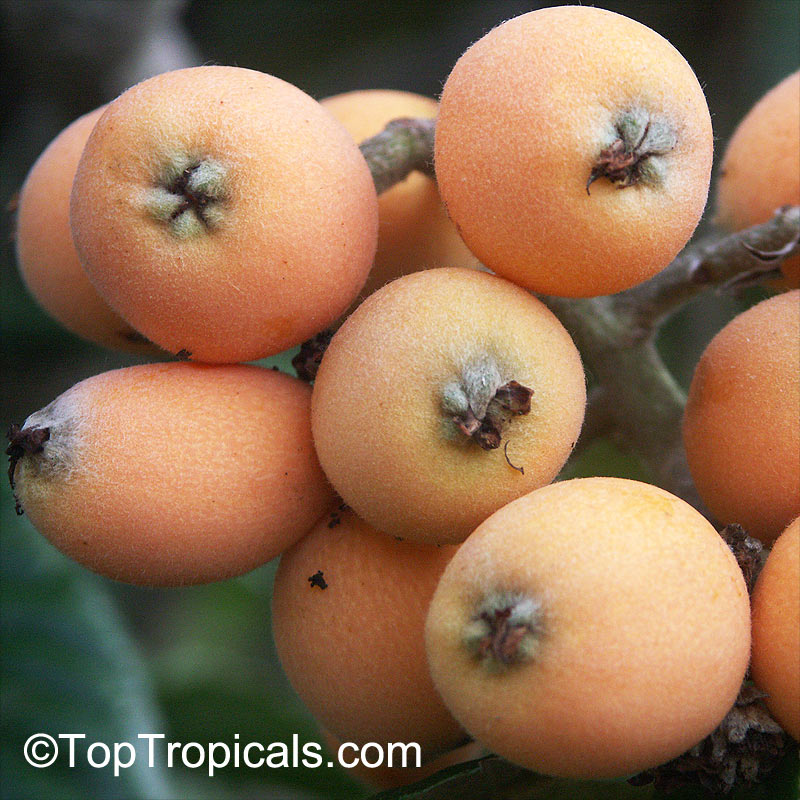
A: From our experience, the most popular Loquat variety is Christmas. It is an early ripening type hence the name Christmas. Fruits are very large for a loquat, they are bright yellow with a tangy apricot flavor.
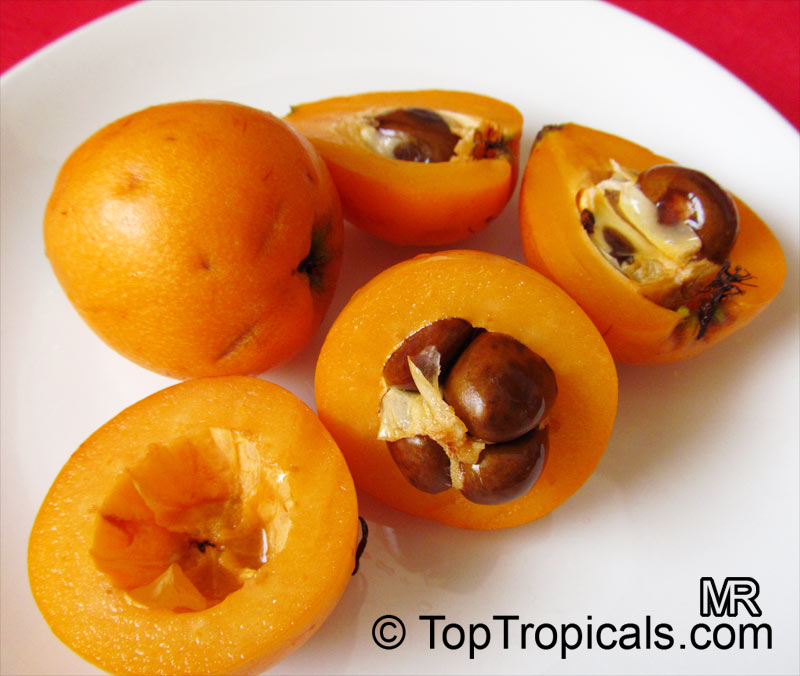
Another good variety we recommend is Yehuda - it has a large fruit and very small seed Also, variety Oliver for many years has been considered the best loquat for South Florida. The fruiting season is March to May. It has medium to large fruit. The fruit is very sweet with only one-two seeds.
Loquats are very cold hardy tropical fruit trees, easy to grow, drought tolerant, fast growing. Fruit is great for eating fresh or making jam.

Check them out while they are on sale!

Date: 30 Aug 2020

Memory Garden: Do It Yourself Paradise

A true moment of peace, calm, and gratitude...

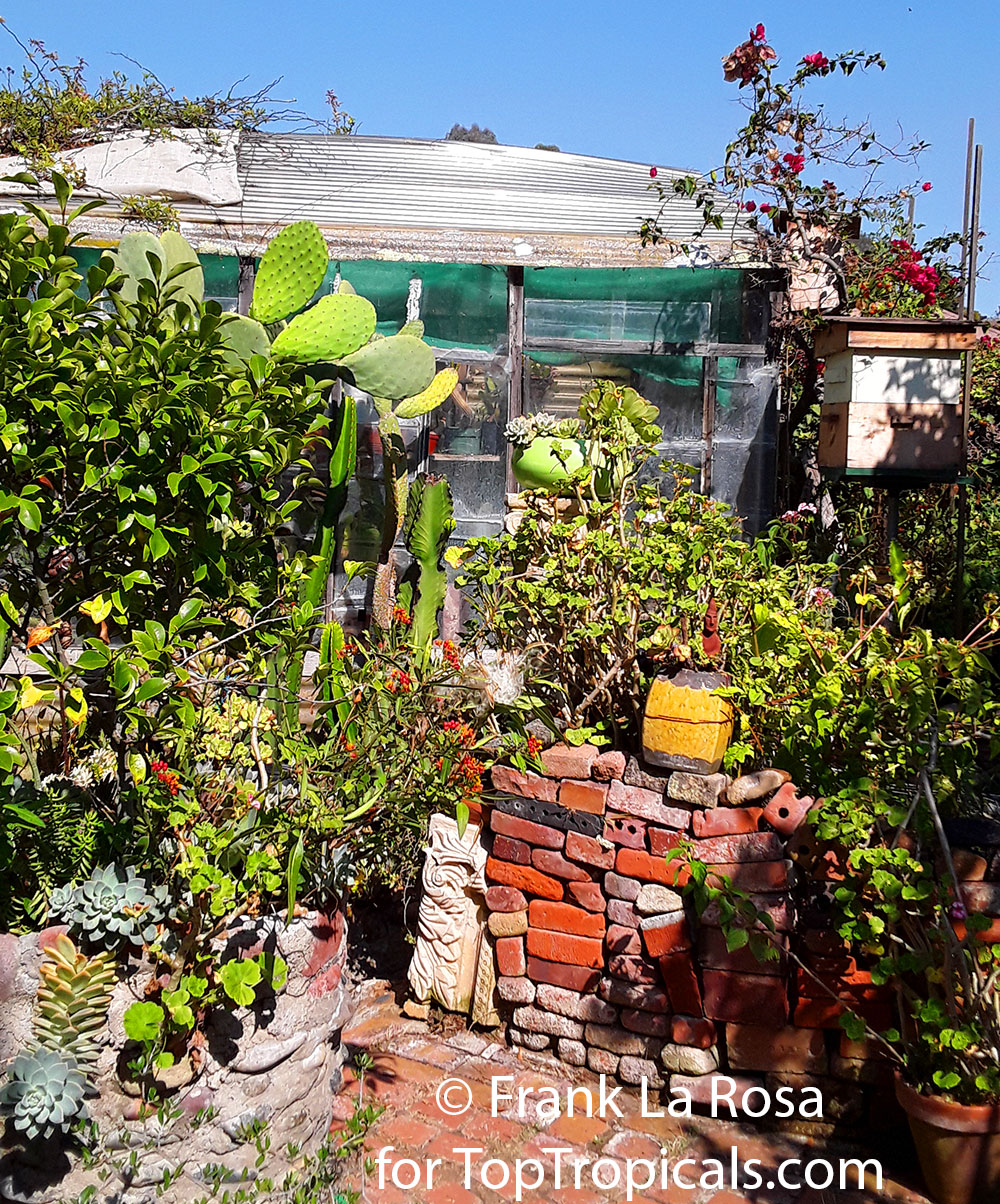
by Frank La Rosa, Del Mar, CA

...I term my garden one of memories because almost every plant in it have been given to me by some person that I cared for. The Sicilian jasmin came from a nice lady who brought it from Sicilia in her purse, and she in turn gave me a cutting from which I have propagated three more plants. The Mermaid rose came from my father-in-law a rosarian, who "bootlegged" it, actually (in his boot) in the trunk of his car as he drove from Texas where he lived. Today that rose reaches up up the second story and covers the arch out front...
I have made four stone arches in this Memory garden. One is the entrance to the Chapel of All Good Spirits. It took me two years to build it from stones I collected from many loved places...

CONTINUE READING >>

Date: 12 Jul 2020

Delicious Turkish Brown Fig

by Onika Amell, tropical plant expert

...Did you know that figs were among the very first plants grown in the hot and arid Middle East? Fast growing and utterly delicious, they soon made their way all over the Mediterranean, transported aboard ships and on the backs of camels...
If you are a fig lover, you may be tempted to grow your own. Market-bought figs are never as good and tasty as your own, homegrown figs. They just simply do not keep well in supermarkets. Fast growing, undemanding and low maintenance, figs will bear fruit in just two years, often bearing two crops in a year. Another plus is that they are not bothered by too many pests and are self-fertile. Apart from the delicious fruit, any fig tree will add beauty and shade to a garden...

CONTINUE READING >>

Read more about fig trees:

Tropical Treasure magazine # 13 (3) 2010:
- Hard copy
- PDF Download

Date: 30 Jun 2020

Plants like to snack!
How to feed Poinciana tree

(and other tropical flowering trees)

Q: We purchased a Royal Poinciana tree from TopTropicals not too long ago and we gradually gave it more sun until finally we were able to plant it in direct sunlight where it's been for a week or so. Rain has been sporadic lately so I'm giving it a little bit of water every day. It seems to be doing fine. I do have a question about whether the leaves are as green as they should be? I read online that I should fertilize it with gardenia / ixoria fertilizer in March, June, and October. I looked on homedepot.com but didn't really find anything that goes by that name. Would fertilizer help? Can you suggest a fertilizer?

A: Your Poinciana tree looks pretty healthy and happy, congratulations with a great job!
Traditional (old-school) fertilizer recommendations usually suggest feeding a plant 2-3 times a year with a slow-release fertilizer. And although a plant will benefit from any fertilizer application (extra food is always good), however, for the best results, faster growth, sooner and more profuse blooming, your should use complete plant nutrition products - liquid fertilizers (see why liquid fertilizers are better than dry).
Here is an example. Some people eat a big heavy meal once a day which we all know, is not very healthy. Other people eat balanced food more frequently but in smaller portions - this is always the best way to go.
From this point, plants prefer SNACKING - frequent feeding, but with less concentrated, mild and balanced nutrients.
For your beautiful Poinciana tree (and other flowering plants), we suggest the following nutrition program:

1) SUNSHINE Megaflor - Bloom Nutrition Booster - you may use this fertilizer as frequent as with every watering, it won't burn the roots, and will provide a complete nutrition for all plant needs throughout the year. You can continue fertilizing with Megaflor even during winter time. Sunshine Megaflor will help you to keep the plant healthy, vigorous, and resistant to stress and diseases. It turns leaves green and makes the plant strong so it will start flowering sooner for you.

2) Tropical Allure - Smart-Release Booster. Apply it once a month during hot season only (in Florida - from March to November).