Date: 25 Feb 2021
Container mango - Condo varieties
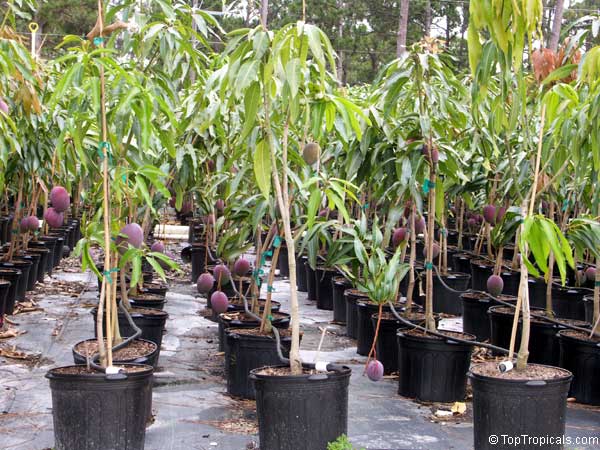
Q: What are the good varieties of mango trees available for container grow? Can you please share the details?
A: There are some great varieties of Mango selected specifically
for container culture, they even have a nick-name - "condo mangoes". They
have compact growth habit and respond well to pruning to keep them in small
size. Here are a few of our favorites that we currently have in stock:
Glenn
Ice
Cream
Cotton
Candy
Mallika
Manilita
Pram
Kai Mai
Mun
Kun Si
Maha
Chinook
You can see more condo mangoes on this page.
Related articles:
How to grow a Dwarf Mango tree
Choosing the right Mango for your garden
10 secrets of successful Container Mango growing on a balcony.
Condo Mango
Date: 1 Feb 2021
The Secret of Longevity
finally revealed!
"...Time spent in the garden doesn't count against your lifespan..."
Want to live longer? Surround yourself with plants
If you want to live longer, live around green space. The Barcelona
Institute for Global Health found that for every 10% increase in vegetation that's
within 1,600 feet of your home, your probability of death drops by 4%.
LEARN MORE >>
Why gardening could help you live longer:
1. It gets you into Nature.
2. It's good exercise.
3. You'll eat what you grow.
4. It exercises your mind, while also relieving stress.
LEARN MORE >>
Gardening helps you live to 100
Many of the world's centenarians share one common hobby: gardening. Could you extend your life and drop your stress by taking up the pursuit, too? People living in these so-called "blue zones" have certain factors in common - with daily exercise habits and a plant-based diet, for starters. But they share another unexpected commonality. People are gardening well into old age - their 80s, 90s and beyond. Could nurturing your green thumb help you live to 100? Let nature nurture you!
LEARN MORE >>
The healthiest people in the world don't go to the gym.
Moving naturally throughout the day might sound pleasant and romantic,
but the reality is that 100 years ago only 10% of us had sedentary jobs,
whereas today it's 90%. However, there are still easy ways to add more movement into your busy lifestyle. The research also showed that walking even as little as two hours per week could reduce the risk of cardiovascular disease, respiratory disease, cancer, and help you live longer.
What work out can be better than Gardening? Fresh air, lots of exercise, yet fun and rewarding!
See also: Forget the gym and get to gardening.
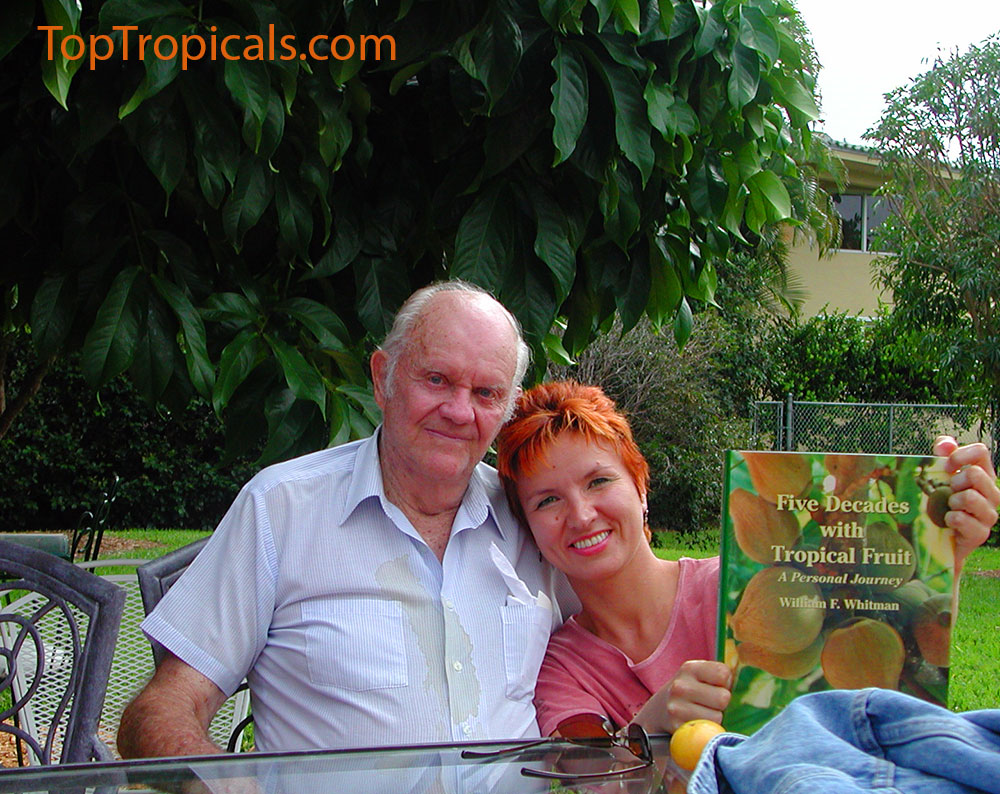
In the photo: The Father of American Tropical Fruit Horticulture Bill Whitman, age 92, is presenting his book Five decades with tropical fruit to Top Tropicals after giving a tour
Date: 28 Dec 2020
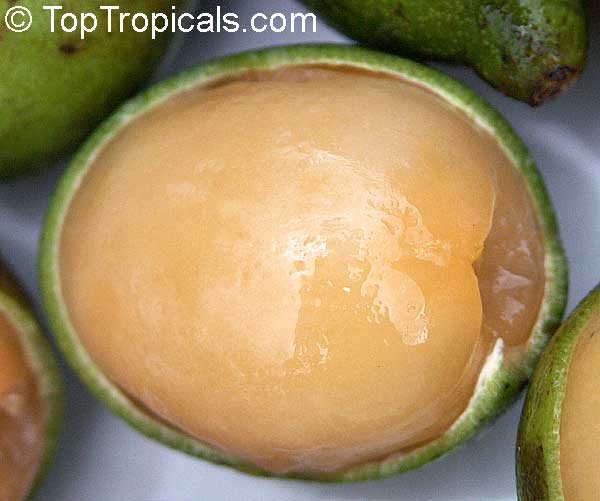
Spanish Lime Tree
Q: Do I need two plants of the Spanish lime to have fruits? Do you have a grafted tree that I would only need one plant?
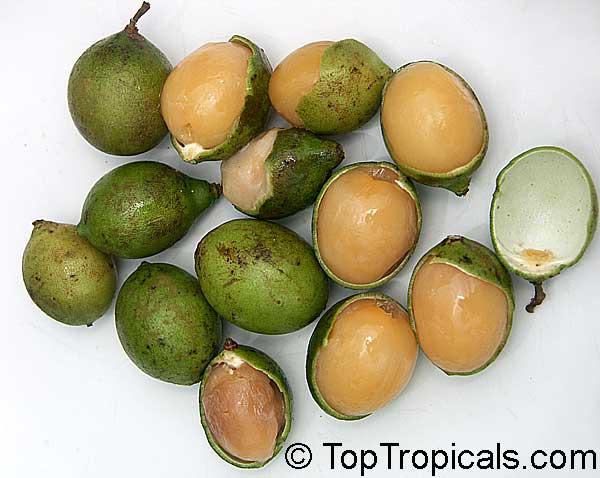
A: From our experience with Spanish Lime trees - Melicoccus bijugatus, fruiting habit really depends on variety. There
are self-pollinating varieties that only require one tree. Seedling usually
require cross-pollination between two trees for better production. It doesn't
mean that one tree won't bloom or fruit - it will, but production may be lower
than if they were cross-pollinated.
The Spanish Lime trees we currently have in stock are seedlings from a
good, self-pollinating variety Key West, however, only grafted trees are
precisely true to variety since they are technically clones. Seedlings normally take
a few years (3-4) until they start fruiting. Spanish Limes don't have to be
grafted to produce quality fruit, however, grafted trees may take less time
till they fruit.
This species is really hard to obtain and we do not have any grafted trees
now, and probably not for another year. So if you really want this fruit
tree, you may want to try at least with a seedling.
We only have a few left in stock and many people want them. Otherwise, you
may sign up for the wish list and wait until we (hopefully) have grafted specimens (enter
Melicoccus bijugatus in wish list).
Date: 20 Dec 2020
Mango ID and ripeness
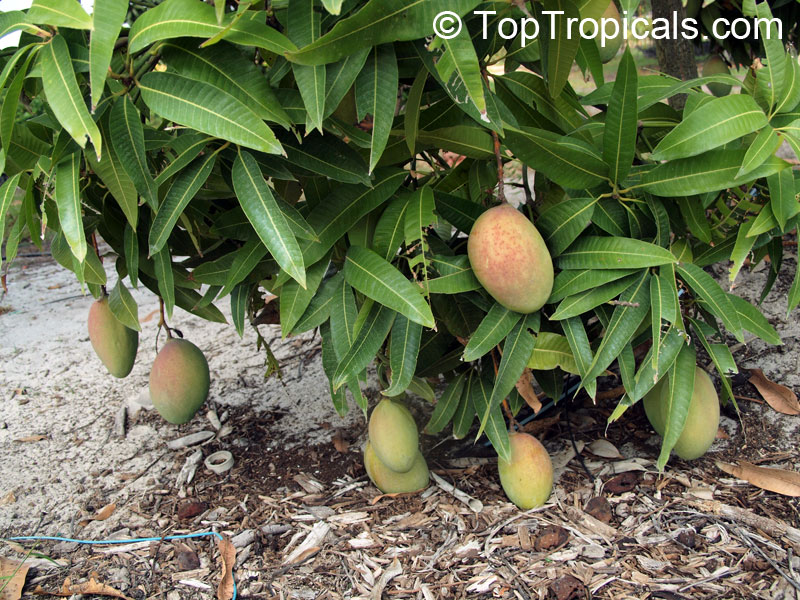
Q: As the World's Leading Authority on Tropical Plants, I hope you can help us out. We obtained a mango tree from a City giveaway, and planted it a few years ago. This is the 1st year it has produced fruit. They are almost all green color, & range from 6-7 inches in length. Attached are a few photos of the tree & its fruit. Please help to identify the type, and how to determine when they would be ready to pick. Or should we just wait until they fall off of the tree?
A: If the tree is grafted, it normally starts flowering within a year after planting. If
the tree is over 6 years old and just now started fruiting - chances are, this is a seedling (possible at giveaways)
without specific variety. However the fruit looks pretty good size and shape, hopefully it tastes great. You will find out soon!
Based on the pictures, there maybe a few possible choices, including
varieties (or their seedlings) Keitt, Rosigold, it can be even Lancetilla if fruit grows bigger than 7" long. The next step would be, wait until the fruit get some color, then it will be easier to narrow down the variety.
Also see if there is a lot of fiber or no fiber.
You may wait until at least one fruit ripens on the tree and let it fall naturally - that
will be the color (can be all green, but in your case it looks like it's turning yellow blush). After that, you may pick full size fruit before they fall and let them
ripen on a kitchen table. Usually once the fruit starts showing color, it is close to ripening. For all-green varieties, just wait till fruit grows to maximum full
size. You may also check if the fruit gets softer to touch, then it's ready.
Date: 4 Dec 2020
Musa ensete Maurelli - Red Abyssinian Banana
by Onika Amell, tropical plant expert
Q: I am looking for a colorful, tropical plant with in particular, coarser texture, to add to planting beds next to my decks and around my swimming pool. Any suggestions? I am located in St. Petersburg, FL.
A: Consider incorporating some fast growing Red Abyssinian Banana, also known as wild banana or Ethiopian banana. This is a fantastic ornamental from East Africa and an excellent choice to create a tropical feel and to add coarse-textured foliage. This plant is not a true banana and therefore does not produce any edible fruit. American gardeners were rather slow to discover this enormous perennial, but finally woke up to them over the last decade to a point where they now are considered to be one the most beautiful ornamental banana plants for the landscape and for good reason...