Garden Blog - Top Tropicals

Date: 4 Apr 2026

Rare Night-Blooming Cactus that Glows and Grows Large Edible Fruit
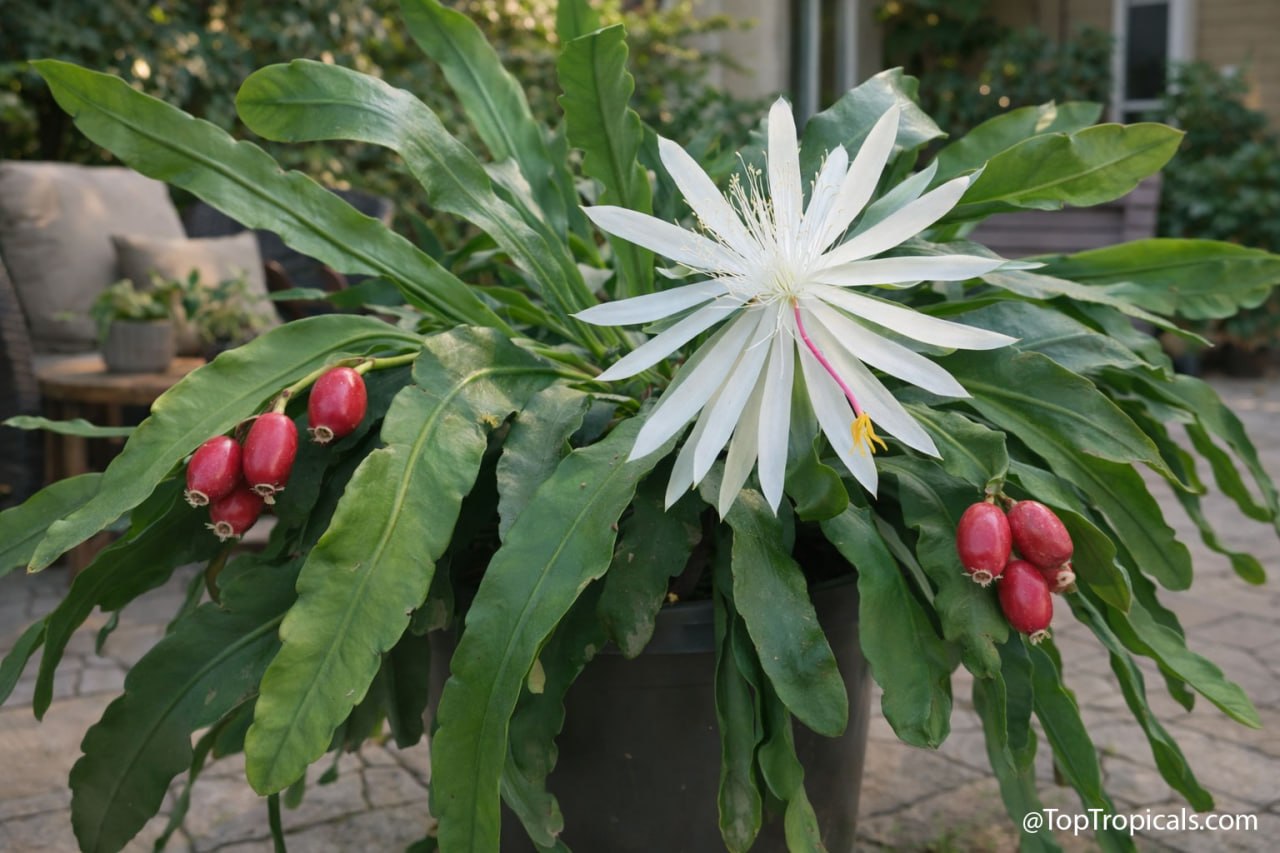
Epiphyllum hookeri - Rare Night-Blooming Cactus with fragrant flowers and large edible fruit
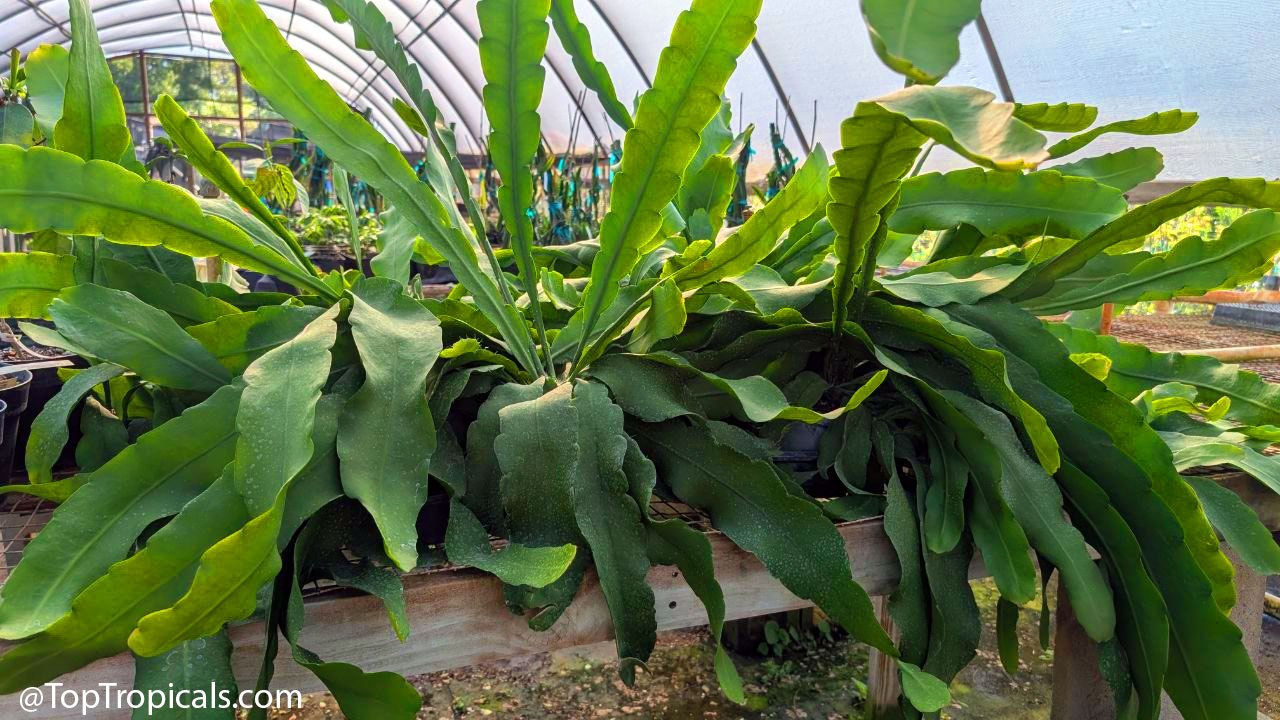
Epiphyllum hookeri - Rare Night-Blooming Cactus with fragrant flowers and large edible fruit

Epiphyllum hookeri - Night-Blooming Cactus with large leaves
Epiphyllum hookeri - Night-Blooming Cactus with large leaves

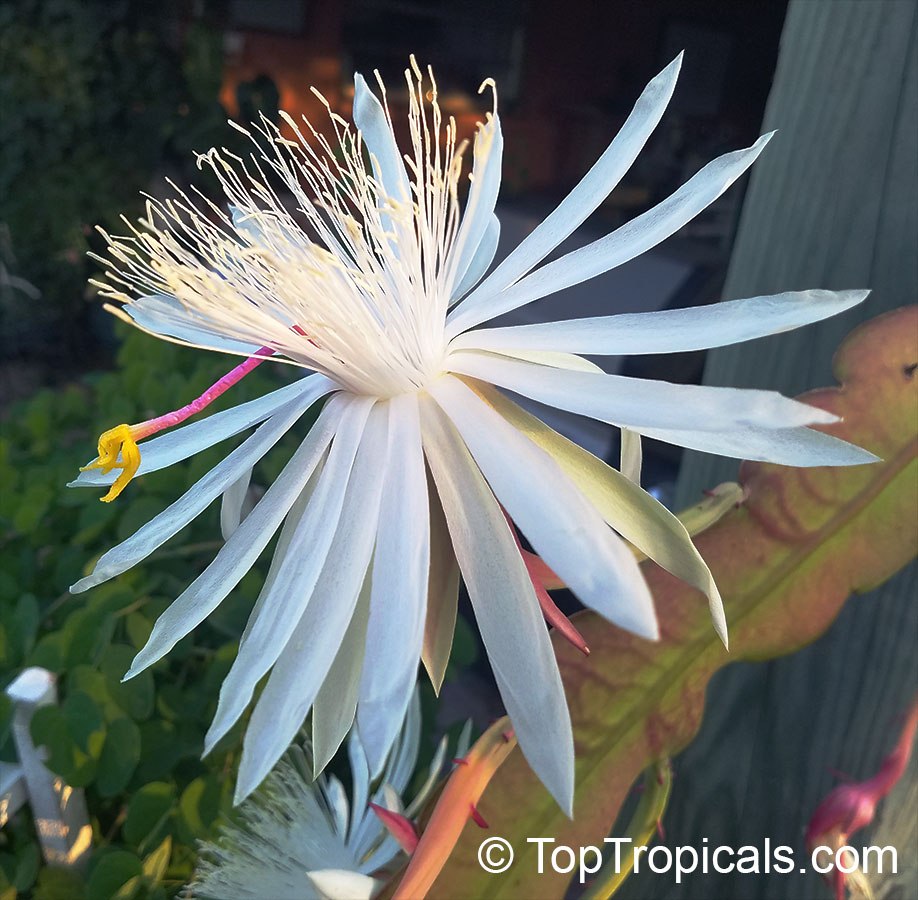
Epiphyllum hookeri - Night-Blooming Cactus large flowers

Epiphyllum hookeri - Night-Blooming Cactus large flowers

Rare Night-Blooming Cactus that Glows and Grows Large Edible Fruit 🍅

Did you know this nigh blooming beauty has large edible fruit? Why the Epiphyllum hookeri is the ultimate two-for-one plant for tropical garden lovers.
  • 🌠 The Midnight Spectacle


    Most gardeners grow the Epiphyllum hookeri for its "ghostly" white flowers. These massive, fragrant blooms wait until sunset to unfurl, reaching their peak beauty under the moonlight before fading at dawn.
  • 🌠 The Edible Bonus


    What many don’t realize is that this specific seed-grown type is a "fruiting" powerhouse. After the dramatic floral display, the plant sets smooth, elongated fruit. The flavor? Mild, sweet, and surprisingly refreshing -think of it as a garden-grown secret.
  • 🌠 How to Grow It


    Light: Filtered sun or bright shade (no harsh midday sun!).
    Hydration: Regular watering in well-drained soil.
    Display: It’s a natural climber/cascader—put it in a hanging basket and let it shine.


🛒 Claim your fruiting night-bloomer

Collect epiphytic jungle cacti:

📚 Learn more:

Plant Facts

Epiphyllum hookeri, Epiphyllum strictum, Epiphyllum stenopetalum, Epiphyllum phyllanthus
Climbing Cactus, Hooker's Orchid Cactus
USDA Zone: 9-11
Small plant 2-5 ftSemi-shadeModerate waterWhite, off-white flowers

#Container_Garden #Shade_Garden #Food_Forest

🟢 Join 👉 TopTropicals
Date: 9 Nov 2019

Saving Fallen Papaya Tree

Q: Hope there is help for my beautiful amazing papaya tree! There where a loooooooot of fruits on it, but it broke! First of all, it was leaning and friends tried to straight my beautiful tree. What can I do? Will it get fruits again?

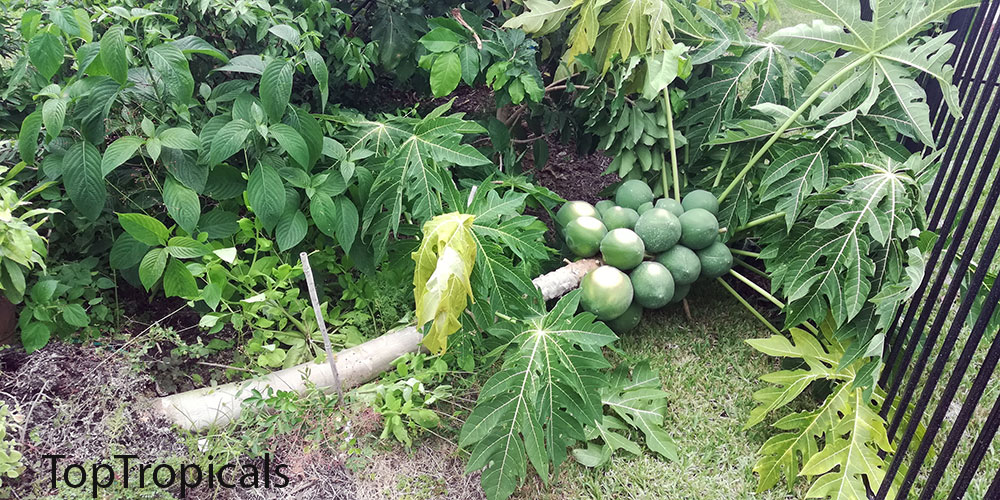
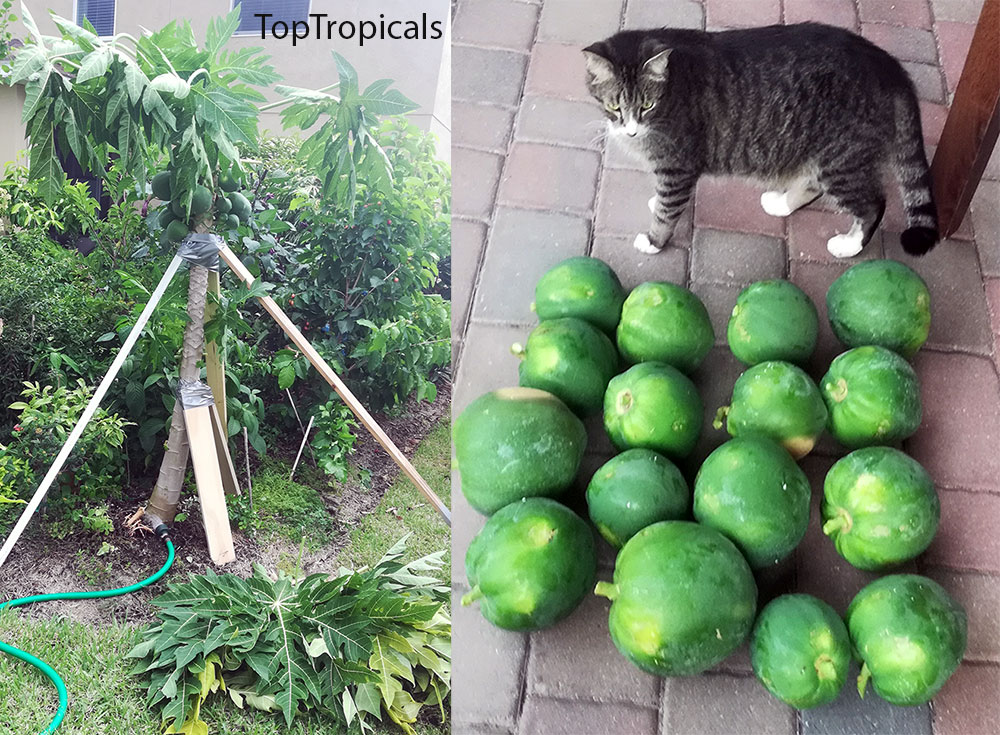
A: A couple months ago we also had a Papaya tree loaded with fruit that fell down (see photos). It was heart-breaking. We secured it and it continued growing for a couple of weeks but unfortunately, at the end the tree still died, leaving us a million fruit. The Papaya tree has a very sensitive root system and is hard to re-establish once the roots are damaged.
However, if it just has a broken top, it has a good chance to grow back from the side shoots.
Of course, remove all the fruit so they don't take energy from the recovering tree.
When a tree is loaded with fruit, it is important to provide support for heavy branches and for the trunk if needed. Always support the fruiting tree to prevent from possible falling BEFORE it starts leaning down and may become broken by even a light wind.
In the photo, you can see how we fixed boards around, but it was already after the tree fell. Unfortunately, it was too late since the roots got damaged. Always need to stake the tree up before the branches get too heavy!

RECOMMENDED FERTILIZERS:
Fruit Festival Plant Food - Super Crop Booster
Mango-Food - Smart Release Fruit Tree Booster
SUNSHINE-Honey - sugar booster

Maradol Papaya $10 Hot Sale

Only local pick up from our Garden Center
Hurry up, while supply lasts!

Date: 29 Jan 2020

The most luscious Hospitality Fruit: Pineapple

by Mark Hooten, the Garden Doc

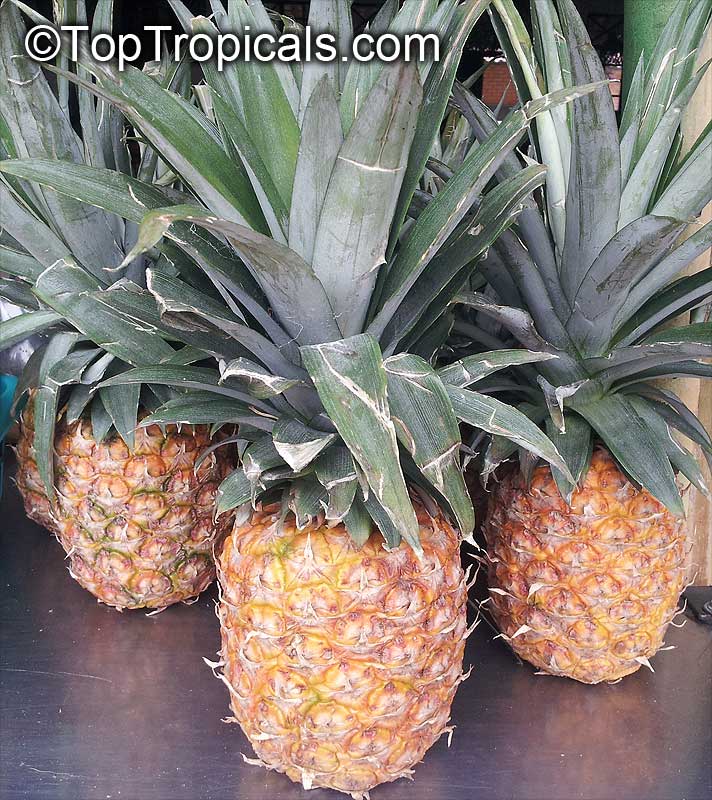
I wonder how many people know that the Pineapple (Ananas comosus) was actually the very first New World tropical fruit to have been sampled fresh by European royalty? It happened 527 years ago, when one made it to Spain, being personally delivered to King Ferdinand and Queen Isabella by Christopher Columbus... He had obtained a huge number of them, however only one actually survived intact and edible! That pineapple was instantly declared to be the most luscious wonderful fruit ever!..
...During the 1700s before the Revolutionary War, the overly monetarily intoxicated super-rich were actually paying a modern equivalent of⁠ - get this - 8000 dollars for a single fruit!..
...In conclusion, I will add the simple recipe for my personally favorite go-to comfort food...

Pineapple plantation in Hawaii

Date: 15 Jan 2021

Healthy Plants: Q&A from Mr Booster

New Boosters for the New Year!
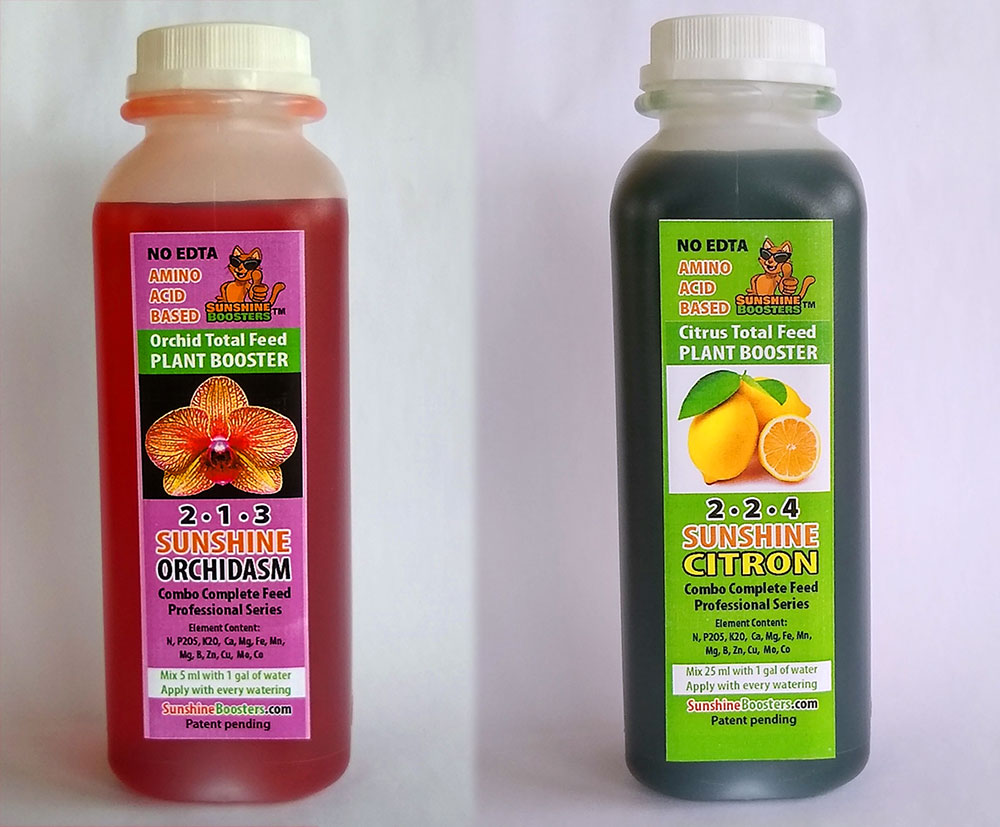
Sunshine Total Feed: Orchidasm and Citron

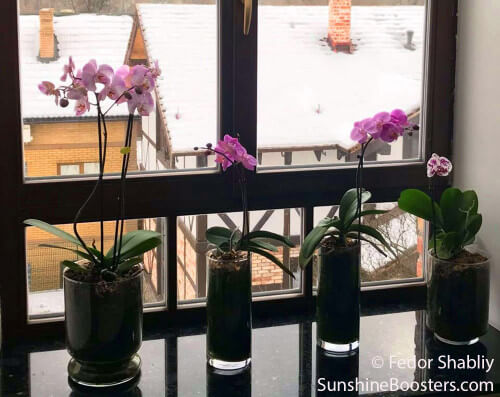
How to grow everblooming orchids?

Q: I ended up with a large collection of orchids that I was given as presents... They grow well but unfortunately after the showy blooms were gone, I don't see any more flowers, just green leaves. What do I need to do to make them bloom again? Should I fertilize them with Azalea bloom booster?

A: Orchids culture is different from garden ornamental plants. First big difference, they are epiphytes, growing in a loose bark medium rather than soil, and benefit from daily mist. Second difference is a type of fertilizer. You can not use a regular garden fertilizer on orchids, because they are very sensitive to salts. Orchids need special, acidic type of fertilizer, very mild in action.
Luckily, Sunshine Boosters formulas are exactly what orchids need! They are amino-acid based, have very mild formulas, and do not create nutrient lock up (building up salts is one of the biggest enemies of tender orchids).
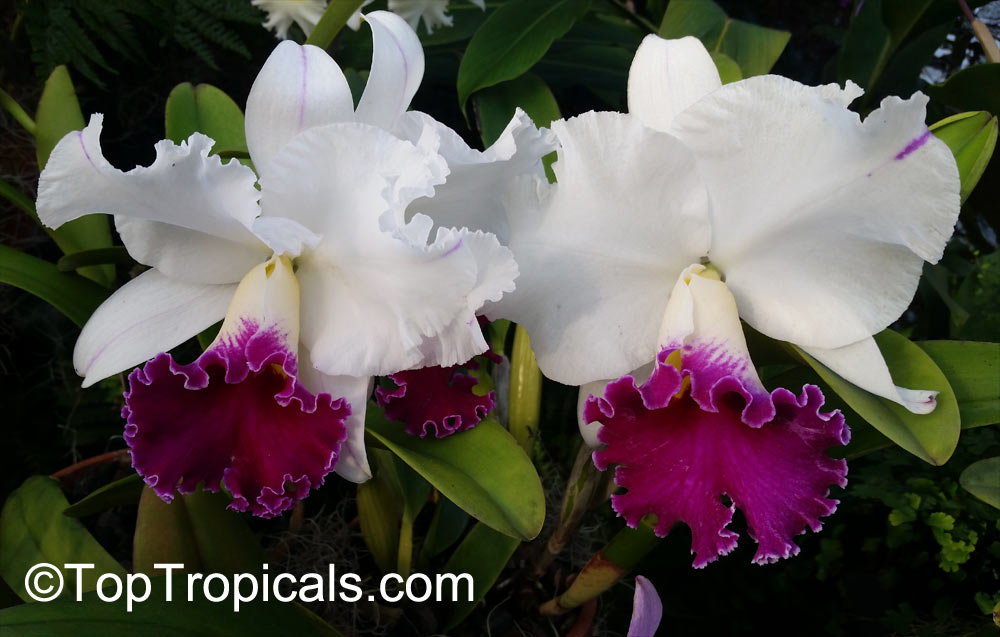
A new Sunshine Boosters Orchidasm TotalFeed is scientifically balanced orchid food that contains all necessary nutrients, including micro-elements, for healthy, happy, vigorous orchids. It can be used as often as daily with every foliage spray. From our testing experience, after using Orchidasm Booster, orchids not only got happy and thriving - they also bloom more often - up to several times a year, shooting new flower spikes one after another! (while normal blooming cycle for most orchids is once a year). It gets even better - the flower display lasts twice longer!
To enjoy these beautiful flowers year around - treat them with Love, give them some Orchidasm!

See more information with pictures in Sunshine Boosters Orchid Blog

Secrets of a healthy Citrus tree

Q: We planted several citrus trees in our yard - Meyer Lemon, Grapefruit and Blood Orange. The trees came from the store full of flowers and even had a few fruit, but a year after planting - no more flowers! The old leaves are green, but new growth doesn't look healthy, leaves are yellowish and have spots, maybe eaten by bugs (?), and how do we get them to fruit?

A: Citrus plants are not the easiest trees to grow; they are susceptible to various diseases, pests, and deficiencies, especially in areas with high humidity/rainfall like Florida. Fungi, viruses, leaf minors, chlorosis - this is not a complete list of citrus common problems. In commercial groves, these conditions are kept under control by using harsh chemicals on solid schedule.
For home gardeners, growing citrus trees may become a challenge. Many people don't want to use harsh chemicals on their edibles; and those who do, may not always have time to apply treatments on a professional schedule. So as much as we all love a fresh juicy orange, growing your own may become quite a pain!
Sunshine Citron TotalFeed is your simple, eco-safe solution to a healthy looking, productive citrus tree with organic fruit! Amino-acid based formula provides all necessary elements to strengthen the tree and make it resistant to possible problems.
Did you know that treatment of leaf chlorosis (yellow leaves with dark green veins), commonly treated with iron supplements, in fact requires a complex combination of nutrients - both balanced NPK and micro-elements?
Use Sunshine Citron in combination with Sunshine GreenLeaf and Sunshine SuperFood and never see yellow chlorotic leaves again!
Apply Sunshine Epi on regular basis (every 2 weeks) and help your tree boost its immune system and stay virus-free.
Add Sunshine Honey, and you will have large, juicy fruit that are much sweeter and more flavorful than those from the store! All these boosters are compatible with each other, and perfectly natural. Eat your fruit safely and enjoy...

Read more about treating citrus tree defficiencies in Sunshine Boosters Citrus Blog.

Date: 16 Feb 2019

Featured plant. Randia formosa - Blackberry jam fruit

TopTropicals.com

Randia formosa - Blackberry jam fruit

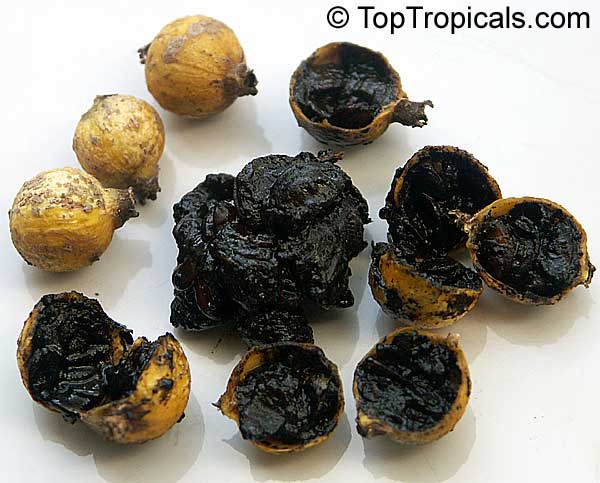
This unique compact plant, perfect for container culture, combines features of a fragrant flower and tasty desert fruit. Kids love it! Originally from Central and South America, this rare tropical small evergreen tree bears fruit which tastes like fresh Blackberry jam. Many claim that it's even better than preserves. Closely related to the gardenia, its flowers are sweetly fragrant. This relatively hardy tropical has attractive foliage and can be grown in a container as well as in the ground. The Randia formosa (or Rosenbergiodendron formosum) produces as many as 25 to 30 fruits at a time. Since it blooms for a few months in the fall and winter, fruiting and flowering can be enjoyed when many other plants are dormant. Large tubular white flowers that attract nocturnal moths... Read more about this plant...

Get it from our store... Limited quanity!